Ryan Caldwell writes about military decision-making, failed programs, and the tradeoffs behind major defense choices. His work is focused on understanding why systems succeed or fail beyond headlines, promises, and initial expectations.
The Pentagon has spent more money on weapons that don't work than most countries spend on defense. That's not hyperbole. The programs on this list alone account for over $60 billion in sunk costs, and that's before adjusting for inflation. Each one arrived with PowerPoint briefings full of revolutionary promises. Each one left behind a trail of congressional hearings, inspector general reports, and hard lessons that the defense establishment seems constitutionally incapable of learning.
What makes these failures legendary isn't just the money. These vehicles earned their infamy through a specific combination of ambition, stubbornness, and spectacular dysfunction: the anti-aircraft gun that locked onto a bathroom fan, the stealth bomber shaped like a tortilla chip, the fighting vehicle whose development became a literal comedy. The pattern connecting them is remarkably consistent: requirements creep, spiraling costs, and an institutional refusal to kill a program until billions are gone.
Here are ten military vehicles that failed so spectacularly they became permanent fixtures in the history of defense procurement, counted down from notable disappointment to all-time catastrophe.
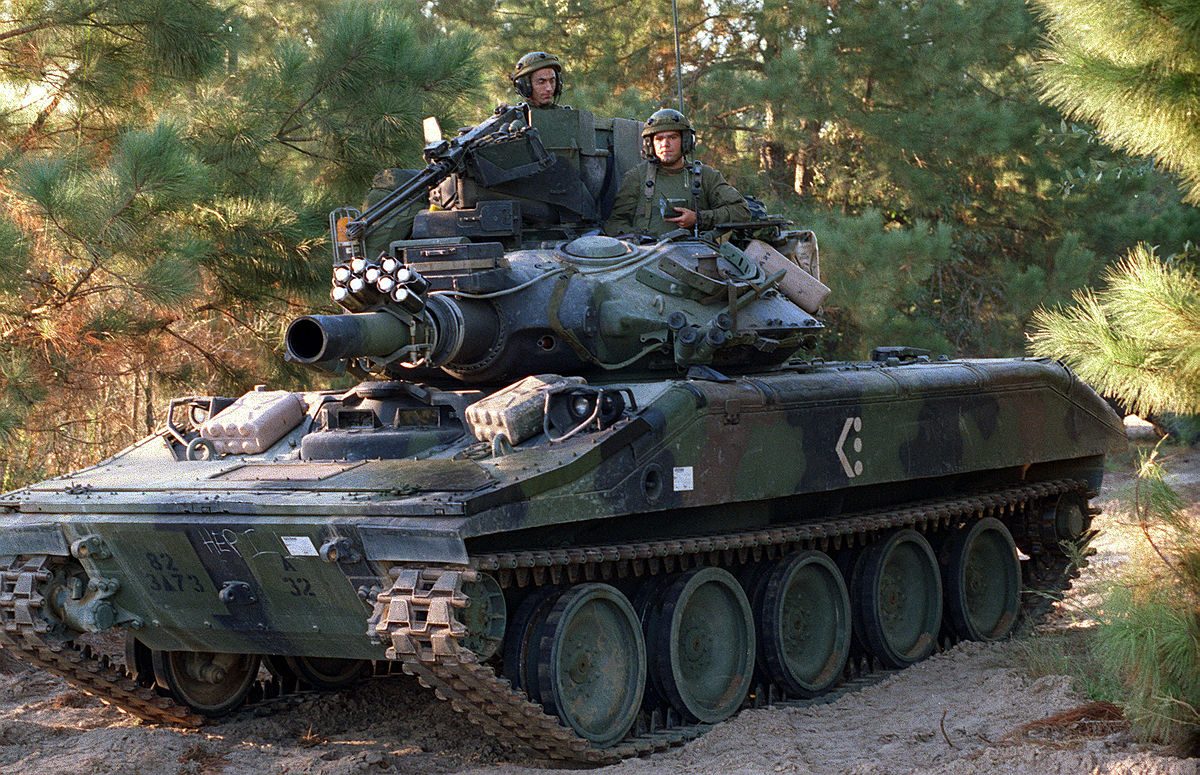
10. M551 Sheridan: The Airborne Tank That Couldn't Survive Contact
The M551 Sheridan was designed to give airborne forces a tank they could drop from aircraft. Its thin aluminum armor and unreliable missile system made that concept far more dangerous than planners anticipated.
The M551 Sheridan was supposed to solve a genuine problem: airborne troops needed armored firepower they could parachute into a combat zone. The solution was a 17-ton light tank armed with a 152mm gun-launcher that could fire conventional rounds and the MGM-51 Shillelagh guided missile. In practice, it combined the worst qualities of a tank and a missile launcher while excelling at neither.
The ammunition was the first problem. Combustible casings swelled in Vietnam's humidity and jammed in the breech. Crews reported rounds cooking off from gun heat. The Shillelagh missile was comically unreliable in jungle conditions, with infrared guidance easily confused and exhaust obscuring the gunner's sight at the worst possible moment.
Then there was the armor. At 13mm of aluminum in places, heavy machine gun fire could penetrate it. RPGs went through like cardboard. Mines turned the thin belly armor and onboard missile propellant into catastrophic explosions. Crews nicknamed it the "aluminum coffin." The program cost approximately $1.3 billion, and while the Sheridan limped on into the 1990s, it taught the Army an expensive lesson about the gap between an elegant concept and a survivable machine.
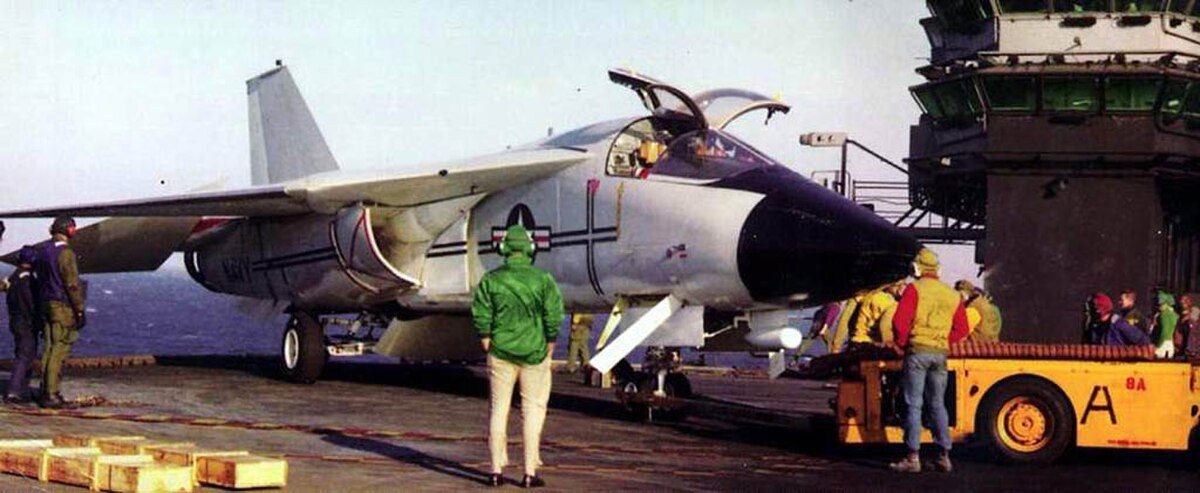
9. F-111B: The Navy Fighter That Couldn't Fight
The F-111B was Robert McNamara's attempt to force a single airframe on both the Air Force and Navy. The Navy variant was so overweight it could barely operate from aircraft carriers.
The F-111B is what happens when a Defense Secretary decides he knows more about aircraft design than the people who fly them. Robert McNamara's TFX program was bureaucratic logic at its finest: instead of separate fighters for the Air Force and Navy, build one airframe that serves both. The only problem was that the Air Force needed a low-level strike bomber and the Navy needed a fleet defense interceptor, fundamentally incompatible missions.
The Air Force version eventually became a capable strike aircraft. The Navy's F-111B was an unmitigated disaster. It was grotesquely overweight, nearly seven tons heavier than specified, making it sluggish, underpowered, and dangerous on carrier approaches. It couldn't achieve supersonic speed in level flight, which is somewhat problematic for a fighter. The aircraft was so heavy it needed a longer catapult stroke than carriers could provide.
The line that sealed its fate came during congressional testimony in 1968. When Vice Admiral Tom Connolly was asked if a more powerful engine could fix the problems, he replied: "There isn't enough power in all Christendom to make that airplane what we want." Congress cancelled the program shortly after, and the Navy got the F-14 Tomcat, designed from scratch as a carrier fighter. McNamara's commonality dream had cost hundreds of millions and years of wasted development, but it produced one lasting contribution: proof that you cannot compromise your way to a good fighter.
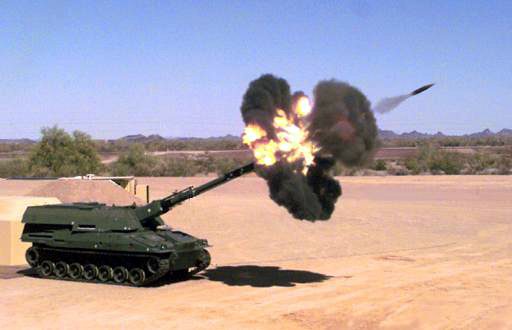
8. XM2001 Crusader: The Howitzer That Couldn't Deploy
The XM2001 Crusader could fire 10 rounds per minute with exceptional accuracy. Unfortunately, at 55 tons, getting it to the battlefield was nearly impossible.
The XM2001 Crusader was a genuinely impressive piece of artillery. Its autoloader could fire 10 to 12 rounds per minute, three times faster than existing self-propelled howitzers. Its liquid-cooled cannon sustained high rates of fire without barrel degradation. If you evaluated it purely on firing range performance, the Crusader was a triumph.
The problem was getting it to the firing range. At 55 tons, heavier than an M1 Abrams, the Crusader was a strategic mobility nightmare. It couldn't fit on a C-130 transport. It required a dedicated 30-ton ammunition resupply vehicle that was itself too heavy to airlift. In a post-Cold War world focused on rapid deployment, building a howitzer that required heavy transport ships was a strategic absurdity.
The program consumed approximately $2 billion over two decades before Secretary Rumsfeld cancelled it in 2002, citing the need for lighter forces after 9/11. The Army eventually got precision-guided artillery rounds that achieved similar effects from existing, deployable platforms at a fraction of the Crusader's price tag. The lesson: the most capable weapon in the world is useless if it can't reach the battlefield.
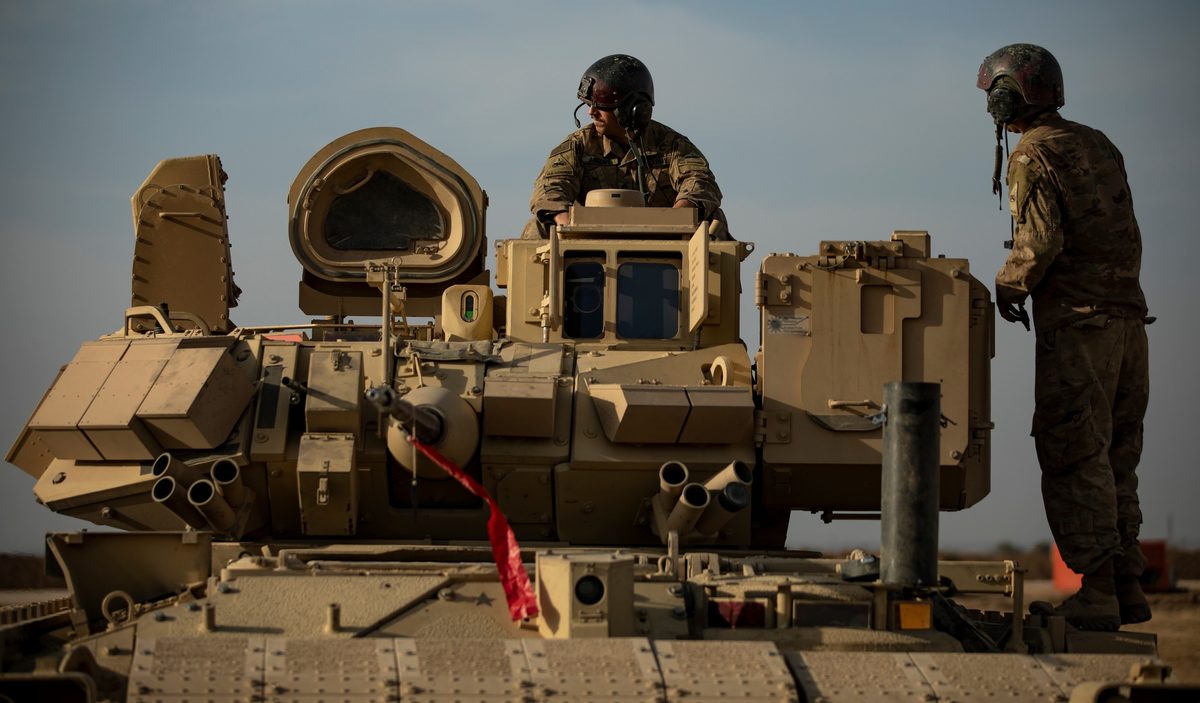
7. M2 Bradley: The Vehicle That Tried to Be Everything
The M2 Bradley's chaotic development became the subject of a book, a congressional investigation, and an HBO movie. Against all odds, it eventually became an effective fighting vehicle.
The M2 Bradley is the only vehicle on this list that eventually became genuinely effective, which makes its development saga all the more absurd. What started in the 1960s as a simple APC to replace the M113 underwent seventeen years of requirements creep that transformed it into a 33-ton infantry fighting vehicle trying to be a troop carrier, scout vehicle, and tank destroyer simultaneously.
The dysfunction became so legendary it inspired James Burton's book The Pentagon Wars, later adapted into an HBO film. Burton documented how, as he characterized it, the Army rigged live-fire tests to hide the Bradley's weaknesses, though the Army disputed his characterization. The aluminum hull, when struck by anti-armor rounds, produced spalling that turned the interior into a blender of molten fragments. During initial tests, the Army filled vehicles with water cans instead of fuel and left ammunition compartments empty, then declared it survivable. When Burton demanded realistic testing, the results were predictably catastrophic.
The Bradley eventually overcame its troubled birth. With improved armor packages, it performed well in the Gulf War, Iraq, and Afghanistan. But development cost over $5.7 billion, roughly double estimates, and combat weight grew from 20 to over 33 tons. The Bradley proves that a flawed procurement process can sometimes produce a decent vehicle despite itself, but at a cost in time, money, and credibility that nobody should want to repeat.
6. M247 Sergeant York (DIVAD): The Anti-Aircraft Gun That Couldn't Find Aircraft
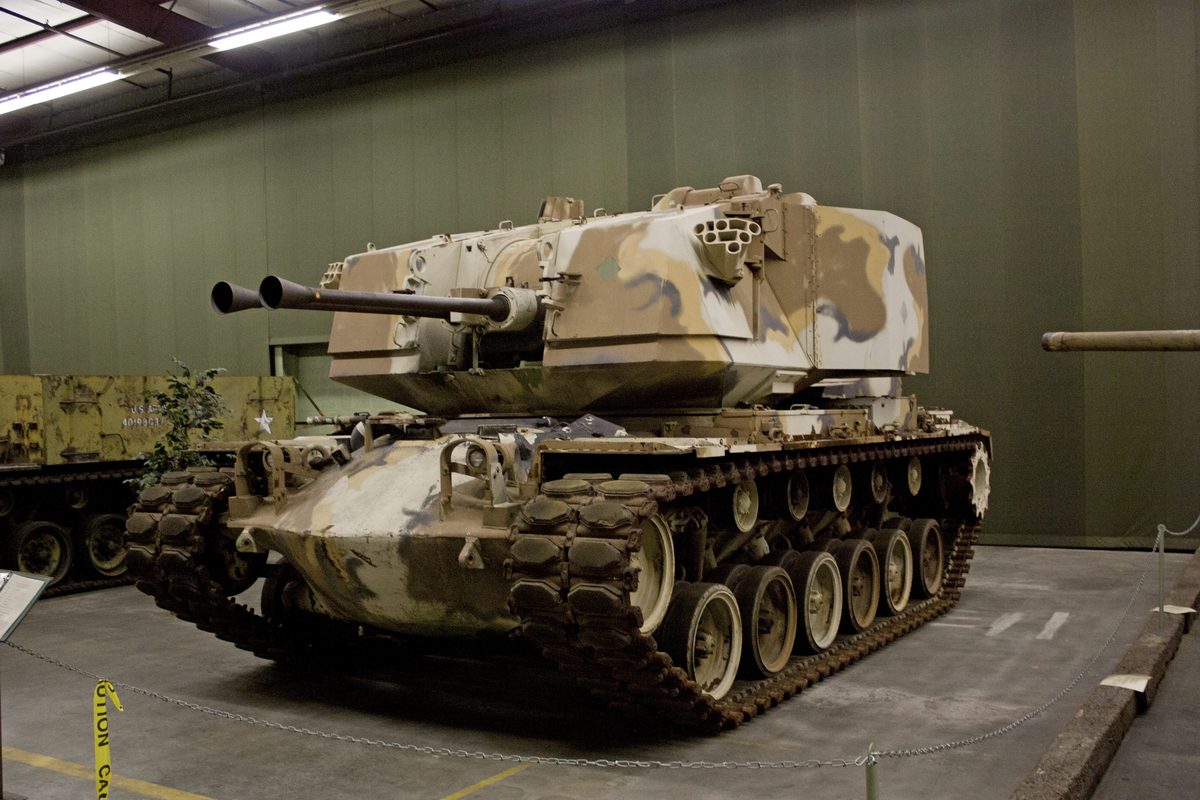
The M247 Sergeant York was supposed to protect Army formations from Soviet aircraft. Its radar had trouble distinguishing helicopters from trees -- and once locked onto a portable toilet's ventilation fan.
The M247 Sergeant York may be the most embarrassing weapons program in American military history. Its job was straightforward: shoot down Soviet aircraft and helicopters threatening Army ground formations. It failed at this in ways that would be difficult to invent.
The system mounted twin 40mm Bofors guns on an M48 Patton chassis with radar derived from the F-16's fire control system, designed for high-altitude tracking and poorly suited to low-flying helicopters against ground clutter. During testing, it consistently failed to track drone targets. But the legendary failure, according to widely reported accounts, occurred during a VIP demonstration: the radar locked onto a rotating exhaust fan on a nearby portable latrine. The gun turret swung toward the assembled dignitaries, who understandably scattered.
The problems went far deeper. It couldn't engage targets in bad weather or identify friend from foe reliably. The Army spent $1.8 billion on a system that couldn't perform its primary mission under any realistic conditions. Secretary Weinberger cancelled it in 1985. The Sergeant York remains the gold standard for building a modern weapon from obsolete components and hoping the integration works itself out.
5. Expeditionary Fighting Vehicle (EFV): The Amphibious Vehicle That Drowned in Its Own Complexity
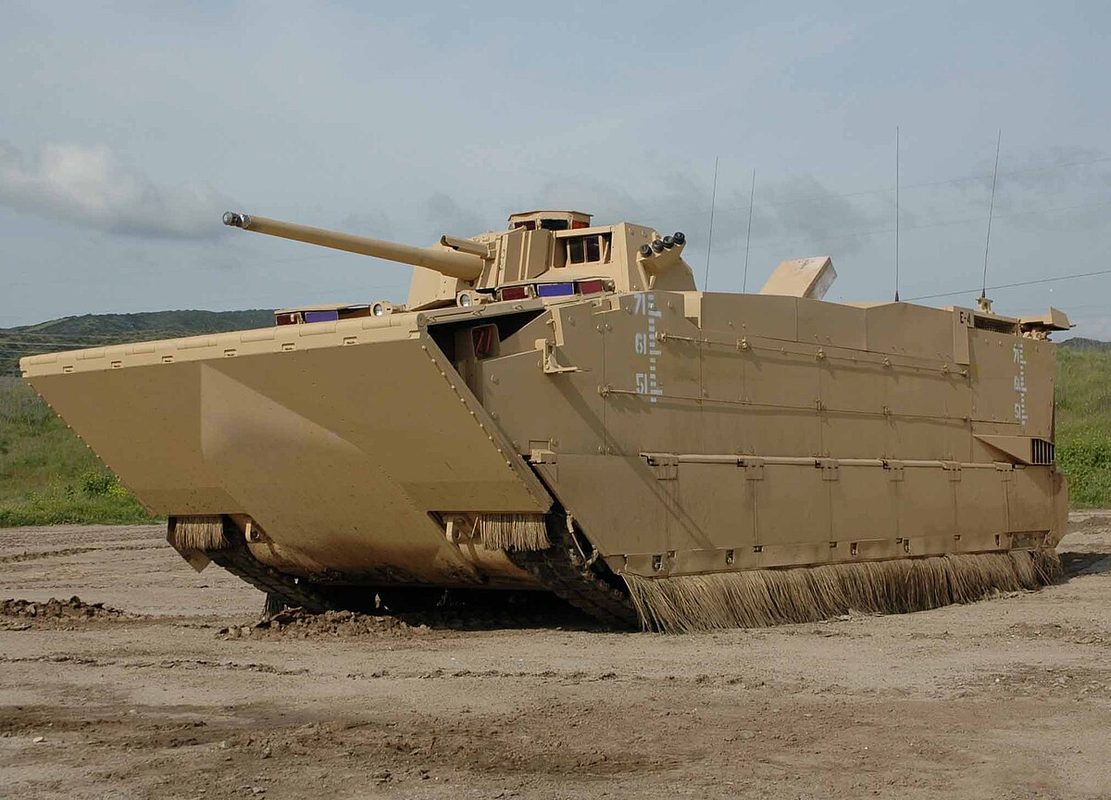
The EFV could skim across water at 25 knots -- when it was working. Its mean time between critical failures was measured in hours, not days.
The Marine Corps' Expeditionary Fighting Vehicle was an engineering marvel in a universe where maintenance doesn't matter. The requirement: an 80,000-pound armored vehicle that could launch from a ship 25 miles offshore, skim across the ocean at 25 knots (three times faster than any existing amphibious vehicle), then drive onto the beach and fight as an infantry carrier. The EFV achieved this through a retractable planing hull and a 2,700-horsepower engine.
The technology worked, intermittently. The EFV could plane across water at remarkable speed, but it broke constantly. Mean time between mission failures was approximately 4.5 hours, meaning it would statistically break down before completing a single assault. The hydraulics leaked, the engine consumed fuel at unacceptable rates, and the electronics were fragile. Everything that made it fast on water made it unreliable everywhere.
After $3 billion in development, with total costs projected at $15 billion for 573 vehicles, Secretary Gates cancelled the EFV in 2011. The Marines pivoted to the Amphibious Combat Vehicle, which doesn't plane at 25 knots but has the considerable advantage of actually working. The EFV stands as proof that a vehicle can be technologically spectacular and operationally useless at the same time.
4. RAH-66 Comanche: The Stealth Helicopter That Vanished (Without Ever Fighting)
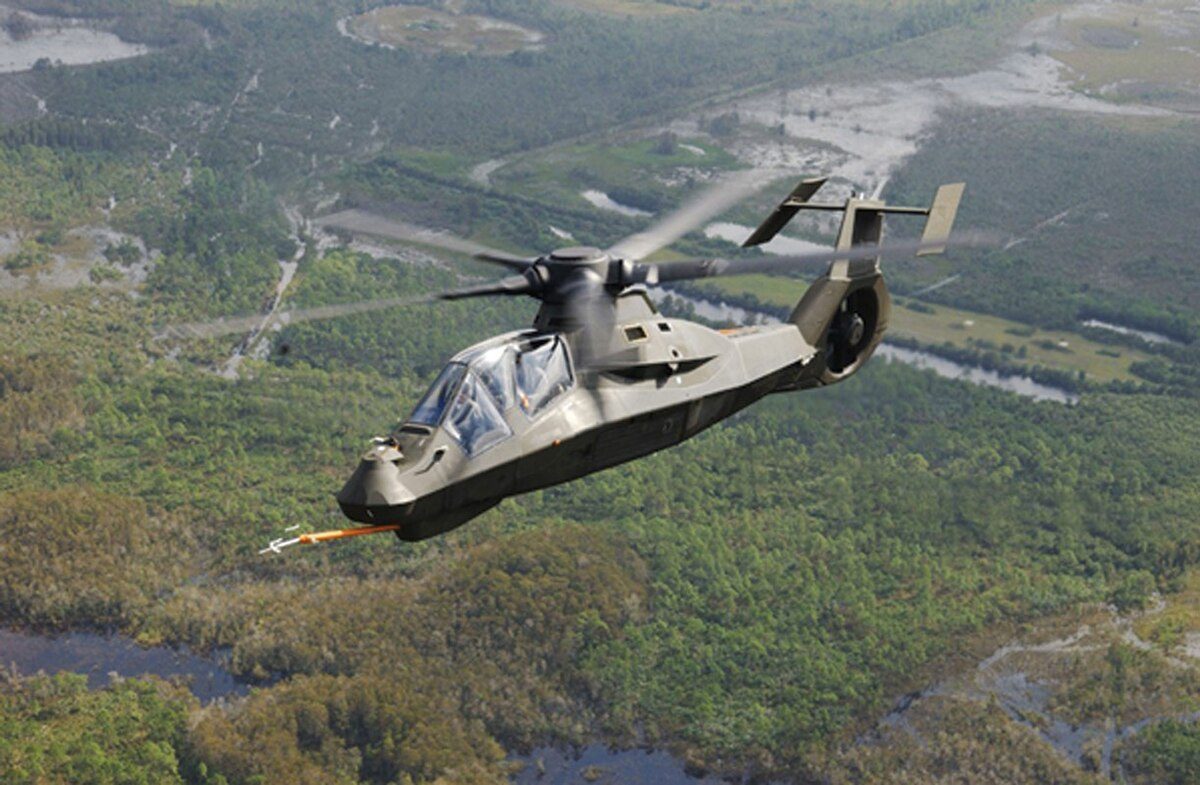
The RAH-66 Comanche was the Army's most expensive helicopter program. After 20 years and $7 billion, only two prototypes were built before cancellation.
The RAH-66 Comanche was the Army's helicopter for the 21st century, a stealthy reconnaissance and attack helicopter replacing the OH-58 Kiowa, AH-1 Cobra, and several other airframes in one leap. Boeing and Sikorsky won the contract in 1991. What followed was two decades, $7 billion, and exactly two flyable prototypes.
The design was genuinely innovative. Its faceted fuselage reduced radar cross-section to roughly one-hundredth that of an Apache. Weapons were carried internally for stealth. The five-blade rotor and ducted fantail reduced acoustic signature. On paper, it was everything the Army wanted. In reality, it was everything the Army couldn't afford.
Weight growth was relentless, degrading performance and requiring constant engine upgrades. The software, millions of lines of code, was never fully debugged. The 20mm cannon experienced chronic malfunctions. By 2004, the Army had spent more on the Comanche than it would have cost to upgrade every helicopter in its existing fleet. The two prototypes ended up in museums, the most expensive museum pieces the Army has ever produced.
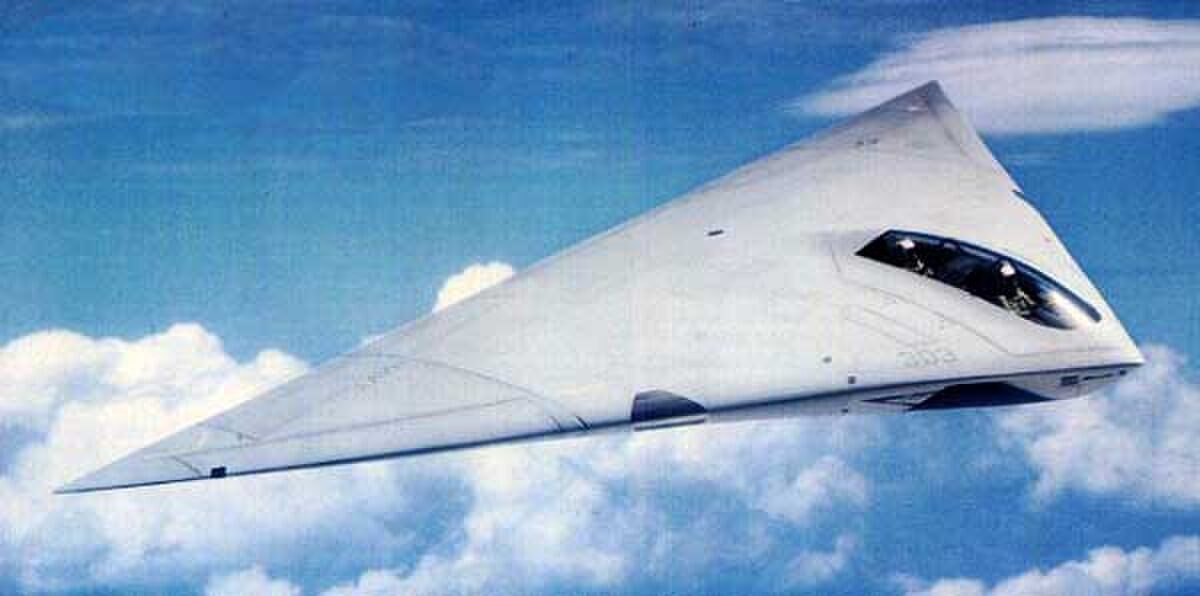
3. A-12 Avenger II: The Flying Dorito
The A-12 Avenger II's distinctive triangular shape earned it the nickname "Flying Dorito." No prototype was ever completed before the program's dramatic cancellation.
The A-12 Avenger II holds a distinction no other weapon system can claim: it is the subject of the largest contract termination in Pentagon history. The Navy's planned replacement for the A-6 Intruder was a stealthy carrier-based attack aircraft with a triangular flying wing design. Crews nicknamed it the "Flying Dorito," which turned out to be more memorable than anything the aircraft accomplished, because it never flew.
McDonnell Douglas and General Dynamics began development in 1988 with a fixed-price contract of approximately $4.8 billion. Almost immediately, the program unraveled. The composite materials for the triangular wing were heavier than estimated, and contractors couldn't manufacture them at required tolerances. Weight grew 30 percent above spec. Costs spiraled past $3 billion with completion nowhere in sight, and estimates ranged from $9 to $11 billion to finish.
In January 1991, Secretary Cheney terminated the contract, calling it "a case of bad management" by the contractors. What followed was a legal battle that outlasted most military careers. The government sued to recover $1.35 billion. The contractors countersued, claiming unrealistic requirements and withheld stealth technology. The case bounced through courts for 23 years before settling in 2014. The A-12 never produced a flyable prototype, never dropped a bomb, and cost more in legal fees than many successful aircraft programs cost in their entirety. The Flying Dorito remains the cautionary tale that procurement lawyers cite more than any other.
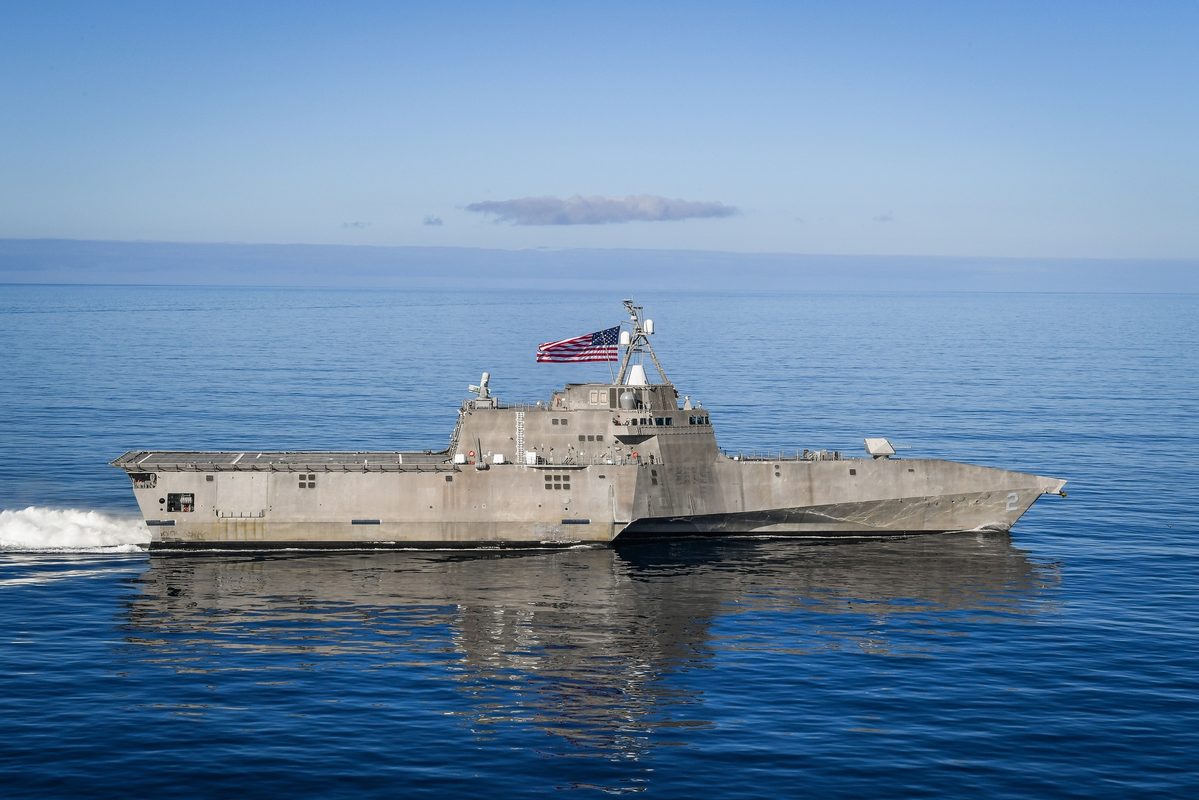
2. Littoral Combat Ship (LCS): The Navy's Most Expensive Mistake (That's Still Being Made)
The LCS was supposed to cost $220 million per ship. Actual costs exceeded $600 million, and the Navy began retiring ships that were barely a decade old.
The LCS might be the most frustrating program on this list because the Navy saw the problems developing in real time and kept building ships anyway. The concept was reasonable: a fast, modular warship that could swap mission packages for mine warfare, anti-submarine operations, or surface combat. Two competing designs were selected, Freedom-class and Independence-class, because the Navy couldn't choose. They built both.
The original target was $220 million per ship. Actual costs ballooned past $600 million per hull, excluding the mission modules that were the entire point. Those modules arrived years late, over budget, and underperforming. The mine countermeasures module couldn't clear mines effectively. The anti-submarine module struggled to detect submarines. The surface warfare module was lightly armed compared to any adversary.
Meanwhile, the ships kept breaking down. Five LCS ships experienced significant engineering casualties within ten months. USS Freedom suffered complete propulsion failure. USS Milwaukee broke down on its maiden voyage. The combining gear, which merged diesel and gas turbine power, proved chronically unreliable. The Navy began decommissioning ships barely a decade old, well short of their 25-year service lives. Total program costs have exceeded $30 billion, making the LCS one of the most expensive procurement failures in naval history, and one of the few where the Navy's answer to a failed program was to keep building more of them.
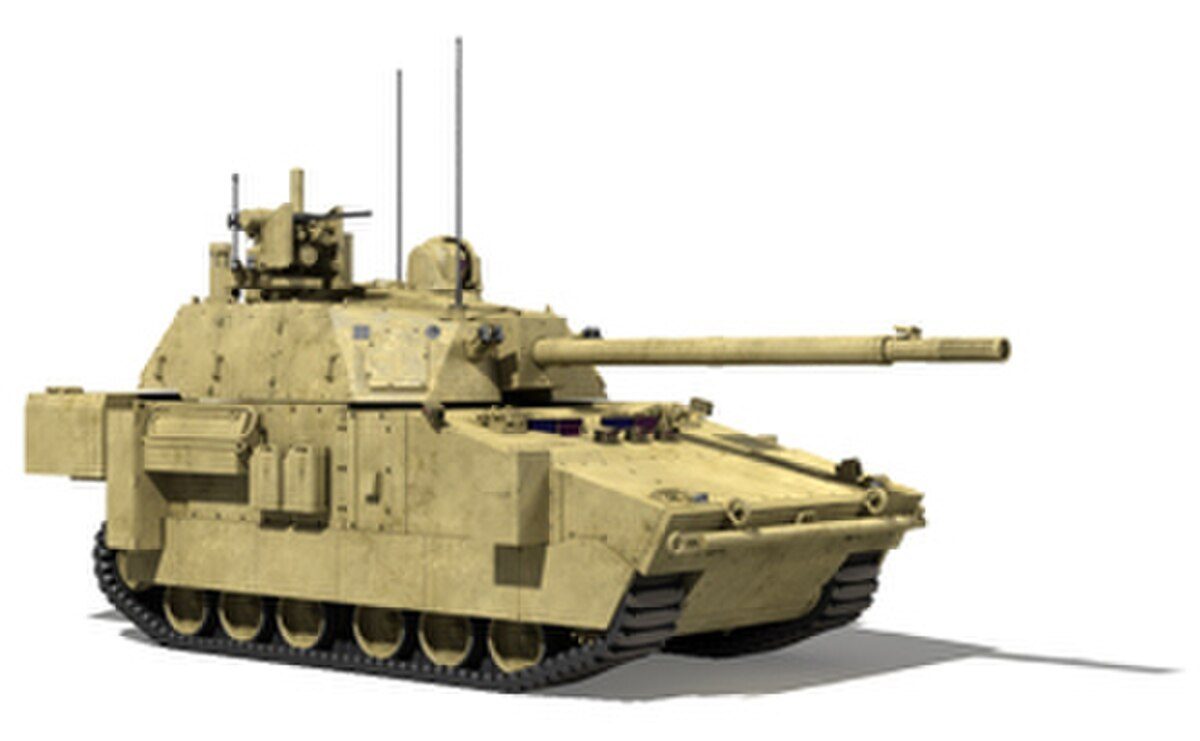
1. Future Combat Systems (FCS): The $20 Billion Army of the Future That Never Arrived
Future Combat Systems promised to network 18 different vehicle types, robots, and sensors into one integrated system. The technology to make it work didn't exist yet.
Future Combat Systems was not a vehicle. It was an entire ecosystem: 18 manned and unmanned systems including ground vehicles, drones, robots, sensors, and munitions, all connected by a wireless network promising perfect situational awareness. It was the most ambitious Army modernization since World War II, and the most expensive cancellation in Department of Defense history.
The concept came from the "Revolution in Military Affairs" thinking: lighter, networked forces replacing heavy armored divisions. Boeing won the lead contract in 2003, and the Army committed to replacing virtually every combat vehicle. Manned vehicles would be lighter than an Abrams, protected by network-enabled threat detection rather than heavy armor. Seductive vision. Built on technology that didn't exist yet.
The wireless network was the single point of failure. It needed bandwidth that wasn't available, reliability that couldn't be guaranteed in contested electromagnetic environments, and software integration across 18 platforms. Nobody could make it work. The lighter armor depended on active protection systems still in early development, and 20-ton vehicle weights proved incompatible with the protection soldiers needed against IEDs in Iraq.
Secretary Gates cancelled FCS in 2009 after $20 billion spent. Some technologies survived, including ground robots, sensors, and networking concepts, but the core promise was exposed as fantasy. FCS remains the ultimate example of the Pentagon's most dangerous tendency: the belief that enough money and enough PowerPoint slides can compress decades of technological development into a single program.
The Pattern: Why the Pentagon's Worst Failures Share the Same DNA
Step back from these ten programs and a pattern emerges. Every one shares the same genetic code: requirements that grew beyond reason, costs that spiraled beyond control, and an institutional refusal to kill a program until the money was already gone.
The cycle is consistent. A genuine need is identified. A program launches with ambitious goals. Then requirements creep. Weight grows. Costs increase. Timelines slip. At each stage, the program office chooses between admitting the problems or deferring the reckoning. They almost always choose the latter. The political economy reinforces it. Major weapons systems create jobs in dozens of states, making cancellation feel more expensive than continuing even when the math says otherwise.
The vehicles that actually work share different DNA. They start with a clear, limited mission. They use proven technology. They're designed by people who will use them. The F-14 Tomcat, born from the F-111B's wreckage, is the textbook example. Sometimes the best procurement strategy is a spectacular failure that forces the system to start over.
But that's an expensive way to learn, and the pattern shows no signs of stopping. Somewhere in the Pentagon right now, a program office is briefing a requirements document that asks one vehicle to do the work of three. The slides look great. The budget has been optimized. And in ten years, someone will be writing this article again with a new name on the list.