Skip to content
April 23:The Zeebrugge Raid108yr ago

The Su-34 Fullback: Russia's Most Unusual Strike Aircraft

Daniel Mercer · · 13 min read
Save
Share:
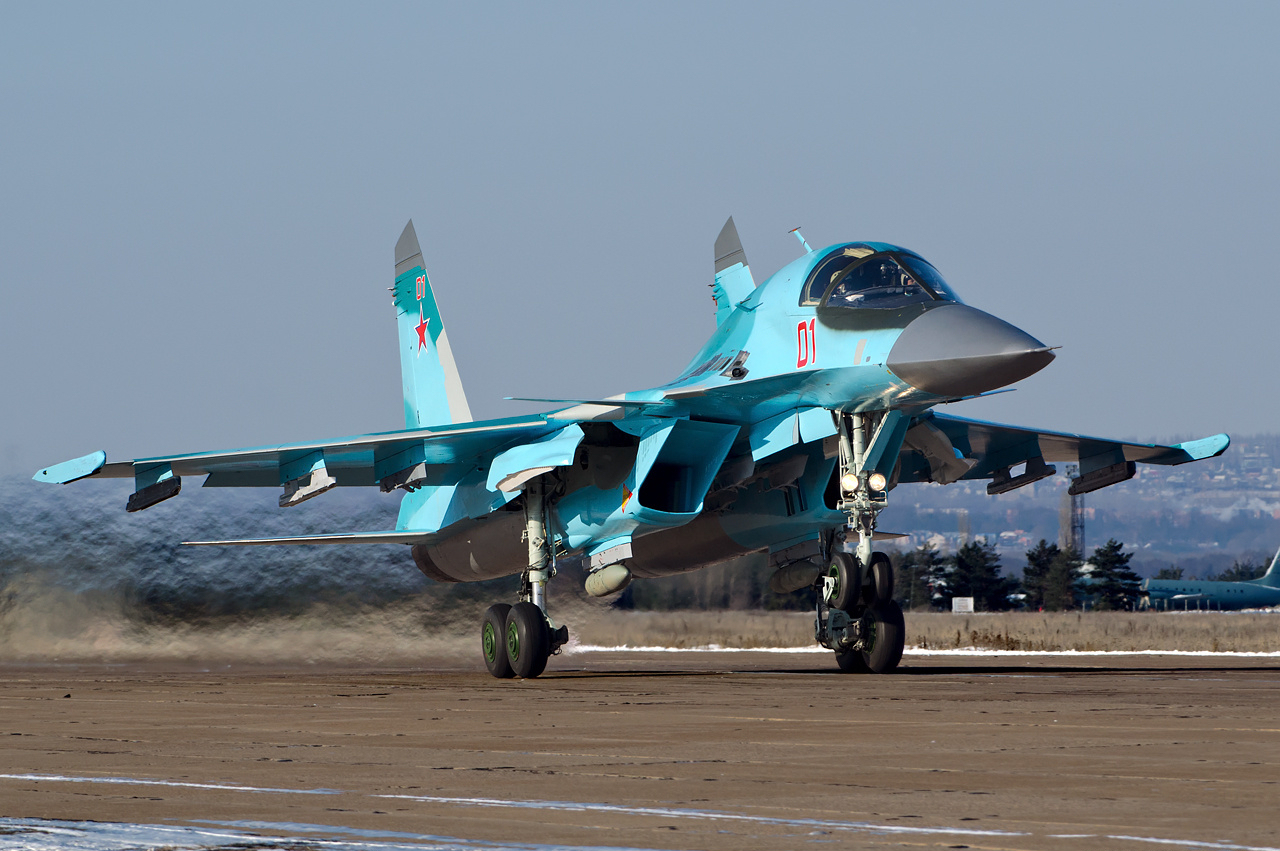
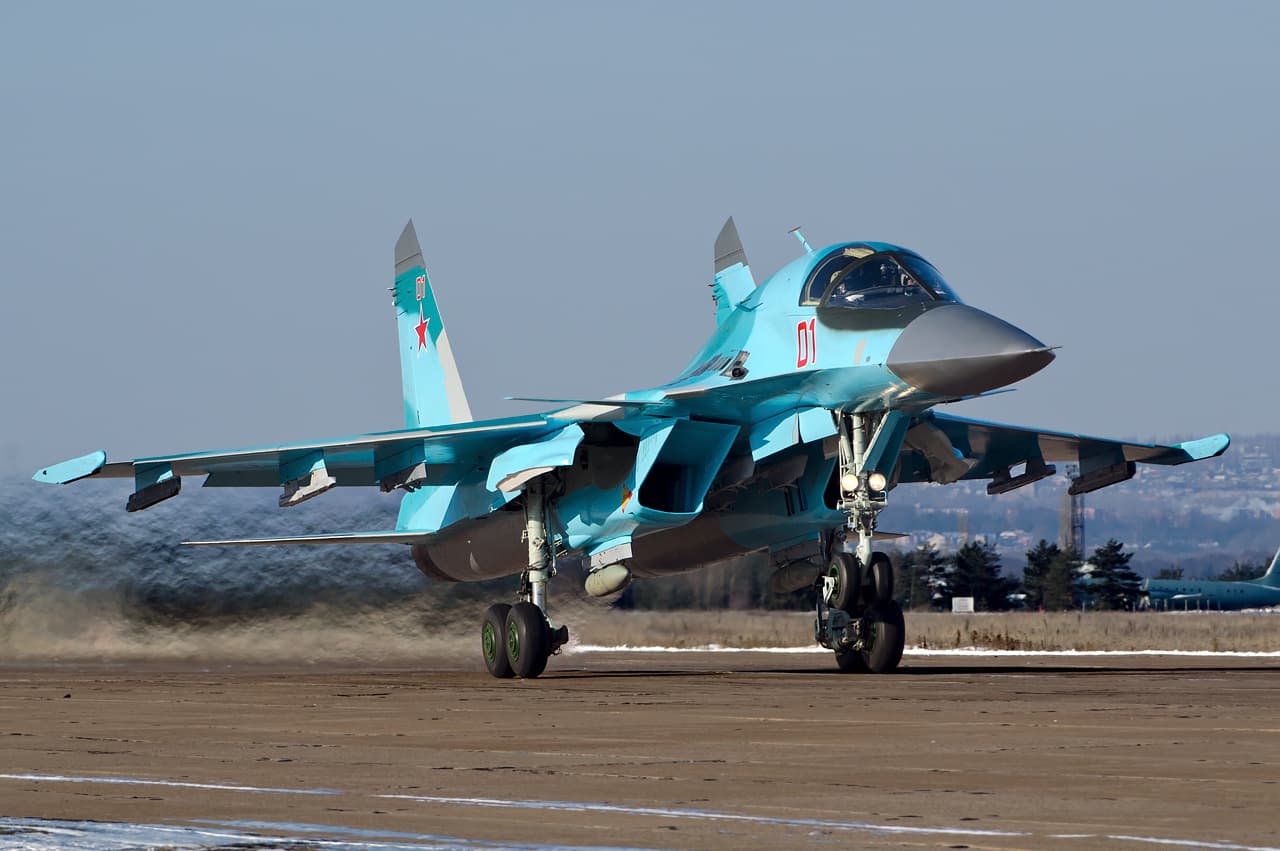
Sukhoi Su-34 Fullback strike aircraft in flight showing its distinctive flattened nose profile
Daniel Mercer
Daniel Mercer

Military History Editor

Daniel Mercer writes about military history with a focus on the 20th century, including World War II, the Cold War, and Vietnam. His work looks at how decisions made decades ago still influence doctrine, planning, and assumptions today.

The Sukhoi Su-34 is the only tactical combat aircraft in the world where the crew can stand up, heat a meal, and use a toilet during a mission. That fact usually gets a laugh, but it reflects a serious design philosophy. The Fullback was built for long-range strike missions lasting six hours or more, deep penetration sorties where crew fatigue becomes a real factor in mission effectiveness. Sukhoi designed the cockpit around the people who would sit in it for half a day at a time, and the result is the most unusual fighter-bomber in any air force's inventory.

But the Su-34 is not just a comfortable cockpit bolted to a Flanker airframe. It carries a formidable weapons load, features an armored titanium cockpit pod, mounts both forward-looking and rear-facing radars, and has seen extensive combat service in Syria and Ukraine, where it has been both Russia's primary precision strike platform and one of the most frequently lost aircraft types in the conflict.

Origins: The Flanker Goes to Ground

The Su-34 traces its lineage directly to the Su-27 Flanker. In the late 1980s, the Soviet Air Force needed a replacement for the Su-24 Fencer, a variable-sweep wing strike aircraft that had served as the Soviet Union's primary tactical bomber since the 1970s. Rather than design an entirely new aircraft, Sukhoi proposed adapting the Su-27 airframe for the ground attack role, leveraging the Flanker's excellent range, payload capacity, and aerodynamic performance.

The original demonstrator, the Su-27IB (IB for Istrebitel-Bombardirovshchik, or fighter-bomber), first flew on April 13, 1990. The aircraft went through a protracted development process through the post-Soviet economic collapse, with full-scale production not beginning until 2006 and the first operational squadron not activated until 2011, more than two decades after the concept first flew.

The Cockpit: Side by Side

The Su-34's most distinctive feature is immediately visible: the flattened "platypus" nose that houses a side-by-side cockpit. Every other tactical combat jet in the world uses either a single-seat or tandem (front-and-back) seating arrangement. The Su-34 puts its pilot and navigator/weapon systems officer (WSO) shoulder to shoulder, like the crew of a commercial airliner.

Side-by-side seating offers genuine advantages for a strike aircraft. The two crew members can easily communicate, share displays, and coordinate during complex attack profiles without the awkward over-the-shoulder interactions required in tandem cockpits. The arrangement also allows a wider cockpit volume, which Sukhoi used to create what is effectively a small cabin behind the ejection seats.

This cabin space contains a galley for heating meals, a chemical toilet, and enough room for a crew member to stand, stretch, and move around during long missions. On sorties lasting six to eight hours, these creature comforts are not luxuries, they are crew effectiveness measures. A navigator who can eat a hot meal and use a restroom at the four-hour mark will perform measurably better during the final approach to a target than one who has been sitting in a cramped cockpit without relief.

The entire cockpit assembly is enclosed in an armored titanium "bathtub", similar in concept to the A-10 Thunderbolt II's armored cockpit, that protects the crew from anti-aircraft fire and fragments. The armor is designed to withstand hits from 20mm and 23mm anti-aircraft cannon rounds, providing a level of crew protection that most tactical jets do not offer.

Close-up of Su-34 Fullback nose showing the distinctive flattened 'platypus' shape housing the side-by-side cockpit
The Su-34's distinctive flattened nose earned it the nickname "Platypus." The wide shape accommodates side-by-side seating for the pilot and navigator, unique among tactical combat jets, and houses the Leninets V004 radar. (Russian Ministry of Defense)

Sensors and Self-Defense

The Su-34 mounts the Leninets V004 passive electronically scanned array (PESA) radar in its nose, a multimode radar capable of air-to-air search and track, ground mapping, terrain following for low-altitude penetration, and target designation for precision-guided munitions. The radar can detect and track aerial targets while simultaneously mapping the terrain ahead for ground attack.

More unusually, the Su-34 also mounts a rear-facing radar in a fairing between its twin engine nacelles. This aft radar provides warning of approaching fighters and missiles from behind, a vulnerability that strike aircraft are particularly exposed to during their attack runs when they cannot maneuver freely. The rear radar can cue defensive countermeasures and air-to-air missiles, giving the Fullback a level of rearward situational awareness that no Western strike aircraft offers.

The Platan electro-optical targeting pod, typically mounted on a chin station beneath the nose, provides infrared and TV targeting for precision-guided weapons, laser designation, and reconnaissance imaging.

Weapons

The Su-34 can carry up to 8,000 kilograms (17,600 pounds) of weapons across 12 hardpoints, a payload comparable to the F-15E Strike Eagle. The weapons suite includes:

  • Kh-29 TV and laser-guided air-to-surface missiles
  • Kh-31 anti-radiation and anti-ship missiles
  • Kh-59 standoff cruise missiles with TV guidance
  • KAB-500 and KAB-1500 precision-guided bombs (laser and satellite guided)
  • Unguided bombs and cluster munitions
  • R-73 and R-77 air-to-air missiles for self-defense

The combination of precision-guided air-to-ground weapons and self-defense air-to-air missiles gives the Su-34 genuine dual-role capability. Unlike dedicated bombers that require fighter escort, the Fullback can defend itself against aerial intercept, though it is not optimized for air combat and would be at a disadvantage against dedicated air superiority fighters.

Powerplant 2× Saturn AL-31FM1 turbofans
Max Speed Mach 1.8 (1,900 km/h)
Range 4,000 km (2,485 mi) with external tanks
Combat Radius 1,100 km (683 mi)
Max Payload 8,000 kg (17,600 lb)
Crew 2 (side-by-side)
Built ~150+ delivered to Russian Air Force

Combat Record

The Su-34 received its combat debut in September 2015, when Russia deployed Fullbacks to Syria as part of its military intervention in the Syrian Civil War. Operating from Hmeimim Air Base in Latakia province, Su-34s flew precision strike missions against targets across Syria, employing KAB-500 satellite-guided bombs and Kh-29 missiles. Russia used the Syrian campaign to validate the Su-34's systems in operational conditions and publicized the deployments extensively.

The conflict in Ukraine beginning in February 2022 became the Fullback's most intensive operational test. Su-34s have been among the most active Russian combat aircraft in the campaign, flying ground attack missions across the theater. They have employed KAB-series guided bombs, including glide bomb variants with wing kits for standoff delivery, against Ukrainian positions, infrastructure, and defensive lines.

However, Ukraine has also inflicted significant losses on the Su-34 fleet. Ukrainian air defense systems, including S-300, Buk-M1, and Western-supplied systems, have shot down multiple Fullbacks, making the Su-34 one of the most frequently reported Russian fixed-wing losses in the conflict. The losses have demonstrated that the Su-34, despite its defensive systems, remains vulnerable to modern integrated air defense networks, particularly when operating at the medium altitudes required for accurate bomb delivery.

The Fullback's Place in History

The Su-34 occupies a unique niche in military aviation. It is not a clean-sheet design, it is fundamentally a Flanker with a wide nose, armored cockpit, and precision strike avionics. But the combination of those modifications produced an aircraft that has no direct Western equivalent. The F-15E Strike Eagle is the closest comparison in terms of role and capability, but it uses tandem seating, lacks cockpit armor, and does not offer rear-facing radar or crew creature comforts.

The Fullback's design philosophy reflects a specifically Russian approach to air combat: missions are long, bases may be distant from the front lines, and crew endurance matters. It is the only tactical jet in the world designed around the assumption that the crew needs to eat, rest, and function effectively over half-day sorties. That may seem like a footnote compared to its weapons and sensors, but any pilot who has spent eight hours in an ejection seat will tell you it is one of the most practical features ever built into a combat aircraft.

Share this article

Share:

Recommended

Ace of The Skies: Can You Identify These Military Aircraft Throughout The Years?
Test Yourself

Ace of The Skies: Can You Identify These Military Aircraft Throughout The Years?

Can you identify these aircraft?

Take the Quiz

On This Day in Military History

March 14

Eli Whitney Patents the Cotton Gin, Setting the Stage for Civil War (1794)

Eli Whitney received the U.S. patent for the cotton gin, a machine that mechanically separated cotton fibers from seeds. The invention revitalized and expanded Southern slavery, made "King Cotton" the foundation of Southern wealth, and created the economic divide that made the Civil War virtually inevitable. Whitney later pioneered interchangeable parts in musket manufacturing, the "American System" that gave the Union its decisive industrial advantage.

1757, Execution of Admiral Byng: "Pour Encourager les Autres"

1943, Battle of the Atlantic: Convoy HX-229 Under Attack

See all 10 events on March 14

Get Military News & History in Your Inbox

Join thousands of readers receiving our weekly digest of military technology, history, and analysis.

Test Your Knowledge