

Why Military Logistics Decide Wars More Than Weapons
Logistics, sustainment, and organization often matter more than individual weapons systems.
james-holloway··22 min read
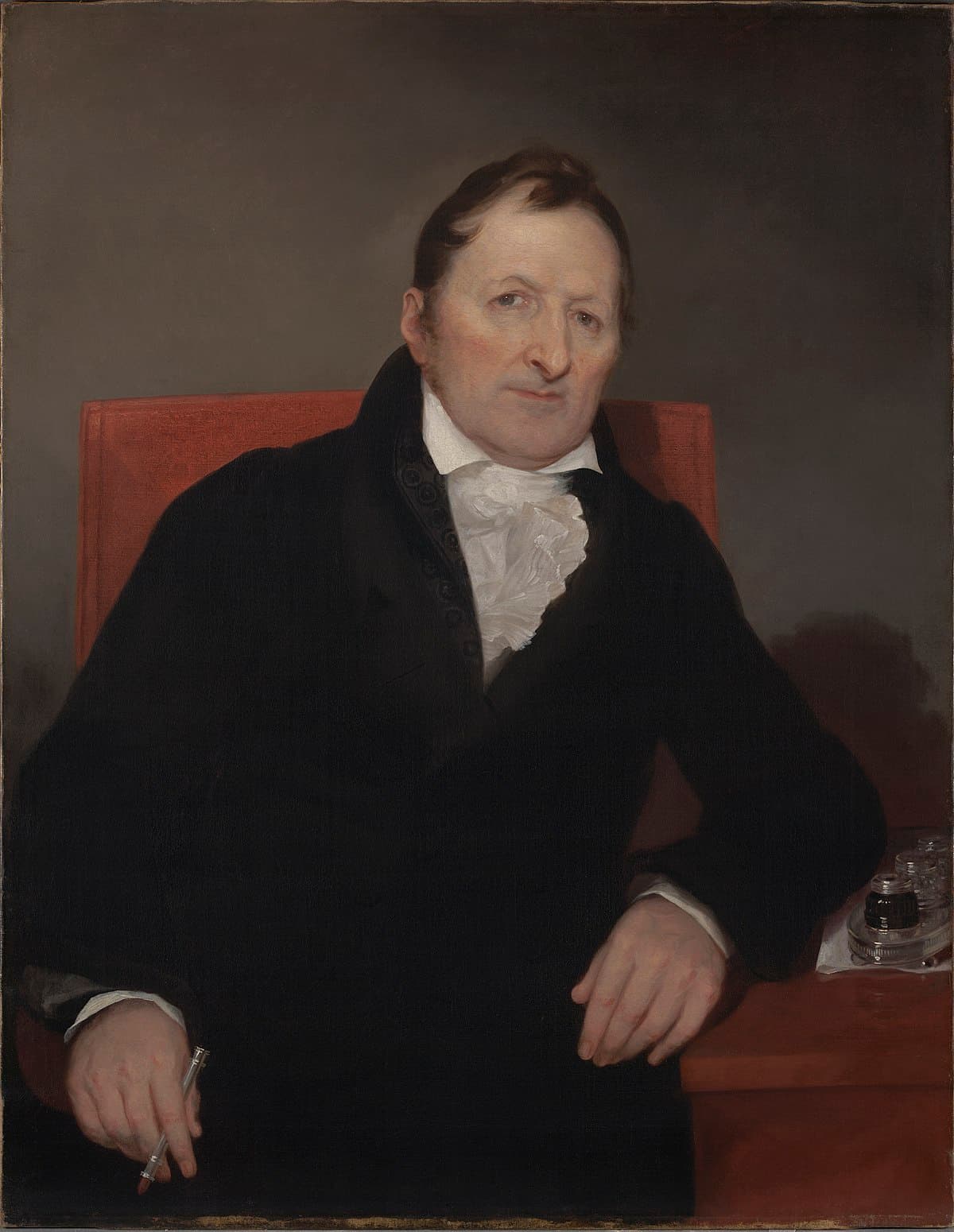
Eli Whitney received the U.S. patent for the cotton gin, a machine that mechanically separated cotton fibers from seeds. The invention revitalized and expanded Southern slavery, made "King Cotton" the foundation of Southern wealth, and created the economic divide that made the Civil War virtually inevitable. Whitney later pioneered interchangeable parts in musket manufacturing, the "American System" that gave the Union its decisive industrial advantage.
Related articleHenry of Navarre defeated the Catholic League army under the Duke of Mayenne at the Battle of Ivry in the French Wars of Religion. Henry's decisive cavalry charge scattered the larger League force, and his famous order to follow his white plume rallied his troops. The victory paved the way for Henry's eventual entry into Paris and his conversion to Catholicism to secure the throne.
British Admiral John Byng was executed by firing squad on the quarterdeck of HMS Monarch in Portsmouth Harbor for failing to "do his utmost" at the Battle of Minorca in 1756. Voltaire immortalized the execution in Candide with the savage line: "In this country, it is wise to kill an admiral from time to time to encourage the others." The case remains one of the most debated episodes in naval history.
Related articleEli Whitney received the U.S. patent for the cotton gin, a machine that mechanically separated cotton fibers from seeds. The invention revitalized and expanded Southern slavery, made "King Cotton" the foundation of Southern wealth, and created the economic divide that made the Civil War virtually inevitable. Whitney later pioneered interchangeable parts in musket manufacturing, the "American System" that gave the Union its decisive industrial advantage.
Related articleUnion forces under Brigadier General Ambrose Burnside captured New Bern, North Carolina, in a combined Army-Navy assault. The victory was part of Burnside's successful North Carolina Expedition, which seized key coastal positions that threatened Confederate supply lines and remained in Union hands for the rest of the war.
Albert Einstein was born in Ulm, Germany. His 1905 equation E=mc² established the theoretical foundation for nuclear energy and nuclear weapons. His 1939 letter to President Roosevelt warning of the possibility of German atomic weapons led directly to the Manhattan Project, the largest secret military-scientific program in history.
The German light cruiser SMS Dresden, the last surviving ship of Admiral von Spee's East Asia Squadron, was cornered and scuttled at Robinson Crusoe Island off Chile by British cruisers HMS Kent and HMS Glasgow. Dresden had survived the Battle of the Falkland Islands and raided commerce for three months before being hunted down.
Slovakia declared independence from Czechoslovakia under pressure from Nazi Germany, becoming a German client state. This was the pretext Hitler used the following day to occupy the remainder of Czechoslovakia, proving that his territorial ambitions extended beyond "reuniting" ethnic Germans and that the Munich Agreement had been a fraud from the beginning.
Related articleGerman U-boat wolf packs launched devastating attacks on convoys SC-122 and HX-229 in the North Atlantic, sinking 22 merchant ships over four days in what became the largest convoy battle of World War II. The losses were so severe that the British Admiralty briefly considered abandoning the convoy system, the crisis point of the Battle of the Atlantic.
The RAF dropped the 22,000-pound "Grand Slam" earthquake bomb for the first time, destroying the Bielefeld railway viaduct in Germany. Designed by Barnes Wallis, creator of the Dambusters "bouncing bomb", the Grand Slam was the heaviest conventional bomb used in World War II, carried by specially modified Avro Lancaster bombers that could accommodate only one.
UN forces under General Matthew Ridgway recaptured Seoul during Operation Ripper, the fourth time the battered South Korean capital changed hands during the Korean War. Ridgway's methodical, grinding advance contrasted sharply with MacArthur's previous headlong dash to the Yalu River, which had provoked the Chinese intervention. Ridgway restored the front line near the 38th parallel.
Related article
Civilian Physicist / Consultant to the Manhattan Project
His 1939 letter to President Roosevelt warning of the potential for atomic weapons directly led to the Manhattan Project. His mass-energy equivalence equation E=mc² provided the theoretical foundation for nuclear weapons. A committed pacifist, he later expressed deep regret: "I made one great mistake in my life, when I signed the letter to President Roosevelt."

Colonel, U.S. Air Force
West Point graduate, fighter pilot, and test pilot who commanded Apollo 8, the first crewed mission to orbit the Moon in December 1968. His Christmas Eve reading of Genesis from lunar orbit was watched by the largest television audience in history and became one of the defining moments of the Cold War space race.

Admiral, Royal Navy
Executed by firing squad for failing to relieve the British garrison on Minorca in 1756, the only British admiral ever executed for not winning a battle. Voltaire immortalized the case in Candide: "In this country, it is wise to kill an admiral from time to time to encourage the others." The injustice led to reforms in military justice.
Wear the Timeline
10 military events occurred on March 14, spanning multiple centuries. Key events include: Eli Whitney Patents the Cotton Gin, Setting the Stage for Civil War (1794), Execution of Admiral Byng: "Pour Encourager les Autres" (1757), Battle of the Atlantic: Convoy HX-229 Under Attack (1943).
The most significant military event on March 14 is Eli Whitney Patents the Cotton Gin, Setting the Stage for Civil War (1794). Eli Whitney received the U.S. patent for the cotton gin, a machine that mechanically separated cotton fibers from seeds. The invention revitalized and expanded Southern slavery, made "King Cotton" the foundation of Southern wealth, and created the economic divide that made the Civil War virtually inevitable. Whitney later pioneered interchangeable parts in musket manufacturing, the "American System" that gave the Union its decisive industrial advantage.
Notable military figures born on March 14 include Albert Einstein (1879–1955), Colonel Frank Borman (1928–2023).
Events on March 14 span the Colonial & Revolutionary era, the Civil War, World War I, World War II, the Korean War, the Interwar Period, covering 10 events across 4 centuries of military history.
Events on March 14 involve 3 branches of the U.S. and allied armed forces, reflecting the global scope of military operations throughout history.
Explore military history from the day you were born.
June 6
The Allied invasion of Normandy, the largest amphibious assault in history.
December 7
Japan attacks the U.S. Pacific Fleet, bringing America into World War II.
September 11
The deadliest terrorist attack in history transforms U.S. national security.
August 6
The first atomic bomb is dropped on a city, ushering in the nuclear age.
May 8
Nazi Germany surrenders unconditionally, ending World War II in Europe.
November 11
Armistice Day marks the end of World War I and honors all who served.
June 4
The turning point of the Pacific War as the U.S. Navy destroys four Japanese carriers.
July 4
The Declaration of Independence is adopted, sparking the American Revolution.
Logistics, sustainment, and organization often matter more than individual weapons systems.

Every regulation has a backstory. These 23 rules trace directly to specific incidents.
Calvin Graham Was Youngest Decorated US Soldier at 12 Pearl Harbor Visitors Bureau “Green Boys” was a term given to soldiers who…
North American F-28 Twin Mustang US Air Force The F-28 Twin Mustang was one of the top Korean War aircraft from the very beginning….