Skip to content
April 23:The Zeebrugge Raid108yr ago

The Bell V-280 Valor: The Tiltrotor Built to Succeed the Black Hawk

Michael Trent · · 13 min read
Save
Share:
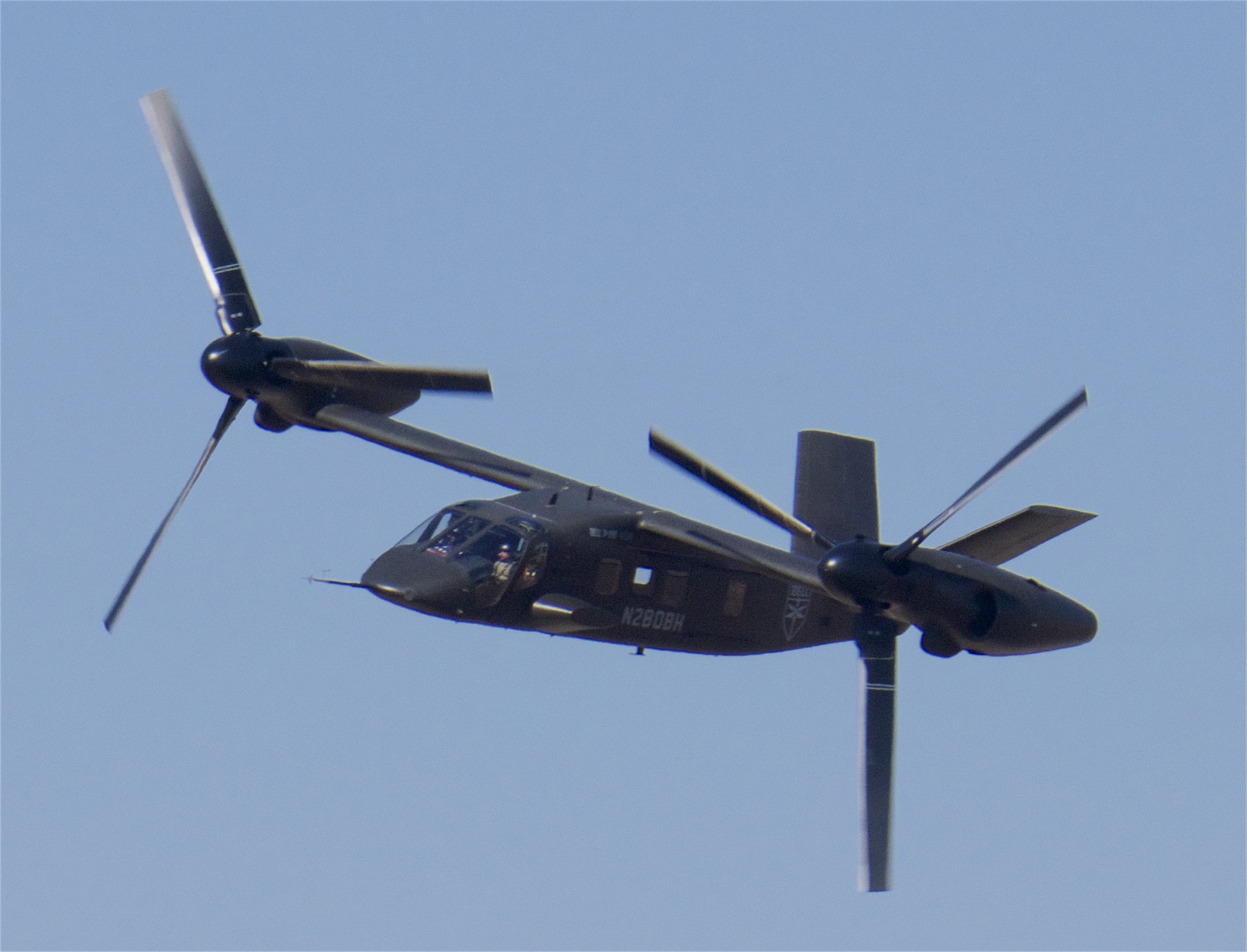
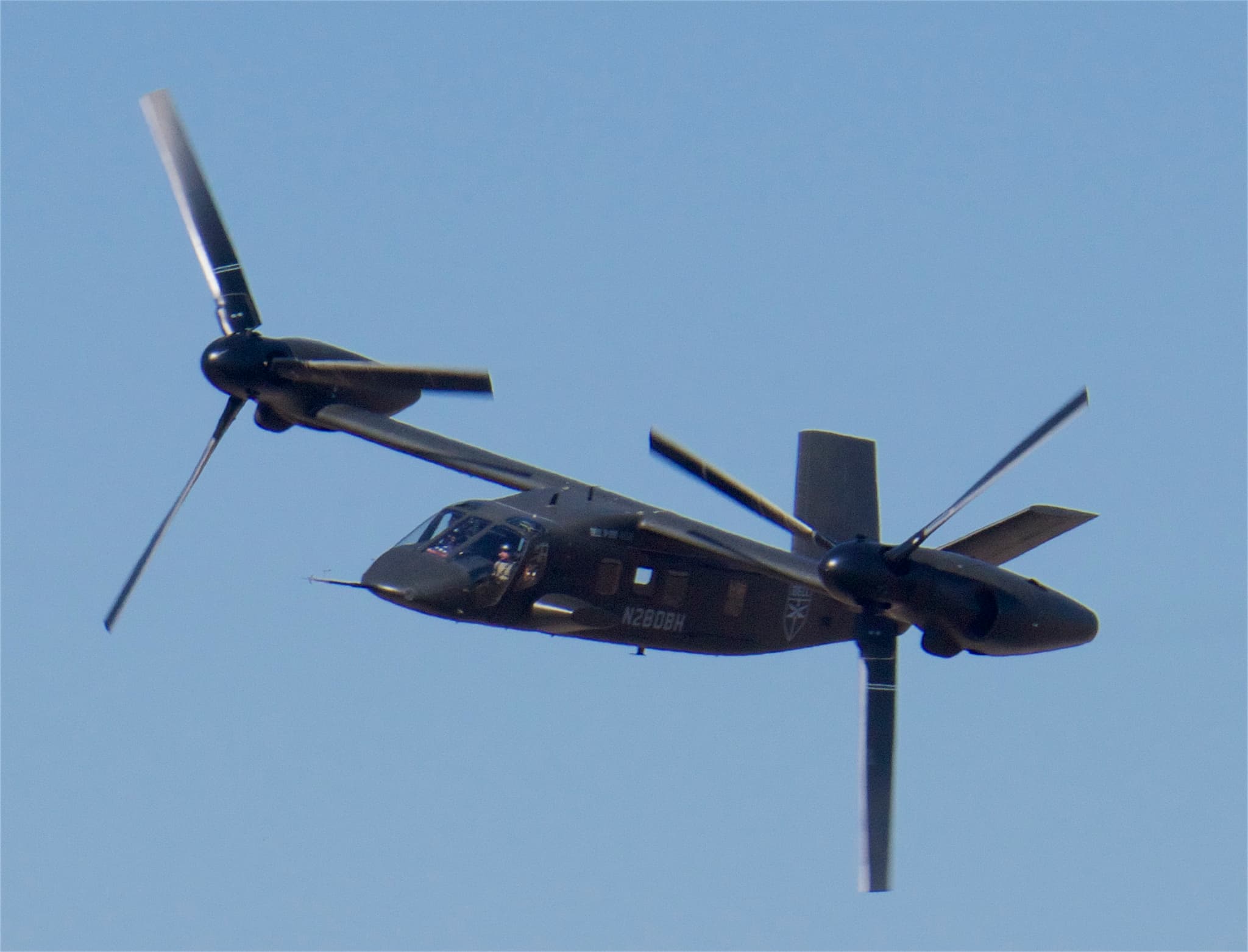
Bell V-280 Valor tiltrotor aircraft in flight with rotors tilted forward for airplane mode
Michael Trent
Michael Trent

Defense Systems Analyst

Michael Trent covers military aircraft, weapons systems, and defense technology with an emphasis on cost, maintenance, and real-world performance. He focuses less on specifications and more on how systems hold up once they are deployed, maintained, and operated at scale.

In December 2022, the U.S. Army announced the most consequential rotorcraft decision in a generation: Bell Textron's V-280 Valor had won the Future Long-Range Assault Aircraft (FLRAA) competition, beating the Sikorsky-Boeing SB>1 Defiant X. The Valor will replace the UH-60 Black Hawk, the workhorse that has carried American soldiers into combat since 1979, with a tiltrotor aircraft that flies twice as fast, covers twice the range, and fundamentally changes how the Army moves troops across the battlefield. It is also a direct descendant of the V-22 Osprey's tiltrotor concept, but with critical design changes that address nearly every complaint leveled at the Osprey over its troubled history.

Why the Black Hawk Needs a Replacement

The UH-60 Black Hawk entered service in 1979 and has been the Army's primary utility helicopter ever since. It is a proven, reliable platform, but it was designed for a Cold War battlefield in Central Europe, where distances were measured in tens of kilometers. Modern operational requirements demand far greater range and speed.

In the Indo-Pacific theater, which the Pentagon considers the most likely arena for future great-power conflict, the distances are enormous. Island chains stretch across thousands of miles of open ocean. A helicopter that cruises at 150 knots with a combat radius of 150 nautical miles cannot operate effectively across these distances. The Army needed an aircraft that could self-deploy over long ranges, move troops at jet-like speeds, and still land in confined spaces without a runway.

The FLRAA program was launched to fill this gap. Two competitors emerged: Bell's V-280 Valor, a tiltrotor, and Sikorsky-Boeing's SB>1 Defiant X, a compound coaxial helicopter with a pusher propeller. Both promised speeds above 250 knots and ranges exceeding 500 nautical miles, a transformative improvement over the Black Hawk.

How the Tiltrotor Works (And Why This One Is Different)

A tiltrotor aircraft uses rotors mounted on the tips of its wings that can pivot between vertical (for helicopter-like hover and landing) and horizontal (for airplane-like forward flight). The V-22 Osprey pioneered this concept for military service, but its implementation came with significant compromises.

On the V-22, the entire engine nacelle tilts with the rotor, a massive mechanical assembly that rotates 90-plus degrees, containing the engine, gearbox, and proprotor. This creates enormous mechanical complexity, maintenance burden, and weight in the tilt mechanism. The V-22's tilt system has been a persistent source of maintenance issues and contributed to several accidents over the aircraft's service life.

The V-280 Valor solves this problem elegantly: the engine nacelles are fixed in place, permanently oriented horizontally along the wing. Only the rotor blades tilt. Power is transmitted from the fixed engines through a gearbox that redirects the drive shaft to the rotating proprotor hub. This dramatically simplifies the mechanical system, reduces weight, lowers maintenance requirements, and improves the aircraft's ability to autorotate in an engine-out emergency, a critical safety feature that the V-22 essentially lacks.

The fixed nacelle design also gives the V-280 a cleaner aerodynamic profile in airplane mode, since the engines sit in streamlined nacelles rather than angled pods. The result is better cruise efficiency and lower drag at high speed.

Bell V-280 Valor in hover mode with rotors tilted vertically during a demonstration flight
The V-280 Valor in helicopter mode with rotors tilted vertically. Unlike the V-22 Osprey, the V-280's engine nacelles remain fixed, and only the rotor systems tilt, dramatically simplifying the mechanism and improving reliability. (Bell Textron)

Performance

The V-280's target designation, 280 knots, comes from its design cruise speed of 280 knots (322 mph / 519 km/h). During flight testing, the prototype demonstrated speeds exceeding 300 knots in level flight, making it roughly twice as fast as the Black Hawk's typical cruise speed of 150 knots.

The combat radius is expected to exceed 500 nautical miles (926 km), more than three times the Black Hawk's effective operational radius. This range allows the Valor to conduct assault operations across distances that currently require forward refueling points or aerial refueling, simplifying the logistics chain and allowing units to strike deeper into enemy territory.

The cabin is designed to carry a full infantry squad of 14 soldiers with their equipment, comparable to the Black Hawk's troop capacity. The aircraft features a rear ramp for rapid loading and unloading, a capability the Black Hawk lacks with its side doors, and the cabin volume is sufficient for internal cargo, litter patients in the medevac role, or mission-specific equipment.

Power comes from a pair of GE T64-GE-419 turboshaft engines, a proven powerplant family with decades of military service. The interconnecting driveshaft between the two proprotors ensures that if one engine fails, the remaining engine can power both rotors, maintaining controlled flight.

Why Bell Won

The Army's decision to select the V-280 over the Defiant X was driven by several factors. The tiltrotor concept offered greater speed and range than the compound helicopter. The V-280's flight test program, which began in December 2017 and accumulated over 200 flight hours, demonstrated mature, reliable performance. The fixed-nacelle design addressed the maintenance and safety concerns that had dogged the V-22 program.

The Defiant X, based on Sikorsky's X2 coaxial rotor technology, was a capable design that offered exceptional agility and hover performance. Its rigid coaxial rotors and pusher propeller achieved high speeds through a fundamentally different approach. But the tiltrotor's speed and range advantages in forward flight, where the aircraft spends most of its mission time, proved decisive.

Sikorsky-Boeing protested the decision, arguing that the evaluation was flawed. The Government Accountability Office denied the protest in April 2023, upholding the Army's selection.

Timeline and What Comes Next

The FLRAA contract is potentially worth $70 billion over its full lifecycle, making it one of the largest military aviation procurement programs currently underway. Bell is in the engineering and manufacturing development (EMD) phase, building the production-representative prototypes that will undergo formal testing.

The Army's plan calls for initial operational capability in the early 2030s, with full-rate production ramping up through the decade. The V-280 will initially replace Black Hawks in assault and utility roles, with thousands of aircraft potentially required to fill the Army's rotorcraft fleet. Additional variants for medevac, command and control, and special operations missions are expected to follow.

The V-280 Valor represents the biggest leap in Army rotorcraft capability since the turbine helicopter replaced piston-powered machines in the 1960s. A helicopter that flies at 280 knots and covers 500+ nautical miles without refueling changes the fundamental geometry of ground combat, allowing commanders to move forces across battlefield distances that previously required fixed-wing transport or multi-day ground movement. The Black Hawk defined Army aviation for 45 years. The Valor is designed to define the next 45.

Share this article

Share:

Recommended

Ace of The Skies: Can You Identify These Military Aircraft Throughout The Years?
Test Yourself

Ace of The Skies: Can You Identify These Military Aircraft Throughout The Years?

Can you identify these aircraft?

Take the Quiz

On This Day in Military History

March 14

Eli Whitney Patents the Cotton Gin, Setting the Stage for Civil War (1794)

Eli Whitney received the U.S. patent for the cotton gin, a machine that mechanically separated cotton fibers from seeds. The invention revitalized and expanded Southern slavery, made "King Cotton" the foundation of Southern wealth, and created the economic divide that made the Civil War virtually inevitable. Whitney later pioneered interchangeable parts in musket manufacturing, the "American System" that gave the Union its decisive industrial advantage.

1757, Execution of Admiral Byng: "Pour Encourager les Autres"

1943, Battle of the Atlantic: Convoy HX-229 Under Attack

See all 10 events on March 14

Get Military News & History in Your Inbox

Join thousands of readers receiving our weekly digest of military technology, history, and analysis.

Test Your Knowledge