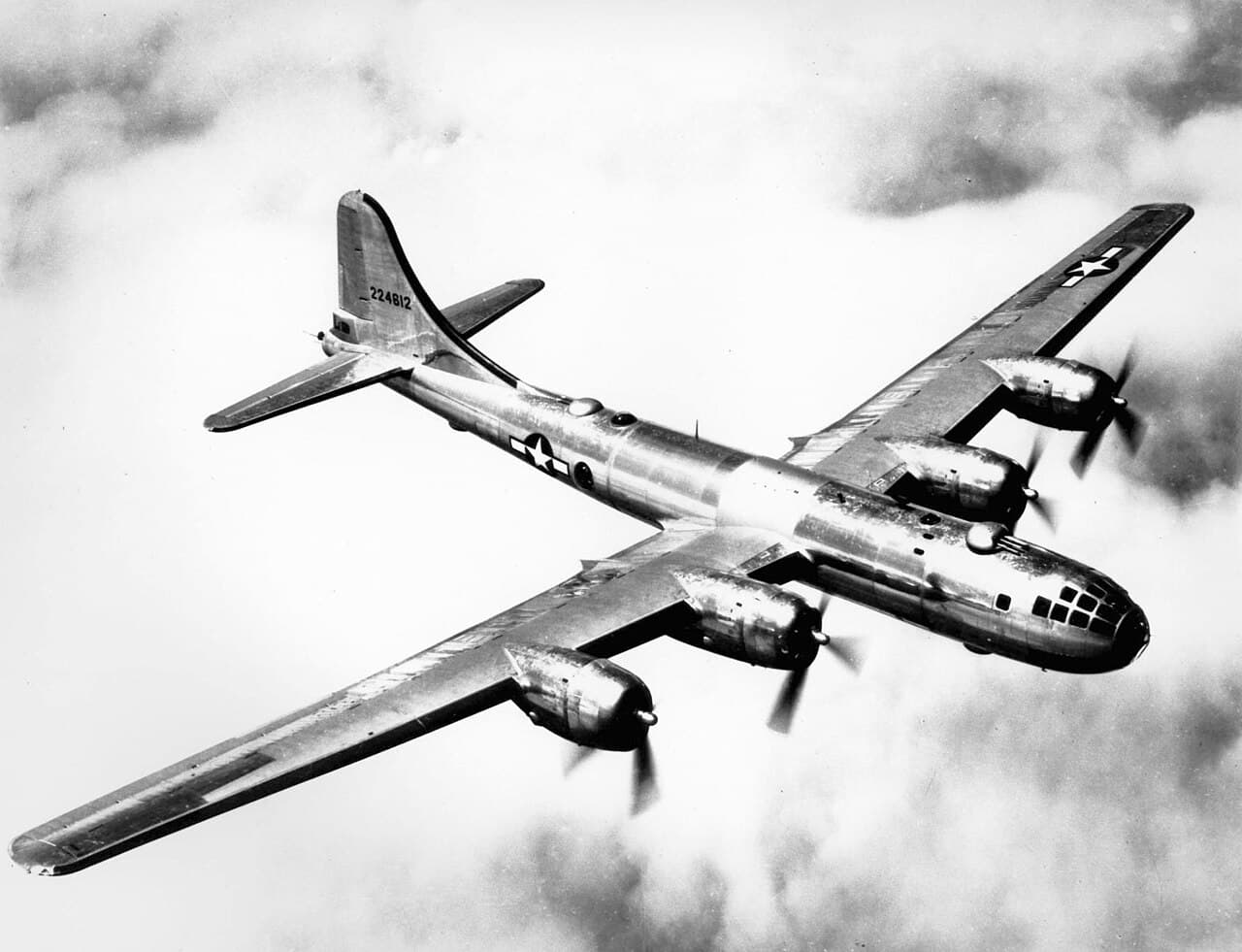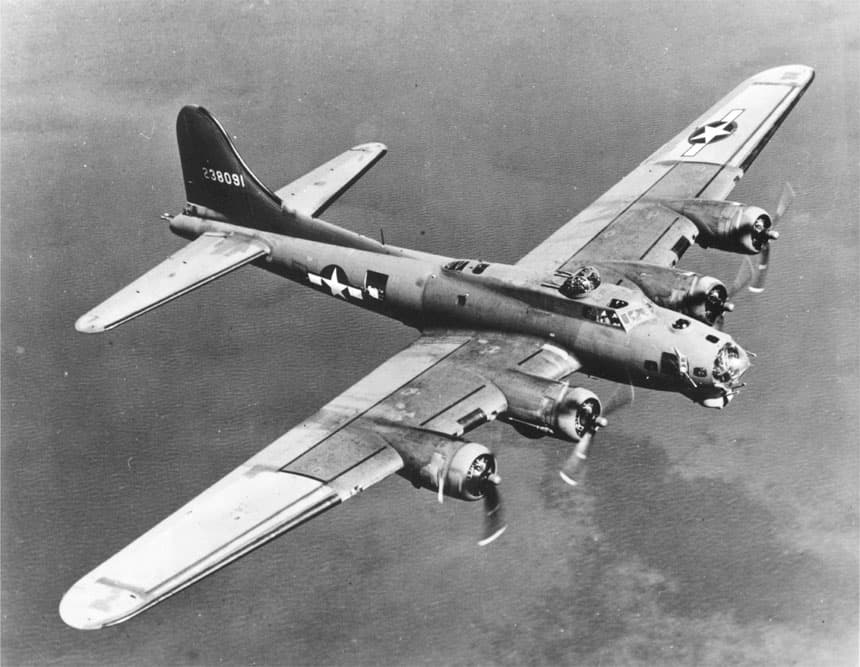
Boeing B-17G Flying Fortress
Boeing
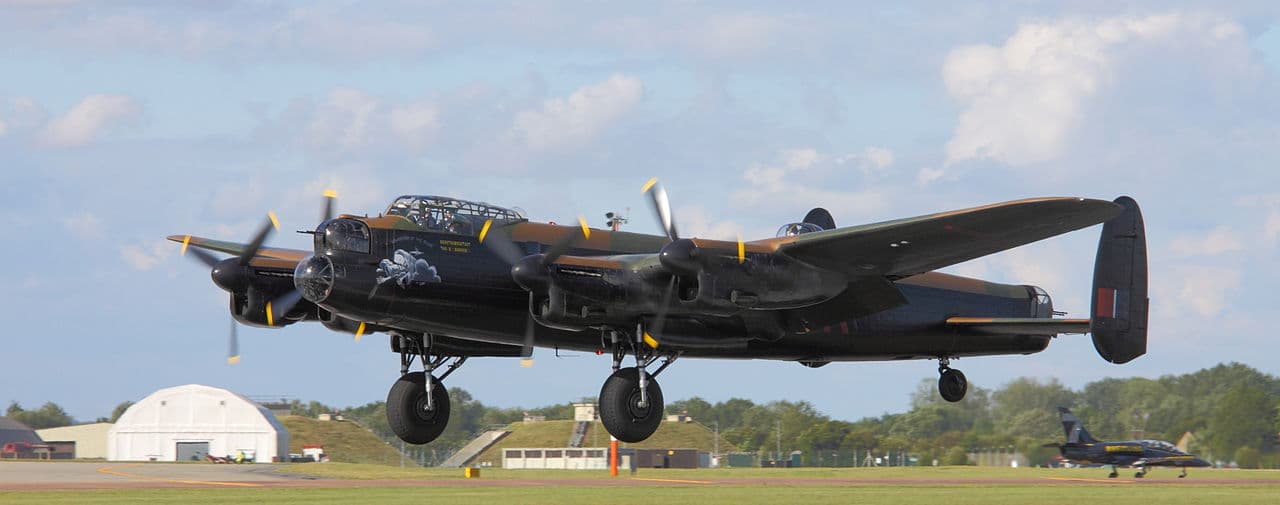
Avro Lancaster B Mk I
A.V. Roe & Company (Avro)
B-17G Flying Fortress vs Avro Lancaster
Two bombing philosophies that burned the Third Reich
The Bottom Line
The B-17G and Lancaster were the twin hammers of the Combined Bomber Offensive, neither was "better" in absolute terms, as each was optimized for a fundamentally different bombing doctrine.
Who Wins Each Scenario?
Precision bombing of a specific factory (daylight)
B-17G
The B-17G's higher operational altitude, Norden bombsight, and formation discipline made it the superior precision daylight bomber. The Lancaster could bomb by day but was more vulnerable to fighter attack.
Delivering maximum tonnage to an area target
Lancaster B Mk I
The Lancaster's 14,000-pound standard load versus the B-17G's 6,000-pound combat load made it far more efficient at delivering maximum tonnage per sortie.
Destroying a hardened point target (dam, bunker, battleship)
Lancaster B Mk I
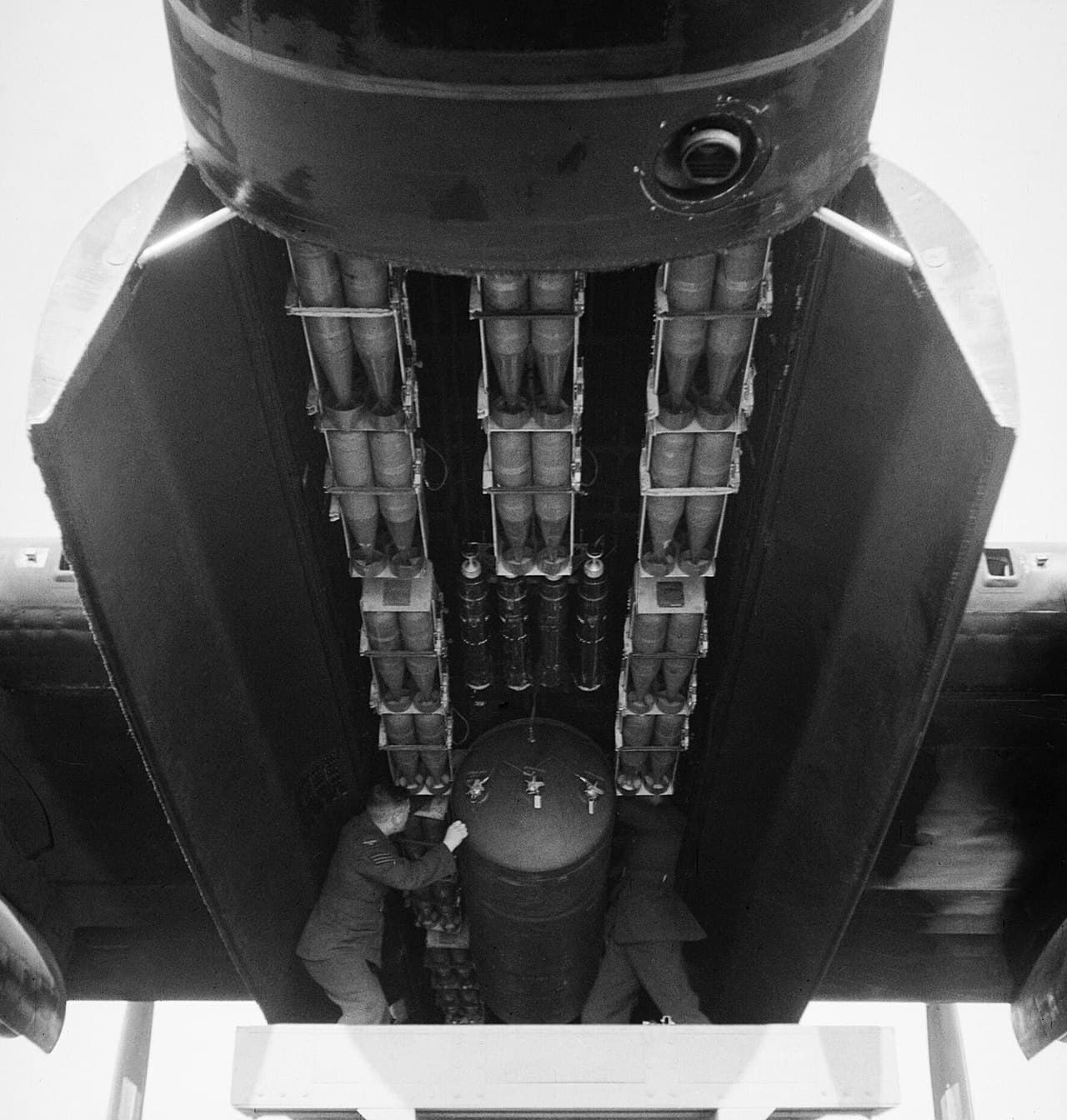
Only the Lancaster could carry the Tallboy and Grand Slam earthquake bombs. The B-17G's bomb bay could not accommodate weapons above 4,000 pounds.
Surviving enemy fighter attack
B-17G
The B-17G's thirteen .50-caliber guns, robust structure, and formation defense made it far more survivable against fighter attack than the Lancaster with its inadequate .303 armament.
Night bombing mission
Lancaster B Mk I
The Lancaster was purpose-optimized for night operations: better maneuverability for evasive corkscrewing, adequate defensive armament for the night environment, and superior bomb load for area attacks.
Long-range strategic mission
Lancaster B Mk I
The Lancaster's 2,530-mile range exceeded the B-17G's 2,000 miles. For distant targets like Norway or southern Germany, the Lancaster could carry a meaningful bomb load where the B-17G could not.
Interactive 3D Models
Performance Profile
Overall capability comparison across six combat dimensions
Head-to-Head Specifications
Key performance metrics compared side by side
Size Comparison
Both aircraft drawn to the same scale, the B-17G has 1.8ft greater wingspan and is 5.3ft longer
Performance Analysis
How each aircraft performs across key combat dimensions
Speed
WINNER: B-17GThe B-17G had a maximum speed of 287 mph at 25,000 feet. More importantly, its formation cruise speed of approximately 180 mph at 25,000 feet allowed it to maintain the tight combat box formations required for mutual defensive fire. The Fortress was optimized for sustained high-altitude operations.
The Lancaster's maximum speed of 282 mph at 11,500 feet was comparable, but it typically operated at lower altitudes (18,000–22,000 feet for area bombing) where its speed was sufficient to reach and return from targets within the cover of darkness.
Speed was not a decisive differentiator between heavy bombers, neither could outrun fighters, and both relied on other means of protection. The B-17G's higher operational altitude partially compensated for its similar speed by forcing interceptors to climb higher.
Climb Rate
WINNER: B-17GThe B-17G climbed at 900 ft/min and could sustain operations at 25,000 feet, where its turbosupercharged engines maintained power effectively. The ability to bomb from 25,000+ feet was a core element of American precision bombing doctrine.
The Lancaster's climb rate of 720 ft/min was adequate for its night bombing role. However, its operational ceiling of 24,500 feet was lower than the B-17G's, and the Merlin engines lost more power at altitude than the B-17G's turbosupercharged Cyclones.
The B-17G had superior altitude performance, which was critical for its daytime doctrine. The Lancaster's lower ceiling was acceptable for night bombing but made it more vulnerable to flak at typical operating altitudes.
Range & Endurance
WINNER: Lancaster B Mk IThe B-17G had a combat range of approximately 2,000 miles, adequate for striking targets deep in Germany from English bases, though the bomb load decreased significantly at maximum range.
The Lancaster's 2,530-mile range with a standard bomb load was one of its key advantages. It could reach distant targets like Tirpitz in Norway or the Italian industrial centers while carrying meaningful ordnance. The Lancaster's range with reduced bomb load was even greater.
The Lancaster had clearly superior range, which gave Bomber Command greater strategic flexibility. The B-17G's range was adequate for the European theater but more limiting than the Lancaster's, particularly for distant targets.
Altitude Performance
WINNER: B-17GThe B-17G's service ceiling of 35,600 feet and practical bombing altitude of 25,000+ feet gave it a significant altitude advantage. The turbosupercharged Wright Cyclone engines maintained power at altitude far better than the Lancaster's Merlins. This altitude capability was defensive as well as doctrinal, higher altitude meant less accurate flak.
The Lancaster's ceiling of 24,500 feet was lower, and most night bombing missions were flown at 18,000–22,000 feet. At night, altitude was less critical for defense against fighters, and lower altitude improved bombing accuracy with the H2S radar used for area targeting.
The B-17G's altitude advantage was decisive for its daylight doctrine. An extra 5,000–10,000 feet of altitude significantly reduced flak effectiveness and made fighter interception more difficult. For night operations, the Lancaster's lower altitude was actually advantageous for its mission profile.
Dive Speed
EvenThe B-17G could descend rapidly when needed, and its robust airframe could handle the stresses of emergency dives. However, heavy bombers rarely employed deliberate diving as a tactic.
The Lancaster was a responsive aircraft for its size and could execute moderate evasive maneuvers including dives. Lancaster pilots used "corkscrew" evasive maneuvers against night fighters, a demanding sequence of diving turns that required considerable airframe strength.
Diving performance was not a meaningful comparison for heavy bombers. Both aircraft could execute emergency descents when necessary. The Lancaster's corkscrew evasive maneuver was more relevant than dive speed, it was an active survival tactic that the B-17 formation doctrine did not employ.
Maneuverability
WINNER: Lancaster B Mk IThe B-17G was stable and predictable in flight, which was important for maintaining tight formation. Its heavy controls provided the steady platform needed for precision bombing with the Norden bombsight. Individual evasive maneuvering was generally not part of the combat doctrine.
The Lancaster was remarkably agile for a heavy bomber, pilots consistently praised its handling qualities. It could execute the corkscrew evasive maneuver (a rapid sequence of climbing and diving turns) that was Bomber Command's standard response to night fighter attack. Some Lancaster pilots even attempted barrel rolls, though this was neither recommended nor common.
The Lancaster was the more maneuverable aircraft by a clear margin. Its lighter controls and more responsive handling made it a more pleasant aircraft to fly and gave its pilots more options for individual evasion. The B-17G's doctrine de-emphasized individual maneuverability in favor of formation discipline.
Cockpit Visibility
EvenThe B-17G's cockpit provided good forward visibility for navigation and formation flying. The extensive glazing of the bombardier's station provided excellent downward visibility for the bombing run. Multiple gun positions provided all-round observation.
The Lancaster's cockpit offered a good view for the pilot, and the bomb aimer's position in the nose had a clear downward view. The mid-upper turret provided reasonable all-round observation. The H2S ground-mapping radar supplemented visual observation at night.
Visibility was comparable between the two aircraft, though the contexts were very different. The B-17 crew relied on visual observation for formation keeping and target acquisition by day, while the Lancaster crew depended more on radar and instruments for night operations.
Roll Rate
WINNER: Lancaster B Mk IThe B-17G's roll rate was adequate but not exceptional. The heavy control forces at high speed made rapid rolling maneuvers difficult, and the formation doctrine did not require individual aerobatic capability.
The Lancaster's aileron response was notably better than the B-17G's, contributing to its reputation as the more agile heavy bomber. This responsiveness was critical during the corkscrew evasive maneuver.
The Lancaster's superior handling and responsiveness gave it better roll characteristics. For a heavy bomber, the Lancaster was surprisingly nimble, while the B-17G prioritized stability over agility.
Photo Gallery, 18 Photos
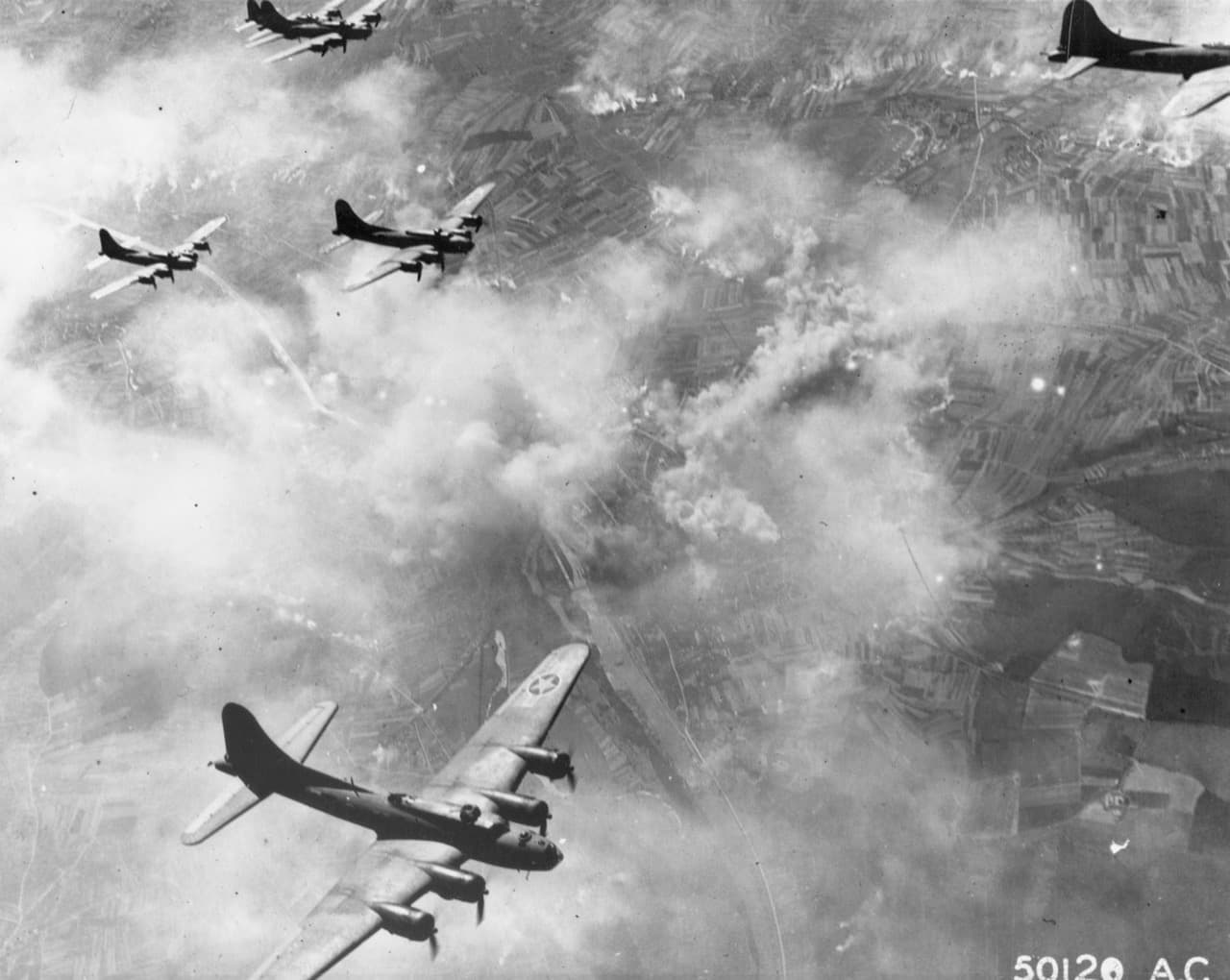
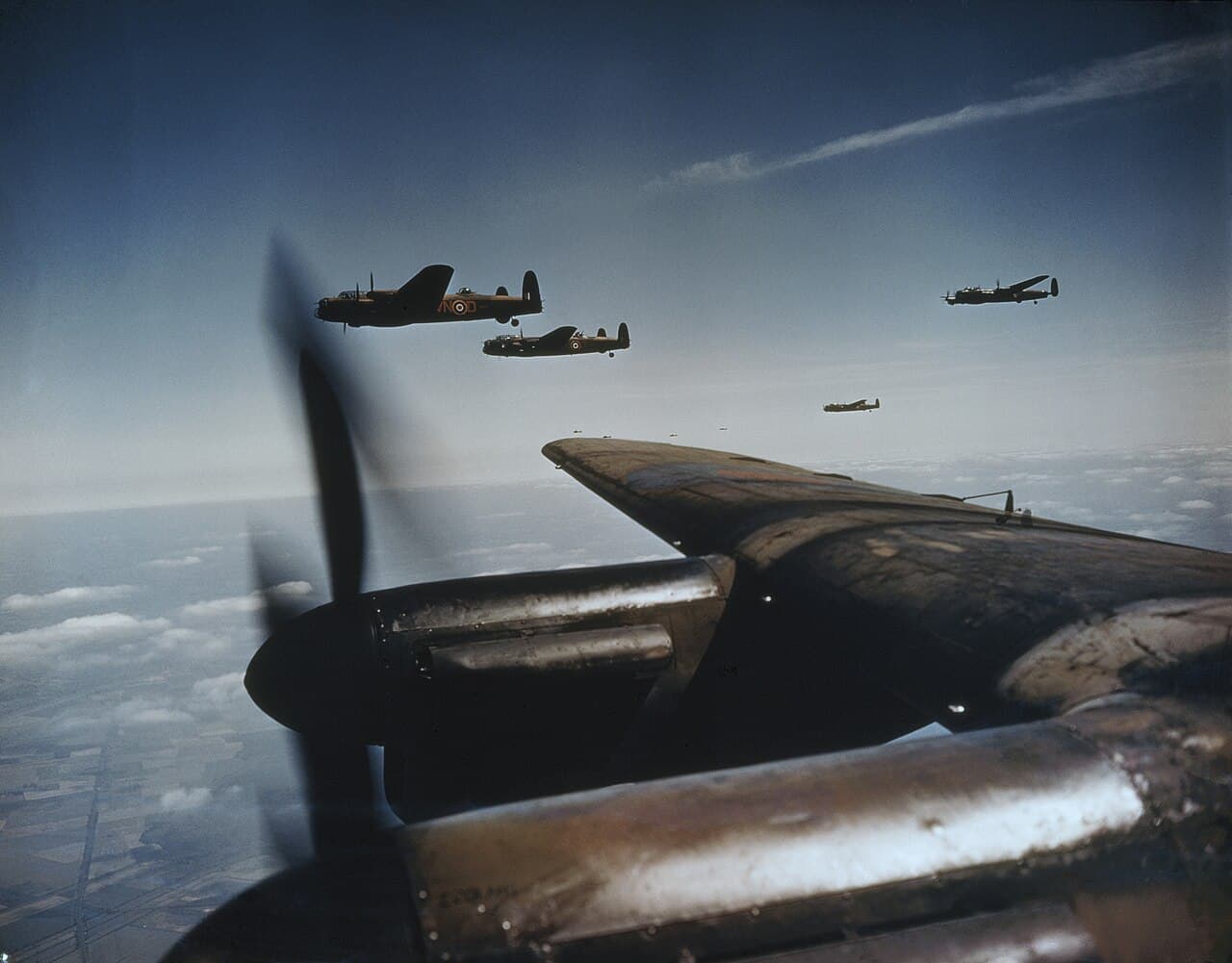
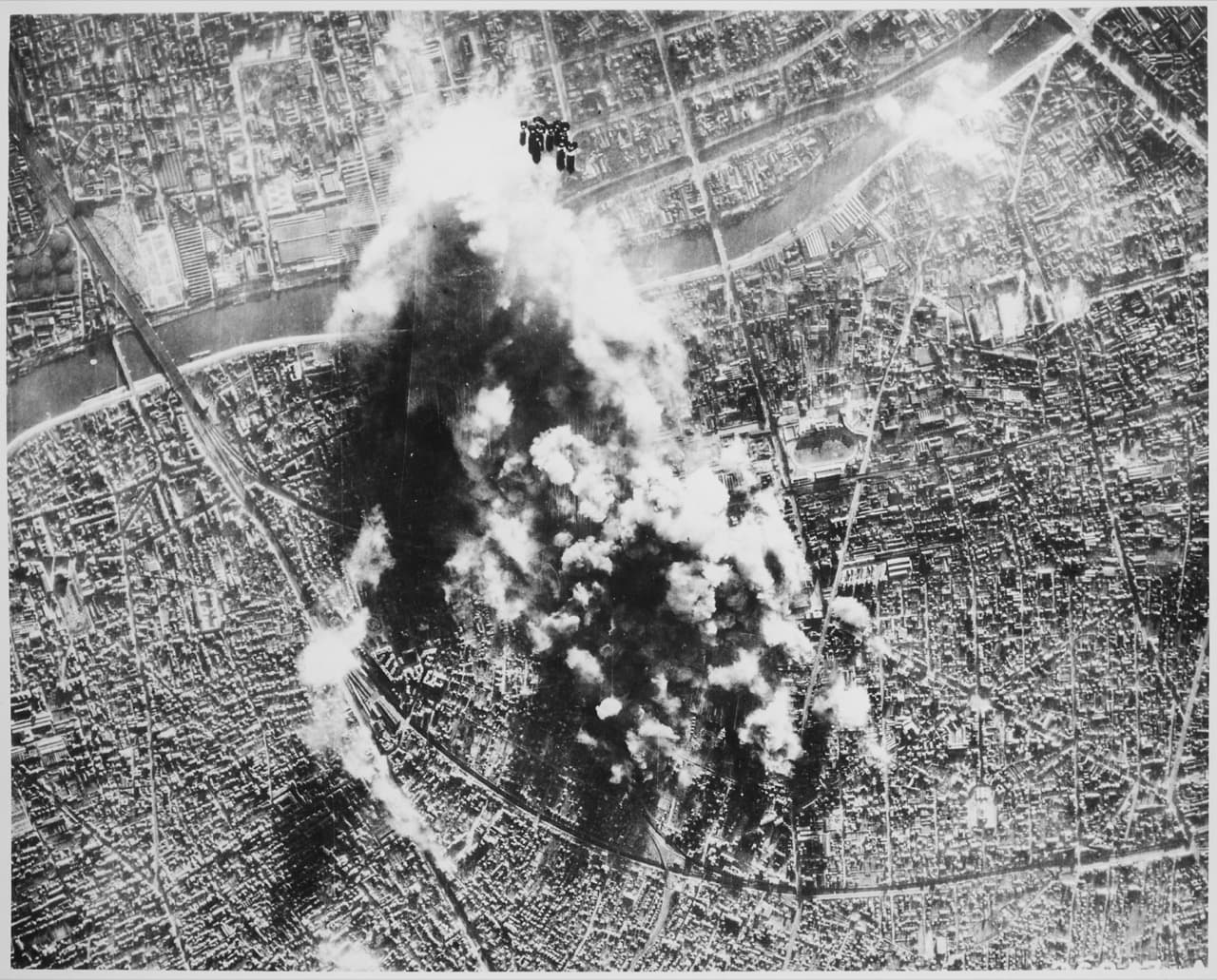
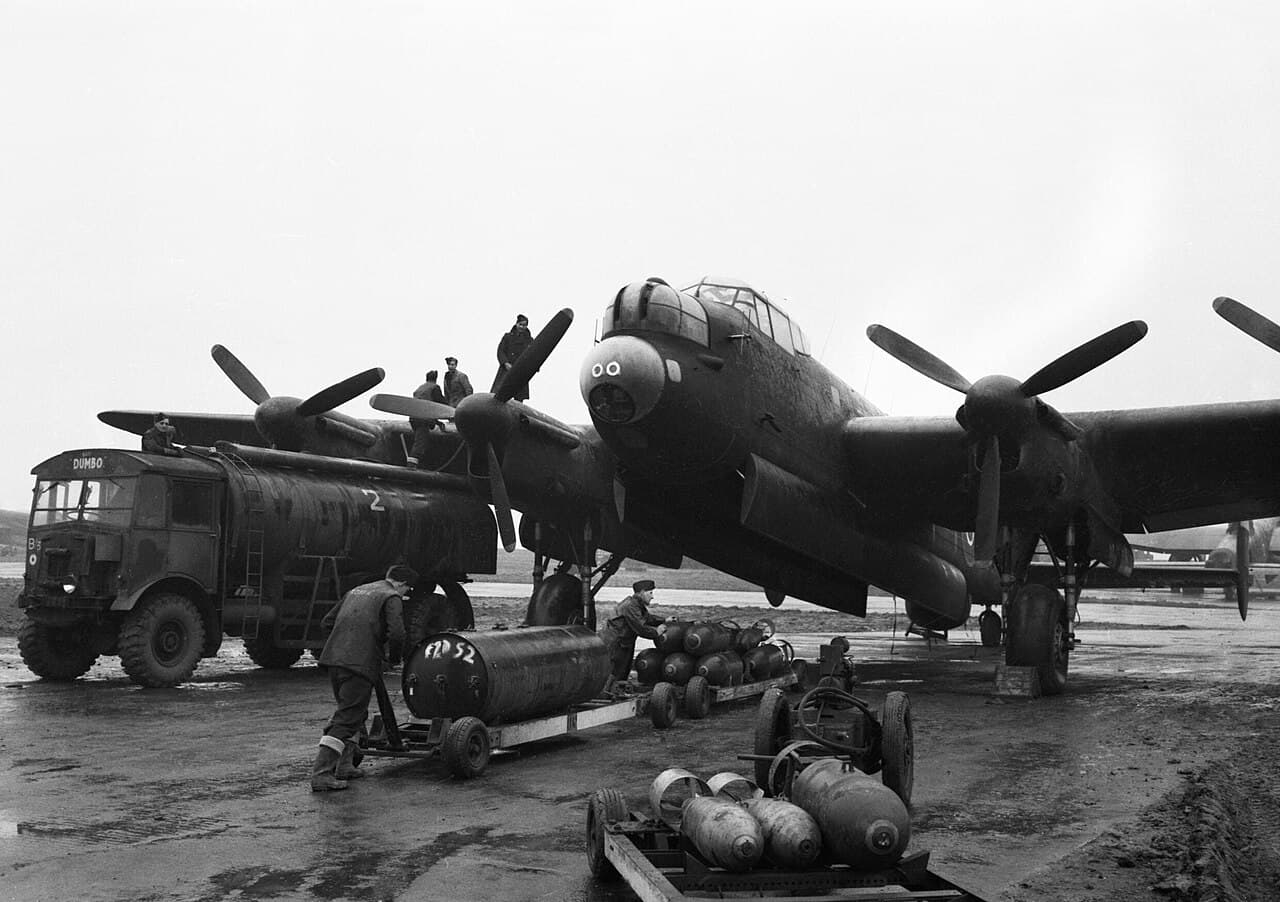
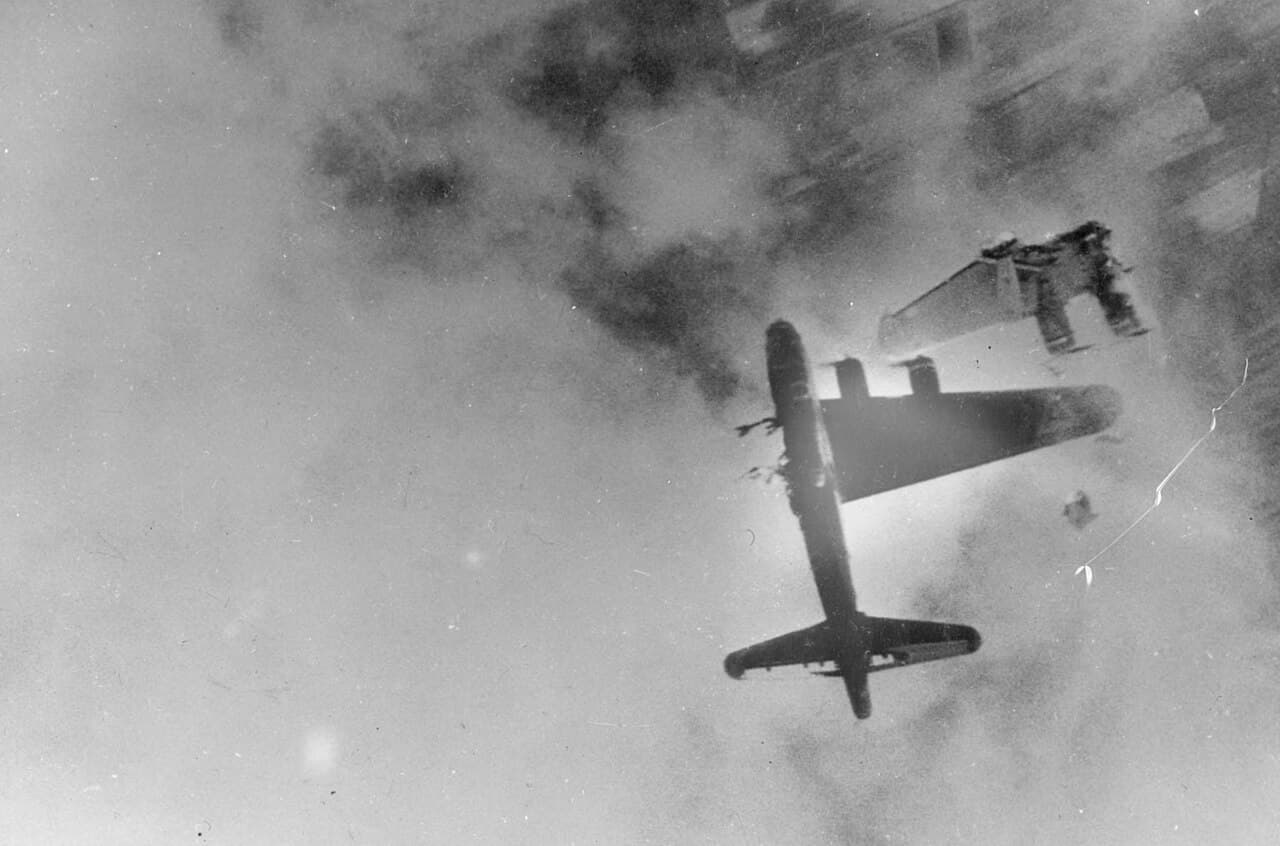

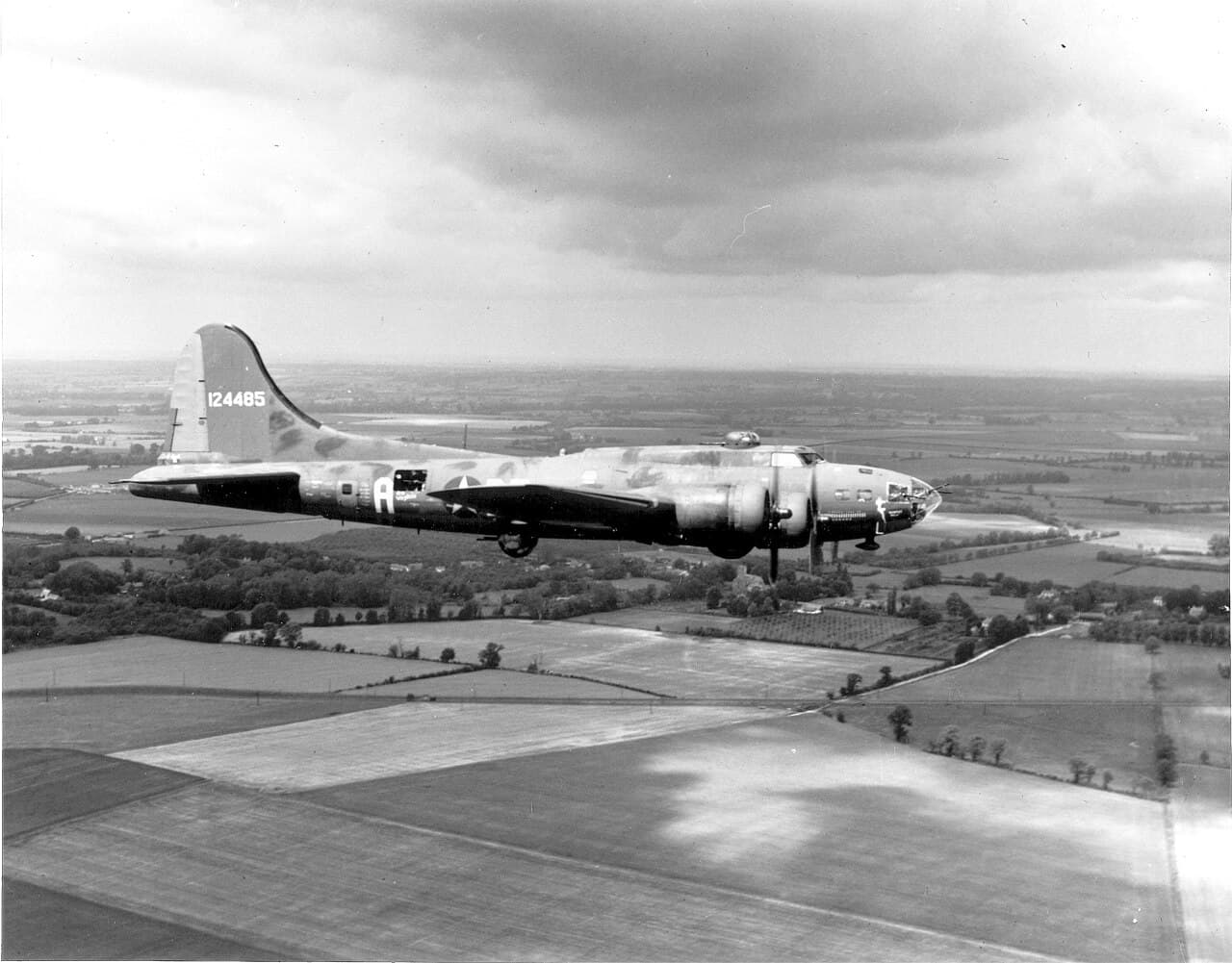
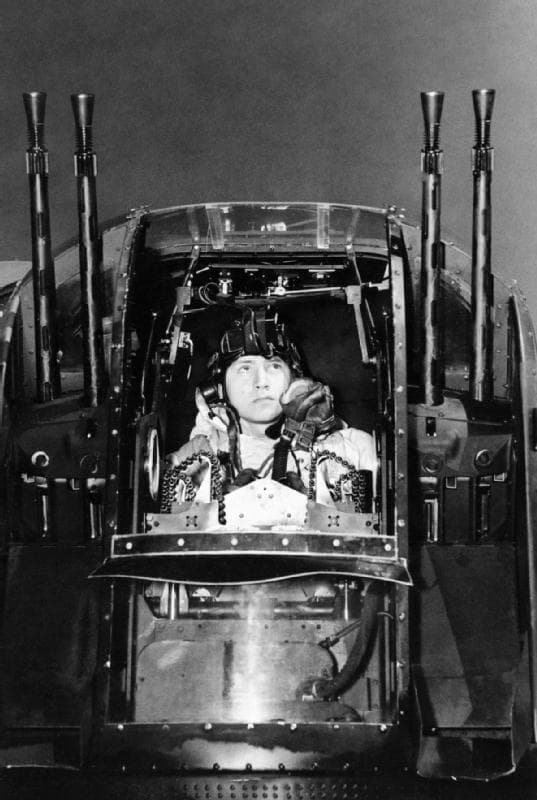
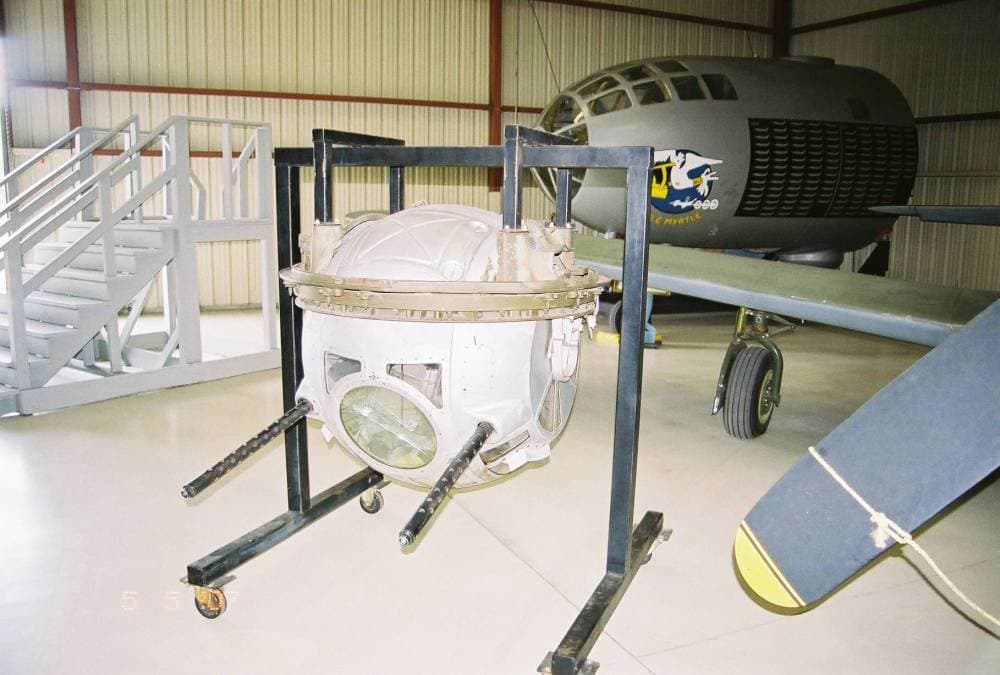
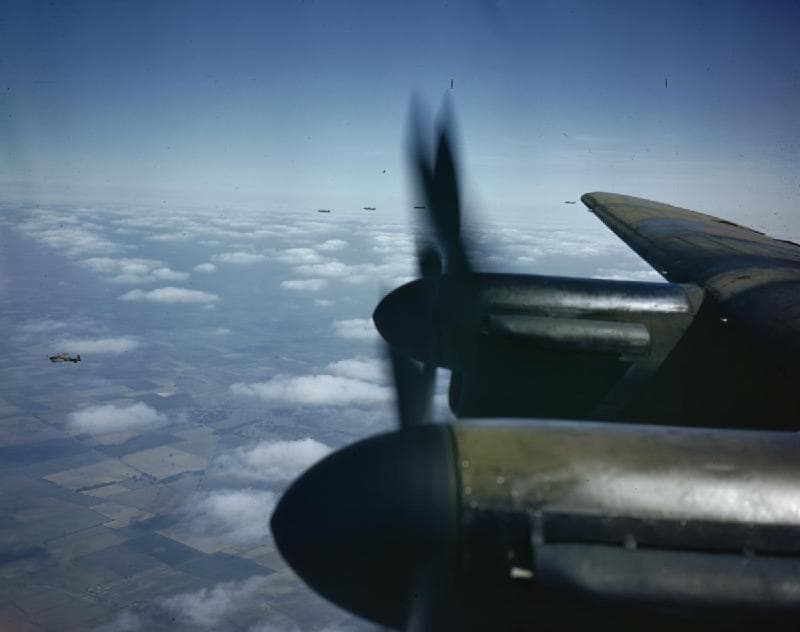
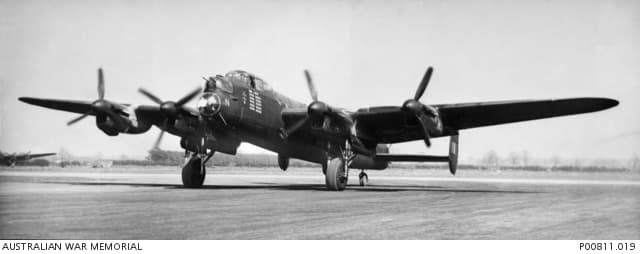

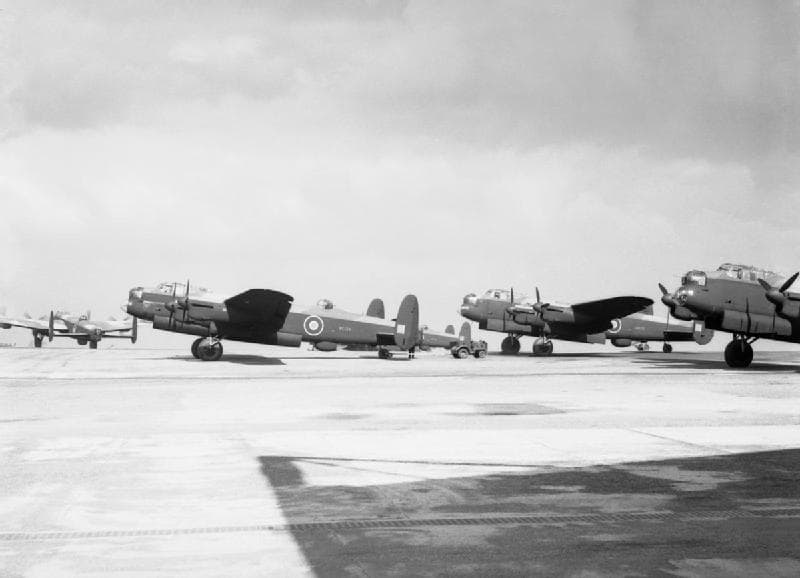
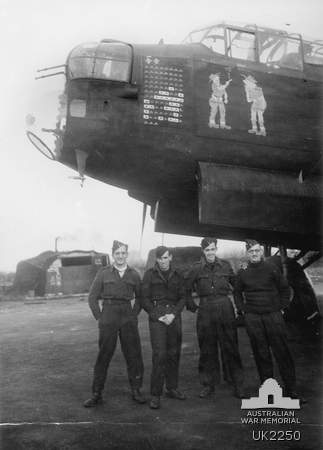
Click any photo to enlarge · 18 photos
Historical Context
The strategic backdrop that shaped both aircraft
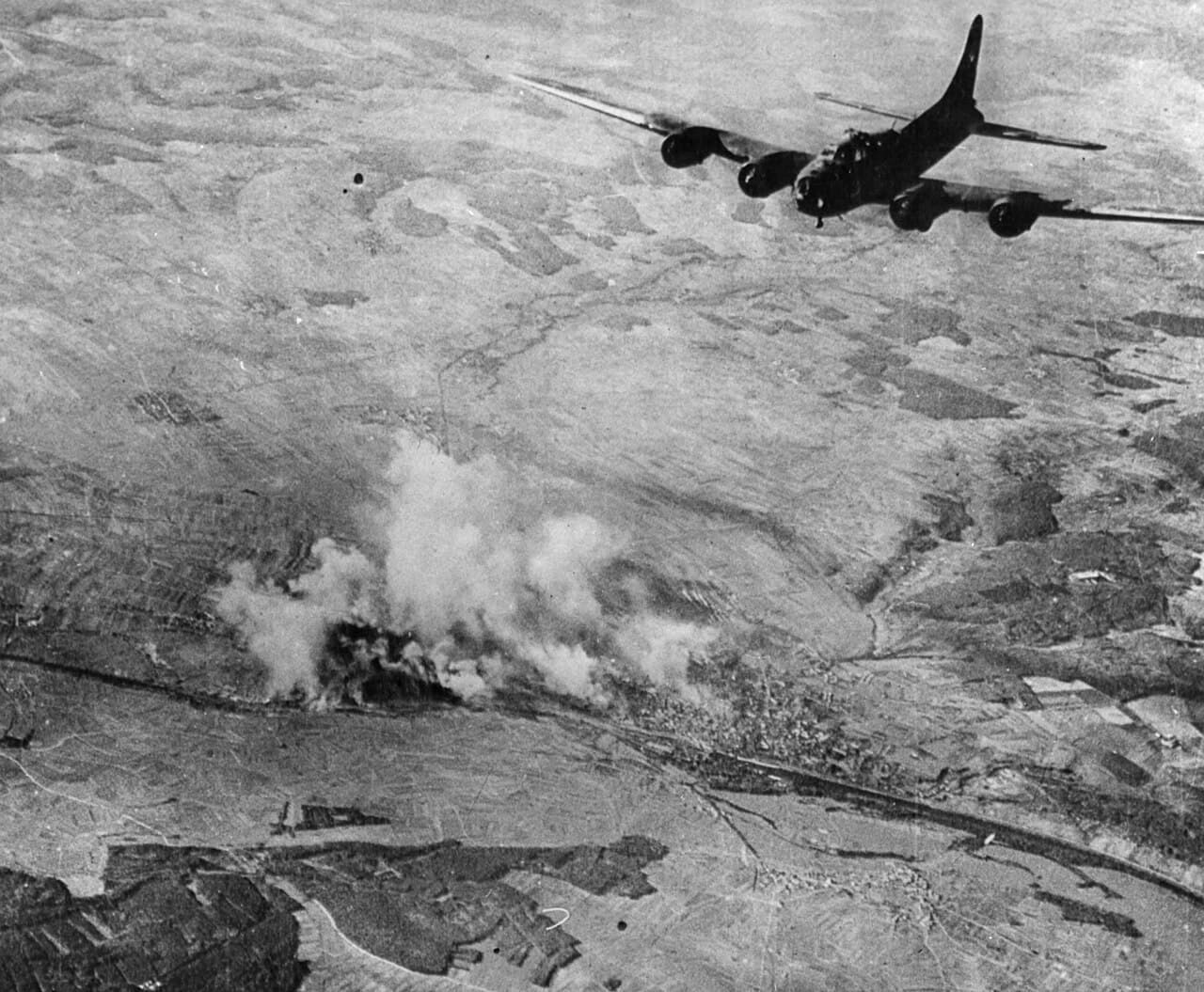
The B-17G and Lancaster never competed against each other, they fought the same enemy from different directions, at different times of day, using fundamentally different doctrines. Understanding why requires understanding the divergent paths that led the United States and Britain to their respective bombing philosophies.
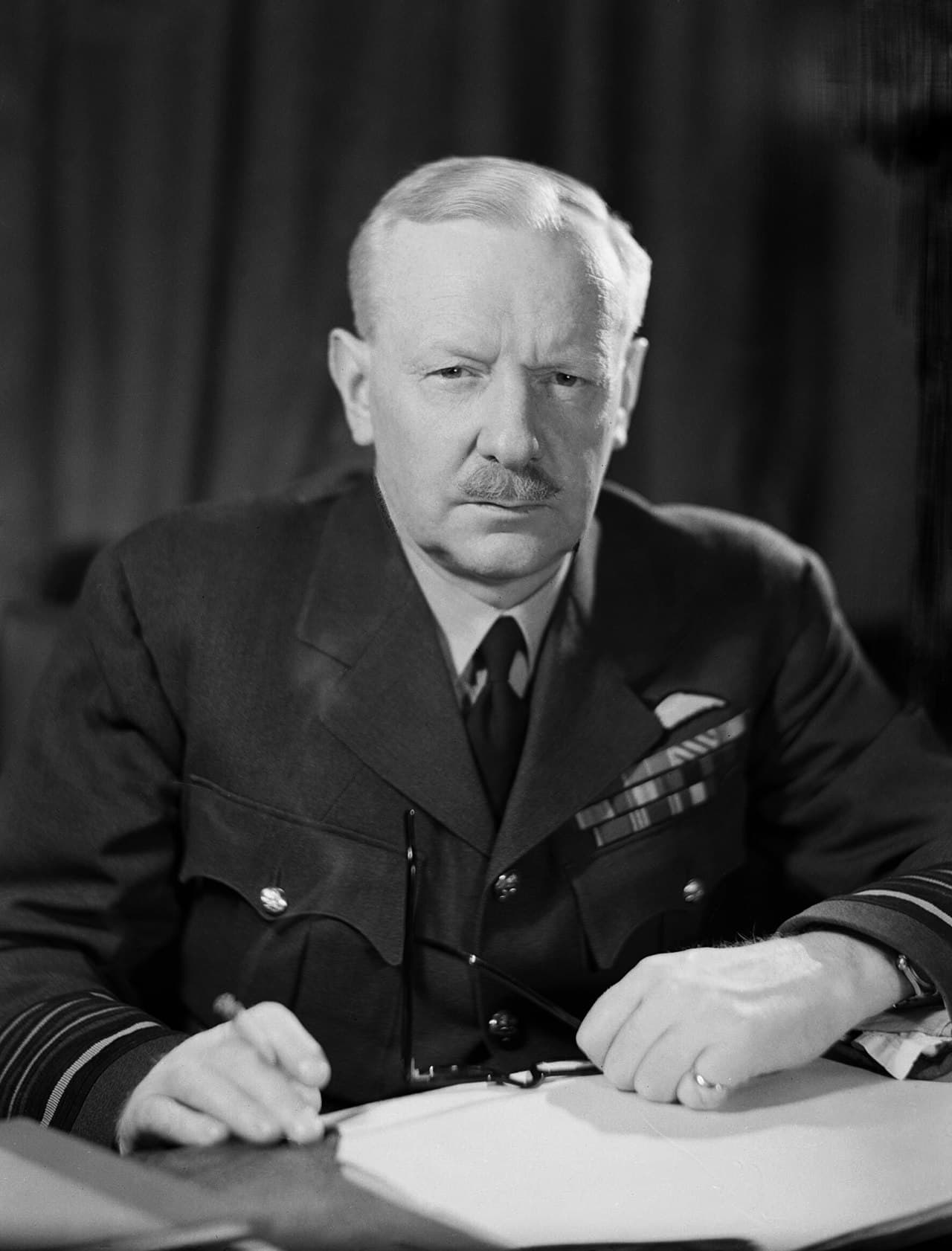
The RAF began the war committed to precision daylight bombing, but catastrophic losses in the first weeks of the conflict, unescorted Wellingtons and Hampdens were slaughtered by German fighters, forced a rapid pivot to night operations. By 1942, under Air Marshal Arthur "Bomber" Harris, RAF Bomber Command had embraced area bombing as official doctrine. The logic was grimly practical: navigating to a specific factory at night was nearly impossible with 1942 technology, but navigating to a city was achievable. The Lancaster, with its enormous bomb bay and long range, was the perfect instrument for delivering massive tonnage to area targets.
The USAAF took a different path. American bombing doctrine, developed at the Air Corps Tactical School during the 1930s, held that precision bombing of key industrial nodes, ball-bearing plants, oil refineries, aircraft factories, could systematically dismantle an enemy's war economy. The B-17, with its Norden bombsight and high-altitude capability, was designed to execute this doctrine. The combat box formation of heavily armed Fortresses was supposed to provide its own defense, making fighter escort unnecessary.
Both doctrines proved partially wrong and partially right. The Eighth Air Force's unescorted daylight raids of 1943, culminating in the catastrophic second Schweinfurt mission, demonstrated that even thirteen .50-caliber guns could not protect a bomber formation from determined fighter attack. The loss rate was unsustainable until long-range P-51 Mustang escorts arrived in early 1944. The RAF's night operations, while suffering lower per-sortie loss rates, sustained Bomber Command's campaign for years longer and ultimately inflicted comparable total casualties.
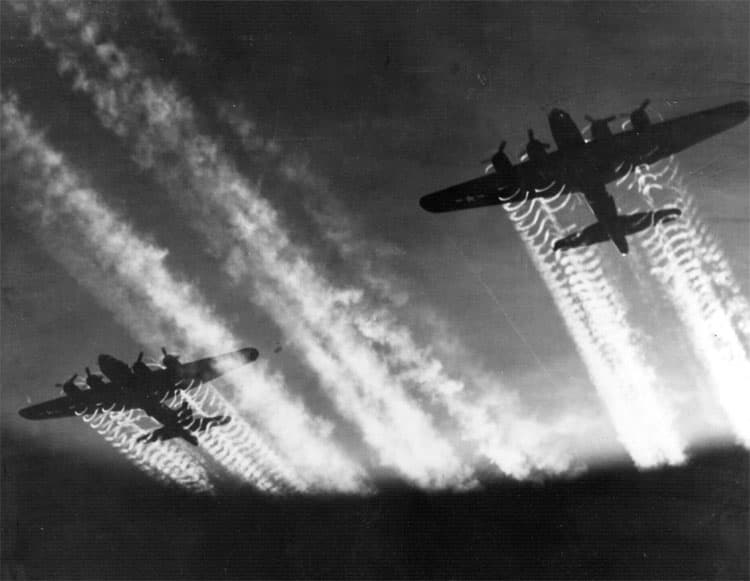
What both air forces discovered was that strategic bombing was brutally expensive in men and machines, but devastatingly effective when sustained. The Combined Bomber Offensive, Lancasters hammering German cities at night, Fortresses striking industrial targets by day, created a round-the-clock assault that the Luftwaffe could never fully counter. By 1944, this dual offensive was consuming a third of Germany's industrial output in air defense and repairs, diverting fighters from the Eastern and Western fronts, and destroying the synthetic oil plants that the Wehrmacht desperately needed.
Notable Combat Encounters
Key engagements where these aircraft faced each other in combat
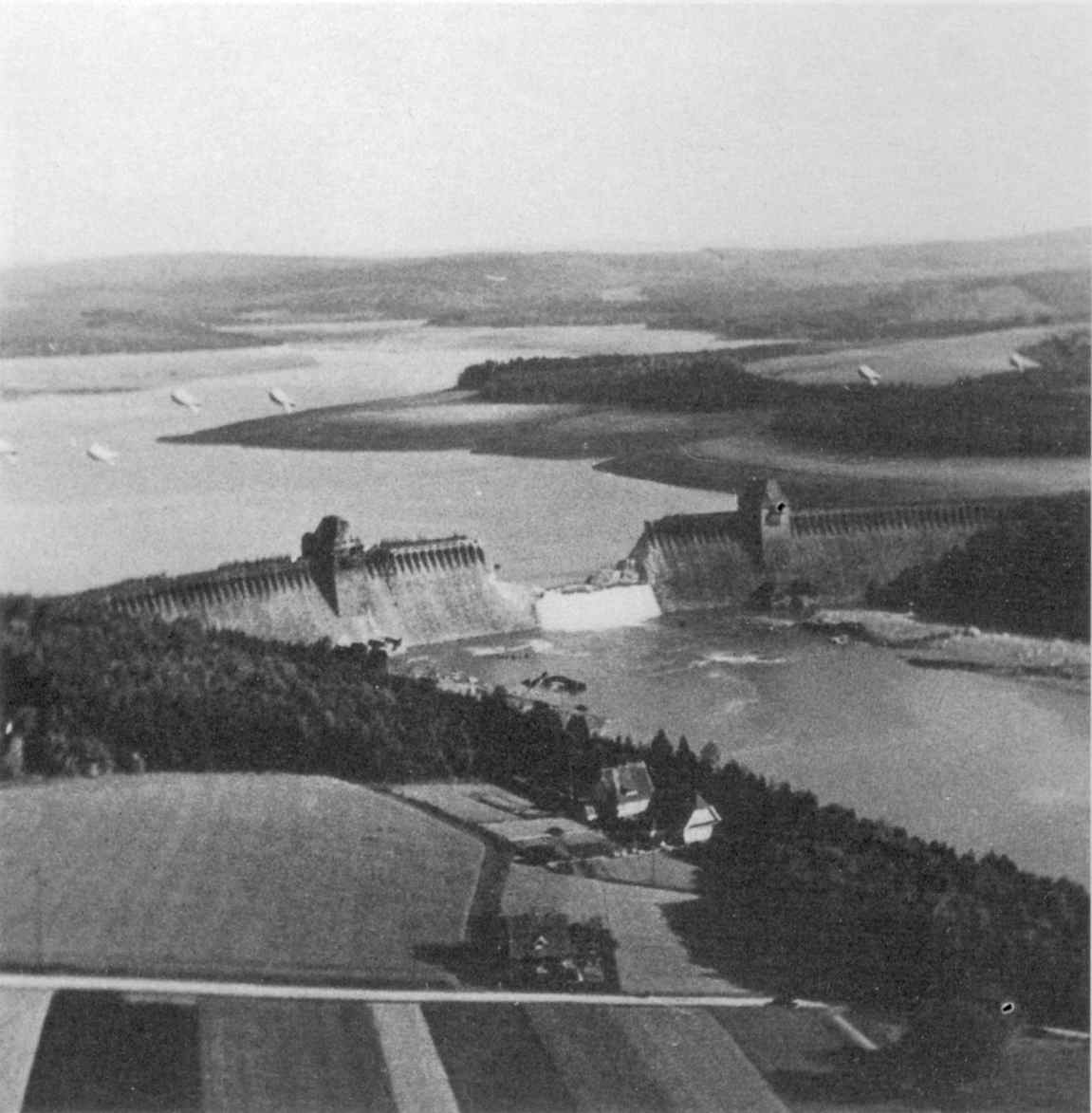
Operation Chastise, the "Dam Busters" raid, saw 19 specially modified Lancasters of 617 Squadron attack the Möhne, Eder, and Sorpe dams using Barnes Wallis's revolutionary bouncing bomb. The Lancasters flew at just 60 feet above the water to deliver the 9,250-pound Upkeep mines.
Outcome
The Möhne and Eder dams were breached, causing catastrophic flooding that killed approximately 1,600 people and disrupted industrial production. Eight Lancasters were lost, a 42% casualty rate.
No other Allied bomber could have carried the Upkeep mine. The raid demonstrated the Lancaster's unique ability to deliver specialized ordnance that the B-17 could never accommodate.
The first Schweinfurt-Regensburg mission sent 376 B-17s deep into Germany to strike ball-bearing factories and the Messerschmitt plant. Without long-range fighter escort, the Fortress formations endured continuous fighter attacks from takeoff to target and back.
Outcome
60 B-17s lost (16% of the force) with 600 airmen killed, captured, or missing. An additional 100+ B-17s were damaged, many beyond repair. The Eighth Air Force had lost more men in a single day than the Marines lost taking Tarawa.
Schweinfurt exposed the fatal flaw in the self-defending bomber doctrine. The B-17G's heavy defensive armament was insufficient against massed German fighters. Long-range escorts were essential.
"Black Thursday", the second Schweinfurt raid, sent 291 B-17s back to the ball-bearing factories. Again without escort beyond the range of P-47s, the formations were savaged by over 300 German fighters using rockets, heavy cannons, and even aerial bombing.
Outcome
77 B-17s destroyed, 122 damaged, a combined loss rate that made the Eighth Air Force temporarily halt deep-penetration raids. The crisis forced the urgent acceleration of P-51 Mustang deployment.
The worst day in Eighth Air Force history. It demonstrated both the B-17G's legendary structural resilience (many severely damaged aircraft made it home) and the limits of defensive firepower alone.
The Nuremberg raid was Bomber Command's costliest night operation. 795 Lancasters and Halifaxes flew a long, straight route that German night fighters exploited ruthlessly. A bright half-moon and clear conditions turned the bomber stream into a shooting gallery for radar-equipped Bf 110s and Ju 88s.
Outcome
95 bombers lost (12.1% of the force), including 64 Lancasters. 545 aircrew were killed. The bombing itself was inaccurate, most bombs fell in open countryside rather than on the target.
Nuremberg was to Bomber Command what Schweinfurt was to the Eighth Air Force, a disaster that exposed the vulnerability of the bombing doctrine. It demonstrated the Lancaster's limitations in defensive capability.
Lancasters of 617 and 9 Squadrons struck the German battleship Tirpitz with 12,000-pound Tallboy earthquake bombs. The Lancasters flew from Scottish bases (Lossiemouth), requiring a round trip of over 2,200 miles with the massive weapons.
Outcome
Three direct Tallboy hits caused the Tirpitz to capsize. The threat of the German battleship fleet was eliminated. No B-17 or B-24 could have carried the Tallboy bombs required for this mission.
The ultimate demonstration of the Lancaster's unique payload capability. The 33-foot bomb bay allowed it to carry weapons that no other Allied bomber could accommodate.
Armament & Firepower
Primary weapons, munitions capacity, and destructive capability
B-17G Loadout
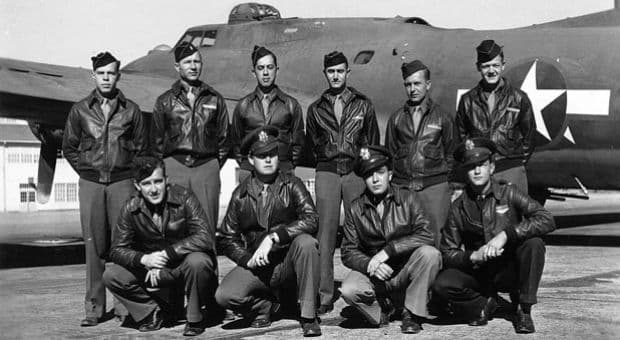
The B-17G carried thirteen .50-caliber M2 Browning machine guns: two in the chin turret, two in the upper turret, two in the ball turret, two waist guns, two in the tail position, and one in each cheek position plus the radio room. The chin turret, the G model's defining addition, finally addressed the head-on attack vulnerability that had plagued earlier B-17 variants. Total defensive ammunition exceeded 5,000 rounds. The combat box formation created interlocking fields of fire where dozens of Fortresses could concentrate on an attacking fighter.
Lancaster B Mk I Loadout
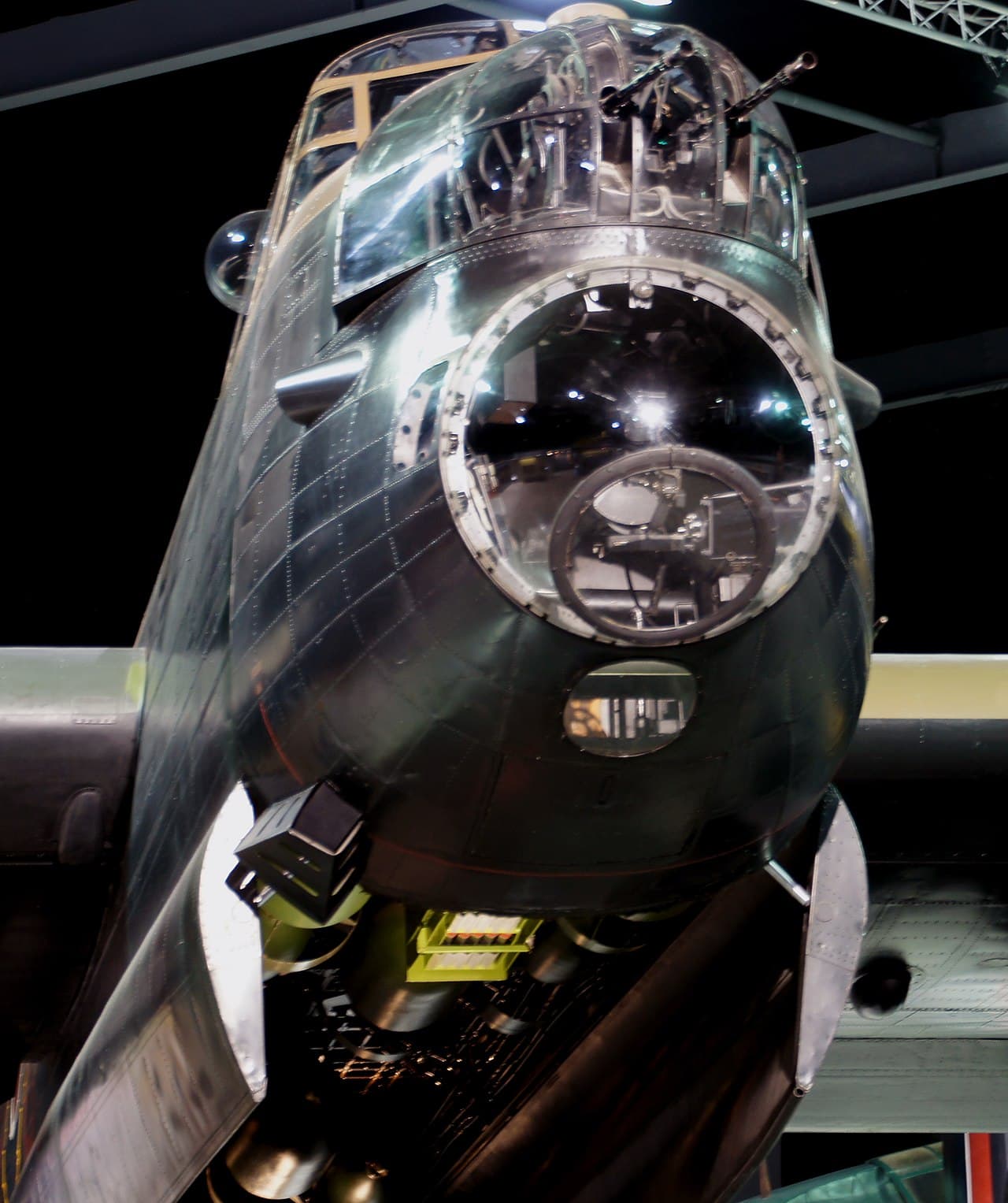
The Lancaster carried eight .303 Browning machine guns: two in the front turret, two in the mid-upper turret, and four in the rear turret (the Rose-Rice tail turret on some aircraft had two .50-caliber guns). The .303 rounds lacked the range, penetration, and hitting power of the .50-caliber BMG, and were increasingly ineffective against armored German fighters from 1943 onward. The Lancaster had no belly turret, a critical vulnerability exploited by German night fighters attacking from below with "Schräge Musik" upward-firing cannons.
Air-to-Air Verdict
The B-17G was overwhelmingly superior in defensive firepower. Thirteen .50-caliber guns versus eight .303s was a massive disparity. The B-17G's combat box formation further multiplied this advantage by creating interlocking fields of fire. A frontal attack on a B-17G formation was almost suicidal for a fighter pilot; an attack on a Lancaster from below was virtually undetectable.
The defensive armament comparison is perhaps the starkest contrast between these two aircraft. The B-17G was designed to fight its way to the target and back, its thirteen .50-caliber guns were a core component of the self-defending bomber concept. The Lancaster was designed to avoid being found, its defensive armament was a last resort, not a primary survival mechanism.
The inadequacy of the Lancaster's .303 guns was recognized early and became increasingly acute as the war progressed. The .303 round could barely penetrate a German fighter's armor plate at combat ranges, meaning that Lancaster gunners were firing essentially ineffective rounds at attackers who carried 20mm and 30mm cannons. Proposals to re-arm Lancasters with .50-caliber guns were repeatedly delayed by production priorities and never fully implemented.
The B-17G's defensive firepower was genuinely formidable. A formation of 36 Fortresses in a combat box could bring over 400 guns to bear on an attacking fighter, creating a lethal crossfire zone that forced the Luftwaffe to develop increasingly desperate tactics, including heavy-caliber rockets, ram attacks (Sturmgruppen), and the deployment of Me 262 jets, to penetrate bomber formations.
However, the B-17G's defensive firepower did not prevent catastrophic losses during the unescorted raids of 1943. Against determined, coordinated fighter attack, even thirteen guns per aircraft were insufficient. The arrival of P-51 escorts in early 1944 was what made daylight bombing sustainable, not the bombers' own guns. The Lancaster's reliance on darkness for protection, while seemingly more fragile, was actually more reliable than the B-17G's self-defense doctrine until the Luftwaffe deployed effective airborne radar in its night fighters.
Survivability & Protection
Armor, self-sealing tanks, pilot protection, and structural resilience
B-17G Protection
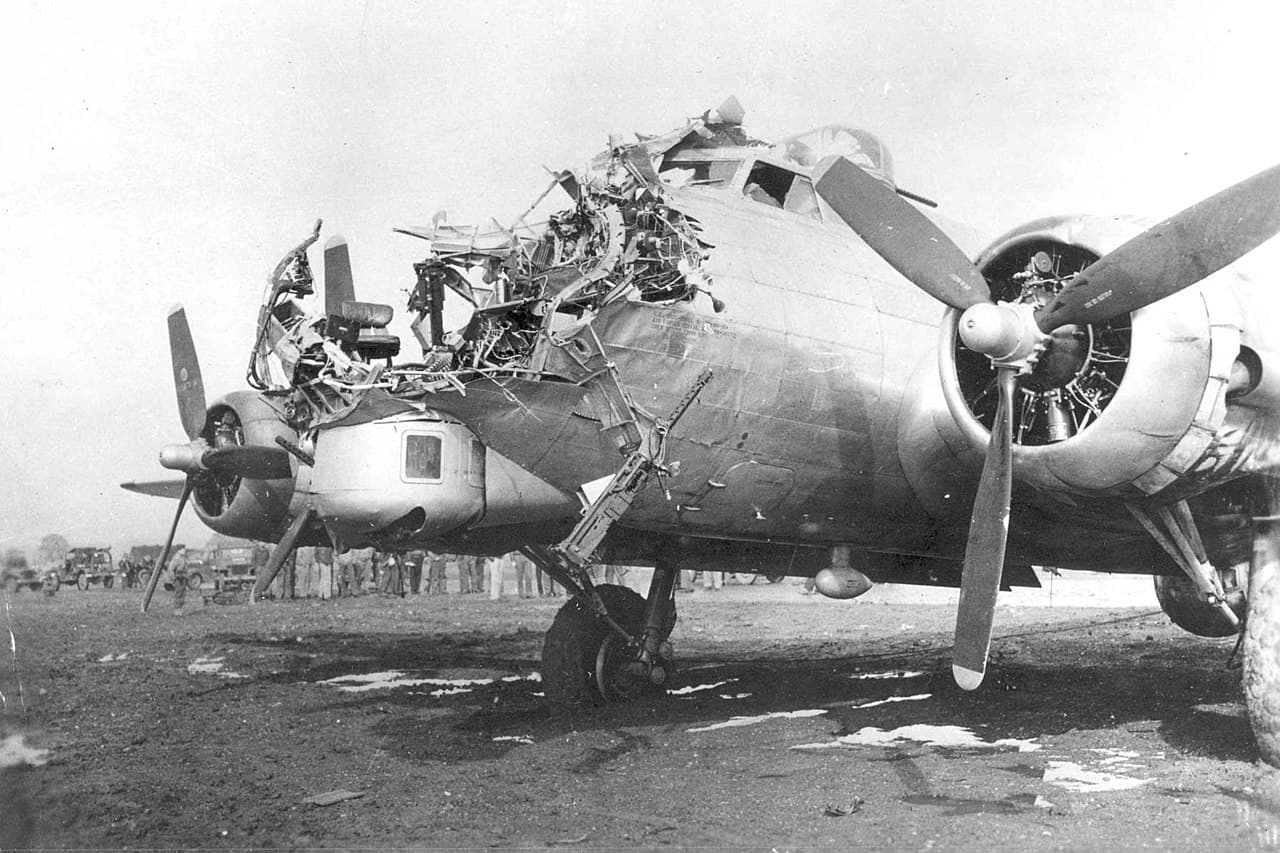
The B-17G carried extensive armor protection for its ten-man crew, including armored bulkheads, flak curtains, and armor plate around critical crew positions. The aircraft's legendary structural resilience, documented in hundreds of photographs showing Fortresses that survived with engines shot away, tails half severed, and fuselages opened to the sky, was the result of robust structural design and redundant systems. The Wright Cyclone radial engines were air-cooled, eliminating the coolant vulnerability that made liquid-cooled engines fragile.
Lancaster B Mk I Protection
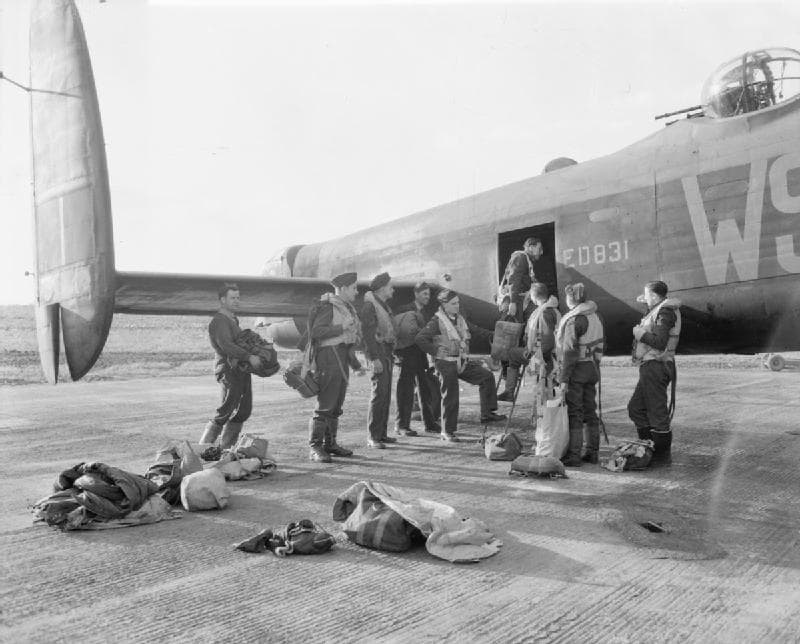
The Lancaster carried less crew armor than the B-17G, and its seven-man crew had fewer protected positions. The aircraft was structurally sound but not designed to absorb the same level of punishment as the Fortress. The Merlin engines were liquid-cooled, making them vulnerable to coolant leaks from even minor damage. The Lancaster's fuel tanks, while self-sealing, were positioned in areas that made the aircraft critically vulnerable to fire, the leading cause of catastrophic loss.
Pilot Protection
The B-17G's pilot and copilot sat behind armor plate and had armored windscreens. The ten-man crew, while spread throughout the aircraft and individually vulnerable, meant the loss of any single crew member did not necessarily compromise the aircraft's ability to return home. The Lancaster's seven-man crew occupied more concentrated positions, and the loss of either pilot was likely to be fatal to the aircraft.
Structural Durability
The B-17G was the most structurally resilient heavy bomber of the war. Documented cases of Fortresses surviving with one wing shot nearly through, entire nose sections destroyed, and multiple engines out are numerous and well-photographed. The Lancaster was structurally adequate but significantly more fragile, a hit to the main spar or a fuel tank fire was typically catastrophic.
Crash Survivability
The B-17G offered better crash survivability due to its higher wing position and more spacious fuselage, which gave crew members more escape routes. The Lancaster's escape hatches were notoriously difficult to reach, particularly from the rear turret. Lancaster rear gunners had the lowest survival rate of any crew position in Bomber Command, many were found dead in their turrets, unable to escape.
Survivability is where the B-17G and Lancaster comparison becomes most emotionally charged, because it directly translates to aircrew lives. Both air forces lost staggering numbers of men, Bomber Command suffered 55,573 killed, and the Eighth Air Force lost over 26,000, but the nature of the losses was different.
The B-17G's structural resilience was genuinely remarkable and is the source of its enduring reputation. The photographs of Fortresses that survived catastrophic damage are not propaganda exaggerations, they document an aircraft that could absorb punishment far beyond what its designers intended. Air-cooled radial engines, redundant control cables, and overbuilt structural members combined to create a bomber that simply refused to die.
The Lancaster's vulnerability was equally real. The combination of inadequate defensive armament, fire-prone fuel tank placement, and restricted escape hatches created a lethal trap when the aircraft was hit. The overall loss rate for Bomber Command Lancaster crews was approximately 44% killed, nearly one in two. The survival rate for crews who were hit by "Schräge Musik" upward-firing cannons was virtually zero, as the rounds typically penetrated the wing root fuel tanks and caused instantaneous fire.
The B-17G's superior survivability was partially offset by its daylight mission profile, which exposed it to more accurate visual-range fighter attack and aimed flak. The Lancaster's night operations offered passive protection that, in the aggregate, compensated somewhat for the aircraft's greater inherent vulnerability. Both bomber types operated at unsustainable loss rates during the worst periods of the air campaign.
Tactical Doctrine & Evolution
How pilots were trained to fight in each aircraft and how tactics adapted over time
B-17G Tactics
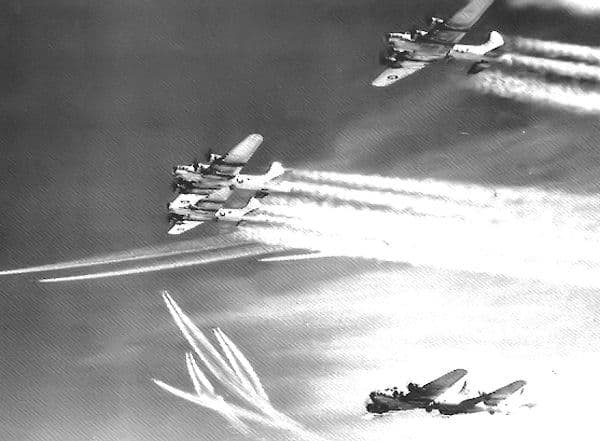
The B-17G's tactical doctrine was built around the combat box formation, a precisely choreographed arrangement of 18-36 aircraft that created overlapping fields of defensive fire. Each bomber group flew in a stacked formation of three squadrons (high, lead, and low), with each aircraft positioned to provide covering fire for its neighbors.
The bombing run itself was the most disciplined phase. On the final approach to the target, the formation flew straight and level for several minutes while the lead bombardier tracked through his Norden bombsight. During this period, the formation could not maneuver to evade flak, every aircraft held steady to ensure accurate bombing. This was the most dangerous period of any mission, as German flak batteries concentrated their fire on the predictable approach path.
Formation integrity was paramount. A B-17 that fell out of formation, due to engine damage, battle damage, or pilot error, was immediately vulnerable to fighter attack. German fighter pilots watched for stragglers and concentrated on isolated aircraft that had lost the protection of the formation's guns. Staying in formation, even with severe damage, was often the difference between survival and destruction.
The introduction of P-51 escort fighters in early 1944 fundamentally changed the tactical equation. Rather than relying solely on formation firepower for defense, B-17G formations were now covered by fighters that could engage the Luftwaffe at distance. This freed the bomber formations from some of the rigid positioning requirements and allowed more flexible routing to targets.
Lancaster B Mk I Tactics
Bomber Command's tactical doctrine evolved continuously throughout the war, driven by the ongoing cat-and-mouse game between British bombers and German night defenses. The Lancaster operated as part of a bomber stream, a carefully planned river of aircraft flowing along a specific route to concentrate the force over the target in the shortest possible time.
The bomber stream was designed to overwhelm German defenses by saturation. Rather than having individual aircraft navigate independently (as in 1942), the entire force followed the same route, arriving over the target within a 30-45 minute window. This concentration meant that German night fighters and flak batteries could only engage a fraction of the force before the stream passed.
Pathfinder Force (PFF) aircraft, usually Lancasters and Mosquitoes equipped with H2S radar and Oboe precision navigation, marked the target with colored flares before the main force arrived. The accuracy of the attack depended heavily on the Pathfinders: if the markers were accurate, the bombing was devastating; if they were misplaced, the bombs fell on empty countryside.
The corkscrew was the standard defensive maneuver against night fighters. When a Lancaster crew detected an attacker (usually by the rear gunner's visual scan or the Monica tail-warning radar), the pilot would execute a violent series of climbing and diving turns designed to break the fighter's radar lock and present a difficult target. The corkscrew was physically demanding, required considerable skill, and was only effective if the attack was detected in time.
Window (chaff) was introduced in July 1943 for the Hamburg raids and became a standard part of Bomber Command operations. Bundles of aluminum foil strips were dropped to confuse German ground radar, creating false returns that blinded the Himmelbett radar stations and the Wurzburg flak-direction radar. The German response, the Wilde Sau and Zahme Sau fighter tactics, adapted to window but never fully overcame it.
How Tactics Evolved
The tactical evolution of heavy bomber warfare between 1942 and 1945 was a relentless competition between offense and defense that consumed enormous resources on both sides and produced some of the most sophisticated electronic warfare of the conflict.
The B-17G's doctrine evolved from near-suicidal unescorted deep penetration in 1943 to highly effective escorted precision bombing by mid-1944. The key enabler was the P-51 Mustang, which provided escort to Berlin and beyond. With fighter protection, the B-17G formation's defensive firepower became complementary rather than primary, the formation still needed to defend itself during the bombing run when escorts were engaged elsewhere, but the fighters handled the bulk of the defense.
Bomber Command's evolution was driven by the electronic warfare dimension. The introduction of H2S ground-mapping radar, Oboe precision navigation, GH blind-bombing, and the Pathfinder marking system progressively improved bombing accuracy. Simultaneously, the Window chaff countermeasure, Mandrel radar jamming, and ABC (Airborne Cigar) communications jamming degraded German defensive capabilities.
The German response was equally sophisticated. Night fighters were equipped with Lichtenstein and SN-2 airborne intercept radar, Naxos homer receivers that tracked H2S emissions, and the devastating "Schräge Musik" upward-firing twin cannon installation that allowed fighters to attack from the Lancaster's blind spot below. The cat-and-mouse cycle of measures and countermeasures continued until the end of the war.
By 1945, both bombing forces had achieved devastating effectiveness. The B-17G-led daylight campaign had destroyed German oil production, while the Lancaster-led night campaign had devastated transportation networks and industrial cities. The Combined Bomber Offensive consumed approximately 25% of Germany's total war effort in air defense and damage repair, a staggering diversion of resources from the fighting fronts. Neither aircraft alone could have achieved this result; together, they were decisive.
What the Pilots Said
Firsthand accounts from the men who flew and fought these aircraft
On the B-17G“She was the greatest airplane ever built. You could shoot an engine off her, blow half the tail away, riddle the fuselage until you could see daylight through it, and she'd still bring you home. I owe my life to the Boeing engineers who built that airplane stronger than any of us thought possible.”
On the Lancaster B Mk I“The Lancaster was a pilot's aeroplane, responsive, honest, and capable of things no heavy bomber had any right to do. She would corkscrew, dive, and turn with a willingness that gave you a fighting chance when the night fighters found you. But if they hit your tanks, it was over in seconds.”
On the B-17G“Formation flying was everything. You held your position because your life depended on the guns of the men around you, and their lives depended on your guns. When a Fort went down, you watched it go and tightened the formation. You couldn't think about the ten men inside. Not until you got home.”
On the Lancaster B Mk I“The worst part of flying Lancasters was the knowledge that if you were hit, you probably wouldn't get out. The escape hatches were small, the aircraft was full of fuel, and you were flying at night over enemy territory. Our odds were worse than the infantry on D-Day, and we did it night after night for months.”
On the Lancaster B Mk I“I flew both types during the war, and they were as different as chalk and cheese. The Fortress was a tank, heavy, solid, and nearly indestructible. The Lancaster was a sports car, light, agile, and carrying twice the payload. If I had to bomb a city, give me a Lancaster. If I had to survive the trip there and back, give me a Fortress.”
By the Numbers
Statistical combat performance and historical kill ratios
Direct comparison of combat records is complicated by the fundamentally different mission profiles. Bomber Command Lancasters flew 156,000 sorties and lost 3,249 aircraft in action, a loss rate of 2.08% per sortie. The Eighth Air Force B-17s flew approximately 291,000 sorties and lost 4,754 aircraft, a loss rate of 1.63% per sortie. However, these raw numbers obscure significant variation: B-17 loss rates exceeded 10% on several 1943 missions, while the average Lancaster sortie was longer and more demanding.
Comparing the combat records of the B-17G and Lancaster requires careful attention to context, because the two aircraft fought under fundamentally different conditions. The Eighth Air Force's daylight campaign and Bomber Command's night offensive each had distinct patterns of loss and survival that make direct statistical comparison misleading.
The B-17G's loss rate per sortie was lower overall, but this figure is heavily influenced by the post-February 1944 period when P-51 escort fighters dramatically reduced losses. During the unescorted raids of 1943, the B-17's loss rate was often 5-10% per mission, unsustainable by any standard. The arrival of long-range fighters transformed the calculus: by mid-1944, loss rates had fallen below 2% per mission, and the Eighth Air Force was able to sustain the tempo of operations that broke the Luftwaffe.
The Lancaster's loss rate was remarkably consistent throughout the war, typically 3-4% per sortie during the main force campaigns. This consistency masked a grim reality: Bomber Command's campaign stretched over a much longer period, which meant that the cumulative probability of survival was devastating. A Bomber Command crew typically needed to complete 30 sorties for a full tour, at a 3.5% average loss rate, the statistical probability of surviving a full tour was approximately 35%.
The most meaningful comparison may be in overall contribution to the strategic bombing campaign. The Lancaster delivered a higher tonnage of bombs per aircraft per sortie due to its superior bomb load. The B-17G required more sorties to deliver equivalent tonnage but was more survivable per sortie. In aggregate, both types were essential, the combined day-and-night offensive was far more effective than either could have been alone.
What the combat records ultimately demonstrate is that strategic bombing in WWII was an extraordinarily costly enterprise regardless of aircraft type or tactical doctrine. Both the B-17G and Lancaster achieved their strategic objectives, the destruction of German industrial capacity, oil production, and transportation networks, at a price in aircrew lives that remains staggering to contemplate.
Production & the Numbers Game
How industrial output shaped the strategic balance
12,731
B-17G Built
3,425
Lancaster B Mk I Built
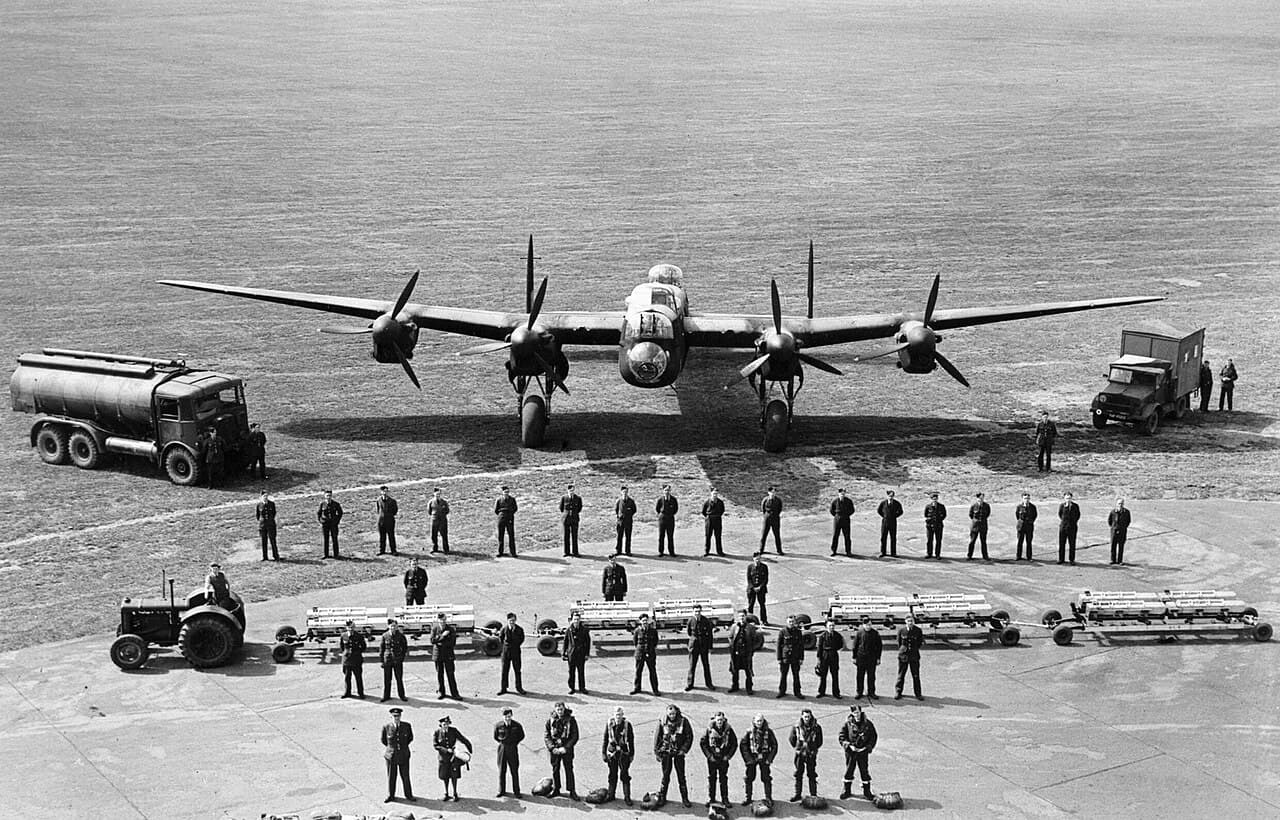
The production comparison reflects the different industrial approaches of the United States and Britain. America's vast manufacturing capacity allowed it to produce nearly twice as many B-17s as Britain produced Lancasters, while simultaneously building even greater numbers of B-24 Liberators, B-29 Superfortresses, and thousands of fighters, transports, and trainers.
Britain's more limited industrial base made every Lancaster more precious. Bomber Command could not afford the loss rates that the Eighth Air Force sustained during the 1943 crisis, there simply were not enough replacement aircraft and crews. This industrial reality influenced tactical doctrine: the emphasis on night bombing was partly driven by the need to keep per-sortie loss rates low enough to maintain force levels.
The economic comparison reveals an interesting paradox. The Lancaster delivered more bomb tonnage per aircraft (a consequence of its larger bomb load) but was more expensive to produce per unit. The B-17G was cheaper per unit but required more sorties to deliver equivalent tonnage. In terms of cost per ton of bombs delivered, the two types were remarkably similar.
Both production programs demonstrated the fundamental truth of strategic bombing: it was an industrial process. The ability to produce replacement aircraft and train replacement crews at a rate that exceeded losses was as important as the performance of any individual aircraft. The United States' overwhelming industrial advantage ultimately made the daylight bombing campaign sustainable; Britain's more efficient use of its limited Lancaster fleet kept the night campaign viable. Together, they created the round-the-clock pressure that no German defense system could withstand.

Advantages in This Matchup
Where each aircraft holds the edge in a head-to-head encounter
B-17G Flying Fortress
- Superior defensive armament with thirteen .50-caliber machine guns
- Legendary structural resilience, survived catastrophic battle damage
- Higher service ceiling (35,600 ft) for better flak and fighter avoidance
- Air-cooled engines more resilient to combat damage than liquid-cooled
- Combat box formation created devastating interlocking fields of fire
- Better crew survivability, more escape routes and armor protection
- Superior precision bombing capability with Norden bombsight at altitude
Lancaster B Mk I Lancaster
- Massively superior bomb load, 22,000 lbs maximum vs 9,600 lbs
- Unobstructed 33-foot bomb bay could carry Grand Slam and Tallboy
- Greater range (2,530 miles) for reaching distant targets
- More agile handling, capable of effective evasive maneuvers
- More efficient tons-per-sortie ratio for area bombing
- Night operation provided passive protection against fighters
- Smaller crew (7 vs 10), fewer lives risked per aircraft
Final Verdict
Overall Assessment
Context-Dependent
Neither aircraft holds a definitive advantage, the winner depends on the scenario.
The B-17G Flying Fortress and Avro Lancaster are not meaningfully comparable on a "which was better" basis because they were designed for different wars. The B-17G was built for the American vision of strategic bombing, high-altitude, daylight, precision attacks on specific industrial targets. The Lancaster was built for the British reality of strategic bombing, night-time area attacks on German industrial centers, driven by the painful lessons of early-war daylight losses.
Each aircraft excelled at its designated mission. The B-17G's combination of defensive firepower, structural resilience, and high-altitude capability made it the finest daylight heavy bomber of the war. No other aircraft could sustain the punishment that Fortresses absorbed over Germany day after day. The Lancaster's enormous bomb bay, superior range, and agile handling made it the finest night bomber of the war. No other aircraft could deliver the Tallboy or Grand Slam, and no other heavy bomber could execute the corkscrew with the Lancaster's responsiveness.
The real verdict is that the Combined Bomber Offensive needed both. Lancasters by night denied German workers rest and destroyed housing, transportation, and utilities. Fortresses by day struck at specific industrial targets with growing precision and forced the Luftwaffe to maintain a massive daytime fighter force. Together, they created an around-the-clock assault that consumed a quarter of Germany's war economy in defense and repair.
If forced to choose one aircraft for all bombing missions, the Lancaster's vastly superior payload, greater range, and operational flexibility would make it the more versatile choice. But this hypothetical misses the essential point: the B-17G's role in forcing the Luftwaffe to fight by day, where it could be destroyed by P-51 escorts, was strategically decisive in a way that raw bomb tonnage statistics cannot capture. The destruction of the Luftwaffe fighter force in early 1944, precipitated by the B-17G formations that the German fighters had to attack, enabled both D-Day and the final phase of the bomber offensive.
These two aircraft represent the pinnacle of piston-engine strategic bombing. Their crews suffered casualties at rates that exceed any other sustained military campaign in history. That they achieved their strategic objective, the systematic destruction of Germany's capacity to wage war, is testament to both the aircraft and the extraordinary courage of the men who flew them.
Theaters of Operation
Shared Theaters
B-17G Only
Lancaster B Mk I Only