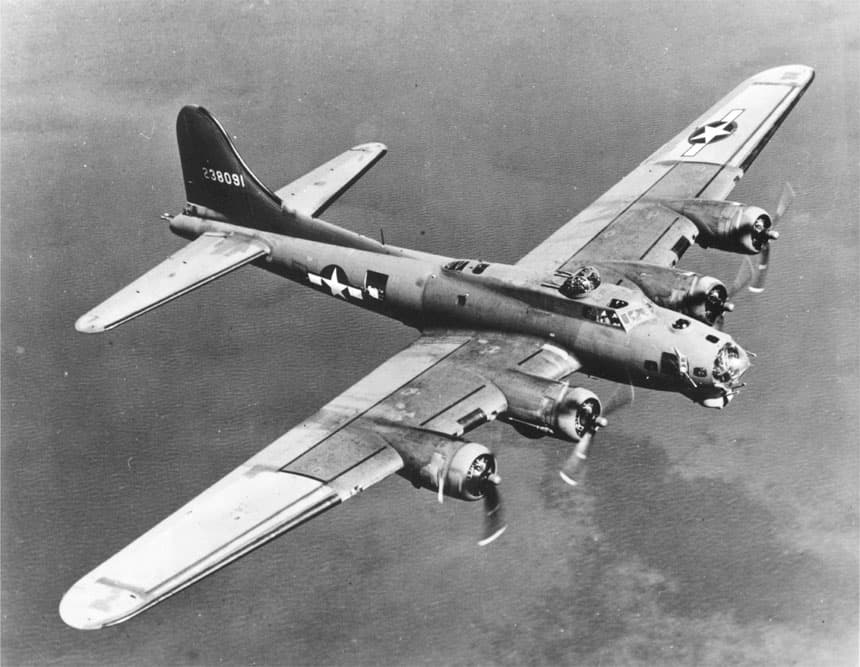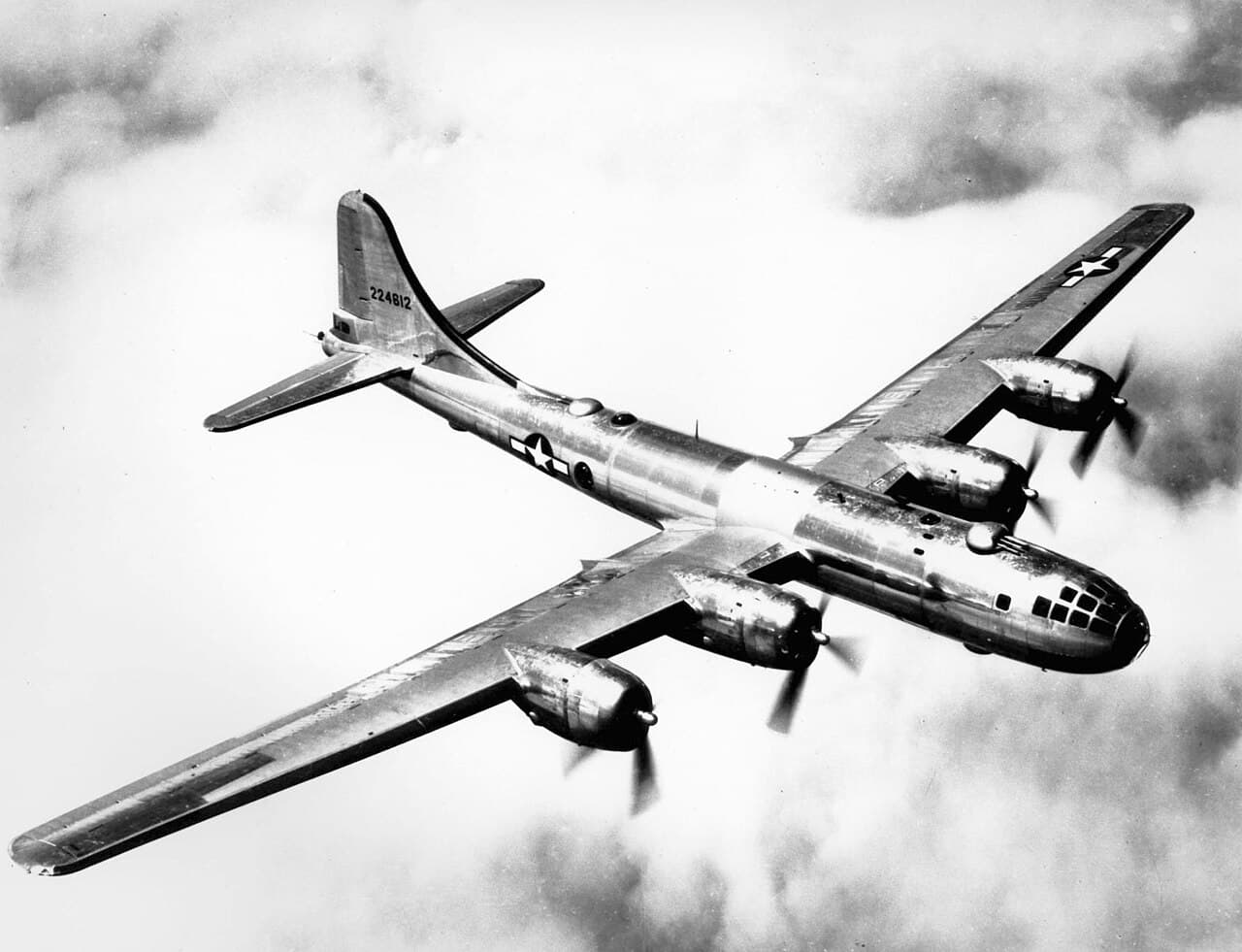
Boeing B-29 Superfortress
Boeing
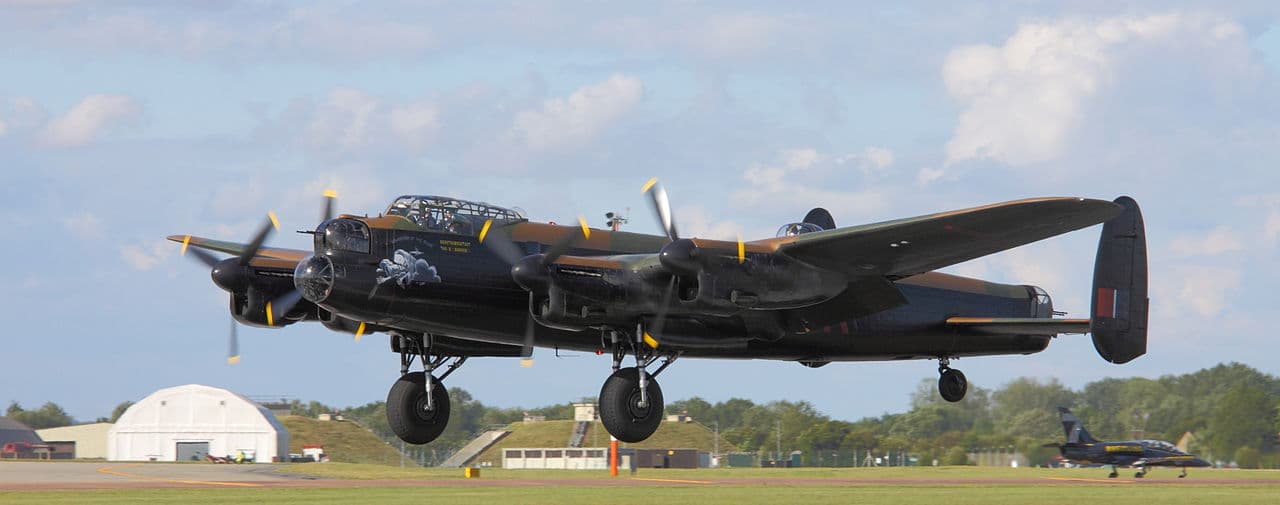
Avro Lancaster B Mk I
A.V. Roe & Company (Avro)
B-29 Superfortress vs Avro Lancaster
America's atomic bomber against Britain's dam-busting heavy
The Bottom Line
The B-29 was the more technologically advanced bomber by a full generation. The Lancaster was the harder-working, more adaptable aircraft that bore the weight of the European bombing offensive for three grinding years. The B-29 delivered the weapons that ended the Pacific war; the Lancaster delivered the campaign that crippled Germany's industrial capacity.
Who Wins Each Scenario?
Night area bombing over defended Germany
Lancaster B Mk I
Purpose-built for this role with the Pathfinder system, massive bomb bay, proven engines, and three years of operational refinement. The Lancaster delivered 608,000+ tons in exactly this mission profile.
Long-range Pacific strategic bombing
B-29
The Lancaster lacked the range for Pacific operations. The B-29's 3,250-mile combat radius, pressurized cabin, and high-altitude capability made it the only viable option for striking Japan from island bases.
Precision strike with specialized weapons
Lancaster B Mk I
No other bomber could carry the Tallboy, Grand Slam, or bouncing bomb. 617 Squadron's precision strikes on dams, V-weapon sites, U-boat pens, and the battleship Tirpitz demonstrated capabilities no B-29 unit matched.
High-altitude daylight operations
B-29
The pressurized cabin, superior 31,000+ foot ceiling, and computer-controlled defensive armament made the B-29 far better suited for sustained high-altitude daylight bombing.
Surviving enemy defenses
B-29
The B-29's 1.38% loss rate versus Bomber Command's 2.2–5.8% reflects superior defensive capabilities, though the difference in enemy quality (weakened Japan versus peak Luftwaffe night fighters) must be acknowledged.
Maximum payload delivery on a single target
Lancaster B Mk I
The Lancaster could carry 22,000 lbs with the Grand Slam, the heaviest conventional bomb of WW2, giving it the edge in sheer payload. The B-29's atomic capability, however, delivered incomparably greater destructive power per weapon.
Performance Profile
Overall capability comparison across six combat dimensions
Head-to-Head Specifications
Key performance metrics compared side by side
Size Comparison
Both aircraft drawn to the same scale, the B-29 has 39.3ft greater wingspan and is 29.5ft longer
Performance Analysis
How each aircraft performs across key combat dimensions
Speed
WINNER: B-29The B-29 reached 357 mph at altitude, 75 mph faster than the Lancaster. This speed made it significantly harder to intercept and reduced exposure time over defended targets.
The Lancaster's 282 mph was adequate for night operations where speed was less critical than navigation accuracy. Its lower speed actually aided target identification during nighttime area bombing.
The B-29's speed advantage was substantial and operationally significant. Over Japan, it could outrun most interceptors at altitude. The Lancaster, operating at night, relied on darkness rather than speed for protection, a valid doctrinal choice, but one that offered no margin when night fighters closed in.
Maneuverability
WINNER: Lancaster B Mk IThe B-29 was surprisingly agile for its size, with responsive controls at altitude. Its higher wing loading gave it better stability in formation flying.
Lancaster pilots praised its handling qualities, it was responsive and pleasant to fly for a heavy bomber. It could perform corkscrew evasive maneuvers when attacked by night fighters, a survival tactic that required good low-speed handling.
The Lancaster was the more maneuverable aircraft in the regimes that mattered, low-altitude evasion and corkscrew escape maneuvers. The B-29's handling was excellent at high altitude but less relevant to survival, since its primary defense was altitude and speed rather than evasion.
Climb Rate
WINNER: B-29The B-29 could reach its operational altitude of 25,000–30,000 feet more efficiently, though climb rate varied significantly with bomb load. Four 2,200-hp Wright R-3350 engines provided ample power.
The Lancaster's four Merlins gave it reliable climb performance to its typical operational altitude of 18,000–22,000 feet. Lighter bomb loads allowed faster climbs for Pathfinder marking missions.
The B-29 had the advantage in absolute ceiling, but both aircraft climbed adequately for their respective mission profiles. The B-29's higher operating altitude was more a function of pressurization than raw climb performance, the Lancaster could reach similar altitudes but crews couldn't operate effectively without pressurization.
Altitude Performance
WINNER: B-29Service ceiling of 31,850 feet, roughly 10,000 feet higher than the Lancaster. The pressurized cabin allowed crews to operate at these altitudes without oxygen masks, maintaining alertness and endurance on long missions.
The Lancaster's operational ceiling of 21,400–24,500 feet was sufficient for European operations. Operating at lower altitudes actually improved bombing accuracy, as bomb dispersion increased with release altitude.
The B-29's altitude advantage was decisive. Operating at 30,000+ feet put it above most Japanese fighters and flak, dramatically reducing losses. The Lancaster's lower ceiling was a serious vulnerability against German 88mm flak and high-altitude night fighters. The pressurized cabin was the key differentiator, it represented a genuine generational advance.
Range & Endurance
WINNER: B-29Combat range of 3,250 miles (5,830 miles ferry range). Designed specifically for the vast Pacific distances, the B-29 could strike Japan from Mariana Islands bases, a 3,000-mile round trip.
Maximum range of 2,530 miles (1,660 miles with standard bomb load). Adequate for European operations where targets were typically 500–1,000 miles from bases in England.
Range was the B-29's reason for existing. No other bomber in the Allied inventory could span the Pacific distances required to reach Japan. The Lancaster's range was sufficient for its theater but would have been inadequate for Pacific operations. This isn't a failing of the Lancaster, it was never designed for such missions.
Dive Speed
EvenStructurally sound in steep descents, though dive bombing was never part of its mission profile. The B-29's speed and altitude gave it options for rapid descent to evade threats.
Lancaster crews used diving as part of the corkscrew evasive maneuver against night fighters, a combination of diving, climbing, and turning that exploited the bomber's handling qualities. The airframe could handle aggressive maneuvering when survival demanded it.
Neither aircraft was designed for diving, but the Lancaster's use of aggressive evasive maneuvers including dives was a documented survival tactic. The B-29 rarely needed to dive, its altitude was its defense. In the context of bomber operations, this category is essentially a wash.
Roll Rate
WINNER: Lancaster B Mk IAdequate roll rate for a heavy bomber. The B-29's larger ailerons provided reasonable response, though no heavy bomber excelled in this category.
The Lancaster's lighter control forces and responsive ailerons made it the more agile of the two in roll, which contributed to its reputation as a pilot's airplane among heavy bombers.
Roll rate is largely irrelevant for strategic bombers, but the Lancaster's lighter handling gave it a slight edge in the violent evasive maneuvers that night bomber crews relied on for survival.
Cockpit Visibility
WINNER: B-29The B-29's large greenhouse nose provided excellent forward and downward visibility for the bombardier and pilot. The pressurized cabin allowed crew comfort that aided alertness on long missions.
The Lancaster offered good visibility from the cockpit and excellent forward views for the bomb aimer in the nose. The mid-upper and tail turrets provided good defensive observation arcs.
Both aircraft provided adequate visibility for their respective missions. The B-29's advantage in crew comfort through pressurization was more significant than any difference in window placement, alert crews see more than exhausted ones, and the B-29's crews could operate for hours without the debilitating effects of cold and hypoxia that Lancaster crews endured.
Photo Gallery, 12 Photos
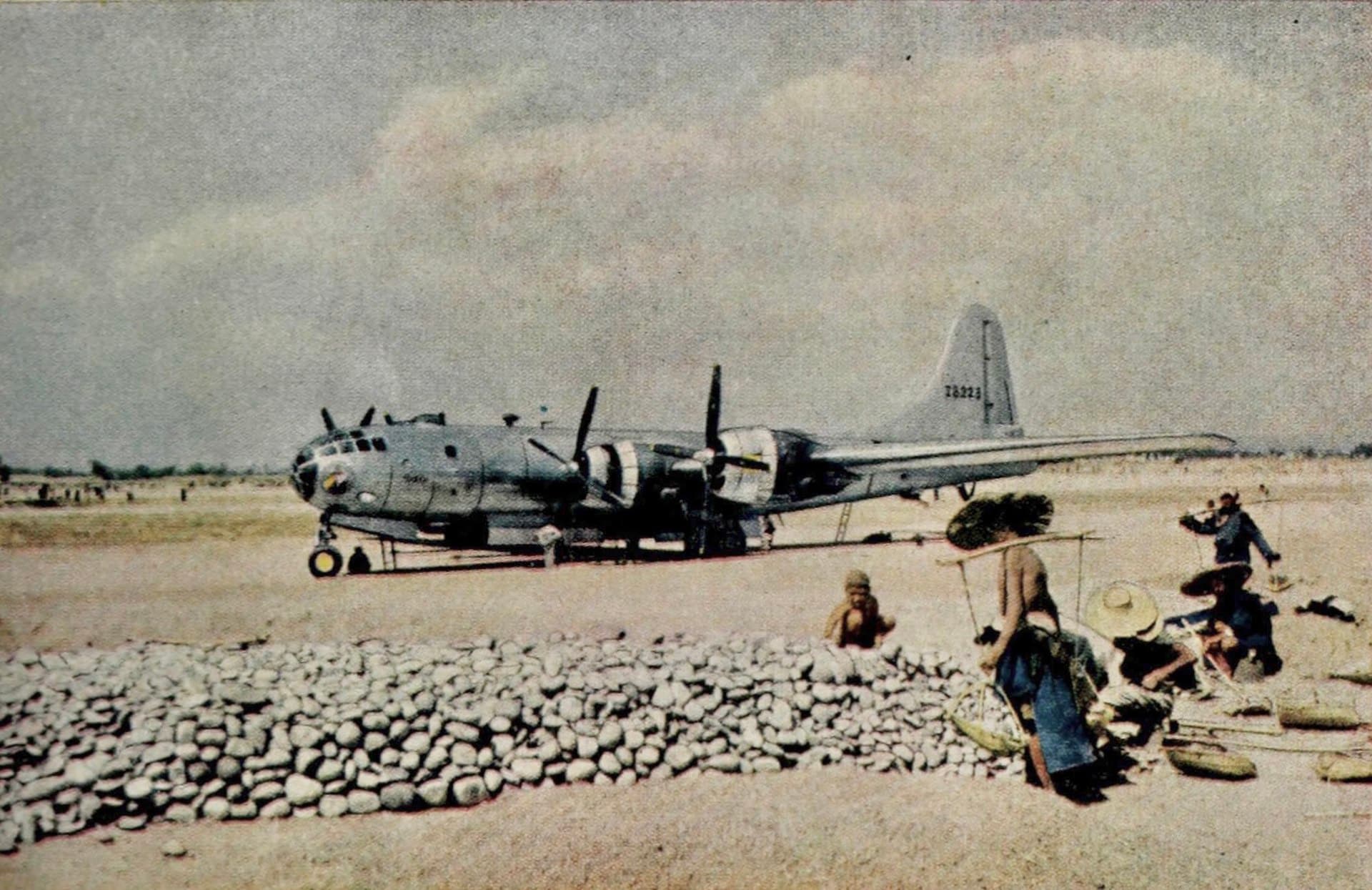
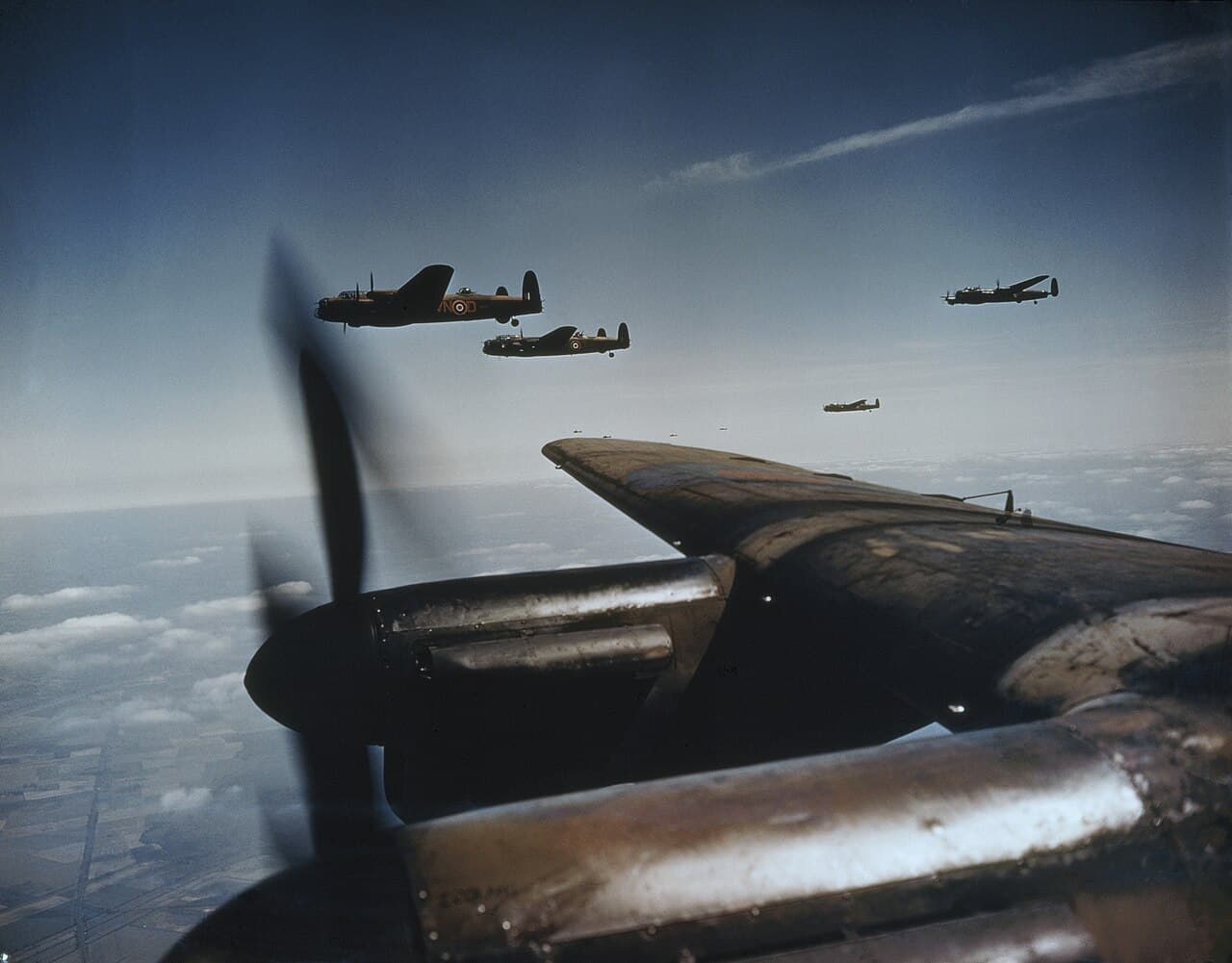
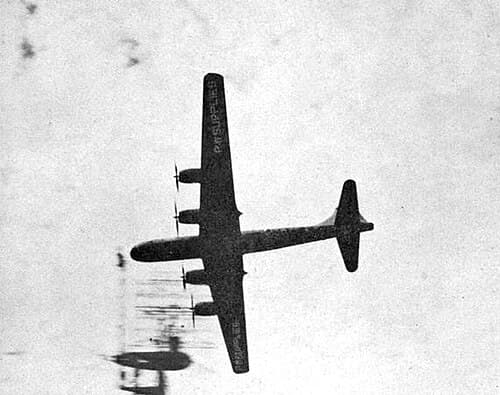
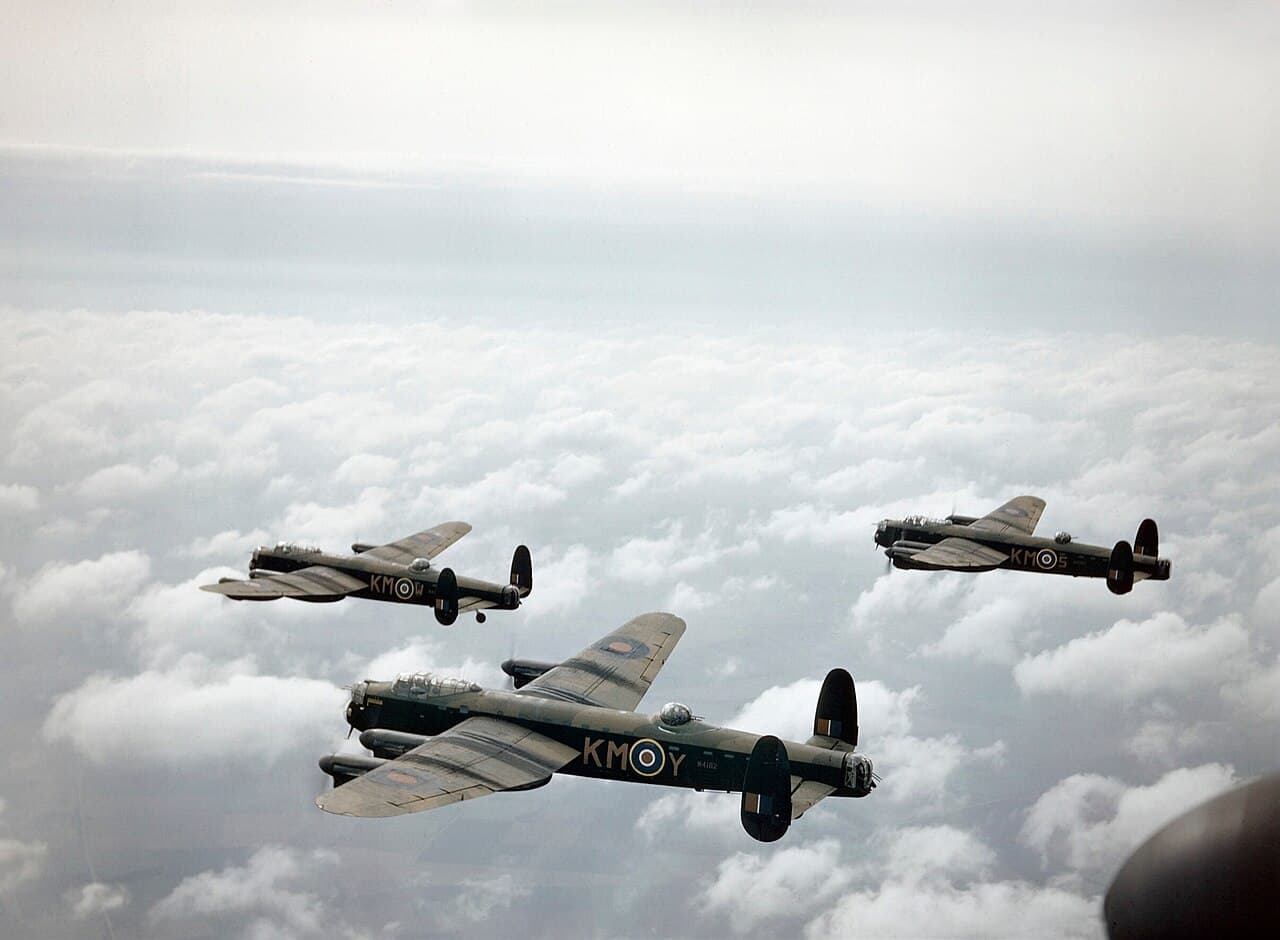
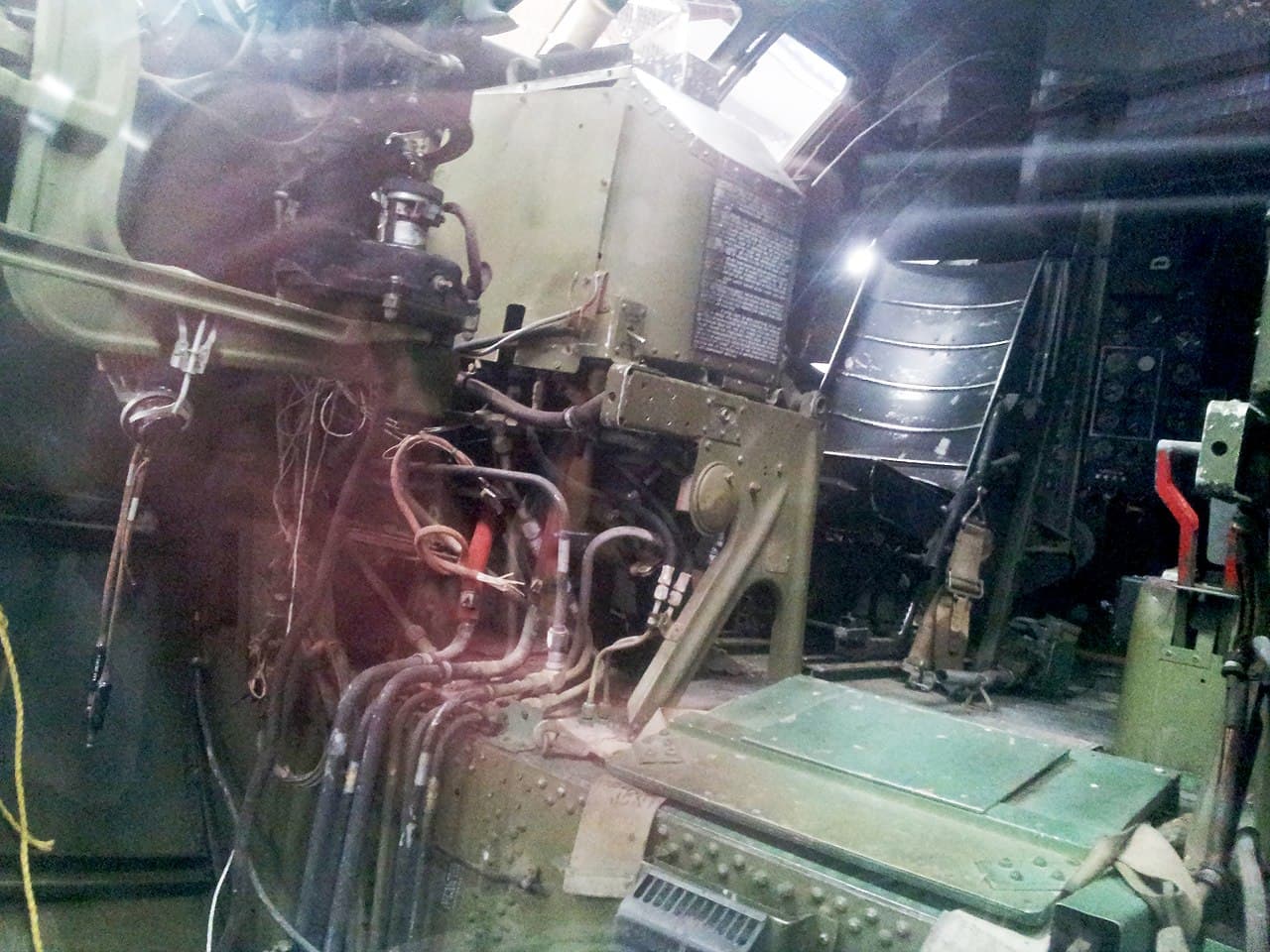
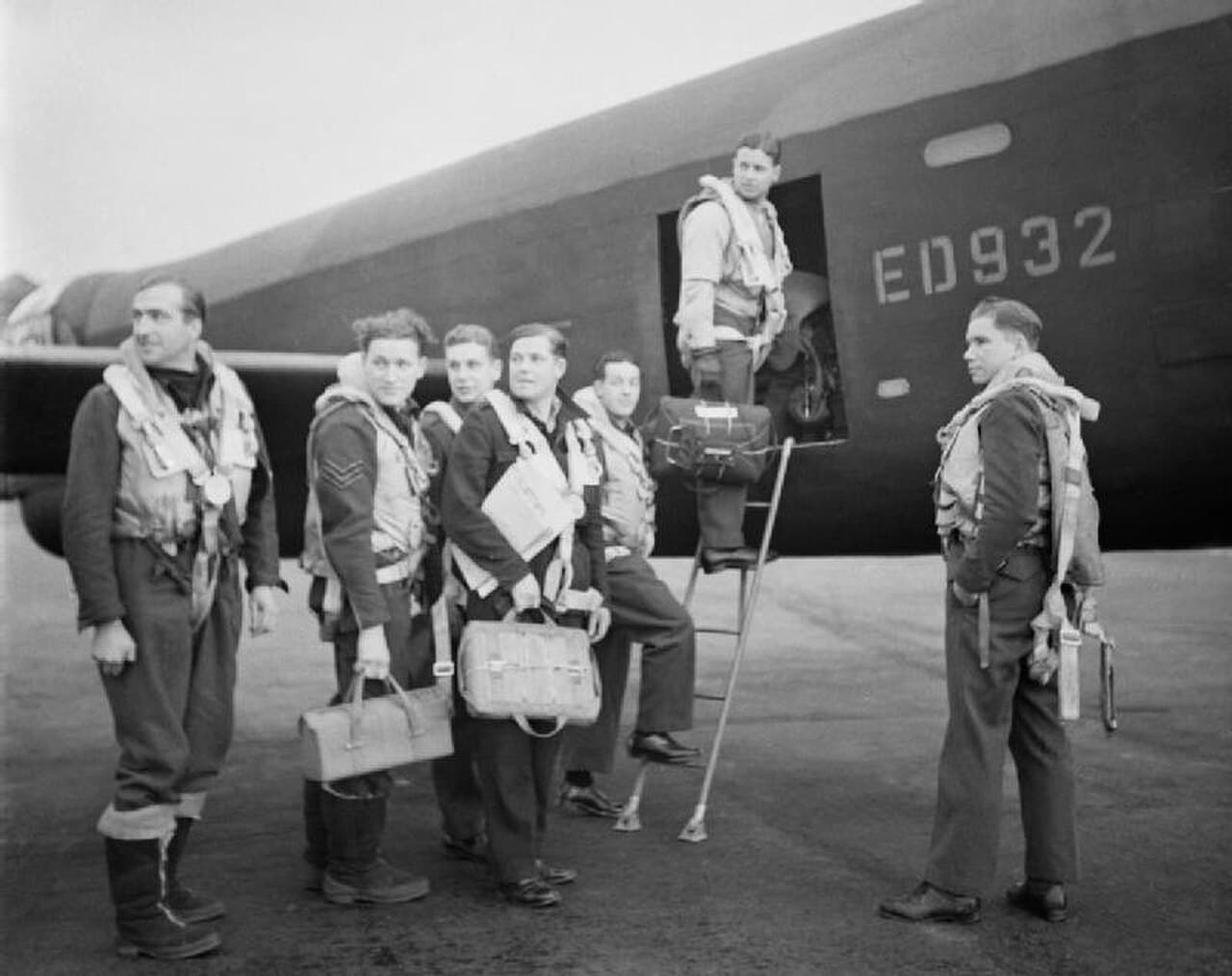
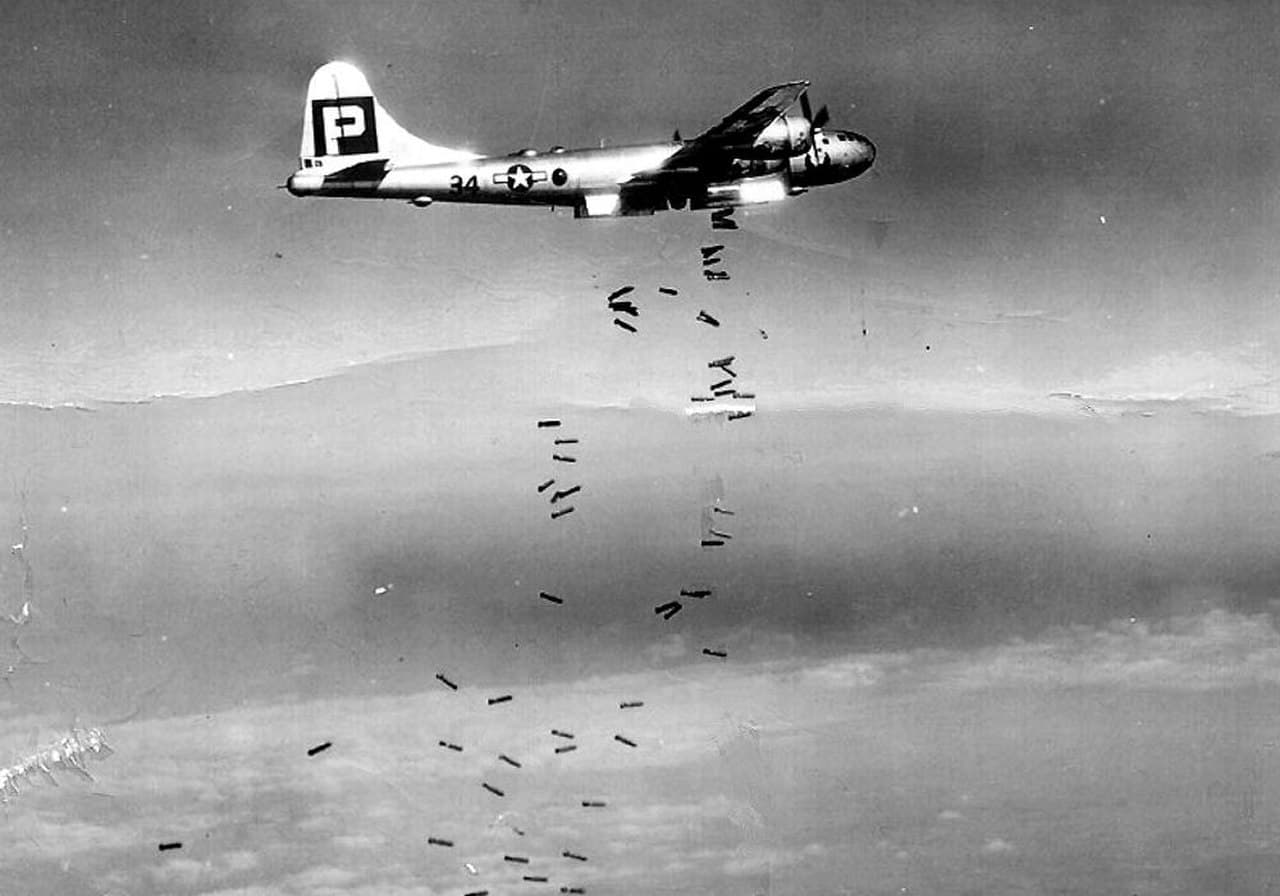
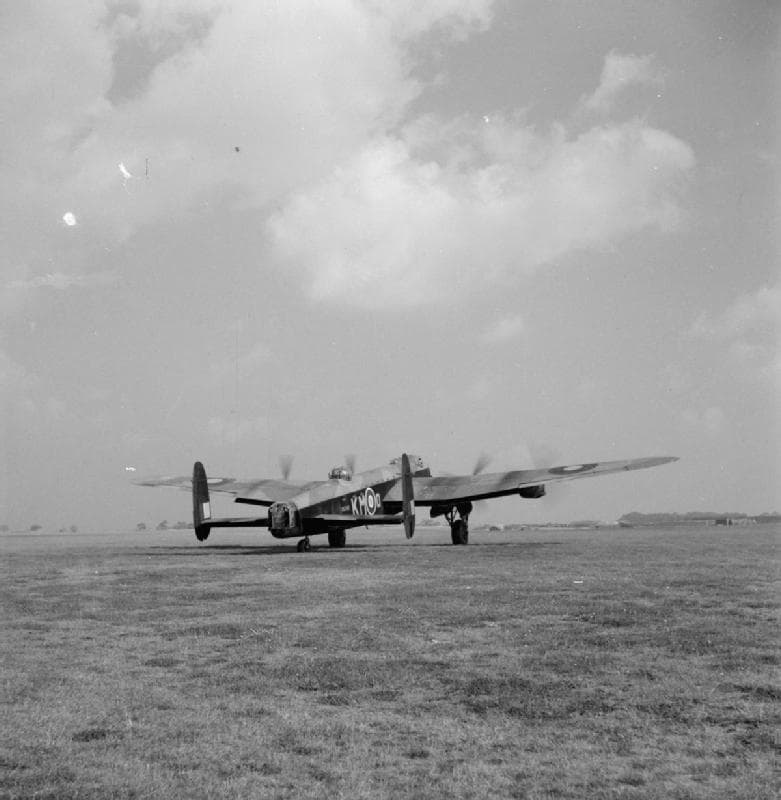
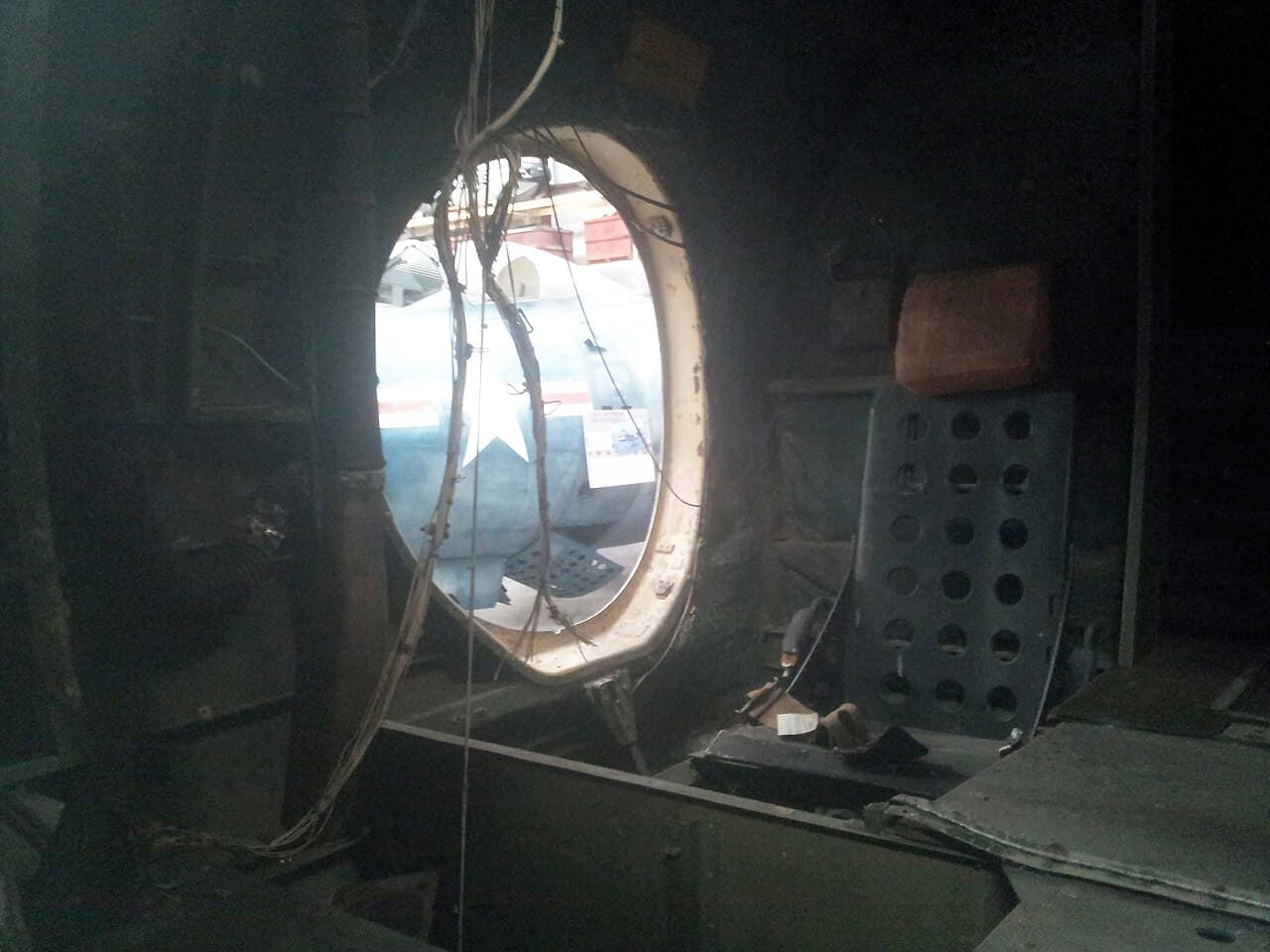
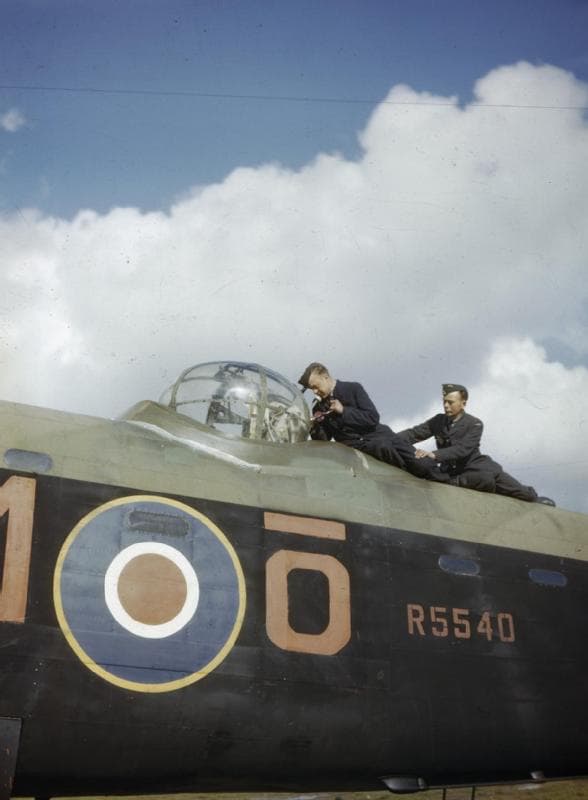
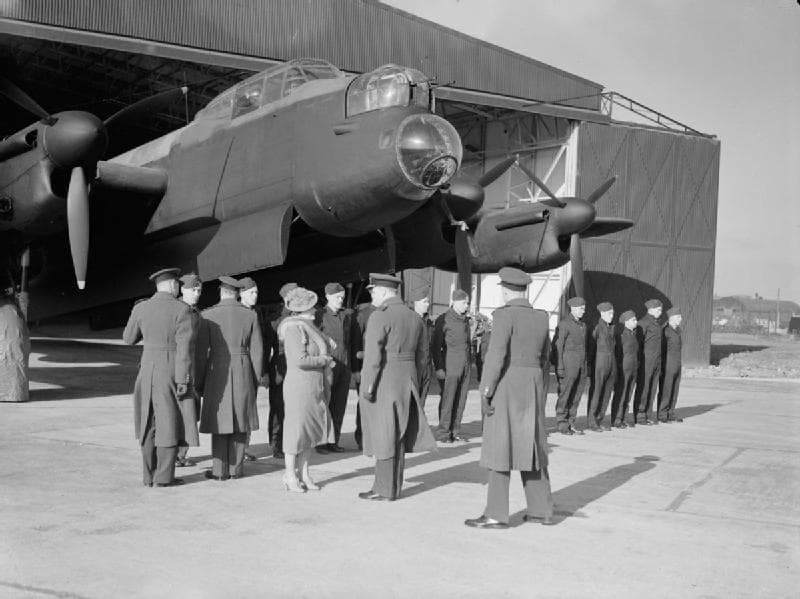
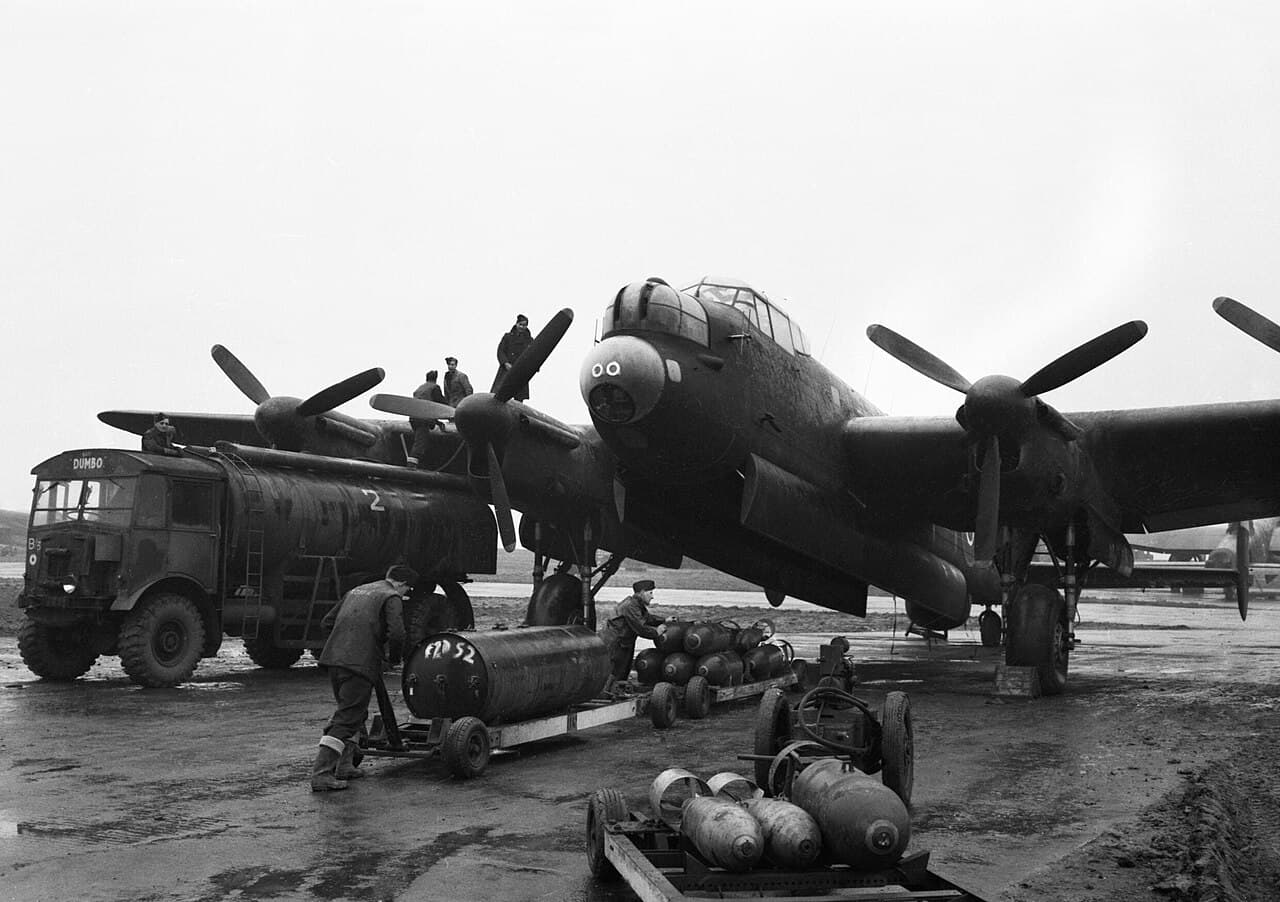
Click any photo to enlarge · 12 photos
Historical Context
The strategic backdrop that shaped both aircraft
The B-29 Superfortress and Avro Lancaster were the most capable strategic bombers fielded by the Western Allies during World War II, yet they were products of entirely different design philosophies, industrial traditions, and operational requirements. The Lancaster evolved from the failed twin-engine Avro Manchester, designer Roy Chadwick replaced its unreliable Rolls-Royce Vulture engines with four proven Merlins, creating an aircraft that first flew in January 1941 and entered combat in March 1942. The B-29 was conceived from scratch as a next-generation "hemisphere defense weapon," with Boeing beginning design work in 1938 and the prototype flying in September 1942. It would not see combat until June 1944.
The doctrinal divide between these aircraft was as significant as the technological gap. RAF Bomber Command, under Air Marshal Arthur "Bomber" Harris, embraced nighttime area bombing, targeting entire industrial cities with massed bomber streams, guided by the Pathfinder Force's colored flares. This approach acknowledged that night bombing lacked the accuracy for precision targeting and instead sought to destroy worker housing, infrastructure, and morale across Germany's industrial heartland. The USAAF, by contrast, built its strategy around daylight precision bombing with the Norden bombsight, though General Curtis LeMay would later abandon this doctrine entirely for the B-29's devastating low-altitude firebombing campaign against Japan.
The two bombers fought in different theaters against very different enemies. The Lancaster faced the Luftwaffe's sophisticated night fighter force, radar-equipped Bf 110s and Ju 88s using tactics like Wilde Sau and the deadly Schräge Musik upward-firing cannons, for three full years. The B-29 faced a Japanese air defense that was already in decline by the time it entered service, with fewer experienced pilots and less advanced radar. This difference in opposition makes direct comparison of loss rates misleading, but it underscores the reality that the Lancaster's war was, by any measure, the more dangerous assignment.
Notable Combat Encounters
Key engagements where these aircraft faced each other in combat
Operation Millennium, the first 1,000-bomber raid. 1,047 aircraft took off; 898 reached Cologne and dropped 1,500 tons of bombs, two-thirds incendiaries. Lancasters were among the force, though relatively new at this stage. The raid destroyed 3,300 homes, damaged 9,500 more, and killed approximately 469 people.
Outcome
41 aircraft lost (3.9% rate). The concentrated bomber stream overwhelmed German night defenses, proving the concept that would define RAF strategy for the rest of the war.
Established the massed bomber stream as Bomber Command's primary tactic and demonstrated the psychological impact of area bombing on both German civilians and British morale.
Operation Chastise, the Dambusters Raid. Nineteen specially modified Lancasters of 617 Squadron, led by Wing Commander Guy Gibson, attacked dams in Germany's Ruhr Valley using Barnes Wallis's 9,000-pound "Upkeep" bouncing bomb. Aircraft flew at just 60 feet above the water at 230 mph, releasing their weapons to skip across the reservoir surface and sink against the dam wall.
Outcome
The Möhne and Eder Dams were breached and the Sorpe Dam damaged, causing massive flooding that disrupted Ruhr industrial production. Eight of 19 Lancasters were lost (42%) and 53 aircrew killed. Gibson received the Victoria Cross.
Became the Lancaster's signature mission and the most celebrated bombing operation of the war. 617 Squadron went on to become the RAF's premier precision unit, delivering Tallboy and Grand Slam earthquake bombs against V-weapon sites, U-boat pens, and the battleship Tirpitz.
Operation Meetinghouse, the most destructive bombing raid in history. 334 B-29s launched from the Marianas; 279 dropped 1,665 tons of incendiaries at just 5,000–9,000 feet. General Curtis LeMay had stripped the bombers of most defensive armament to increase bomb loads, a radical gamble that paid off against weakened Japanese defenses.
Outcome
Sixteen square miles of central Tokyo were destroyed, 267,000 buildings burned, an estimated 80,000–100,000 civilians killed, and one million left homeless. Fourteen B-29s were lost to enemy action.
Vindicated LeMay's revolutionary low-altitude firebombing tactics and demonstrated the B-29's devastating effectiveness. The firebombing campaign would destroy 175 square miles of Japanese urban area across 64 cities.
The atomic bomb missions. B-29 "Enola Gay," piloted by Colonel Paul Tibbets, dropped "Little Boy" on Hiroshima from 31,060 feet, destroying 75% of the city. Three days later, B-29 "Bockscar" dropped "Fat Man" on Nagasaki after the primary target of Kokura was obscured by smoke.
Outcome
Both missions were completed with zero combat losses. Japan announced its surrender on August 15, 1945.
The B-29 was the only aircraft with the range, altitude capability, and bomb bay dimensions to deliver the atomic bombs. These missions ended the war and established the B-29 as the most consequential bomber in aviation history.
Armament & Firepower
Primary weapons, munitions capacity, and destructive capability
B-29 Loadout
12x .50 caliber M2 Browning machine guns in 4 remote-controlled turrets plus tail turret (some variants included a 20mm cannon in the tail). General Electric CFC centralized fire control system with analog computers calculating lead, deflection, and parallax. One gunner could control multiple turrets simultaneously.
Lancaster B Mk I Loadout
8x .303 Browning machine guns in 3 turrets, nose turret (2 guns), mid-upper turret (2 guns), and tail turret (4 guns). Manually operated with basic reflector sights. No ventral defense, leaving a critical blind spot exploited by German night fighters using Schräge Musik upward-firing cannons.
Air-to-Air Verdict
The B-29's defensive armament was a full generation ahead. Its .50 caliber guns had roughly three times the effective range and far greater hitting power than the Lancaster's .303 rifles. The computer-controlled remote turrets provided accuracy that manual turrets could not match, and the centralized fire control system allowed coordinated defense from any angle. The Lancaster's .303 guns were essentially rifle-caliber rounds, German night fighters with 20mm and 30mm cannon could fire from well outside their effective range.
Ground Attack Verdict
Neither aircraft was designed for ground attack, but both carried impressive bomb loads. The Lancaster's 33-foot unobstructed bomb bay could carry the 22,000 lb Grand Slam, the heaviest bomb used in WW2, as well as Tallboys, bouncing bombs, and other specialty weapons. The B-29 carried up to 20,000 lbs and was the only aircraft capable of delivering atomic weapons. In versatility of ordnance, the Lancaster had the edge; in destructive potential per weapon, the B-29's atomic capability was unmatched.
The B-29 was better defended and could deliver the most destructive weapons in history. The Lancaster could carry a wider variety of specialized ordnance. Both were optimized for their respective doctrines, the B-29 for high-altitude daylight operations where defensive firepower mattered, the Lancaster for night operations where evasion was more important than firepower.
Survivability & Protection
Armor, self-sealing tanks, pilot protection, and structural resilience
B-29 Protection
Self-sealing fuel tanks, armor plating protecting crew positions, and the ability to absorb significant battle damage. The Wright R-3350 engines, however, were notoriously unreliable and prone to catching fire, more B-29s were lost to mechanical failures (267) than to enemy action (147).
Lancaster B Mk I Protection
Modest armor protection around crew positions. Early models lacked self-sealing fuel tanks. No effective ventral defense, making the aircraft critically vulnerable to Schräge Musik upward-firing cannon attacks. The narrow fuselage severely limited bail-out options.
Pilot Protection
The B-29 offered significantly better crew protection through its pressurized cabin (reducing fatigue and hypoxia on long missions), superior armor, and better escape provisions. Lancaster crews had a notoriously low bail-out survival rate, only 15% of crew in downed Lancasters escaped, compared to 25% for Halifax crews. The Lancaster's cramped fuselage and limited escape hatches made it a death trap when hit.
Structural Durability
The Lancaster was a remarkably sturdy airframe that could absorb considerable flak damage and still fly home. The B-29 was structurally robust but its engines were its Achilles heel, the R-3350s ran extremely hot and required careful management. For every B-29 lost to the enemy, almost two were lost to accidents and mechanical failures.
The B-29 had better designed-in survivability features, but its unreliable engines undermined this advantage. The Lancaster's survival problem was doctrinal, it flew into the teeth of the Luftwaffe's sophisticated night fighter force for three years, sustaining a 44.4% aircrew death rate that made Bomber Command the deadliest assignment in the Allied forces. The B-29's 1.38% sortie loss rate looks dramatically better, but it faced a far weaker enemy by the time it entered service.
Tactical Doctrine & Evolution
How pilots were trained to fight in each aircraft and how tactics adapted over time
B-29 Tactics
The B-29 evolved through three distinct tactical phases. Initially, it flew high-altitude daylight precision bombing from China and India bases (Operation Matterhorn, 1944), achieving poor results due to Pacific jet streams, cloud cover, and engine overheating at altitude. General Curtis LeMay transformed operations after taking command in January 1945, switching to low-altitude nighttime firebombing at 5,000–9,000 feet, stripping defensive armament to increase bomb loads, abandoning formation flying, and switching from high-explosive to incendiary bombs targeting Japan's wood-and-paper construction. This radical tactical shift produced devastating results. B-29s also conducted Operation Starvation, mining Japanese harbors and shipping lanes, one of the most cost-effective operations of the Pacific war.
Lancaster B Mk I Tactics
RAF Bomber Command refined its night bombing tactics continuously from 1942 to 1945. The bomber stream concentrated hundreds of aircraft along a narrow corridor to overwhelm German night fighter defenses. The Pathfinder Force (No. 8 Group), formed in August 1942, flew ahead to locate and mark targets with colored flares using methods designated Newhaven (visual), Parramatta (H2S radar), and Wanganui (sky marking for cloud-covered targets). A Master Bomber orbited the target directing the attack by radio. Electronic warfare included Window (chaff) to blind German radar, Mandrel jamming screens, and ABC (Airborne Cigar) for jamming fighter communications. By 1944, Bomber Command could place the bulk of its force within three miles of the Pathfinder markers.
How Tactics Evolved
Both bomber forces underwent revolutionary tactical evolutions during the war. The RAF moved from scattered, ineffective night raids in 1941 to devastating massed attacks guided by sophisticated electronic warfare and Pathfinder marking by 1944. The USAAF abandoned its cherished daylight precision doctrine for the B-29, discovering that low-altitude firebombing was devastatingly more effective against Japanese targets. Both evolutions required commanders willing to challenge established doctrine, Harris refined night area bombing into a precision science, while LeMay's decision to strip B-29s of defensive armament and send them in low was one of the boldest tactical gambles of the war.
What the Pilots Said
Firsthand accounts from the men who flew and fought these aircraft
On the B-29“Can you imagine flying a big four-engine bomber at 5,000 feet? That was just unheard of, absolutely unheard of. When they told us we were going in low over Tokyo, we thought they could throw the kitchen sink up there and hit us.”
On the B-29“We trained together. We lived together. We prayed together. It just blew my mind, first of all its size, and then its capabilities. There was nothing else like the B-29.”
On the Lancaster B Mk I“I was scared shitless and just wanted to drop our bombs and get the hell home. Watching a mortally-hit Lancaster go slowly spiraling down, trailing a dark plume of smoke, that was a horrifying experience that never left you.”
On the Lancaster B Mk I“I was 20 years old, very naive, didn't have any experience of life at all. I remember the stress, the tiredness, fear, and the pride in belonging to Bomber Command. You lived day to day, you never made plans beyond the next operation.”
By the Numbers
Statistical combat performance and historical kill ratios
Exchange Ratio
The Lancaster flew 156,308 sorties and dropped 608,612 tons of bombs over three years (1942–1945), carrying 64% of all RAF/RCAF tonnage. Bomber Command lost 3,249 Lancasters in action (44% of 7,377 built) with a 2.2–5.8% sortie loss rate. The B-29 flew approximately 33,000 sorties and dropped 158,000 tons over fourteen months (1944–1945), losing 414 aircraft total, but only 147 to enemy action. The B-29's 1.38% loss rate reflected both its superior capabilities and the degraded state of Japanese air defenses by 1944–45.
Source: RAF Bomber Command records; USAAF Strategic Bombing Survey
Direct comparison of combat records is misleading because the Lancaster faced a far more formidable enemy for a far longer period. Bomber Command's 44.4% aircrew death rate made it the most dangerous assignment in the Allied forces, a Lancaster crew had less than a 25% chance of surviving a full tour of 30 operations. The B-29's losses, while significant, were dominated by mechanical failures rather than enemy action. In terms of strategic impact, the Lancaster's three-year campaign crippled German industry, transportation, and oil production, while the B-29's firebombing and atomic missions forced Japan's surrender. Both achieved their strategic objectives, but the Lancaster's toll in human courage was incomparably greater.
Production & the Numbers Game
How industrial output shaped the strategic balance
3,970
B-29 Built
3,425
Lancaster B Mk I Built
The production comparison reveals fundamentally different industrial philosophies. The B-29 was the most technologically ambitious aircraft program of the war, a gamble that paid off but at staggering cost. The Lancaster was a pragmatic design that maximized proven technology and existing production capacity. Britain built nearly twice as many Lancasters at one-fifth the unit cost, sustaining operations even with a 44% attrition rate. America built fewer B-29s at enormous expense, but each aircraft was individually more capable. The B-29 program advanced American aviation technology by a decade, directly leading to the B-50, KC-97, Boeing Stratocruiser, and establishing the template for Cold War strategic bombers.
Advantages in This Matchup
Where each aircraft holds the edge in a head-to-head encounter
B-29 Superfortress
- Pressurized cabin, the first production bomber with full pressurization, allowing crews to operate at 30,000+ feet without oxygen masks
- Remote-controlled turrets with computer-aided fire control, a generation ahead of manually operated turrets
- Extreme range (3,250 miles combat), the only bomber capable of spanning Pacific distances
- Superior speed (357 mph) and ceiling (31,850 feet), above most interceptors and flak
- Advanced AN/APQ-13 and Eagle radar for navigation and blind bombing
- Only aircraft capable of delivering atomic weapons, the single most war-changing capability of any WW2 aircraft
- Technological foundation for postwar aviation, led directly to the B-50, KC-97, and Boeing Stratocruiser
Lancaster B Mk I Lancaster
- Unmatched bomb bay versatility, 33-foot unobstructed bay carried the 22,000 lb Grand Slam, Tallboy, and bouncing bomb
- Three years of sustained combat operations, carried 64% of all RAF/RCAF bomb tonnage from 1942 to 1945
- Cost-effective production at one-fifth the B-29's price, enabling higher numbers despite heavy attrition
- Proven Rolls-Royce Merlin engines, among the most reliable powerplants of the war
- Smaller seven-man crew, fewer trained personnel needed, fewer lives at risk per sortie
- Exceptional adaptability, from area bombing to precision dam-busting, earthquake bombs, mine-laying, and humanitarian food drops
- Seamless integration with the Pathfinder marking system for increasingly accurate area bombing
Final Verdict
Overall Winner
🇺🇸 Boeing B-29 Superfortress
United States
The B-29 Superfortress represents a full generational leap in bomber technology, faster, higher-flying, longer-ranged, better defended, and equipped with systems the Lancaster did not possess. In a direct technical comparison, the B-29 wins most categories decisively. However, this comparison demands crucial context: the B-29 entered service two years after the Lancaster and cost nearly five times as much. The Lancaster was operational from 1942 and bore the brunt of the strategic bombing war against Germany for three years, carrying 64% of all RAF tonnage, adapting to missions its designers never imagined, and doing so with engines that actually worked reliably. The B-29 was the future of strategic airpower and the instrument that ended the Pacific war. The Lancaster was the bomber that won the air war over Europe through courage, adaptability, and industrial determination. Both were indispensable to Allied victory.
Theaters of Operation
B-29 Only
Lancaster B Mk I Only