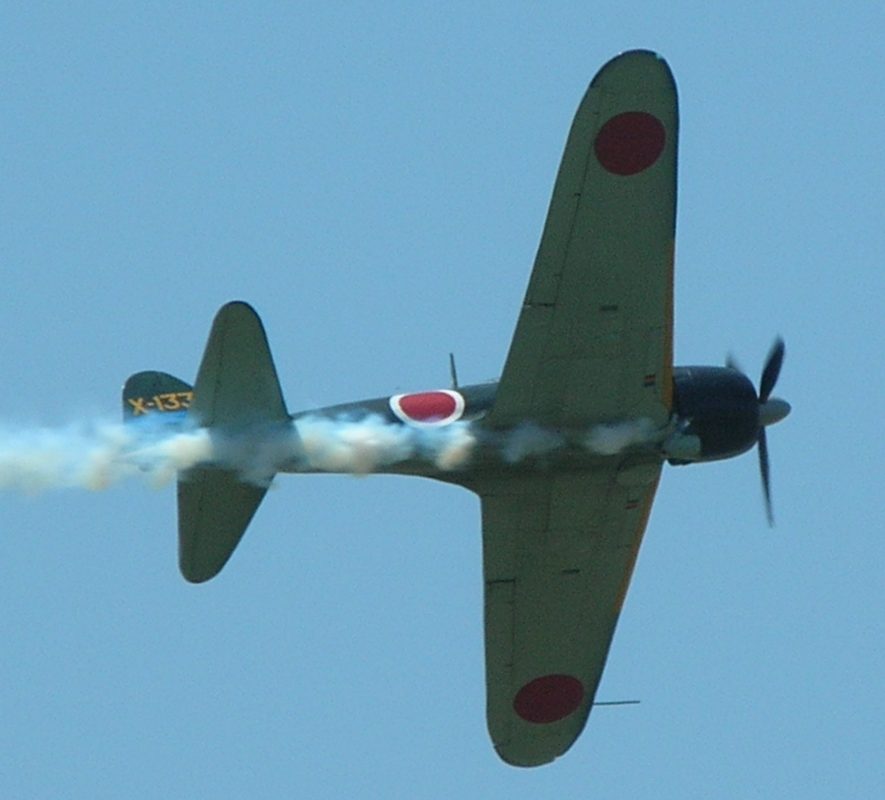
#33, A6M Zero: Made Pearl Harbor Possible
The Mitsubishi A6M Zero achieved an astonishing 12:1 kill ratio during the first six months of the Pacific War, sweeping Allied fighters from the sky with a combination of extraordinary range, tight turning ability, and aggressive pilot tactics. It was the Zero that provided air cover for the Pearl Harbor attack, and it was the Zero that established Japanese air superiority across Southeast Asia, the Philippines, and the Dutch East Indies in a stunning series of early-war victories.
The Zero's incredible performance came at a terrible cost: it had no armor, no self-sealing fuel tanks, and no structural redundancy. A few hits from .50-caliber machine guns could turn a Zero into a fireball. When American pilots learned to avoid turning fights and instead use diving attacks and superior firepower, the Zero's kill ratio collapsed. By 1943, the Hellcat and Corsair had made the Zero obsolete. But no discussion of aviation history is complete without acknowledging the aircraft that dominated the Pacific for the first year of the war and demonstrated that Japanese aerospace engineering was a serious threat to Western air power.