#44, Panavia Tornado: Proved Europe Could Build Its Own Fighters
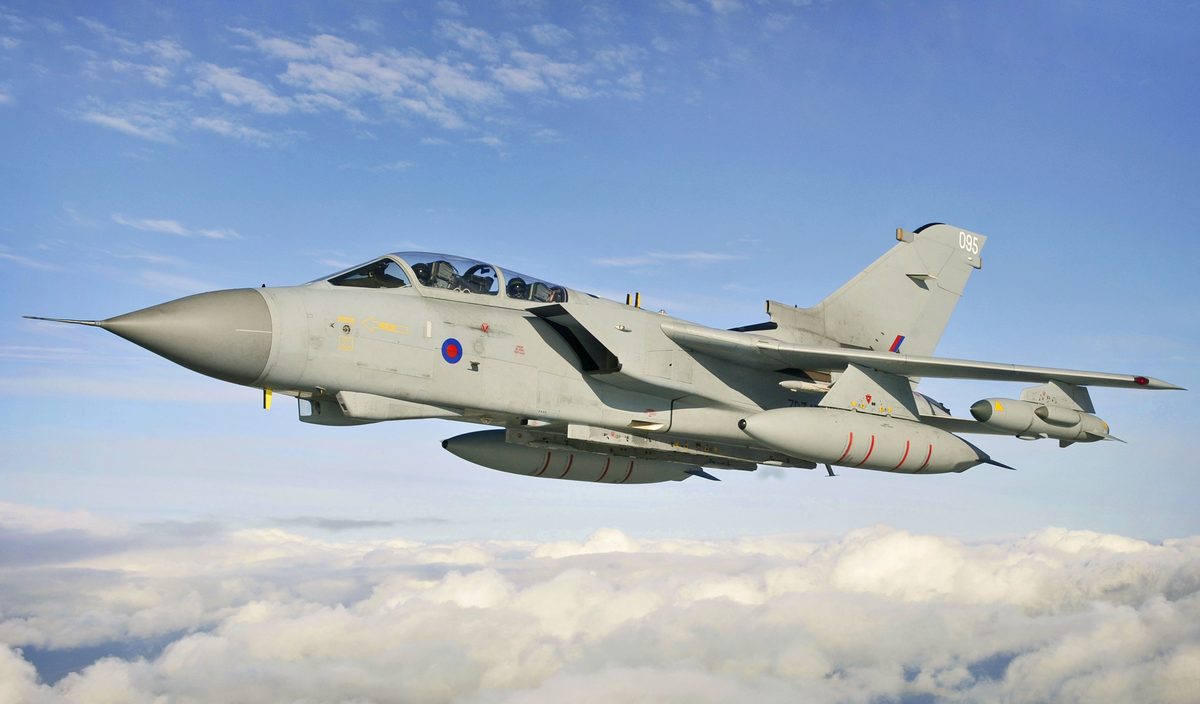
The Panavia Tornado was the first major multinational European combat aircraft, a joint development by Britain, Germany, and Italy that proved European nations could collaborate on a world-class military platform without American help. The Tornado GR1's variable-geometry wings allowed it to penetrate enemy airspace at treetop height and Mach 0.9, delivering precision strikes against the most heavily defended targets. It was NATO's primary low-level interdiction aircraft throughout the Cold War.
During Desert Storm, RAF Tornados flew some of the most dangerous missions of the war, ultra-low-level airfield attacks against Iraqi air bases using JP233 runway denial weapons. These missions were devastatingly effective but also costly, with six Tornados lost in the first week. The Tornado also served as an air defense fighter (ADV variant) and reconnaissance platform, with nearly 1,000 built across all variants. Its success paved the way for the Eurofighter Typhoon and proved that collaborative European defense technology programs could deliver combat-proven military equipment on a massive scale.