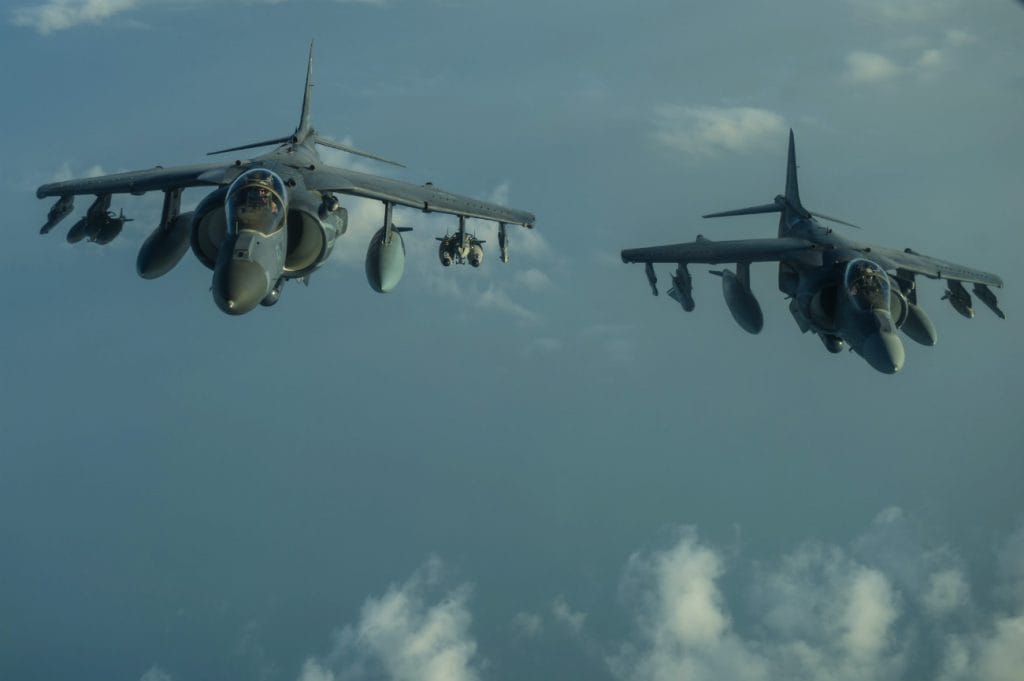

The AV-8B Harrier II is a progression of the British design for the Hawker Siddley Harrier. This single engine light attack aircraft is capable of short and vertical take-offs and landings (S/VTOL). Since its introduction to the U.S. Navy in 1981, it has been adopted by both the Navy and Marine Corps as a close air support and electronic warfare platform. The EAV-8B Harrier II is the electronic warfare variant still in use by the U.S. Marine Corps and is used to conduct electronic attack and screening for Naval fighter aircraft and ground forces.
Unique Airframe
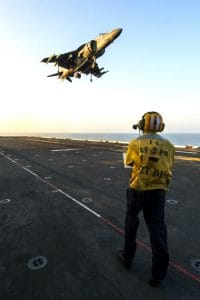
The AV-8B Harrier II is the first operational S/VTOL aircraft used by the United States Navy and Marine Corps. It has served aboard aircraft carriers, large assault ships, and even remote forward operating bases. Because it can land virtually anywhere it has clearance to touch down, the Marine Corps have taken great value from their AV-8B. Originally produced by McDonnell-Douglas, Boeing now provides service for the present fleet of AV-8Bs and variants still in operation. The Marine Corps plans to transition their entire AV-8Bs to F-18C/D/Es by 2025.
Performance
The rate of accidents for the AV-8B Harrier II is nearly three times higher than other aircraft operating in either the U.S. Navy or Marine Corps. Being the only S/VTOL fixed-wing aircraft in either’s fleet stipulates they must maintain and utilize it until a replacement can be found. The Marine Corps hopes to use a highly modified F-35B to take over all duties presently maintained by their F-18C and AV-8B fleet. The rate of failure of this aircraft is partially due to the engineering of a single-engine capable of short and vertical take-offs and landings. A lot of errors occur particularly with the directional nozzle controlling the vector thrust of the AV-8B.