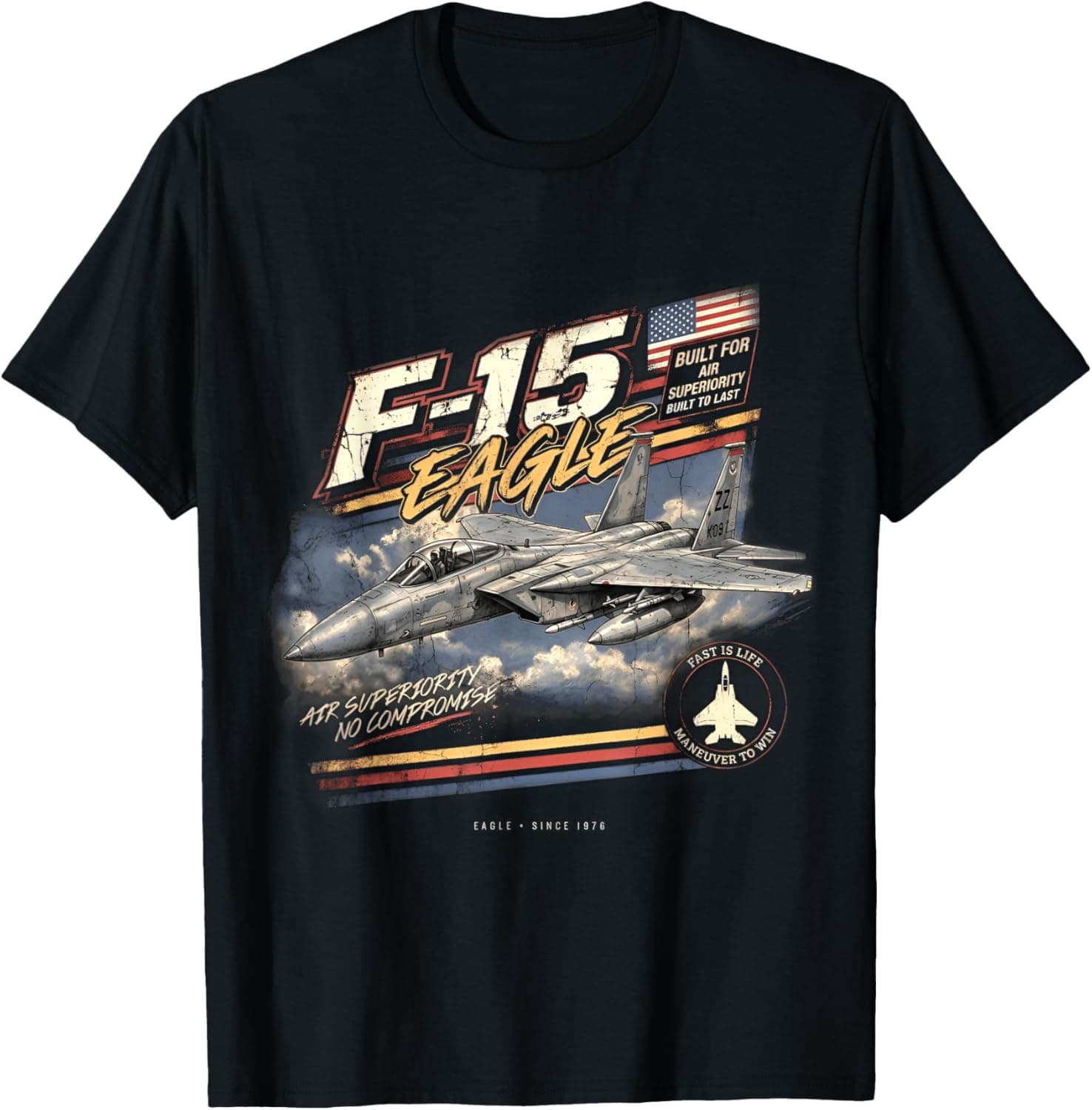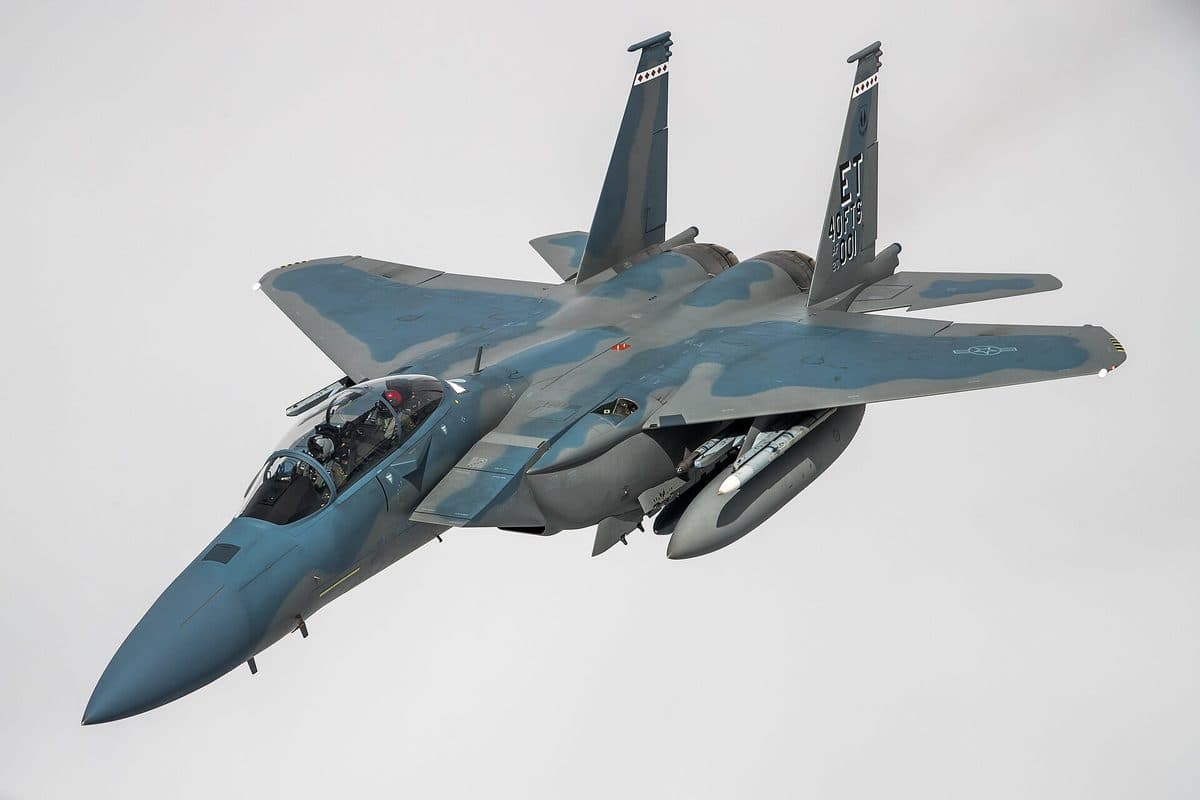

The F-15 Eagle was designed to do one thing: win air-to-air fights. When it entered service in 1976, its motto was "Not a pound for air-to-ground," a deliberate rejection of the multi-role compromises that had crippled the F-4 Phantom II and the F-111 Aardvark before it. The Eagle would be a pure fighter, optimized for a single mission. Then McDonnell Douglas took that same airframe and turned it into one of the most effective strike platforms in history. The F-15E Strike Eagle didn't replace the Eagle's air superiority capability. It added deep interdiction on top of it, creating a dual-role fighter that could drop precision munitions at night, in weather, at low altitude, and still outfight anything it met on the way home.
Not a Pound for Air-to-Ground, Until There Was
The original F-15A/C was born from the painful lessons of Vietnam. American fighters had been asked to do everything, including intercept, dogfight, bomb, and escort, and the resulting designs were compromises that struggled against smaller, more agile MiGs. The Fighter Mafia, led by Colonel John Boyd and analyst Pierre Sprey, pushed for a dedicated air superiority fighter with unmatched thrust-to-weight ratio, visibility, and maneuverability. The F-15 delivered on that vision. Its twin Pratt & Whitney F100 engines gave it a thrust-to-weight ratio greater than 1:1, meaning it could accelerate going straight up. Its 63.8-degree-per-second roll rate and 9g structural limit made it a devastating dogfighter.
But even as the F-15A entered service, engineers at McDonnell Douglas recognized that the airframe had untapped potential. The Eagle's massive wing area (608 square feet), powerful engines, and structural strength meant it could carry far more external stores than an air superiority mission required. In 1980, McDonnell Douglas began privately funding the Enhanced Tactical Fighter concept, a two-seat F-15 optimized for deep strike missions while retaining full air-to-air capability.
The timing was strategic. The Air Force needed a replacement for the aging F-111 Aardvark in the deep interdiction role, and the Enhanced Eagle competed directly against General Dynamics' F-16XL, a cranked-arrow-wing derivative of the F-16 Fighting Falcon. The Dual-Role Fighter competition ran through 1983-1984, and the F-15E won decisively. The two-seat Strike Eagle offered longer range, heavier payload, a more capable radar, and, critically, the ability to fight its way in and out of defended airspace without escort.