Skip to content
April 18:The Doolittle Raid on Tokyo84yr ago

The F-111 Aardvark: The Controversial Jet That Became a Legend

Daniel Mercer · · 16 min read
Save
Share:
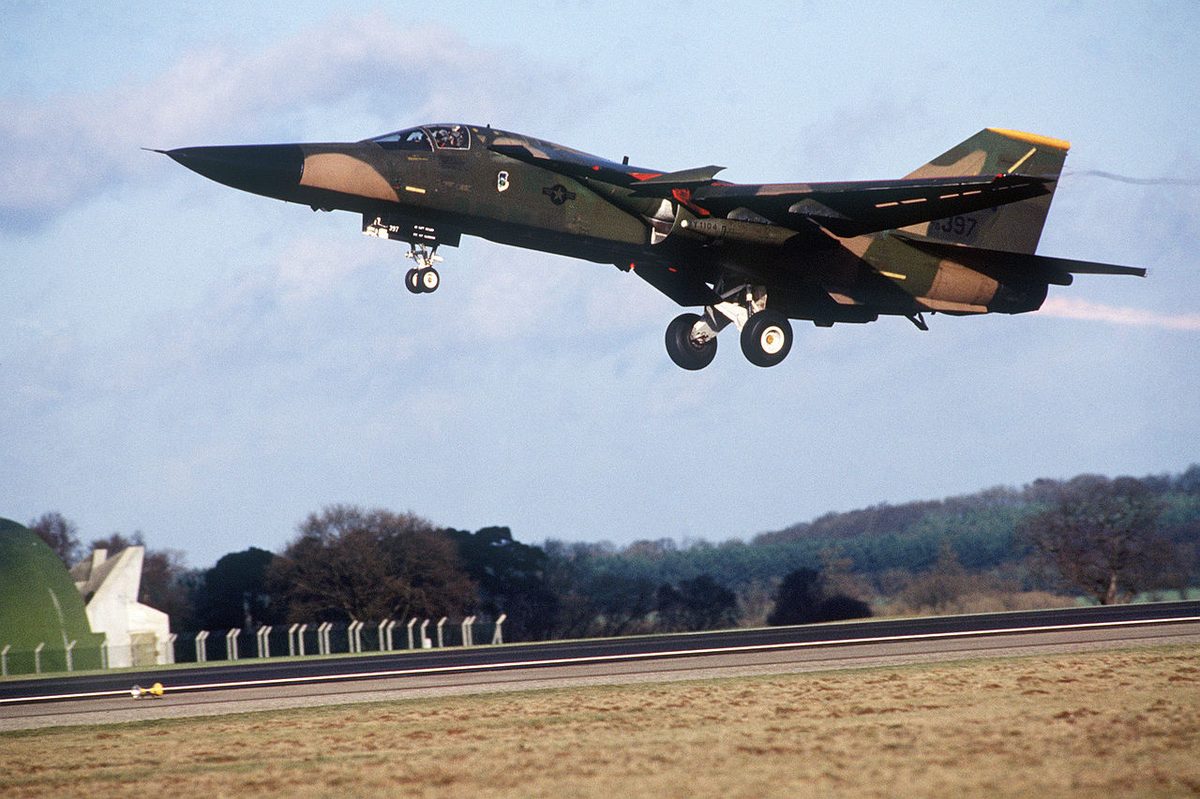
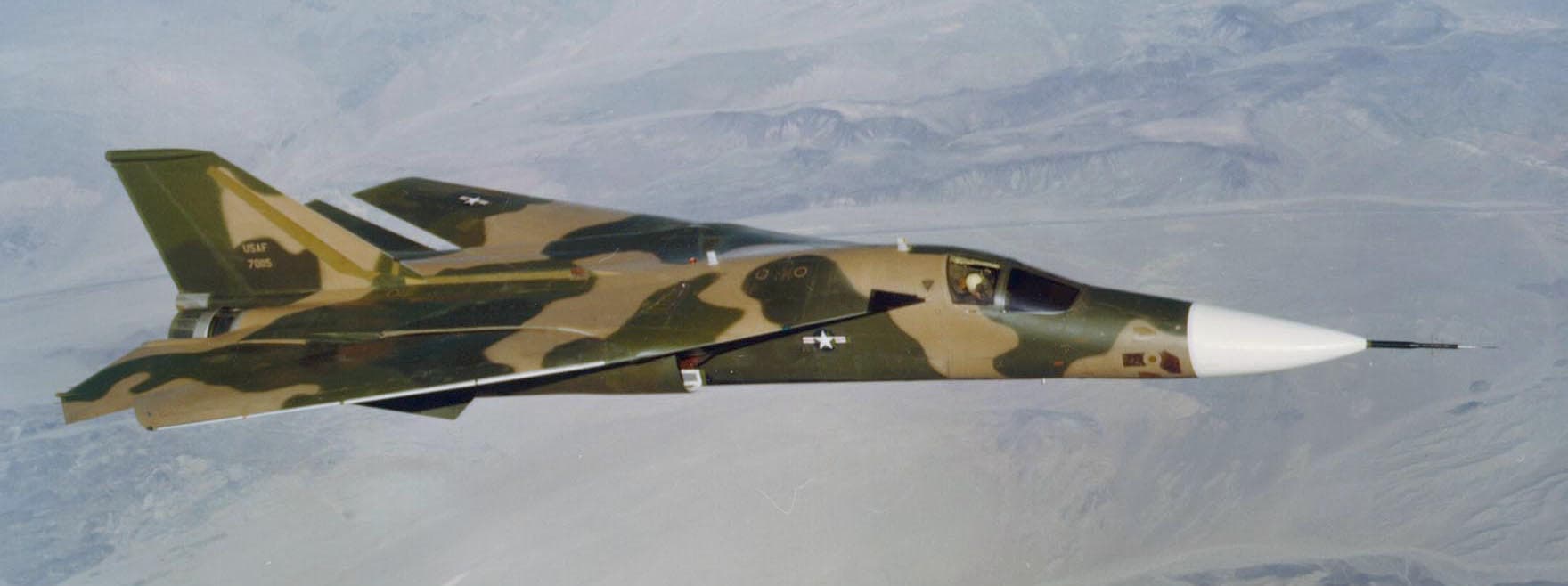
F-111 Aardvark in flight with wings swept back during a high-speed pass
Daniel Mercer
Daniel Mercer

Military History Editor

Daniel Mercer writes about military history with a focus on the 20th century, including World War II, the Cold War, and Vietnam. His work looks at how decisions made decades ago still influence doctrine, planning, and assumptions today.

The General Dynamics F-111 flew for over 30 years without an official name. When the Air Force finally christened it "Aardvark" in 1996, the aircraft was already being retired — a farewell gesture for a machine that had earned its place in aviation history the hard way. The F-111 was born from political controversy, debuted with a string of losses in Vietnam, and was written off by its critics before it ever had a chance to prove itself. Then it did.

What followed was three decades of service that produced more firsts than almost any other military aircraft: the first production swing-wing jet, the first operational terrain-following radar, the first precision "tank plinking" campaign, and the longest fighter combat mission in history at the time. The F-111 was not just a successful aircraft. It was the aircraft that proved concepts the rest of the world would spend decades catching up to.

The TFX: McNamara's Grand Experiment

In February 1961, Secretary of Defense Robert McNamara directed the Air Force and Navy to develop a single aircraft that could satisfy both services' requirements. The Air Force wanted a long-range, low-level strike aircraft capable of penetrating Soviet air defenses. The Navy wanted a fleet defense interceptor that could loiter for hours and shoot down incoming bombers and missiles. McNamara insisted on 80 percent commonality between the two versions, projecting a billion dollars in savings.

Both services resisted. Their requirements were fundamentally different — the Air Force needed an aircraft optimized for speed at sea level, while the Navy needed one that could operate from aircraft carriers. When Boeing and General Dynamics submitted competing proposals, the military evaluation board recommended Boeing. McNamara overruled them in November 1962, selecting General Dynamics' design for its greater commonality between variants. The decision triggered a congressional investigation that dragged on for months.

General Dynamics signed the contract on December 21, 1962. Exactly two years later, on December 21, 1964, the F-111 made its first flight from Carswell Air Force Base in Texas.

The Navy's variant, the F-111B, was a disaster. It was too heavy for carrier operations, and the Navy fought the program at every turn until it was finally canceled in 1968 after only seven were built. But the F-111B's legacy was significant: its swing-wing mechanism, TF30 engines, AWG-9 radar, and AIM-54 Phoenix missile system were all inherited by its replacement — the Grumman F-14 Tomcat.

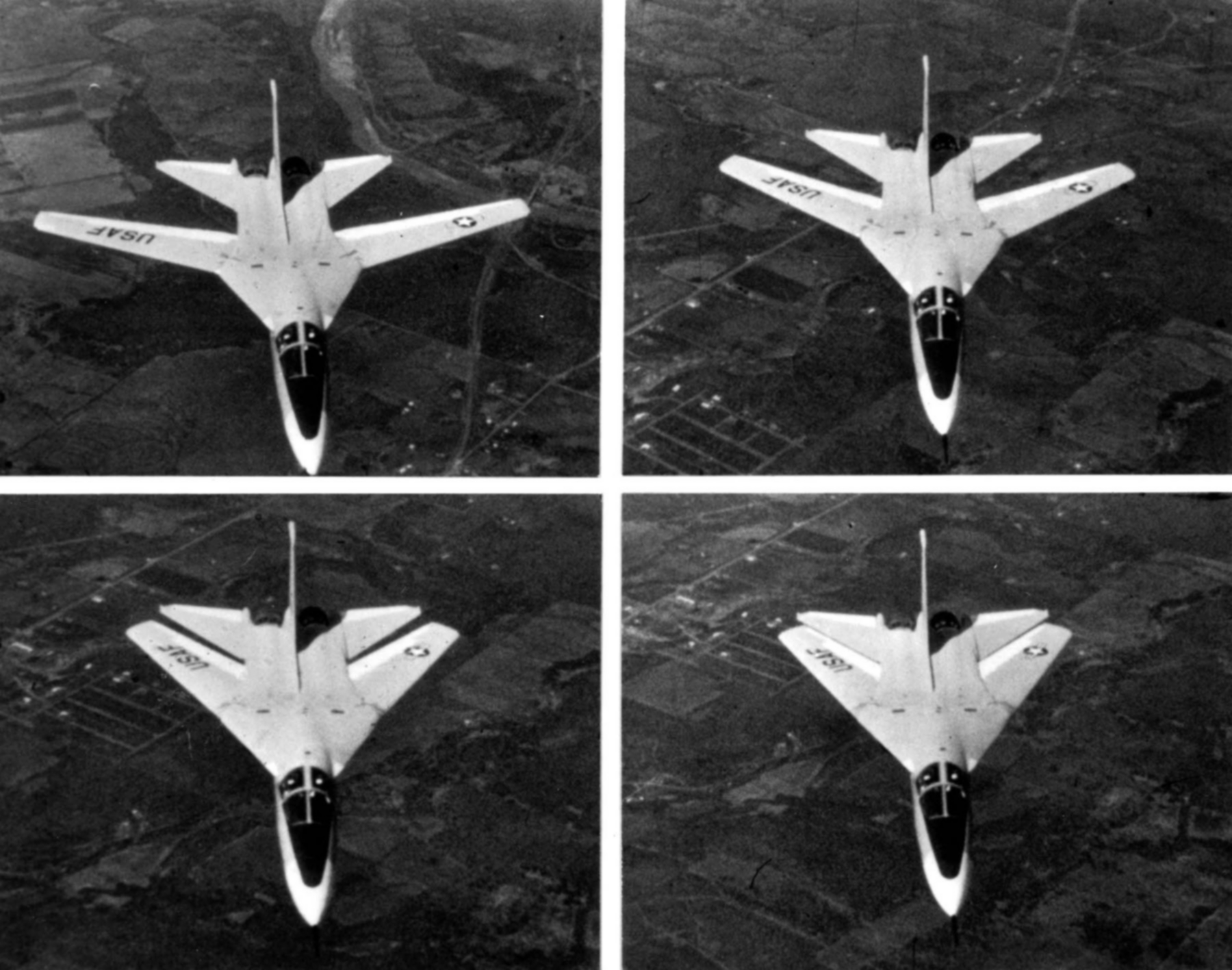
F-111 Aardvark demonstrating variable-sweep wing positions from fully extended to fully swept
The F-111's variable-sweep wings could move from 16 degrees fully forward to 72.5 degrees fully swept, giving the aircraft dramatically different flight characteristics at different speeds. (U.S. Air Force photo)

Engineering Firsts

Variable-Sweep Wings

The F-111 was the world's first production aircraft with variable-sweep wings. The wings could pivot from 16 degrees fully forward to 72.5 degrees fully swept. With wings extended, the F-111 could take off and land in as little as 2,000 feet and loiter efficiently at low speeds. With wings swept back, it could dash at Mach 2.5 at altitude or fly supersonic at treetop level — something no other aircraft could do.

An elegant engineering detail: the four inboard wing pylons pivoted automatically to remain aligned with the aircraft's centerline as the wings swept, keeping weapons and fuel tanks pointed forward regardless of wing position. The two outboard pylons were fixed and could only carry stores at low sweep angles.

The swing-wing concept proved so influential that it spread across the globe. The F-14 Tomcat, B-1B Lancer, Panavia Tornado, and a family of Soviet aircraft — the MiG-23, Su-17, Su-24, Tu-22M, and Tu-160 — all adopted variable-sweep wings following the F-111's lead.

Terrain-Following Radar

The F-111 pioneered automated terrain-following radar (TFR) that mapped the ground ahead and automatically adjusted the flight path to maintain a set altitude above terrain — as low as 200 feet, at night, in any weather, at speeds exceeding 480 knots. The pilot set the desired clearance altitude, and the aircraft flew itself through valleys, over ridgelines, and around obstacles without the crew ever seeing the ground.

This was revolutionary. It meant the F-111 could fly missions that would have been impossible for any other aircraft — penetrating deep into defended airspace at treetop level, below radar coverage, in conditions that grounded everything else. The concept of automated terrain-following is now standard on modern strike aircraft and cruise missiles, but the F-111 proved it operationally decades before anyone else.

The Crew Escape Module

Instead of ejection seats, the F-111 used something unique: a 3,000-pound crew capsule that jettisoned the entire cockpit section. When activated, 27,000 pounds of rocket thrust separated the module from the aircraft. A large parachute slowed descent, and an airbag system cushioned the landing impact. The capsule was watertight, serving as a flotation device for water landings.

One particularly clever detail: if hydraulic pressure was lost, the vertical stabilizer could slam to one side and invert the aircraft. A rocket motor in the nose wheel well would flip the plane upright before the capsule separated — preventing the crew from being rocketed into the ground.

Specifications

Specification F-111F
Crew 2 (pilot and weapons systems officer, side by side)
Length 73 ft 6 in (22.4 m)
Wingspan 63 ft extended / 32 ft swept (19.2 m / 9.7 m)
Height 17 ft 1.5 in (5.2 m)
Empty Weight 47,481 lb (21,537 kg)
Max Takeoff Weight 100,000 lb (45,360 kg)
Engines 2× Pratt & Whitney TF30-P-100 afterburning turbofans (25,100 lbf each)
Max Speed Mach 2.5 (1,650 mph / 2,655 km/h)
Range 3,565 miles (5,740 km) with external fuel
Service Ceiling 66,000 ft (20,100 m)
Weapons Capacity 31,500 lb (14,300 kg) across 9 hardpoints + internal bay
Total Built 562 (all variants, 1963–1976)

The Variants

The F-111 family included eight distinct variants, each optimized for different roles:

The F-111A (159 built) was the initial production model. The F-111D (96 built) introduced an ambitious digital avionics suite that proved chronically unreliable. The F-111E (94 built) took a simpler approach with modified air intakes for better performance. The F-111F (106 built) was the definitive variant — more powerful engines, the Pave Tack targeting pod, and the ability to deliver precision-guided weapons with devastating accuracy.

The FB-111A (76 built) was a strategic bomber variant with longer wings and nuclear weapons capability, replacing the B-58 Hustler in Strategic Air Command. The EF-111A Raven (42 converted) carried the ALQ-99 electronic warfare jamming system and was nicknamed "Spark Vark."

The F-111C (24 built) was Australia's export variant, combining the FB-111A's longer wings with the F-111A's fuselage — giving Australia one of the longest-range strike aircraft in the Asia-Pacific region.

F-111F with Pave Tack targeting pod deployed from internal weapons bay
The Pave Tack targeting pod mounted on a rotating cradle in the F-111F's weapons bay. When deployed, it swung down to provide infrared imaging and laser designation for precision-guided munitions. (U.S. Air Force photo)

Vietnam: From Disaster to Redemption

The F-111's combat debut was catastrophic. In March 1968, six F-111As deployed to Thailand under Operation Combat Lancer for real-world testing. They flew 55 night missions against targets in North Vietnam. Three aircraft were lost in rapid succession over the course of just three weeks. Operations were halted.

Investigation revealed that the third loss was caused by a fatigue failure in a hydraulic control-valve rod for the horizontal stabilizer, which caused uncontrollable pitch-up. Inspection of the remaining fleet found 42 other F-111As with the same potential failure. The program's critics — and there were many — declared the aircraft a failure.

Four years later, the F-111 came back and proved them wrong. During Operations Linebacker and Linebacker II in 1972-1973, F-111As flew over 4,000 combat missions with only six losses — a remarkable record for aircraft flying the most dangerous possible mission profile: low-level, at night, deep into the most heavily defended airspace in the world. The F-111s required no tanker support, no electronic countermeasures escort, and no fighter escort. They flew alone, in weather that grounded every other aircraft type.

The Libya Raid: 6,400 Miles Round Trip

On April 15, 1986, eighteen F-111Fs from the 48th Tactical Fighter Wing at RAF Lakenheath, England, took off on what would become the longest fighter combat mission in history. Their target was Libya, in retaliation for the Berlin discotheque bombing. France and Spain denied overflight rights, forcing the strike package to fly around the entire Iberian Peninsula.

The round trip covered 6,400 miles and required 28 KC-135 tanker aircraft for multiple aerial refuelings. The mission lasted 13 hours. The F-111Fs struck their targets in Tripoli using Pave Tack and laser-guided bombs. One aircraft was lost. The mission demonstrated that the F-111 could project precision strike power across extraordinary distances — a capability that would become central to American military doctrine.

Desert Storm: The F-111's Finest Hour

The 1991 Gulf War was where the F-111F finally received the recognition it deserved. A force of just 66 F-111Fs from the 48th TFW flew more sorties and hit more targets than any other aircraft type in the war.

The key innovation was "tank plinking." Using the Pave Tack infrared sensor, F-111F crews discovered that Iraqi tanks and armored vehicles retained heat long after the desert sand had cooled at night. Each vehicle showed up as a bright white dot on the infrared display. Crews would identify individual vehicles and drop a single GBU-12 500-pound laser-guided bomb on each one — precise enough to put a bomb through a tank's engine deck.

On a single night in February, forty F-111Fs accounted for over 100 armored vehicles. Over the course of the entire war, the 66-plane F-111F force was credited with approximately 1,500 Iraqi tanks and armored vehicles. The F-111F also delivered the massive 5,000-pound GBU-28 bunker-buster bomb — a weapon developed during the war specifically to reach deeply buried command bunkers.

Australia's Love Affair with the Pig

Australia was the only international operator of the F-111, and the Royal Australian Air Force fell completely in love with it. The first F-111Cs arrived at RAAF Amberley on June 1, 1973, and served for 37 years — becoming one of Australia's most iconic military symbols.

The RAAF's F-111C combined the FB-111A's longer wings with the F-111A fuselage, giving Australia a strike aircraft with extraordinary range — enough to reach any potential threat in the region without tanker support. The fleet was never used in combat, but it served as the centerpiece of Australia's conventional deterrent for nearly four decades.

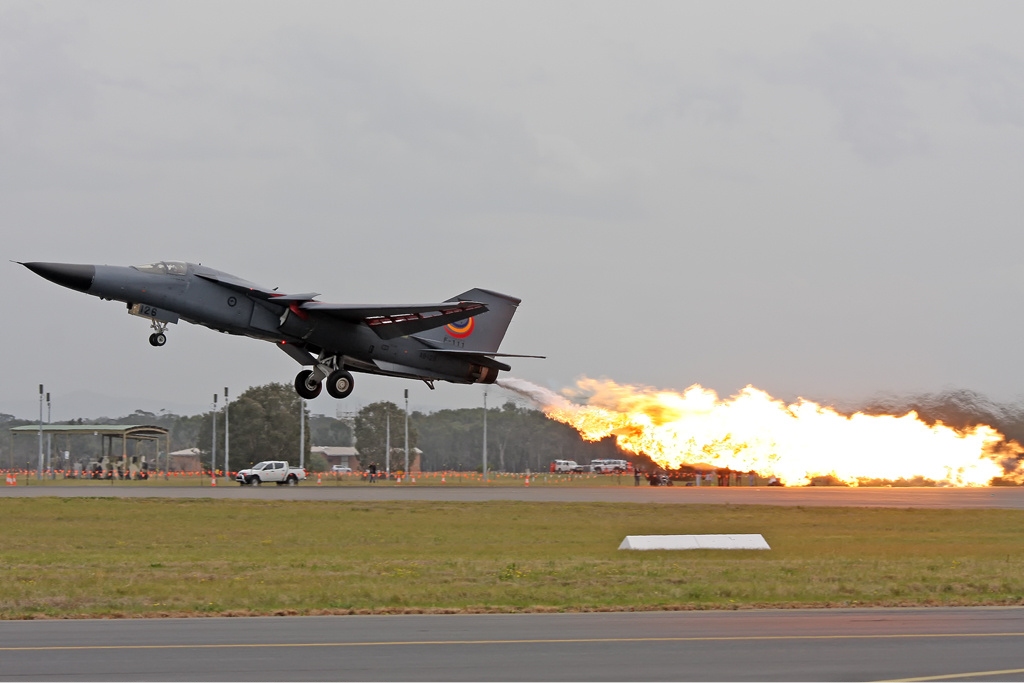
Australian crews were famous for the spectacular "dump and burn" display at airshows. The fuel dump nozzle was located between the engine exhausts, so igniting dumped fuel with the afterburners created a massive wall of flame trailing behind the aircraft. The RAAF performed the maneuver at the 2000 Sydney Olympics closing ceremony, Brisbane's annual Riverfire festival, and the Australian Grand Prix. The U.S. Air Force banned the practice, but the Australians continued it until retirement.

The RAAF retired its last F-111s on December 3, 2010. Twenty-three airframes were buried at the Swanbank landfill near Ipswich, Queensland — the fuselage bonded panels contained asbestos, making burial the safest disposal method. The F-111 was replaced by F/A-18F Super Hornets as an interim measure before the F-35 arrived.

RAAF F-111 performing a dump and burn maneuver with a massive wall of flame trailing behind the aircraft
An RAAF F-111C performing the iconic "dump and burn" maneuver. The fuel dump nozzle between the engines created a spectacular wall of flame that became a beloved airshow tradition in Australia. (Royal Australian Air Force)

Legacy

The F-111 was retired too soon. Many Air Force officers have argued that no single replacement aircraft matched its combination of range, payload, speed, and all-weather precision strike. The F-15E Strike Eagle took over the medium-range strike role. The B-1B Lancer — itself a supersonic swing-wing bomber descended directly from the FB-111 — absorbed some strategic missions. But the F-111's unique ability to fly low, fast, far, and precisely in any weather has never been fully replicated in a single airframe.

The F-111's technological legacy is vast. It proved variable-sweep wings were practical, spawning a generation of swing-wing aircraft worldwide. Its terrain-following radar became the foundation of modern low-level strike doctrine and cruise missile navigation. Its Pave Tack system demonstrated that infrared targeting and laser-guided weapons could make a single aircraft devastatingly effective against armored vehicles — the concept now underpins modern air power doctrine. And the TF30 engine in the F-111 was the world's first afterburning turbofan, a powerplant concept that now equips virtually every modern fighter jet.

The F-111 Aardvark spent its entire career proving people wrong. It was declared a failure after Vietnam, then came back to set records. It was dismissed as obsolete, then delivered more precision strikes than any aircraft in Desert Storm. It flew for over three decades without an official name and earned the respect of everyone who ever depended on it. Not bad for a political compromise that nobody wanted.

Frequently Asked Questions

Why was the F-111 called the Aardvark?

The name "Aardvark" was inspired by the aircraft's long, pointed nose, which resembled the snout of the African ant-eating mammal. The nickname was used informally for decades but only became the official name in 1996, just before the aircraft was retired from service.

How many F-111s were built?

A total of 562 F-111s were built across all variants between 1963 and 1976. This includes 159 F-111As, 96 F-111Ds, 94 F-111Es, 106 F-111Fs, 76 FB-111As, 24 F-111Cs for Australia, and 7 F-111Bs for the Navy. An additional 42 F-111As were converted to EF-111A Raven electronic warfare aircraft.

Did the F-111 have ejection seats?

No. The F-111 used a unique crew escape module that jettisoned the entire cockpit section as a single capsule. Rocket motors separated the module from the aircraft, a parachute slowed its descent, and an airbag cushioned the landing. The capsule was also watertight for water landings.

What replaced the F-111?

The F-111's strike role was taken over by the F-15E Strike Eagle for medium-range precision missions. The FB-111A strategic bomber role transitioned to the B-1B Lancer. The EF-111A electronic warfare variant was replaced by the EA-6B Prowler and later the EA-18G Growler. Australia replaced its F-111Cs with F/A-18F Super Hornets and subsequently F-35A Lightning IIs.

Was the F-111 used in Desert Storm?

Yes. The F-111F was one of the most effective aircraft in the 1991 Gulf War. A force of 66 F-111Fs pioneered "tank plinking" — using infrared sensors to identify armored vehicles at night and destroying them with individual laser-guided bombs. They accounted for approximately 1,500 Iraqi armored vehicles during the conflict.

How fast could the F-111 fly?

The F-111 could reach Mach 2.5 (approximately 1,650 mph or 2,655 km/h) at altitude with wings fully swept. It could also fly supersonic at very low altitudes using its terrain-following radar — a capability unique among its contemporaries.

Share this article

Share:

Recommended

Ace of The Skies: Can You Identify These Military Aircraft Throughout The Years?
Test Yourself

Ace of The Skies: Can You Identify These Military Aircraft Throughout The Years?

Can you identify these aircraft?

Take the Quiz

On This Day in Military History

March 9

USS Monitor vs. CSS Virginia: The First Ironclad Battle (1862)

The USS Monitor and CSS Virginia fought the first battle between ironclad warships at Hampton Roads, Virginia. The four-hour duel ended inconclusively — neither could penetrate the other's armor — but it revolutionized naval warfare worldwide, rendering every wooden warship on earth obsolete overnight. Britain and France immediately halted construction of wooden-hulled warships.

1916Pancho Villa Raids Columbus, New Mexico

1945Tokyo Firebombing: Operation Meetinghouse Launched

1847Siege of Veracruz: First Large-Scale American Amphibious Assault

See all 10 events on March 9

Get Military News & History in Your Inbox

Join thousands of readers receiving our weekly digest of military technology, history, and analysis.

Test Your Knowledge