Skip to content
April 20:Robert E. Lee Resigns from the US Army165yr ago

10 Best Fighter Jets of All Time, Ranked

Michael Trent · · 18 min read
Save
Share:
Collage of iconic fighter jets from different eras spanning WWII to modern stealth aircraft
Michael Trent
Michael Trent

Defense Systems Analyst

Michael Trent covers military aircraft, weapons systems, and defense technology with an emphasis on cost, maintenance, and real-world performance. He focuses less on specifications and more on how systems hold up once they are deployed, maintained, and operated at scale.

Ranking the greatest fighter jets of all time is an exercise in managed controversy. Every list like this requires judgment calls about what matters more — raw combat kills, technological breakthroughs, production volume, or lasting influence on aircraft design. A fighter that dominated one war might have been irrelevant in the next. A revolutionary design that flew in small numbers might have changed less than a pedestrian aircraft built by the thousands. What follows is our attempt to weigh all of those factors and produce a ranking that spans from the propeller age to the stealth era. Disagreement is expected. That is half the point.

10. Sukhoi Su-27 Flanker
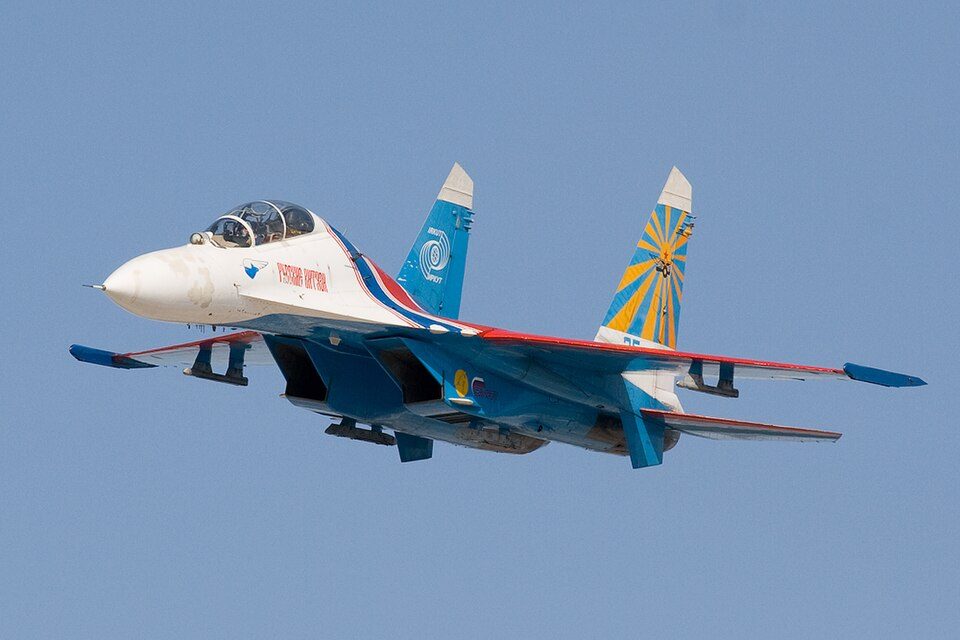
Su-27 Flanker in flight showing its distinctive twin-engine twin-tail air superiority profile
A Su-27 Flanker of the Russian Knights aerobatic team. The Flanker's extraordinary agility redefined what a large fighter could do. (Photo via Wikimedia Commons)

The Su-27 Flanker was the Soviet Union's answer to the F-15 Eagle, and in several respects it exceeded the aircraft it was designed to counter. The Flanker's enormous internal fuel capacity gave it a combat radius that dwarfed Western fighters of its era. Its aerodynamic design — featuring a blended wing-body configuration and widely spaced twin engines — produced a level of agility that stunned Western observers when they first saw it demonstrated.

That demonstration came at the 1989 Paris Air Show, where Soviet test pilot Viktor Pugachev performed a maneuver that became known as Pugachev's Cobra: pitching the aircraft's nose up past 90 degrees while maintaining forward flight, then recovering smoothly. The maneuver had no tactical application, but it proved that the Flanker could reach angles of attack that no Western fighter could match. The airshow audience — packed with aerospace engineers and military officials — understood immediately what they were seeing.

The Su-27 family spawned an entire lineage of derivatives: the Su-30 multirole fighter, the Su-33 carrier variant, the Su-34 strike aircraft, and the Su-35 advanced variant. More than 30 air forces have operated Flanker variants. The design's combination of range, agility, and growth potential made it the most successful Soviet/Russian fighter program since the MiG-21, and its descendants remain in production today.

9. F-14 Tomcat

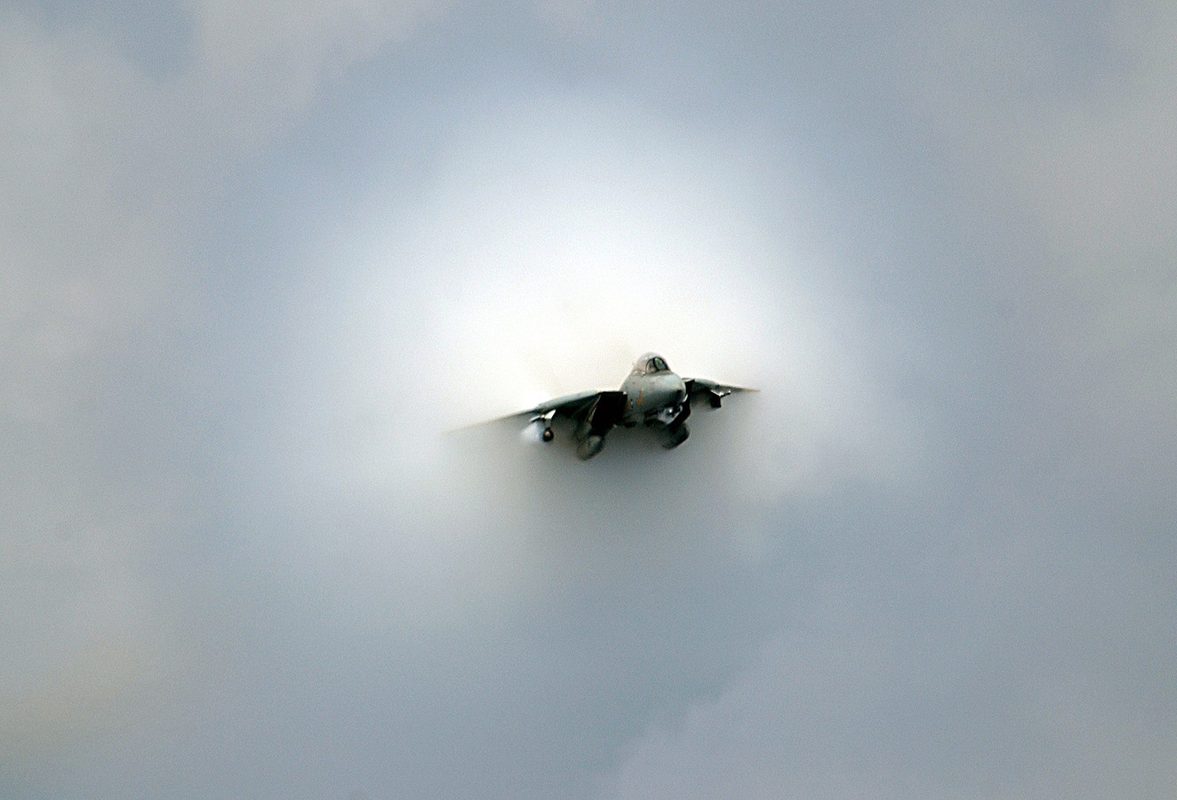
F-14 Tomcat at near-supersonic speed with vapor cone forming around the airframe
An F-14 Tomcat in a dramatic near-supersonic pass. The swing-wing interceptor could engage targets over 100 miles away with the AIM-54 Phoenix. (U.S. Navy photo)

The F-14 Tomcat was built around a weapon system: the AIM-54 Phoenix missile, which could engage targets over 100 miles away. The Navy needed a fleet defense interceptor that could protect carrier battle groups from Soviet bomber attacks, and Grumman delivered an aircraft with variable-sweep wings, twin engines, and the AWG-9 radar — the most powerful airborne radar of its time, capable of tracking 24 targets and engaging six simultaneously.

The Tomcat's most extensive combat record belongs not to the U.S. Navy but to Iran. The Imperial Iranian Air Force received 79 F-14As before the 1979 revolution, and those aircraft fought throughout the Iran-Iraq War from 1980 to 1988. Iranian Tomcat pilots claimed between 130 and 159 air-to-air kills against Iraqi MiGs and Mirages, with losses in the single digits. Iranian F-14s are the only aircraft to have scored kills with the AIM-54 Phoenix missile in combat — American Tomcat crews fired Phoenix missiles operationally but never scored a hit.

The Iranian F-14's reputation became so fearsome that Iraqi pilots reportedly turned away from engagements when they detected a Tomcat's radar signature. In the first six months of the war alone, Iranian F-14s claimed at least fifty air-to-air victories with only one aircraft damaged in return.

The Tomcat served the U.S. Navy from 1974 until its retirement in 2006, covering the transition from Cold War fleet defense to post-9/11 strike operations with the addition of LANTIRN targeting pods. Its cultural impact — cemented by the 1986 film Top Gun — ensured that the F-14 became the most recognizable Navy fighter of its era.

8. MiG-21 Fishbed

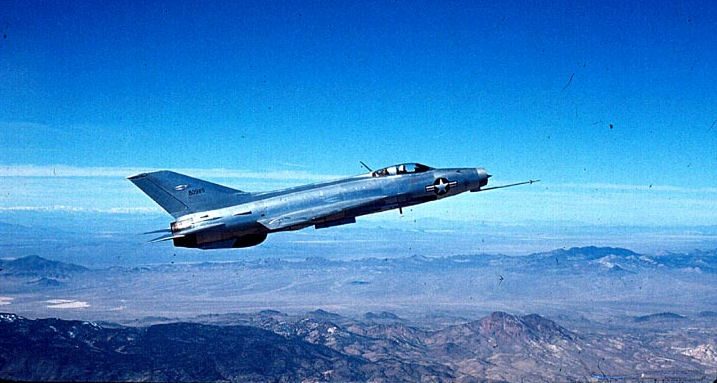
MiG-21 Fishbed in flight over desert mountains showing its delta wing and nose intake
A MiG-21 in flight. The most-produced supersonic jet in history served with over 60 air forces across four decades. (U.S. Air Force photo)

The MiG-21 is the most-produced supersonic jet aircraft in aviation history. Approximately 11,496 were built across Soviet, Indian, and Chinese production lines, and the type served with over 60 air forces across four continents. Seven decades after its maiden flight, MiG-21 variants remain in active service with several nations.

The Fishbed's genius was its simplicity. It was small, light, cheap to produce, and easy to maintain in austere conditions. It could reach Mach 2 on a single Tumansky turbojet, and its delta wing configuration gave it respectable performance at both high and low altitudes. These qualities made it the ideal export fighter for Soviet allies and non-aligned nations during the Cold War.

In Vietnam, MiG-21s operated under ground-controlled interception tactics that maximized their strengths and minimized their weaknesses. North Vietnamese pilots would make a single high-speed pass at American strike packages, fire their missiles or cannon, and disengage before the heavier American fighters could maneuver for a counterattack. The tactic was devastatingly effective — the MiG-21 accounted for the majority of American aircraft shot down in air-to-air combat over North Vietnam.

The legend of "Colonel Tomb," a North Vietnamese ace supposedly credited with 13 kills, became one of the enduring myths of the Vietnam air war. Postwar research by historians found no record of any pilot by that name in Vietnamese archives. The most likely explanation is that the kill markings on a particular MiG-21 represented the combined victories of multiple pilots who flew that aircraft — a common practice in the VPAF. The real top Vietnamese ace was Nguyen Van Coc, credited with nine confirmed kills.

7. F-86 Sabre

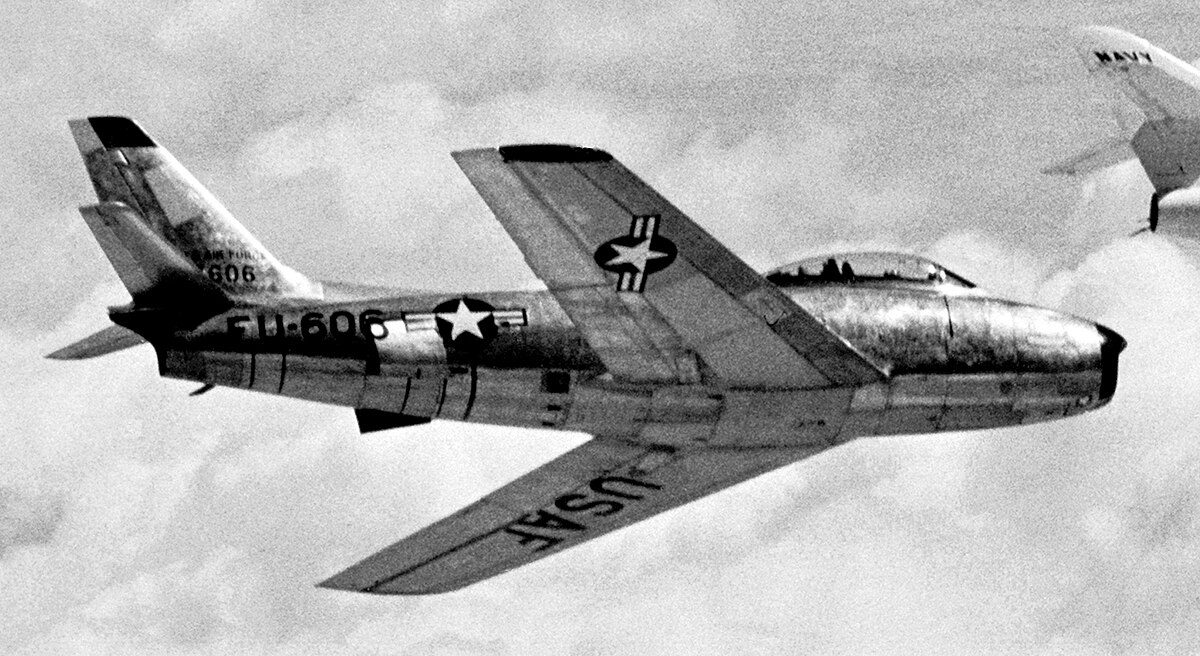
F-86 Sabre in flight above the clouds showing its swept-wing design
An F-86 Sabre above the clouds. America's first swept-wing jet fighter dominated MiG Alley during the Korean War. (U.S. Air Force photo)

The F-86 Sabre was America's first swept-wing jet fighter, and it arrived just in time. When the Korean War began in 1950, the appearance of Soviet-built MiG-15s over the Yalu River shocked UN forces. The straight-winged F-80 Shooting Stars and F-84 Thunderjets that had been handling ground attack duties were outclassed in air-to-air combat. The F-86 was rushed to Korea to restore air superiority, and the resulting duels over "MiG Alley" became the first jet-versus-jet air campaign in history.

The Sabre's swept wing drew directly from captured German research data on high-speed aerodynamics. North American Aviation had originally designed the aircraft with a straight wing, but wind tunnel testing and access to German swept-wing research convinced the design team to adopt a 35-degree sweep — a decision that transformed a competent jet into a world-beater.

American pilots claimed a kill ratio of approximately 10:1 against the MiG-15 in Korea, though postwar analysis of both sides' records suggests the real ratio was closer to 2:1 — still a significant advantage. The Sabre's edge came less from performance superiority — the MiG-15 actually had a better climb rate and higher ceiling — and more from the radar-ranging gunsight, superior pilot training, and better cockpit visibility.

The F-86 produced the last generation of American gun-kill aces. Captain Joseph McConnell Jr. scored 16 confirmed kills, making him the top American ace of the Korean War. Nearly 10,000 Sabres were built in various configurations, serving with over 30 air forces worldwide.

6. F-4 Phantom II

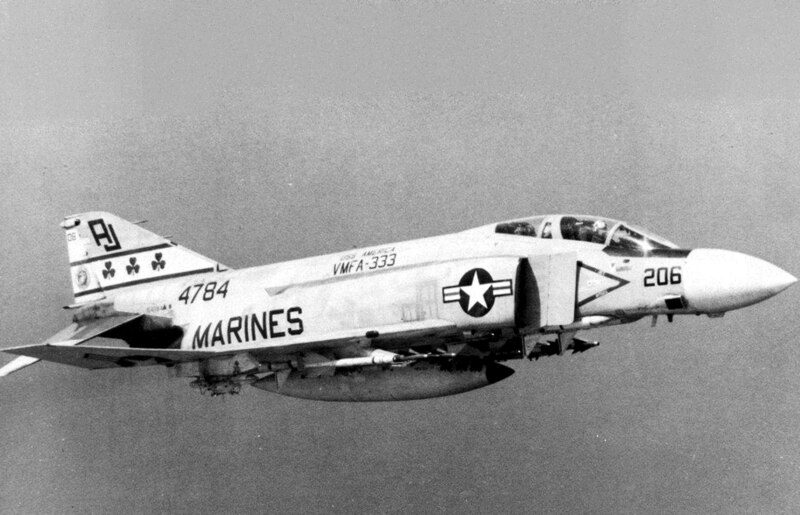
F-4 Phantom II in flight with MARINES marking visible on the fuselage
A U.S. Marine Corps F-4J Phantom II in flight. The Phantom served with all four U.S. military branches and eleven foreign nations. (U.S. Marine Corps photo)

The F-4 Phantom II was a brute — big, fast, smoky, loud, and capable of carrying more ordnance than a World War II heavy bomber. It was also the aircraft that taught the Pentagon a painful lesson about the limits of technology over training.

McDonnell designed the F-4 for the missile age. The original Navy variants carried no internal gun, relying instead on AIM-7 Sparrow and AIM-9 Sidewinder missiles for air-to-air combat. The assumption was that beyond-visual-range missile engagements had made dogfighting obsolete. Vietnam proved that assumption catastrophically wrong. The AIM-7 Sparrow hit its target just 8 percent of the time between 1965 and 1968. The AIM-9 Sidewinder managed 15 percent. Pilots who had been trained to fire missiles at distant radar contacts found themselves in turning fights with smaller, more agile MiG-17s and MiG-21s — and they did not have a gun.

The response diverged along service lines in a fascinating way. The Air Force fixed the airplane: the F-4E variant added an internal M61 Vulcan cannon. The Navy fixed the pilot: in 1969, the Naval Fighter Weapons School — better known as TOPGUN — was established specifically to retrain Phantom crews in dogfighting tactics. When bombing resumed over North Vietnam in 1972, Navy kill ratios jumped to 12:1, with the majority of kills scored by TOPGUN graduates.

Despite its Vietnam troubles, the Phantom's overall record is remarkable. Over 5,000 were built, serving with 11 nations. The F-4 set 16 world records for speed, altitude, and time-to-climb. It served simultaneously with the Air Force, Navy, and Marines — the last American fighter to achieve that distinction. Its massive payload capacity made it an effective bomber, and it remained in U.S. service until 1996. Several air forces still operate upgraded Phantoms today.

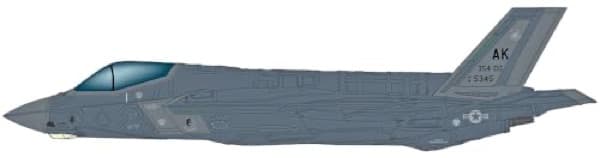
5. F-35 Lightning II

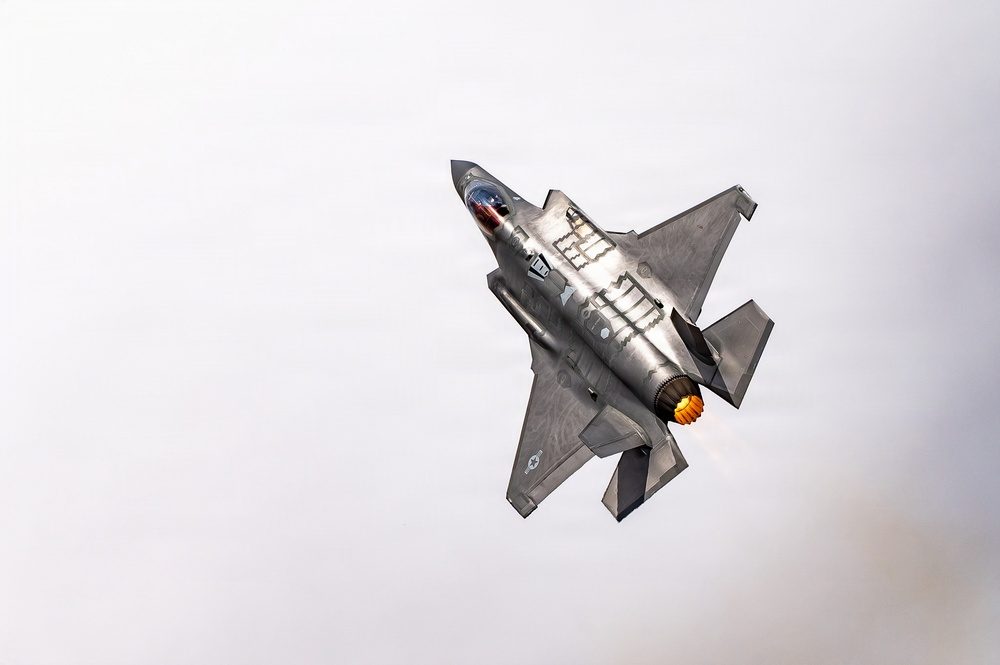
F-35A Lightning II in flight with afterburner lit against blue sky
An F-35A Lightning II with afterburner lit. The most controversial — and most capable — multirole fighter ever built. (U.S. Air Force photo via DVIDS)

The F-35 Lightning II is the most controversial aircraft on this list, and including it at number five will generate objections from both directions. Critics argue it is too expensive, too slow, and too maintenance-intensive. Supporters argue it represents a fundamental shift in how air combat works — and the data increasingly supports the supporters.

The F-35 is not built to win dogfights. It is built to win information wars. Its AN/APG-81 AESA radar, AN/AAQ-37 Distributed Aperture System, and Electro-Optical Targeting System create a fused picture of the battlespace that no other fighter can match. In exercises, F-35 pilots routinely detect and engage adversaries long before they are detected in return. The aircraft's stealth signature — a product of its shape, radar-absorbing materials, and internal weapons carriage — means that opposing fighters and air defenses must get much closer to achieve a track, by which point the F-35 has already fired.

The production numbers tell their own story. With over 1,000 delivered and orders from 18 nations, the F-35 is on track to become the most widely operated Western fighter of its generation. The three variants — the conventional F-35A, the short-takeoff/vertical-landing F-35B, and the carrier-capable F-35C — cover virtually every tactical aviation mission.

The F-35's long-term impact will be measured not by its speed or agility, but by whether sensor fusion and stealth truly make traditional fighter performance metrics obsolete. Early operational experience suggests they do.

4. P-51 Mustang

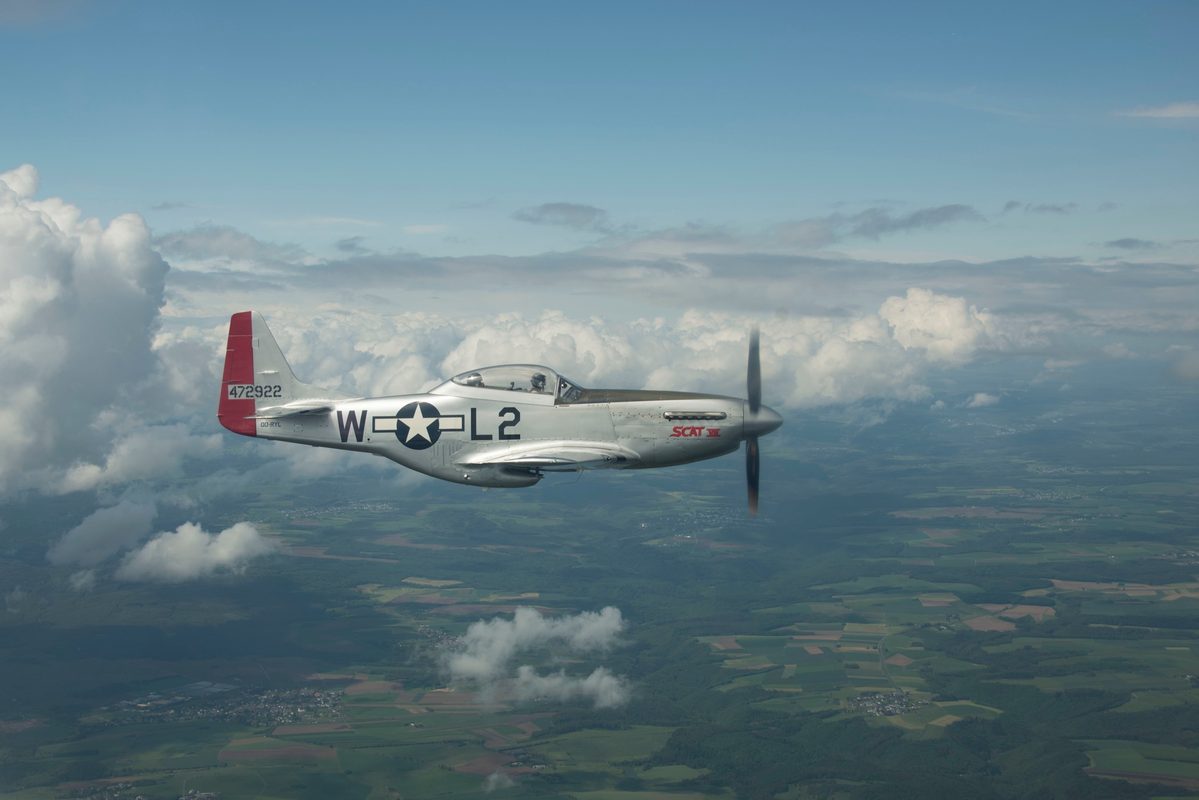
P-51 Mustang with red tail markings in flight over countryside
A P-51 Mustang in flight. The Mustang's ability to escort bombers deep into Germany changed the air war over Europe. (U.S. Air Force photo via DVIDS)

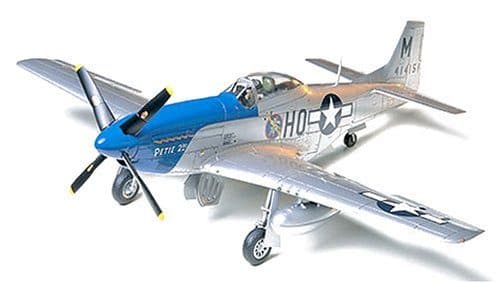
The P-51 Mustang may be the greatest example of an engine swap transforming a good airplane into a legendary one. North American Aviation designed the NA-73X prototype in just 102 days — beating the British purchasing commission's 120-day deadline by nearly three weeks. The prototype first flew on October 26, 1940. It was a remarkable achievement of rapid engineering, but the initial Allison-powered Mustangs were disappointing at high altitude, where the engine lost power.

The transformation came in 1942, when Rolls-Royce test pilot Ronald Harker suggested fitting the Mustang with the two-stage supercharged Merlin 61 engine. The result was a revelation: the Merlin-powered P-51B gained 50 mph at altitude, transforming a capable low-level fighter into the premier high-altitude escort fighter of the war. The Packard Motor Car Company licensed the Merlin for American production, eventually building 57,000 engines — over a third of all Merlin production.

The Merlin Mustang could fly at 430 mph at 30,000 feet with a combat range that, with external drop tanks, allowed it to escort B-17 and B-24 bombers from England to Berlin and back. No other Allied fighter could match that combination of speed, range, and altitude performance. The P-51D became the definitive variant, with a bubble canopy providing 360-degree visibility and six .50-caliber machine guns.

The Mustang's strategic impact was decisive. Before long-range escort fighters arrived, Eighth Air Force bomber losses were approaching unsustainable levels. The P-51 changed the equation entirely, and by early 1945, Mustang pilots had achieved air superiority over Germany itself. Hermann Göring reportedly remarked that when he saw Mustangs over Berlin, he knew the war was lost. Over 15,000 Mustangs were built.

3. F-16 Fighting Falcon

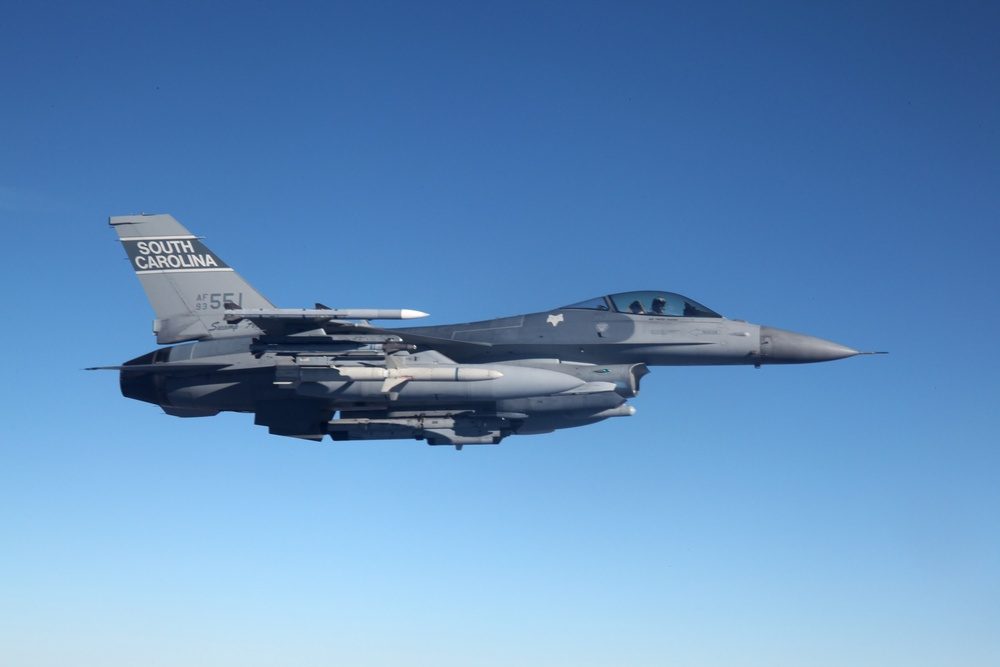
F-16 Fighting Falcon in flight armed with missiles against blue sky
An F-16 Fighting Falcon armed for combat. More than 4,600 F-16s have been built — making it the most successful fighter program in modern history. (U.S. Air Force photo via DVIDS)

The F-16 Fighting Falcon was born from a rebellion inside the Pentagon. In the early 1970s, a group of officers and analysts known as the "Fighter Mafia" — led by Colonel John Boyd and civilian analyst Pierre Sprey — argued that the Air Force's obsession with expensive, complex fighters like the F-15 was misguided. They advocated for a small, cheap, highly maneuverable aircraft that could be built in large numbers. The Lightweight Fighter program produced two prototypes: General Dynamics' YF-16 and Northrop's YF-17. The YF-16 won, and the rest is the most prolific fighter program in Western aviation history.

The F-16 introduced several revolutionary features. It was the first production fighter with a fly-by-wire flight control system, which replaced mechanical linkages with electronic signals — allowing the aircraft to be designed with relaxed static stability, making it inherently more agile. The reclined ejection seat and bubble canopy gave pilots unmatched visibility. The side-mounted control stick responded to pressure rather than movement, translating the pilot's intentions into control inputs with minimal physical effort.

More than 4,600 F-16s have been built, with production still ongoing. The Fighting Falcon serves with 25 air forces worldwide and has seen combat in virtually every major conflict since the 1980s. Israeli F-16s destroyed Iraq's Osirak nuclear reactor in 1981. In the 1982 Bekaa Valley air battle, Israeli F-16s and F-15s shot down 44 Syrian MiGs without a single loss. American F-16s flew more sorties in Desert Storm than any other aircraft type.

The pilots never accepted "Fighting Falcon" as the name. From the beginning, they called it the Viper — reportedly inspired by the colonial fighters in the TV series Battlestar Galactica and the aircraft's cobra-like appearance at the end of the runway. The generals who chose "Falcon" lost that particular battle.

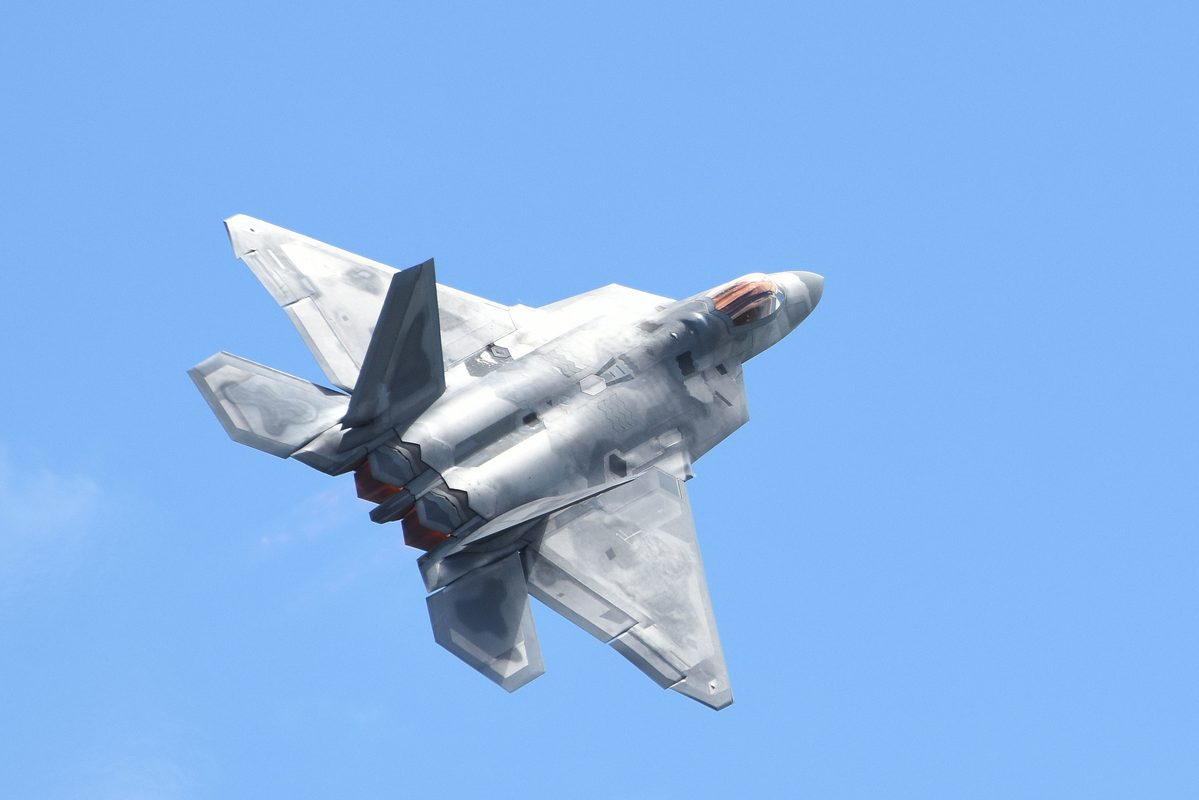
2. F-22 Raptor

F-22 Raptor maneuvering in flight with afterburner visible against blue sky
An F-22 Raptor in flight. The world's first fifth-generation fighter combines stealth, supercruise, and unmatched agility. (U.S. Air Force photo via DVIDS)

The F-22 Raptor was designed to guarantee American air superiority against any adversary, in any scenario, for a generation. Two decades after entering service, no fighter in the world has matched its combination of stealth, speed, agility, and situational awareness. The Raptor remains the benchmark against which every fifth-generation fighter is measured — including by the nations building them.

The F-22's stealth is not a single feature but an integrated design philosophy. Every surface angle, every panel edge, every inlet and exhaust geometry was shaped to minimize radar reflection. The aircraft carries its weapons internally to preserve its radar cross-section, and it can supercruise — sustaining Mach 1.5+ without afterburner — which allows it to cover distances faster while reducing its infrared signature.

The Raptor's air combat performance is best illustrated by its exercise record. In simulated engagements against fourth-generation fighters, F-22 pilots have achieved kill ratios exceeding 100:1. During Red Flag exercises, Raptors have dominated the battlespace so thoroughly that opposing forces have struggled to detect them, let alone engage them. In one widely cited exercise, a single F-22 was credited with 20 simulated kills before being "shot down."

Only 187 production F-22s were built — far fewer than the original plan of 750 — making it one of the most exclusive operational fighters in history. The Air Force has never exported the Raptor, and federal law prohibits its sale to foreign governments. This exclusivity is both the F-22's greatest strength and its most significant limitation: there are simply not enough of them.

The decision to end Raptor production in favor of the F-35 remains one of the most debated procurement decisions in modern military history. Whether the Raptor's successor — the Next Generation Air Dominance (NGAD) platform, recently designated F-47 — can match the F-22's air superiority dominance while adding new capabilities remains to be seen.

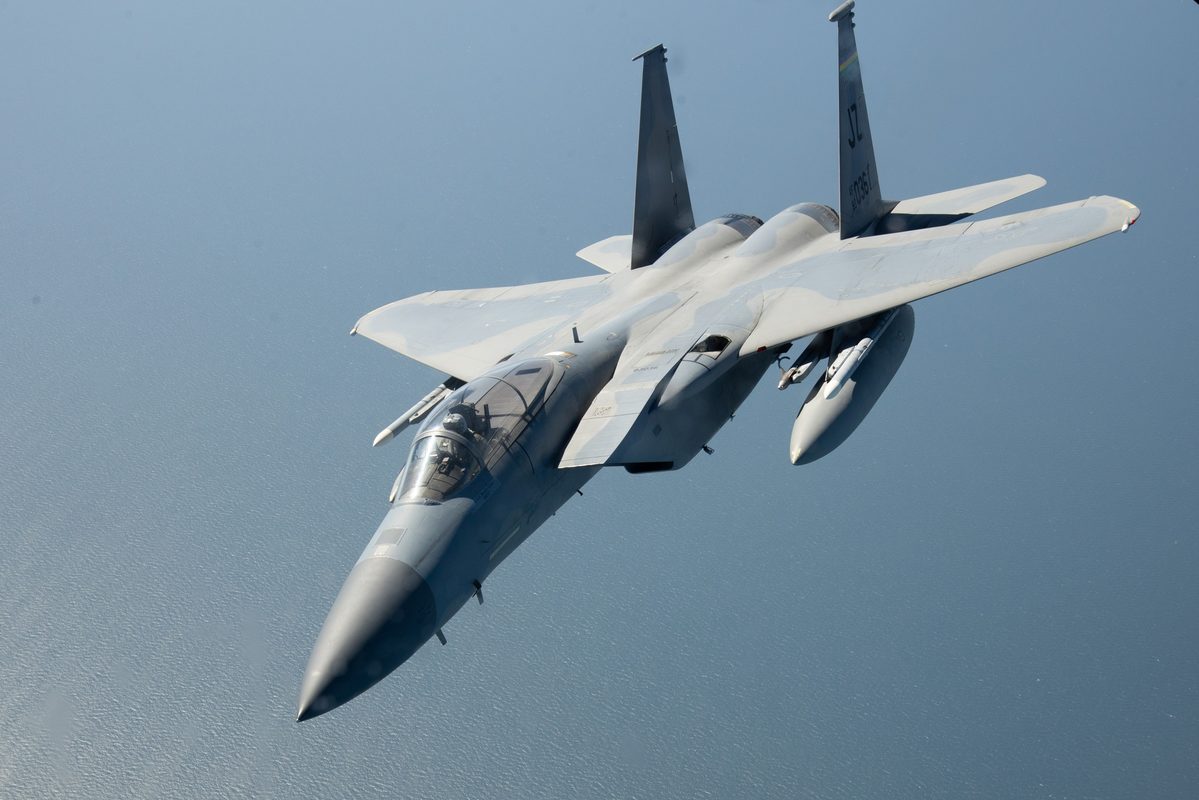
1. F-15 Eagle

F-15E Strike Eagle in flight over water showing its twin-engine twin-tail profile
An F-15 Eagle in flight. With 104 aerial victories and zero losses, the Eagle has the most dominant combat record in the history of air warfare. (U.S. Air Force photo via DVIDS)

The F-15 Eagle has a combat record that no other fighter in history can match: 104 confirmed air-to-air kills with zero losses in aerial combat. That record spans multiple operators, multiple decades, and multiple wars. No F-15 has ever been shot down by another aircraft.

The Eagle was the Air Force's response to the perceived MiG-25 threat, and McDonnell Douglas delivered an aircraft that exceeded every requirement. Twin F100 engines produced a thrust-to-weight ratio greater than one, meaning the Eagle could accelerate in a vertical climb. The APG-63 radar could detect and track targets at ranges that gave pilots the first-shot advantage in virtually every engagement. The aircraft's large wing provided excellent turn performance despite its size, and its internal fuel capacity gave it the range to operate deep over enemy territory.

Israeli Air Force F-15s scored the type's first kills during the 1979 air battles with Syria, and Israeli Eagles dominated the 1982 Bekaa Valley engagement. During Desert Storm, F-15Cs accounted for 34 of the 37 Iraqi aircraft shot down in air-to-air combat — including five kills in a single day by Captain Charles "Sly" Rodriguez. Saudi F-15s scored additional kills during the same campaign.

What makes the Eagle the greatest fighter of all time is not just its kill record, but the breadth of its impact. The F-15 airframe proved so capable that it spawned the F-15E Strike Eagle — one of the most effective strike aircraft ever built — and continues in production today as the F-15EX Eagle II, more than 50 years after the original first flew. The Eagle family has been in continuous production longer than any other American fighter in history.

The F-22 may be more technologically advanced. The F-16 may have been built in greater numbers. The Mustang may have a more romantic legacy. But no fighter jet combines the Eagle's undefeated combat record, its half-century of continuous production, its successful adaptation from air superiority to strike to electronic warfare, and its ongoing relevance in an era of stealth and sensor fusion. The F-15 Eagle is not just the best air superiority fighter ever built. It is the most complete fighter program in aviation history.

Share this article

Share:

Recommended

Ace of The Skies: Can You Identify These Military Aircraft Throughout The Years?
Test Yourself

Ace of The Skies: Can You Identify These Military Aircraft Throughout The Years?

Can you identify these aircraft?

Take the Quiz

On This Day in Military History

March 11

MacArthur Evacuates the Philippines: "I Shall Return" (1942)

General Douglas MacArthur, his family, and a small party departed Corregidor Island aboard PT boats under direct orders from President Roosevelt, leaving behind 76,000 American and Filipino troops besieged on the Bataan Peninsula. MacArthur's evacuation through Japanese-controlled waters to Australia produced one of the war's most famous pledges — "I shall return" — and shaped the entire Allied strategy in the Pacific Theater.

1941Lend-Lease Act Signed: America Becomes the Arsenal of Democracy

1917British Forces Capture Baghdad from the Ottoman Empire

1985Gorbachev Becomes Soviet Leader, Beginning the End of the Cold War

See all 10 events on March 11

Get Military News & History in Your Inbox

Join thousands of readers receiving our weekly digest of military technology, history, and analysis.

Test Your Knowledge