Skip to content
April 21:Battle of San Jacinto190yr ago

How Much Does an F-22 Raptor Cost? Full Breakdown (2026)

James Holloway · Updated March 4, 2026 · 8 min read
Save
Share:
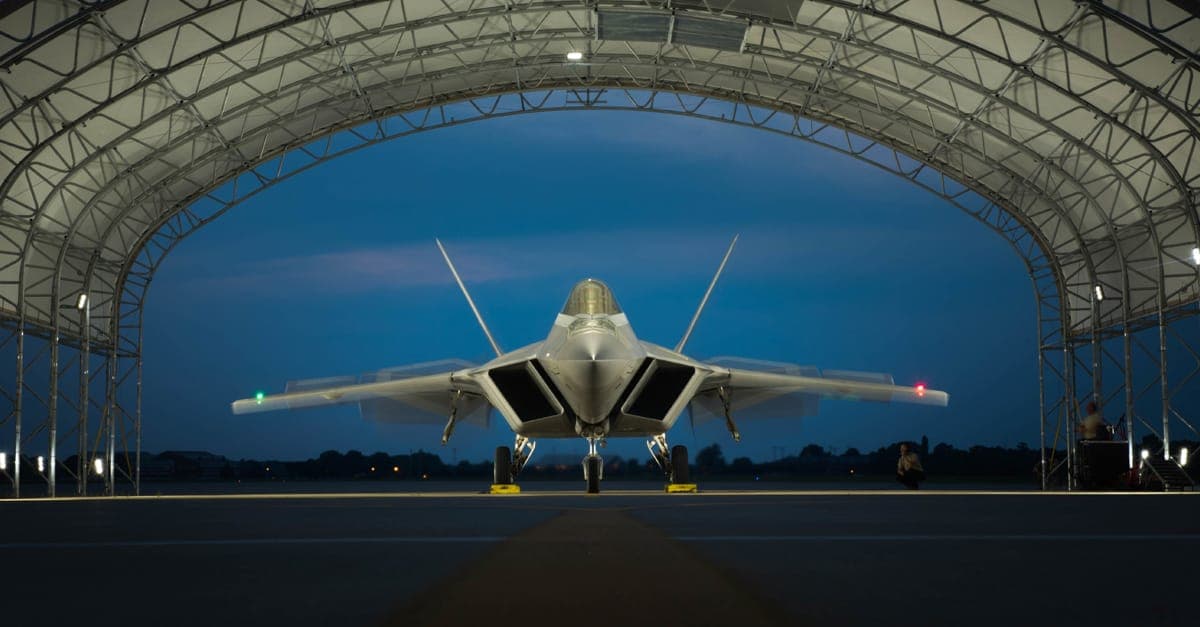
F-22 Raptor in flight
James Holloway
James Holloway

Military Logistics & Sustainment Analyst

James Holloway writes about military readiness, logistics, and the practical limits of modern forces. His work focuses on how training, sustainment, and organizational decisions shape what militaries can actually do -- not just what they are designed to do on paper.

The F-22 Raptor is the most expensive fighter aircraft ever produced. Its price tag reflects both revolutionary technology and a troubled production history that saw the Air Force receive far fewer aircraft than originally planned. But the dollar figure depends entirely on which cost you are asking about — and most headlines get the distinction wrong.
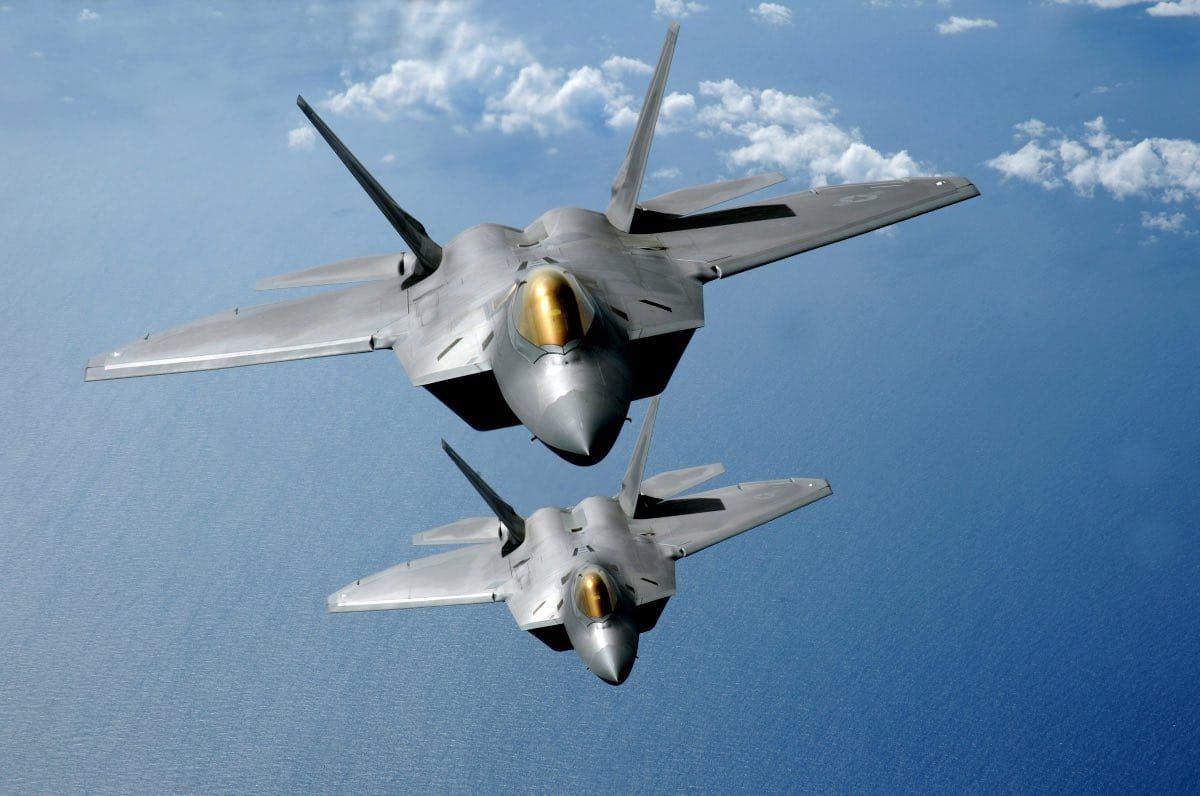
F-22 Raptors in formation flight over mountainous terrain
F-22 Raptors on a training mission (U.S. Air Force photo by Master Sgt. Kevin J. Gruenwald)

Flyaway Cost vs. Program Cost: Why the Numbers Differ

The F-22 has two very different price tags, and conflating them is the most common mistake in defense reporting.

The flyaway cost — the price to build one additional F-22 off the production line — was approximately $143 million for the final production lots in 2009 dollars. Adjusted for inflation, that figure is roughly $195–200 million in 2025 dollars. This covers the airframe, engines, and avionics. It does not include the decades of research and development that made the aircraft possible.

The program acquisition unit cost — which divides the entire $67.3 billion program cost across all 195 aircraft built — comes to approximately $334 million per jet. This is the figure most often cited in headlines, and it includes every dollar spent on research, testing, tooling, and construction. Of the $67.3 billion total, roughly $32.4 billion went to research and development, $34.2 billion to procurement, and $676 million to military construction.

Both numbers are legitimate. But comparing the F-22's $334 million program cost to the F-35's $82 million flyaway cost, as some articles do, is comparing apples to oranges.

Cost Comparison: F-22 vs. F-35 vs. F-15EX vs. F-16V

Fighter Aircraft Cost Comparison (2025 Figures)

Metric F-22 Raptor F-35A Lightning II F-15EX Eagle II F-16V Block 70
Flyaway Unit Cost ~$143M (2009) / ~$200M (2025 est.) ~$82M airframe / ~$102M with engine ~$94M (incl. EPAWSS) ~$70M (airframe only)
Cost Per Flight Hour ~$85,325 ~$42,000 ~$29,000 ~$22,000
Generation 5th gen 5th gen 4.5th gen 4.5th gen
Stealth Full stealth (air superiority optimized) Full stealth (multi-role optimized) Reduced signature (not stealth) Conventional (not stealth)
Primary Role Air dominance Multi-role strike / ISR Air superiority / deep strike Multi-role lightweight fighter
Total Built 195 (production ended 2011) 1,000+ (in production) 104 planned (in production) 4,600+ all variants (in production)

Cost Per Flight Hour

Operating the F-22 costs approximately $85,325 per flight hour, according to the most recent Government Accountability Office data. This figure includes fuel, maintenance, spare parts, and all associated support costs. It makes the Raptor nearly four times as expensive to fly as the F-16 ($22,000/hour) and roughly double the cost of the F-35A ($42,000/hour).

The high operating cost stems from the F-22's stealth coatings, which require intensive maintenance between flights. The aircraft's radar-absorbing materials degrade with exposure to weather, exhaust heat, and the stress of high-G maneuvering. Restoring the coatings demands specialized facilities, trained technicians, and significant downtime. The F-22 has historically required between 10 and 30 maintenance hours per flight hour, depending on the fleet's condition and the year measured.

Why the F-22 Costs So Much

The Raptor's price is not the result of any single factor. It is the compounding effect of several:

Limited production run. The Air Force originally planned to buy 750 F-22s. Budget pressures and the post-Cold War drawdown reduced that number to 381, then 278, then finally 187 operational aircraft. When $32.4 billion in R&D costs are spread across 195 jets instead of 750, the per-unit price nearly quadruples. This is the single biggest driver of the F-22's headline cost.

Stealth materials and manufacturing. The F-22 was the first production fighter built from the ground up around stealth. Its radar-absorbing coatings, precisely shaped surfaces, and internal weapons bays required manufacturing tolerances far tighter than any previous fighter. The airframe uses more titanium than any other fighter, requiring specialized machining processes.

Engine development. The Pratt & Whitney F119 turbofan was the first production engine capable of sustained supersonic cruise without afterburner. Developing supercruise capability required billions in R&D and produced an engine that remains unmatched in its thrust class.

Integrated avionics. The F-22's sensor fusion system — which combines radar, electronic warfare, and communications data into a unified picture — was groundbreaking in the early 2000s. Much of the technology that the F-35 later adopted at lower cost was pioneered at great expense on the Raptor.

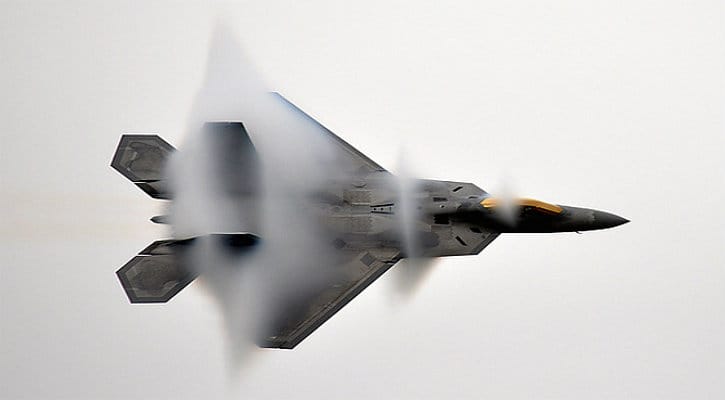
F-22 Raptor demonstrating high-speed flight
The F-22's supercruise capability required billions in engine development (U.S. Air Force photo)

Lifecycle Costs and Fleet Status

The Government Accountability Office estimates that maintaining and operating the entire F-22 fleet throughout its lifespan will cost approximately $60 billion. As of 2025, the Air Force operates roughly 178 F-22s from the original 195 built, with at least five lost to accidents over the program's history. Of those 178, only about 150 are combat-coded — the remaining 28 are Block 20 training aircraft that lack the hardware upgrades needed for combat missions. Congress has blocked the Air Force from retiring those Block 20 jets until at least 2028.

The fleet's readiness has also become a growing concern. The F-22's mission-capable rate dropped to 40.19% in fiscal year 2024 — the lowest level in approximately 20 years, down from 52% in FY2023 and 57.4% in FY2022. That means fewer than half of the fleet is available to fly on any given day, a figure driven by aging airframes, supply chain issues, and the intensive stealth maintenance demands.

Can the F-22 Production Line Be Restarted?

In a word: no. A 2017 Air Force study, obtained through the Freedom of Information Act by The War Zone, concluded that restarting F-22 production would cost approximately $50 billion. The tooling, dies, and production infrastructure at Lockheed Martin's Marietta, Georgia facility have been scrapped or retooled for other programs. The specialized vendor base — hundreds of suppliers with the necessary security clearances and manufacturing capabilities — would need to be rebuilt from scratch. The workers who built the original jets have largely retired or moved on.

Even if the line could be restarted, each new F-22 would cost an estimated $200+ million — and it would take years before the first aircraft rolled off the line. The Air Force has concluded that the money is better spent on the F-47, the sixth-generation fighter that Boeing is now developing under the Next Generation Air Dominance program.

The F-22's Future: Sunset and Replacement

The Air Force's current plan calls for the F-22 fleet to begin its sunset around 2030, with retirement phased through the 2030s as the F-47 enters service. Boeing received the F-47 engineering and manufacturing development contract in March 2025, with first flight targeted for 2028 and initial operational capability in the early 2030s.

However, the timeline depends entirely on how quickly F-47 production ramps up. The Air Force has $7.8 billion in planned F-22 spending through FY2029 — $4.7 billion for upgrades and $3.1 billion for R&D — suggesting the Raptor will remain a critical asset well into the next decade. For a deeper look at how the F-22 stacks up against its replacement and the F-35, see our F-47 vs. F-22 vs. F-35 comparison.

Is the F-22 Worth the Cost?

Despite its price tag, the F-22 provides capabilities no other aircraft can match. Its combination of stealth, supercruise, and sensor fusion allows it to control airspace against any adversary. In Red Flag exercises, the Raptor maintains a kill ratio exceeding 100-to-1 against fourth-generation fighters. No enemy aircraft has ever achieved a simulated kill against an F-22 in training.

The real question is not whether the F-22 was worth building, but whether stopping at 187 aircraft was a mistake. With only 150 combat-coded jets and a mission-capable rate below 50%, the Air Force's air dominance capability is thinner than the aircraft's reputation suggests. The F-22's cost story is ultimately a cautionary tale about what happens when a nation builds the best fighter in the world — and then decides it cannot afford enough of them.

For a full comparison of the F-22 against its stablemate, see our breakdown of the F-22 Raptor vs. F-35 Lightning II. To learn more about how the Raptor earned its name, read why the F-22 is called Raptor.

Frequently Asked Questions

How much does an F-22 Raptor cost in 2026?

The F-22's flyaway cost was approximately $143 million in 2009 dollars when production ended, which is roughly $195–200 million adjusted for inflation to 2025. Including all research and development costs, the program acquisition unit cost was approximately $334 million per aircraft — derived from dividing the total $67.3 billion program cost across the 195 jets built.

How much does it cost to fly an F-22 per hour?

According to the Government Accountability Office, the F-22 costs approximately $85,325 per flight hour. This includes fuel, maintenance, spare parts, and support. For comparison, the F-35A costs about $42,000 per hour, the F-15EX about $29,000, and the F-16 about $22,000.

Why was the F-22 so expensive?

The F-22's extreme cost stems primarily from its limited production run. The Air Force originally planned to buy 750 Raptors but cut the order to just 195, meaning $32.4 billion in research and development costs were spread across far fewer aircraft. The jet also pushed technological boundaries in stealth materials, supercruise-capable engines, and integrated sensor fusion — all of which carried substantial development costs. The use of titanium, radar-absorbing materials, and precision manufacturing processes added to per-unit production costs as well.

How many F-22 Raptors are left?

As of 2025, approximately 178 F-22s remain in the Air Force's operational inventory from the original 195 built. At least five have been lost to accidents. Of the 178 remaining, only about 150 are combat-coded — the 28 Block 20 aircraft lack the upgrades needed for combat missions and are used primarily for training. Congress has blocked the Air Force from retiring the Block 20 jets until at least 2028.

Can the F-22 production line be restarted?

No. A 2017 Air Force study concluded that restarting F-22 production would cost approximately $50 billion. The production tooling has been scrapped, the supplier base would need to be rebuilt, and the specialized workforce has dispersed. Even if technically feasible, each new F-22 would cost over $200 million. The Air Force has decided to invest in the F-47 sixth-generation fighter instead.

Is the F-22 more expensive than the F-35?

Yes, substantially. The F-22's flyaway cost (~$143M in 2009 dollars, ~$200M adjusted) is roughly double the F-35A's current price of about $82 million for the airframe. Operating costs are even more disproportionate: the F-22 costs approximately $85,325 per flight hour versus $42,000 for the F-35A. The difference reflects the F-22's more complex stealth coatings, its twin-engine design, and its smaller production run.

When will the F-22 be retired?

The Air Force plans to begin phasing out the F-22 around 2030, with full retirement expected through the 2030s as the Boeing F-47 sixth-generation fighter enters service. However, the Air Force still has $7.8 billion in planned F-22 spending through FY2029, suggesting the fleet will remain a critical asset well into the next decade. The exact retirement timeline depends on how quickly F-47 production ramps up.

Share this article

Share:

Recommended

Ace of The Skies: Can You Identify These Military Aircraft Throughout The Years?
Test Yourself

Ace of The Skies: Can You Identify These Military Aircraft Throughout The Years?

Can you identify these aircraft?

Take the Quiz

Get Military News & History in Your Inbox

Join thousands of readers receiving our weekly digest of military technology, history, and analysis.

Test Your Knowledge