Skip to content
April 26:The Bombing of Guernica89yr ago

The Javelin Missile Costs $240,000 Per Shot. Here's Why Every Army on Earth Wants One.

David Kowalski · · 12 min read
Save
Share:
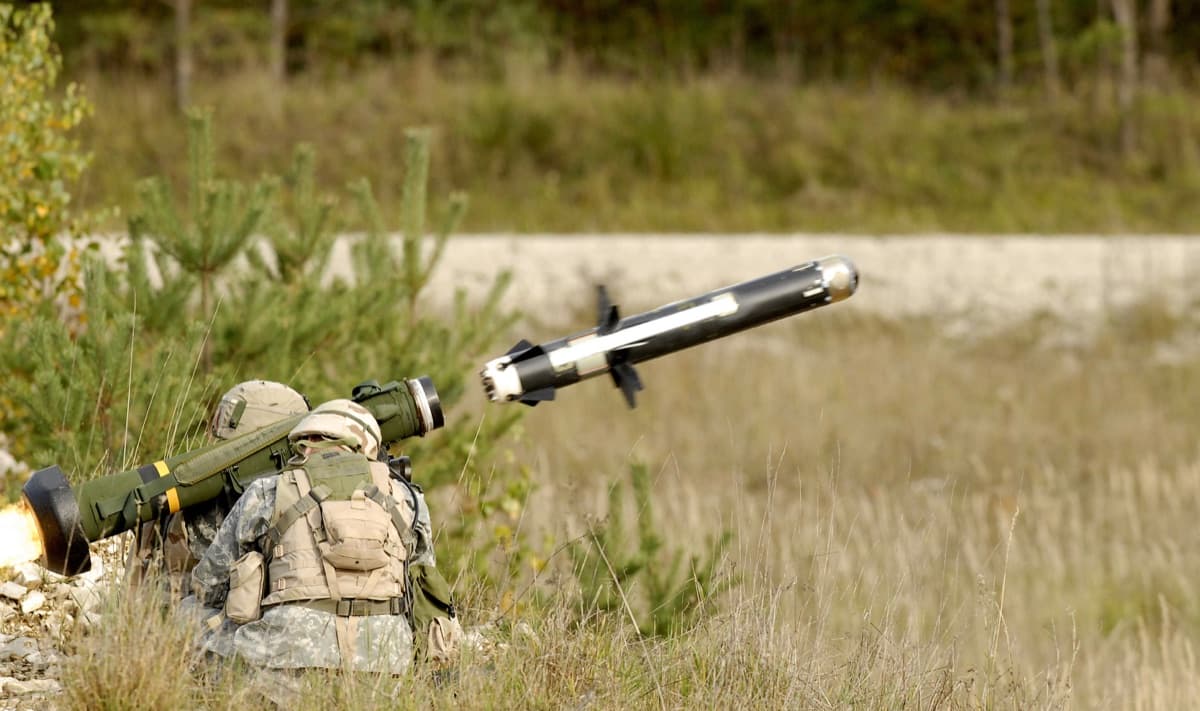
Soldier firing an FGM-148 Javelin anti-tank missile during a live-fire training exercise, with the missile's exhaust visible at launch
David Kowalski
David Kowalski

Missile Systems & Air Defense Contributor

David Kowalski writes about missile systems, air defense networks, and the technology behind precision strike warfare. His work examines how offensive and defensive missile capabilities shape the balance of power between nations.

A Russian T-72B3 main battle tank costs approximately $4 million. It weighs 46 tons, carries a crew of three, and represents years of training and logistics investment. A 22-year-old infantry soldier carrying an FGM-148 Javelin on their shoulder can destroy that tank in under 15 seconds, from behind a wall, in any weather, at ranges up to 2,500 meters, and walk away before the crew even knows they've been targeted. The Javelin missile costs roughly $178,000. The reusable Command Launch Unit costs another $126,000. The total system costs a fraction of the target it's designed to kill. That arithmetic is the reason the Javelin has become the most consequential infantry weapon of the 21st century.

What the Javelin Actually Is

The FGM-148 Javelin is a man-portable, fire-and-forget anti-tank guided missile system produced by a joint venture between Lockheed Martin and RTX (formerly Raytheon). It entered service with the U.S. Army in 1996 and has since been adopted by over 20 allied nations. The system consists of two components: the missile itself, sealed in a disposable launch tube, and the Command Launch Unit (CLU), a reusable sighting and fire-control device that attaches to the tube.
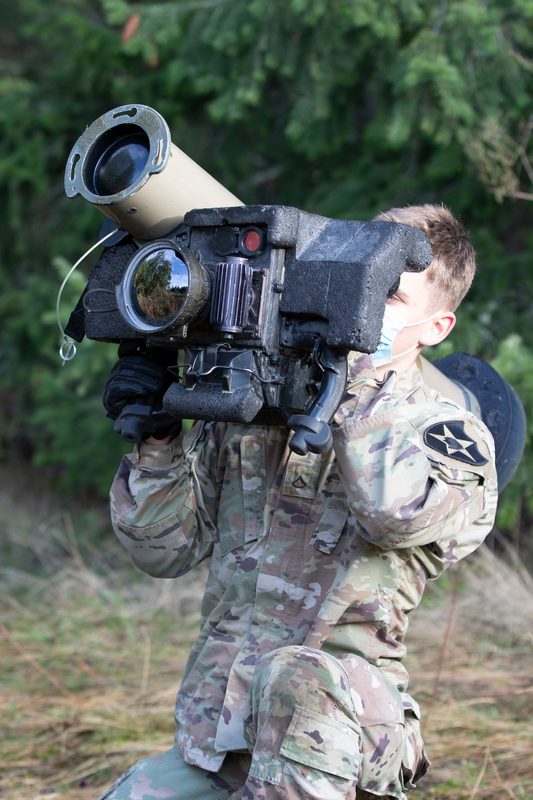
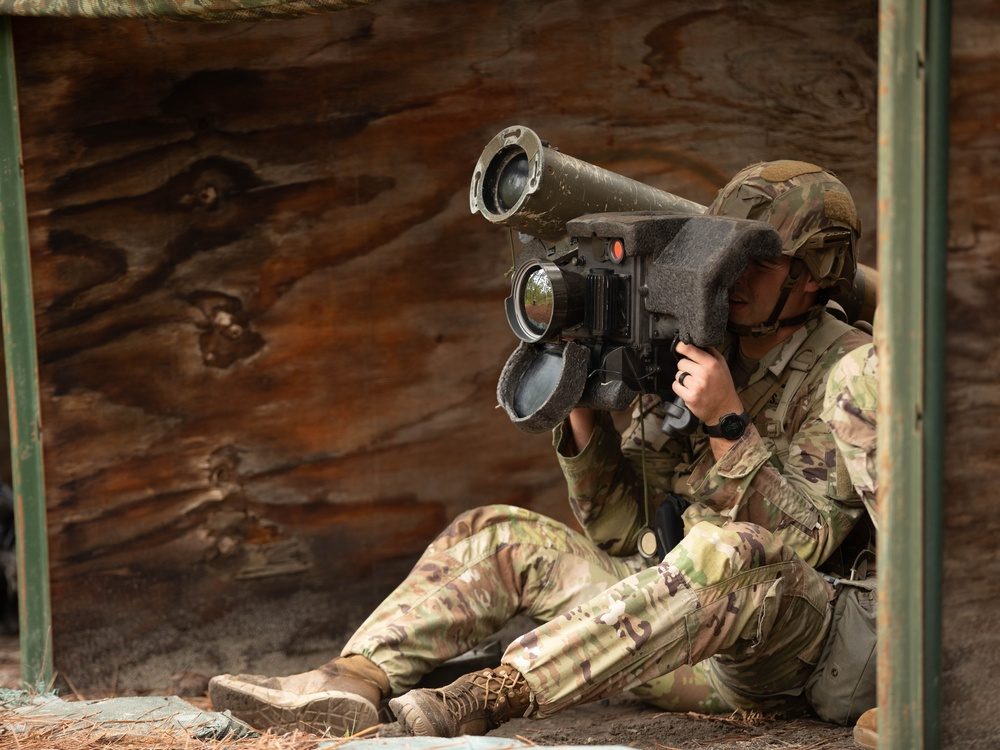
U.S. Army soldier aiming a Javelin anti-tank missile system with the Command Launch Unit attached during a training exercise
A soldier simulates engaging a target using the Javelin's Command Launch Unit (CLU) during a Best Squad Competition. The CLU provides day/night surveillance and targeting capability and is reusable across multiple missile rounds. (U.S. Army / DVIDS)

The complete system, missile in tube plus CLU, weighs about 22.3 kilograms (49.2 pounds). A trained soldier can carry it, set up, acquire a target, fire, and displace in under a minute. The missile's effective range spans from 75 meters minimum to a maximum of 2,500 meters for the baseline model, with the newer FGM-148F extending that range to approximately 4,750 meters.

But what makes the Javelin exceptional isn't its portability or its range. It's what happens after the soldier pulls the trigger.

Fire and Forget: The Cooled Infrared Seeker

Most anti-tank missiles require the operator to guide the weapon to the target. Wire-guided systems like the TOW demand that the soldier keep the crosshairs on the tank for the entire flight time, up to 20 seconds of sitting exposed while the missile covers the distance. Beam-riding systems like the Kornet require a similar sustained engagement. In both cases, the operator is vulnerable to return fire during the guidance phase.

The Javelin eliminates that problem entirely. Its seeker is a cooled infrared focal plane array, essentially a miniaturized thermal camera that locks onto the target's heat signature before launch. The soldier uses the CLU to identify the target, switch to the missile's seeker view, place a targeting box over the target, and command a lock. Once the seeker has locked, the soldier fires and can immediately take cover, move to a new position, or engage a second target. The missile guides itself.

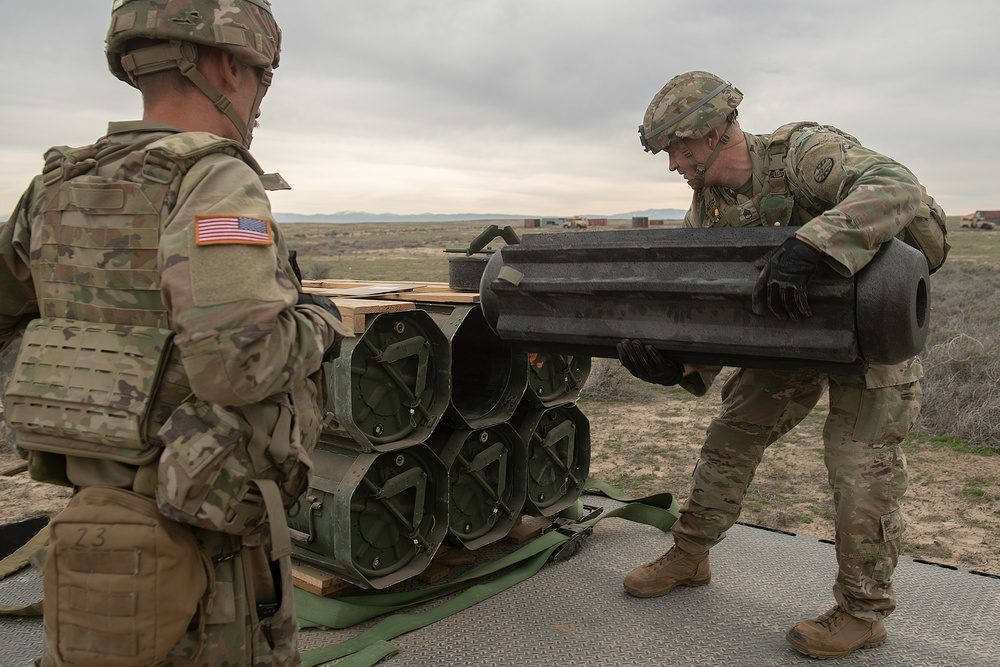
A Javelin missile being removed from its sealed transport and launch canister during training preparation at Orchard Combat Training Center
A Javelin missile is prepared for a training exercise at the Orchard Combat Training Center in Idaho. Each missile is factory-sealed in its launch tube, which doubles as a shipping container, and has a shelf life of over 10 years. (Idaho Army National Guard / DVIDS)

The "cooled" part of the seeker is critical. The infrared detector operates at extremely low temperatures, cooled by a small integrated cooling unit that activates during the targeting sequence. Cooling the sensor dramatically improves its sensitivity, allowing it to distinguish the target's thermal signature from background clutter even when the target is partially obscured, has been sitting idle with engines off, or is positioned against a thermally complex background like an urban environment. This level of seeker sophistication is one reason the Javelin costs what it does, and one reason cheaper competitors struggle to match its reliability.

Top Attack: Hitting Tanks Where They're Weakest

Modern main battle tanks are designed to survive frontal hits. The front glacis plate of a T-90M carries composite armor and explosive reactive armor tiles that can defeat most anti-tank weapons in a direct engagement. The turret front is similarly hardened. Head-on, a main battle tank is an extraordinarily difficult target to kill.

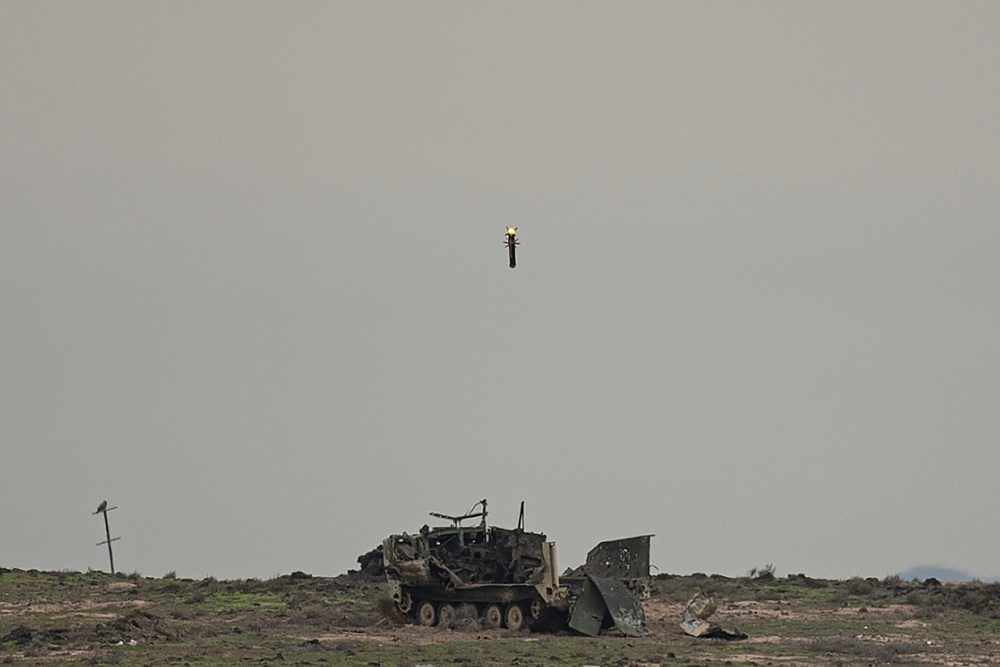
The Javelin doesn't attack head-on. In its primary engagement mode, called top-attack, the missile launches with a soft-launch motor that ejects it from the tube at low velocity, protecting the operator from dangerous backblast and allowing firing from enclosed spaces. After clearing the tube, the main flight motor ignites and the missile climbs to an altitude of approximately 150 meters. It then dives onto the target from above, striking the turret roof, the thinnest armor on any tank.

Idaho Army National Guard soldiers preparing to fire a Javelin missile during field training exercises at Orchard Combat Training Center
Soldiers from 2-116th Combined Arms Battalion train with the Javelin system at the Orchard Combat Training Center in Idaho, including the first-ever Javelin live fire in Idaho National Guard history. (Idaho Army National Guard / DVIDS)

The warhead is a tandem shaped charge, two charges arranged in sequence. The first, smaller charge detonates on impact and defeats the target's explosive reactive armor (ERA), which is designed to disrupt incoming shaped-charge jets. The second, larger charge detonates milliseconds later, driving a focused jet of molten metal through the now-unprotected base armor beneath the ERA. The tandem warhead can penetrate over 800 millimeters of rolled homogeneous armor equivalent, more than sufficient to defeat the roof armor of any tank in service anywhere in the world.

The Javelin also has a direct-attack mode for use against bunkers, buildings, and other non-armored targets where a flat trajectory is more appropriate. The operator selects the mode before firing.

Ukraine: 7,000 Javelins and the Myth of the Tank

The Javelin had been used in combat before Ukraine, in Iraq and Afghanistan, primarily against bunkers and vehicles, but the war in Ukraine, beginning in 2022, became the weapon's defining moment. The United States shipped over 7,000 Javelin missiles to Ukraine, representing roughly one-third of the total U.S. inventory. Ukrainian forces used them to devastating effect during the early weeks of the Russian invasion, particularly during the defense of Kyiv.

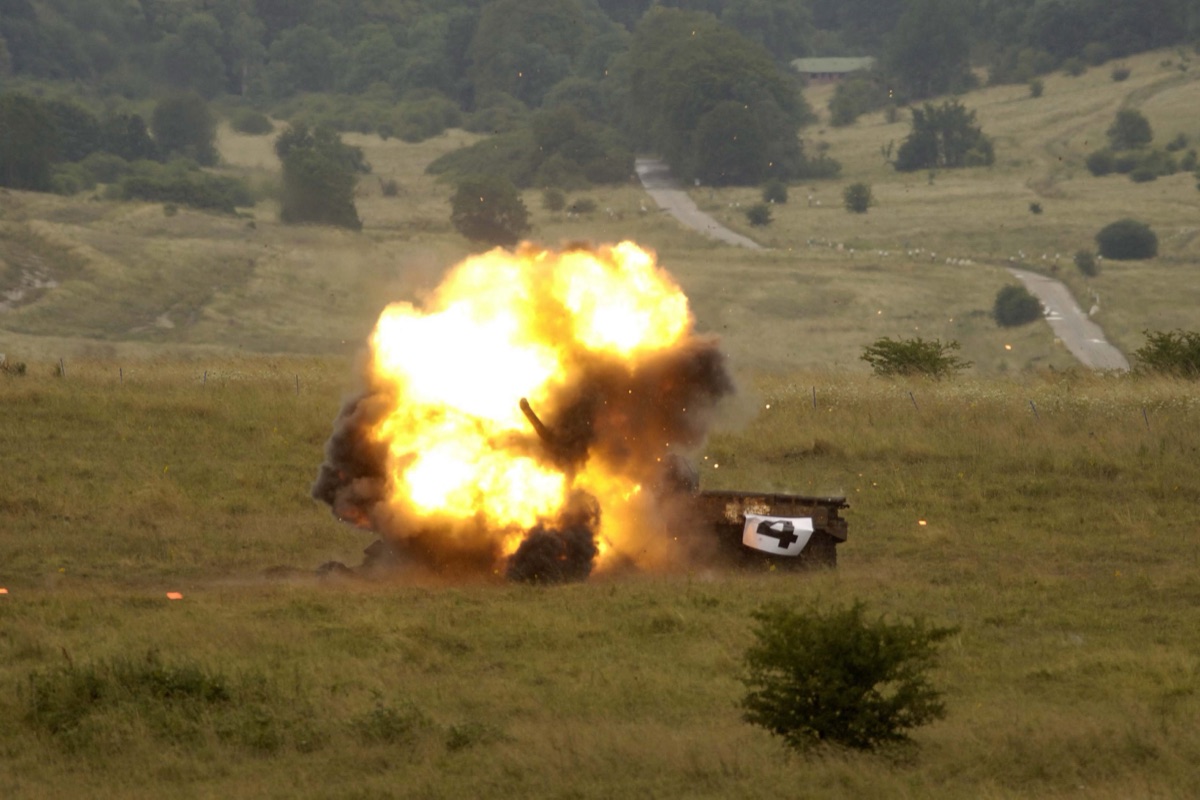
Armored vehicle target being engaged during live-fire gunnery qualification at Udairi Range Complex in Kuwait
An armored target is engaged during a live-fire qualification exercise. In Ukraine, the Javelin's top-attack profile proved devastating against Russian armored columns, exploiting the weak roof armor that no amount of reactive armor could fully protect. (U.S. Army / DVIDS)

The tactical impact was immediate and visible. Russian armored columns pushing south from Belarus toward Kyiv encountered Ukrainian infantry teams armed with Javelins operating from concealed positions in tree lines, buildings, and roadside berms. The fire-and-forget capability meant Ukrainian soldiers could engage a tank, immediately move to a new position, and engage again before Russian forces could identify the firing location. Russian tank crews began welding improvised metal cages, dubbed "cope cages," onto their turret roofs in a desperate attempt to prematurely detonate the Javelin's warhead before it reached the base armor. The cages were largely ineffective against the tandem warhead.

The strategic impact was even more significant. The Javelin's performance in Ukraine reinforced a growing consensus among military planners: that armored vehicles operating without infantry support, electronic warfare protection, and active protection systems are unacceptably vulnerable on the modern battlefield. The weapon didn't make tanks obsolete. But it made operating tanks without comprehensive defensive measures suicidal.

The Production Problem: 32 Months Per Missile

The Javelin's greatest vulnerability isn't on the battlefield. It's in the factory. A single Javelin missile takes approximately 32 months to produce from start to finish. The production line, split between Lockheed Martin's facility in Troy, Alabama, and RTX's plant in Tucson, Arizona, was running at roughly 2,100 missiles per year before the Ukraine war. After the U.S. shipped over 7,000 missiles to Ukraine, the Pentagon moved to ramp production to approximately 4,000 missiles per year, but even that accelerated rate means rebuilding the depleted inventory will take years.

The production bottleneck lies primarily in the seeker. The cooled infrared focal plane array requires specialized materials, precision manufacturing, and extensive quality testing. Each seeker must perform flawlessly on the first and only shot. There's no second chance with a fire-and-forget weapon. Every component in the guidance section must meet exacting specifications, and the testing regime reflects that standard.

A Paratrooper from the 82nd Airborne Division aiming an FGM-148 Javelin anti-tank weapon system during Expert Soldier Badge qualification at Fort Liberty
A Paratrooper assigned to the 82nd Airborne Division trains with the Javelin during Expert Soldier Badge qualification at Fort Liberty, North Carolina. The 82nd was among the first units deployed to Europe following Russia's 2022 invasion of Ukraine. (U.S. Army / DVIDS)

The CLU is less of a bottleneck because it's reusable. A single CLU can fire dozens of missiles over its service life. But the CLU itself is being upgraded. The Lightweight Command Launch Unit (LWCLU) reduces weight and integrates improved thermal imaging, making the entire system easier to carry and more effective at longer ranges. The LWCLU has begun fielding to Army units and represents the next evolution of the platform.

Why $178,000 Is a Bargain

The Javelin's per-unit cost draws regular criticism, particularly when compared to cheaper alternatives like the AT-4 (roughly $1,500) or the Carl Gustaf recoilless rifle ($2,000 per round). But this comparison misses the point. The AT-4 and Carl Gustaf are unguided weapons with effective ranges under 500 meters. Using them against a modern main battle tank requires the operator to get dangerously close and aim precisely under fire.

The Javelin allows engagement at ranges where the operator is beyond the effective reach of most tank-mounted weapons. The fire-and-forget capability eliminates the exposure time that makes wire-guided missiles so dangerous to their operators. The top-attack profile defeats armor that would stop a direct-impact weapon. And the hit probability, exceeding 90 percent in testing and well over 80 percent in combat conditions, means fewer missiles are wasted on misses.

When measured against what it destroys, whether a $4 million tank, a $2 million armored personnel carrier, or a defensive position that would otherwise require an airstrike, the Javelin's cost becomes trivially cheap. One Javelin missile costs less than a single day of operating an F-16 fighter. The economics favor the missile.

The Competitive Landscape and Future

The Javelin is not the only fire-and-forget anti-tank missile in production. Israel's Spike family of missiles offers comparable fire-and-forget capability with fiber-optic datalinks that allow mid-course target updates. The European NLAW, which also saw extensive use in Ukraine, provides a cheaper, lighter, shorter-range alternative with a predicted-line-of-sight guidance system. South Korea, Turkey, and India are all developing domestic anti-tank missiles with fire-and-forget seekers.

But the Javelin remains the benchmark. Its combination of range, armor penetration, hit probability, soft-launch capability, and operational maturity, backed by over 5,000 combat firings across Iraq, Afghanistan, Syria, and Ukraine, makes it the standard against which every competing system is measured. The FGM-148F upgrade, currently entering production, extends range, improves the seeker's ability to engage targets in heavy clutter, and adds a multipurpose warhead optimized for both armored and structural targets.

The weapon that costs $178,000 per shot has changed the calculus of ground warfare. It hasn't made tanks obsolete, since active protection systems, improved countermeasures, and combined-arms doctrine will keep armored vehicles relevant. But it has permanently shifted the balance between armor and infantry, giving a single soldier the power to destroy in seconds what took a factory months to build and a crew years to learn to operate. That asymmetry is the Javelin's real value. And at $178,000, it's the most cost-effective weapon on the modern battlefield.

Share this article

Share:

Recommended

Ace of The Skies: Can You Identify These Military Aircraft Throughout The Years?
Test Yourself

Ace of The Skies: Can You Identify These Military Aircraft Throughout The Years?

Can you identify these aircraft?

Take the Quiz

On This Day in Military History

April 6

United States Declares War on Germany (1917)

After months of German unrestricted submarine warfare and the revelation of the Zimmermann Telegram, the U.S. House of Representatives voted 373-50 to declare war on Germany, four days after the Senate voted 82-6. The entry of American industrial might and two million fresh troops tipped the balance decisively against the Central Powers.

1862, Battle of Shiloh Begins

1865, Battle of Sailor's Creek

1941, Germany Invades Yugoslavia and Greece

See all 11 events on April 6

Get Military News & History in Your Inbox

Join thousands of readers receiving our weekly digest of military technology, history, and analysis.

Test Your Knowledge