Skip to content
April 22:First Poison Gas Attack at Ypres111yr ago

LRASM: The Missile the Navy Built Specifically to Sink Chinese Aircraft Carriers

David Kowalski · · 11 min read
Save
Share:
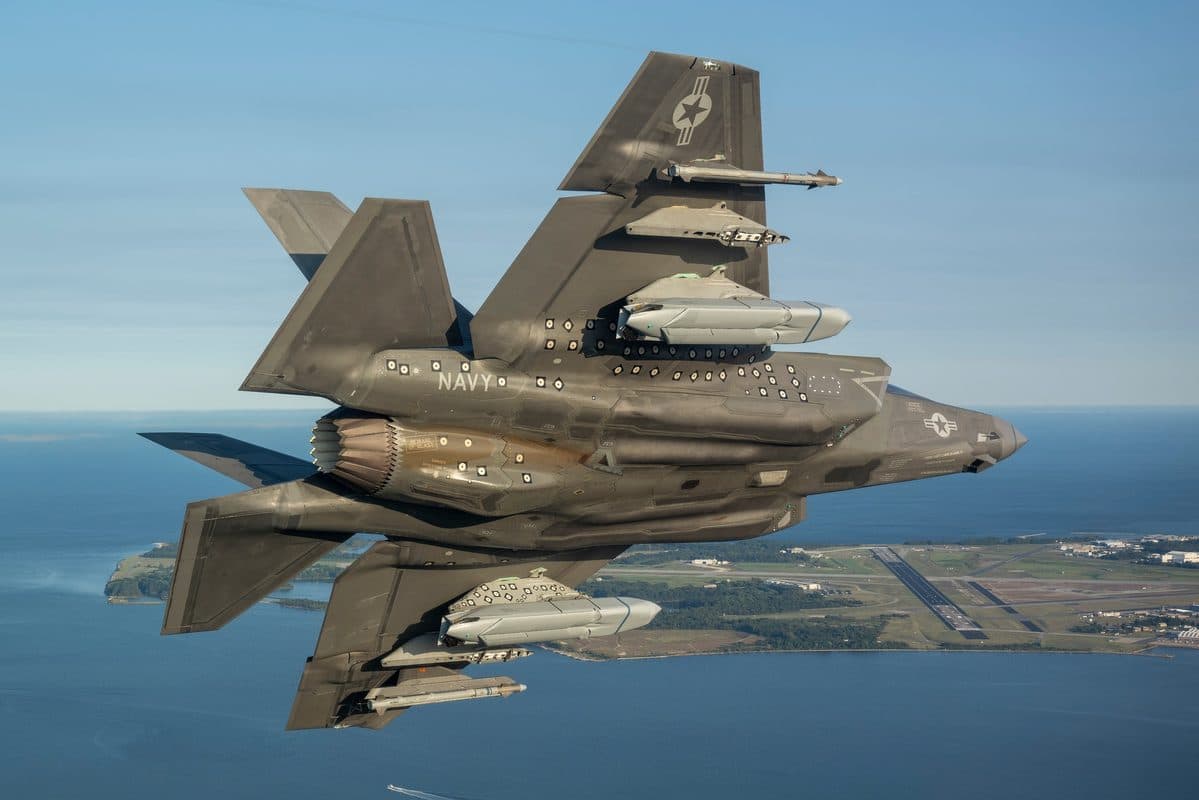
F-35C Lightning II carrying AGM-158C LRASM anti-ship missiles on external pylons during a flight test over Patuxent River
David Kowalski
David Kowalski

Missile Systems & Air Defense Contributor

David Kowalski writes about missile systems, air defense networks, and the technology behind precision strike warfare. His work examines how offensive and defensive missile capabilities shape the balance of power between nations.

The AGM-158C Long Range Anti-Ship Missile can find and hit a warship without GPS, without satellite communications, and without a human being telling it which ship to attack. In a world where electronic warfare can jam navigation signals, sever data links, and blind the sensors that modern weapons depend on, the LRASM was designed to keep flying, keep searching, and keep killing, entirely on its own.

That single capability, autonomous targeting in a denied environment, is what separates the LRASM from every anti-ship missile that came before it, and it's why the U.S. Navy considers it the most important offensive anti-surface weapon in its inventory. China's expanding fleet of advanced warships, protected by layers of electronic warfare and air defense systems designed specifically to defeat conventional cruise missiles, demanded a weapon that could think for itself. The LRASM is that weapon.

Why the Navy Needed a New Anti-Ship Missile

For decades, the U.S. Navy's primary anti-ship weapon was the AGM-84 Harpoon, a missile first deployed in 1977. The Harpoon was effective against the surface combatants it was designed to engage, Soviet-era destroyers and frigates with limited electronic warfare capabilities. But by the 2010s, the threat environment had fundamentally changed. China's People's Liberation Army Navy had grown into the world's largest fleet by hull count, deploying modern destroyers and cruisers equipped with sophisticated phased-array radars, electronic countermeasures, and layered air defense systems that could detect and intercept incoming missiles at ranges the Harpoon was never designed to overcome.

The problem wasn't just range. The Harpoon uses an active radar seeker that broadcasts its presence as it approaches a target, essentially announcing itself to every electronic warfare system in the area. Against a modern Chinese task force with integrated air defense networks, a Harpoon would face jamming, decoys, and interceptor missiles long before reaching its target. The Navy needed something that could slip through those defenses without being detected, and that meant building a missile that didn't rely on any of the signals an adversary could exploit.

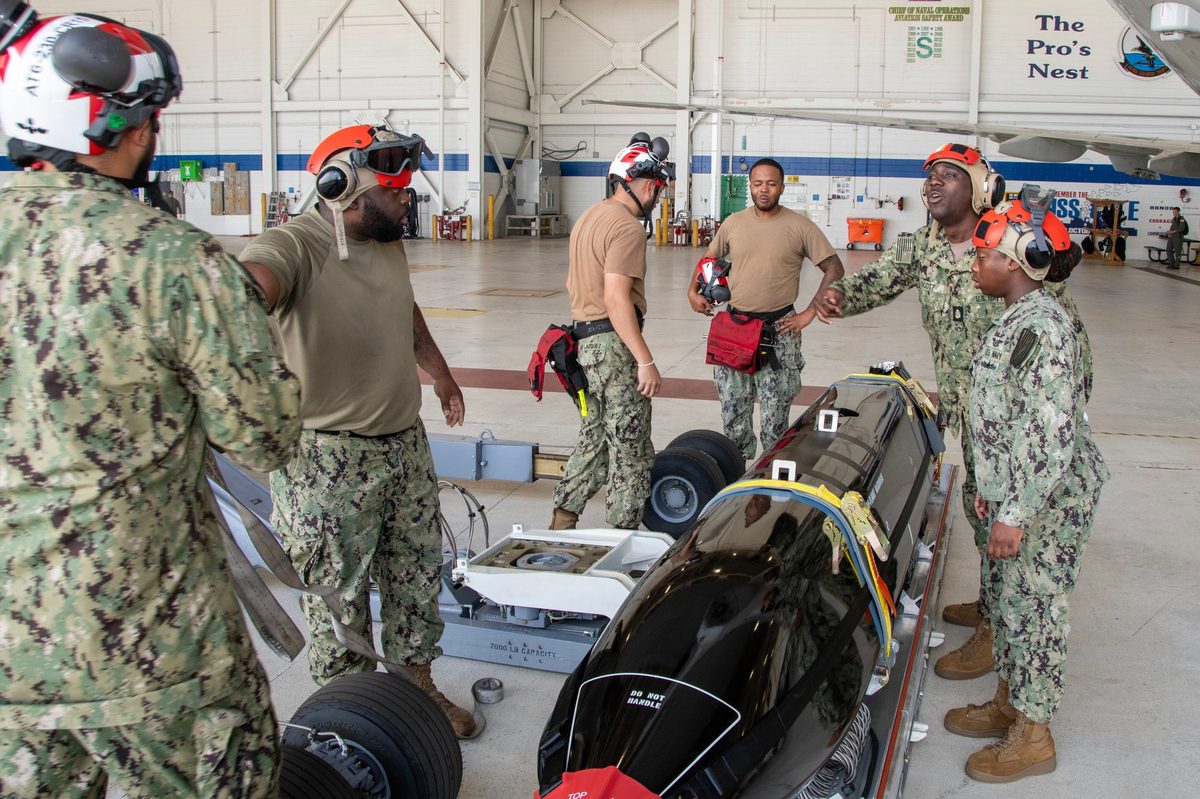
Sailors from Patrol Squadron 30 conducting a pre-installation inspection of an AGM-158C LRASM missile at Naval Air Station Jacksonville
Sailors from Patrol Squadron 30 inspect an AGM-158C LRASM before loading it onto a P-8A Poseidon maritime patrol aircraft. The LRASM is being integrated across multiple Navy and Air Force platforms to provide distributed anti-ship capability throughout the fleet.

In 2009, DARPA launched the Long Range Anti-Ship Missile program to address exactly this gap. The requirement was straightforward but technically demanding: build a stealthy, long-range cruise missile that could autonomously locate, identify, and engage enemy warships in an environment where GPS was jammed, communications were severed, and the launching aircraft might not be able to provide any guidance updates after release. Lockheed Martin won the contract, and the result was the AGM-158C, a weapon that shares its airframe with the combat-proven JASSM-ER but carries an entirely different brain.

The JASSM-ER Airframe: Proven Stealth at Range

The LRASM is built on the airframe of the AGM-158B JASSM-ER (Joint Air-to-Surface Standoff Missile, Extended Range), a land-attack cruise missile that has been in service since 2014 and has been combat-tested in strikes against Syrian targets. This wasn't a convenient shortcut, it was a deliberate engineering decision that gave the LRASM several critical advantages from day one.

The JASSM-ER airframe is inherently low-observable. Its angular body, carefully shaped surfaces, and radar-absorbent coatings reduce its radar cross section to a fraction of what legacy anti-ship missiles present. Where a Harpoon might appear on a destroyer's radar screen at 30 or 40 kilometers, the LRASM is designed to remain invisible until it's far too close for most defense systems to react effectively.

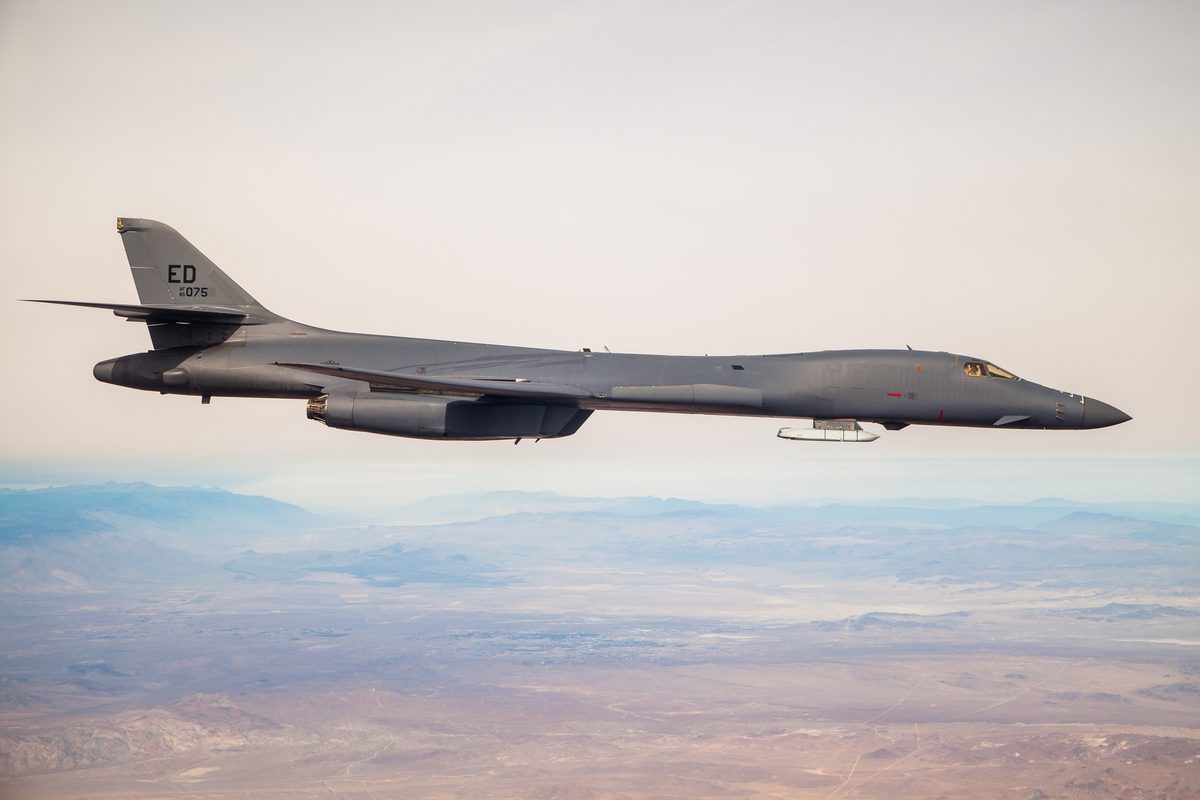
B-1B Lancer carrying a JASSM missile on an external pylon during a flight test over Edwards Air Force Base
A B-1B Lancer carries a JASSM on an external pylon during weapons integration testing at Edwards Air Force Base. The LRASM shares this same airframe, giving it proven stealth characteristics and long range. The B-1B can carry up to 24 LRASMs, making it the most potent anti-ship bomber in existence.

The shared airframe also means the LRASM inherits the JASSM-ER's range, widely estimated at more than 500 nautical miles, though the exact figure is classified. For anti-ship warfare, that range is transformative. A B-1B Lancer carrying 24 LRASMs can launch from well beyond the engagement envelope of any Chinese air defense system, saturating a carrier battle group with more missiles than its defenses can handle simultaneously. The math is simple and devastating: even if a task force's defenses intercept 90 percent of incoming LRASMs, a full B-1B load of 24 missiles still puts two or three warheads on target.

The LRASM's Williams International turbofan engine provides efficient cruise flight at high subsonic speeds, and the missile's terminal flight profile brings it down to sea-skimming altitude, just meters above the wave tops, making it extremely difficult for shipboard radars to detect against the ocean surface clutter.

The Brain: Autonomous Targeting Without Human Input

What makes the LRASM fundamentally different from every preceding anti-ship missile is its guidance system. The AGM-158C uses a multimodal sensor suite that combines GPS/INS midcourse navigation, a weapon data link, a passive radio-frequency sensor, and an imaging infrared seeker for terminal guidance. Each of these systems can operate independently, and the missile's onboard processing can fuse data from all of them simultaneously to build a picture of what's ahead, without emitting any detectable signals of its own.

In a normal engagement scenario, the LRASM launches with pre-programmed waypoints and target information. During the midcourse phase, it navigates using GPS and inertial guidance, receiving updates through the weapon data link if the launching platform can provide them. But the LRASM was specifically designed for the scenario where none of that works. If GPS is jammed, the missile navigates on inertial guidance alone. If the data link is severed, the missile continues on its last known targeting data. And when it reaches the target area, it switches to its passive sensors, listening for the electromagnetic emissions that warships inevitably produce, and its imaging infrared seeker to identify, classify, and select its target from among multiple ships.

This is the critical capability: the LRASM can look at a formation of warships and decide which one to hit. Its onboard algorithms can distinguish between a high-value target like an aircraft carrier and an escort destroyer, selecting the ship that matches its pre-programmed targeting priorities. No pilot is making that selection. No operator on a distant ship is steering the missile. The weapon makes the decision autonomously, in an environment where every form of external communication may have been cut.

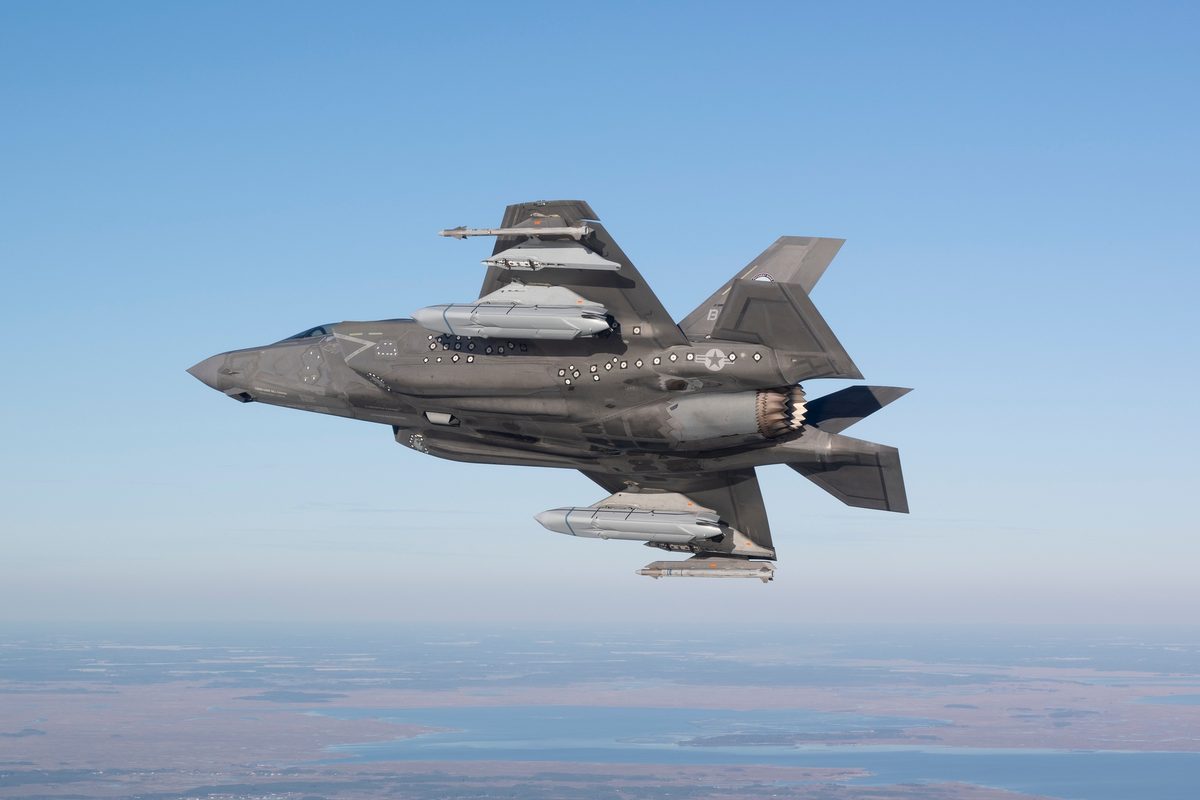
F-35B Lightning II conducting the first test flight with AGM-158 missiles loaded on external stations at Patuxent River
An F-35B Lightning II conducts the first flight test with AGM-158 missiles loaded on external stations, January 2025. Integration of the LRASM onto the F-35 dramatically expands the number of platforms that can deliver autonomous anti-ship strikes from stealth aircraft.

Platform Integration: From Bombers to Fighters

The LRASM achieved Early Operational Capability on the U.S. Air Force's B-1B Lancer in December 2018, making the bone-shaking supersonic bomber the first platform cleared to carry the weapon operationally. The B-1B remains the most potent LRASM delivery platform in terms of sheer volume, its three internal weapons bays can carry up to 24 missiles, enough to overwhelm the defenses of an entire surface action group in a single sortie.

The Navy's F/A-18E/F Super Hornet followed, achieving IOC with the LRASM in 2019. While the Super Hornet carries fewer missiles than the B-1B, typically two on external pylons, it can operate from aircraft carriers, giving the Navy an organic anti-ship strike capability that doesn't depend on Air Force bombers being available. A carrier air wing of Super Hornets can coordinate LRASM launches from multiple aircraft, arriving at the target from different axes simultaneously to complicate the defender's problem.

Integration onto the F-35 is perhaps the most strategically significant expansion. In September 2024, flight testing began on the F-35C carrier variant at Naval Air Station Patuxent River, with the F-35B following in January 2025. The F-35's combination of stealth, sensor fusion, and advanced networking means it can approach a target area, gather targeting data with its own sensors, and launch LRASMs from ranges where the F-35 itself remains undetected. The LRASM's autonomous capability then takes over, freeing the F-35 to withdraw without maintaining a data link to the weapon.

The Navy is also developing a surface-launched variant designed to fire from the Mk 41 Vertical Launch System installed on Arleigh Burke-class destroyers and Ticonderoga-class cruisers. A surface-launched LRASM would give every VLS-equipped warship in the fleet an organic long-range anti-ship capability, transforming escorts from purely defensive platforms into offensive surface strikers.

Designed for the China Problem

The LRASM exists because of China's anti-access/area-denial strategy. Beijing has spent two decades building a military architecture specifically designed to keep American carrier strike groups away from the Western Pacific, a layered system of ballistic missiles, cruise missiles, submarines, electronic warfare, and surveillance satellites that military planners call A2/AD. The centerpiece of that strategy is the ability to detect, track, and destroy American warships at ranges of 1,000 miles or more.

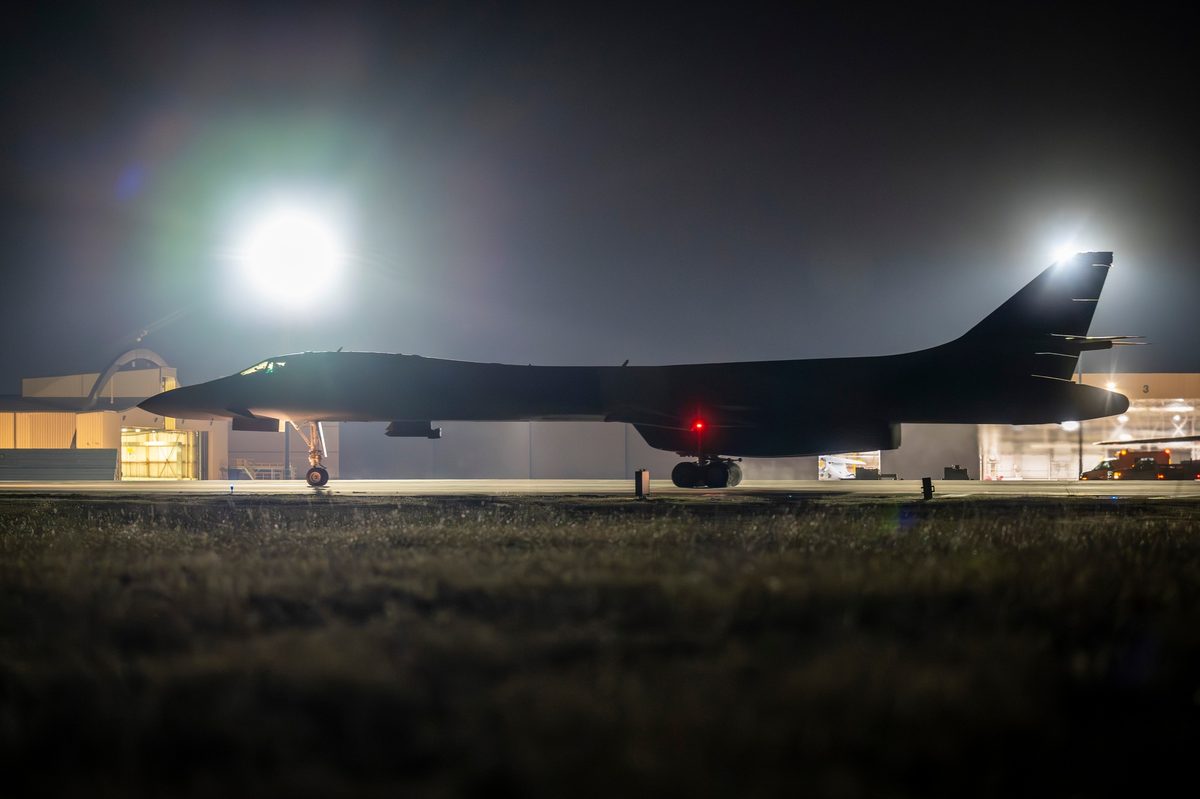
B-1B Lancer bomber taxiing on a runway at Dyess Air Force Base preparing for a long-range strike mission
A B-1B Lancer from Ellsworth Air Force Base prepares for a long-range strike mission. The B-1B can carry 24 LRASMs internally, making it the single most destructive anti-ship platform in any military's arsenal. In a Pacific conflict, B-1Bs launching from Guam or Australia could strike Chinese naval formations at distances well beyond the reach of enemy air defenses.

But A2/AD works both ways. If China can threaten American ships at long range, the LRASM gives America the ability to threaten Chinese ships at even longer range, and to do so with a weapon that China's electronic warfare systems can't effectively counter. The LRASM's passive sensors don't emit signals that can be detected or jammed. Its stealth design defeats radar detection. Its autonomous targeting means that severing communications between the launching aircraft and the missile doesn't matter. Every countermeasure in China's A2/AD toolkit, jamming, cyber warfare, anti-satellite attacks, is designed to disrupt the sensor-to-shooter kill chain. The LRASM's answer is to compress that kill chain into a single weapon that carries its own sensors, makes its own targeting decisions, and needs no external support after launch.

At approximately $3.5 million per missile, the LRASM is not cheap, but it's an order of magnitude less expensive than the ships it's designed to destroy. A Chinese Type 055 Renhai-class cruiser represents a multi-billion dollar investment. A full B-1B load of 24 LRASMs costs roughly $84 million. The exchange ratio favors the attacker overwhelmingly, which is exactly the kind of asymmetric cost calculus that keeps admirals in Beijing awake at night.

The Autonomy Question

The LRASM's autonomous targeting capability raises questions that extend beyond the technical. A weapon that can select its own targets without human input sits at the edge of what military ethicists and arms control advocates consider acceptable. The Pentagon's existing policy requires a "human in the loop" for lethal targeting decisions, but the LRASM is designed to operate in precisely the conditions where maintaining that human connection may be impossible.

In practice, the human decision happens before launch. The pilot or mission commander approves the strike, defines the targeting parameters, and releases the weapon. What happens after that, the missile's autonomous navigation, target identification, and engagement, occurs within boundaries the human operator set before the missile left the rail. Whether that constitutes meaningful human control depends on one's definition of the term, and reasonable people disagree.

What is not debatable is the operational necessity. In a contested environment where communications can be jammed and GPS can be spoofed, a missile that cannot function autonomously is a missile that cannot function at all. The LRASM's autonomy isn't a feature the Navy added because it could, it's a capability the Navy built because the alternative was fielding a weapon that China's electronic warfare systems could defeat before it reached its target. The threat environment demanded autonomy, and the LRASM delivered it.

The AGM-158C LRASM represents something larger than a single weapons program. It represents the U.S. Navy's acknowledgment that the era of unchallenged American naval supremacy is over, and that maintaining maritime dominance in the Pacific requires weapons that can operate without the network connectivity that American forces have relied on for thirty years. In a fight against a peer adversary, the networks will be attacked, the satellites will be blinded, and the communications will be jammed. The LRASM was built to win that fight anyway.

Share this article

Share:

Recommended

Ace of The Skies: Can You Identify These Military Aircraft Throughout The Years?
Test Yourself

Ace of The Skies: Can You Identify These Military Aircraft Throughout The Years?

Can you identify these aircraft?

Take the Quiz

On This Day in Military History

April 10

Loss of USS Thresher (1963)

The nuclear-powered submarine USS Thresher sank during deep-diving tests 220 miles east of Cape Cod, killing all 129 crew and shipyard personnel aboard. A leak in a silver-brazed pipe joint caused cascading system failures. The disaster led to the creation of the SUBSAFE program, the most rigorous submarine safety protocol in history.

1862, Siege of Fort Pulaski: Rifled Artillery Revolution

See all 6 events on April 10

Get Military News & History in Your Inbox

Join thousands of readers receiving our weekly digest of military technology, history, and analysis.

Test Your Knowledge