Skip to content
April 30:The Fall of Saigon51yr ago

The Gepard: How a Cold War Anti-Aircraft Gun Became the World's Best Drone Killer

Marcus Webb · · 10 min read
Save
Share:
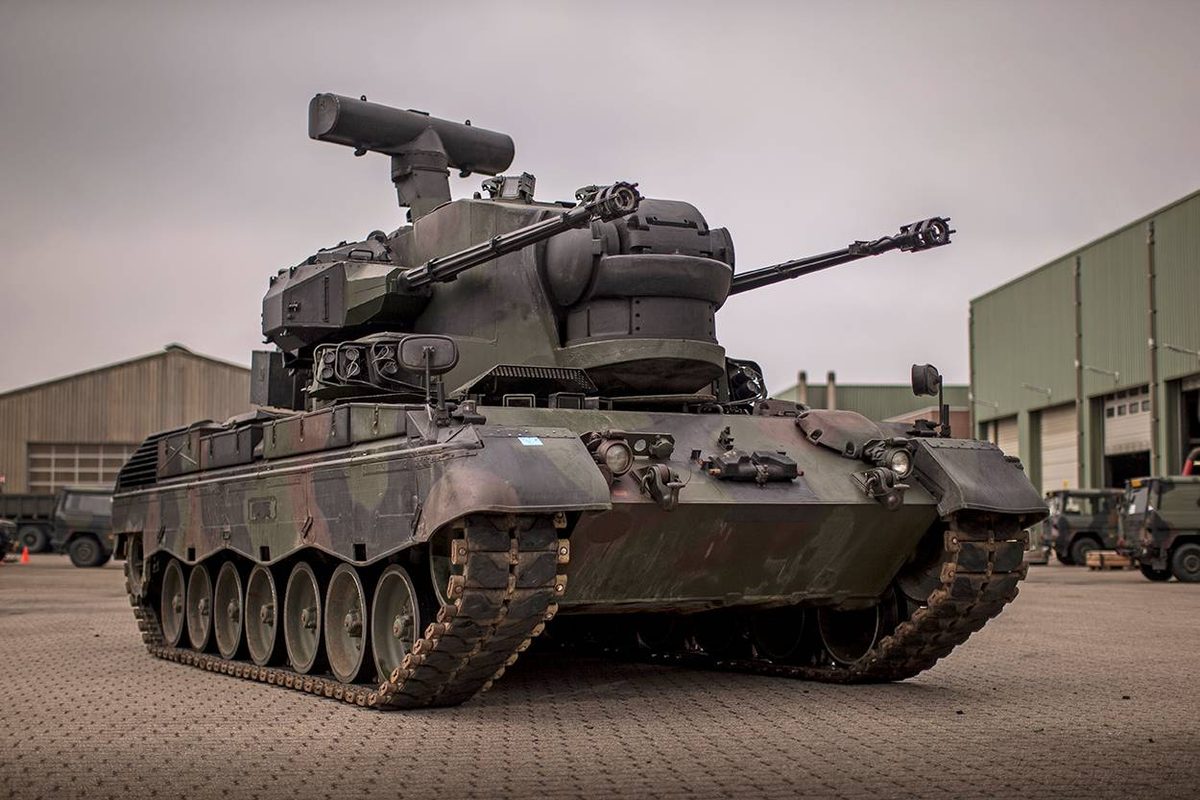
Flakpanzer Gepard self-propelled anti-aircraft gun with its distinctive twin 35mm Oerlikon turret and radar system
Marcus Webb
Marcus Webb

Military Vehicles & Ground Systems Contributor

Marcus Webb writes about military ground vehicles, armored platforms, and the logistics of land warfare. His work covers everything from MRAPs and infantry carriers to the training pipelines that keep ground forces operational in contested environments.

A single 35mm Oerlikon round costs roughly $100 to $200. A Stinger shoulder-fired missile costs around $250,000. An IRIS-T interceptor runs about $400,000. A Patriot PAC-3 missile costs between $3 million and $4 million. Each of these weapons can destroy the same target: a Shahed-136 kamikaze drone that Iran sells to Russia for approximately $20,000 apiece.

The math is brutal and obvious. When a nation is spending $3 million to destroy a $20,000 drone, the attacker wins the economic war even when every drone gets shot down. Ukraine learned this equation the hard way in the fall of 2022, when waves of Iranian-made Shahed drones began striking Ukrainian infrastructure almost nightly. The country's limited supply of Western air defense missiles was being exhausted at a rate that no production line could sustain. The solution came from the most unlikely source imaginable: a Cold War-era German anti-aircraft gun that the Bundeswehr had already decided to scrap.

Built to Kill Soviet Jets

The Flakpanzer Gepard was developed in the 1960s and entered service with the German Army in 1976. It was designed for a specific Cold War nightmare scenario: Soviet ground-attack aircraft and helicopters sweeping across the North German Plain in the opening hours of a Warsaw Pact invasion, flying below the engagement envelope of long-range surface-to-air missiles. The Gepard's job was to fill the gap between those high-altitude SAM systems and the infantry soldiers on the ground, providing mobile, radar-directed anti-aircraft fire that could keep pace with armored formations.
Royal Netherlands Army Flakpanzer Gepard self-propelled anti-aircraft gun in an operational field setting
A Royal Netherlands Army Flakpanzer Gepard in the field. The Gepard served NATO armies across Europe for decades, providing mobile air defense for armored formations. When Germany began retiring the system, few expected it would see its most important combat deployment years later in Ukraine.

The vehicle is built on the hull of the Leopard 1 main battle tank, giving it the mobility and armor protection to operate alongside front-line armored units. The turret mounts twin 35mm Oerlikon KDA automatic cannons, each capable of firing approximately 550 rounds per minute for a combined rate of 1,100 rounds per minute. The guns are fed by magazines holding 320 rounds of ammunition per gun. The turret also carries a search radar on the rear and a tracking radar on the front face, giving the Gepard the ability to detect, track, and engage aerial targets autonomously in all weather conditions.

The Oerlikon KDA guns fire high-explosive incendiary tracer rounds with a programmable fuse, allowing the shell to detonate at a pre-set distance even if it doesn't directly hit the target. Against aircraft, this proximity detonation creates a burst of shrapnel that increases the probability of a kill. The effective range against aerial targets is approximately 3.5 to 4 kilometers, short by modern missile standards, but devastatingly effective within that engagement envelope. The guns can traverse 360 degrees and elevate to 85 degrees, covering virtually the entire sky above the vehicle.

The Gepard was considered one of the finest short-range air defense systems of the Cold War era. It served in the armies of Germany, the Netherlands, Belgium, and several other nations. But by the 2000s, the threat it was designed to counter, low-flying manned aircraft, seemed increasingly obsolete. Germany began phasing the Gepard out of service in 2010, and by 2022, the remaining vehicles were sitting in storage, awaiting disposal. The ammunition production lines had been shut down. The Gepard was, by every institutional measure, a dead platform.

Ukraine Changes Everything

Russia's full-scale invasion of Ukraine in February 2022 transformed the European security landscape overnight, and with it, the Gepard's fortunes. When Ukraine urgently requested air defense systems to counter Russian cruise missiles and, increasingly, Iranian-made Shahed-136 loitering munitions, Germany faced a difficult choice. Its most advanced air defense systems, like the IRIS-T SLM, were in short supply and expensive. Patriot systems were even scarcer. But sitting in storage depots across Germany were dozens of Gepard vehicles that could be refurbished and shipped relatively quickly.

Germany announced the transfer of Gepard systems to Ukraine in April 2022. The first three vehicles arrived in Ukraine on July 25, 2022. By the end of September, thirty Gepards had been delivered along with 6,000 rounds of 35mm ammunition. Over the following months, additional vehicles followed, and by early 2025, Germany had provided approximately 60 Gepard systems to Ukrainian forces along with tens of thousands of ammunition rounds.

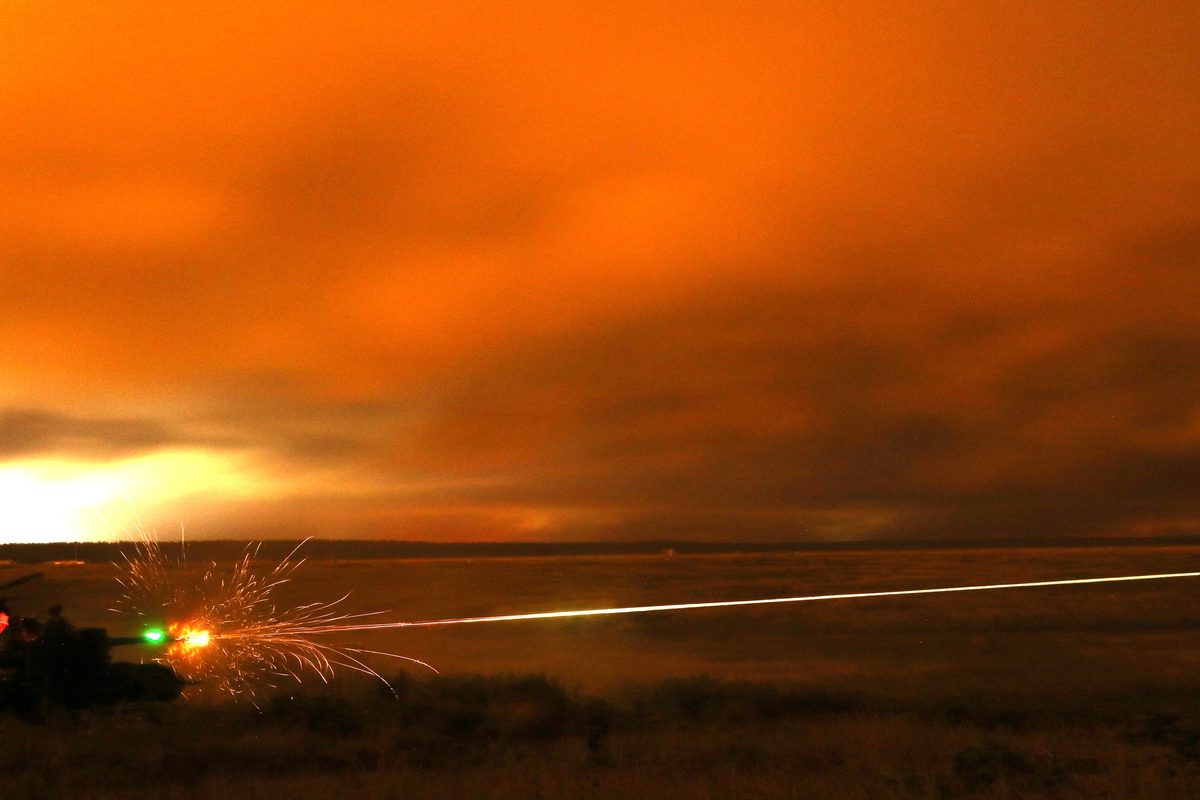
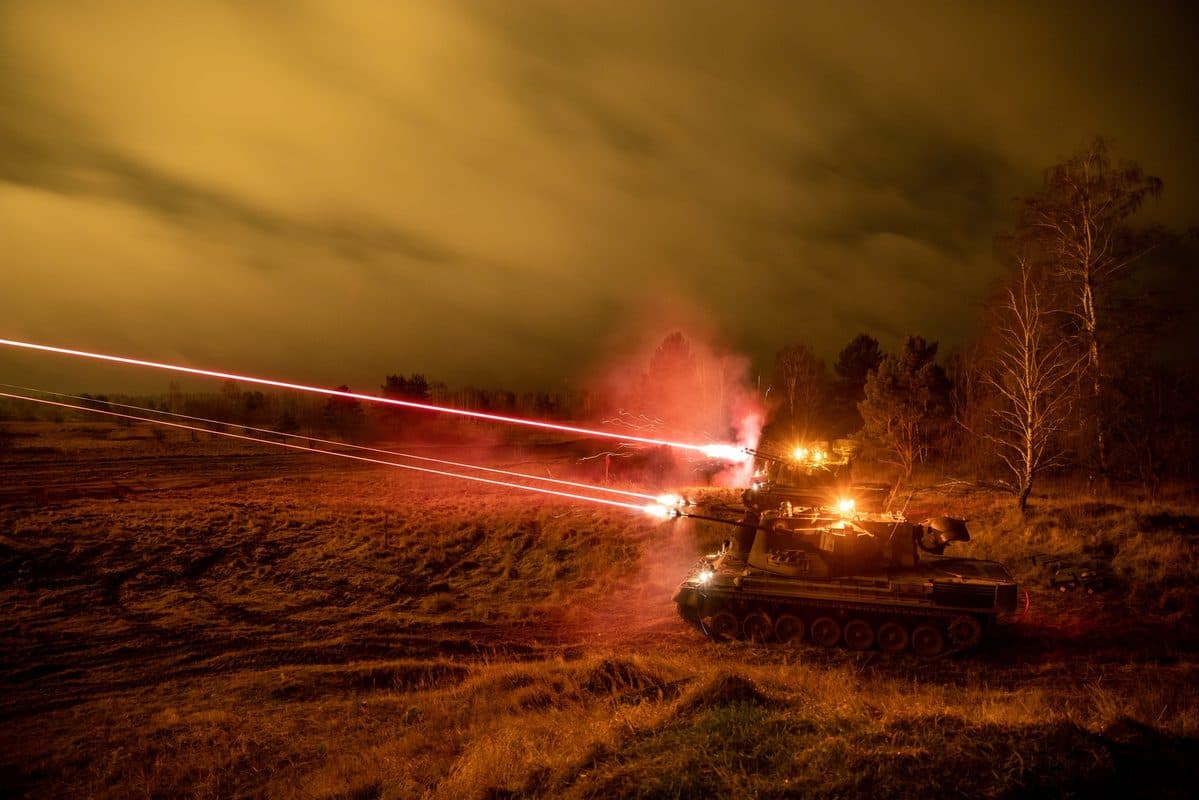
NATO soldiers firing Oerlikon air defense weapons during Exercise Oerlikon at a training range in Bemowo Piskie, Poland
Romanian and U.S. soldiers fire air defense weapons during Exercise Oerlikon in Poland. The Gepard's 35mm Oerlikon KDA cannons were designed to engage low-flying aircraft, but their high rate of fire and radar-guided accuracy proved even more effective against the slower-moving drones that dominate modern battlefields.

The results exceeded every expectation. Ukrainian Gepard crews discovered that the system was extraordinarily effective against exactly the kind of target it was never designed to engage: slow-moving, low-flying unmanned aerial vehicles. The Shahed-136, which cruises at approximately 185 kilometers per hour (roughly the speed of a small propeller aircraft), presented a far easier targeting solution than the fast-moving jets and helicopters the Gepard was built to counter. The search radar could detect incoming drones at ranges where the tracking radar had ample time to lock on, and the twin 35mm guns could shred a Shahed with a short burst of two to three rounds.

Ukrainian forces praised the Gepard as the most reliable and effective weapon system Germany had provided. A Ukrainian defense attache stated publicly that the Gepard had been used to "great effect" against Shahed drones, calling it the most cost-effective counter-drone solution in the Ukrainian arsenal. By the end of 2023, German-made Gepard systems had demonstrated the highest drone kill rate relative to cost of any air defense system deployed in the conflict.

The Ammunition Crisis

The Gepard's battlefield success created an immediate and severe logistical problem: ammunition. When Germany retired the Gepard from active service, it also stopped producing 35mm ammunition for the system's Oerlikon KDA guns. The existing stockpiles had been drawn down over years of storage, and when the first 6,000 rounds were shipped to Ukraine alongside the initial batch of vehicles, it became immediately apparent that the supply would not last.

The ammunition consumption rate in active combat was staggering. A Gepard engaging multiple Shahed waves in a single night could fire hundreds of rounds. Across dozens of vehicles operating across Ukrainian territory, ammunition expenditure quickly outpaced the initial supply. Ukraine's Gepard crews were forced to ration their ammunition, sometimes holding fire against drones they could have engaged because they needed to preserve rounds for higher-priority threats.

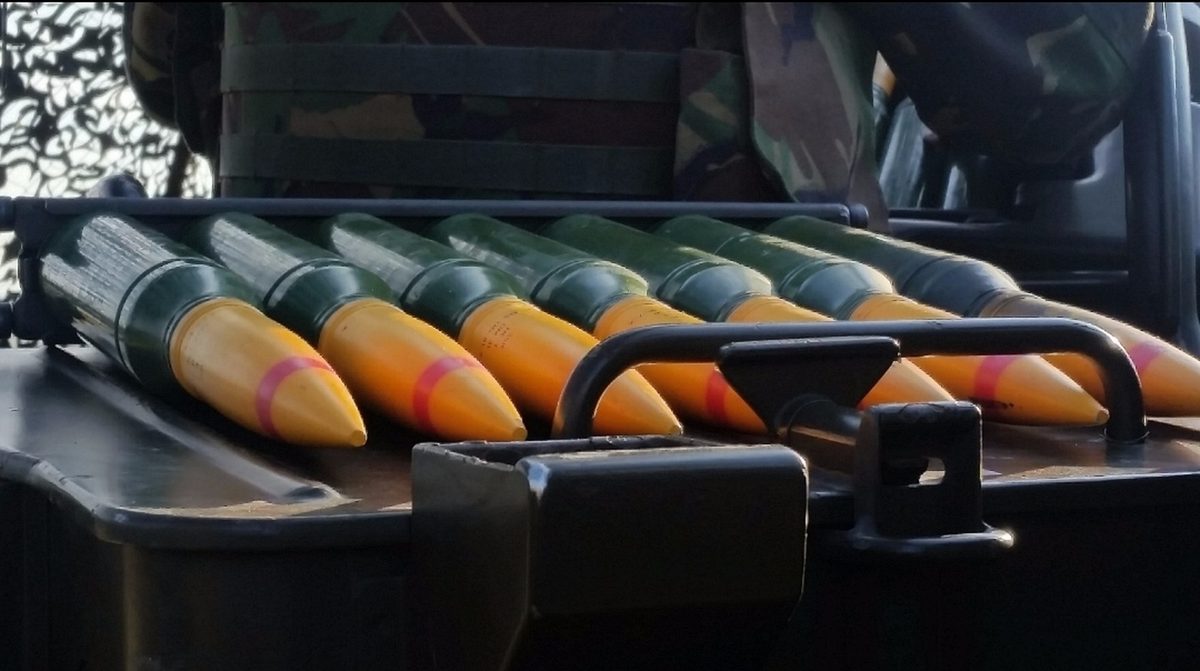
35mm high-explosive anti-aircraft ammunition rounds prepared for use in air defense exercises
35mm high-explosive rounds prepared for air defense training. The Gepard's Oerlikon KDA guns fire these rounds at a combined rate of 1,100 per minute, but the ammunition supply crisis nearly neutralized the system's effectiveness in Ukraine until new production lines were established.

Germany scrambled to source additional ammunition. The obvious supplier was Switzerland, home to Oerlikon (now part of Rheinmetall), which manufactured the original ammunition. But Switzerland's strict neutrality laws prohibited the re-export of Swiss-made military equipment to active conflict zones. Despite intense diplomatic pressure from Germany and other NATO nations, Switzerland initially refused to authorize the transfer of 35mm ammunition to Ukraine. This decision effectively held hostage the combat capability of one of Ukraine's most effective air defense systems.

The crisis eventually eased through a combination of diplomatic pressure and alternative sourcing. Norway agreed to supply its stockpiles of compatible 35mm ammunition. Brazil's Empresa Brasileira de Defesas (known as Emgepron) began producing 35mm rounds. Rheinmetall restarted production at facilities outside Switzerland. By mid-2024, the ammunition supply had stabilized, but the near-disaster illustrated a fundamental vulnerability in the defense industrial base: even a brilliantly effective weapon system is worthless without a sustainable supply chain for its consumables.

The Cost Equation That Rewrote Air Defense Doctrine

The Gepard's performance in Ukraine forced a painful reckoning across Western defense establishments. The prevailing air defense philosophy of the 21st century had emphasized missiles: increasingly sophisticated, increasingly expensive guided missiles that could engage targets at ever-greater ranges with ever-higher precision. The assumption was that the targets would justify the expense: enemy aircraft costing tens or hundreds of millions of dollars, cruise missiles costing millions.

Drones destroyed that assumption. When the threat is a $20,000 to $50,000 expendable drone launched in waves of dozens, intercepting each one with a missile costing hundreds of thousands or millions of dollars is economically suicidal. A defender using Patriot missiles to shoot down Shaheds will run out of interceptors, or money, long before the attacker runs out of drones. The Gepard demonstrated that gun-based air defense, which the missile-centric establishment had dismissed as obsolete, was actually the most rational response to the most common aerial threat of the 2020s.

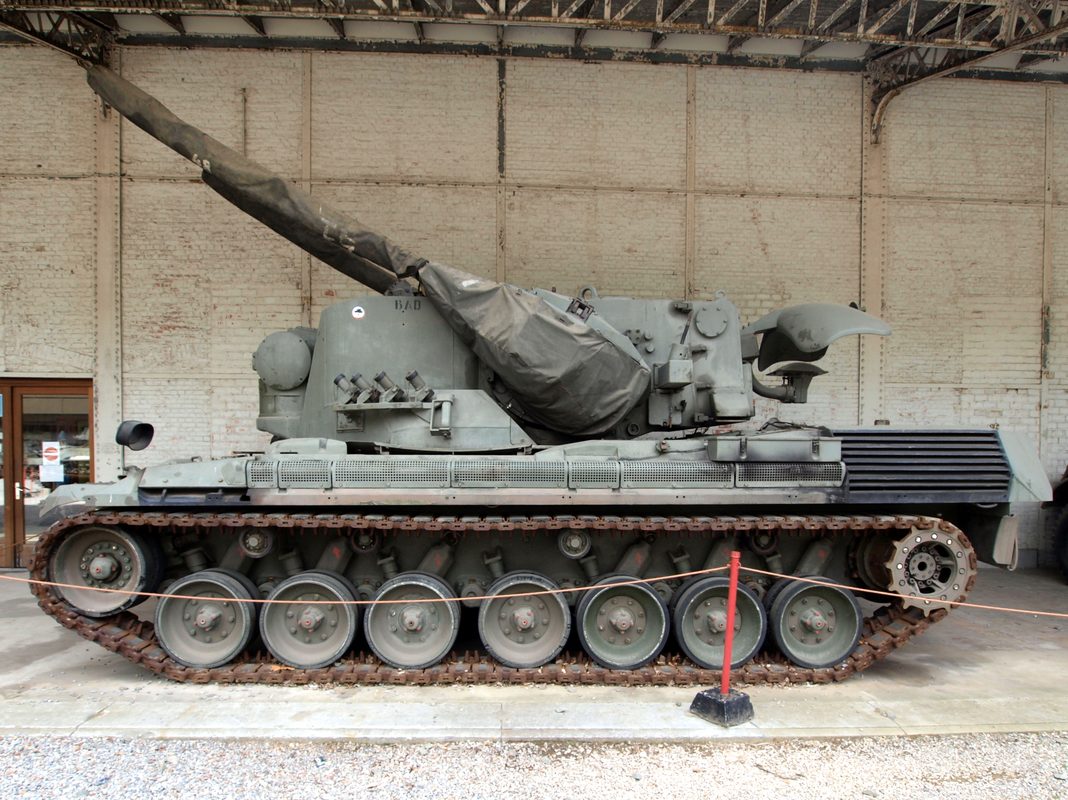
Side view of a Flakpanzer Gepard self-propelled anti-aircraft gun on display at the Royal Museum of the Armed Forces in Brussels
A Flakpanzer Gepard on display at the Royal Museum of the Armed Forces in Brussels. Designed in the 1960s and fielded in 1976, the Gepard was considered obsolete before the drone age proved that radar-guided automatic cannons remain one of the most cost-effective air defense solutions available.

The numbers tell the story. At $100 to $200 per 35mm round, and assuming an average of three to five rounds per drone engagement, a Gepard can destroy a Shahed for a cost of roughly $300 to $1,000. Compare that to $250,000 for a Stinger, $400,000 for an IRIS-T missile, or $3 to $4 million for a Patriot interceptor. The Gepard's cost per kill is between 300 and 13,000 times cheaper than the missile alternatives, depending on which interceptor it replaces. At those ratios, a nation can afford to shoot down drones all day, every day, for years, which is exactly what Ukraine has been doing.

This economic reality has triggered a global reassessment. Germany's KNDS (formerly Krauss-Maffei Wegmann) has proposed an upgraded Gepard variant with modern sensors and improved fire control. South Korea's Hyundai Rotem is developing a new SPAAG (Self-Propelled Anti-Aircraft Gun) system for the Korean market. The U.S. Army, which phased out its last gun-based air defense system (the M163 Vulcan) in the 1990s, is now developing the directed energy and gun-based components of its Integrated Air and Missile Defense architecture specifically to address the drone cost-exchange problem.

From Scrapheap to Doctrine

The Gepard's resurrection is one of the most remarkable stories in modern military history. A weapon system that multiple NATO armies had discarded as irrelevant became, within months of its deployment to Ukraine, the single most cost-effective air defense platform on the planet. It didn't need upgrades. It didn't need new software. It didn't need integration into some networked battle management system. It needed ammunition, competent crews, and targets, and the drone age provided the targets in abundance.

The broader lesson is that military obsolescence is contextual, not absolute. The Gepard wasn't obsolete because its technology stopped working. It was considered obsolete because the threat it was designed to counter, low-flying manned aircraft, had been superseded by precision-guided missiles and high-altitude standoff weapons. When a new threat appeared that shared the characteristics of the old one (slow, low-flying, and produced in large numbers), the Gepard's capabilities matched perfectly. The platform that couldn't justify its cost against the threats of 2010 became indispensable against the threats of 2023.

For defense planners worldwide, the Gepard's story carries a sobering implication. The most expensive, most advanced weapons in the arsenal are not always the most useful. Sometimes the right answer to a $20,000 drone is a 50-year-old gun firing $100 shells. The Gepard didn't need to be cutting-edge. It needed to be available, affordable, and lethal against the target that mattered most. On all three counts, the Cold War anti-aircraft gun delivered.

Share this article

Share:

Recommended

Ace of The Skies: Can You Identify These Military Aircraft Throughout The Years?
Test Yourself

Ace of The Skies: Can You Identify These Military Aircraft Throughout The Years?

Can you identify these aircraft?

Take the Quiz

On This Day in Military History

April 10

Loss of USS Thresher (1963)

The nuclear-powered submarine USS Thresher sank during deep-diving tests 220 miles east of Cape Cod, killing all 129 crew and shipyard personnel aboard. A leak in a silver-brazed pipe joint caused cascading system failures. The disaster led to the creation of the SUBSAFE program, the most rigorous submarine safety protocol in history.

1862, Siege of Fort Pulaski: Rifled Artillery Revolution

See all 11 events on April 10

Get Military News & History in Your Inbox

Join thousands of readers receiving our weekly digest of military technology, history, and analysis.

Test Your Knowledge