Skip to content
April 21:Battle of San Jacinto190yr ago

Inside the MQ-25 Stingray: The Navy's First Carrier-Based Drone Isn't a Weapon — It's a Gas Station

Alex Carter · · 10 min read
Save
Share:
MQ-25 Stingray unmanned aerial refueling drone on the flight deck of an aircraft carrier
Alex Carter
Alex Carter

Modern Warfare & Defense Technology Contributor

Alex Carter writes about modern warfare, emerging military technology, and how doctrine adapts to new tools. His work focuses on what changes in practice -- command, control, targeting, and risk -- when systems like drones and autonomous platforms become routine.

The Navy's most important drone will never fire a missile, drop a bomb, or conduct a strike mission. It carries gas. The MQ-25A Stingray is a carrier-based unmanned tanker aircraft — and it might be the most strategically significant drone program in the Department of Defense, precisely because it solves a problem so mundane that most people don't know it exists: the carrier air wing is hemorrhaging combat sorties to refueling duty.

The Problem No One Talks About

Here is a fact that should alarm anyone who thinks about naval aviation: on a typical carrier deployment, 20-30% of F/A-18 Super Hornet sorties are dedicated to aerial refueling — not combat. The Navy calls this "organic tanking" or "buddy tanking." A Super Hornet carries a refueling pod under its wing, takes off loaded with fuel, flies to a designated point, and orbits there while other aircraft plug in and top off their tanks. The tanker Hornet then returns to the carrier, having accomplished nothing except moving fuel from one airplane to another.

This is spectacularly wasteful. An F/A-18E/F Super Hornet costs approximately $70 million. Its flight hour cost is roughly $30,000. Every hour a Super Hornet spends tanking is an hour it isn't available for strike, air superiority, electronic warfare, or reconnaissance. And because carrier air wings have a finite number of aircraft (typically 44 strike fighters), dedicating a quarter of them to gas-station duty means the wing's actual combat power is 25-30% less than its aircraft count suggests.
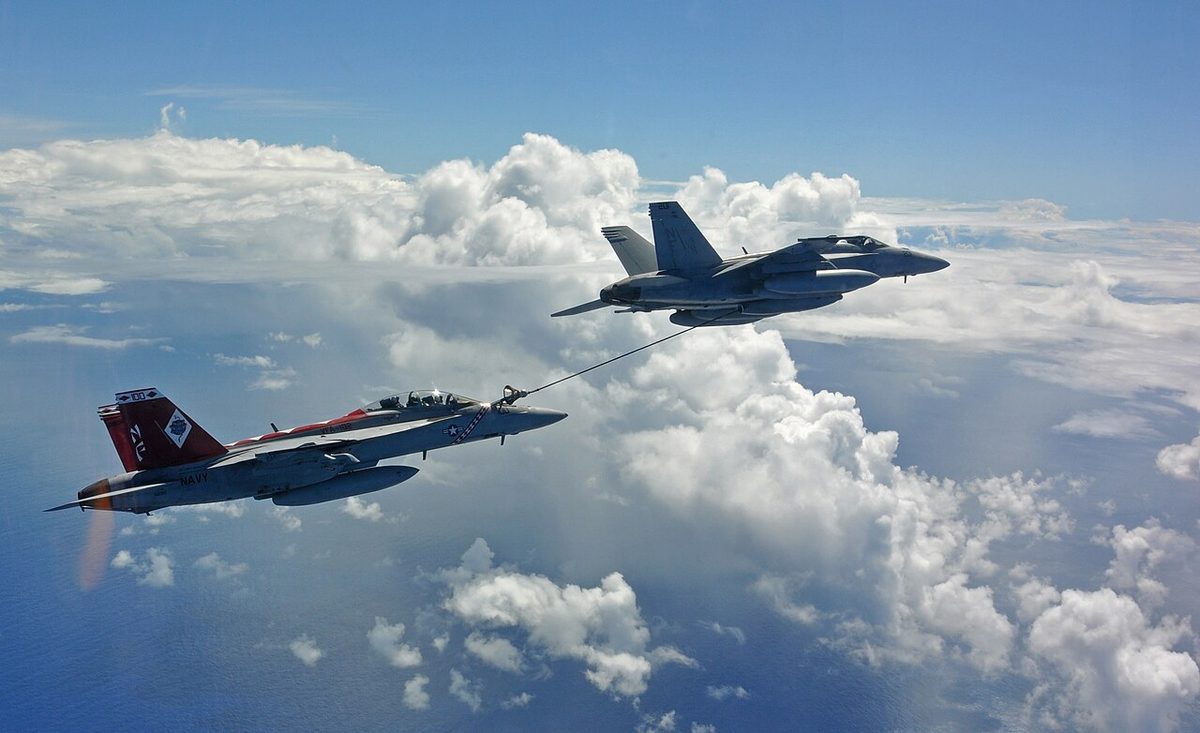
F/A-18 Super Hornet conducting aerial refueling operations
An F/A-18 Super Hornet configured for buddy tanking — a mission that currently consumes 20-30% of carrier air wing sorties. The MQ-25 will eliminate this waste. (Wikimedia Commons / Public Domain)

The problem gets worse at range. The Super Hornet's combat radius is approximately 450 nautical miles. Against a peer adversary with anti-ship cruise missiles that can reach 500+ nautical miles, the carrier must stay farther from the threat than its fighters can effectively reach without refueling. The math is brutal: to strike a target 700 nautical miles away, you need tankers. To provide tankers, you sacrifice combat sorties. The deeper the carrier operates from the threat, the more sorties you burn on tanking, and the fewer fighters you have available for the actual mission.

The MQ-25A Stingray: A Drone Built to Carry Gas

Boeing's MQ-25A Stingray is purpose-built to solve this problem. It is an unmanned, carrier-capable tanker aircraft that launches from catapults, recovers via arrested landing, and delivers 15,000 pounds of fuel to receiver aircraft at a mission radius of 500 nautical miles. That's the equivalent of the fuel carried by a buddy-tanking Super Hornet — delivered by an unmanned aircraft that costs a fraction of a manned fighter's operating cost and doesn't consume a pilot or a strike-fighter slot.

The airframe is deceptively simple. The MQ-25 is powered by a single Rolls-Royce AE 3007N turbofan engine (the same family used on the Cessna Citation X and Embraer ERJ-145). It has a wingspan of 75 feet, a length of 51 feet, and a maximum takeoff weight that puts it solidly in the medium-sized aircraft category. It carries an Aerial Refueling Store (ARS) — essentially a fuel tank with a hose and drogue — under each wing, allowing it to refuel two aircraft simultaneously.

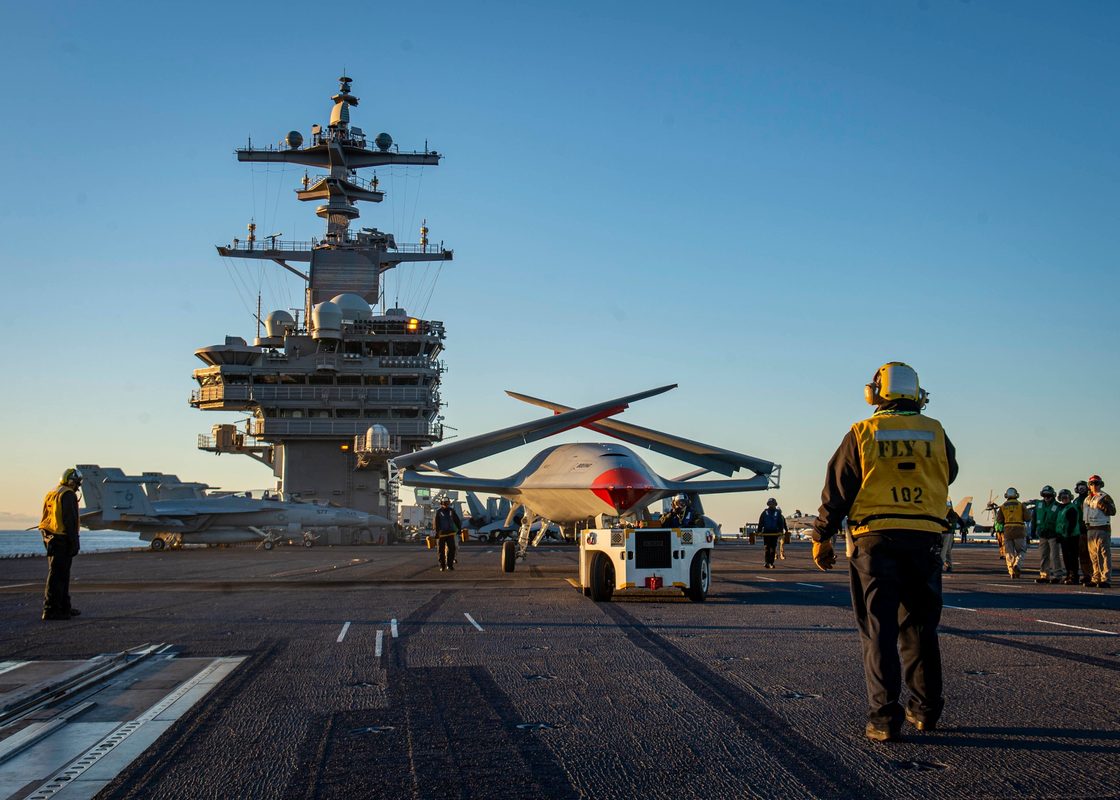
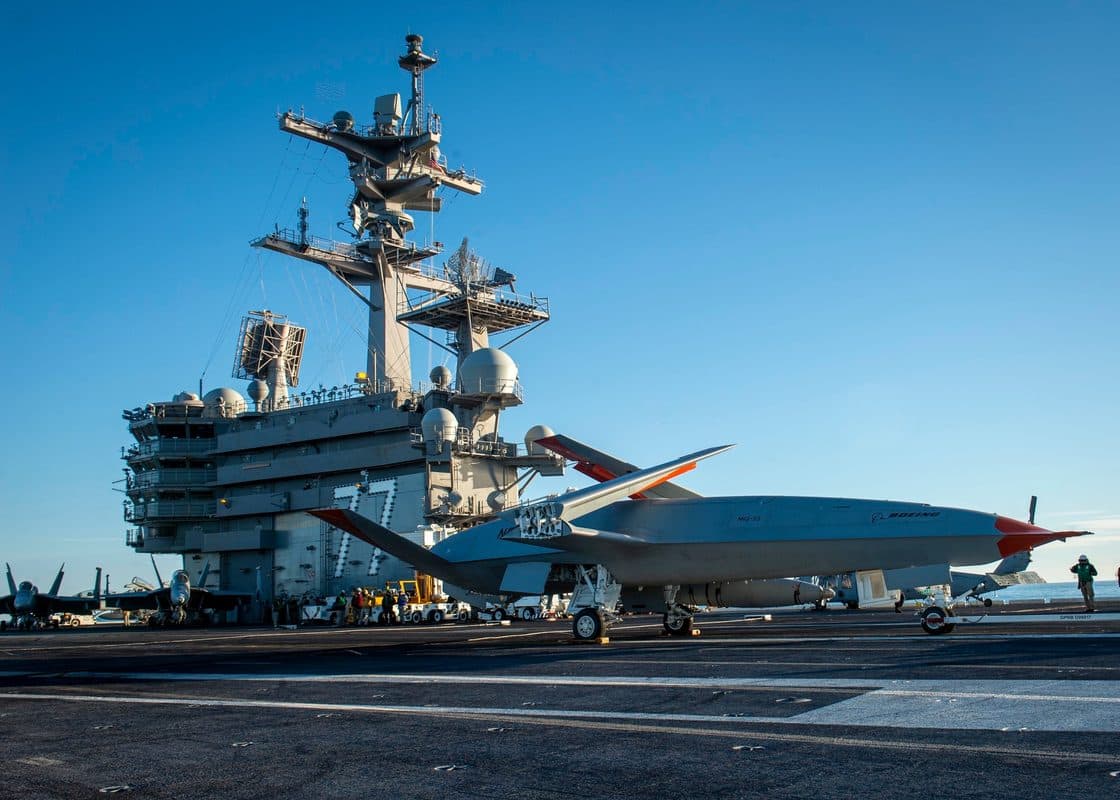
MQ-25 Stingray drone positioned on a carrier flight deck with crew nearby
A Boeing MQ-25 T1 test asset on the flight deck of USS George H.W. Bush during carrier integration testing — the first time an unmanned aircraft has operated from a carrier in this capacity. (DVIDS / Public Domain)

What makes the MQ-25 revolutionary isn't its speed, range, or payload — it's unexceptional in all three categories. What makes it revolutionary is that it operates from an aircraft carrier without a pilot. It taxis autonomously across the flight deck, launches from the catapult, navigates to the refueling track, extends the drogue, waits for receivers to plug in, transfers fuel, recovers aboard the carrier, and folds its wings for storage — all without a human in the cockpit. A remote operator monitors the aircraft from the carrier, but the MQ-25 handles the vast majority of its mission profile autonomously.

What the Stingray Actually Delivers: Range

The MQ-25's most important contribution isn't the fuel it carries — it's the combat sorties it gives back. By taking over the tanking mission, the MQ-25 frees every Super Hornet currently dedicated to buddy tanking for combat duty. A carrier air wing with 4-6 MQ-25s recovers approximately 10-12 additional combat sorties per day. That's a 25-30% increase in effective combat power without adding a single fighter to the wing.

The range extension is equally dramatic. With MQ-25 tanker support, the carrier air wing's effective strike radius increases from approximately 450 nautical miles to 700-800 nautical miles. This means a carrier can operate 200-300 nautical miles farther from the threat — outside the range envelope of many anti-ship cruise missiles — while still projecting power to the same depth. Against a peer adversary in the Western Pacific, that additional standoff distance could be the difference between a carrier that can operate effectively and one that's forced into a defensive posture.

The Path to the Flight Deck

The MQ-25 program has moved faster than most major defense acquisitions. Boeing won the competition in August 2018 with a $805 million contract for four engineering and manufacturing development aircraft. The T1 test asset (a pre-production prototype) completed its first flight in September 2019. In June 2021, the T1 became the first unmanned aircraft in history to refuel another aircraft — passing fuel to an F/A-18 Super Hornet. Subsequent tests demonstrated refueling of the E-2D Advanced Hawkeye and F-35C Lightning II.

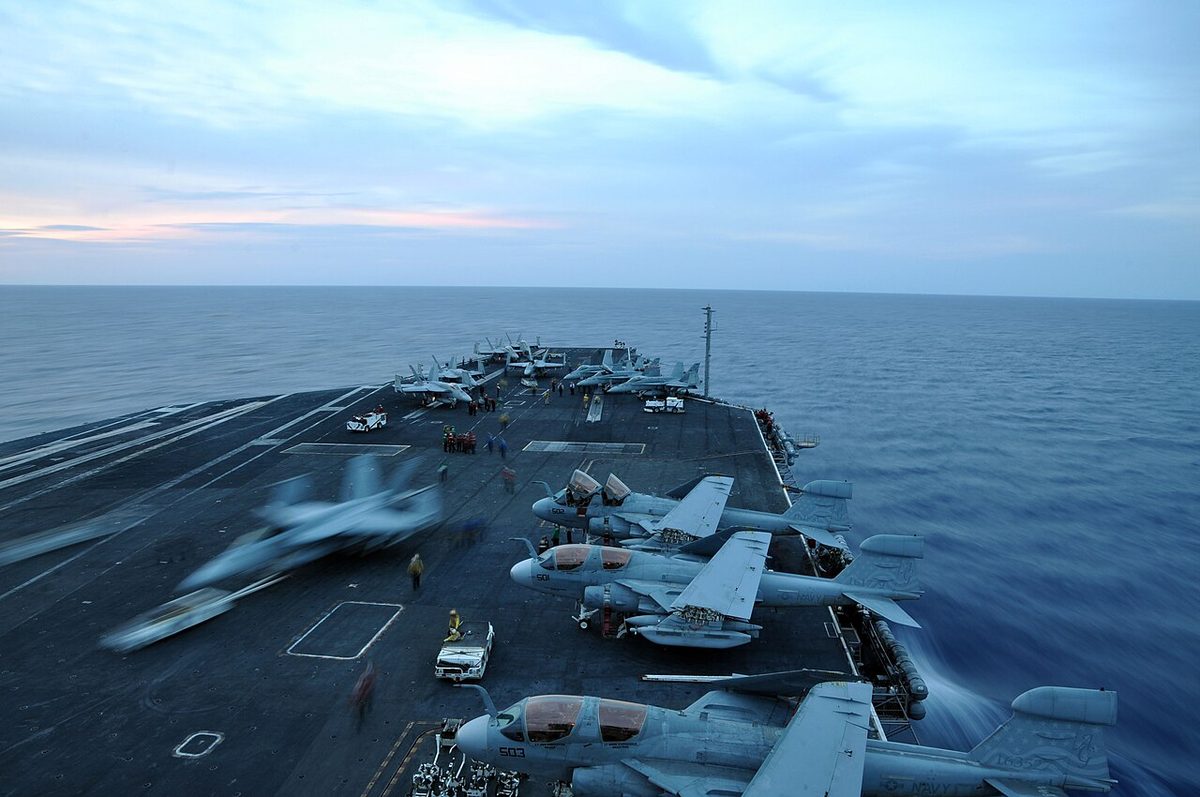
Carrier air wing aircraft on the flight deck during night operations
Sailors prepare aircraft for night flight operations on a carrier flight deck — the operational environment the MQ-25 must master to join the air wing. (Wikimedia Commons / Public Domain)

Carrier integration testing aboard USS George H.W. Bush (CVN-77) demonstrated that the MQ-25 can operate safely in the most demanding environment in naval aviation: the carrier flight deck. The aircraft taxied autonomously, folded and unfolded its wings, and navigated around other aircraft and deck crew. The first production MQ-25A completed its first taxi test in January 2026, moving autonomously from the Boeing production facility in Mascoutah, Illinois.

The Navy plans to purchase approximately 76 MQ-25s — enough for 4-6 per carrier air wing across the fleet. Initial operating capability is expected in the late 2020s, with full operational capability following as production ramps up. The program's total cost is estimated at approximately $13 billion — expensive in absolute terms, but a fraction of what it would cost to buy additional Super Hornets to replace the tanking sorties the MQ-25 eliminates.

The Boring Revolution

The MQ-25 doesn't make headlines. It doesn't carry weapons. It doesn't have the dramatic profile of a stealth drone or the lethal reputation of an armed Reaper. When defense journalists write about carrier-based drones, they almost always focus on future strike variants — the X-47B, the theoretical unmanned combat air vehicle that will one day fly alongside manned fighters. The MQ-25 is the unsexy version. The gas station.

But the MQ-25 represents something more significant than any strike drone: it is the first unmanned aircraft that will be fully integrated into the daily operations of a carrier air wing. It will launch and recover alongside manned fighters, share the flight deck, and participate in the choreographed chaos of cyclic flight operations. Every lesson learned — in autonomous deck operations, unmanned-manned teaming, remote supervision, and carrier integration — applies directly to future unmanned combat aircraft.

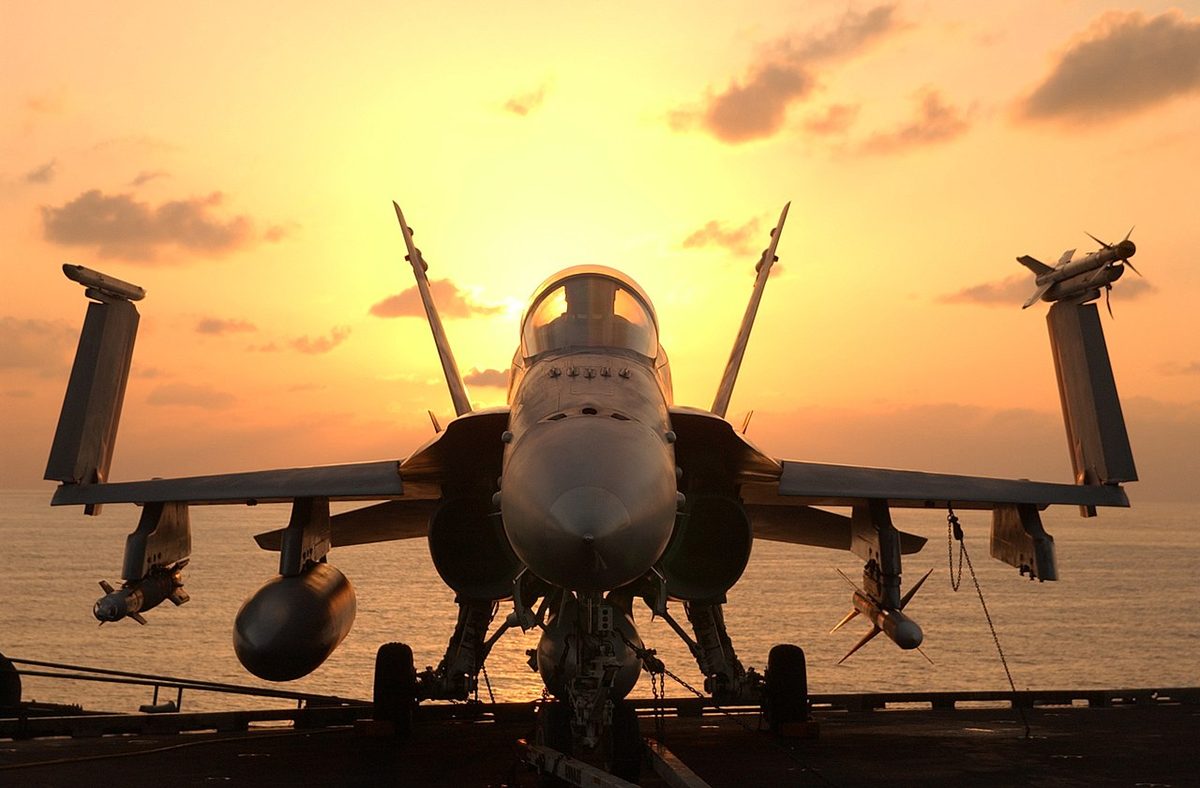
F/A-18 Super Hornet on carrier flight deck with weapons loaded for combat mission
An F/A-18 Super Hornet loaded for a combat mission. Every Super Hornet freed from tanking duty by the MQ-25 becomes available for strikes like this. (Wikimedia Commons / Public Domain)

The Navy chose a tanker instead of a strike drone for its first carrier-based unmanned aircraft because the tanking mission is the lowest-risk, highest-payoff entry point. Tanking doesn't require the MQ-25 to penetrate enemy airspace, engage threats, or make split-second targeting decisions. It flies a predictable profile in friendly airspace — the ideal mission for proving unmanned carrier operations before adding complexity.

The Air Force Is Watching

The MQ-25 isn't just a Navy program anymore. The U.S. Air Force has expressed interest in a land-based variant of the Stingray for its own aerial refueling needs. The Air Force's tanker fleet — primarily KC-135 Stratotankers and KC-46 Pegasus aircraft — is enormous but expensive to operate and maintain. An unmanned tanker that could handle routine refueling sorties in permissive airspace, freeing manned tankers for contested environments or reducing flight-hour costs, has obvious appeal.

The broader concept — autonomous tanking as a service — could transform how the entire Department of Defense thinks about aerial refueling. Today, every tanking sortie requires a crew of 2-3 highly trained aviators flying a multi-hundred-million-dollar aircraft. If unmanned tankers prove reliable, the economics shift dramatically: lower operating costs, no crew fatigue limitations, and the ability to deploy tankers forward into environments where you wouldn't risk a manned aircraft.

What Comes After the Gas Station

The MQ-25's airframe is designed with growth potential. The Navy has discussed future variants that could carry intelligence, surveillance, and reconnaissance (ISR) sensors, electronic warfare payloads, or even weapons. The aircraft's internal volume and power generation capacity can accommodate additional mission systems beyond the baseline tanker configuration.

But the MQ-25's real legacy won't be what it carries. It will be what it proves: that unmanned aircraft can operate safely and reliably from aircraft carriers, integrated seamlessly into the most complex aviation environment in the world. Once the MQ-25 demonstrates that carrier-based unmanned operations work, the path to unmanned strike, ISR, and electronic warfare platforms operating from carriers becomes a matter of engineering, not conceptual proof.

The Navy's most important drone is a gas station. And that gas station is going to change everything about how carrier air wings fight — starting with the 20-30% of combat power they've been wasting on buddy tanking for the past three decades.

Share this article

Share:

Recommended

Ace of The Skies: Can You Identify These Military Aircraft Throughout The Years?
Test Yourself

Ace of The Skies: Can You Identify These Military Aircraft Throughout The Years?

Can you identify these aircraft?

Take the Quiz

On This Day in Military History

April 21

Battle of San Jacinto (1836)

General Sam Houston's 900 Texan soldiers launched a surprise 18-minute attack on General Santa Anna's 1,300 Mexican troops at San Jacinto, killing over 630 and capturing 730 — including Santa Anna himself. The decisive victory won Texas its independence from Mexico.

1918The Red Baron Shot Down

1945Soviet Forces Reach Berlin

See all 4 events on April 21

Get Military News & History in Your Inbox

Join thousands of readers receiving our weekly digest of military technology, history, and analysis.

Test Your Knowledge