Skip to content
April 18:The Doolittle Raid on Tokyo84yr ago

Rafale vs Typhoon vs Gripen: Europe's 3 Fighters Were Built for 3 Different Wars

Michael Trent · · 12 min read
Save
Share:
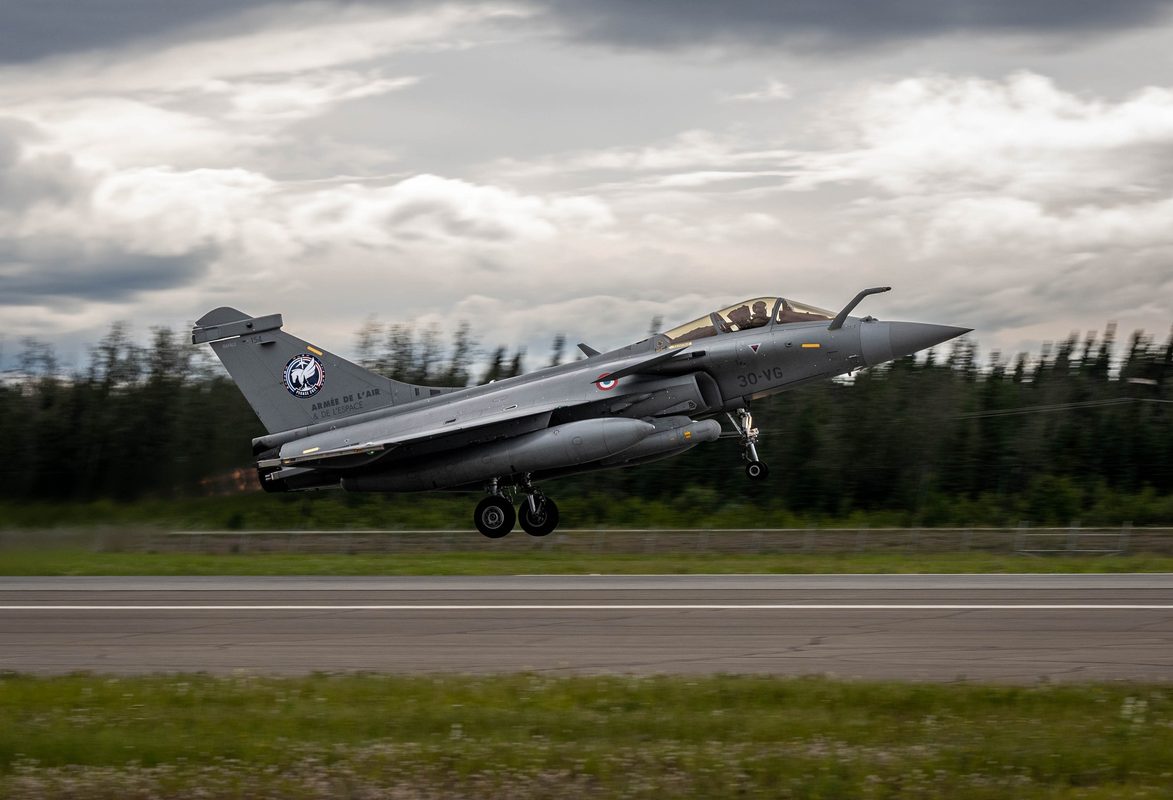
French Dassault Rafale fighter jet taking off during Northern Edge military exercises
Michael Trent
Michael Trent

Defense Systems Analyst

Michael Trent covers military aircraft, weapons systems, and defense technology with an emphasis on cost, maintenance, and real-world performance. He focuses less on specifications and more on how systems hold up once they are deployed, maintained, and operated at scale.

Three NATO allies spent over $100 billion developing three separate fourth-generation fighters during the same decade. France built the Rafale. Britain, Germany, Italy, and Spain built the Eurofighter Typhoon. Sweden built the Gripen. Each nation could see what the others were doing. Each had the opportunity to join forces and produce a single, cheaper, more capable aircraft. None of them did — because each was designing for a fundamentally different war.

Three Threats, Three Designs

France needed a fighter that could do everything: air superiority, ground attack, nuclear strike, and carrier operations. France maintains an independent nuclear deterrent, deploys military forces across Africa and the Middle East, and operates the only non-American nuclear-powered aircraft carrier. The Rafale had to be omnirole — not multirole, but a fighter designed from the ground up to perform every combat mission with equal proficiency, from a carrier deck or a land base, anywhere on Earth.

The Eurofighter Typhoon consortium — Britain, Germany, Italy, and Spain — needed an air superiority fighter to defend European airspace against Soviet bombers and fighters pouring through the Fulda Gap. The Cold War threat was clear and specific: high-altitude interception of fast-moving targets over Central Europe. The Typhoon was designed as the best air-to-air fighter its four nations could collectively build, with ground attack capability added later as a secondary consideration.

Sweden needed a fighter that could survive a Soviet invasion. Not win a war against Russia — Sweden has never expected to win that war — but impose costs high enough to deter an attack in the first place. The Gripen was designed to operate from 800-meter road strips, be rearmed and refueled by six conscripts in ten minutes, and be cheap enough that Sweden could afford to buy enough of them to matter. Every design decision was subordinated to one strategic reality: Sweden would fight alone, with limited resources, against a vastly larger adversary.

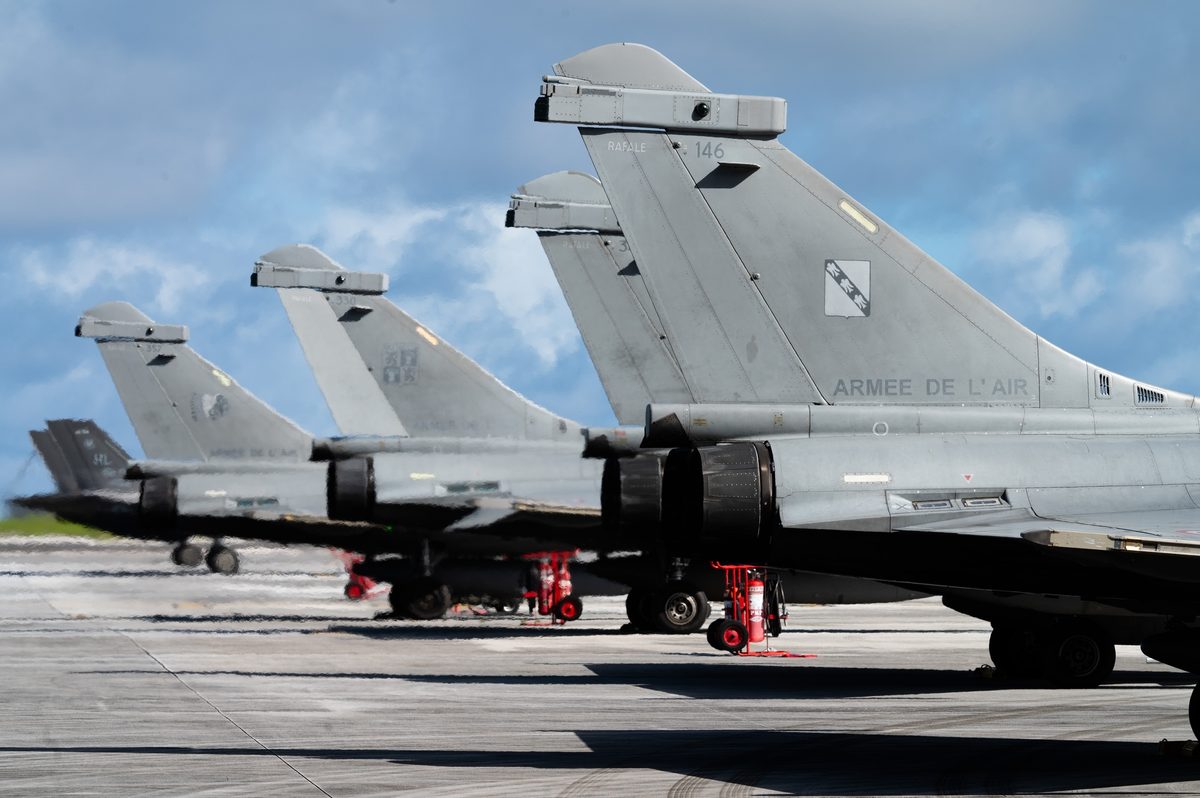
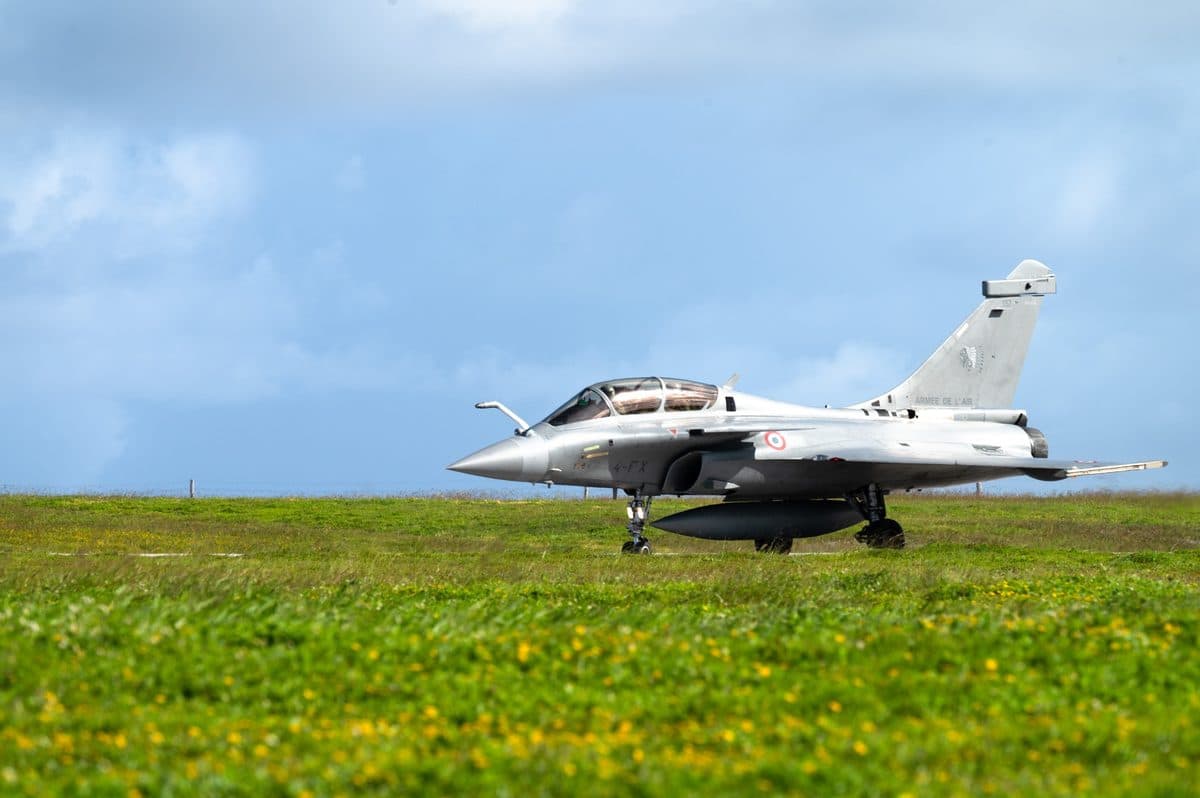
French Air Force Dassault Rafale fighter jet on the runway during Arctic Defender 24 exercises in Alaska
The Rafale was designed for global power projection — it has seen combat in Libya, Mali, Syria, Iraq, and Afghanistan, operating from both land bases and France's carrier Charles de Gaulle.

The Specs: What the Numbers Tell You (and What They Don't)

Specification Dassault Rafale Eurofighter Typhoon Saab Gripen E
Country France UK / Germany / Italy / Spain Sweden
First Flight 1986 1994 1988 (Gripen A); 2017 (Gripen E)
Max Speed Mach 1.8 Mach 2.0 Mach 2.0
Combat Radius 1,850 km 1,389 km 1,300 km
Max Payload 9,500 kg 7,500 kg 5,300 kg
Hardpoints 14 13 10
Radar RBE2-AA AESA CAPTOR-E AESA ES-05 Raven AESA
Engines 2x Snecma M88 2x Eurojet EJ200 1x GE F414G
Empty Weight 10,300 kg 11,000 kg 8,000 kg
Carrier Capable Yes (Rafale M) No No
Nuclear Delivery Yes (ASMP-A) No No
Cost per Unit ~$100M ~$110M ~$85M
Cost per Flight Hour ~$16,500 ~$18,000 ~$4,700

The numbers immediately reveal each aircraft's philosophy. The Rafale carries the most weapons the farthest. The Typhoon is the fastest with the most powerful radar. The Gripen costs a fraction of either to operate and was designed to run on a shoestring. But the really telling difference is the one the spec sheet does not capture: each aircraft was designed for a different kind of air force.

Rafale: France's Swiss Army Knife

France pulled out of the Eurofighter consortium in 1985 because the other partners refused to build a carrier-capable variant. This was not vanity — France's strategic posture required it. The Marine Nationale operates the carrier Charles de Gaulle, which gives France the ability to project air power anywhere in the world without depending on allied basing. A carrier fighter was not optional.

Beyond carrier capability, France insisted on complete sovereignty over the aircraft's design, production, and export decisions. Joining a four-nation consortium meant consensus, compromise, and potential vetoes on arms sales. France preferred to build something entirely French — French engines, French radar, French weapons — that could be sold to anyone France chose, without asking London or Berlin for permission.

French Dassault Rafale flying in formation with a U.S. Air Force F-35 Lightning II during joint exercises
The Rafale operates alongside allied aircraft in joint exercises worldwide — France has sold the fighter to India, UAE, Greece, Indonesia, Egypt, and Qatar, making it Europe's most successful fighter export.

The result is the closest thing to a true omnirole fighter in production. The Rafale carries the ASMP-A nuclear cruise missile for France's airborne nuclear deterrent. It operates from the Charles de Gaulle as the Rafale M naval variant. It has dropped bombs in Libya, Mali, Syria, Iraq, and Afghanistan. It has won export contracts against the Typhoon and F-35 in India, the UAE, Greece, Indonesia, Egypt, and Qatar.

The Rafale's weakness is that doing everything means optimizing nothing. In pure air-to-air combat, the Typhoon is faster and carries a more powerful radar. In pure ground attack, a dedicated strike aircraft carries more ordnance farther. But no other fighter in the world can do carrier ops, nuclear strike, deep interdiction, close air support, and air superiority all at the same level with the same airframe. That versatility is worth its weight in sovereignty.

Typhoon: The Interceptor That Learned to Bomb

The Eurofighter Typhoon was designed to kill Soviet fighters and bombers at high altitude and high speed. Its twin EJ200 engines produce 40,000 pounds of combined thrust with reheat, giving it a thrust-to-weight ratio that makes it one of the most agile fighters in the world in the air superiority regime. The CAPTOR-E AESA radar is among the most capable in production, with a mechanically repositioned array that gives it a wider scan angle than fixed AESA radars.

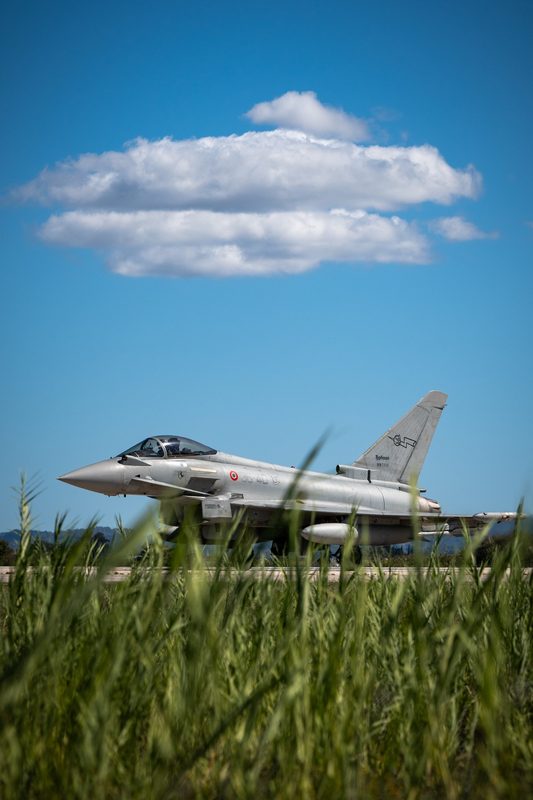
Italian Eurofighter Typhoon fighter jet preparing for takeoff at Andravida Air Base Greece during military exercises
The Typhoon was designed for high-altitude air superiority over Central Europe — its twin engines and delta-canard aerodynamics make it one of the most agile fighters in production.

The Typhoon's problem is that the war it was designed for never happened. The Soviet Union collapsed three years before the Typhoon first flew in 1994, and the consortium spent the next two decades retrofitting ground attack capabilities onto an aircraft that was never optimized for the role. Adding precision-guided munitions, targeting pods, and conformal fuel tanks to a dedicated air superiority platform is possible but involves compromises that a clean-sheet design would not require.

The four-nation consortium also created political complexity that has hampered the Typhoon's export competitiveness. Any export sale requires the agreement of all four partner nations. Germany blocked a sale to Saudi Arabia over human rights concerns. Britain pushed for sales that Germany opposed. The consortium structure that distributed industrial work across four countries also distributed decision-making power — and national interests do not always align.

Despite these challenges, the Typhoon is the backbone of European air defense. It serves as the primary air superiority fighter for the RAF, the Luftwaffe, the Italian Air Force, and the Spanish Air Force. Saudi Arabia, Kuwait, Qatar, Austria, and Oman have also purchased it. With the CAPTOR-E radar and integration of the Meteor beyond-visual-range missile, the Typhoon is arguably the most lethal air-to-air platform in Europe.

Gripen: Built to Fight Alone

The Saab Gripen exists because Sweden cannot afford a Rafale or a Typhoon — and does not need one. Sweden's defense posture during the Cold War was simple: if the Soviet Union invaded, Sweden would fight a defensive war on its own territory, using its geography — forests, archipelagos, frozen lakes — as force multipliers. The fighter that supported this strategy needed to be cheap, rugged, easy to maintain, and capable of operating from improvised airstrips after conventional air bases had been destroyed.

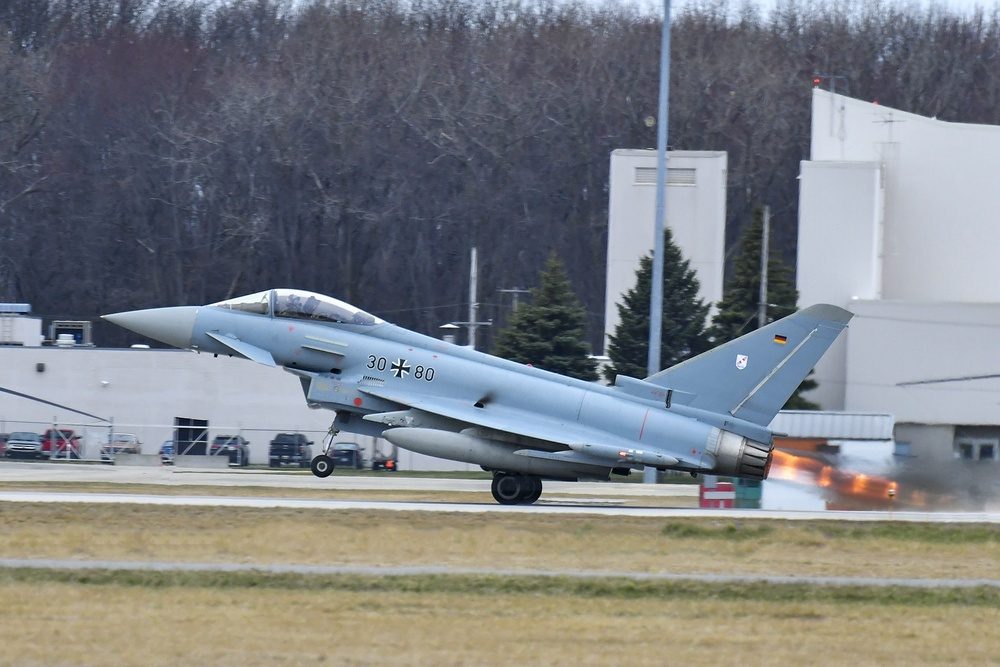
German Air Force Eurofighter Typhoon taking off from Selfridge Air National Guard Base during training exercises
The Typhoon serves as the primary air superiority fighter for NATO's major European air forces — Britain, Germany, Italy, and Spain all depend on it for air defense of the continent.

The Gripen delivers on every one of those requirements. It is a single-engine fighter that costs roughly $85 million per unit — about 20 percent less than a Rafale or Typhoon — with an operating cost of approximately $4,700 per flight hour, roughly one-quarter to one-third of its competitors. It can land on a 800-meter section of highway, be refueled and rearmed by a team of six conscripts in under ten minutes, and take off again. No other Western fighter is designed for this kind of dispersed, austere operations.

The Gripen E — the latest variant — has been significantly upgraded from the original design. It carries the ES-05 Raven AESA radar with a repositioner similar to the Typhoon's CAPTOR-E, giving it wide-angle scanning capability. It has been designed with a high degree of sensor fusion, presenting pilots with a synthesized tactical picture rather than raw data from individual sensors. The avionics architecture is modern enough that Saab markets the Gripen E as a "smart fighter" — an aircraft that maximizes pilot effectiveness through information management rather than raw performance.

The Gripen's weakness is physics. A single-engine fighter carrying 5,300 kg of weapons cannot match the range, payload, or sustained performance of a twin-engine fighter carrying 9,500 kg. In a high-intensity conflict against a peer adversary, the Gripen brings fewer weapons to the fight and burns through them faster. But that is not the Gripen's war. The Gripen's war is a defensive fight on home turf, where short range is acceptable because the targets are overhead, and where affordability determines whether you have 50 fighters or 200.

The Export War

The export competition between these three fighters has become a proxy war for European influence. France has won the most export contracts in the last decade, selling Rafales to India (36 aircraft), the UAE (80), Greece (24), Indonesia (42), Egypt (54), and Qatar (36). The Rafale's export success has been driven partly by France's willingness to include technology transfer and industrial offsets in its deals — and partly by the fact that buying a Rafale comes with no political strings from London, Berlin, or Madrid.

The Typhoon has sold to Saudi Arabia (72), Kuwait (28), Qatar (24), Austria (15), and Oman (12). Its export record has been hampered by the consortium's political complexity and by competition from the F-35, which offers fifth-generation stealth at a comparable price point.

The Gripen targets a different market entirely: countries with limited budgets that need a capable, modern fighter they can actually afford to operate. Brazil ordered 36 Gripen Es. Thailand operates Gripen C/Ds. Colombia, the Philippines, and several other nations have evaluated the Gripen for similar reasons — it delivers 80 percent of the Typhoon's combat capability at 25 percent of the operating cost.

The F-35 Shadow

Hanging over all three programs is the F-35 Lightning II. Every European fighter competes against the American fifth-generation stealth fighter in nearly every export competition, and the F-35 offers something none of the European aircraft can match: low-observable stealth. For nations facing advanced integrated air defense systems — particularly those aligned against Russia or China — the F-35's ability to penetrate defended airspace is an argument that no amount of Typhoon agility or Rafale versatility can fully counter.

But the F-35 comes with American strings. Export customers cannot modify the software without Lockheed Martin's involvement. Maintenance data flows through American systems. And Washington retains the ability to restrict operations through the Autonomic Logistics Information System, which connects every F-35 to a centralized maintenance network. For nations that value operational sovereignty — France above all, but increasingly others — these dependencies are unacceptable. The European fighters offer something the F-35 cannot: independence from American control over your own air force.

Three Right Answers

The standard criticism — that Europe wasted money building three fighters when one would have sufficed — assumes that one design could have satisfied all three sets of requirements. It could not. France would never have accepted a fighter it did not fully control. The Typhoon consortium would never have accepted the cost and complexity of carrier capability for a single customer. And Sweden would never have accepted the operating costs of a twin-engine design optimized for Central European air superiority.

Each fighter was built for a different war. The Rafale was built for a France that projects power globally, fights wars in Africa and the Middle East, and maintains an independent nuclear deterrent from a carrier deck. The Typhoon was built for a Europe that expected to defend its airspace against Russian bombers and fighters in a conventional war. The Gripen was built for a Sweden that expected to fight alone, from forest roads, against overwhelming odds.

All three were right. The waste was not in building three fighters. The waste would have been in building one that did none of those jobs well.

Share this article

Share:

Recommended

Ace of The Skies: Can You Identify These Military Aircraft Throughout The Years?
Test Yourself

Ace of The Skies: Can You Identify These Military Aircraft Throughout The Years?

Can you identify these aircraft?

Take the Quiz

On This Day in Military History

April 18

The Doolittle Raid on Tokyo (1942)

Sixteen B-25 Mitchell bombers launched from the aircraft carrier USS Hornet and struck Tokyo and other Japanese cities in the first air raid on the Japanese home islands. Led by Lieutenant Colonel James "Jimmy" Doolittle, the daring raid boosted American morale just four months after Pearl Harbor.

1775Paul Revere's Midnight Ride

1943Operation Vengeance — Yamamoto Shot Down

1988Operation Praying Mantis

See all 5 events on April 18

Get Military News & History in Your Inbox

Join thousands of readers receiving our weekly digest of military technology, history, and analysis.

Test Your Knowledge