Skip to content
April 22:First Poison Gas Attack at Ypres111yr ago

How Russia's Electronic Warfare Blinded Ukrainian Drones, and How Ukraine Fought Back

Alex Carter · · 14 min read
Save
Share:
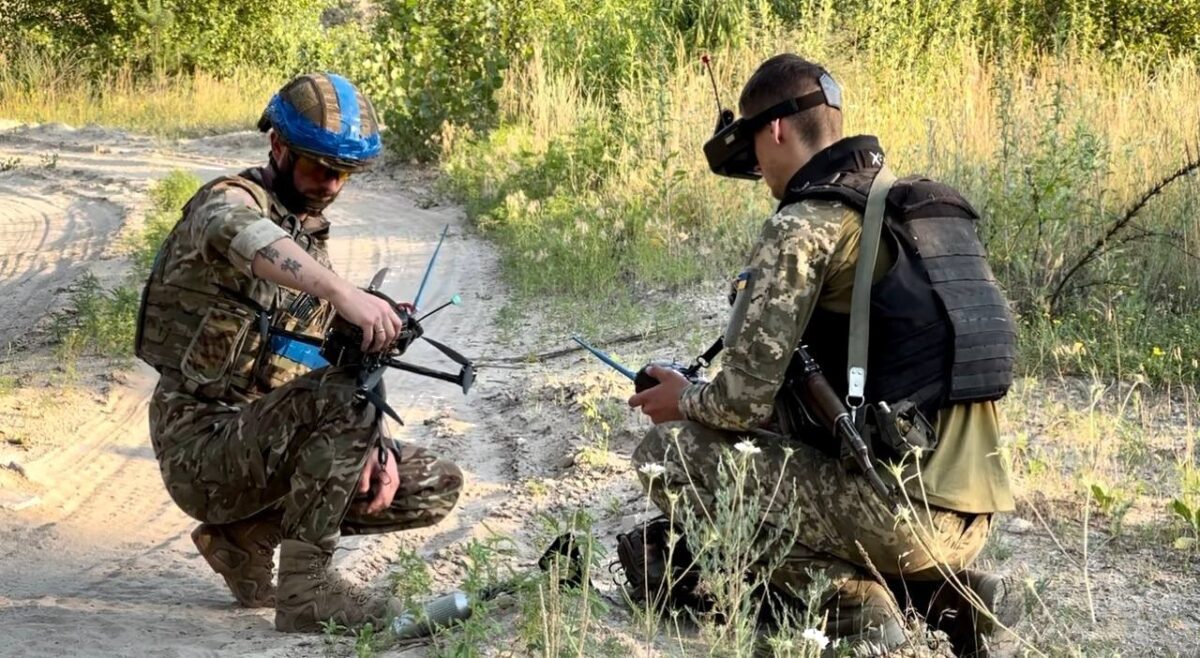
Military operator controlling an FPV drone in a forested environment, the drone hovering overhead during a NATO training exercise
Alex Carter
Alex Carter

Modern Warfare & Defense Technology Contributor

Alex Carter writes about modern warfare, emerging military technology, and how doctrine adapts to new tools. His work focuses on what changes in practice -- command, control, targeting, and risk -- when systems like drones and autonomous platforms become routine.

Ukraine built the most drone-intensive military operation in history. Russia responded not with better air defenses or faster interceptors, but by making the electromagnetic spectrum itself hostile. In the invisible war beneath the visible one, electronic warfare systems blanketed the front lines with jamming so dense that GPS signals vanished, drone video feeds dissolved into static, and precision-guided munitions wandered off course by hundreds of meters. For a period in 2024, Ukraine's drone advantage, the capability that had defined the war's character, was being systematically neutralized by machines most people have never heard of.

What happened next is one of the most consequential technology adaptation cycles in modern warfare. Ukrainian engineers did not just try to overpower Russian jamming with stronger radios. They eliminated the vulnerability entirely, first with fiber-optic cables that bypassed radio frequencies altogether, then with AI vision systems that navigate and track targets without GPS. The result is a new generation of drones that fly through electronic warfare environments as if the jamming does not exist. This is the story of how that invisible battlefield shaped the war, and what it means for every military that depends on networked, GPS-guided technology.

Russia's Electronic Warfare Arsenal

Russia entered the full-scale war in 2022 with more tactical electronic warfare capability than any military had deployed in decades. The systems were not improvised. They were purpose-built, layered, and designed to create overlapping zones of electromagnetic denial across the entire front.
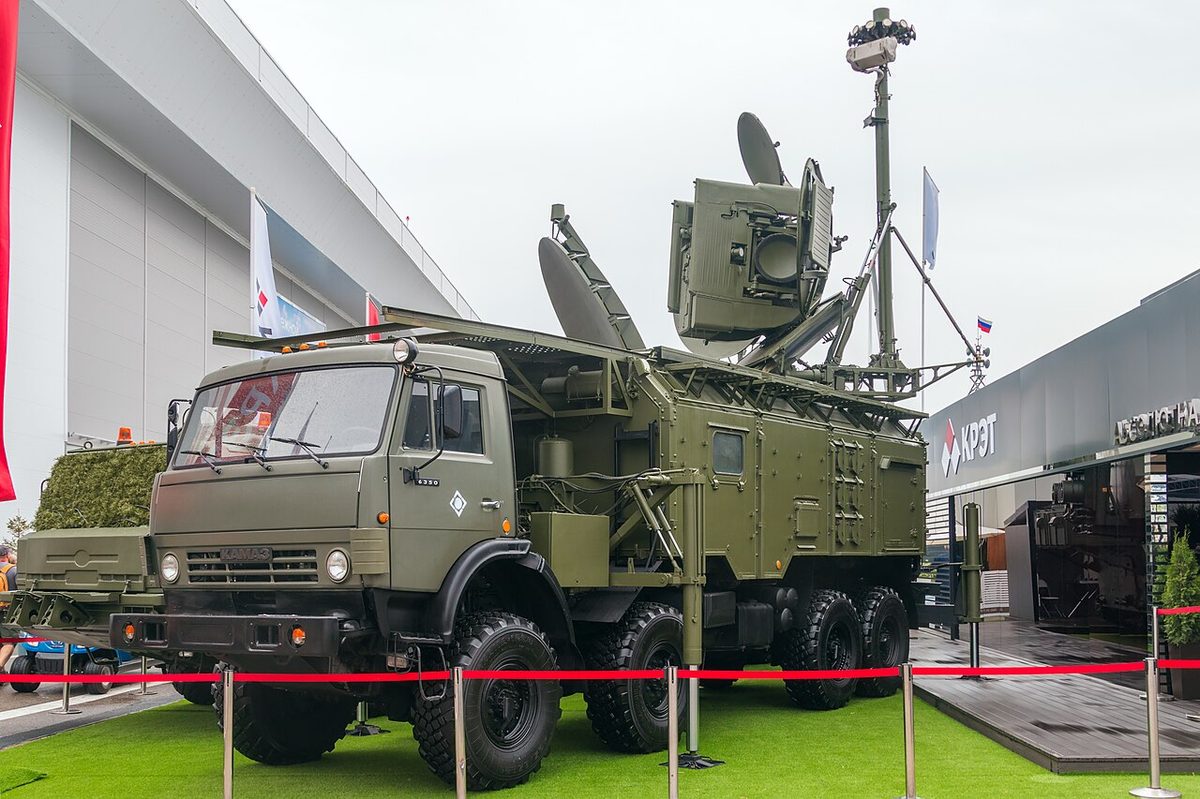
Krasukha-4 electronic warfare system mounted on a BAZ-6910 heavy truck chassis
The Krasukha-4, mounted on a BAZ-6910 chassis, is one of Russia's most capable broadband jamming platforms, designed to disrupt airborne radar and reportedly capable of affecting low-Earth orbit satellites.

The Krasukha-4 is the most capable system in the lineup. Mounted on a BAZ-6910 heavy truck chassis, it is a broadband jammer operating across the X-band and Ku-band frequencies used by airborne radar, satellite communications, and surveillance systems. According to Russian defense industry sources, the Krasukha-4 can jam airborne radar at ranges exceeding 200 kilometers, disrupt low-Earth orbit satellite communications, and in some cases cause permanent damage to targeted electronic systems through sustained high-power emissions. In the early months of the war, Krasukha-4 systems were credited with degrading the effectiveness of Turkey's Bayraktar TB2 drones, which had been devastatingly effective during their initial deployment.

The R-330Zh Zhitel operates at a different layer. A VHF and UHF jammer, the Zhitel targets GPS signals, satellite communications, and cellular networks. It does not need to find a specific target. It creates a suppression zone tens of kilometers wide where GPS receivers return garbage data or no data at all, satellite phones cannot connect, and cellular networks go dark. For any military system that depends on GPS for navigation or targeting, which in 2024 means nearly everything, operating inside a Zhitel's coverage area means operating partially blind.

The Pole-21 system focuses specifically on GPS suppression. Rather than jamming communications broadly, it targets the weak GPS satellite signals that precision-guided weapons depend on for terminal guidance. A single Pole-21 installation can degrade GPS accuracy across an entire sector of the front, turning 8-meter precision into 50-meter or worse uncertainty.

The RB-341V Leer-3 takes a different approach entirely. It uses Orlan-10 reconnaissance drones as airborne relay platforms for cellular network hijacking. Once the Orlan-10s are overhead, the Leer-3 can intercept cellular communications, push propaganda messages to phones in the target area, send fake orders designed to create confusion, and geolocate active phones for targeting. It is electronic warfare as psychological warfare, the spectrum weaponized not just to deny capability, but to inject false information.

And at the strategic level, the Murmansk-BN system provides high-frequency jamming at ranges exceeding 5,000 kilometers. While its tactical relevance to the front-line drone fight is limited, its existence illustrates the depth of Russian investment in controlling the electromagnetic spectrum at every scale.

How GPS Jamming Crippled Precision Weapons

The practical effects of this electronic warfare deployment were devastating for systems that Western planners had spent decades perfecting around GPS guidance.

The M142 HIMARS launcher fires the M31A1 GMLRS rocket, a weapon that uses GPS-aided inertial navigation to achieve circular error probable (CEP) of roughly 8 to 10 meters at ranges up to 84 kilometers. That precision made HIMARS the single most effective deep-strike weapon Ukraine received from the West, capable of destroying ammunition dumps, command posts, and logistics nodes with one or two rounds. By late 2023, Russian electronic warfare had intensified to the point where HIMARS effectiveness dropped sharply. According to Ukrainian military officials and Western defense analysts, GMLRS rockets in heavily jammed areas were missing their targets by margins that made them operationally ineffective against point targets. The backup inertial navigation system is unjammable, it uses internal gyroscopes and accelerometers that require no external signal, but it accumulates error over the flight time, reducing accuracy to levels that can miss a building-sized target.

The situation was even worse for the M982 Excalibur GPS-guided artillery round. Designed to give 155mm howitzers precision-strike capability, the Excalibur depends heavily on GPS for its terminal guidance. Ukrainian forces reported that Russian jamming reduced Excalibur accuracy by up to 90 percent in some sectors. A round designed to land within 2 meters of its target was landing 30 meters or more away, rendering it no more accurate than conventional unguided artillery at a fraction of the cost-effectiveness. The U.S. Army took notice. By 2024, it had purchased 376 anti-jamming GPS kits specifically for HIMARS launchers, with 284 more planned through 2029.

Portable GPS jammers compounded the problem at the tactical level. Russian units deployed man-portable and vehicle-mounted jammers that could suppress GPS signals within a 24-kilometer radius. These small systems were cheap, numerous, and difficult to locate and destroy. A single squad-level jammer could degrade the accuracy of every GPS-guided weapon fired into its coverage area.

The FPV Drone Crisis

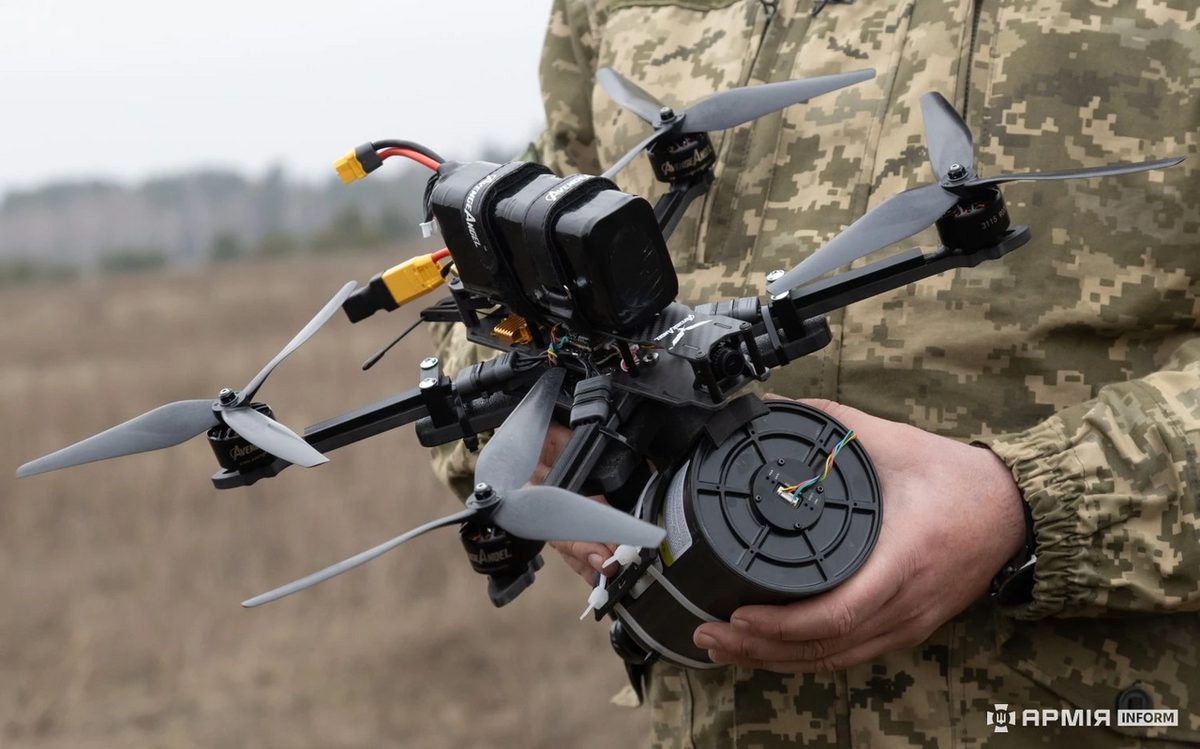
First-person-view FPV combat drone used in the Ukraine conflict
FPV combat drones became the war's defining weapon, cheap, lethal, and produced in the hundreds of thousands. But their dependence on radio-frequency links made them vulnerable to electronic warfare countermeasures.

While GPS jamming degraded long-range precision weapons, the more immediate crisis played out in the FPV drone war that had come to define daily combat along the front.

A standard FPV attack drone depends on two radio-frequency links: a control link carrying the pilot's stick inputs from the ground station to the drone, and a video link carrying the live camera feed from the drone back to the pilot's goggles. Both links operate on common frequencies, typically 900 MHz, 1.3 GHz, 2.4 GHz, or 5.8 GHz, and both are vulnerable to jamming.

Russian forces deployed vehicle-mounted counter-UAS electronic warfare systems like the Volnorez and Lesochek, which created localized jamming bubbles around protected positions. Within these bubbles, typically several hundred meters in radius, FPV control and video links degraded or failed entirely. Broader systems like the Zhitel created wider suppression zones that affected both drone links and GPS simultaneously.

The operational impact was severe. Ukrainian FPV operators reported hit rates dropping from 40 to 60 percent in favorable conditions during 2023 to 20 to 30 percent or lower in heavily jammed sectors by mid-2024. Some operators described losing their video feed entirely several hundred meters short of the target, the screen going to static while the drone flew blind, crashing harmlessly into open ground or veering off course. Others lost their control link, meaning they could still see through the drone's camera but could not steer it. In an environment where both sides were spending hundreds of millions of dollars annually on drone production, a halving of effectiveness was not a nuisance. It was an operational crisis that threatened Ukraine's most cost-effective way of destroying Russian equipment.

Ukrainian developers responded with radio-link improvements: frequency-hopping radios that rapidly switch frequencies to evade narrowband jamming, directional antennas, increased transmission power, and encrypted digital video links. Russian EW operators countered each improvement in weeks. The cycle was accelerating, and the physics favored the jammer, a jammer close to the drone will always overpower a transmitter kilometers away, because signal strength decreases with the square of the distance.

The Fiber-Optic Revolution

Conceptual illustration of a fiber-optic guided drone trailing a thin tether cable
Fiber-optic drones trail a hair-thin glass cable that carries both video and control signals. With no radio-frequency emissions, there is nothing for electronic warfare systems to detect or jam.

Ukraine's first major counter-adaptation did not involve building better radios. It involved eliminating the radio link entirely.

Fiber-optic guided drones carry a spool of hair-thin optical fiber, thinner than a human hair, that unspools behind the drone as it flies. The control signals from the operator's transmitter and the video feed from the drone's camera travel through this fiber as pulses of light rather than radio waves. No radio frequency means nothing for electronic warfare systems to detect, jam, or spoof. The drone flies through the densest jamming environment on earth as if it does not exist.

The concept was not new. Fiber-optic guidance has been used in anti-tank missiles since the 1980s, the Israeli SPIKE and the Japanese Type 01 LMAT both use fiber-optic data links. But applying it to cheap, mass-produced FPV drones changed the equation. A fiber-optic spool adds less than $100 to the cost of a drone that already costs a few hundred dollars. The trade-off is range, current fiber-optic drones are limited to roughly 10 to 20 kilometers by the length of fiber they can carry, but for the close-range FPV attacks that dominate the front line, that range is sufficient.

The adoption rate tells the story of how significant the advantage was. By September 2025, Russia alone was producing an estimated 50,000 or more fiber-optic FPV drones per month, according to defense industry analysts. Ukraine had adopted the technology in parallel. Both sides recognized that in an environment saturated with electronic warfare, the fiber-optic link was not merely preferable. It was becoming necessary for reliable operations in contested electromagnetic space.

AI Vision: The $70 Module That Changed Everything

Fiber-optic cables solved the jamming problem for the radio link, but they did not solve the GPS problem. A drone that cannot be jammed can still be a drone that does not know exactly where it is or where its target is, especially if it needs GPS for navigation or terminal guidance. The second major adaptation addressed this gap: machine-vision AI that lets drones see, track, and strike targets without any external signal at all.

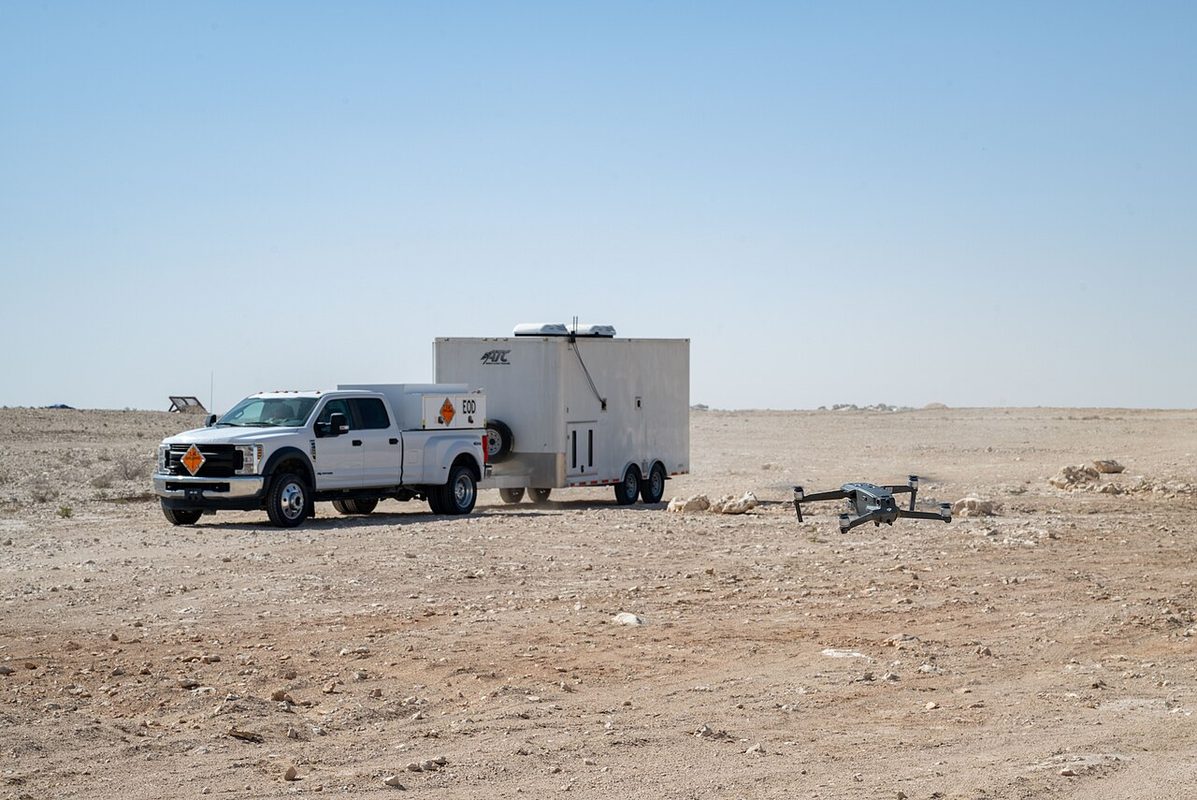
Military personnel conducting counter-UAS training with electronic warfare equipment
Counter-UAS training has become a critical skill set as both sides develop increasingly sophisticated electronic and kinetic measures against drones.

Ukrainian company Fourth Law developed an AI vision module that costs approximately $70 per unit. The module uses a camera and onboard processor to identify and lock onto a target visually. The operator designates the target on their screen, and the AI stores an image of what it looks like. From that point, the drone maintains its lock on the target using machine vision alone, no GPS, no radio commands for terminal guidance, no external data. If the target moves, the AI tracks the movement. If the drone's video link is jammed in the final seconds of approach, the AI continues to guide the drone to impact using only what it can see through its own camera.

The results were dramatic. One Ukrainian brigade reported that integrating AI vision modules increased their FPV drone success rates from approximately 20 percent to 80 percent. That is not an incremental improvement. That is the difference between a weapon system that is marginally useful and one that is devastatingly effective. At $70 per module on a drone that costs a few hundred dollars total, the cost-effectiveness ratio is extraordinary, a $400 drone destroying a $3 million armored vehicle with 80 percent reliability.

The AI training pipeline behind these modules is equally significant. A Ukrainian nonprofit organization called OCHI has accumulated over 2 million hours of frontline drone footage, the equivalent of 228 years of continuous video. This footage, captured by thousands of drone operators across the entire front, provides the training data that machine-vision algorithms need to recognize tanks, armored vehicles, infantry positions, artillery pieces, and other targets in every lighting condition, weather state, and terrain type the war produces. The scale of this dataset is unprecedented in military AI development.

Russia has pursued similar capabilities. Nvidia chipsets found in downed Shahed drone wreckage indicate that Iranian-designed loitering munitions are being equipped with autonomous night targeting capability, machine vision that can identify and strike targets in darkness without operator input or GPS guidance. The proliferation of AI-guided autonomous targeting on both sides suggests this is not a niche innovation. It is the direction drone warfare is heading universally.

Autonomous Navigation and Mesh Networking

The third layer of adaptation extends beyond individual drone strikes to how drones navigate, communicate, and coordinate without depending on any external signal infrastructure.

Autonomous navigation systems use a combination of inertial measurement units, visual odometry (tracking ground features to estimate movement), and pre-loaded terrain maps to navigate without GPS. The drone knows where it is based on what it can see and what its internal sensors tell it about how it has moved, rather than relying on satellite signals that can be jammed. The accuracy is lower than GPS in ideal conditions, but in a jammed environment where GPS accuracy has been degraded to 50 meters or worse, autonomous visual navigation can actually be more precise than the jammed GPS signal it replaces.

Mesh networking allows multiple drones to share data with each other directly, rather than routing all communications through a central ground station. If one drone in a group can see the target, it can share that targeting information with other drones in the mesh. If one drone's link to the ground station is jammed, it can relay through another drone that has a clear link. The network becomes resilient to localized jamming because there is no single link whose failure kills the entire operation.

These capabilities are converging into something that looks less like a remotely piloted aircraft and more like an autonomous weapon that happens to accept human input when conditions allow it. The operator sets the mission parameters, designates the target, and launches the drone. If the communications link holds, the operator can guide the drone manually. If the link is jammed, the drone continues the mission autonomously, navigating by visual odometry, identifying the target by machine vision, and striking without any external signal. The human is in the loop when possible and out of the loop when electronic warfare makes it necessary.

The Arms Race That Never Ends

What makes this contest different from previous technology competitions in warfare is its speed. The cycle from new capability to countermeasure to counter-countermeasure, which in previous conflicts might have taken years, now plays out in weeks or months.

Russia deploys a new jammer. Ukrainian drone developers modify their frequency-hopping algorithms. Russia widens the jamming bandwidth. Ukraine switches to fiber-optic links. Russia develops counter-fiber-optic tactics, attempting to sever the thin cable with fragmentation or to defeat the drone with kinetic interceptors since electronic means no longer work. Ukraine adds AI vision so the drone can complete its mission even if the fiber breaks in the final seconds. Each step forces the other side to innovate or accept a disadvantage.

The economic dimension is equally important. Russia's electronic warfare systems cost millions of dollars per unit. A Krasukha-4 represents a significant capital investment. The drones they are trying to defeat cost hundreds of dollars each. Even with the added cost of fiber-optic spools and AI vision modules, the attacker's cost advantage is overwhelming. Electronic warfare can degrade drone effectiveness, but it cannot make drones uneconomical, and as long as drones remain economical, the incentive to find ways around electronic warfare will persist.

This dynamic has implications far beyond Ukraine. Every NATO military depends on GPS-guided munitions. Every modern armed force is investing in drone capabilities. The war in Ukraine has demonstrated, in operational conditions that no exercise or simulation can replicate, that electronic warfare can reduce the effectiveness of GPS-guided weapons by 90 percent and cut drone hit rates in half. It has also demonstrated that determined adversaries can adapt around electronic warfare faster than most defense procurement systems can respond.

The Invisible Battlefield

The broader lesson is one that defense planners are still absorbing. Electronic warfare is not a supporting capability. It is the invisible battlefield that determines whether all the visible technology, the drones, the precision munitions, the networked command systems, actually works as designed. A military that dominates the electromagnetic spectrum can degrade an adversary's most advanced capabilities to the point of irrelevance. A military that cannot operate in a contested electromagnetic environment will find that its expensive precision weapons perform no better than the unguided munitions they were designed to replace.

Ukraine's response, fiber-optic links, AI vision, autonomous navigation, points toward a future where the most effective military systems are those that depend on nothing outside themselves. No GPS signal to jam. No radio link to disrupt. No external data to spoof. The drone that carries its own intelligence, its own navigation, and its own targeting is the drone that electronic warfare cannot stop. That capability, born from the desperate necessity of fighting through the densest jamming environment in modern history, is now proliferating to both sides and will define the next generation of autonomous weapons worldwide.

The contest between electronic warfare and the systems it targets is not a problem that gets solved. It is an arms race that accelerates. And the war in Ukraine has demonstrated that the side which adapts faster, not the side with the most expensive equipment, is the side that maintains its edge.

Share this article

Share:

Recommended

Ace of The Skies: Can You Identify These Military Aircraft Throughout The Years?
Test Yourself

Ace of The Skies: Can You Identify These Military Aircraft Throughout The Years?

Can you identify these aircraft?

Take the Quiz

Get Military News & History in Your Inbox

Join thousands of readers receiving our weekly digest of military technology, history, and analysis.

Test Your Knowledge