Skip to content
April 24:Operation Eagle Claw Fails in Iran46yr ago

THAAD: The Only Missile Defense System That Intercepts Warheads Outside the Atmosphere

David Kowalski · · 12 min read
Save
Share:
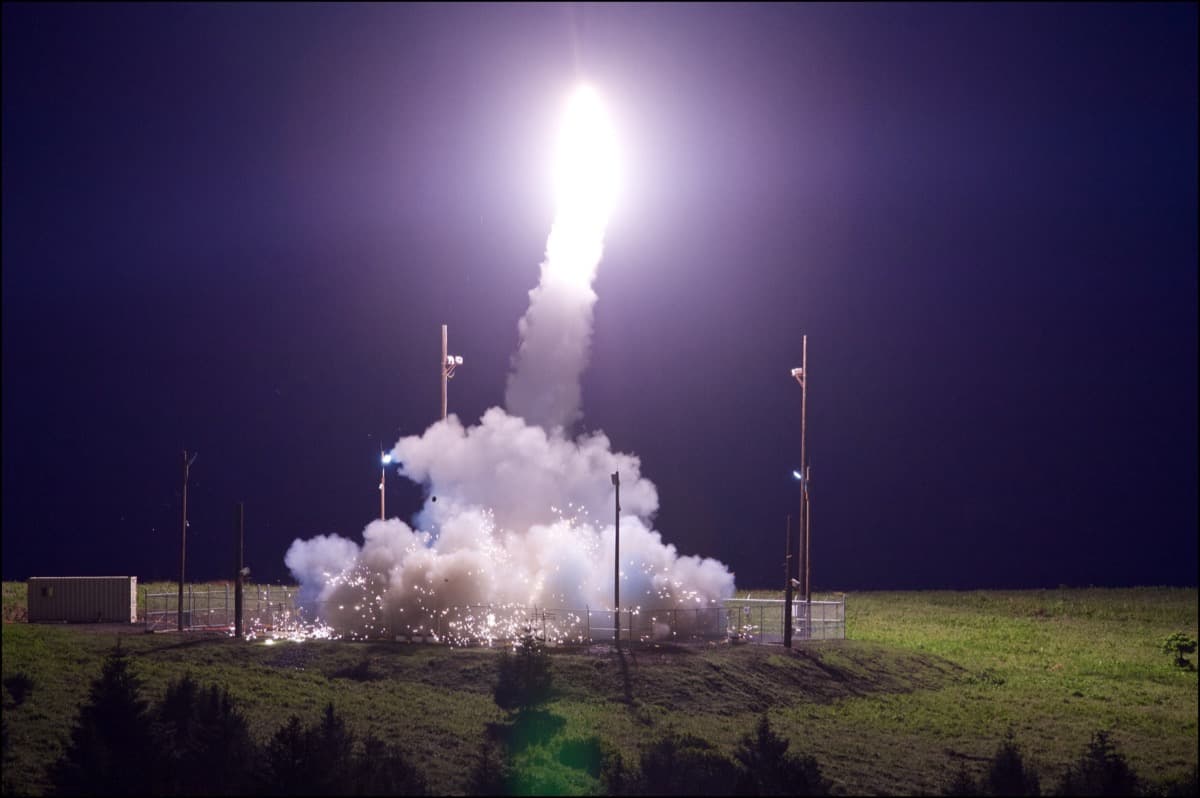
THAAD interceptor launching during a nighttime missile defense test at Kodiak, Alaska
David Kowalski
David Kowalski

Missile Systems & Air Defense Contributor

David Kowalski writes about missile systems, air defense networks, and the technology behind precision strike warfare. His work examines how offensive and defensive missile capabilities shape the balance of power between nations.

Imagine trying to hit a bullet with another bullet. Now imagine both bullets are traveling at Mach 8, the target is the size of a washing machine, the intercept happens 150 kilometers above Earth, in the vacuum of space, and you have roughly 120 seconds from detection to impact. There is no explosive warhead on your interceptor. No fragmentation sleeve. No proximity fuze. The only kill mechanism is the collision itself: two objects meeting at a combined closing speed exceeding 15,000 miles per hour. If you miss by six inches, you miss entirely. That is what the Terminal High Altitude Area Defense system does, and as of December 2024, it has done it in combat.

What Makes THAAD Different

Most missile defense systems intercept their targets inside the atmosphere. The Patriot PAC-3 engages incoming missiles at altitudes below 25 kilometers. Israel's Iron Dome works at altitudes measured in hundreds of meters. Russia's S-400 operates within the atmospheric envelope. These systems rely on a combination of proximity detonation and blast fragmentation, get close enough, detonate a warhead, and let shrapnel do the rest.

THAAD operates in a fundamentally different regime. Its interceptors climb to altitudes between 40 and 150 kilometers, the upper stratosphere and beyond, into the exoatmosphere, where the air is too thin for aerodynamic control surfaces and too sparse for blast fragmentation to work. At those altitudes, there is no medium to carry a shockwave. An explosive warhead would detonate and produce nothing useful. So THAAD doesn't carry one.
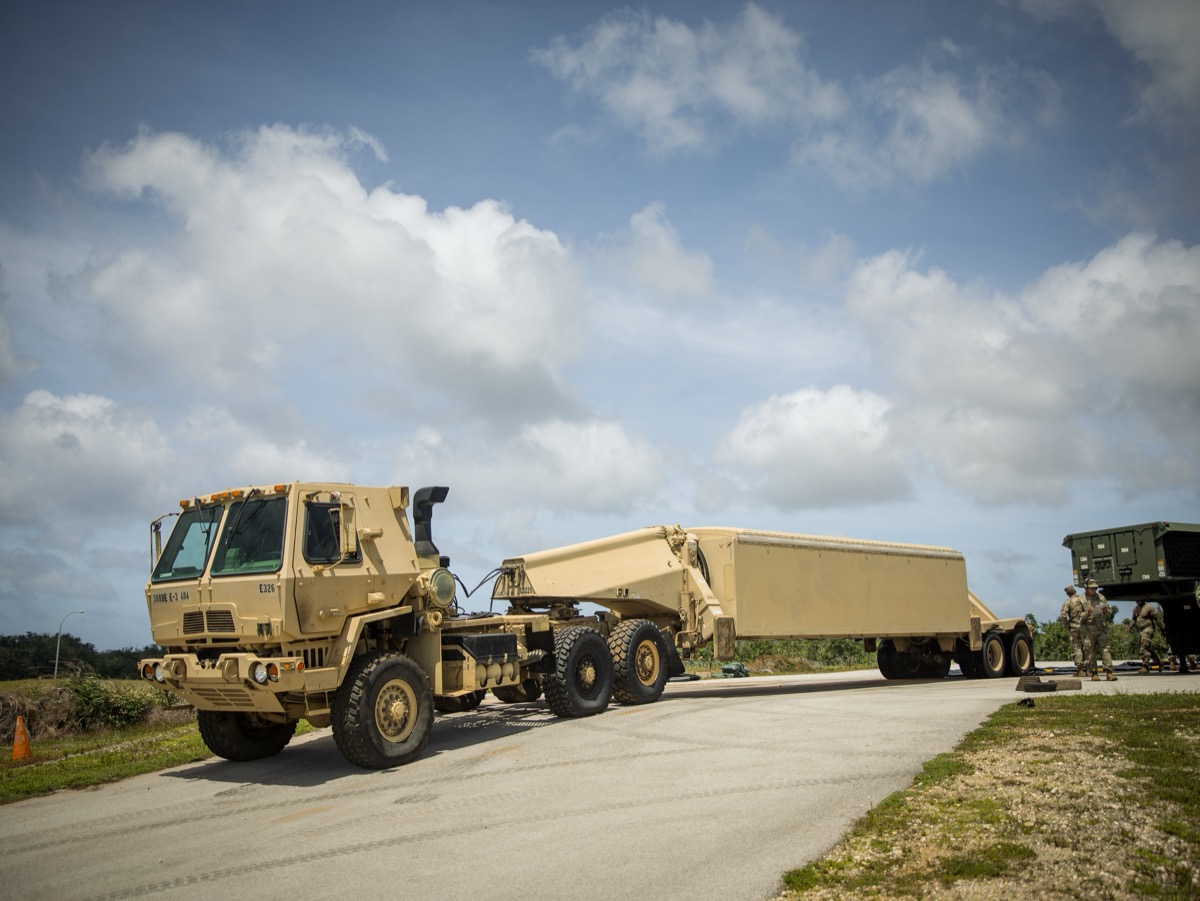
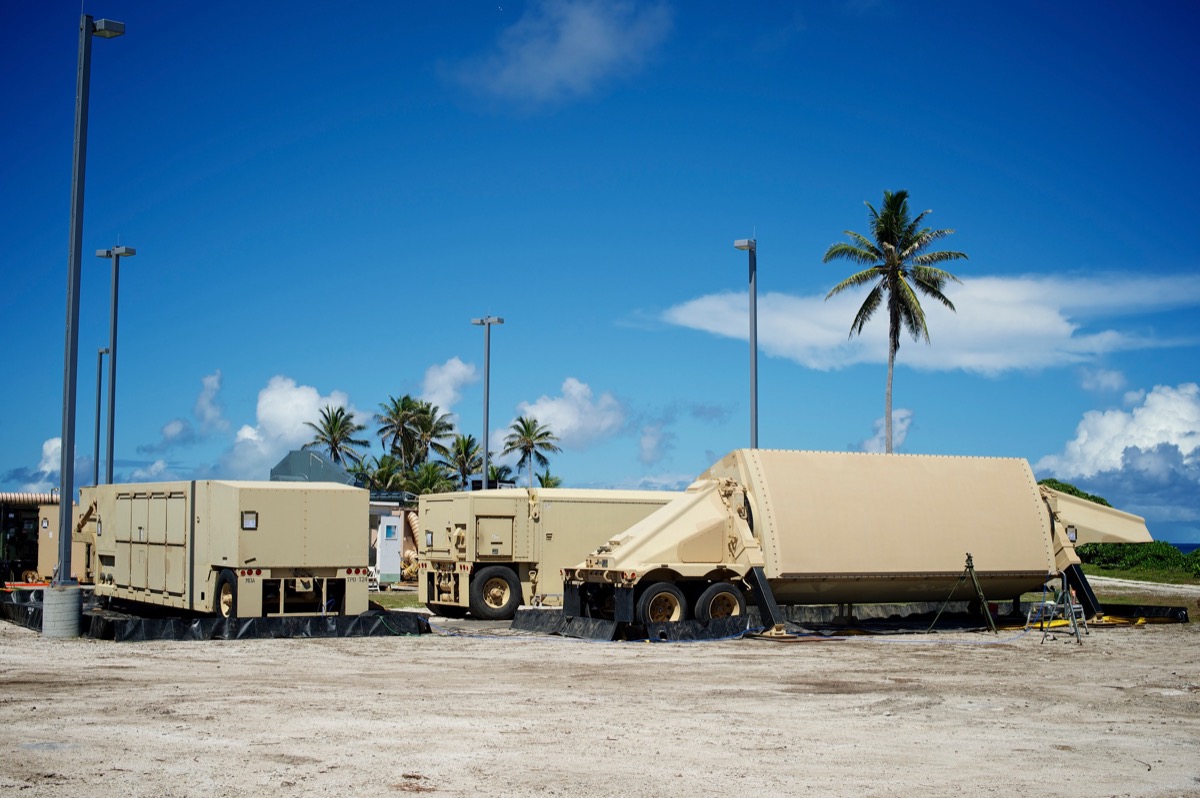
THAAD battery with launchers and support vehicles deployed in a defensive position
A THAAD battery deployed in Guam during a Table VIII evaluation. Each battery includes six launchers, an AN/TPY-2 radar, and fire control stations. (U.S. Army photo via DVIDS)

Instead, THAAD uses hit-to-kill technology. The interceptor, a 900-kilogram kinetic kill vehicle, maneuvers directly into the path of the incoming warhead and destroys it through the sheer energy of the collision. At closing speeds above Mach 15, the kinetic energy released is roughly equivalent to being hit by a ten-ton truck traveling at 600 miles per hour. The warhead doesn't just break apart, it disintegrates. The energy is so extreme that the intercept produces a visible flash detectable from the ground, even at 150 kilometers altitude.

The Physics of Hit-to-Kill

The physics behind hit-to-kill are simple in principle and extraordinarily difficult in execution. Kinetic energy equals one-half mass times velocity squared. At the closing speeds involved in a THAAD intercept, roughly 6 to 8 kilometers per second, even a relatively small interceptor carries enormous destructive energy. A 60-kilogram kill vehicle (the terminal stage of the THAAD interceptor) traveling at 7 km/s carries approximately 1.5 gigajoules of kinetic energy. That's equivalent to detonating about 350 kilograms of TNT, delivered to a single point of impact.

The problem is guidance. The incoming warhead is typically 50 to 80 centimeters in diameter, traveling at 3 to 4 km/s on a ballistic trajectory that may include minor evasive maneuvers or decoys. The intercept geometry means the THAAD kill vehicle and the warhead are approaching each other at a combined 6 to 8 km/s. At that speed, one second of flight covers 7 kilometers. A guidance error of one millisecond translates to a miss distance of 7 meters, far too much for a hit-to-kill weapon.

THAAD's kill vehicle solves this problem with an infrared seeker that acquires the warhead during the terminal phase of the intercept. The seeker detects the thermal signature of the warhead against the cold background of space, a task that is actually easier in the exoatmosphere than it would be at lower altitudes, because there is no atmospheric clutter, no weather, and minimal infrared noise. Once the seeker locks on, the kill vehicle uses a divert-and-attitude-control system, a ring of small thrusters that fire in precise bursts, to steer directly into the warhead. The final corrections happen in the last fraction of a second before impact.

The AN/TPY-2 Radar

AN/TPY-2 X-band phased array radar positioned during a missile defense test
The AN/TPY-2 radar during a flight test at Kwajalein Atoll. This X-band phased array radar can detect ballistic missiles at ranges exceeding 1,000 kilometers. (Missile Defense Agency photo via DVIDS)

If the interceptor is THAAD's fist, the AN/TPY-2 radar is its eyes. Built by Raytheon (now RTX), the AN/TPY-2 is an X-band, solid-state phased array radar with a detection range exceeding 1,000 kilometers. It is the most powerful transportable radar in the U.S. military inventory and one of the most capable missile defense sensors ever built.

The AN/TPY-2 operates in two modes. In "terminal mode," it is co-located with the THAAD battery and provides the fire control radar for interceptor guidance. In "forward-based mode," it is deployed closer to the threat, often in a separate country, and acts as an early warning sensor, detecting ballistic missiles shortly after launch and cueing other missile defense systems across the Ballistic Missile Defense System (BMDS) network.

The radar's X-band frequency gives it exceptional resolution. It can distinguish between warheads, spent rocket stages, and decoys at ranges where lower-frequency radars would see only a single blurred track. This discrimination capability is critical against adversaries who may deploy decoys, chaff, or multiple reentry vehicles designed to overwhelm defenses. The AN/TPY-2 can track dozens of objects simultaneously and classify each one, providing the fire control solution that tells the interceptor which object is the actual warhead.

A single AN/TPY-2 weighs approximately 55 tons and requires six trucks to transport. Despite its size, the radar is designed for rapid deployment, it can be set up and operational within hours after arriving at a prepared site. The U.S. currently operates AN/TPY-2 radars in Japan, Israel, Turkey, Qatar, and at multiple U.S. installations, in addition to the radars co-located with THAAD batteries.

What a THAAD Battery Looks Like

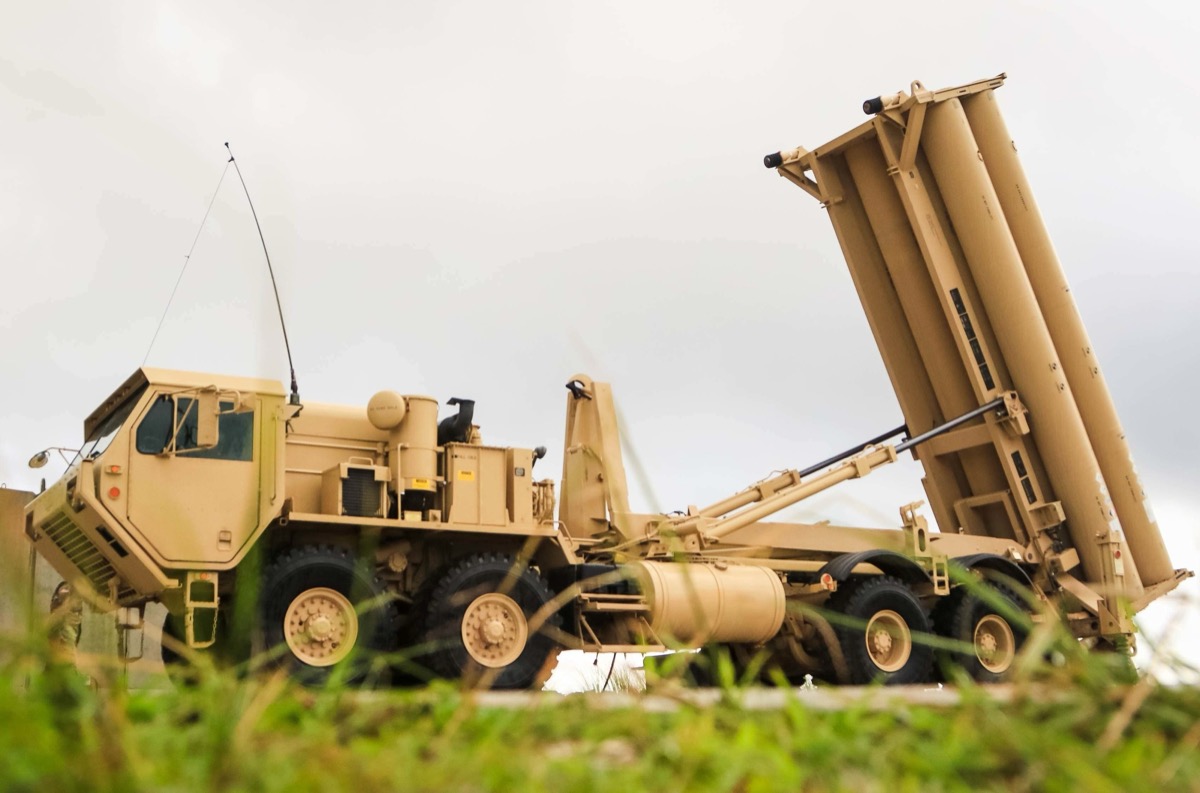
THAAD launcher loaded with interceptor missiles on a mobile platform
A THAAD launcher with eight interceptor canisters. Each battery deploys six launchers for a total of 48 ready-to-fire interceptors. (Missile Defense Agency photo via DVIDS)

A full THAAD battery consists of six truck-mounted launchers, each carrying eight interceptors in sealed canisters, 48 interceptors total. The battery includes one AN/TPY-2 radar, two tactical operations centers (fire control stations), and a crew of approximately 90 soldiers. The entire system is mobile: every component rides on standard military trucks and can be transported by C-17 cargo aircraft.

The interceptor itself is a single-stage, solid-fuel missile approximately 6.17 meters long and weighing roughly 900 kilograms at launch. It accelerates to Mach 8 within seconds of launch, climbs to intercept altitude, separates its kill vehicle, and the kill vehicle maneuvers independently for the terminal intercept. From launch to intercept, the entire engagement can take less than two minutes, though the detection, tracking, and fire control sequence begins well before the interceptor leaves the canister.

The cost is substantial. A single THAAD battery costs between $1.0 billion and $1.8 billion, depending on the configuration and included support equipment. Each interceptor costs approximately $12.7 million. These numbers make THAAD one of the most expensive air defense systems in the world, but the targets it defends against, including nuclear-armed ballistic missiles, make the cost calculus different from conventional air defense.

Test Record: 100% Intercept Success

THAAD has been tested 18 times in controlled flight tests conducted by the Missile Defense Agency and the U.S. Army. In those 18 tests, the system has achieved 14 successful intercepts. The four remaining tests were not failures in the traditional sense, in each case, the target missile malfunctioned before the THAAD interceptor could engage. The target either failed to launch correctly, broke apart prematurely, or deviated so far from its planned trajectory that the test was cancelled. In every test where the THAAD interceptor actually flew against a valid target, it achieved a successful intercept.

This gives THAAD a 100% intercept success rate against targets that were properly presented. That record is unmatched by any other ballistic missile defense system. The Patriot PAC-3, by comparison, has an excellent test record but has experienced test failures. The Ground-based Midcourse Defense (GMD) system, which defends the U.S. homeland against ICBMs, had a success rate of roughly 55% through its first 20 years of testing before improving in recent years.

Critics correctly point out that flight tests are conducted under controlled conditions, the defenders know roughly when the target will launch, they know its approximate trajectory, and the targets do not employ sophisticated countermeasures. Real combat would present additional challenges. But the engineering achievement of hitting a ballistic warhead with a kinetic kill vehicle at exoatmospheric altitudes, repeatedly and reliably, is real. No other system has demonstrated this capability with this consistency.

First Combat Use: Israel, December 2024

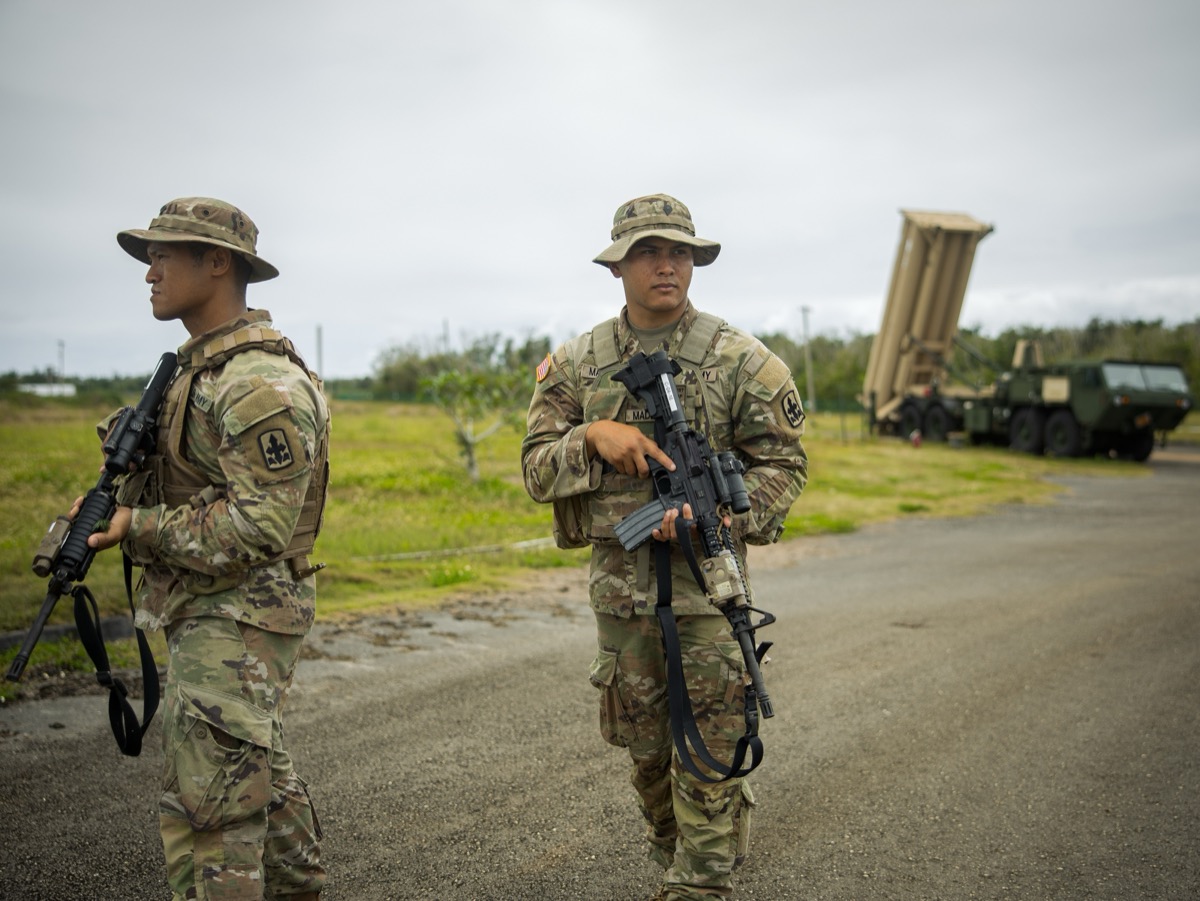
THAAD system deployed in a forward defensive position with security forces
THAAD deployed at a forward operating site. The system has been stationed in Guam, South Korea, the UAE, Romania, and Israel. (U.S. Army photo via DVIDS)

In October 2024, the United States deployed a THAAD battery to Israel in response to escalating ballistic missile threats from Iran and its proxies. It was the first time the U.S. had deployed THAAD to Israel, an unusual step that signaled the severity of the threat environment. The battery was manned by approximately 100 U.S. soldiers from the 11th Air Defense Artillery Brigade.

On December 27, 2024, THAAD made its combat debut. A Houthi ballistic missile was launched from Yemen toward Israel, and the THAAD battery engaged and destroyed it, the first exoatmospheric combat intercept ever conducted. By March 2025, the THAAD battery in Israel had intercepted six Houthi ballistic missiles, all successfully. Every engagement was a hit-to-kill intercept at altitudes above 100 kilometers.

The combat debut validated decades of development and testing. It also demonstrated something that no flight test can fully replicate: the system's performance under real-world conditions, with real adversary missiles following unpredictable trajectories, against a backdrop of simultaneous threats from multiple launch points. The THAAD operators in Israel were not defending against a single cooperative test target, they were operating in an active combat theater with overlapping threat layers.

Global Deployments

The U.S. Army currently operates seven THAAD batteries. These batteries rotate through deployments around the world, with permanent or semi-permanent stationing in several locations:

  • Guam, THAAD has been stationed on Guam since 2013, defending the island and its critical U.S. military installations against North Korean and Chinese ballistic missile threats.
  • South Korea, A THAAD battery was deployed to Seongju in 2017, generating significant diplomatic friction with China, which objected to the AN/TPY-2 radar's ability to track Chinese missile launches. In early 2026, the U.S. relocated this battery to the Middle East.
  • United Arab Emirates, The UAE purchased two THAAD batteries in 2011, becoming the first international customer. These systems are operational and integrated into the UAE's multi-layered air defense network.
  • Israel, Emergency deployment in October 2024, achieving six combat intercepts by March 2025.
  • Romania, THAAD deployed to Romania in 2019 to supplement NATO's Aegis Ashore ballistic missile defense site during maintenance periods.

Saudi Arabia has also expressed interest in purchasing THAAD, and Saudi-U.S. negotiations over a potential sale have been ongoing for several years. The system's combat record in Israel will likely accelerate international procurement decisions.

THAAD vs. Patriot: Complementary, Not Competing

Missile defense interceptor test showing the launch trail during a ballistic missile defense exercise
A missile defense flight test. THAAD and Patriot are designed to work as overlapping layers, THAAD intercepts at high altitude, Patriot covers the lower atmosphere. (Missile Defense Agency photo via DVIDS)

THAAD and the Patriot PAC-3 are not competitors, they are designed to work together as layers in an integrated air and missile defense architecture. THAAD provides the upper tier, intercepting warheads at altitudes between 40 and 150 kilometers during the terminal phase of their ballistic trajectory. If a THAAD interceptor misses, or if the engagement window closes before THAAD can fire, the incoming warhead descends into the atmosphere where the Patriot PAC-3 waits as the lower tier, engaging at altitudes below 25 kilometers.

This layered approach gives the defender two shots at each incoming warhead, one exoatmospheric, one endoatmospheric. The 2022 Missile Defense Agency flight test FTI-03 demonstrated this integration, with THAAD and Patriot systems sharing track data and coordinating engagements through the Integrated Battle Command System (IBCS). The THAAD AN/TPY-2 radar provided early tracking data that was passed directly to Patriot fire control units, enabling earlier engagement decisions and a larger defended area.

The practical difference is significant. THAAD's exoatmospheric intercept destroys the warhead far above the defended area, debris falls harmlessly over a wide, unpopulated area rather than raining down on the target. A Patriot intercept at 15 to 25 kilometers, by contrast, produces debris that falls within the defended zone. For threats carrying chemical, biological, or nuclear warheads, the altitude of the intercept matters enormously: an exoatmospheric kill keeps contaminated debris in the upper atmosphere, while a low-altitude intercept could scatter hazardous material over the very population it was designed to protect.

Where THAAD Fits in the Future

THAAD occupies a critical niche in ballistic missile defense that no other operational system can fill. It is the only deployed system capable of exoatmospheric intercept of medium- and intermediate-range ballistic missiles in the terminal phase. The Ground-based Midcourse Defense system handles ICBMs during their midcourse phase. The Aegis BMD system with SM-3 interceptors can perform exoatmospheric intercepts from naval platforms. But for land-based, mobile, terminal-phase exoatmospheric defense, THAAD is alone.

The system's combat debut in Israel has transformed it from a theoretical capability into a proven one. The 100% intercept record in testing was impressive but abstract. Six successful combat intercepts against Houthi ballistic missiles, each one a real warhead on an unpredictable trajectory, with lives depending on the outcome, is a different category of evidence entirely.

At $12.7 million per interceptor, THAAD is expensive. But the targets it engages, ballistic missiles that can carry nuclear, chemical, or conventional warheads and strike hundreds of kilometers from their launch point, are themselves enormously expensive and enormously destructive. A single Houthi ballistic missile that reaches a population center could kill hundreds and cause billions in damage. A $12.7 million interceptor that prevents that is, by any rational calculation, a bargain.

The challenge ahead is scale. Seven batteries cannot cover every potential target in a world where ballistic missile arsenals are growing in North Korea, Iran, and China. The Missile Defense Agency is working on THAAD upgrades, including extended-range interceptors and improved radar discrimination against advanced countermeasures. But the fundamental physics, hitting a bullet with a bullet, outside the atmosphere, every single time, has been proven. THAAD does what nothing else can.

Share this article

Share:

Recommended

Ace of The Skies: Can You Identify These Military Aircraft Throughout The Years?
Test Yourself

Ace of The Skies: Can You Identify These Military Aircraft Throughout The Years?

Can you identify these aircraft?

Take the Quiz

On This Day in Military History

April 4

NATO: The North Atlantic Treaty Signed (1949)

Twelve nations signed the North Atlantic Treaty in Washington, D.C., creating NATO, the first peacetime military alliance the United States joined outside the Western Hemisphere. Article 5 established collective defense: an attack on one member would be considered an attack on all.

1865, President Lincoln Walks Through Fallen Richmond

1945, First Major Kamikaze Attacks off Okinawa

1945, U.S. Army Liberates Ohrdruf Concentration Camp

See all 11 events on April 4

Get Military News & History in Your Inbox

Join thousands of readers receiving our weekly digest of military technology, history, and analysis.

Test Your Knowledge