Skip to content
May 1:Operation Neptune Spear: U.S. Navy SEALs Kill Osama bin Laden15yr ago

Space Warfare 2026: The Space Force Just Got $40 Billion to Prepare for Combat in Orbit

Alex Carter · · 10 min read
Save
Share:
SpaceX Falcon 9 rocket launching a GPS III satellite from Cape Canaveral Space Force Station at night
Alex Carter
Alex Carter

Modern Warfare & Defense Technology Contributor

Alex Carter writes about modern warfare, emerging military technology, and how doctrine adapts to new tools. His work focuses on what changes in practice -- command, control, targeting, and risk -- when systems like drones and autonomous platforms become routine.

The United States Space Force's fiscal year 2026 budget is approaching $40 billion. That figure, once reconciliation funding for the Golden Dome missile defense shield is included, represents more than double what the service received in its first year as an independent branch. It exceeds the entire defense budget of every NATO member except the United States itself. And it signals something the Pentagon has been reluctant to say plainly for years: space is no longer a support domain. It is becoming a warfighting domain, and the U.S. military is spending accordingly.

Where the Money Is Going

The base Space Force budget request for FY2026 stands at approximately $26.3 billion, already a significant increase from previous years. But the reconciliation bill working its way through Congress adds billions more in targeted spending: $5.6 billion for space-based interceptors, $7.2 billion for space-based sensors, $2 billion for airborne targeting satellites, $350 million for space command and control infrastructure, $150 million for ground targeting satellites, and $125 million for military space communications. Combined, these figures push total space-related defense spending past the $40 billion mark.

The research and development allocation alone jumped from $3.9 billion to $4.4 billion, driven primarily by restored funding for two programs: the Proliferated Warfighter Space Architecture's Tranche 3 Transport Layer and the Next-Generation Overhead Persistent Infrared (Next-Gen OPIR) program's polar satellite segment. Both represent critical investments in the kind of space infrastructure that military planners believe will define the next decade of orbital operations.

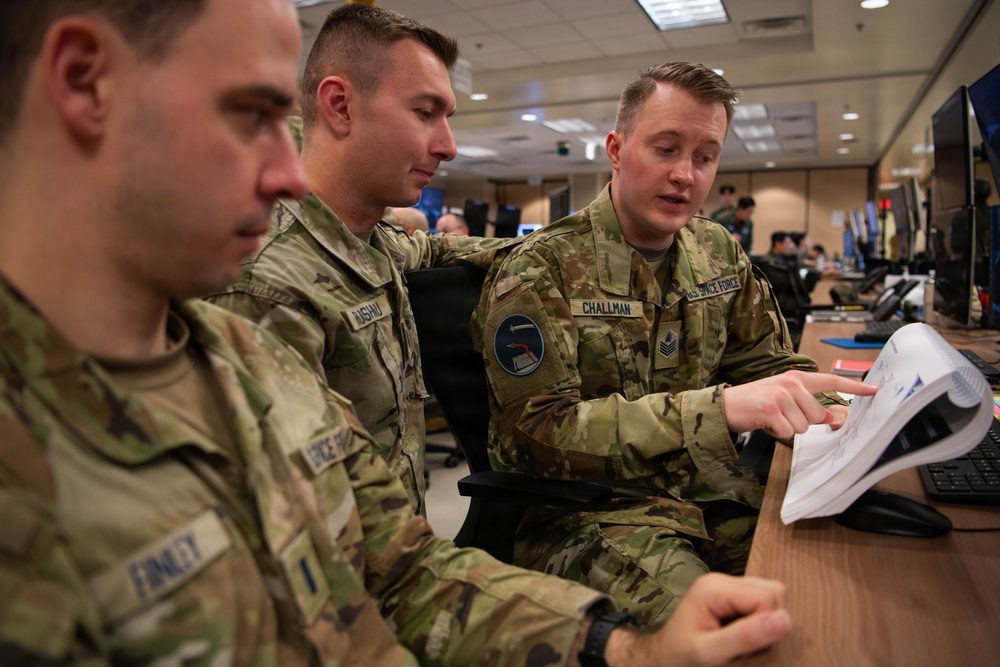
U.S. Space Force Guardians monitoring satellite operations at the USSPACECOM Joint Operations Center
The USSPACECOM Joint Operations Center at Schriever Space Force Base integrates data from multiple operations centers to provide real-time space domain awareness. (U.S. Space Force photo)

The Proliferated Warfighter Space Architecture

If one program explains why the Space Force budget is surging, it is the Proliferated Warfighter Space Architecture, or PWSA. Managed by the Space Development Agency, PWSA represents a fundamental shift in how the U.S. military approaches satellite infrastructure. Instead of relying on a handful of large, expensive, exquisitely capable satellites, each one representing a catastrophic single point of failure, PWSA deploys hundreds of small, networked satellites in low Earth orbit that collectively perform the same missions with far greater resilience.

The concept is straightforward. A constellation of hundreds of small satellites is exponentially harder to destroy than a constellation of five large ones. If an adversary destroys three satellites in a mesh network of 300, the network routes around the gap. If an adversary destroys one of five large geosynchronous satellites, 20 percent of the capability disappears overnight. The architecture is designed around the assumption that some satellites will be lost in a conflict, and the constellation will continue to function anyway.

PWSA operates in "tranches" that progressively add capability. Tranche 0 served as the demonstration layer, proving the mesh networking concept. Tranche 1 expanded the constellation and added missile tracking sensors. Tranche 2 is currently being built out with enhanced communications and tracking payloads. Tranche 3, the layer receiving restored FY2026 funding, adds the Transport Layer that connects the entire constellation into a unified data-sharing network, enabling any satellite in the mesh to relay targeting information to any shooter on the ground, in the air, or at sea within seconds.

The Space Force requested $648 million in FY2026 specifically for seven PWSA launches, nearly double the $357 million allocated for four launches in FY2025. In 2024, the Space Force facilitated a record-breaking 93 rocket launches from Cape Canaveral Space Force Station and Vandenberg Space Force Base. The service expects to launch at least 100 satellites in 2025 alone, nearly doubling its number of unclassified operational spacecraft.

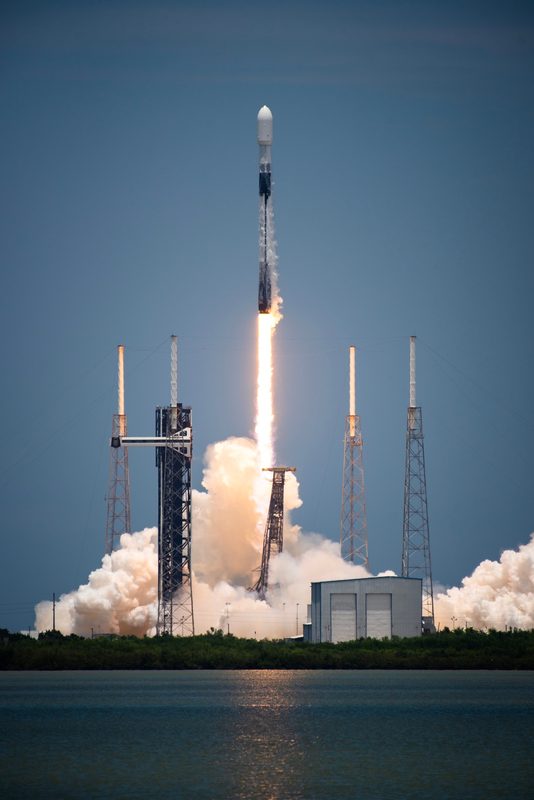
GPS III satellite launching from Cape Canaveral Space Force Station aboard a rocket at night
A GPS III satellite launches from Cape Canaveral Space Force Station. The GPS constellation remains one of the most critical, and most targeted, military assets in orbit. (U.S. Space Force photo)

Why Satellites Are Now Targets

The urgency behind this spending reflects a reality that military planners have understood since at least 2007: satellites are vulnerable, and every modern military capability depends on them. GPS provides precision navigation for troops, guided munitions, and naval vessels. Communications satellites link commanders to forces deployed across the globe. Intelligence, surveillance, and reconnaissance satellites provide real-time imagery of battlefields. Missile warning satellites, namely the OPIR constellation, detect ballistic missile launches within seconds of ignition by identifying the infrared signature of rocket exhaust plumes.

Disable those satellites, and a modern military force degrades rapidly. Precision-guided munitions lose their guidance. Communications networks fragment. Commanders lose situational awareness. Missile defense systems lose their early warning capability, reducing response times from minutes to seconds, or eliminating warning entirely.

China demonstrated its ability to destroy satellites in 2007 when it used a ground-launched kinetic kill vehicle to destroy one of its own aging weather satellites, the Fengyun-1C, at an altitude of 865 kilometers. The test was successful from a weapons development standpoint but catastrophic from a space sustainability perspective. It created more than 3,500 pieces of trackable debris and an estimated 150,000 pieces too small to track, all orbiting at velocities high enough to destroy anything they hit. Much of that debris remains in orbit today, posing a collision risk to every satellite and crewed spacecraft that passes through that altitude band.

Russia has demonstrated co-orbital anti-satellite capabilities, with satellites that maneuver close to adversary spacecraft and could potentially disable or destroy them through kinetic impact, electronic jamming, or directed energy. In November 2021, Russia destroyed one of its own satellites using a ground-based direct-ascent anti-satellite missile, generating another debris field and drawing international condemnation.

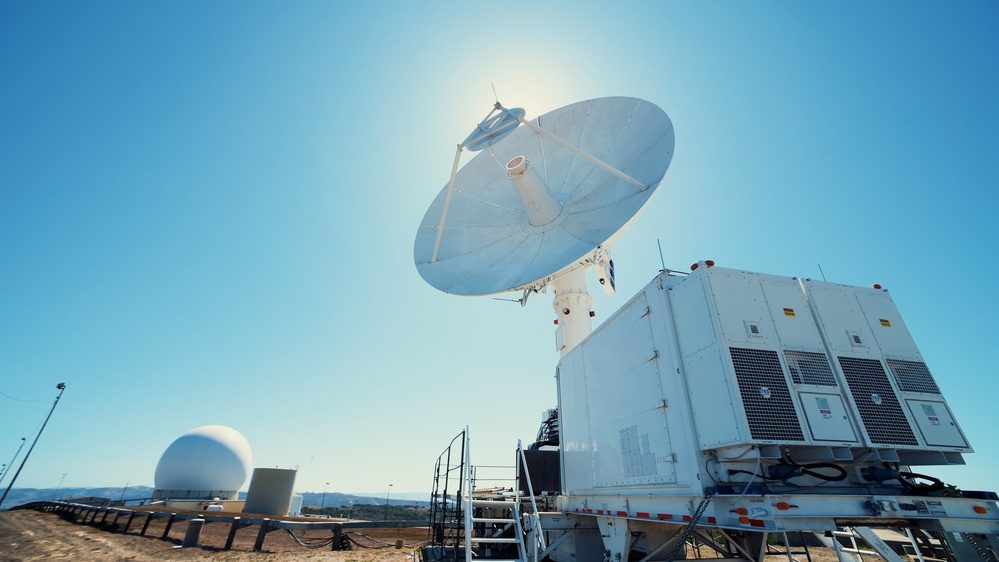
Vandenberg Tracking Station satellite antenna array used for military satellite command and control
The Vandenberg Tracking Station in California is part of the Air Force Satellite Control Network, enabling Space Force operators to communicate with military satellites across multiple orbits. (U.S. Space Force photo)

What Combat in Orbit Actually Means

The phrase "combat in orbit" conjures science fiction imagery of laser battles between spacecraft, but the near-term reality is more subtle and arguably more dangerous. Space warfare, as currently envisioned by the Pentagon and its adversaries, takes several forms.

Electronic warfare involves jamming or spoofing satellite signals without physically destroying the satellite. GPS jamming is already widespread. Russia has deployed GPS jammers extensively in Ukraine, and Chinese fishing fleets have been caught using GPS spoofing to mask illegal fishing activities. Jamming a satellite's uplink or downlink can render it useless without creating debris or triggering the kind of escalation that a kinetic strike might.

Directed energy weapons, primarily ground-based or air-based lasers, can dazzle or blind satellite optical sensors, degrading reconnaissance capability without destroying the satellite itself. China has reportedly tested ground-based laser systems capable of tracking and potentially blinding imaging satellites in low Earth orbit.

Cyber attacks target the ground stations and communication links that control satellites. A compromised ground station can cause a satellite to maneuver into a degraded orbit, shut down its payloads, or transmit corrupted data to military users who may not realize the information they are receiving has been tampered with.

Kinetic kill vehicles, both ground-launched and co-orbital, represent the most destructive and escalatory option. Ground-launched ASAT weapons can reach satellites in low Earth orbit within minutes. Co-orbital weapons can loiter near target satellites for months or years before activating, making them difficult to defend against because the attack window is unpredictable.

Next-Generation Missile Warning

One of the most critical FY2026 investments is the Next-Generation Overhead Persistent Infrared program, or Next-Gen OPIR. This system replaces the aging Space-Based Infrared System (SBIRS) satellites that currently provide missile warning coverage. SBIRS satellites detect ballistic missile launches by identifying the intense infrared radiation emitted by rocket motors during their boost phase, which covers the first few minutes after launch when the missile is accelerating through the atmosphere.

Next-Gen OPIR improves on SBIRS in several ways. The sensors are more sensitive, capable of detecting dimmer infrared signatures at greater ranges. The satellites are designed to survive in a contested environment, with hardened electronics and the ability to maneuver to avoid co-orbital threats. The polar satellite segment, one of the elements receiving restored FY2026 funding, fills a critical coverage gap over the Arctic, where traditional geosynchronous SBIRS satellites struggle to maintain continuous observation due to the geometry of their orbits.

This Arctic coverage matters because both Russia and China are developing missile systems that could fly polar or near-polar trajectories, routes that exploit gaps in the current sensor architecture. A hypersonic glide vehicle launched from northern Russia on a trajectory over the North Pole could reach the continental United States without ever passing through the sensor footprints optimized for equatorial and mid-latitude missile trajectories.

U.S. Space Force Guardians from field commands working together during military exercise
Space Force Guardians from multiple field commands coordinate satellite operations during Exercise Freedom Shield 26 in the Republic of Korea, March 2026. (U.S. Space Force photo)

Space Domain Awareness

You cannot defend what you cannot see. Space domain awareness, the ability to track and characterize every object in orbit, is the foundation of space defense, and FY2026 includes significant investments in expanding this capability. The Space Force currently tracks more than 47,000 objects in Earth orbit, ranging from operational satellites to spent rocket bodies to fragments of debris. But tracking alone is insufficient. The Space Force needs to determine what those objects are doing, whether a satellite maneuvering near a U.S. asset is performing a routine station-keeping burn or positioning itself for a hostile close approach.

The Space Fence radar system on Kwajalein Atoll in the Marshall Islands represents the most advanced ground-based space surveillance sensor in operation. It can detect objects as small as 10 centimeters in low Earth orbit and track thousands of objects simultaneously. But the Space Force is also investing in space-based surveillance, with satellites that watch other satellites. The Geosynchronous Space Situational Awareness Program (GSSAP) deploys satellites in near-geosynchronous orbit that can maneuver close to objects of interest in the geosynchronous belt, characterizing their capabilities through close-range observation.

The Scale of the Investment

The $40 billion figure becomes more striking in context. When the Space Force was established in December 2019, the White House requested $15 billion for its first fiscal year. In the span of five years, the budget has nearly tripled. That growth rate exceeds every other branch of the U.S. military and reflects a bipartisan consensus, unusual in Washington, that space superiority is not optional.

The spending also reflects a hard calculation about the cost of losing space capabilities versus the cost of defending them. A single GPS III satellite costs approximately $529 million. The entire GPS constellation, with 31 operational satellites, represents roughly $16 billion in hardware alone, not counting the ground infrastructure and decades of development costs. Losing even a fraction of those satellites would have consequences far beyond the military. Civilian aviation, maritime navigation, financial systems, and emergency services all depend on GPS timing and positioning signals.

The Space Force's argument, increasingly accepted across the Pentagon and Congress, is simple: defending space assets costs less than replacing them after they are destroyed, and infinitely less than fighting a war without them. The $40 billion budget is the down payment on that argument. Whether it proves sufficient will depend on how quickly adversaries develop the capability to put those assets at risk, and whether the Proliferated Warfighter Space Architecture can deliver the resilience it promises before that capability arrives.

Share this article

Share:

Recommended

Ace of The Skies: Can You Identify These Military Aircraft Throughout The Years?
Test Yourself

Ace of The Skies: Can You Identify These Military Aircraft Throughout The Years?

Can you identify these aircraft?

Take the Quiz

On This Day in Military History

April 11

Truman Relieves General MacArthur (1951)

President Harry S. Truman relieved General of the Army Douglas MacArthur of all commands in Korea and the Far East, replacing him with General Matthew Ridgway. MacArthur had publicly contradicted administration policy by advocating for attacks on China. The firing was a landmark assertion of civilian control over the military.

1945, Liberation of Buchenwald Concentration Camp

See all 10 events on April 11

Get Military News & History in Your Inbox

Join thousands of readers receiving our weekly digest of military technology, history, and analysis.

Test Your Knowledge