Skip to content
April 30:The Fall of Saigon51yr ago

Virginia-Class vs Yasen-Class: The Submarine Rivalry Neither Navy Talks About

Nathan Cole · · 11 min read
Save
Share:
USS Virginia nuclear attack submarine underway on the surface of the Atlantic Ocean
Nathan Cole
Nathan Cole

Naval Warfare & Maritime Systems Analyst

Nathan Cole covers naval warfare, maritime strategy, and the ships and submarines that project power across the world's oceans. His work focuses on fleet architecture, carrier operations, and how navies adapt to threats from missiles, drones, and undersea warfare.

These two submarines will never meet in peacetime, and both navies want to keep it that way. The Virginia-class fast-attack submarine is the backbone of America's undersea fleet, optimized for hunting enemy submarines and projecting power from the deep. The Yasen-class, Russia's most advanced nuclear submarine, carries a weapons load that would make a surface warship jealous, including hypersonic anti-ship missiles designed to destroy carrier battle groups. One is a precision hunter. The other is an underwater arsenal ship. Both represent the absolute cutting edge of submarine technology, and together they define the undersea rivalry that neither Washington nor Moscow discusses publicly.

The Platforms at a Glance

Specification Virginia-Class (Block V) Yasen-M (Project 885M)
Displacement (submerged) ~10,200 tons ~13,800 tons
Length 460 ft (140 m) 390 ft (119 m)
Reactor GE S9G (life-of-ship) KPM pressurized water
Speed (submerged) 25+ knots 31+ knots
Torpedo tubes 4 x 533mm 10 x 533mm
VLS cells 12 (+ 28 VPM) 32
Total weapons capacity ~65 torpedo-sized weapons ~72 torpedo-sized weapons
Primary missiles Tomahawk TLAM Kalibr, Oniks, Zircon
Crew ~132 ~90
Boats in service 23+ 4
Unit cost ~$3.4 billion ~$1.6 billion (est.)
Max depth ~490 m (estimated) ~600 m (estimated)

Virginia: The Hunter-Killer

The Virginia class was designed to do one thing better than any submarine in history: find and kill enemy submarines. Every aspect of its design, from the pump-jet propulsor that eliminates cavitation noise to the Large Aperture Bow sonar array that replaced the traditional spherical array, prioritizes acoustic stealth and sensor performance. The Virginia is widely considered the quietest submarine in the world, producing so little noise at patrol speed that it effectively disappears into the ambient ocean background.

The GE S9G reactor is a "life-of-ship" design that never requires refueling during the submarine's planned 33-year service life. This is not a minor engineering detail. Reactor refueling overhauls on older submarine classes took years and cost hundreds of millions of dollars. Eliminating refueling means Virginia-class boats spend a significantly higher percentage of their operational lives at sea rather than in drydock.

The Block V variant, now entering service, adds the Virginia Payload Module (VPM), a 70-foot hull insert containing four large-diameter vertical launch tubes. Each tube carries seven Tomahawk cruise missiles, adding 28 missiles to the submarine's existing 12-tube VLS capacity for a total of 40 Tomahawk missiles. Block V boats are also being designed to carry the Conventional Prompt Strike hypersonic missile beginning around 2028, giving Virginia-class submarines a hypersonic land-attack capability that would make each boat one of the most potent strike platforms in the Navy.

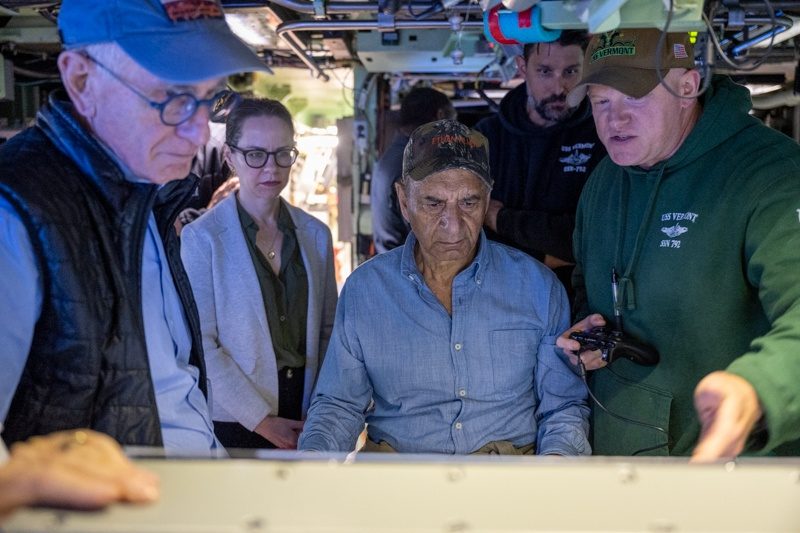
Virginia-class submarine USS Vermont at sea with crew members visible on the sail
USS Vermont (SSN 792), a Virginia-class fast-attack submarine, operates in the Pacific. The Virginia class is the most-produced nuclear submarine program in the Western world, with over 23 boats delivered. (U.S. Navy photo)

Yasen: The Underwater Arsenal Ship

The Yasen-class was conceived during the Soviet era as Project 885, a successor to the Akula-class attack submarines that had alarmed the U.S. Navy with their improving quietness throughout the 1980s. The lead ship, Severodvinsk (K-560), was laid down in 1993, but the collapse of the Soviet Union stretched construction to an astonishing 21 years. She was not commissioned until 2014. The improved Yasen-M variant (Project 885M), beginning with Kazan, shortened the construction timeline and incorporated modernized electronics and reduced displacement.

Where the Virginia is a hunter-killer that carries missiles, the Yasen is a missile submarine that can also hunt. Its primary mission is anti-ship and land-attack strike using its 32 vertical launch cells. Those cells can carry a mix of three missile types: Kalibr cruise missiles for land attack at ranges exceeding 1,500 kilometers, P-800 Oniks supersonic anti-ship missiles that approach targets at Mach 2.5, and, most significantly, 3M22 Zircon hypersonic missiles that reportedly reach speeds of Mach 8 or higher.

The Zircon is the weapon that changes the strategic equation. A hypersonic anti-ship missile traveling at Mach 8 gives a surface ship's defensive systems approximately 15 to 20 seconds of reaction time from the moment of detection to impact. Current shipborne defense systems such as Aegis, PAAMS, and their equivalents were designed to intercept subsonic and supersonic threats. Whether they can reliably engage a Mach 8 sea-skimming target remains an open and uncomfortable question for Western naval planners.

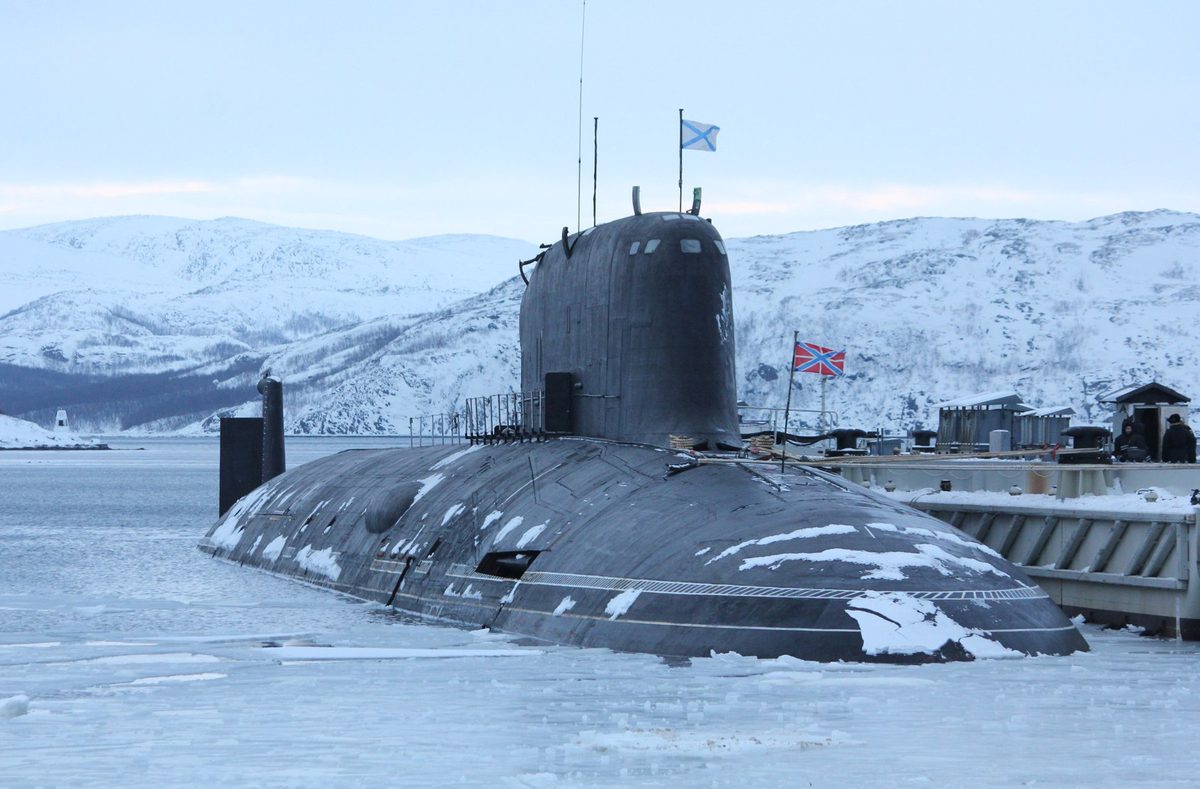
Russian Navy Yasen-class submarine K-560 Severodvinsk at sea showing its distinctive hull form
K-560 Severodvinsk, the lead ship of the Yasen class, at sea. The Yasen displaces nearly 14,000 tons submerged, larger than many surface warships. (Russian Ministry of Defense photo)

Sensors and Stealth

The acoustic competition between these two submarines is the most closely guarded secret in both navies. What is publicly known suggests the Virginia holds a significant advantage in quieting. The Virginia's pump-jet propulsor, acoustic tile coating, and machinery sound isolation systems represent decades of refinement in American submarine quieting technology. Multiple independent assessments have concluded that the Virginia class is the quietest submarine currently in service.

The Yasen is quieter than its predecessors, significantly quieter than the Akula class, but most analysts believe it remains noisier than the Virginia at comparable speeds. A U.S. Navy admiral reportedly stated in 2014 that the United States was "impressed" with Severodvinsk's acoustic performance, which was widely interpreted as an acknowledgment that the gap had narrowed even if it had not closed.

In sonar performance, the Virginia's Large Aperture Bow (LAB) array and hull-mounted arrays give it exceptional passive detection capability. The LAB array replaced the traditional spherical sonar with a conformal array integrated into the bow, freeing internal volume and providing improved detection performance across a wider frequency band. Virginia-class submarines also carry the TB-29A thin-line towed array, which extends behind the submarine and can detect extremely low-frequency sounds at ranges that remain classified.

The Yasen carries the Irtysh-Amfora integrated sonar suite, which includes a spherical bow array, flank arrays, and a towed array. While specific performance data is unavailable, the system is considered the most advanced sonar Russia has produced and represents a generational improvement over previous Russian submarine sonar technology.

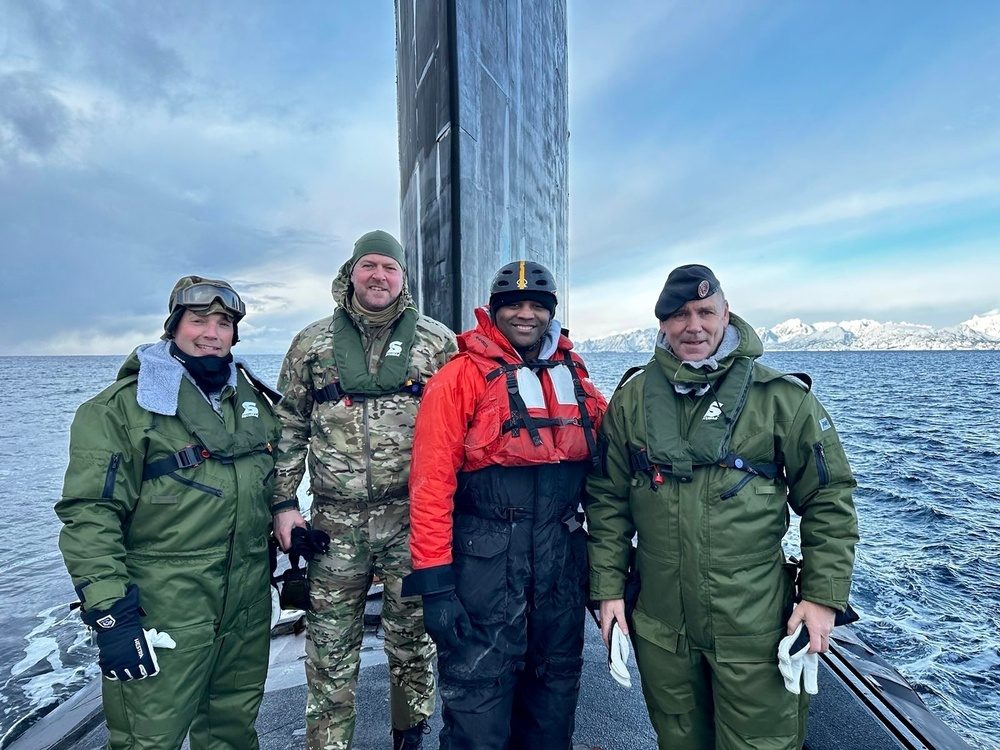
Virginia-class fast-attack submarine USS New Mexico operating in the waters off Vestfjord, Norway
USS New Mexico (SSN 779) operates off the coast of Vestfjord, Norway. Virginia-class submarines regularly patrol the North Atlantic and Arctic, the same waters where Yasen-class boats deploy. (U.S. Navy photo)

The Numbers Game

Perhaps the most decisive difference between these two programs has nothing to do with technology. It is production volume. The U.S. Navy has commissioned more than 23 Virginia-class submarines, with production continuing at a rate of roughly two boats per year from two shipyards: General Dynamics Electric Boat and Huntington Ingalls Newport News. The Navy plans to build at least 66 Virginia-class boats in total.

Russia has four Yasen and Yasen-M boats in service: Severodvinsk, Kazan, Novosibirsk, and Krasnoyarsk. Several more are under construction or fitting out, but Russian submarine production capacity is severely constrained. The Sevmash shipyard in Severodvinsk is the only facility capable of building nuclear submarines for the Russian Navy, and it is simultaneously constructing Yasen-M boats, Borei-class ballistic missile submarines, and performing maintenance on the existing fleet.

The practical result is that the U.S. Navy can deploy Virginia-class submarines across the Pacific, Atlantic, Arctic, and Indian Oceans simultaneously. Russia's small Yasen fleet must be allocated carefully, with each boat representing a disproportionately large fraction of Russia's total modern submarine capability.

The Strategic Matchup

The most likely theater for a Virginia-Yasen encounter is the North Atlantic and Arctic. Russia's Northern Fleet, based on the Kola Peninsula, must transit through the Greenland-Iceland-United Kingdom (GIUK) gap to reach the open Atlantic, the same chokepoint that defined Cold War submarine strategy. Virginia-class submarines patrol these waters regularly, and their primary mission in a conflict scenario would be to detect and track Yasen-class boats before they can reach firing positions for their cruise missiles.

The Yasen's advantage in this scenario is its weapons load. A single Yasen carrying 32 Zircon-capable VLS cells and 10 torpedo tubes represents an enormous amount of firepower. If a Yasen reaches its patrol area undetected, it can threaten surface ships, land targets, and undersea infrastructure from positions that may take days or weeks to locate.

The Virginia's advantage is institutional. The U.S. Navy has more boats, more experienced crews, better logistical support, and decades of continuous at-sea operations that have refined tactics, training, and procedures. The U.S. submarine force has operated nuclear submarines continuously since 1955. Russia's submarine force endured a catastrophic decline in the 1990s and early 2000s that reduced at-sea operations to a fraction of Soviet-era levels, and crew experience suffered accordingly.

USS Virginia SSN-774 transiting the Thames River approaching Naval Submarine Base New London
USS Virginia (SSN 774) makes her way up the Thames River toward Naval Submarine Base New London, Connecticut. The Virginia class has been in continuous production since the early 2000s. (U.S. Navy photo)

What the Comparison Reveals

Comparing the Virginia and Yasen illuminates the different strategic priorities of their respective navies. The United States builds hunter-killers because its primary undersea mission is sea control: dominating the ocean depths to protect carrier strike groups, ensure freedom of navigation, and deny adversaries the ability to operate submarines undetected. The Virginia is the tool for that mission: quiet, sensor-rich, and produced in numbers that allow global coverage.

Russia builds the Yasen because its strategic problem is different. Russia cannot match the U.S. Navy ship-for-ship on the surface. But a single Yasen carrying hypersonic anti-ship missiles can threaten an entire carrier battle group from hundreds of miles away, creating a threat that the surface fleet must respect and defend against even if the submarine never fires. The Yasen's massive weapons load is designed to make each boat count, compensating for the small number of hulls with overwhelming per-unit lethality.

Neither submarine is definitively "better." They are optimized for different missions within different strategic contexts. What is clear is that both represent the pinnacle of their respective nations' submarine engineering, and any encounter between them, should one ever occur outside of exercises and simulations, would test the limits of underwater combat in ways that neither navy has experienced since the Cold War ended.

Share this article

Share:

Recommended

Ace of The Skies: Can You Identify These Military Aircraft Throughout The Years?
Test Yourself

Ace of The Skies: Can You Identify These Military Aircraft Throughout The Years?

Can you identify these aircraft?

Take the Quiz

On This Day in Military History

April 11

Truman Relieves General MacArthur (1951)

President Harry S. Truman relieved General of the Army Douglas MacArthur of all commands in Korea and the Far East, replacing him with General Matthew Ridgway. MacArthur had publicly contradicted administration policy by advocating for attacks on China. The firing was a landmark assertion of civilian control over the military.

1945, Liberation of Buchenwald Concentration Camp

See all 10 events on April 11

Get Military News & History in Your Inbox

Join thousands of readers receiving our weekly digest of military technology, history, and analysis.

Test Your Knowledge