Skip to content
April 23:The Zeebrugge Raid108yr ago

Israel's Trophy APS Has Stopped 5,400+ Anti-Tank Attacks. No Other System Has Broken 1,000.

David Kowalski · · 10 min read
Save
Share:
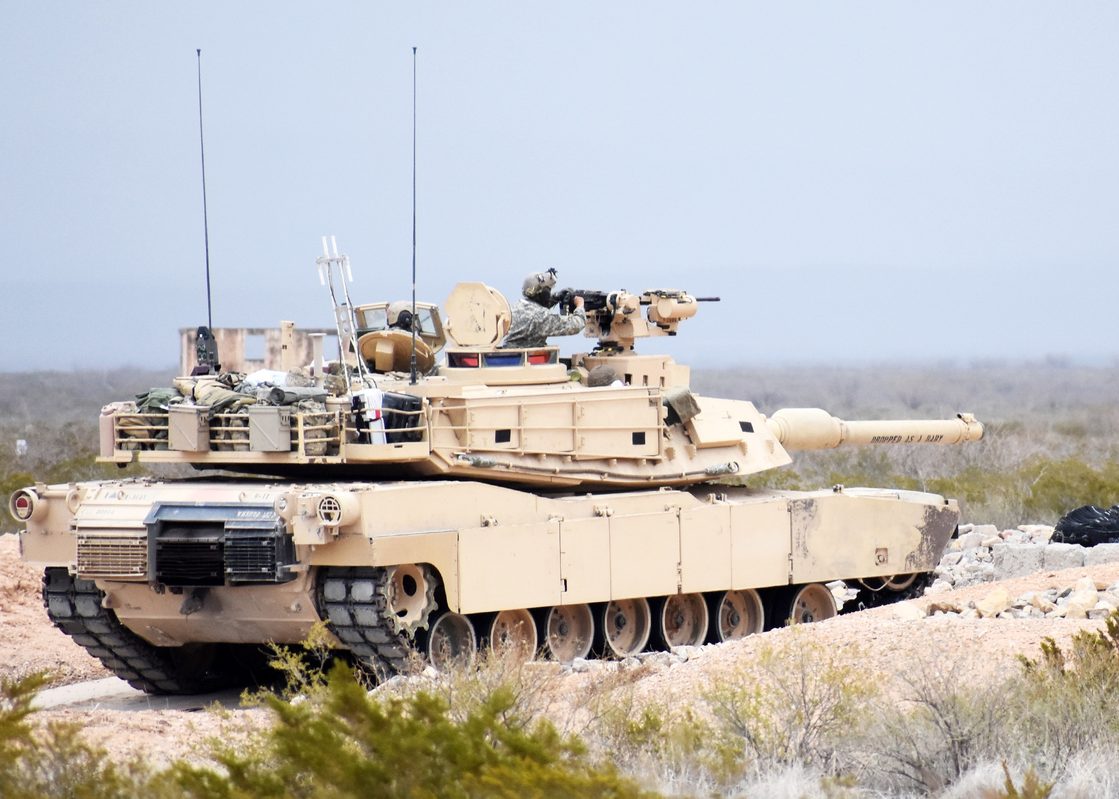
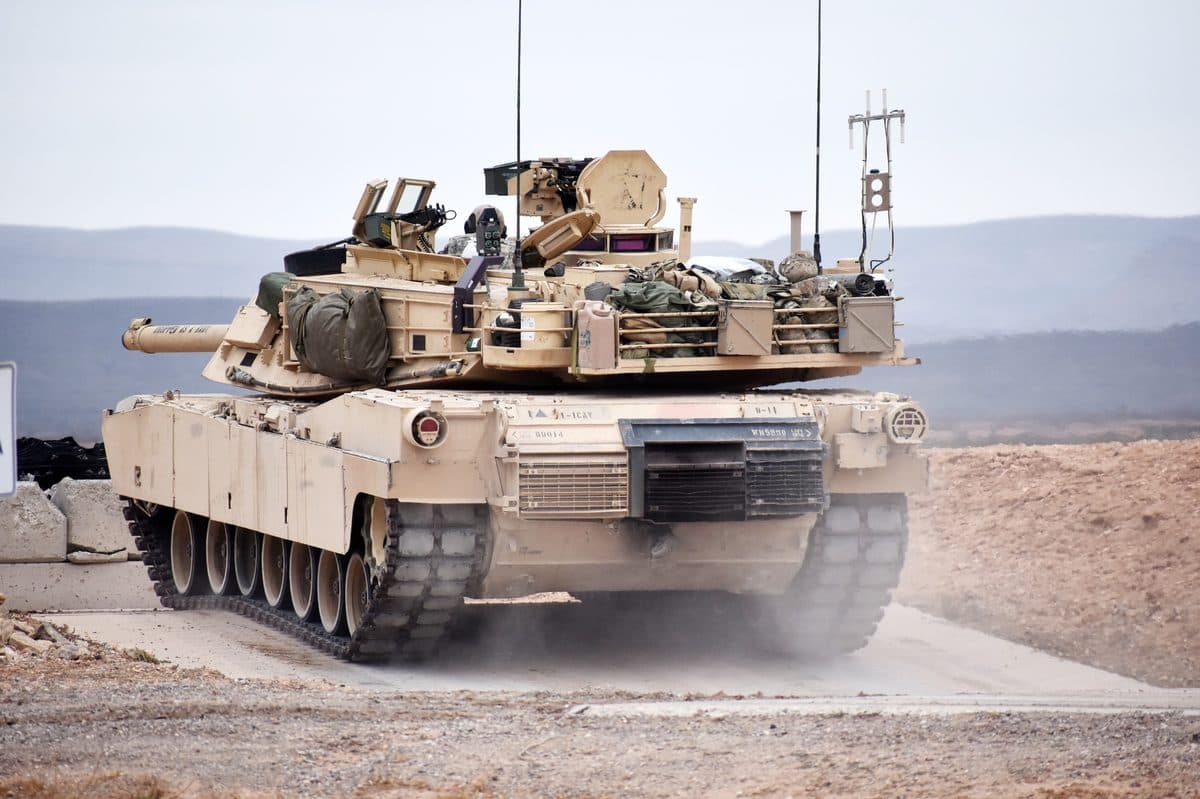
M1 Abrams tank equipped with Trophy Active Protection System during field testing at Fort Bliss showing the distinctive radar panels
David Kowalski
David Kowalski

Missile Systems & Air Defense Contributor

David Kowalski writes about missile systems, air defense networks, and the technology behind precision strike warfare. His work examines how offensive and defensive missile capabilities shape the balance of power between nations.

According to the Israel Defense Forces, 5,400 anti-tank attacks have been stopped, with zero crew killed in a Trophy-equipped tank. Rafael Advanced Defense Systems' Trophy Active Protection System, designated ASPRO-HV in its military configuration, has compiled the most extraordinary combat record of any defensive system in modern armored warfare. Mounted on Israel's Merkava IV tanks, Trophy has intercepted rocket-propelled grenades, anti-tank guided missiles, and recoilless rifle rounds in thousands of engagements across multiple conflicts. The system detects an incoming projectile, calculates the precise intercept point, and fires a directed countermeasure to destroy the threat, all in less than one-tenth of a second. No crew action required. No warning needed. The tank absorbs the attack and keeps moving.

How Trophy Works

Trophy is a "hardkill" active protection system, meaning it physically destroys incoming threats rather than attempting to divert them with smoke, decoys, or electronic jamming (which are "softkill" methods). The system consists of four flat-panel radar antennas, two on each side of the turret, and two rotating countermeasure launchers.
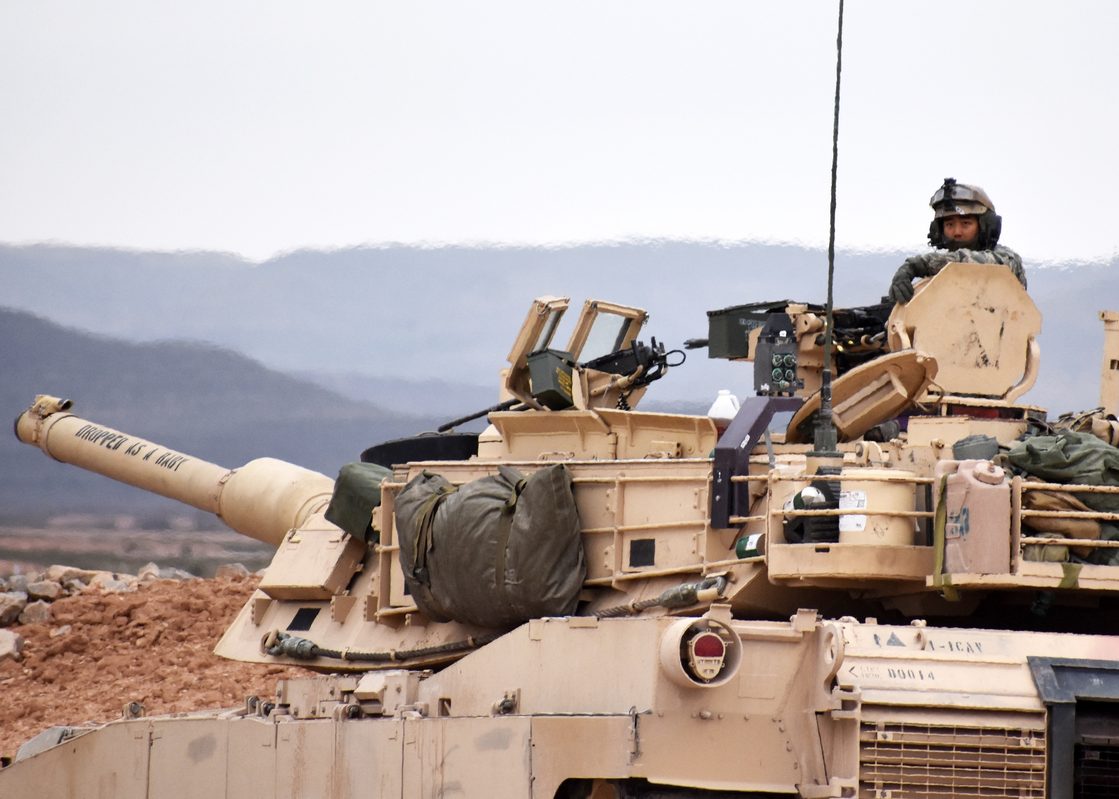
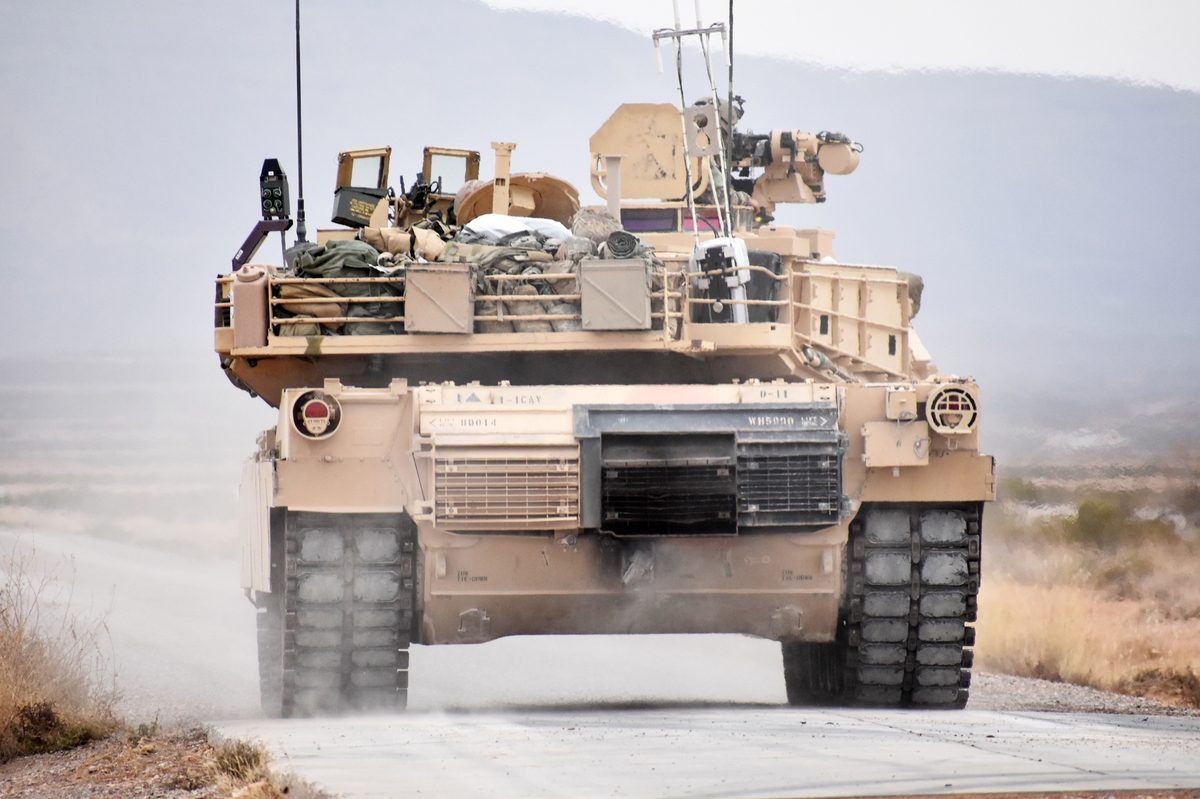
U.S. Army soldiers testing the Trophy Active Protection System on an M1A2 SEPv2 Abrams tank at Fort Bliss
Soldiers from 1st Squadron, 1st Cavalry Regiment test Trophy APS on an M1A2 Abrams at Fort Bliss, Texas. The system's radar panels are visible on the turret sides. (U.S. Army photo)

The engagement sequence begins when the radar detects an incoming projectile. Trophy's EL/M-2133 windguard radar provides continuous 360-degree coverage around the tank, scanning for objects approaching at speeds consistent with anti-tank weapons, typically between 100 and 400 meters per second. When the radar detects a threat, the fire control computer classifies it (distinguishing a rifle bullet from an RPG, for example), calculates its trajectory, and determines the precise intercept point.

The countermeasure launcher then rotates to the correct azimuth and fires a Multiple Explosively Formed Penetrator (MEFP) charge, essentially a focused blast of high-velocity metal fragments directed at the incoming projectile. The fragments hit the threat and either detonate its warhead prematurely (at a safe distance from the tank) or destroy its structural integrity so that it tumbles and breaks apart before reaching the armor. The entire process, detection, classification, trajectory calculation, launcher rotation, and firing, takes less than 100 milliseconds.

The Combat Record

Trophy was first deployed operationally on the Merkava IV in 2009 and saw its first confirmed combat intercept in March 2011, when it destroyed an RPG-29 fired at an Israeli tank near the Gaza border. Since then, the system has been engaged in every major Israeli military operation involving armored forces, including Operations Protective Edge (2014), Guardian of the Walls (2021), and Swords of Iron (2023-2024).

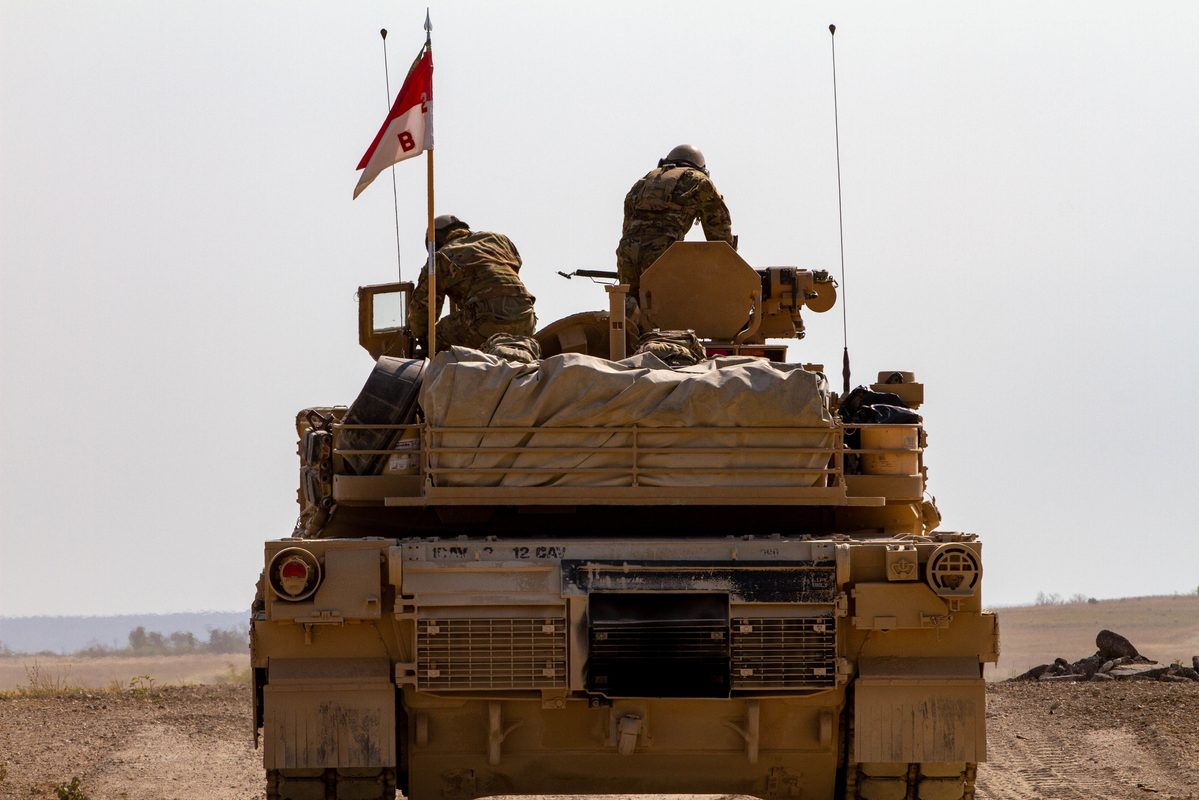
M1 Abrams tank with Trophy APS installed during evaluation testing in a desert environment
An M1 Abrams with Trophy APS installed during evaluation testing. The U.S. Army selected Trophy as its interim active protection solution for the Abrams fleet. (U.S. Army photo)

The Israel Defense Forces credit Trophy with over 5,400 successful intercepts across these operations, a figure that has not been independently verified but is widely cited in defense reporting. Per IDF reporting, the intercepts include RPG-7 rounds, RPG-29 tandem warheads, Kornet anti-tank guided missiles, Metis-M missiles, and various recoilless rifle rounds. No crew member in a Trophy-equipped Merkava has been killed by an anti-tank weapon that the system engaged, according to the IDF. This is not a laboratory statistic, it is a combat record compiled across thousands of engagements in urban combat, where tanks face ambushes from multiple directions simultaneously.

During Operation Swords of Iron, Trophy-equipped Merkava IV tanks operated extensively in dense urban environments in Gaza, where anti-tank teams fired RPGs and ATGMs from buildings, tunnels, and concealed positions at extremely close range. The system proved effective even in these conditions, intercepting threats fired from as close as 10 to 15 meters. The combination of Trophy's 360-degree coverage and its sub-100-millisecond response time meant that even surprise attacks from close range were defeated before the warhead reached the tank.

The U.S. Army Adopts Trophy

In 2018, the U.S. Army selected Trophy as its interim active protection system for the M1A2 SEPv3 Abrams. The decision was driven by urgency, the Army recognized that the proliferation of advanced ATGMs, particularly the Russian Kornet and Iranian-supplied weapons used by Hezbollah and various proxy forces, had made reactive armor alone insufficient for tank protection.

The first U.S. Army brigade combat team equipped with Trophy-equipped Abrams tanks was declared operational in 2021. The Army plans to equip four armored brigade combat teams with Trophy-integrated Abrams tanks, covering the most likely deployment scenarios. Integration required modifications to the Abrams turret to accommodate Trophy's radar panels and countermeasure launchers, but the system was designed for modularity, it can be installed on multiple platform types without fundamental redesign.

What Trophy Cannot Stop

M1 Abrams main battle tank in a field exercise showing its 120mm smoothbore main gun
An M1 Abrams during a field exercise. Trophy protects against chemical-energy anti-tank weapons, but kinetic energy penetrators from tank guns remain outside its capability. (U.S. Army photo)

Trophy is designed to defeat chemical-energy anti-tank weapons, RPGs, ATGMs, HEAT rounds, and recoilless rifle projectiles that use shaped-charge warheads to penetrate armor. These weapons all share a common characteristic: they rely on a precisely shaped explosive charge to generate a superplastic jet of metal that burns through armor. Trophy's countermeasure disrupts this process by detonating the warhead prematurely or destroying the shaped-charge geometry before it can form the penetrating jet.

Kinetic energy penetrators, specifically the armor-piercing fin-stabilized discarding sabot (APFSDS) rounds fired by modern tank guns, are a fundamentally different problem. An APFSDS round is a solid dart of depleted uranium or tungsten, approximately 2 centimeters in diameter and 60 centimeters long, traveling at 1,700 meters per second. It has no warhead to detonate prematurely and no shaped charge to disrupt. Its penetrating power comes entirely from its mass and velocity. Trophy's MEFP countermeasure can damage the dart's fins and potentially cause it to yaw, but it cannot reliably destroy a solid metal rod traveling at Mach 5. Against a tank-fired APFSDS round, the crew must rely on the tank's composite armor.

This limitation is significant but not as critical as it might seem. In modern conflicts, the vast majority of anti-tank engagements involve infantry-portable weapons, RPGs, ATGMs, and recoilless rifles, rather than tank-on-tank duels. Trophy is optimized for the most common threats, not the most powerful ones.

The Danger Zone Problem

Trophy's countermeasure creates a lethal zone around the tank when it fires. The MEFP charge sends high-velocity metal fragments outward in a cone to intercept the incoming threat. Those fragments do not discriminate between enemy projectiles and friendly infantry. Any dismounted soldier standing within approximately 50 meters of the tank on the engagement side is at risk of being struck by countermeasure fragments.

This creates a tactical problem in combined-arms operations, where infantry routinely operate near tanks for mutual support. Israeli doctrine has evolved to account for this: infantry are trained to maintain standoff distance from Trophy-equipped tanks, and tank commanders use radio to warn nearby troops when Trophy engages. The IDF considers this an acceptable tradeoff, the alternative is losing the tank and its crew to the anti-tank weapon.

Close-up of Trophy APS radar panel and countermeasure launcher mounted on an M1 Abrams turret
The Trophy system's countermeasure launcher and radar panel. Each launcher rotates to the calculated intercept bearing and fires in under 100 milliseconds. (U.S. Army photo)

Hardkill vs. Softkill: Why Trophy Chose the Hard Way

Active protection systems fall into two categories. Softkill systems use smoke, decoys, lasers, and electronic jamming to confuse incoming missiles, disrupting the guidance system so the missile misses the tank. Softkill systems include the Russian Shtora, which uses infrared jammers to defeat laser-guided ATGMs, and various smoke-based systems that obscure the tank from missile seekers.

The limitation of softkill is fundamental: it only works against guided weapons. An RPG-7, which is unguided after launch, cannot be jammed or deceived. It follows a ballistic trajectory regardless of any countermeasure. Since RPGs account for the majority of anti-tank attacks in modern urban combat, a softkill-only system leaves the tank vulnerable to the most common threat.

Trophy's hardkill approach defeats everything, guided, unguided, laser-homing, wire-guided, ballistic. If it is heading toward the tank, Trophy can intercept it. This universality is why the IDF chose hardkill over softkill, and it is why the U.S. Army made the same decision. The 5,400-intercept figure cited by the IDF includes every type of anti-tank weapon in the threat inventory, not just the guided ones.

The 0.1-Second Revolution

The significance of Trophy's combat record extends beyond Israel. It has proven that hardkill active protection works at scale, in real combat, against real threats. Before Trophy, active protection was theoretical, the Soviet Union had fielded the Drozd system in the 1980s and the Arena system in the 1990s, but neither compiled a combat record remotely comparable to Trophy's. The Russian Afghanit system on the T-14 Armata has never seen combat.

Trophy has changed the mathematics of armored warfare. Before active protection, a tank's survival depended on its armor thickness, its ability to detect threats first, and the crew's speed in returning fire. With Trophy, survival depends on a computer that reacts in one-tenth of a second. The tank does not need to see the ambush coming. It does not need to know where the shooter is hiding. The system detects the incoming round after it is fired and destroys it before it arrives. Five thousand four hundred times and counting.

Share this article

Share:

Recommended

Ace of The Skies: Can You Identify These Military Aircraft Throughout The Years?
Test Yourself

Ace of The Skies: Can You Identify These Military Aircraft Throughout The Years?

Can you identify these aircraft?

Take the Quiz

On This Day in Military History

April 23

The Zeebrugge Raid (1918)

On St. George's Day, the Royal Navy launched a daring raid on the German-held Belgian port of Zeebrugge, attempting to block the canal entrance used by German U-boats. HMS Vindictive stormed the harbor mole while blockships were scuttled in the canal. Eight Victoria Crosses were awarded for the action.

1951, Battle of the Imjin River

See all 4 events on April 23

Get Military News & History in Your Inbox

Join thousands of readers receiving our weekly digest of military technology, history, and analysis.

Test Your Knowledge