Skip to content
April 22:First Poison Gas Attack at Ypres111yr ago

Why is The F-35 Called "Lightning II"?

James Holloway · Updated January 15, 2024 · 3 min read
Save
Share:
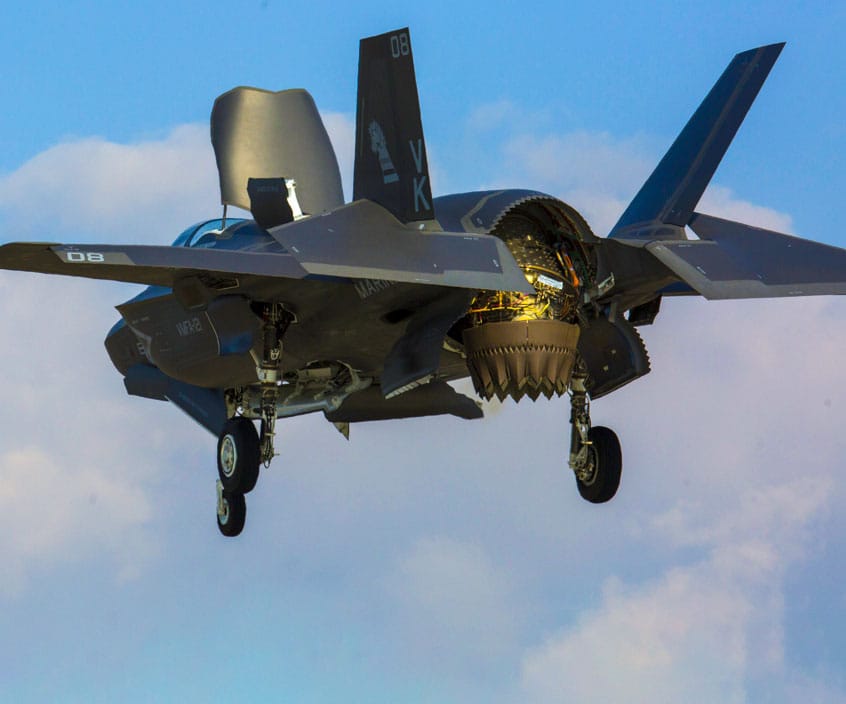
F-35 Lightning II stealth fighter in flight
James Holloway
James Holloway

Military Logistics & Sustainment Analyst

James Holloway writes about military readiness, logistics, and the practical limits of modern forces. His work focuses on how training, sustainment, and organizational decisions shape what militaries can actually do -- not just what they are designed to do on paper.

The F-35 Lightning II carries a name with deep historical significance in American military aviation. By choosing "Lightning II," Lockheed Martin connected its most advanced stealth fighter to one of World War II's most legendary aircraft.
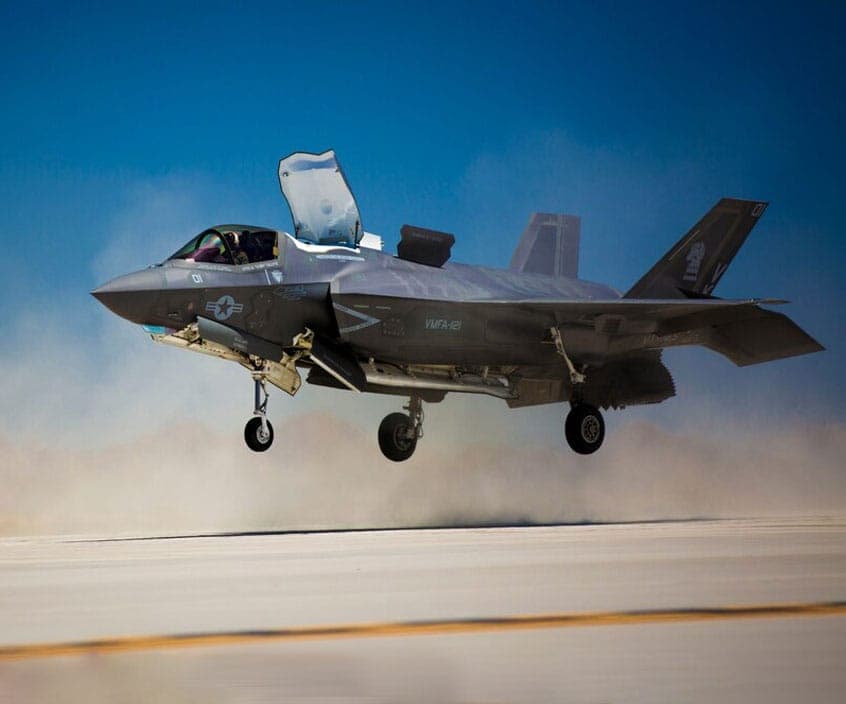
F-35 Lightning II in flight
The F-35 Lightning II continues a proud naming tradition (U.S. Air Force photo)

The Original P-38 Lightning

The Lockheed P-38 Lightning was revolutionary when it entered service in 1941. Its distinctive twin-boom, twin-engine design made it instantly recognizable. The Lightning served in every theater of World War II, excelling as a fighter, bomber escort, and reconnaissance platform.

America's top two aces, Richard Bong and Thomas McGuire, flew P-38s in the Pacific. The aircraft's range, speed, and firepower made it devastatingly effective against Japanese aircraft. When Lockheed sought a name for its new stealth fighter, this legacy offered powerful heritage to draw upon.

Why "Lightning II"?

The naming ceremony in July 2006 officially designated the F-35 as "Lightning II." The "II" acknowledges that this is the second Lockheed aircraft to bear the Lightning name, creating a direct lineage between the company's legendary past and its technological future.

Both aircraft share important characteristics despite their 65-year separation:

  • Multi-role capability: Both excel across multiple mission types
  • Technological innovation: Each represented the cutting edge of their era
  • Lockheed heritage: Both emerged from the same manufacturer's design philosophy
  • Allied partnerships: Both serve alongside international partners

International Significance

The Lightning name also resonates with international partners. The British operated both the P-38 during WWII and developed their own English Electric Lightning interceptor during the Cold War. The F-35 serves with the Royal Air Force and Royal Navy, continuing the Lightning tradition in British service.

Nine partner nations participated in F-35 development, and the aircraft now serves with air forces across NATO and allied nations. The Lightning II name helps unify these partners under a shared historical reference.

Beyond the Name

The F-35 Lightning II brings capabilities the original P-38 could never have imagined. Its stealth technology, advanced sensors, and network-centric warfare capabilities represent generational leaps in aviation technology. To see how the Lightning II measures up against the F-22 Raptor in speed, stealth, and cost, read our F-22 vs F-35 head-to-head comparison.

Learn more about how the F-35 compares to other aircraft in our F-15 vs F-35 comparison or explore the F-35's overall capabilities.

The Lightning II name bridges generations of American air power. When pilots fly the F-35 today, they carry forward a legacy that began with the distinctive twin-boomed P-38 over 80 years ago.

Share this article

Share:

Recommended

Ace of The Skies: Can You Identify These Military Aircraft Throughout The Years?
Test Yourself

Ace of The Skies: Can You Identify These Military Aircraft Throughout The Years?

Can you identify these aircraft?

Take the Quiz

Get Military News & History in Your Inbox

Join thousands of readers receiving our weekly digest of military technology, history, and analysis.

Test Your Knowledge