
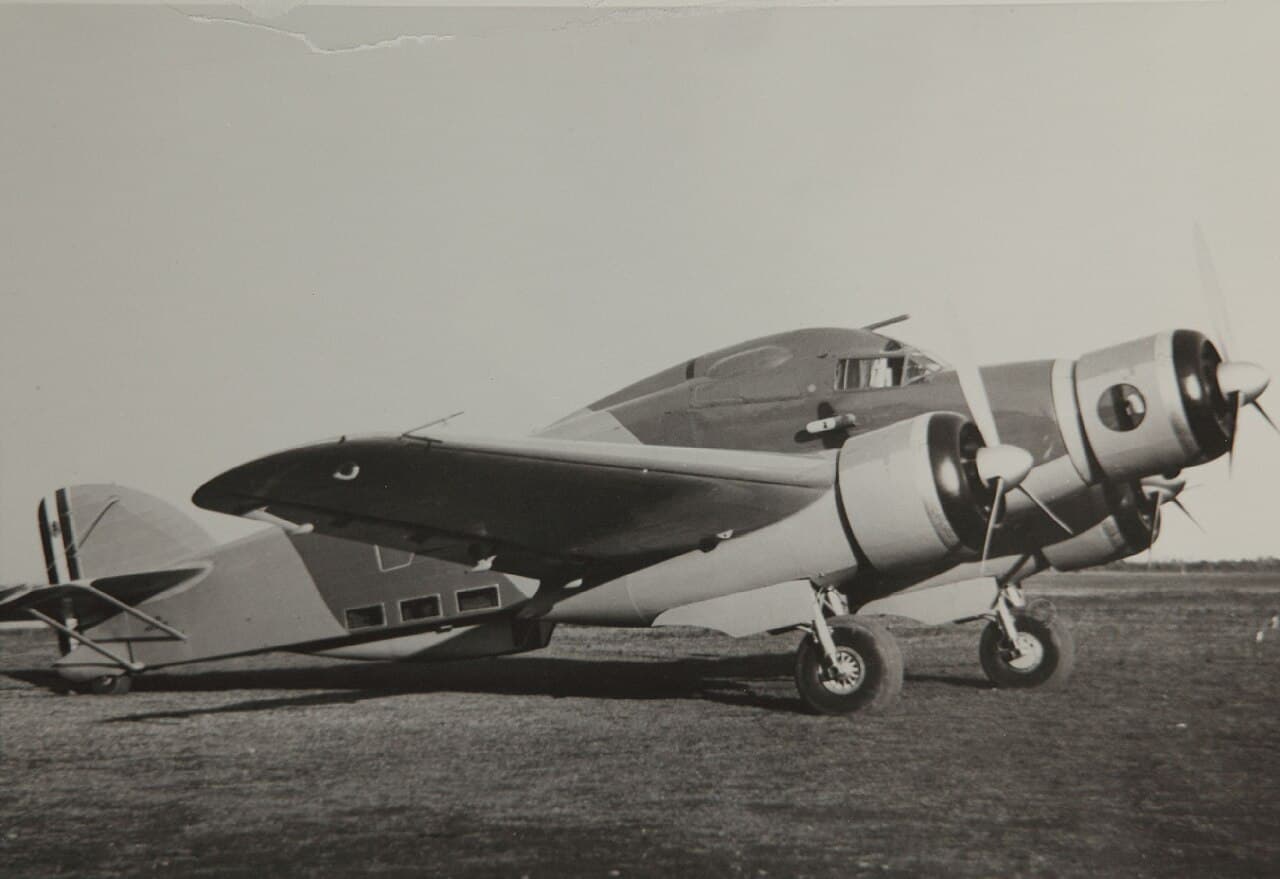
Savoia-Marchetti SM.79 Sparviero
Savoia-Marchetti
How does the SM.79 stack up?
CompareOverview
The Savoia-Marchetti SM.79 Sparviero (Sparrowhawk) was the most important and successful Italian bomber of World War II, and arguably the finest torpedo bomber fielded by any nation during the conflict. Its distinctive hunchbacked fuselage, three-engine configuration, and fixed landing gear gave it an archaic appearance by 1940 standards, but beneath that ungainly exterior lay an aircraft of remarkable performance, structural toughness, and, in the torpedo attack role, lethal effectiveness.
Originally designed as a fast passenger transport and record-breaking racer in the mid-1930s, the SM.79 was adapted into a bomber that first proved itself during the Spanish Civil War. It was in the Mediterranean from 1940 onwards, however, that the Sparviero found its true calling as a torpedo bomber. Operating at wave-top height against heavily defended British convoys, SM.79 crews pressed home attacks with extraordinary courage and skill, sinking or damaging dozens of Allied warships and merchant vessels.
The SM.79 accounted for more Allied naval tonnage than any other Axis aircraft in the Mediterranean theater, earning it the respect, and dread, of Royal Navy sailors who nicknamed it "il Gobbo Maledetto" (the Damned Hunchback). Over 1,330 were produced across multiple variants, making it the backbone of Italy's bomber and torpedo forces from 1940 to 1943.
Performance Profile
Max Speed
267 mph
at 13,120 ft
Range
1,180 miles
normal
Service Ceiling
23,360 ft
Rate of Climb
1,312 ft/min
Armament
4 guns
3x 12.7mm Breda-SAFAT, 1x 7.7mm Lewis
Crew
5
Engine
Piaggio P.XI RC.40
1000 hp radial
Development History
The SM.79 began life in 1934 as an eight-passenger commercial transport designed by Alessandro Marchetti for Savoia-Marchetti. Powered by three engines in the configuration that would become the aircraft's trademark, two wing-mounted and one in the nose, the prototype first flew on October 8, 1934, and immediately demonstrated exceptional performance, setting multiple speed and distance records during 1935-37 that brought international prestige to Italian aviation.
The Italian Air Ministry recognized the type's military potential and ordered a bomber variant with a ventral bomb bay, defensive gun positions, and a distinctive dorsal "hump" housing the bombardier's position. The SM.79-I entered service in October 1936 and was immediately deployed to Spain with the Aviazione Legionaria, where it proved highly effective as a medium bomber, its speed often allowing it to outrun Republican fighters.
The torpedo-bomber variant that would define the SM.79's legacy emerged in 1939-40 when the Regia Aeronautica began experimenting with aerial torpedo delivery. The SM.79 proved ideally suited to the role: its three-engine configuration provided the power and asymmetric-flight safety needed for low-level overwater attacks, while its robust airframe could absorb the punishment inherent in flying through a warship's anti-aircraft barrage. The SM.79-II, optimized for torpedo operations, became the definitive wartime variant.
Production continued throughout the war, with later variants replacing the troublesome three-engine layout with a twin-engine configuration (SM.79-III) that actually improved performance. However, the three-engined variants remained more numerous and saw the majority of combat. The SM.79's wooden-and-steel-tube construction, while considered obsolescent by some critics, proved remarkably resistant to battle damage and was well-suited to Italian manufacturing capabilities.
Combat History
The SM.79 Sparviero's war began on the first day of Italian hostilities, June 10, 1940, with bombing raids against targets in southern France and Malta. As a conventional level bomber, the SM.79 was competent but unexceptional, its speed provided some protection, but its modest bomb load and lack of heavy defensive armament made it vulnerable to modern fighters.
It was in the torpedo attack role that the Sparviero became legendary. Beginning in late 1940, specialized torpedo squadrons, the Aerosiluranti, began attacks against British Mediterranean convoys that would continue for three years and inflict devastating losses. The Battle of the Mediterranean convoys was a grinding attritional struggle, and SM.79 torpedo bombers were at the heart of it. Operating in small formations at wave-top height, Sparviero crews launched their torpedoes at ranges often under 1,000 yards from heavily defended warships, enduring walls of anti-aircraft fire to press home their attacks.
The Sparviero's most famous actions include the attacks on Operation Pedestal (the August 1942 Malta convoy), where SM.79 torpedo bombers played a central role in the destruction of nine out of fourteen merchant ships and the aircraft carrier HMS Eagle. During Operation Harpoon in June 1942, SM.79s sank or damaged multiple ships in one of the most intense air-naval battles of the Mediterranean war. The Royal Navy came to regard the Italian torpedo bombers with deep respect, acknowledging that they were the most dangerous aerial threat to British shipping in the Mediterranean, more effective than either the Luftwaffe's conventional bombers or the Regia Aeronautica's own level bombing units.
Sparviero crews paid a terrible price for their effectiveness. Torpedo attack was one of the most dangerous missions in aerial warfare, requiring a steady, predictable approach at low altitude and slow speed directly into the teeth of a warship's anti-aircraft defenses. Casualty rates among Aerosiluranti squadrons were staggeringly high, and many of Italy's most skilled torpedo pilots were killed during 1941-43. By the time of the armistice, the surviving SM.79 force was a shadow of its former strength, but its combat record in the anti-shipping role was unmatched by any Italian aircraft.
Variants
| Designation | Key Differences | Produced |
|---|---|---|
| SM.79-I | Initial production bomber variant with three Alfa Romeo 126 RC.34 engines (780 hp each). Used in Spanish Civil War and early WW2 Mediterranean bombing operations. | 568 |
| SM.79-II | Definitive torpedo-bomber variant with three Piaggio P.XI RC.40 engines (1,000 hp each). Strengthened airframe, provision for two 450mm torpedoes, improved defensive armament. | 500 |
| SM.79-III | Twin-engine variant with 2x Piaggio P.XI engines, nose fairing replacing third engine. Improved forward visibility and slightly better performance. Late-war production. | 100 |
| SM.79B | Twin-engine export variant with various engine options. Sold to Romania, Yugoslavia, Brazil, and Iraq. Featured a glazed nose in place of the central engine. | - |
| SM.79JR | Romanian-operated variant with two Junkers Jumo 211Da inline engines (1,220 hp each). Extensively used on the Eastern Front for bombing and reconnaissance. | - |
Strengths & Weaknesses
+Strengths
- Outstanding torpedo bomber, arguably the most effective aerial torpedo delivery platform of WW2 in the Mediterranean
- Exceptional structural toughness allowed the aircraft to absorb significant battle damage and return home
- Three-engine configuration provided safety margin over water and could maintain flight on two engines
- Good range of 1,180 miles gave operational flexibility for overwater patrol and strike missions
-Weaknesses
- Fixed landing gear created significant drag and limited maximum speed to 267 mph, slow by 1942 standards
- Light defensive armament of machine guns only, making it vulnerable to determined fighter attack
- Hunchbacked fuselage created aerodynamic drag and complicated bombardier sighting for level bombing
- Three-engine configuration added weight, complexity, and maintenance burden compared to twin-engine alternatives
Pilot Voices
“You flew straight and level at mast height toward the biggest warship you could find, with every gun on the convoy shooting at you. It took a special kind of courage, or madness.”
“The SM.79 was tough as old boots. I once brought one home with over 300 holes in it, two engines shot out, and the tail barely attached. Any other aircraft would have gone into the sea.”
Did You Know?
Before the war, SM.79 variants set 26 world aviation records for speed and distance, making it one of the most celebrated racing aircraft of the 1930s.
Royal Navy sailors nicknamed the SM.79 "il Gobbo Maledetto", the Damned Hunchback, a grudging tribute to the destruction it inflicted on Mediterranean convoys.
Romanian SM.79JR variants with German Jumo engines flew extensive bombing missions on the Eastern Front, making the Sparviero one of the few Italian aircraft to see significant combat outside the Mediterranean.
The SM.79's wooden-and-steel-tube construction was chosen partly because Italy had limited aluminum production, the same material shortages that hampered all Italian aircraft manufacturing.
Compare With

Swordfish Mk I Swordfish
🇬🇧 139 mph

TBF/TBM-3 Avenger
🇺🇸 276 mph

He 111H Pedro
🇩🇪 273 mph

Ju 88A Dreifinger
🇩🇪 292 mph