Michael Trent covers military aircraft, weapons systems, and defense technology with an emphasis on cost, maintenance, and real-world performance. He focuses less on specifications and more on how systems hold up once they are deployed, maintained, and operated at scale.
10. NH Industries NH90
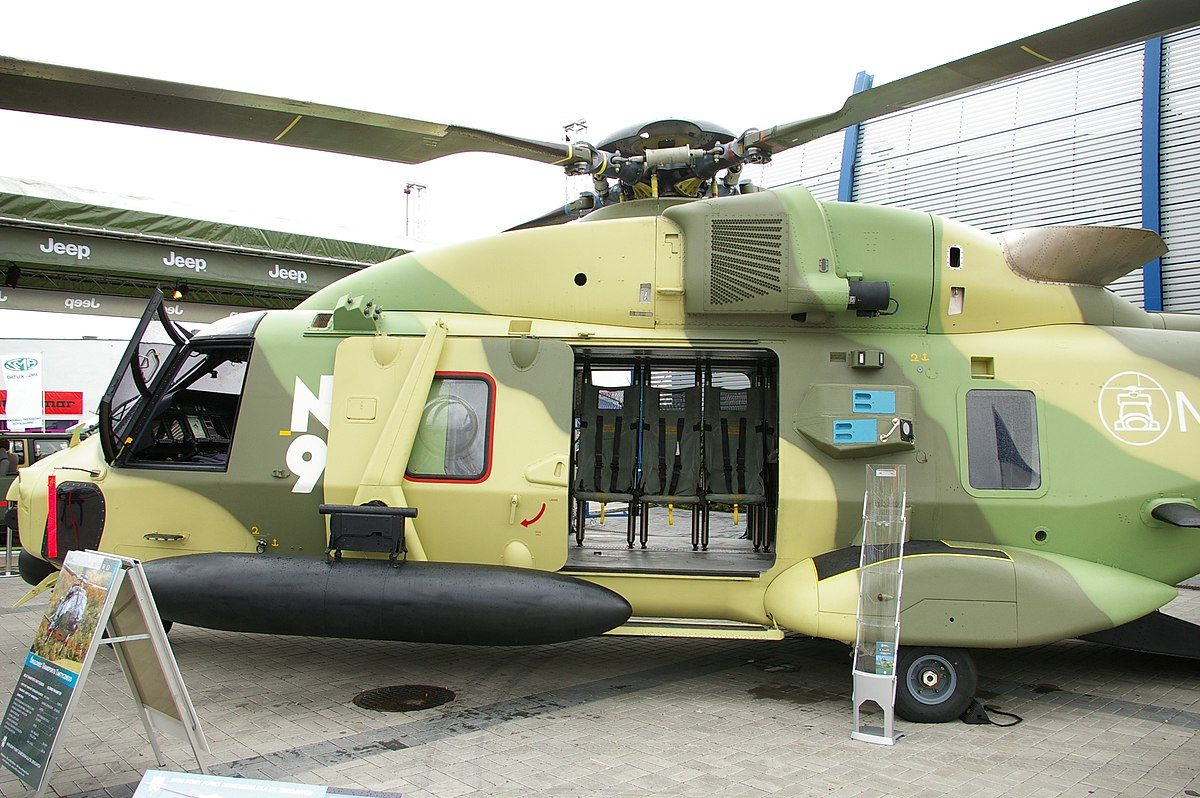
The NH90 was the first military helicopter designed with an all-composite airframe. (Photo via Wikimedia Commons)
The NH90 is what happens when four European nations decide to build one helicopter together. France, Germany, Italy, and the Netherlands launched the program in the 1980s, and the first production aircraft didn't enter service until 2006, a development timeline that tested everyone's patience. But the end result was worth the wait.
The NH90 was the first military helicopter designed from the ground up with an all-composite airframe. The fuselage, built primarily from carbon fiber and Kevlar, is lighter and more resistant to fatigue and corrosion than traditional aluminum structures. The flight control system is fully fly-by-wire, another first for a military helicopter of its class.
Two main variants serve different roles. The Tactical Transport Helicopter (TTH) carries up to 20 troops or underslung loads for army operations. The NATO Frigate Helicopter (NFH) handles maritime patrol, anti-submarine warfare, and search and rescue from naval vessels. More than 500 have been built, and the NH90 now serves with over a dozen countries across Europe, the Middle East, and the Asia-Pacific region.
9. Sikorsky CH-53E Super Stallion
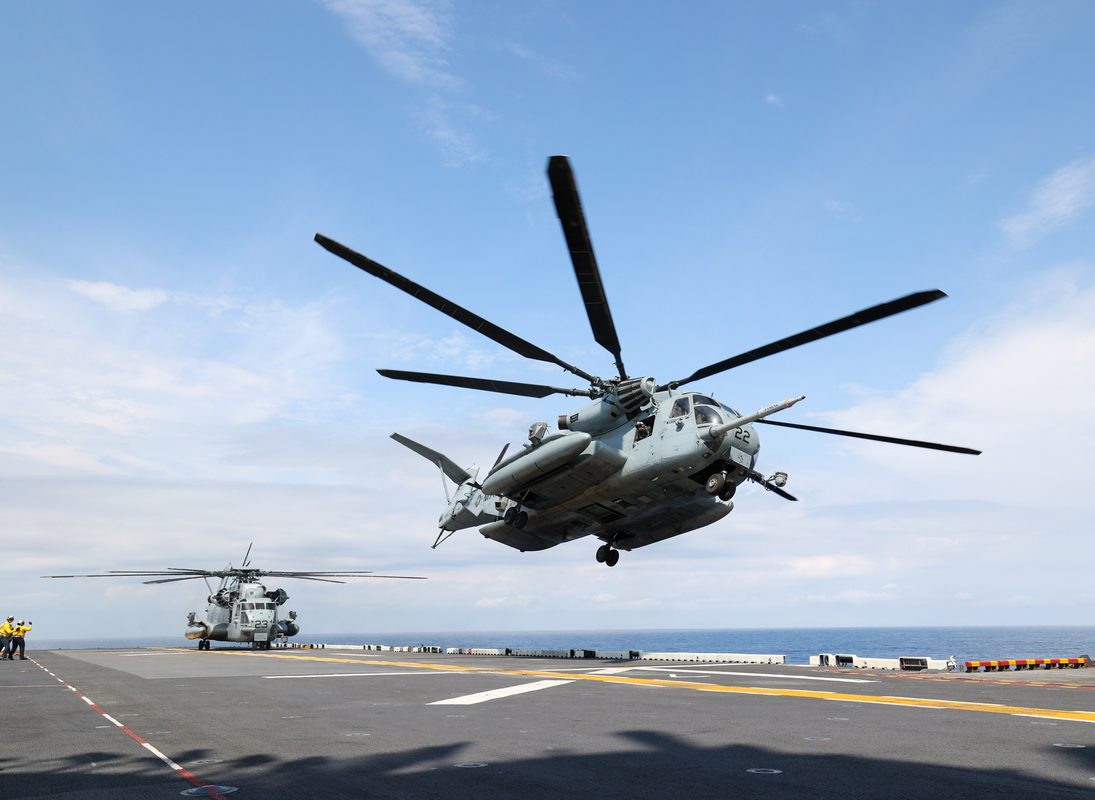
A CH-53E Super Stallion lifts off from a ship deck. The three-engine heavy lifter is the most powerful helicopter in the Western inventory. (U.S. Marine Corps photo via DVIDS)
The CH-53E Super Stallion is the heaviest helicopter in the Western military inventory. With three General Electric T64 engines producing a combined 13,140 shaft horsepower, the Super Stallion can lift 36,000 pounds of external cargo, enough to carry a Light Armored Vehicle, an M198 howitzer with its ammunition, or a downed aircraft that needs to be recovered.
The Marines have relied on the CH-53E since 1981 for the heaviest lift missions that no other Western helicopter can handle. During amphibious operations, the Super Stallion moves equipment from ship to shore faster than landing craft, delivering heavy weapons, vehicles, and supplies directly to forward positions.
The CH-53E's successor, the CH-53K King Stallion, entered service in 2024. The King Stallion triples the Super Stallion's lift capacity to 36,000 pounds over a 110-nautical-mile radius, using three new GE T408 engines producing 7,500 shaft horsepower each. But the Super Stallion earned its place on this list through four decades of lifting what nothing else could.
8. Kamov Ka-52 Alligator
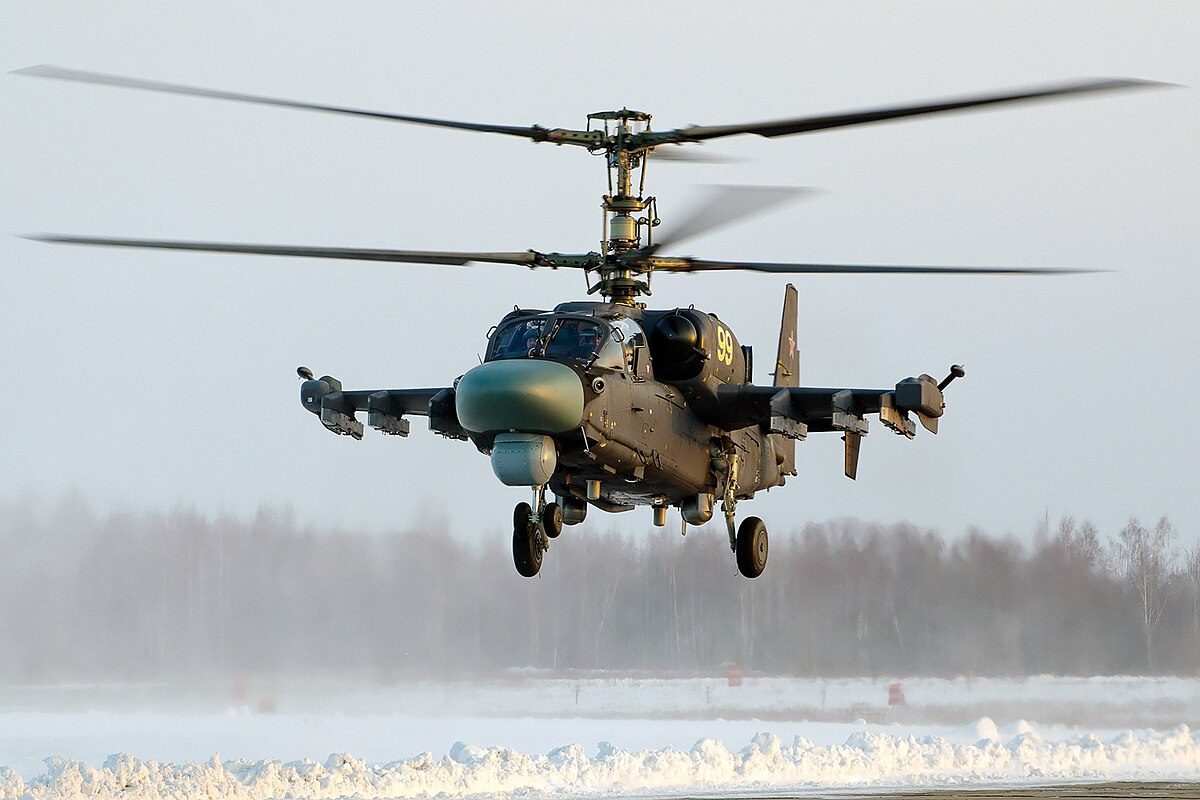
The Ka-52 Alligator's coaxial rotor system eliminates the need for a tail rotor, giving it extraordinary maneuverability. (Photo via Wikimedia Commons)
The Ka-52 Alligator stands apart from every other attack helicopter on this list for one reason: its coaxial rotor system. Two counter-rotating main rotors, stacked one above the other, eliminate the need for a tail rotor entirely. This gives the Ka-52 extraordinary maneuverability, it can perform flat turns, fly sideways at high speed, and maintain stability in crosswinds that would challenge conventional helicopters.
The side-by-side cockpit is another unconventional choice. Most attack helicopters use a tandem layout with the gunner in front and pilot behind. The Ka-52 seats both crew members next to each other, improving communication and allowing either crew member to fly the aircraft or operate the weapons. The helicopter also features the only operational ejection system in a production helicopter, explosive bolts blow the rotor blades clear before rocket-powered seats extract both crew members.
Armed with the Vikhr anti-tank missile, a 30mm cannon, rockets, and air-to-air missiles, the Ka-52 is a formidable weapons platform. It has seen extensive combat use, proving its systems under operational conditions that few other modern attack helicopters have experienced.
7. Bell AH-1 Cobra
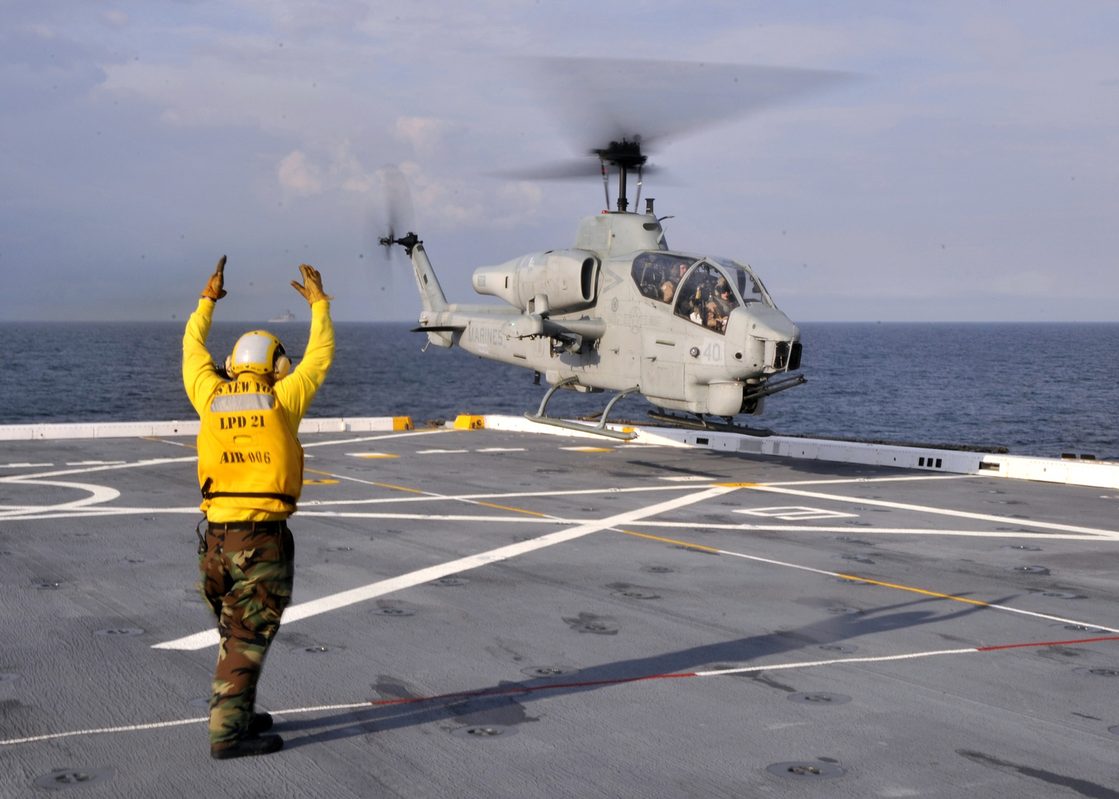
The AH-1 Cobra's narrow 36-inch fuselage was purpose-built for the attack role, the first helicopter ever designed this way. (U.S. Marine Corps photo via DVIDS)
The Bell AH-1 Cobra was the world's first dedicated attack helicopter, and its design established the template that every attack helicopter since has followed. When it arrived in Vietnam in 1967, nothing like it existed. Previous helicopter gunship conversions, armed UH-1 Hueys, were too slow, too heavy, and too vulnerable. The Army needed something purpose-built.
Bell's solution was elegant: take the proven engine, transmission, and rotor system from the UH-1 and wrap them in a completely new, narrow fuselage just 36 inches wide. The tandem cockpit put the gunner in front and pilot above and behind, giving both crew members excellent visibility while presenting the smallest possible target to ground fire. A chin-mounted turret carried a minigun or grenade launcher that the gunner could aim independently of the aircraft's flight path.
The Cobra proved the attack helicopter concept so convincingly that the Army immediately began planning a more advanced successor, which would eventually become the Apache. More than 1,100 AH-1s were built. The Marine Corps continued operating upgraded AH-1W Super Cobras and now flies the AH-1Z Viper, a thoroughly modernized descendant that still carries the Cobra lineage.
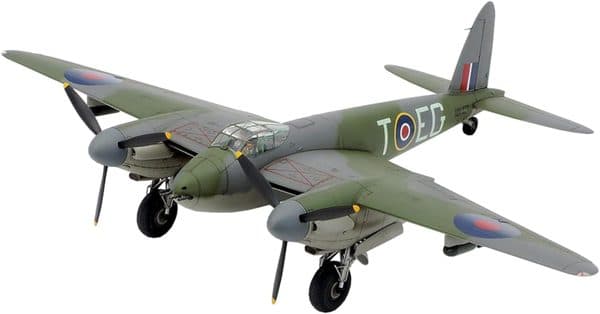
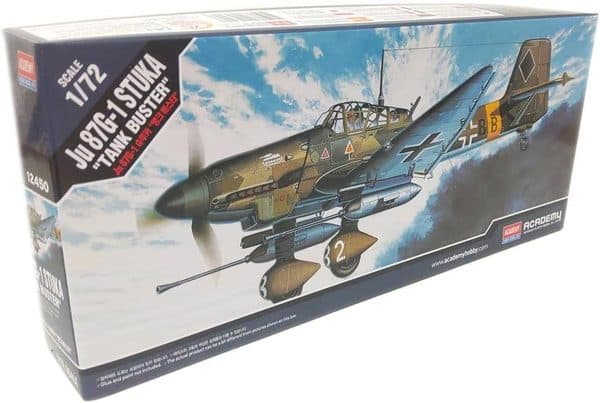
Britain's plywood multirole aircraft in 1/48 from Tamiya, with their trademark precision fit. 323 reviews at 4.6 stars. Fighter-bomber variant with four 20mm cannons and underwing ordnance.
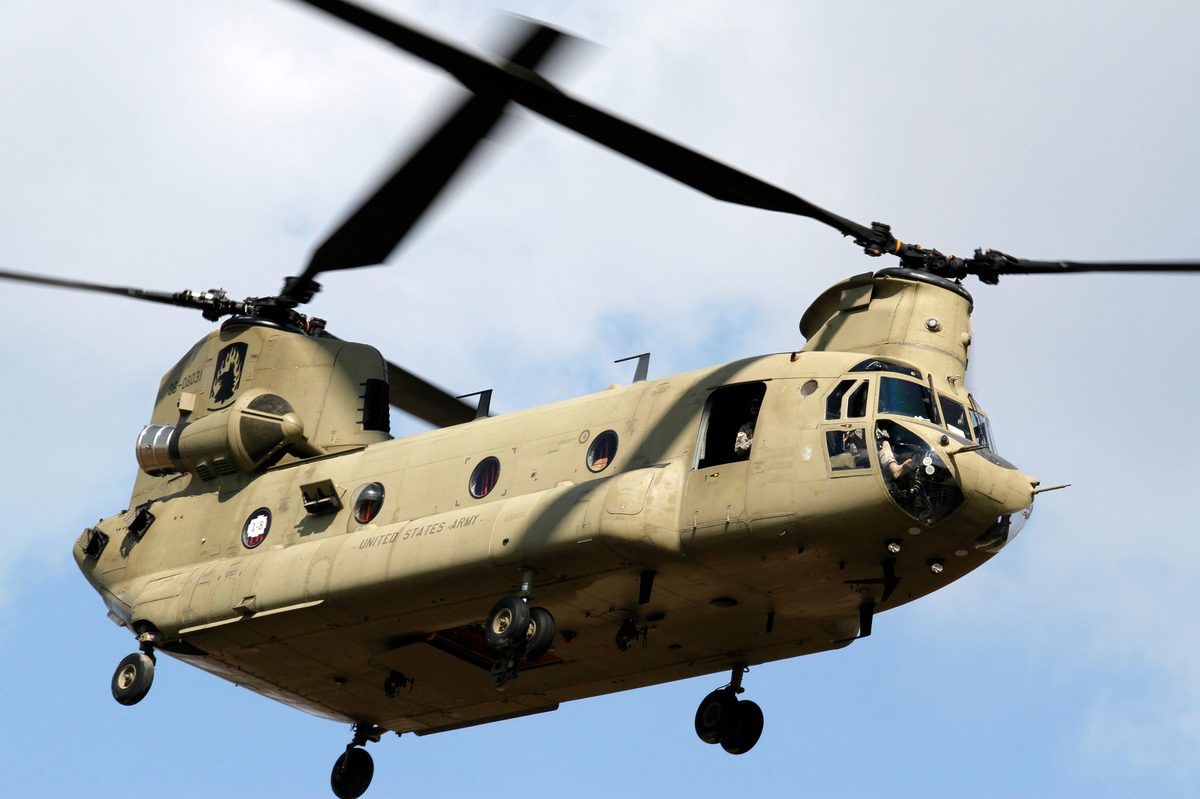
A U.S. Army CH-47 Chinook in flight. The tandem-rotor design has been hauling heavy loads since 1962 with no retirement in sight. (U.S. Army photo via DVIDS)
The CH-47 Chinook has been hauling heavy loads for the US Army since 1962, more than six decades of continuous service with no retirement in sight. Its tandem rotor design, with two fully articulated rotors spinning in opposite directions at each end of the fuselage, eliminates the need for a tail rotor and allows the full power of both engines to go directly into lift.
The numbers tell the story. The Chinook can carry up to 55 troops or 24,000 pounds of cargo. Its rear loading ramp accepts vehicles, artillery pieces, and palletized supplies. Externally, the Chinook can sling-load a 26,000-pound payload at speeds exceeding 140 knots. In the mountains of Afghanistan, Chinooks operated at altitudes above 10,000 feet that grounded most other helicopters.
More than 1,200 Chinooks have been built for customers in over 20 countries. The current production model, the CH-47F, features a digital cockpit, a more powerful drivetrain, and improved vibration dampening. Boeing continues to upgrade the design, and the Chinook is expected to remain in service past 2060, a century after the first one flew.
5. Mil Mi-24 Hind
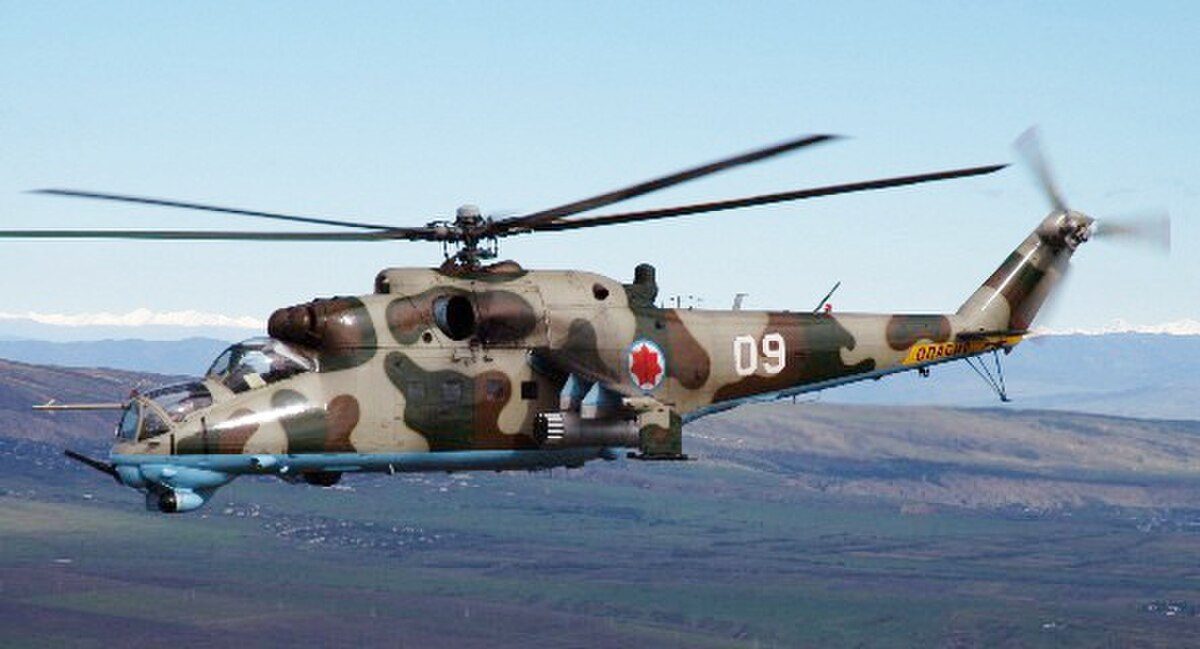
The Mi-24 Hind combined heavy firepower with a troop cabin, a flying infantry fighting vehicle that broke every rule of helicopter design. (Photo via Wikimedia Commons)
The Mil Mi-24 Hind broke every rule of helicopter design, and created something entirely new. When Soviet designers conceived the Mi-24 in the late 1960s, they wanted an aircraft that could do two things no single helicopter had done before: deliver a squad of troops into a landing zone while simultaneously providing its own fire support with heavy weapons.
The result was a helicopter that looked like nothing else. A fully armored cockpit for the two-person crew sat behind a heavy weapons package that included a 12.7mm machine gun (later a twin-barrel 30mm cannon), anti-tank missiles, rocket pods, and bombs. Behind the cockpit, a troop cabin could carry eight fully equipped soldiers. The whole package was wrapped in titanium and steel armor, powered by two massive Isotov engines, and given stub wings that generated additional lift at speed.
The Hind flew unlike any other helicopter. Its speed, over 200 mph in level flight, earned it comparisons to fixed-wing aircraft. Soviet doctrine used it as a flying infantry fighting vehicle: the Hind would suppress enemy positions with its weapons while delivering troops directly into the objective. In Afghanistan, where the Mi-24 saw its most extensive combat use, it became the most feared aircraft in the Soviet arsenal.
More than 2,600 Mi-24s were built. The helicopter has served with over 60 countries on every continent, and upgraded variants remain in active combat service today, five decades after the first Hind flew.
4. Mil Mi-26 Halo
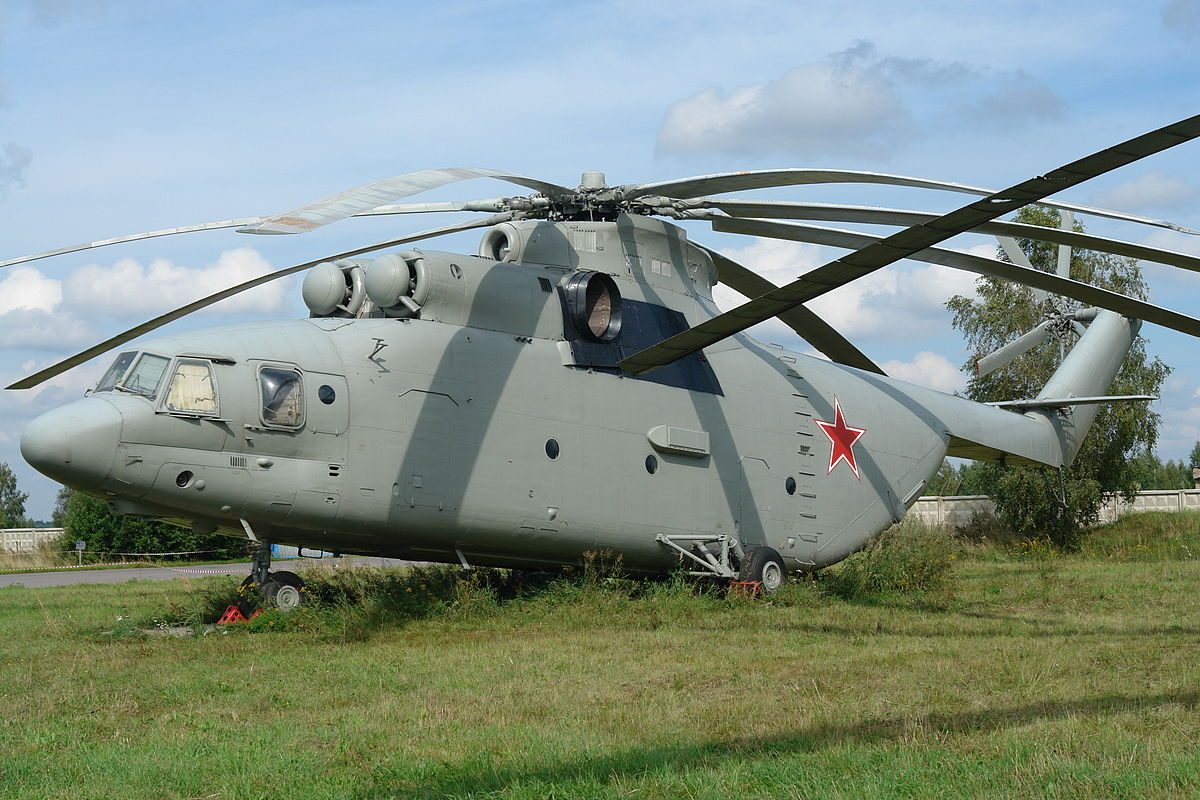
The Mi-26 Halo is the largest and most powerful helicopter ever to enter production, with a rotor span wider than a Boeing 737's wings. (Photo via Wikimedia Commons)
The Mil Mi-26 Halo is the largest and most powerful helicopter ever to enter production. Nothing else comes close. With a maximum takeoff weight of 123,500 pounds, the Mi-26 is heavier than a fully loaded C-130 Hercules transport plane. Its eight-blade main rotor spans 105 feet, wider than the wingspan of a Boeing 737.
The Mi-26's cargo cabin is roughly the same dimensions as the cargo hold of a C-130. It can carry 20 metric tons of internal cargo or 80 fully equipped troops. Externally, it can sling-load armored vehicles, missile systems, and other heavy equipment that would otherwise require fixed-wing transport or ground conveyance.
The Halo has performed feats that seem impossible for a rotary-wing aircraft. During disaster relief operations, Mi-26s have airlifted other helicopters, including CH-47 Chinooks, as slung loads. The aircraft has recovered downed planes, transported prefabricated buildings, and hauled sections of oil pipeline to remote Siberian locations unreachable by road.
First flown in 1977, the Mi-26 remains in production in upgraded form. No Western nation has ever built anything comparable. The closest American equivalent, the canceled CH-54 Tarhe, could lift barely a third of the Mi-26's payload. The Halo occupies a category of one.
3. Sikorsky UH-60 Black Hawk
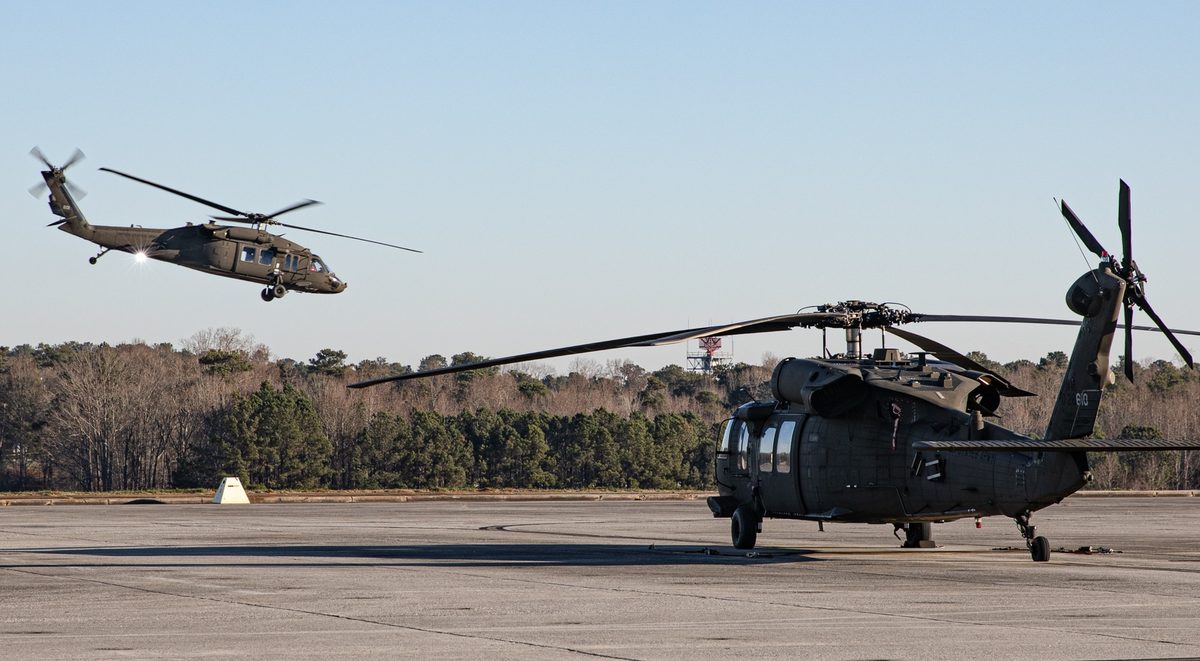
UH-60 Black Hawks at an airfield. The Black Hawk replaced the Huey as the Army's workhorse and has become the most widely used military helicopter in the West. (U.S. Army photo via DVIDS)
The UH-60 Black Hawk replaced the Huey as the US Army's primary utility helicopter in 1979, and it has since become the most widely used military helicopter in the Western world. More than 4,000 Black Hawks have been built in dozens of variants for the US military alone, with hundreds more serving in over 30 countries.
The Black Hawk was designed to survive in a far more dangerous environment than the Huey it replaced. Its airframe was engineered to withstand hits from 23mm anti-aircraft rounds. The landing gear and crew seats were designed to absorb the energy of a crash at vertical speeds up to 38 feet per second, giving the crew a realistic chance of surviving a shoot-down. Self-sealing fuel tanks, redundant flight controls, and ballistic-tolerant drive shafts added layers of survivability that Vietnam-era helicopters lacked.
The Black Hawk family includes the SH-60 Seahawk for the Navy, the HH-60 Pave Hawk for Air Force combat search and rescue, the MH-60 for special operations, and medevac, VIP transport, and electronic warfare variants. A modified MH-60 carried Navy SEALs into Abbottabad, Pakistan, in 2011 during Operation Neptune Spear. The Black Hawk has fought in every American conflict since Grenada in 1983.
2. Boeing AH-64 Apache
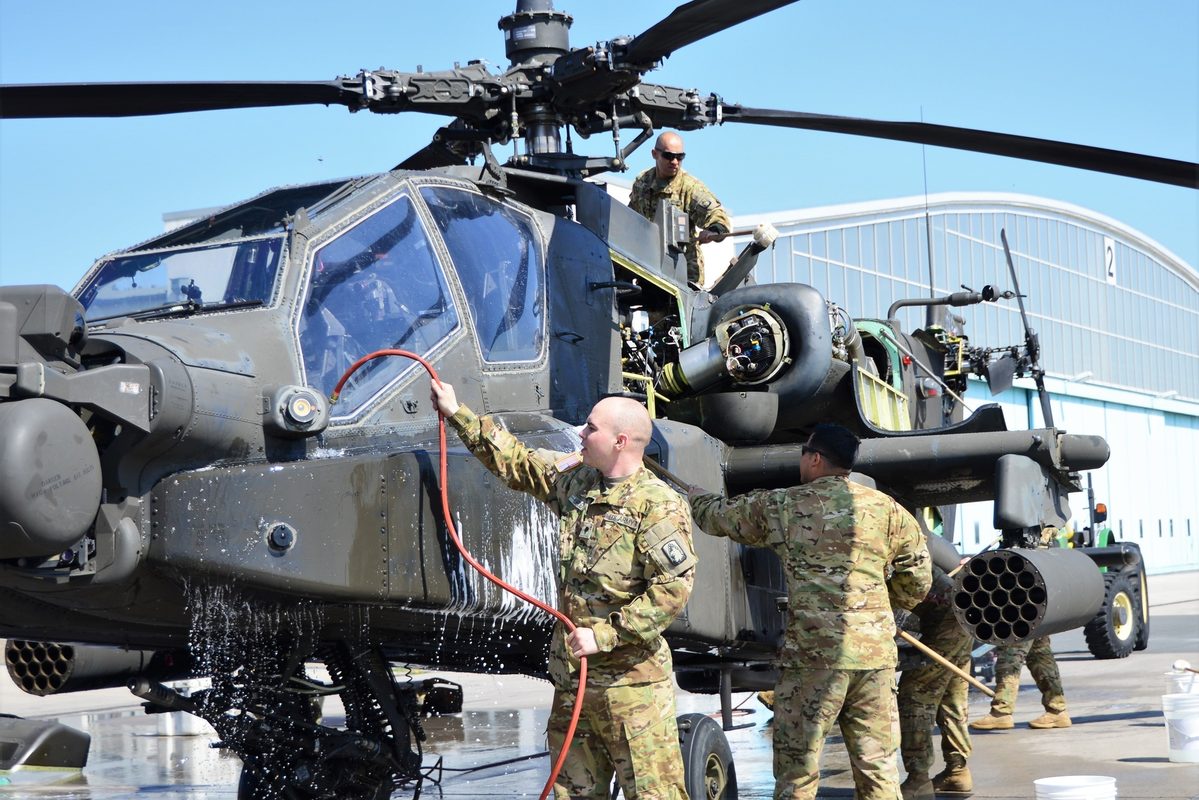
An AH-64 Apache on the flight line. The Apache's Longbow radar and Hellfire missiles make it the most lethal attack helicopter ever built. (U.S. Army photo via DVIDS)
The AH-64 Apache is the most lethal attack helicopter ever built, and its combat record proves it. During the opening hours of the 1991 Gulf War, eight AH-64As destroyed two Iraqi radar sites using Hellfire missiles and rockets, blowing a hole in Iraq's air defense network that coalition aircraft poured through. It was the first shots of the war, and the Apache had announced itself.
The Apache's capabilities center on the AN/APG-78 Longbow fire control radar mounted above the main rotor on the AH-64D and E models. The radar can detect, classify, and prioritize up to 128 targets simultaneously, then hand off targeting data to AGM-114L Longbow Hellfire missiles that guide themselves to the target autonomously. The Apache can rise just above a treeline, scan the battlefield, fire, and drop back behind cover in seconds, a tactic called "masking" that makes the helicopter extraordinarily difficult to engage.
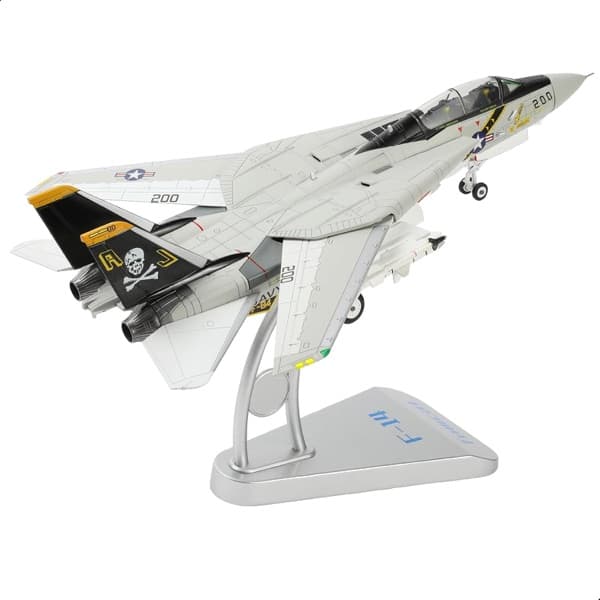
A 1:72 F-14A in the VF-84 Jolly Rogers high-visibility scheme. Features variable-sweep wings that actually move, removable Phoenix missiles, and a metal display stand.
The weapons suite includes the M230 30mm chain gun with 1,200 rounds, up to 16 Hellfire missiles, and 76 Hydra 70 rockets. The Target Acquisition Designation Sight (TADS) and Pilot Night Vision Sensor (PNVS) give the Apache full day/night and adverse weather capability. The monocle display mounted on the gunner's helmet slews the gun turret to follow head movement, wherever the gunner looks, the cannon points.
More than 2,400 Apaches have been built. The helicopter serves with 17 countries and has seen combat in Iraq, Afghanistan, Libya, Syria, and Yemen. No attack helicopter in history has destroyed more enemy armor.
1. Bell UH-1 Iroquois (Huey)
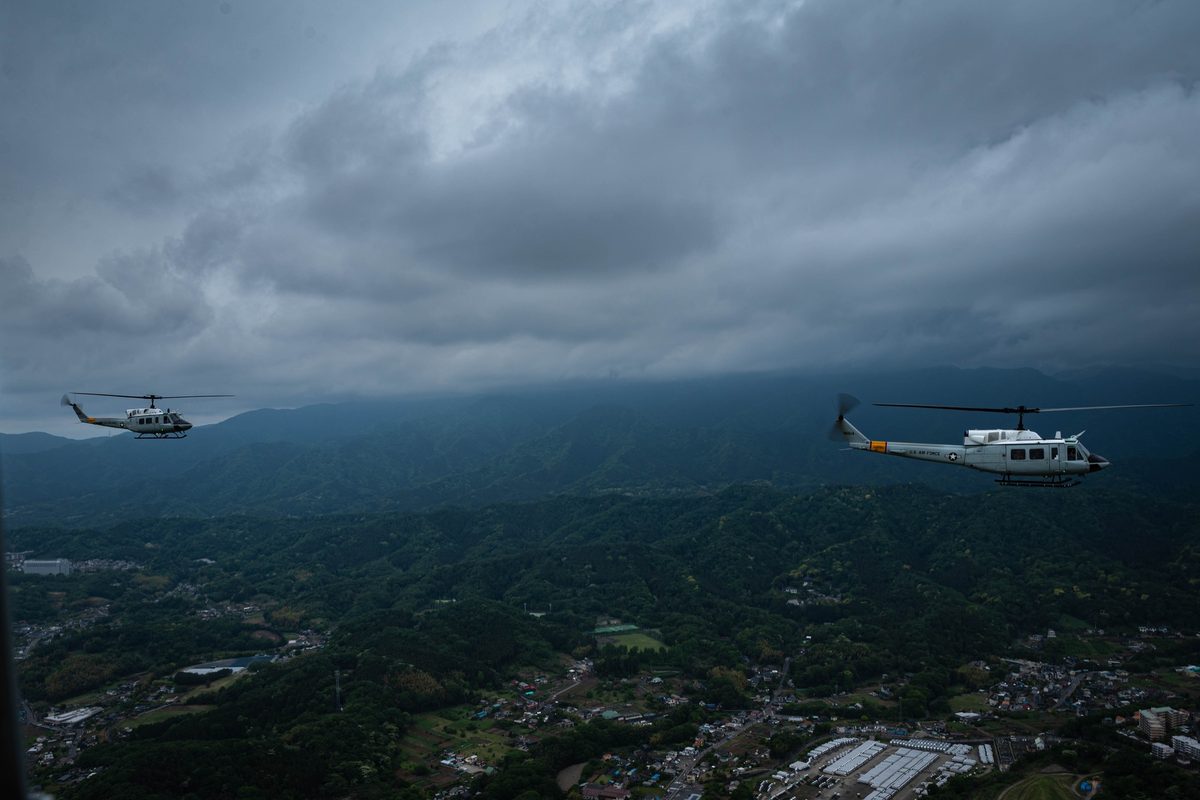
UH-1 Hueys in formation flight. The distinctive whop-whop-whop of the Huey's two-blade rotor became the defining sound of the Vietnam War. (U.S. military photo via DVIDS)
No military helicopter is more iconic than the Huey. The sound of its two-blade rotor, that distinctive whop-whop-whop that carried across the jungles and rice paddies of Vietnam, became the defining audio signature of an entire war. More than any other machine, the UH-1 Iroquois changed how armies fight.
The Huey pioneered airmobile warfare. Before the UH-1, infantry moved on foot, in trucks, or in armored vehicles. The Huey made it possible to pick up an entire company of soldiers, fly them over enemy positions, and insert them directly onto an objective, then extract them just as quickly. The 1st Cavalry Division (Airmobile) proved the concept at the Battle of Ia Drang in 1965, using Hueys to insert and resupply troops in the first major engagement between American and North Vietnamese forces.
Bell produced more than 16,000 UH-1s in all variants, an extraordinary production run that made the Huey the most-produced military helicopter until the Black Hawk eventually surpassed it in total numbers across all models. The helicopter served as a troop transport, medevac platform, gunship, command-and-control aircraft, and cargo hauler. The UH-1C and UH-1M gunship variants, armed with miniguns, rocket pods, and grenade launchers, provided close fire support before the AH-1 Cobra arrived to take over the dedicated attack role.
The Huey's impact went beyond the battlefield. The medevac mission, dustoff helicopters flying into hot landing zones to extract wounded soldiers, saved thousands of lives and fundamentally changed military medicine. The average time from battlefield injury to surgical treatment dropped from hours to minutes, and survival rates for wounded soldiers improved dramatically compared to any previous war.
The UH-1 served with the armed forces of more than 70 countries. Upgraded variants like the UH-1Y Venom still serve with the US Marine Corps today. But the Huey's legacy is not about specifications or upgrades. It defined what a military helicopter could be, and in doing so, it became the most recognizable military aircraft of the twentieth century.