#47, Battle of Hastings: The 9-Hour Bloodbath That Rewrote England's DNA
The Battle of Hastings on October 14, 1066, killed an estimated 5,000 to 12,000 soldiers in a single day, including King Harold Godwinson, whose death ended the Anglo-Saxon era. William the Conqueror's 10,000-strong Norman army, comprising heavy cavalry, archers, and infantry, attacked Harold's 7,000 Anglo-Saxon warriors arrayed in a dense shield wall atop Senlac Hill near the Sussex coast.
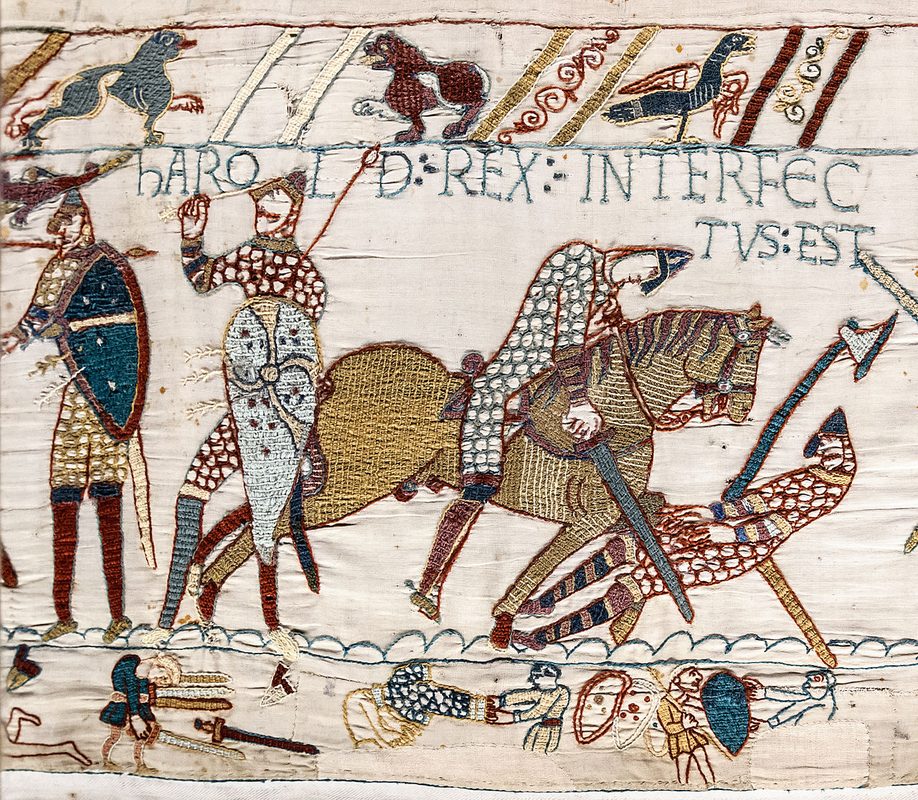
The shield wall held for nine brutal hours. Norman cavalry charges broke against the Anglo-Saxon formation repeatedly until William's troops feigned retreat, a tactic that drew impetuous English defenders down the hill to be slaughtered by wheeling horsemen. An arrow struck Harold in the eye (or so the Bayeux Tapestry suggests), and his housecarls fought to the last man around his body. Hastings wasn't just a battle, it was a complete civilizational replacement. Norman French became the language of England's ruling class, the feudal system was imposed from Scotland to Cornwall, and every English king since has traced their legitimacy back to that single bloody hillside.