IS-7: The Soviet Super-Tank That Was Too Heavy for Its Own Bridges
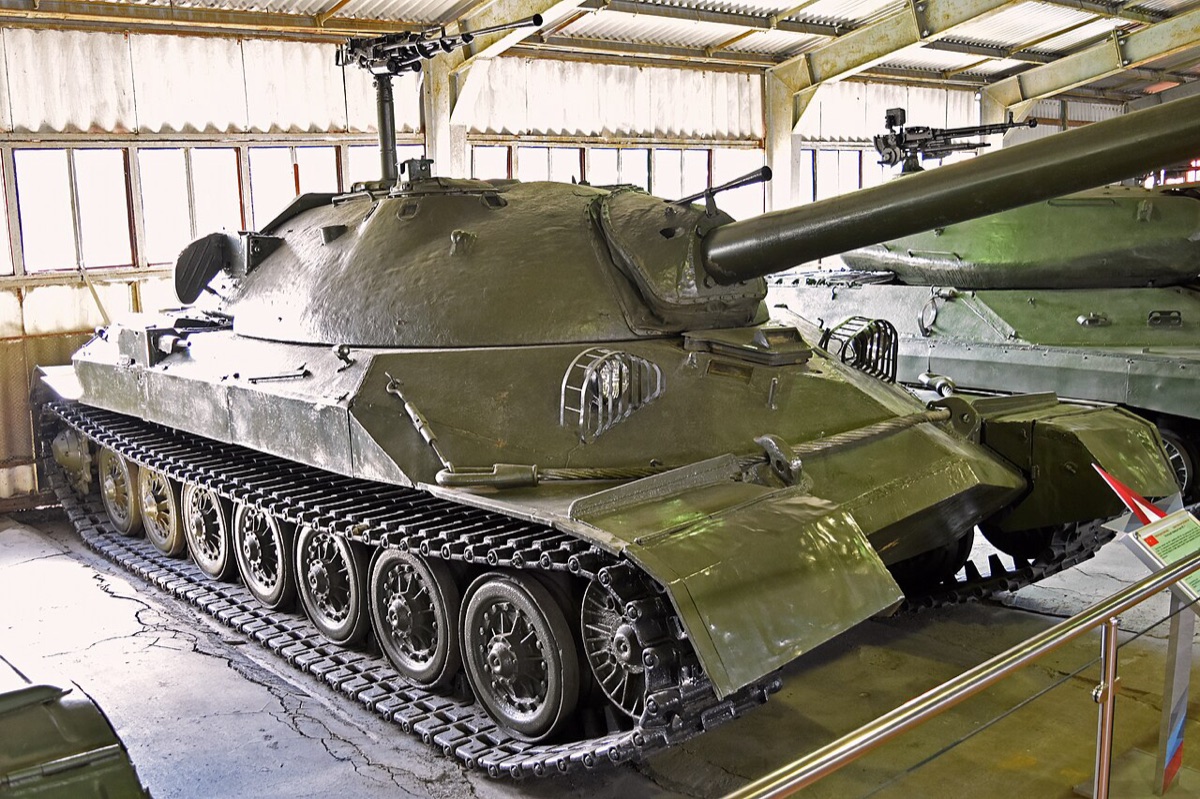
The IS-7 was the heaviest tank the Soviet Union ever built, tipping the scales at 68 tons with a 130mm naval gun, an autoloader that could fire 6-8 rounds per minute, and armor up to 300mm thick on a pike-nose hull designed for maximum shot deflection. Its 1,050-horsepower marine diesel engine gave it a respectable top speed of 60 km/h, astonishingly fast for a tank of its mass. On paper, the IS-7 was the most powerful tank in the world when its prototypes rolled out in 1948.
So why did the Soviets build only six? Because the IS-7 couldn't cross most Soviet-built bridges. At 68 tons, it exceeded the weight limit of standard military pontoon bridges and most permanent road bridges in Eastern Europe. The very territory it was supposed to defend. The logistics of supporting such a heavy vehicle were deemed impossible for a mass-production tank. The Soviet military instead chose the lighter IS-8 (T-10) for serial production. The IS-7 was shelved, its revolutionary features (autoloader, pike-nose armor, high-speed diesel) parceled out to influence later tank designs for decades.