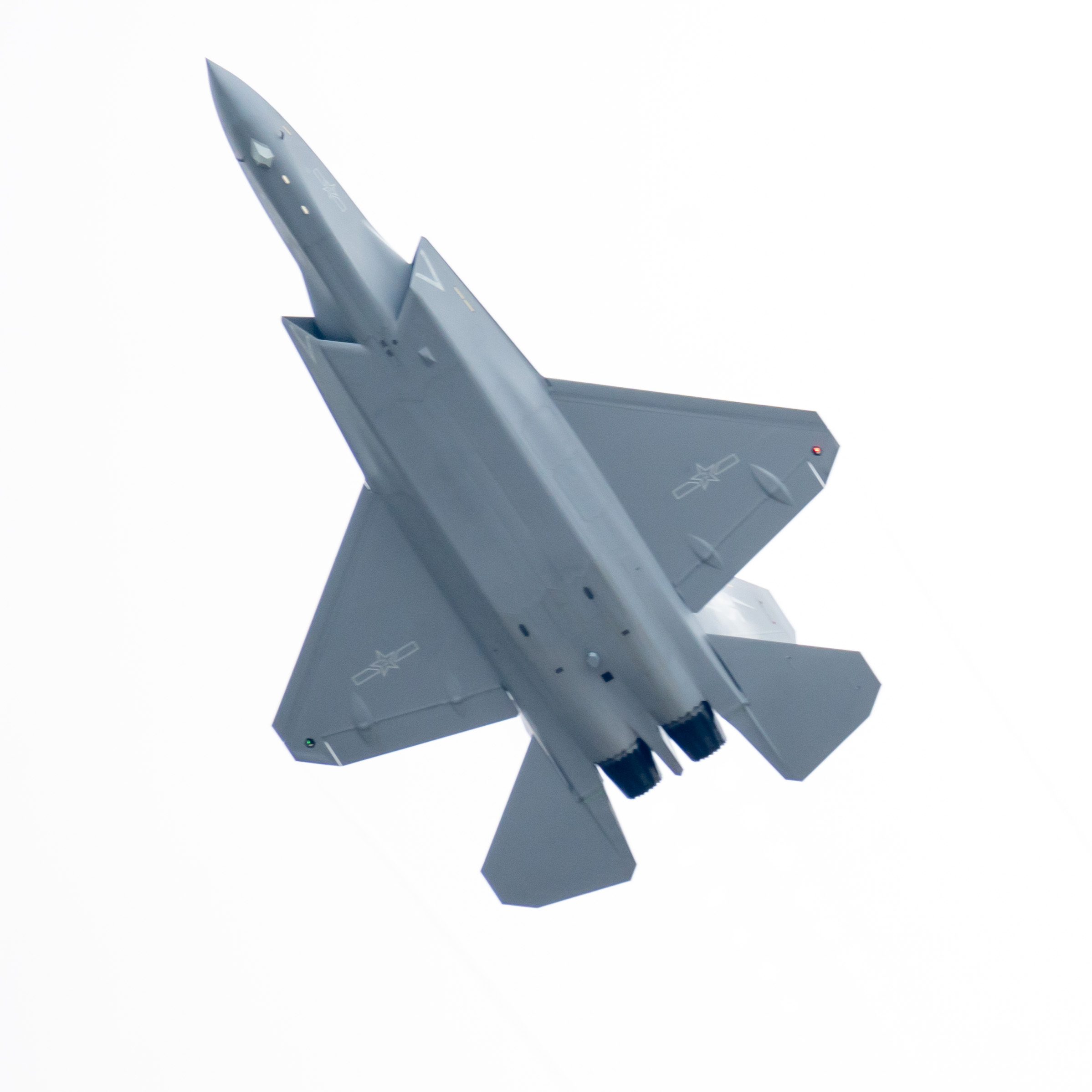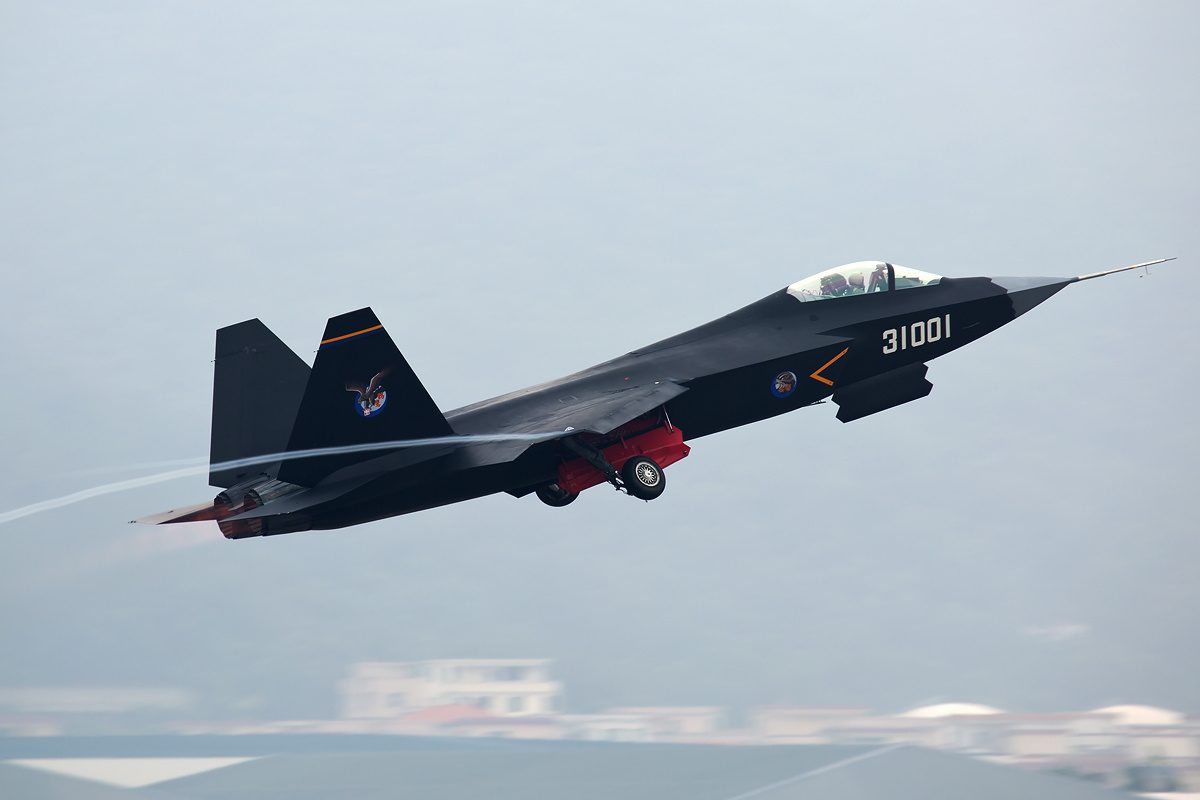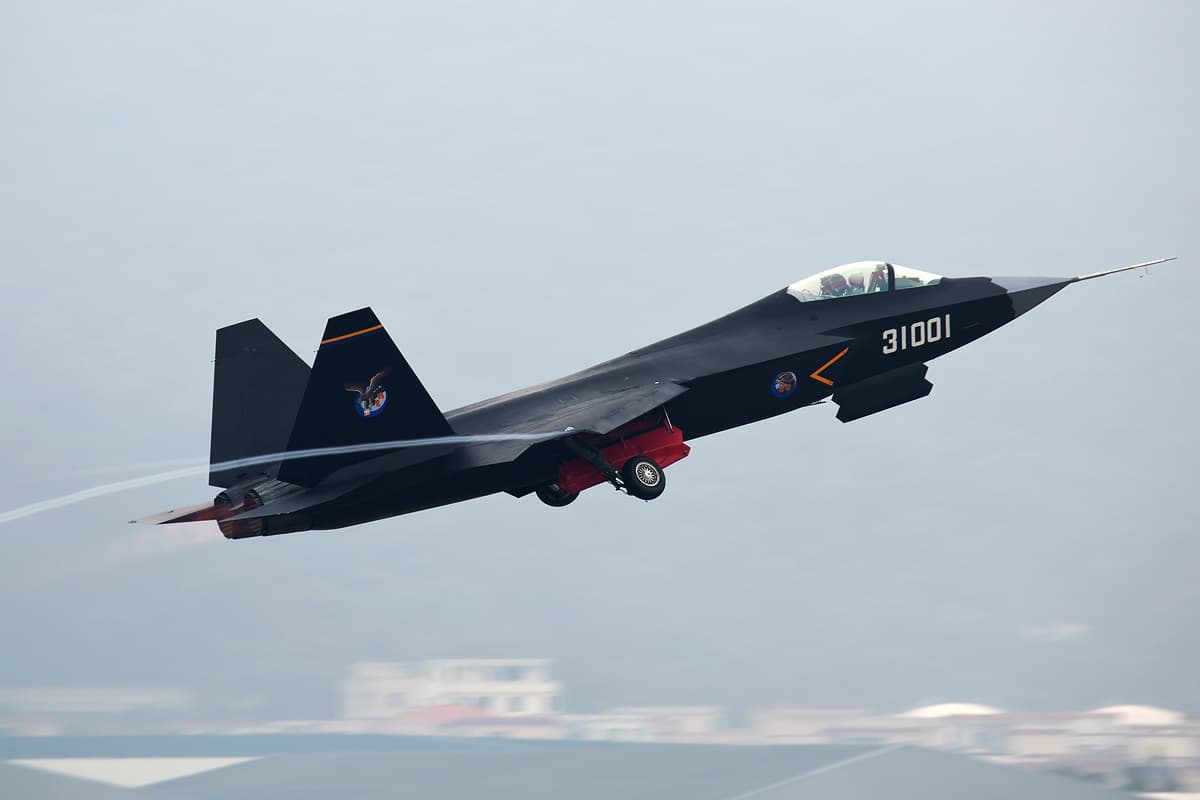

On September 22, 2025, a Shenyang J-35 stealth fighter launched from the deck of the carrier Fujian using an electromagnetic catapult. It was the first time a stealth fighter had ever completed an EMALS launch at sea. It was a milestone that China's aviation industry had been building toward for over a decade, and it announced the J-35 as something more than a technology demonstrator. China now operates a carrier-capable, low-observable, twin-engine combat aircraft that it intends to build in volume and sell to the world.
The J-35 is China's second stealth fighter, complementing the larger J-20 Mighty Dragon. Where the J-20 is a heavy air superiority platform designed for long-range interception, the J-35 is a medium-weight multirole fighter built for carrier operations, fleet defense, strike missions, and, critically, export. Together, they form a high-low mix strategy that mirrors the American pairing of the F-22 Raptor and F-35 Lightning II.
From FC-31 Demonstrator to Carrier Fighter
The J-35's origins trace back to the FC-31 "Gyrfalcon," a private venture by Shenyang Aircraft Corporation that first flew on October 31, 2012. The FC-31 was initially dismissed by many analysts as a technology demonstrator with no clear customer. The People's Liberation Army Air Force had already committed to the J-20, and the FC-31's Russian RD-93 engines left visible smoke trails that undermined its stealth credentials.
A substantially redesigned second prototype flew in December 2016 with Chinese WS-13E engines replacing the smoky Russian powerplants, a single-piece canopy replacing the original two-piece design, refined vertical stabilizers, and improved overall shaping. By 2018, reports confirmed that the PLA had taken formal interest in the program, transforming it from a private venture into an official military project.