Nathan Cole covers naval warfare, maritime strategy, and the ships and submarines that project power across the world's oceans. His work focuses on fleet architecture, carrier operations, and how navies adapt to threats from missiles, drones, and undersea warfare.
A Nimitz-class aircraft carrier displaces 100,000 tons, carries seventy-five aircraft, and costs roughly $13 billion. It is the most powerful conventional weapon system ever built. It is also, in theory, the target of a single missile that costs a fraction of one percent of that figure.
The DF-21D, designated CSS-5 Mod-4 by NATO and known domestically as "Dong Feng" or "East Wind," is the world's first anti-ship ballistic missile. It was designed to do something no weapon had ever done before: follow a ballistic arc through space, reenter the atmosphere, and strike a ship that has been moving the entire time the missile was in flight. If it works as advertised, it means a road-mobile launcher hidden somewhere in mainland China can threaten every aircraft carrier operating within 1,500 kilometers of the Chinese coast.
That single capability, whether real or perceived, has reshaped how the United States Navy thinks about operating in the Western Pacific. Understanding why requires looking not just at the missile itself, but at the entire system that must function flawlessly to put a warhead on a moving flight deck.
What the DF-21D Actually Is
The DF-21D is a two-stage, solid-fueled medium-range ballistic missile. It measures 10.7 meters long and 1.4 meters in diameter, weighs approximately 14,700 kilograms at launch, and carries a 600-kilogram conventional warhead. Its range is estimated at roughly 1,500 kilometers. At terminal phase, it reaches speeds of up to Mach 10.
What makes it categorically different from every other ballistic missile is its Maneuverable Reentry Vehicle, or MaRV. A conventional ballistic warhead follows a predictable parabolic trajectory. It goes up, it comes down, and it hits whatever was at the aim point when it launched. The MaRV changes that equation. Equipped with an active radar seeker and the ability to adjust its flight path during terminal phase, the warhead can theoretically locate and steer toward a ship that has moved significantly since launch.
The missile rides atop a Wanshan WS2600 transporter erector launcher, a massive 10x8 wheeled vehicle that gives the system road mobility. Unlike a fixed silo, a TEL can be hidden in tunnels, moved between pre-surveyed launch sites, and fired from locations that satellites may not be watching. The People's Liberation Army Rocket Force has operated the DF-21D since approximately 2012, with several dozen launchers and a larger number of reloads.
The Kill Chain: Five Steps to Hitting a Moving Ship
The DF-21D is sometimes discussed as though it were a single weapon. It is not. It is the terminal component of a complex kill chain: a sequence of detection, tracking, data fusion, launch, and terminal guidance that must execute without a single critical failure. Understanding this chain is essential to evaluating the weapon's real-world capability.
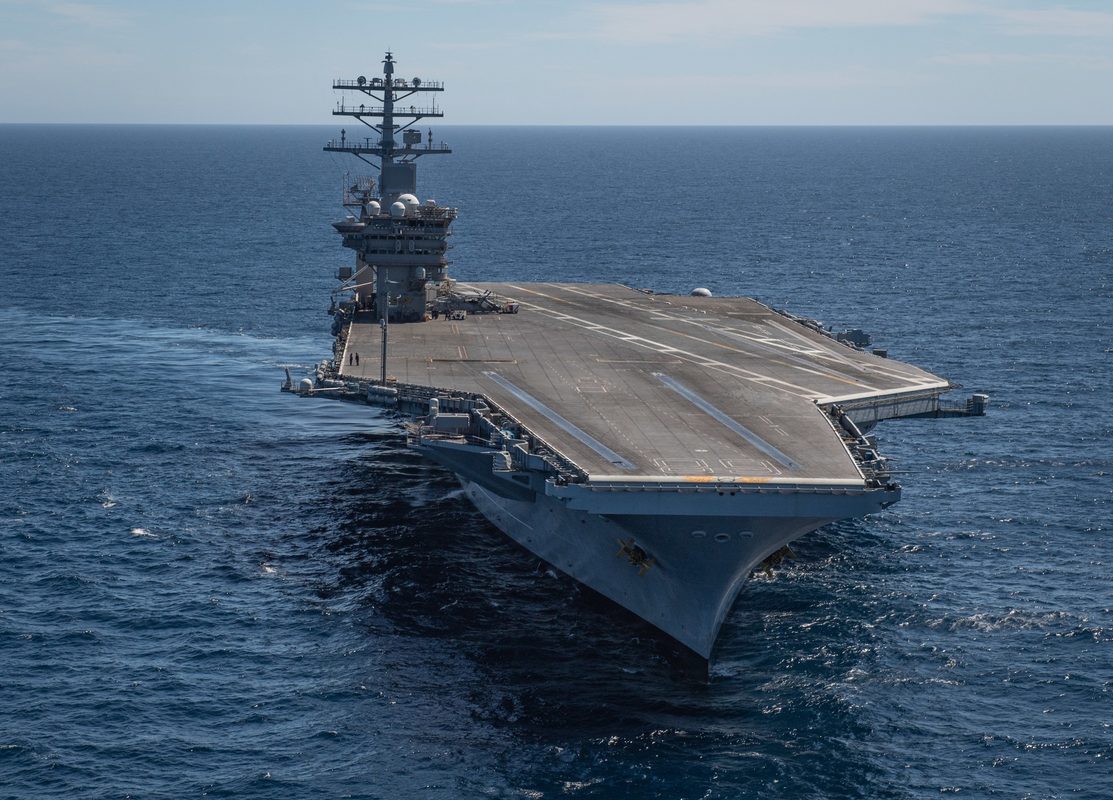
A U.S. aircraft carrier steams through the Pacific. Finding, tracking, and hitting a ship moving at 30-plus knots over 1,500 kilometers away is the central challenge of the DF-21D kill chain.
Phase 1: Detection
Before anything else, you have to find the carrier. The Pacific Ocean covers 165 million square kilometers. A Nimitz-class flight deck, enormous as it is, occupies roughly 18,000 square meters, a speck. China's primary detection assets include the Yaogan satellite constellation (synthetic aperture radar and electro-optical imaging), over-the-horizon radar stations along the coast, maritime patrol aircraft, and submarine pickets. SAR satellites can image large ocean areas regardless of weather but have revisit gaps. OTH radar can detect surface ships at extreme range but with poor resolution. The goal is to fuse these sensors into a detection picture that identifies a carrier strike group's approximate location.
Phase 2: Data Fusion and Targeting
Detection is not targeting. Knowing that a carrier strike group is somewhere in a 50-by-50-nautical-mile box is very different from having the precise coordinates needed to program a ballistic missile. Sensor data must be fused into a targeting solution accurate enough to put the MaRV within acquisition range of its onboard seeker. This fusion happens through PLARF command-and-control networks, and the latency of each sensor feed matters enormously, because the carrier is moving.
Phase 3: Launch and Boost
Once a targeting solution is generated, the launch order goes to the TEL. The solid-fueled rocket ignites and the missile clears the launcher within seconds. Boost phase lasts roughly 70 seconds, the most vulnerable window for the missile, when its infrared signature is brightest and its speed is lowest. After burnout, the missile is on a ballistic trajectory, climbing toward the edge of space.
Phase 4: Midcourse
During midcourse flight, the missile follows a ballistic arc through the upper atmosphere or near-space. This is where satellite data link updates become critical. The carrier has been moving since the targeting solution was generated. At 30 knots, it covers roughly half a nautical mile per minute. Over a flight time measured in minutes, the ship could be 15 or more nautical miles from where it was at launch. Midcourse updates transmitted via satellite attempt to refine the aim point so the MaRV reenters the atmosphere pointed at the carrier's current position rather than where it was ten minutes ago.
Phase 5: Terminal, the Physics Problem
This is where the DF-21D either justifies its reputation or falls short. The warhead reenters the atmosphere at somewhere between Mach 8 and Mach 15. At these speeds, the air around the reentry vehicle compresses into a superheated plasma sheath, the same phenomenon that surrounds spacecraft during reentry. This plasma blocks all electromagnetic signals. The radar seeker cannot see out. Satellite updates cannot get in. The missile is effectively blind.
The Panzer IV was the workhorse of the German armored divisions, and Tamiya's 1/35 kit captures the Ausf. H variant with its characteristic Schurzen side skirts and long-barrel 75mm gun.
This plasma blackout persists until aerodynamic drag slows the warhead to approximately Mach 2, which occurs at roughly 3 to 5 kilometers altitude. At that point, and only at that point, the active radar seeker can activate and begin searching for the carrier. The MaRV has perhaps 5 to 10 seconds to acquire the target, discriminate it from other ships in the strike group and any decoys, and execute terminal maneuvers to guide onto the flight deck.
That narrow window, from Mach 2 activation to impact, is the crux of the entire system. If the midcourse corrections were accurate, the seeker activates with the carrier within its search cone. If they were off by a few miles, the seeker sees ocean.
The A2/AD Architecture
The DF-21D does not exist in isolation. It is the inner ring of China's anti-access/area-denial strategy, a layered system designed to make the Western Pacific prohibitively dangerous for carrier strike groups.
The inner zone extends roughly 1,500 kilometers from the Chinese coast, encompassing the First Island Chain: Taiwan, the Ryukyus, and the Philippines. This is DF-21D territory. Any carrier operating within this zone is theoretically within range.
The outer zone extends to the Second Island Chain and beyond, 4,000 to 5,000 kilometers, reaching Guam. This zone belongs to the DF-26, sometimes called the "Guam Killer." The DF-26 is larger, with an estimated range exceeding 5,000 kilometers, a warhead weighing 1,200 to 1,800 kilograms, and a terminal speed of approximately Mach 18. U.S. intelligence estimates suggest China has roughly 250 DF-26 launchers with up to 500 missiles.
Layered beneath these ballistic missiles are the YJ-21 hypersonic anti-ship missile (launched from Type 055 Renhai-class destroyers), submarine-launched cruise missiles, and land-based anti-ship cruise missiles. The combined effect is a threat environment where a carrier strike group faces simultaneous attacks from multiple azimuths, multiple altitudes, and multiple speed regimes.
The strategic logic is straightforward: force American carriers to operate so far from the Chinese coast that their aircraft cannot reach targets without extensive tanker support, effectively neutralizing the carrier's power projection capability without sinking a single ship.
The August 2020 Test
On August 26, 2020, China conducted the only publicly known live-fire test of the DF-21D against a ship-sized target. The PLARF launched one DF-21D and one DF-26B into the South China Sea, south of the Paracel Islands. A former PLA colonel later claimed the missiles "hit a vessel" in the target area. U.S. Indo-Pacific Command confirmed detecting the launches but would not confirm a hit. Satellite imagery showed what appeared to be a target barge in the splash zone, but independent verification was never established.
One test, against what was almost certainly a stationary target, with no electronic warfare, no decoys, and no defensive missiles, does not validate the system against a defended carrier strike group. But it confirms the PLARF can execute the launch-to-splash sequence. The question of terminal accuracy against a real-world target remains unanswered.
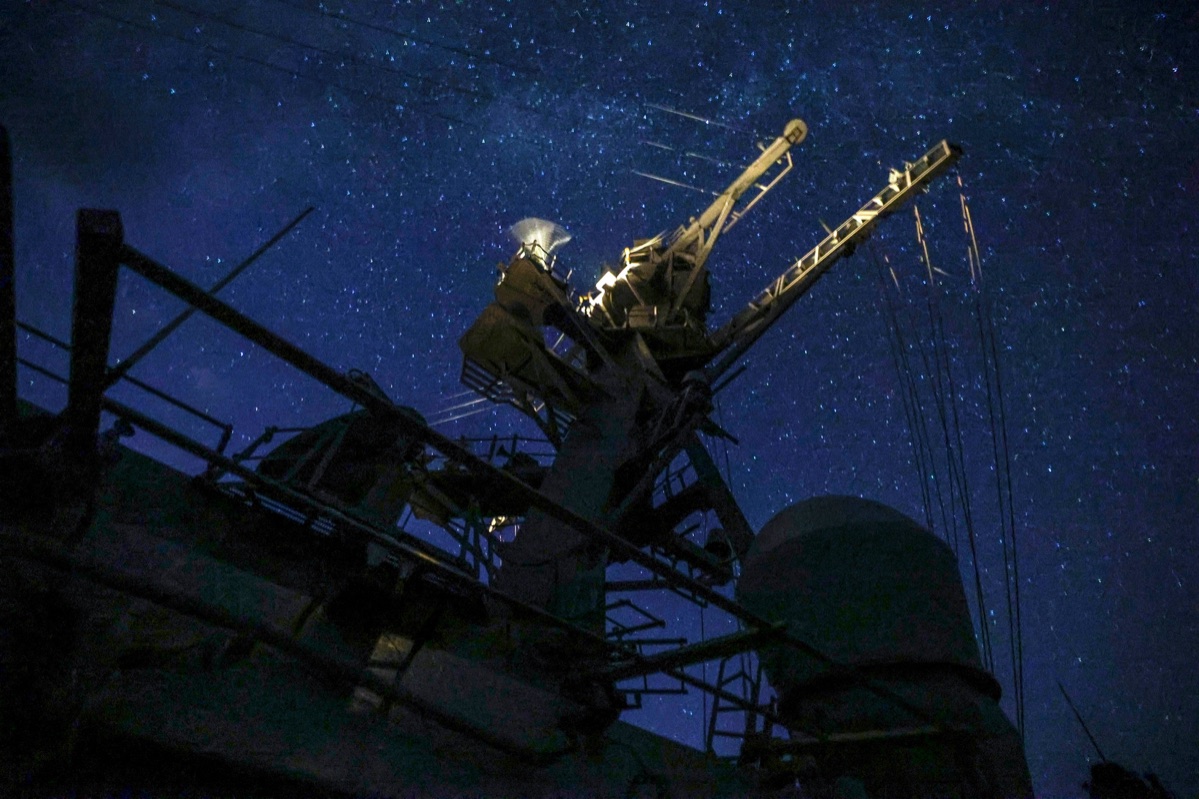
The SPY-1D radar arrays of an Arleigh Burke-class destroyer. Aegis-equipped ships form the backbone of the carrier strike group's ballistic missile defense capability.
The Case for Skepticism
The DF-21D has earned its fearsome reputation partly because it represents a genuinely novel capability, and partly because novelty breeds uncertainty, which breeds caution. But there are serious technical reasons to question whether the system works as reliably as its reputation suggests.
The plasma blackout problem is the most fundamental. During reentry, the missile is blind for a significant portion of its terminal descent. The seeker only activates at roughly Mach 2, at 3 to 5 kilometers altitude. At that speed and altitude, the seeker has an extremely limited time window to search for, acquire, and lock onto a target. The radar seeker itself is physically small, constrained by the diameter of the reentry vehicle, which limits its search area and processing power.
Targeting data freshness is another challenge. The kill chain requires near-real-time tracking of the carrier from detection through launch through midcourse corrections. Any gap in the tracking, whether a satellite not overhead, a data link jammed, or a processing delay, degrades the accuracy of midcourse updates. A carrier moving at 30-plus knots covers significant distance during the missile's flight time, and even small errors in predicting its course compound over distance.
Electronic warfare adds another layer of uncertainty. A carrier strike group deploys extensive electronic countermeasures: jamming, spoofing, and decoys. The EA-18G Growler is specifically designed to degrade enemy radar and communications. Against a small radar seeker with limited processing power and seconds to discriminate real targets from false ones, electronic warfare could be decisive.
Finally, there is the warhead question. Six hundred kilograms of conventional explosive is a serious weapon, but a Nimitz-class carrier displaces 100,000 tons and is built with extensive damage-control systems, armored flight decks, and redundant compartmentalization. A single DF-21D hit would likely constitute a "mission kill," disabling flight operations and damaging critical systems, rather than sinking the ship. Sinking a carrier would almost certainly require a saturation attack with multiple missiles, which multiplies every kill-chain challenge by the number of missiles involved.
How the US Navy Responds
The Navy has not been passive. Its counter-strategy operates at every phase of the DF-21D kill chain.
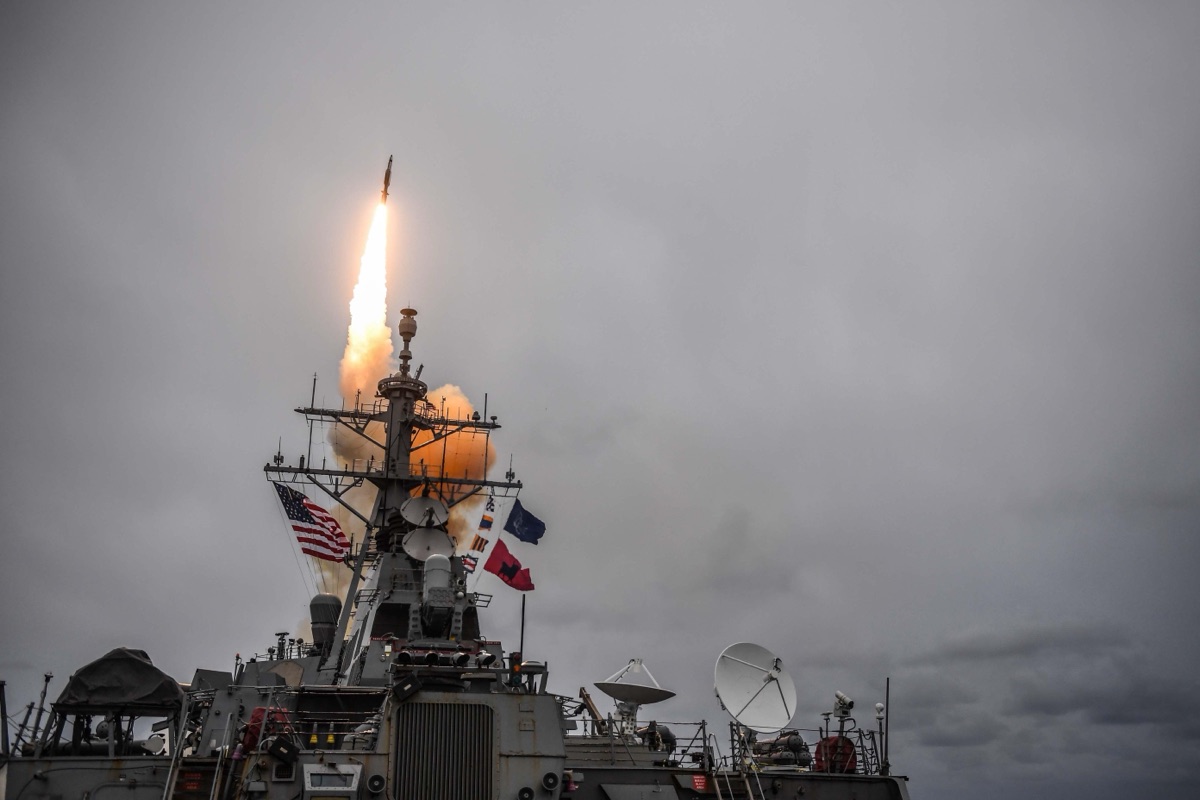
An SM-3 interceptor launches from an Aegis destroyer. The SM-3 is designed for midcourse ballistic missile defense and was used operationally during the April 2024 defense of Israel against Iranian missile strikes.
At the detection phase, the goal is to make the carrier harder to find. Emissions control reduces the electronic signature that satellites and patrol aircraft use to locate surface ships. Distributed Maritime Operations spreads the fleet across a wider area rather than concentrating it around the carrier, complicating the targeting problem.
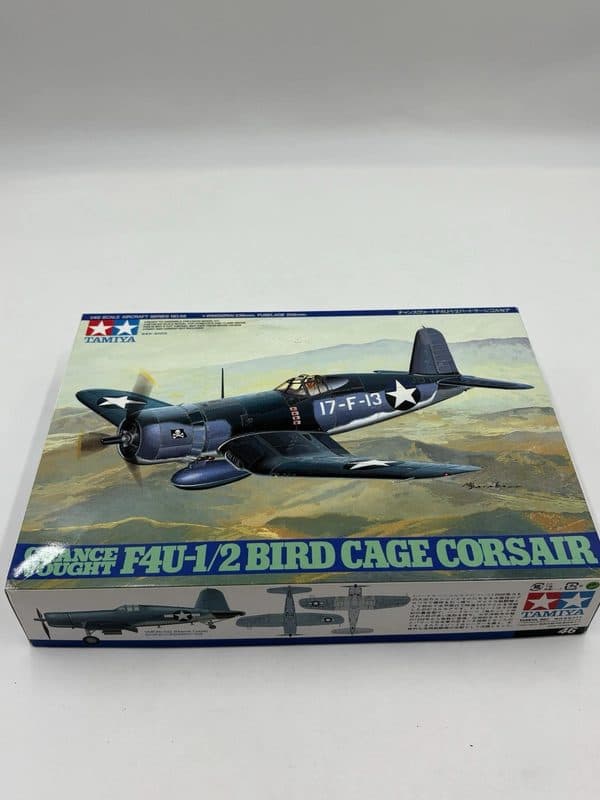
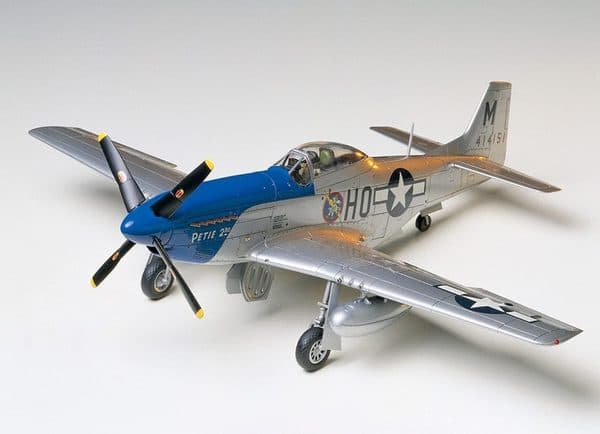
That inverted gull wing was not for looks. The massive Pratt & Whitney R-2800 engine demanded a huge propeller, and the cranked wing kept the landing gear short enough for carrier ops. Tamiya nails the complex geometry. 162 reviews at 4.6 stars.
At the midcourse phase, the Aegis Combat System paired with SM-3 interceptors provides ballistic missile defense, hitting the warhead in space before it reenters the atmosphere and before the MaRV can begin maneuvering. This capability was proved operationally in April 2024, when Aegis destroyers helped intercept Iranian ballistic missiles during a large-scale attack on Israel. The SM-6 adds terminal-phase intercept capability against maneuvering targets at lower altitudes.
At the kill-chain level, the Navy is investing in capabilities to attack the system upstream. Anti-satellite weapons and cyber operations could degrade the Yaogan constellation or disrupt data links. The MQ-25 Stingray tanker drone extends carrier aircraft combat radius by several hundred nautical miles, allowing the air wing to strike from beyond DF-21D range, partially offsetting the standoff distance the missile imposes.
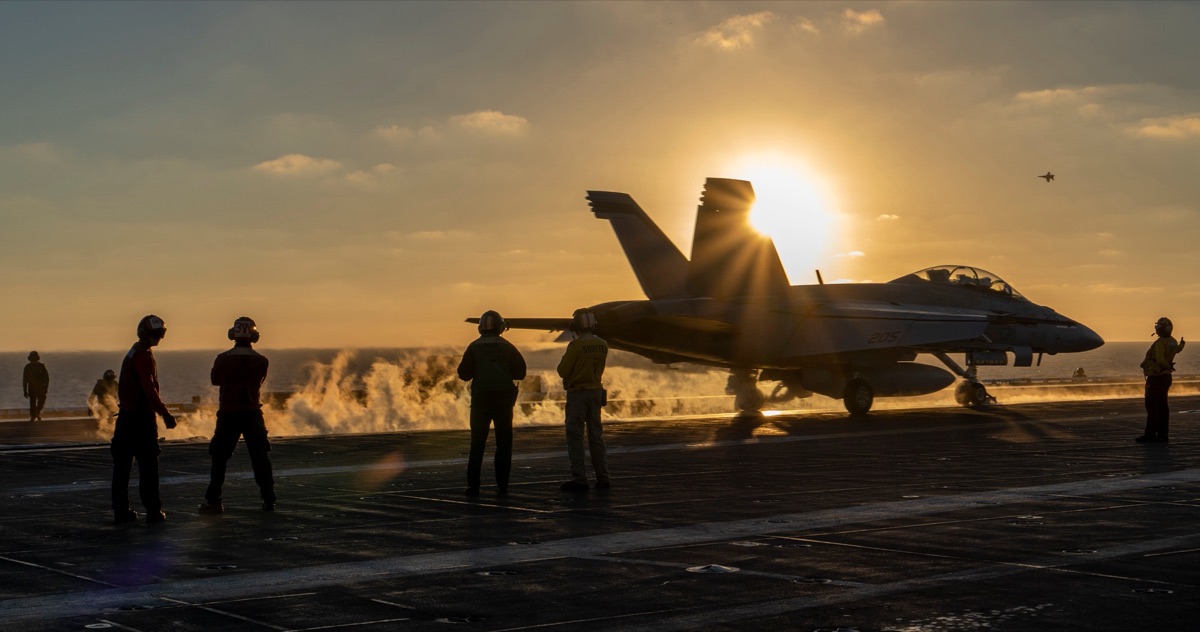
An F/A-18F Super Hornet launches from USS Nimitz. Extending carrier aircraft range, through tanker drones like the MQ-25 Stingray, is a key part of the Navy's response to long-range anti-ship threats.
The Strategic Calculus
The DF-21D does not need to sink a carrier to achieve its strategic purpose. It does not even need to hit one. It needs to create enough doubt, enough perceived risk, that American commanders hesitate to place a $13 billion ship and 5,000 sailors within its range.
Consider the math from the perspective of a fleet commander. Even if the DF-21D has a 10 percent probability of achieving a mission kill against a defended carrier, the consequences of that 10 percent are catastrophic, not just in material terms, but in strategic and political terms. The loss or severe damage of an American aircraft carrier would be the most significant naval event since World War II. No commander, no president, wants to be the one who rolls those dice.
And that is the weapon's true power. It functions as a deterrent not because it is guaranteed to work, but because the cost of being wrong is unacceptable. A carrier that stays 2,000 kilometers from the Chinese coast to avoid the DF-21D threat is a carrier whose aircraft cannot reach Taiwan without tanker support, whose response time is measured in hours rather than minutes, and whose presence in the theater is more symbolic than operational.
China, meanwhile, continues to expand the architecture. The DF-26 extends the threat envelope to Guam and beyond. Hypersonic glide vehicles promise to defeat midcourse interceptors by maneuvering unpredictably through space. The PLARF adds launchers, builds missile stockpiles, and refines its satellite constellation. Each improvement tightens the dilemma for American planners.
The U.S. Navy is adapting by distributing the fleet, extending aircraft range, improving missile defense, and developing new operational concepts. But adaptation is expensive and slow, and it is fundamentally reactive. The DF-21D costs a small fraction of what a carrier costs, and it has already succeeded in its most important mission: forcing the most powerful navy in history to rethink how, where, and whether it can operate in the waters that matter most.
That is what a carrier killer does. Not by killing carriers, but by making their commanders wonder if it can.