Ryan Caldwell writes about military decision-making, failed programs, and the tradeoffs behind major defense choices. His work is focused on understanding why systems succeed or fail beyond headlines, promises, and initial expectations.
Everyone knows military hardware is expensive. The numbers get thrown around like confetti during budget season: $13 billion for a carrier, $2 billion for a bomber, $80 million for a fighter. But those acquisition costs, staggering as they are, only tell half the story. The real financial weight of a military platform isn't what you pay to build it. It's what you pay to use it.
Operating costs (fuel, maintenance, spare parts, personnel, depot overhauls) accumulate hour after hour, year after year, for decades. A B-2 Spirit that cost $2.1 billion to manufacture has generated multiples of that in sustainment costs over its 30-year service life. An aircraft carrier's fuel bill alone would bankrupt a mid-sized corporation.
Here are the 10 most expensive military platforms currently in active service, ranked by acquisition cost, with the operating costs that make defense budgets run into the trillions.
1. USS Gerald R. Ford (CVN-78): $13.3 Billion
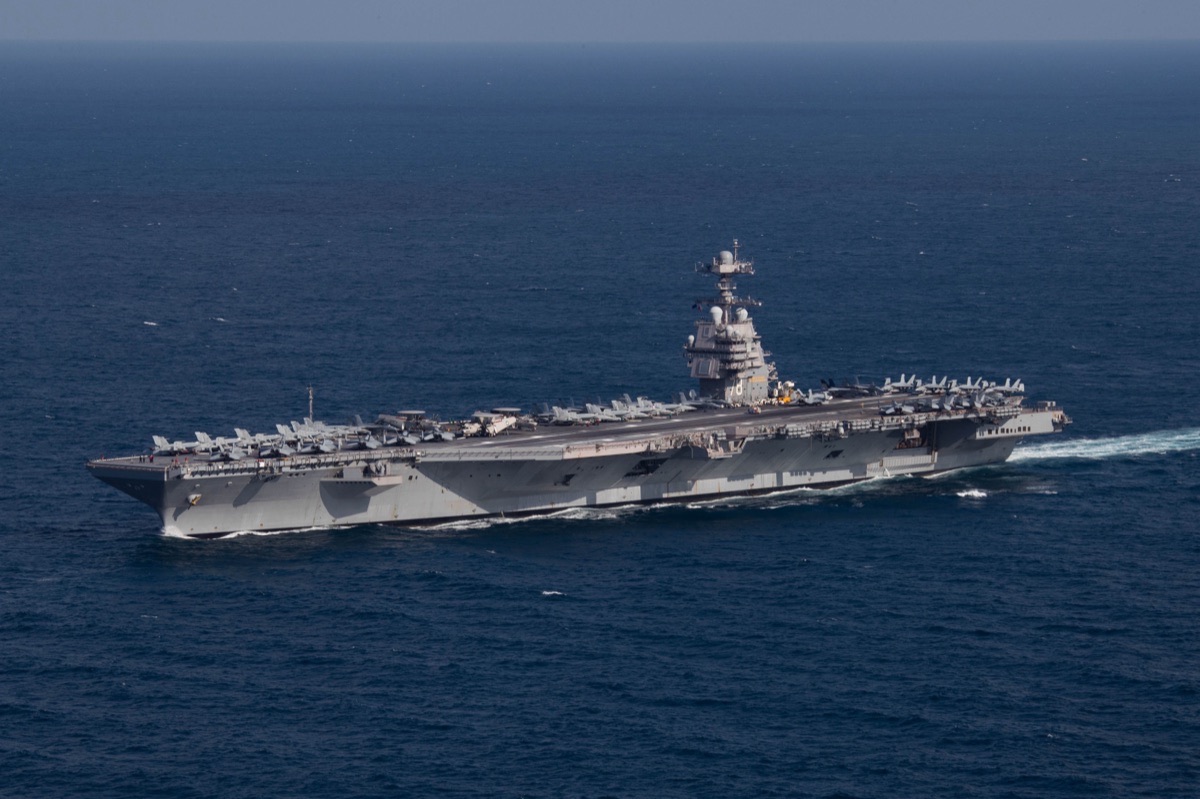
The most expensive single military platform ever constructed, the USS Gerald R. Ford is the lead ship of the Navy's newest carrier class. At $13.3 billion in total acquisition cost, the Ford exceeded its original budget by roughly $2.4 billion, driven by first-of-class challenges with the Electromagnetic Aircraft Launch System (EMALS), Advanced Arresting Gear (AAG), and the dual-band radar system.
The USS Gerald R. Ford (CVN-78) underway. At $13.3 billion, it is the most expensive warship ever built. Operating costs run approximately $8 million per day when deployed with its full air wing and escort group.
Operating cost: Approximately $8 million per day when deployed, or roughly $333,000 per hour. That figure includes fuel for the carrier itself (which, being nuclear-powered, doesn't burn fossil fuel for propulsion but does for aviation operations), fuel and maintenance for its air wing of 75+ aircraft, food and pay for its crew of approximately 4,500, and the operating costs of the cruisers, destroyers, and submarines that make up its carrier strike group. Annual operating costs for a Ford-class carrier and its air wing run approximately $1.5 billion.
2. DDG-1000 Zumwalt: $8.2 Billion
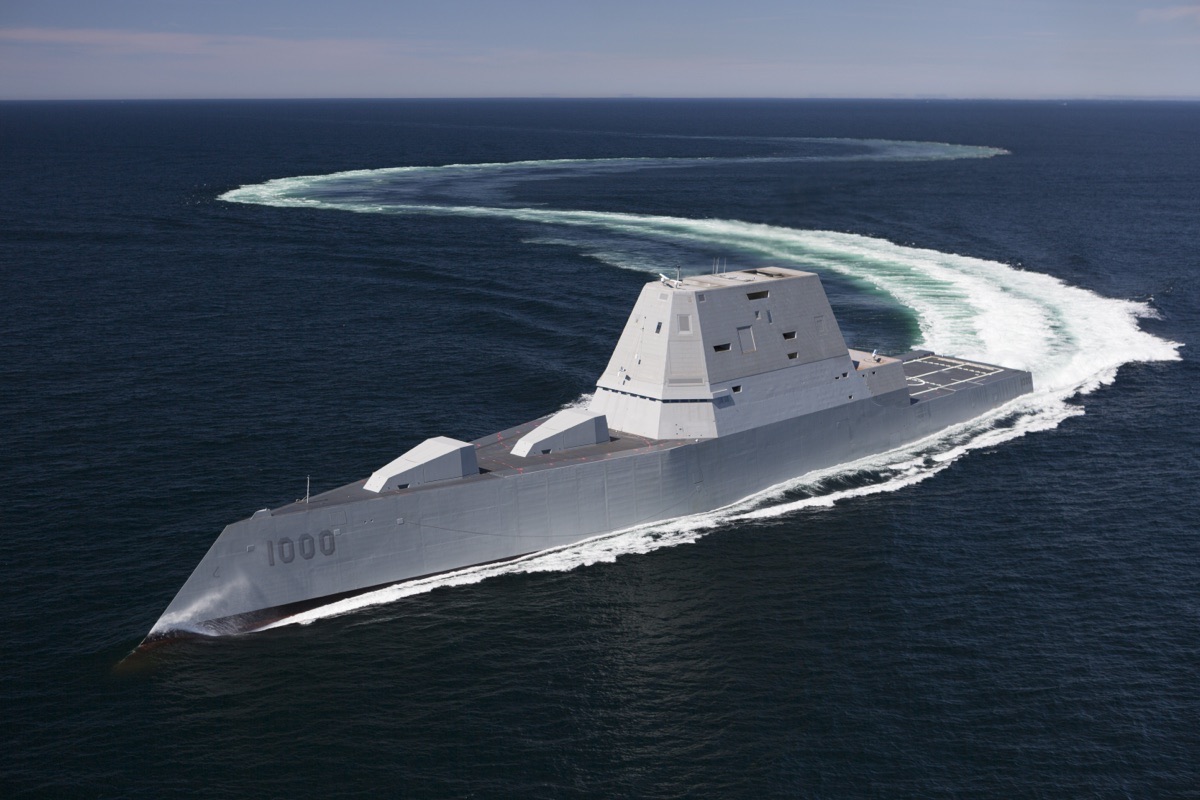
The Zumwalt-class guided missile destroyer was supposed to revolutionize naval surface warfare. At $8.2 billion per ship (including a proportional share of research and development costs across the three-ship class), the DDG-1000 became the most expensive destroyer in naval history, and one of the most controversial.
The USS Zumwalt (DDG-1000) at sea. Its revolutionary tumblehome hull and integrated power system came at an acquisition cost of $8.2 billion per ship. The class was cut from 32 planned vessels to just three.
Operating cost: The Zumwalt class costs roughly twice as much to operate as an Arleigh Burke-class destroyer, an ironic outcome given that the original design was marketed partly on its reduced manning requirements. The ship's 78.5-megawatt integrated power system and advanced automation were supposed to lower crew sizes from 300 to 140, but the complexity of maintaining novel systems has offset those savings. The original plan called for 32 ships; only three were built.
3. Virginia-Class Submarine: $4.3 Billion
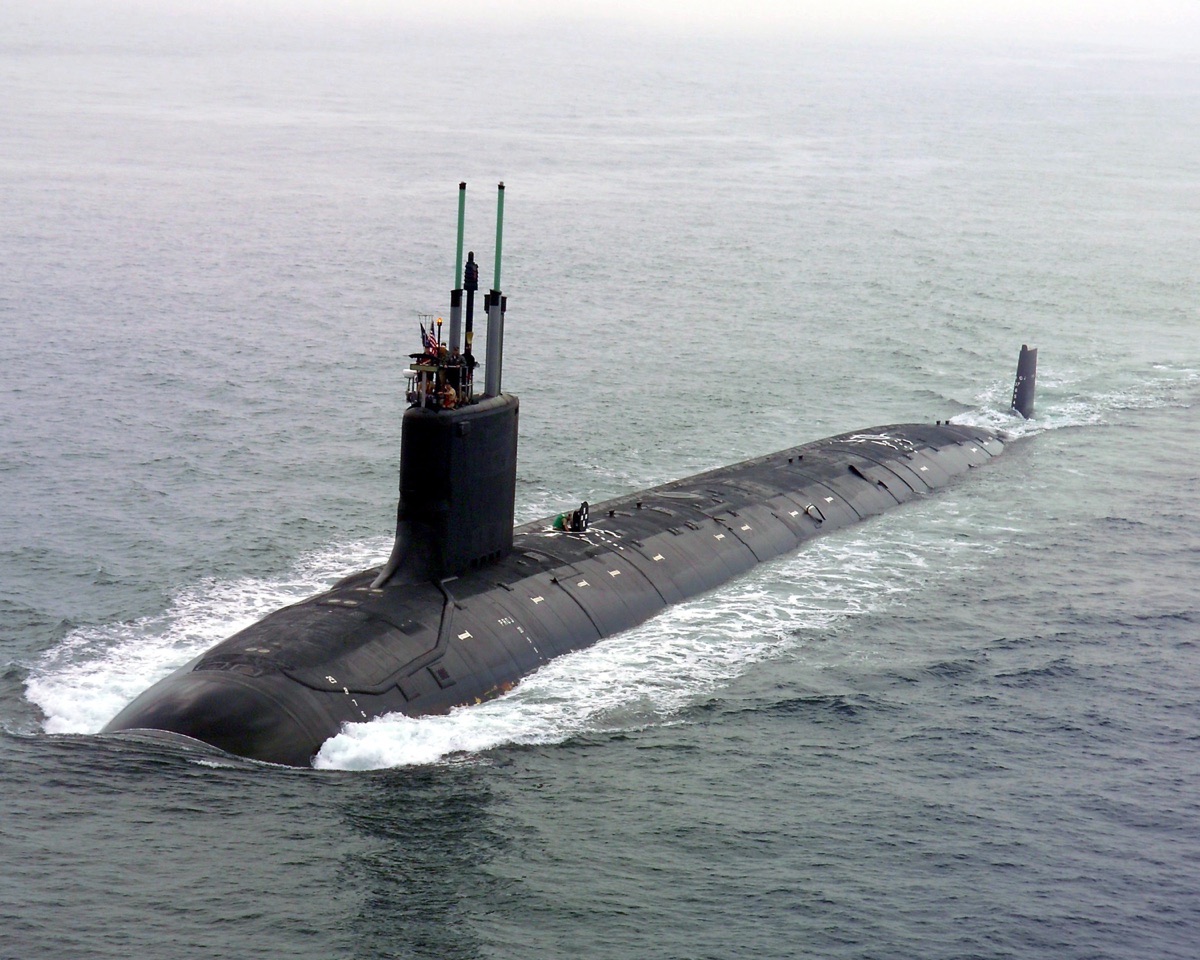
The Virginia class is the backbone of the Navy's attack submarine fleet and the most capable nuclear-powered fast-attack submarine in service. Unit costs have climbed from approximately $2.8 billion for early Block I boats to $4.3 billion for Block V submarines, which feature an 84-foot Virginia Payload Module (VPM) insert that quadruples the ship's Tomahawk cruise missile capacity.
A Virginia-class submarine surfaces during operations. Block V boats with the Virginia Payload Module carry 40 Tomahawk missiles and cost approximately $4.3 billion per hull.
Operating cost: Nuclear submarine operating costs are among the most closely guarded figures in the defense budget, but estimates place the annual sustainment cost of a Virginia-class boat at approximately $50-60 million. Reactor maintenance, specialized crew training, and the classified nature of virtually every component contribute to costs that dwarf those of surface combatants of similar displacement. The boats also require periodic nuclear refueling, a process that takes the submarine out of service for years and costs hundreds of millions of dollars.
4. B-2 Spirit: $2.1 Billion
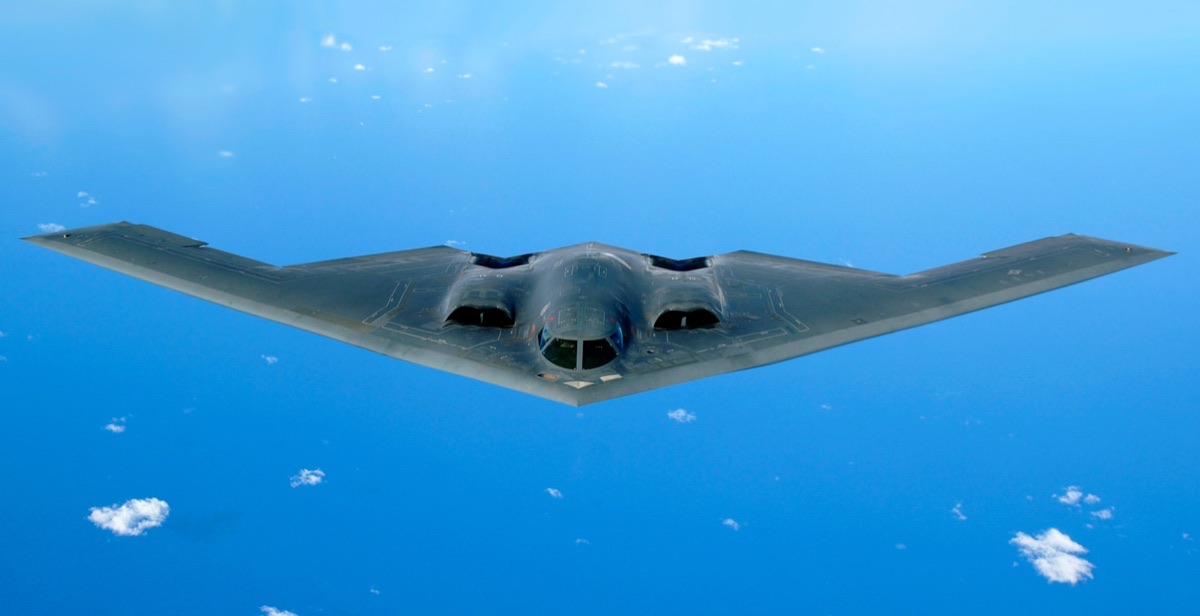
The B-2 Spirit remains the most expensive aircraft per unit ever produced. At $2.1 billion each (in then-year dollars), the 21 B-2s built represented a collective investment of roughly $44 billion. Originally, the Air Force planned to buy 132; the end of the Cold War reduced that to 21, which drove the per-unit cost into the stratosphere as fixed development costs were spread across fewer airframes.
A B-2 Spirit stealth bomber during a flyover. Each of the 21 B-2s cost $2.1 billion to build, and operating costs exceed $130,000 per flight hour, more than most Americans earn in a year.
Operating cost: Approximately $130,000 to $150,000 per flight hour. That makes the B-2 the most expensive aircraft to operate in the U.S. inventory, driven primarily by its stealth skin maintenance requirements. The B-2's low-observable coatings must be meticulously inspected and repaired after every flight, a process that can take days for a single sortie. The aircraft also requires climate-controlled hangars at its home base of Whiteman Air Force Base, Missouri, to protect the sensitive radar-absorbent materials. For context, a single 30-hour round-trip bombing mission to a target halfway around the world costs approximately $4 million in flight-hour costs alone, before you count the munitions.
5. F-22 Raptor: $334 Million
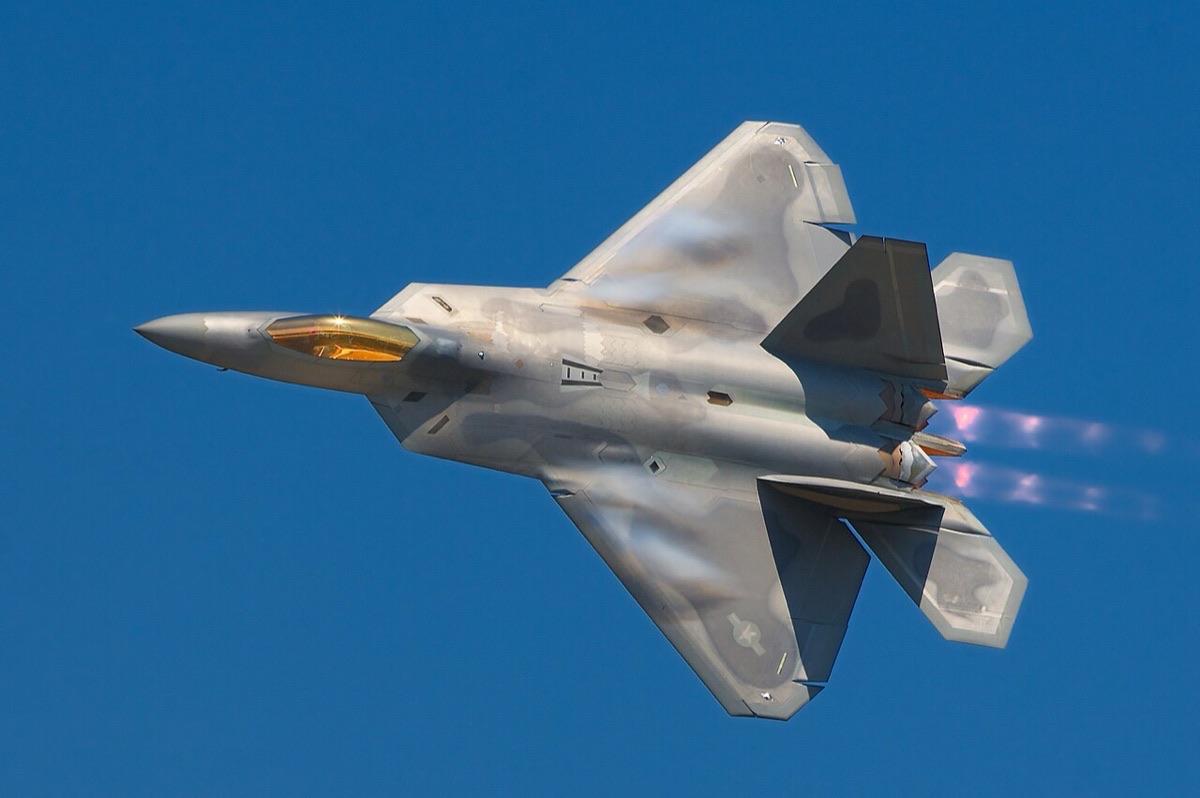
The F-22 Raptor's unit cost tells a story similar to the B-2's. Originally projected to cost roughly $125 million per aircraft with a planned buy of 750, the program was capped at 187 operational aircraft. The result was a per-unit cost of approximately $334 million when development costs are included, making the Raptor the most expensive fighter ever built.
The F-22 Raptor costs approximately $85,000 per flight hour to operate, roughly triple the hourly cost of the F-16 it was designed to replace in the air superiority role.
Operating cost: Approximately $85,325 per flight hour according to GAO data. The Raptor's operating costs are driven by many of the same factors that plague the B-2: low-observable coatings that require constant attention, specialized tooling and facilities, and a small fleet that makes economies of scale impossible. The F-22's stealth maintenance is particularly demanding because the aircraft operates at far higher g-loads and speeds than the B-2, which accelerates wear on surface coatings. For comparison, the F-16 costs roughly $27,000 per flight hour. A single hour of F-22 flight time costs more than many Americans' monthly mortgage.
6. E-2D Advanced Hawkeye: $260 Million
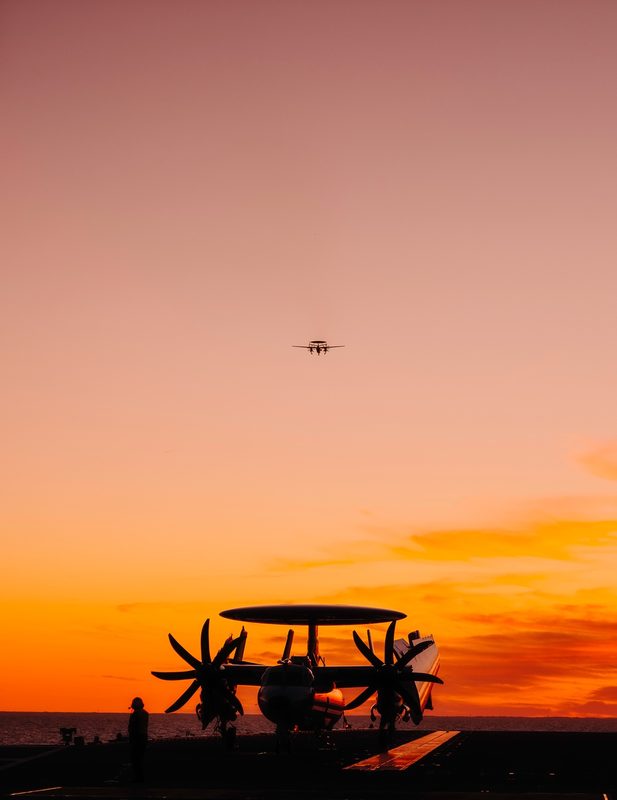
The E-2D Advanced Hawkeye doesn't look expensive. It's a turboprop aircraft with a radar dome on top, and visually, it could be mistaken for a regional airliner with an unusual hat. But the AN/APY-9 radar system it carries is among the most advanced airborne surveillance systems ever built, and at approximately $260 million per aircraft, the E-2D costs more than an F-35.
An E-2D Advanced Hawkeye in flight. Despite its unassuming propeller-driven appearance, each aircraft costs approximately $260 million, more than an F-35, thanks to its advanced AN/APY-9 radar system.
Operating cost: Approximately $18,000 to $22,000 per flight hour. Modest compared to stealth aircraft, but the E-2D flies constantly during carrier operations, often logging 6 to 8 hours per sortie as the fleet's airborne eyes. The radar system requires specialized maintenance that can only be performed by highly trained technicians, and the aircraft's mechanical components endure significant stress from carrier operations including catapult launches and arrested landings.
7. MQ-4C Triton: $260 Million
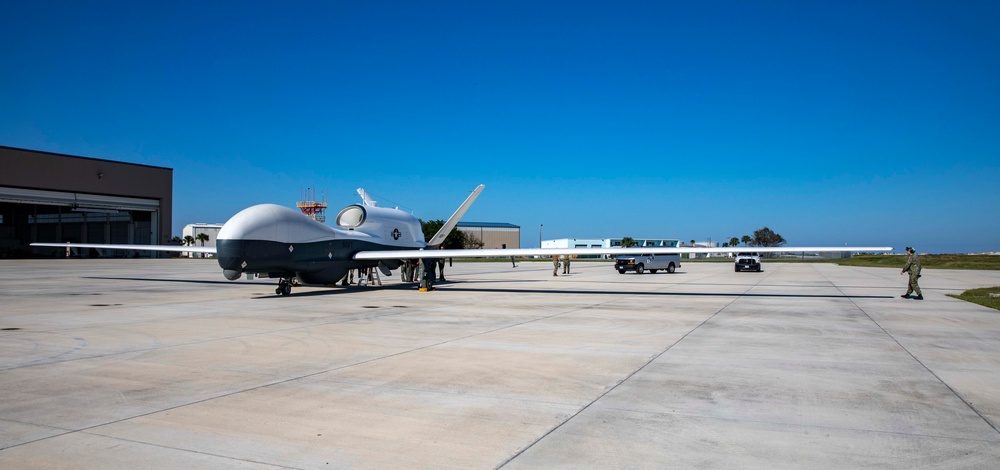
The MQ-4C Triton is the Navy's high-altitude, long-endurance unmanned surveillance aircraft, derived from the Air Force's RQ-4 Global Hawk. At approximately $260 million per unit (with some estimates climbing to $618 million for the final production version), the Triton costs more than many manned combat aircraft.
The MQ-4C Triton on the tarmac. Despite being unmanned, each unit costs approximately $260 million, with unit costs rising as the program matured and capabilities were added. It can fly for 24+ hours at altitudes above 50,000 feet.
Operating cost: Approximately $26,575 per flight hour. The Triton's advantage is endurance. It can fly missions lasting 24 hours or more, covering vast areas of ocean that would require multiple manned aircraft to survey. On a cost-per-hour-of-coverage basis, the Triton is actually more economical than the P-8A Poseidon maritime patrol aircraft it supplements. But the per-unit acquisition cost, which has increased by 117% over the program's life, has drawn consistent congressional scrutiny.
8. B-1B Lancer: $283 Million (Adjusted)
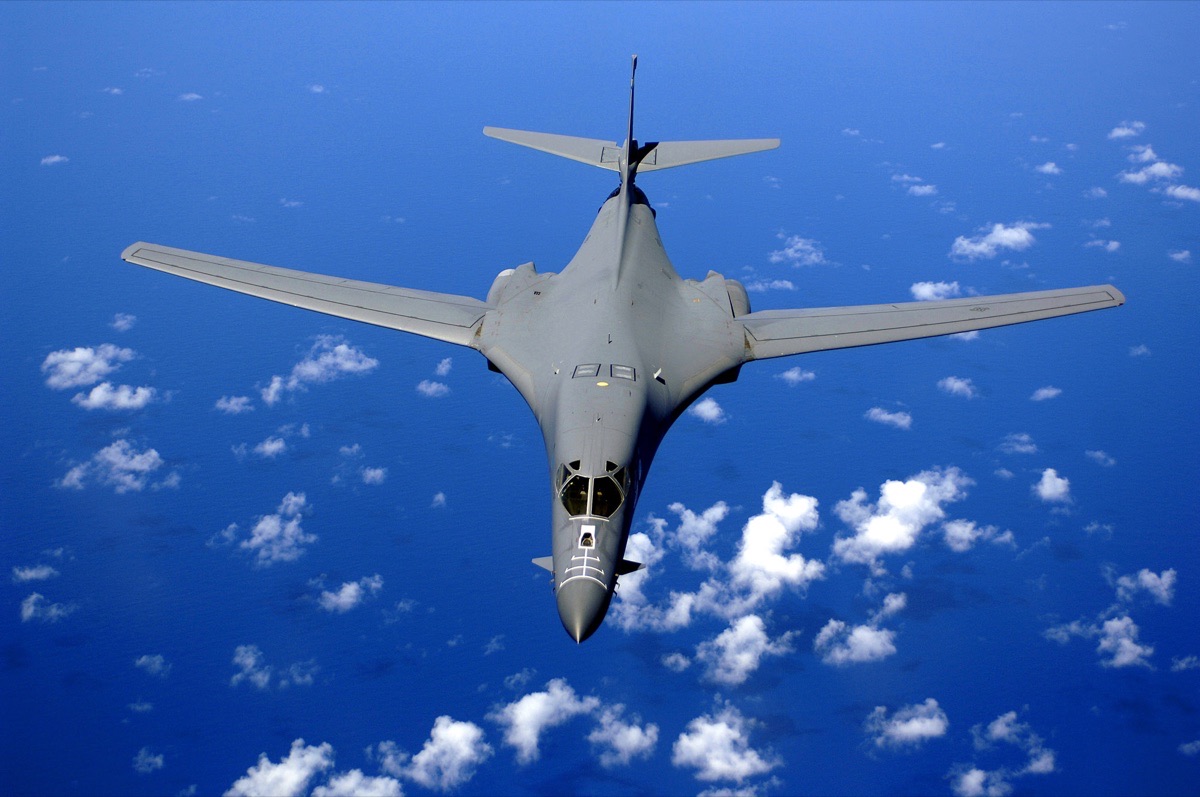
The B-1B Lancer, originally procured at approximately $283 million per aircraft in 1998 dollars, is the Air Force's conventional supersonic bomber. Originally designed as a nuclear penetrator, it was converted to a conventional-only platform under the START treaty and has since become the workhorse of American long-range strike operations, flying extensive combat sorties over Afghanistan, Iraq, Syria, and Libya.
A B-1B Lancer in flight with wings swept. The Lancer's four afterburning turbofan engines consume fuel at prodigious rates, driving operating costs above $90,000 per flight hour during sustained operations.
Operating cost: Approximately $91,330 per flight hour according to 2024 DoD data, though some older estimates place it lower at $60,000 to $63,000 depending on the cost accounting methodology. The B-1B's four F101-GE-102 turbofan engines, each producing 30,000 pounds of thrust with afterburner, are notoriously maintenance-intensive. The fleet's structural fatigue from decades of low-level training and combat operations has driven repair costs steadily upward. The Air Force plans to retire the B-1B fleet entirely by the early 2030s as the B-21 Raider enters service.
9. F-35A Lightning II: $82 Million
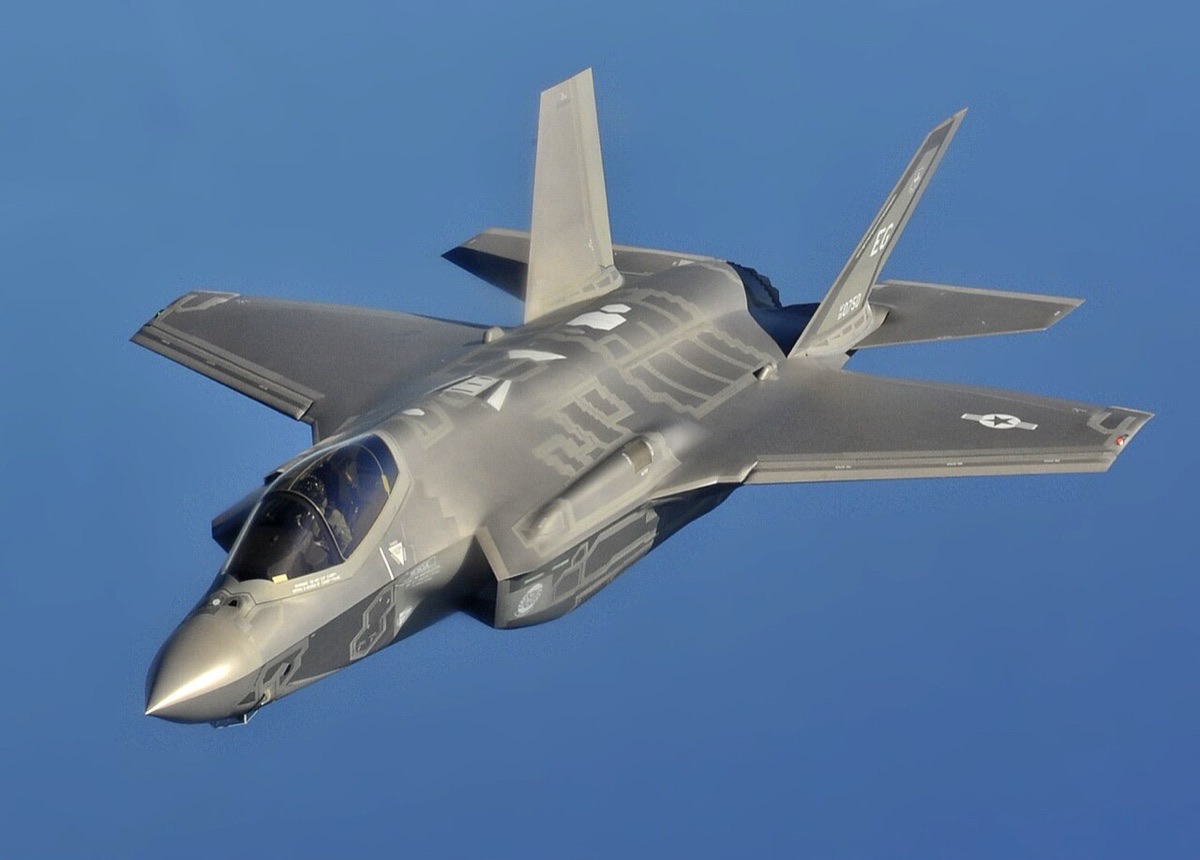
The F-35A might seem like a bargain compared to the other entries on this list, and at $82 million per aircraft in recent production lots, it is a genuine success story of cost reduction. The F-35 program has driven unit costs down by more than 40% from early production, making the Joint Strike Fighter cheaper than the Eurofighter Typhoon and Dassault Rafale despite being a fifth-generation stealth platform.
The F-35A Lightning II has seen its unit cost drop to $82 million, but sustaining a fleet of 2,400+ planned aircraft at $42,000 per flight hour will cost more than $2 trillion over the program's lifetime.
Operating cost: Approximately $42,000 per flight hour for the F-35A variant, with the Marine Corps' F-35B STOVL variant costing more due to its lift fan and swivel nozzle complexity. The Pentagon's goal is to reduce the cost to $25,000 per flight hour, but progress has been slow. When you multiply $42,000 per hour across a planned fleet of 2,400+ aircraft flying for 30+ years, the lifetime sustainment cost of the F-35 program exceeds $2 trillion, making it the most expensive weapons program in human history by total lifecycle cost, even though each individual aircraft is relatively affordable.
10. V-22 Osprey: $72 Million
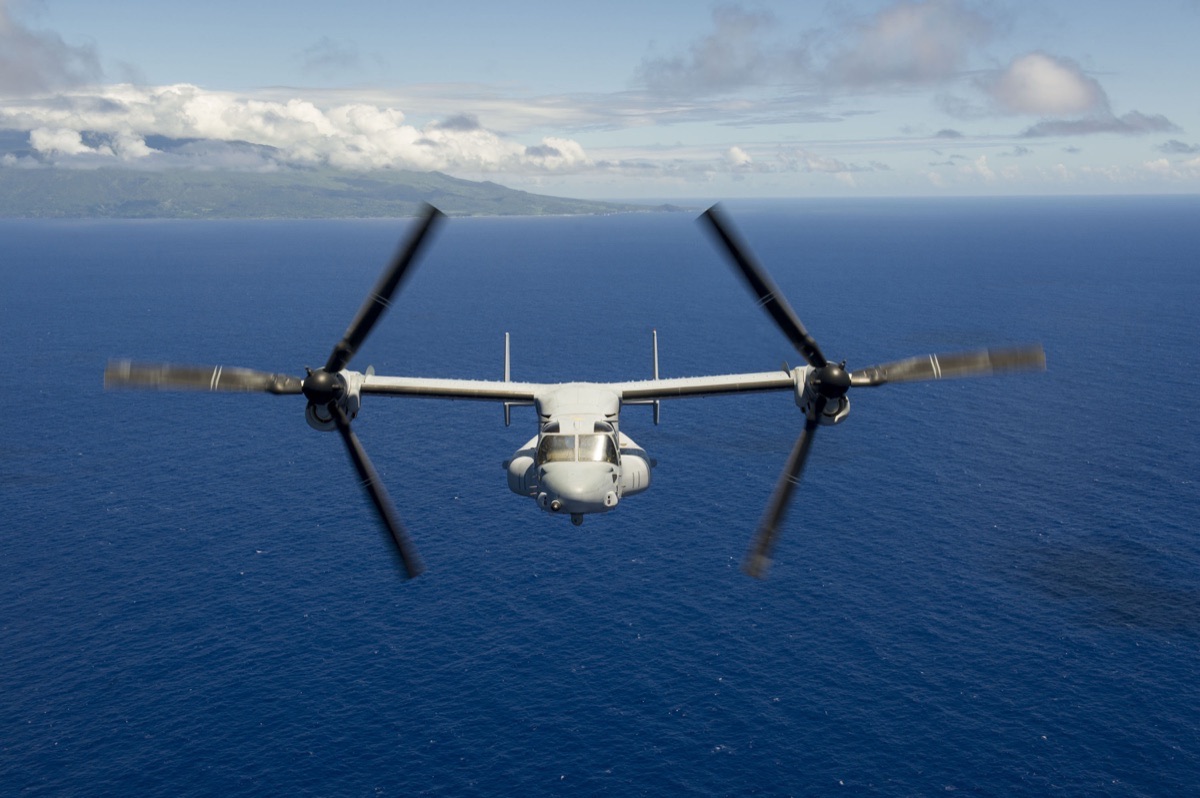
The V-22 Osprey tiltrotor rounds out the list not because of a shocking acquisition cost but because of how its operating costs compare to the conventional helicopters it replaced. At approximately $72 million per aircraft, the Osprey was already roughly three times the cost of the CH-46 Sea Knight it was designed to replace. But the real sticker shock comes in the sustainment bill.
A V-22 Osprey flies with nacelles tilted in airplane mode. The tiltrotor's unique mechanical complexity drives operating costs to approximately $80,000 per flight hour, making it one of the most expensive rotorcraft in military service.
Operating cost: The CV-22 (Air Force Special Operations variant) costs approximately $79,958 per flight hour, comparable to the F-22 Raptor. The MV-22 (Marine Corps variant) costs somewhat less but still exceeds $40,000 per hour. The Osprey's tiltrotor mechanism, with its complex gearboxes, interconnecting driveshaft, and unique failure modes, requires maintenance hours that dwarf those of conventional helicopters. For a platform designed to be a workhorse troop transport, those operating costs have been a persistent source of criticism throughout the program's history.
The Hidden Cost: Why Operating Expenses Matter More Than Sticker Prices
The pattern across all 10 platforms is consistent: operating costs dwarf acquisition costs over a weapon system's lifetime. The F-35 program will spend roughly $1.3 trillion on sustainment versus $400 billion on procurement. The B-2's lifetime sustainment costs have exceeded its acquisition cost several times over. The USS Gerald R. Ford will cost more to operate for a single year than many nations spend on their entire military.
These numbers aren't just interesting trivia. They shape strategic decisions. The Air Force is retiring the B-1B partly because its operating costs have become unsustainable. The Navy capped the Zumwalt class at three ships partly because operating costs proved far higher than projected. The F-35 program's sustainment costs have generated more congressional concern than its acquisition budget. When the Pentagon debates whether to buy 100 more of a platform, the real question isn't the $8 billion purchase price. It's the $30 billion in operating costs that follow over the next three decades.
Every hour that a B-2 Spirit is in the sky, the American taxpayer is spending more than the median U.S. household earns in a year. That's the true cost of military dominance. It isn't the price tag on the factory floor, but the meter that never stops running.