Ryan Caldwell writes about military decision-making, failed programs, and the tradeoffs behind major defense choices. His work is focused on understanding why systems succeed or fail beyond headlines, promises, and initial expectations.
The Pentagon has a pattern. A revolutionary technology is proposed. Congress funds it. Costs escalate. Schedules slip. Requirements change. And then, after billions of dollars have been spent, someone finally pulls the plug. The weapons never fire a shot in anger. The platforms never deploy. The money is gone.
These are not obscure research projects or minor procurement adjustments. These are major weapons programs (presidential helicopters, missile defense systems, space stations, warships, and airborne lasers) that consumed billions of dollars and years of institutional effort before being cancelled. Together, the five programs on this list cost American taxpayers more than $20 billion. Adjusted for inflation, that figure exceeds $30 billion.
What makes these cancellations worth studying is not the waste itself, though the waste is staggering, but the patterns they reveal. The same institutional failures appear again and again: requirements that keep growing, timelines that keep slipping, costs that keep climbing, and a system that rewards optimism over honesty until the bill becomes too large to ignore.
1. YAL-1 Airborne Laser: $5.3 Billion to Prove a Point
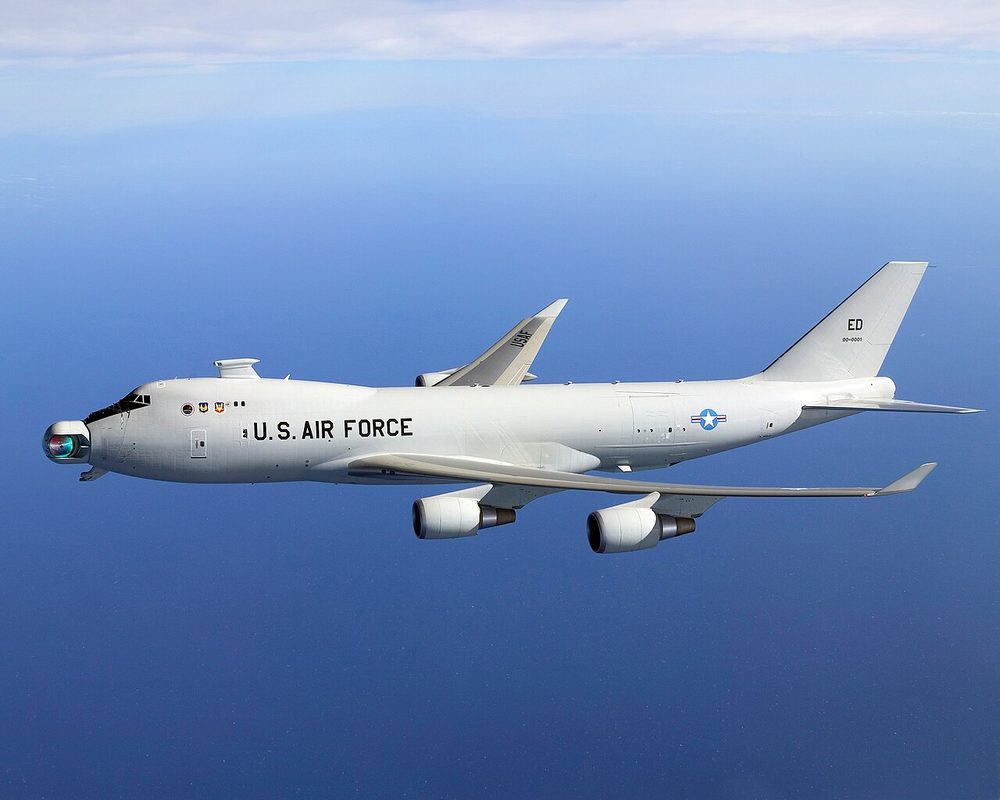
The Boeing YAL-1A Airborne Laser was a modified 747-400F with a megawatt-class chemical laser in its nose. The program proved the physics worked but could never be made operationally practical (U.S. Air Force photo).
The concept was audacious: mount a megawatt-class chemical oxygen iodine laser in the nose of a Boeing 747, fly it near hostile territory, and shoot down enemy ballistic missiles during their vulnerable boost phase, while they were still climbing and full of fuel. The Airborne Laser (ABL) program, designated YAL-1A, was the most ambitious directed-energy weapon ever attempted.
And it worked. On February 11, 2010, the YAL-1 successfully destroyed a liquid-fueled ballistic missile target in its boost phase over the Pacific Ocean, demonstrating for the first time that an airborne laser could shoot down a missile. It was a genuine technological breakthrough.
It was also completely impractical. To engage a missile during its brief boost phase, the 747 would need to loiter within roughly 200 kilometers of the launch site, well within range of any competent air defense system. Air Force Chief of Staff General Norton Schwartz bluntly assessed that the system "does not reflect something that is operationally viable." Secretary of Defense Robert Gates noted that operationalizing the concept would require 10 to 20 modified 747s, at $1.5 billion each, plus $100 million per year per aircraft in operating costs.
After sixteen years of development and $5.3 billion in expenditure, the program was cancelled in December 2011. The YAL-1 made its final flight on February 14, 2012, to Davis-Monthan Air Force Base, where it was stripped for parts and scrapped in September 2014. The most expensive proof-of-concept experiment in military history succeeded technically and failed strategically. The physics worked, but the operations never could.
2. VH-71 Kestrel: $4.4 Billion for a Helicopter the President Never Flew
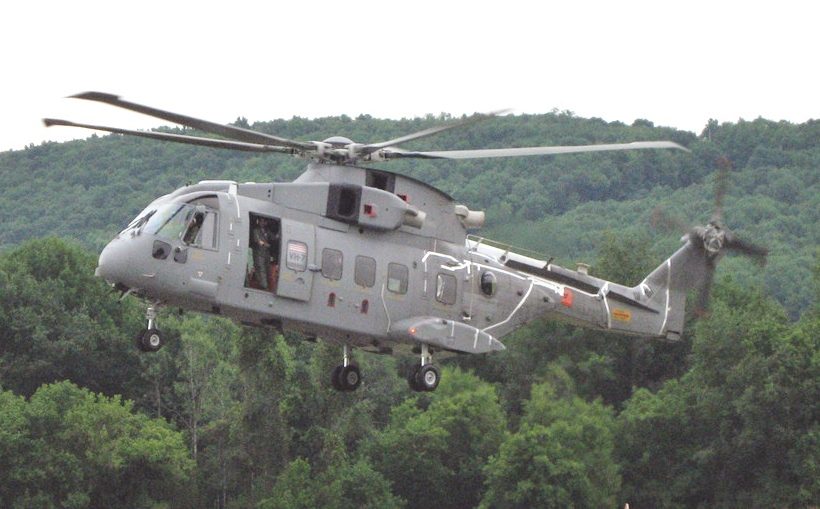
A VH-71 Kestrel prototype during test flight. Despite $4.4 billion spent, no VH-71 ever carried a president. The airframes were eventually sold to Canada for spare parts (Lockheed Martin photo).
In 2005, the U.S. Navy selected a variant of the AgustaWestland AW101 to replace the aging VH-3D Sea King as Marine One, the presidential helicopter. The Lockheed Martin VH-71 Kestrel was supposed to bring the presidential fleet into the 21st century with better range, speed, survivability, and communications than the Vietnam-era helicopters that had been carrying presidents since the Kennedy administration.
The original program cost was estimated at $6.1 billion for 28 helicopters. By 2007, costs had climbed to $11.2 billion. By 2009, the estimate had reached $13 billion, roughly $400 million per helicopter. A single VH-71 was approaching the cost of a fighter jet, for a transport helicopter that would spend most of its operational life flying between the White House lawn and Andrews Air Force Base.
The cost explosion was driven by requirements creep. The Marine One mission demands extraordinary capabilities: hardened communications linking the president to nuclear command and control, countermeasures against surface-to-air missiles, the ability to operate in chemical or biological attack environments, and self-sealing fuel tanks. Each requirement added weight, complexity, and cost. The helicopter grew heavier and more expensive with every specification change.
In February 2009, newly inaugurated President Barack Obama questioned why anyone would need a $400 million helicopter. By June, the Navy terminated the contract after spending $4.4 billion and taking delivery of nine airframes, none of which had been completed to the presidential configuration. The nine VH-71s were sold to Canada for $164 million, where they were cannibalized for spare parts to support Canada's fleet of similar helicopters used for search-and-rescue operations.
The presidential helicopter replacement effort eventually restarted with the Sikorsky VH-92A Patriot, which itself took over two decades from initial requirement to final delivery.
3. MEADS: $4 Billion on an Air Defense System America Walked Away From
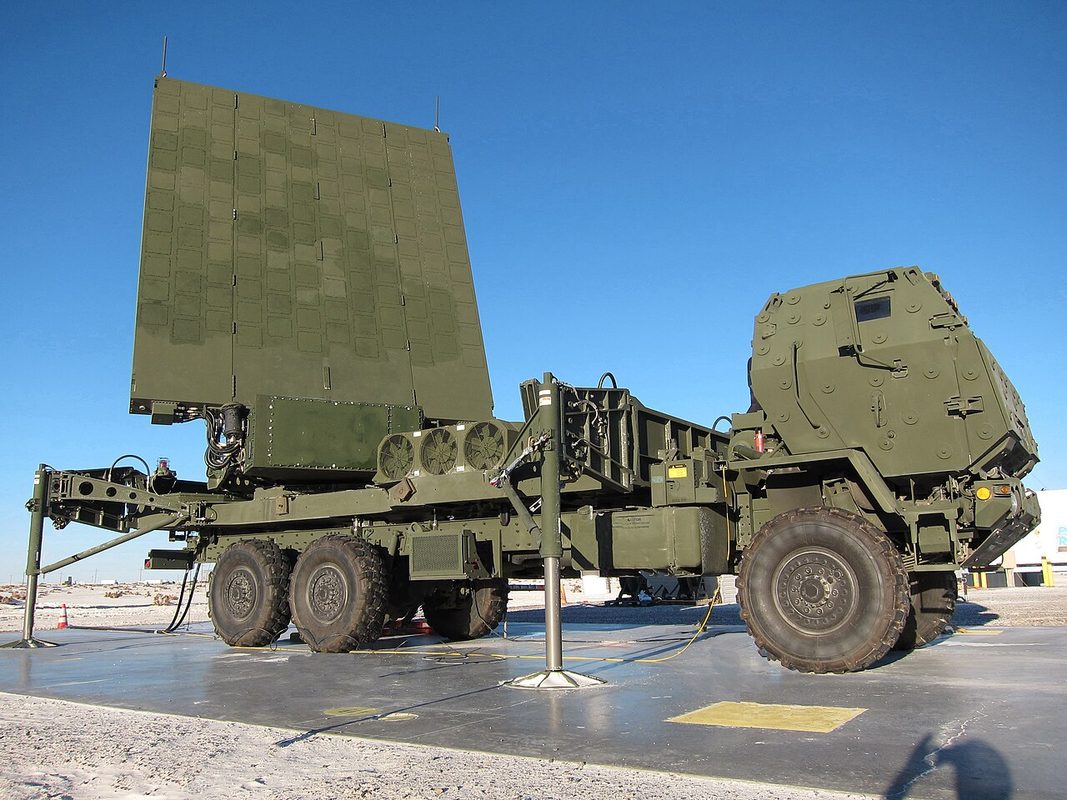
The MEADS surveillance radar was part of a multinational air defense system that the United States spent $4 billion developing before deciding it would never buy the finished product (MEADS International photo).
The Medium Extended Air Defense System (MEADS) was supposed to replace the Patriot missile system as NATO's primary mobile air and missile defense platform. Conceived as a multinational program between the United States, Germany, and Italy, MEADS promised 360-degree radar coverage, network-centric engagement capability, and dramatically improved mobility compared to Patriot.
The United States committed $1.9 billion to the initial design and development phase, with total U.S. investment eventually reaching approximately $4 billion. The program was intended to produce a system that all three partner nations would procure and operate, creating interoperability across NATO.
Then the United States walked away. In February 2011, the Department of Defense announced that while it would fulfill its commitment to complete the development effort, it would not procure MEADS. The stated reason was budgetary: the Pentagon concluded it could not afford both MEADS and upgrades to the existing Patriot system, and Patriot, despite its limitations, was the proven platform.
The decision left Germany and Italy holding the bag. Both nations had invested heavily in a system designed around American participation, and the U.S. withdrawal called the entire program's viability into question. Germany eventually adapted MEADS technology into its own air defense system, while Italy pursued a modified version. But the multinational program as conceived, the one the United States spent $4 billion developing, was effectively dead.
The MEADS cancellation is a case study in the risks of multinational defense procurement. When one partner's budget priorities change, the entire program can collapse. The United States got four billion dollars' worth of technology development. What it did not get was a single fielded system.
4. Manned Orbiting Laboratory: $1.56 Billion (1969) to Spy from Space
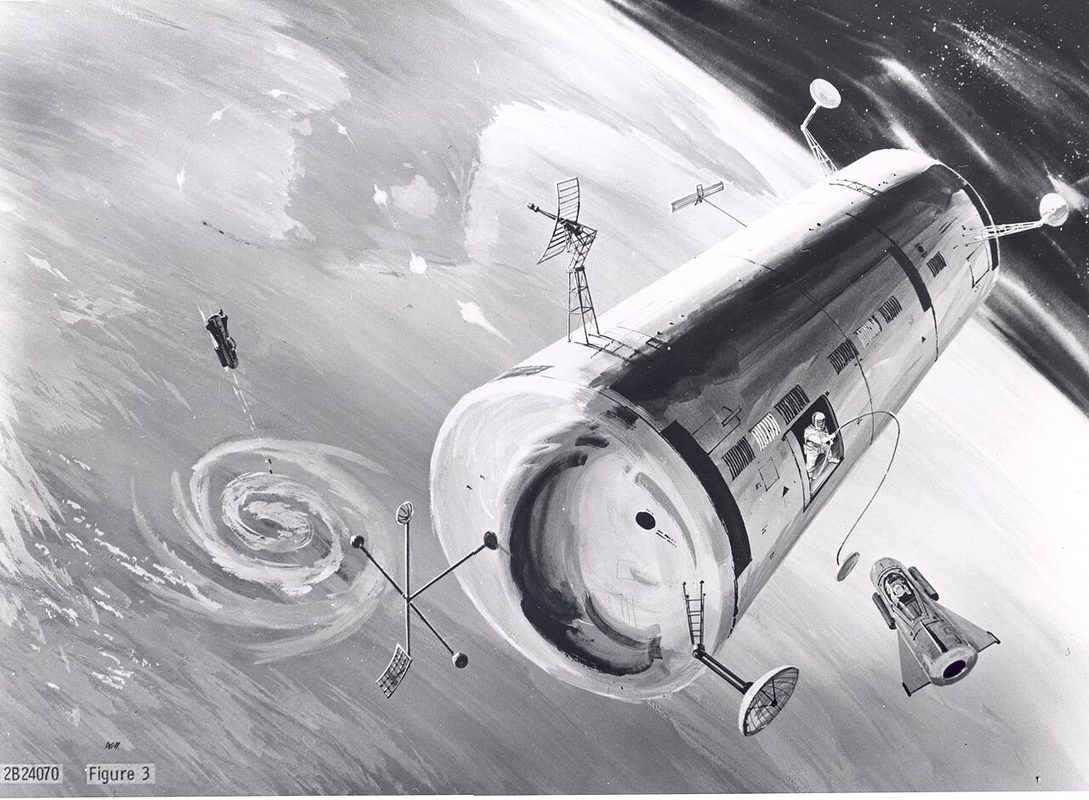
A concept illustration of the Manned Orbiting Laboratory with its Gemini-B crew capsule. The program was intended to give the Air Force a crewed spy platform in orbit (U.S. Air Force/NRO illustration).
Before the International Space Station, before Skylab, the U.S. Air Force wanted its own space station, not for science, but for espionage. The Manned Orbiting Laboratory (MOL), a classified joint program between the Air Force and the National Reconnaissance Office, was designed to put two-man crews in low polar orbit for 30-day missions, operating a high-resolution camera system to photograph Soviet military installations from space.
Approved in 1965 at an estimated cost of $1.5 billion, the program envisioned a series of space stations launched from Vandenberg Air Force Base in California. Crews would launch and return in modified Gemini-B capsules, spending a month photographing targets of intelligence interest before splashing down.
By 1969, the budget had doubled to $3 billion. The program was several years behind schedule and had flown only one unmanned test flight. More critically, the reconnaissance mission that MOL was designed to perform was being accomplished more cheaply and effectively by unmanned spy satellites. The KH-10 camera system proposed for MOL was already approaching obsolescence compared to the automated systems being developed by the NRO's other programs.
President Nixon cancelled MOL on June 10, 1969, after $1.56 billion had been spent, roughly equivalent to $13 billion in today's dollars. Not a single crewed mission was flown. The only tangible legacy was the transfer of several MOL astronauts to NASA, where they went on to fly Space Shuttle missions.
MOL represents a common pattern in military cancellations: a crewed system rendered unnecessary by automated alternatives. The same reconnaissance could be done by satellites that cost less, lasted longer, and did not require putting humans at risk in orbit. The technology that killed MOL, unmanned surveillance, would go on to reshape military intelligence for the next half-century.
5. Constellation-Class Frigate: $7.6 Billion Appropriated, Then Gutted
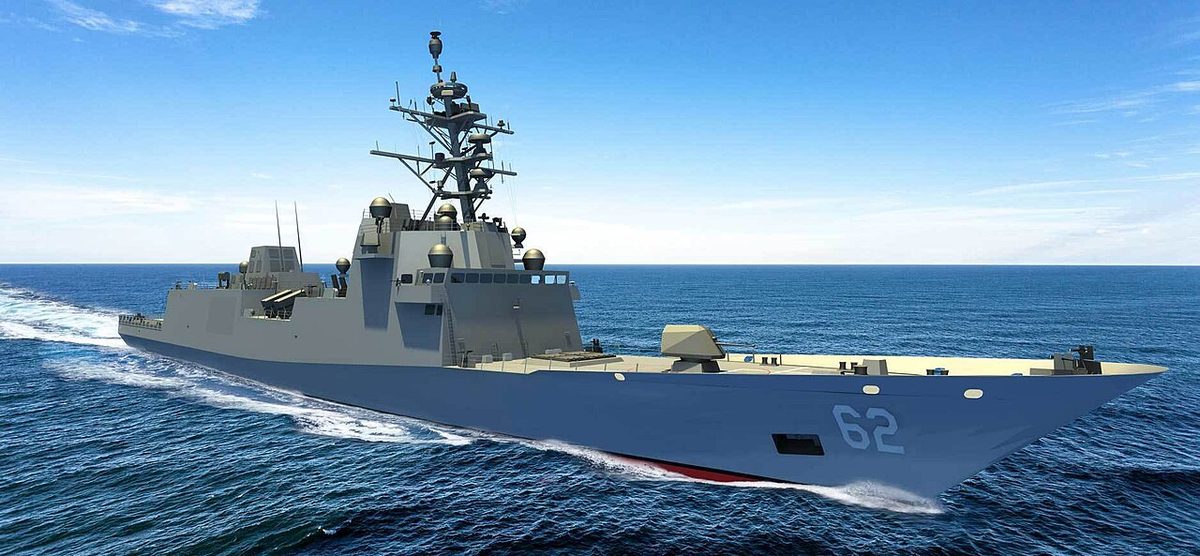
An artist rendering of the Constellation-class frigate. Originally planned as a 20-ship class, the program was slashed to just two hulls in November 2025 after cost overruns and design problems (U.S. Navy illustration).
This one is still fresh. In November 2025, Secretary of the Navy John Phelan announced that all but the first two ships of the Constellation-class frigate program had been cancelled. What had been planned as a 20-ship class (the Navy's first new frigate design in decades) was reduced to two hulls that were already too far along in construction to cancel economically.
The Constellation class was supposed to be the affordable solution to the Navy's small surface combatant gap. After the Littoral Combat Ship program was widely regarded as a failure, the Navy turned to a proven international design, the Italian FREMM frigate, as the basis for a new frigate that would provide capable but cost-effective escort and presence missions. Congress appropriated $7.6 billion for the program.
The problems accumulated quickly. The ship gained 759 tons over its design weight as the Navy added requirements. The cost of the lead ship, originally estimated below $1 billion, climbed to $1.28 billion, approaching the cost of an Arleigh Burke destroyer at 60 percent of the capability. Construction at Fincantieri Marinette Marine's Wisconsin shipyard fell years behind schedule.
Secretary Phelan's assessment was devastating: "The Constellation-class frigate was cancelled because, candidly, it didn't make sense anymore to build it. It was 80 percent of the cost of a destroyer and 60 percent of the capability. You might as well build destroyers."
The Constellation cancellation is notable because it repeated the exact pattern that doomed the Littoral Combat Ship, the very program it was supposed to replace. Requirements grew. Weight grew. Costs grew. And eventually, the "affordable" alternative became too expensive to justify. The Navy is now exploring new small surface combatant concepts, raising the question of whether the third attempt will break the pattern or repeat it.
The Pattern That Never Breaks
Five programs. Five cancellations. More than $20 billion spent. And the patterns are unmistakable.
Optimistic cost estimates. Every program on this list started with cost projections that were dramatically lower than the final bill. The VH-71 tripled. MEADS doubled. The Constellation frigate grew by 30 percent before it was even finished. The initial estimates are almost always wrong, and they are almost always wrong in the same direction: too low.
Requirements creep. The VH-71 gained weight because the president needed more secure communications, better countermeasures, and additional survivability features. The Constellation gained 759 tons because the Navy kept adding capabilities. MOL grew more expensive because the camera system kept being redesigned. In each case, the platform was asked to do more than it was originally designed for, and each addition compounded cost and schedule risk.
Technology overtaking the mission. MOL was killed by unmanned satellites. The YAL-1 was killed by the realization that no 747 could safely loiter within laser range of enemy missiles. The Constellation was killed by the realization that for the same money, you could buy a more capable destroyer. In each case, the threat environment or the available alternatives changed faster than the program could adapt.
Sunk cost resistance. In every case, the warning signs appeared years before cancellation. But the institutional momentum of major defense programs, including the contractors, the congressional districts, and the careers invested, kept the spending going long past the point where honest assessment would have called a halt. The $4.4 billion spent on VH-71 airframes that were sold for scrap was not inevitable. It was the result of a system that cannot easily admit when it has made a mistake.
The total cost of these five programs exceeds the entire annual defense budget of most countries on Earth. The weapons they produced fired zero shots in combat. The platforms they developed protected zero soldiers, sailors, or pilots. The money is gone. And somewhere in the Pentagon, the next program that will join this list is already past its first budget overrun.