David Kowalski writes about missile systems, air defense networks, and the technology behind precision strike warfare. His work examines how offensive and defensive missile capabilities shape the balance of power between nations.
Here is a number worth sitting with: at peak consumption during the early months of support to Ukraine, the United States was shipping Javelin anti-tank missiles faster than Lockheed Martin could build them. Within ten months, the Stinger man-portable air defense inventory, a weapon system that took decades to accumulate, was functionally depleted. Over 7,000 Javelins, roughly one-third of the entire U.S. stockpile, were transferred before the Pentagon paused shipments to protect its own readiness.
That was a proxy conflict. The missiles were not being fired by American forces. And yet the drawdown was severe enough to trigger what has become the largest guided-munitions production expansion since the Cold War.
On March 25, 2026, the Department of Defense announced a sweeping set of production agreements with Lockheed Martin, BAE Systems, and Honeywell, deals designed to quadruple output of some of America's most critical missile systems over the next seven years. Earlier, on February 4, RTX (formerly Raytheon) had signed five separate agreements to dramatically scale Tomahawk and SM-6 production. The combined effort represents tens of billions in investment and a fundamental restructuring of the defense industrial base.
The ambition is real. The question is whether it is remotely sufficient.
The production targets announced in March 2026 are striking in their scale. Lockheed Martin will ramp PrSM, the Army's next-generation precision strike missile, which replaces ATACMS, from a baseline of roughly 45 to 152 units per year up to 550 per year under a seven-year framework contract. THAAD interceptors, the high-altitude missile defense system that protects against ballistic missile threats, will increase from 96 per year to 400, a fourfold jump that BAE Systems will support by manufacturing the interceptor's seeker heads.
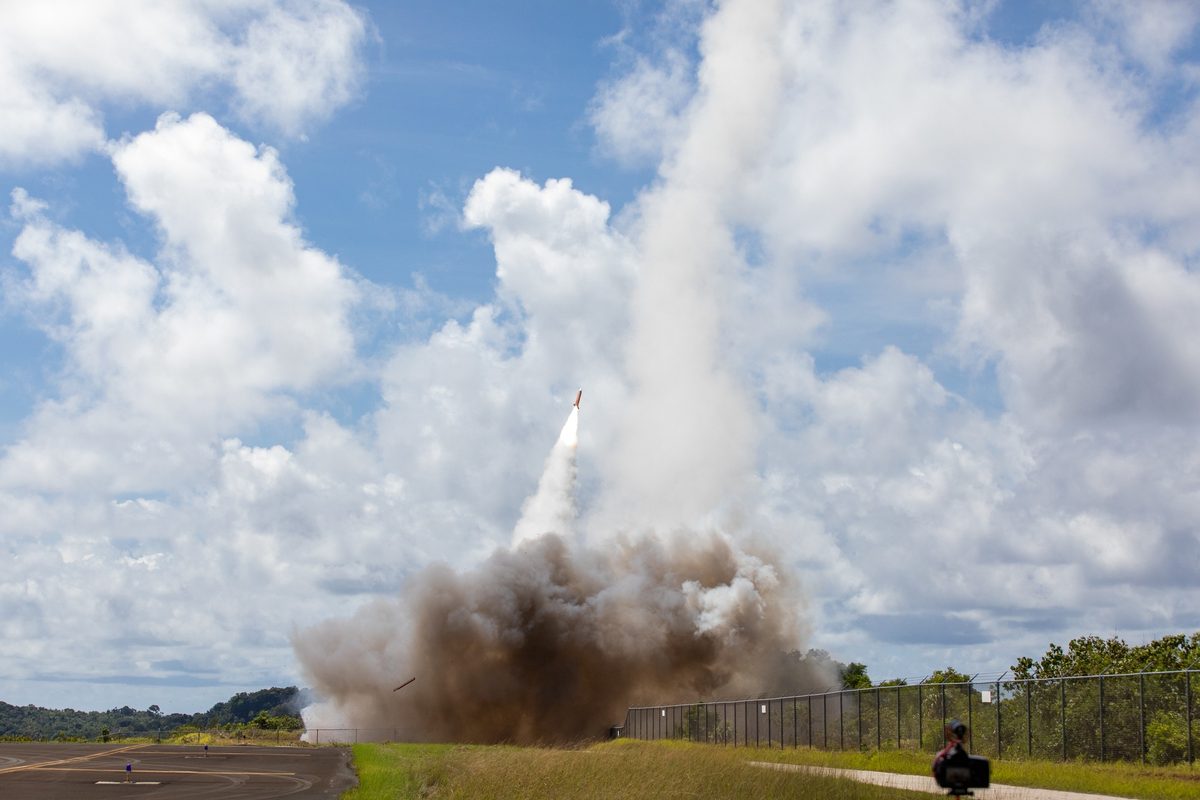
The RTX agreements signed in February target even more dramatic scaling. Tomahawk cruise missile production, which had languished at approximately 90 units per year, is slated to exceed 1,000 annually. The SM-6, a versatile missile used for air defense, anti-ship strikes, and terminal ballistic missile defense aboard Navy destroyers and cruisers, will scale to over 500 per year from previously undisclosed rates. Patriot PAC-3 MSE interceptors, the workhorse of U.S. and allied ground-based air defense, are targeted to increase from 600 to 2,000 per year.
Honeywell announced it will invest $500 million of its own capital into expanding production of navigation systems, actuators, and electronic warfare components, the subsystems that go inside nearly every guided munition in the U.S. arsenal. Lockheed Martin is pouring over $150 million across five years into its Troy, Alabama facility, a sprawling campus of 52 buildings on 4,000 acres that has historically produced more than 190,000 missiles.
On paper, the numbers look transformational. In practice, every one of these targets faces headwinds that range from difficult to structural.
The Replacement Math Does Not Add Up
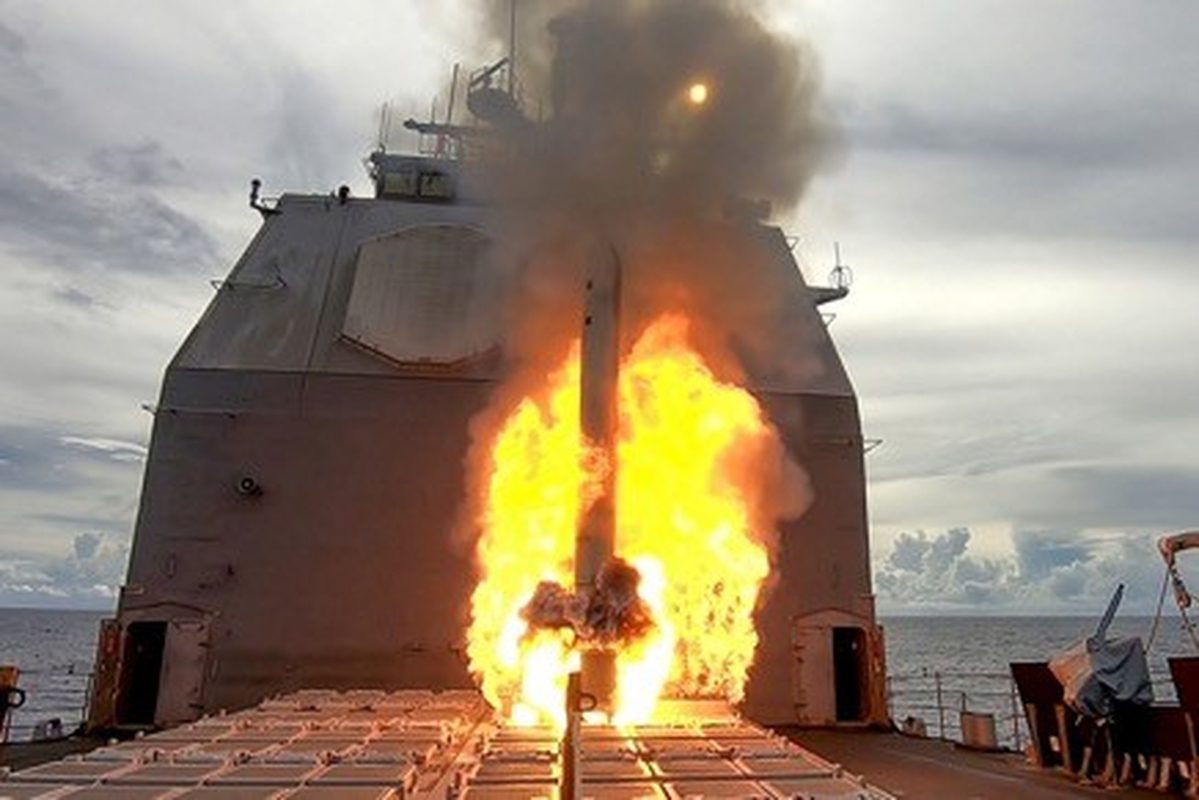
A Tomahawk cruise missile launches from a ship's Vertical Launch System. Current production of ~90 per year means replacing an 850-missile expenditure would take nearly a decade.
Consider Tomahawk. At the legacy production rate of approximately 90 missiles per year, replacing an expenditure of 850 missiles, a plausible figure in any significant naval engagement, would require 9.5 years of uninterrupted production. Even at the ambitious new target of 1,000-plus per year, replacing that same stockpile takes nearly a full year. And each Tomahawk costs approximately $3.5 million, carries a 24-month lead time from order to delivery, and requires components sourced from dozens of specialized suppliers.
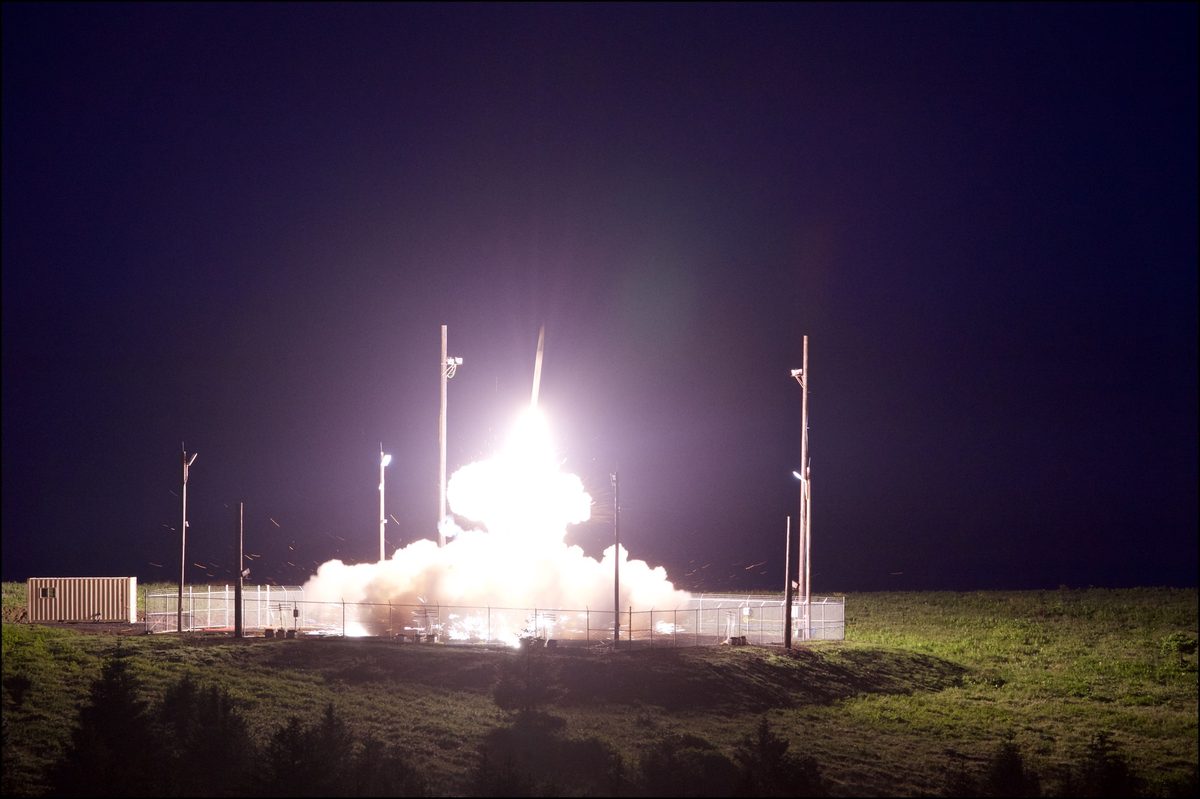
THAAD tells an even more sobering story. The system has received no new interceptor deliveries since July 2023. A backlog of approximately 100 interceptors is not expected to begin arriving until April 2027, nearly four years without new production reaching the force. Each THAAD interceptor costs between $12.7 million and $15.5 million, making it one of the most expensive conventional missiles in the inventory. At $15 million per round, a single THAAD battery's full load of 48 interceptors represents over $700 million in missiles alone.
The production-versus-consumption gap becomes even more stark when you look at historical expenditure rates. During the opening phase of Operation Iraqi Freedom in 2003, the U.S. and U.K. fired over 800 Tomahawks in the first month. That was against a regional adversary with limited air defenses and no capacity to threaten American production facilities. A conflict against a near-peer adversary would demand not just more missiles, but more categories of missiles, anti-ship, air defense, land attack, ballistic missile defense, all simultaneously.
Production Rates vs. Targets
Missile System
Current Rate (per year)
Target Rate (per year)
Unit Cost
Time to Replace 1,000 Units at Target Rate
PrSM
45–152
550
$1.8–3.5M
~22 months
THAAD Interceptor
96
400
$12.7–15.5M
~30 months
Tomahawk
~90
1,000+
~$3.5M
~12 months
Patriot PAC-3 MSE
600
2,000
$3.7–4.7M
~6 months
SM-6
Undisclosed
500+
$4–5M (est.)
~24 months
SM-3 Block IIA
Limited
TBD
$24–28M
N/A
The table reveals a pattern: even at quadrupled production rates, replacing a serious expenditure of any single system takes one to three years. Replacing expenditures across multiple systems simultaneously, the realistic scenario in a major conflict, would take longer still, because many of these missiles share subsystem suppliers, production facilities, and the same constrained pool of skilled labor.
The Industrial Base Problem
A THAAD interceptor launches during a nighttime test. No new THAAD interceptors have been delivered since July 2023, with backlog deliveries not expected until April 2027.
Signing contracts for higher production rates is the easy part. The defense industrial base that must actually build these weapons has been hollowing out for three decades.
Since the post-Cold War drawdown of the 1990s, the U.S. missile production ecosystem has lost approximately 40 percent of its small business suppliers. These are not the prime contractors whose logos appear in press releases. These are the second-, third-, and fourth-tier companies that manufacture circuit boards, rocket motor casings, seeker lenses, guidance fins, thermal batteries, and the thousands of other specialized components that make a guided missile function. When a small supplier with 50 employees closes its doors because defense contracts dried up, the institutional knowledge, the tooling, the quality certifications, the workforce expertise, disappears with it.
Rebuilding that base is not simply a matter of writing larger checks. A new solid rocket motor production line takes three to five years to qualify. Training a technician to hand-solder connections inside a missile seeker, work that cannot be automated because of the precision and variability involved, takes 18 to 24 months. The workforce that performed this work during the Reagan-era buildup has largely retired, and the pipeline of replacements has not kept pace.
Then there is the materials problem. Critical minerals, gallium, germanium, rare earth elements, are essential inputs for the semiconductors, infrared detectors, and electronic warfare components inside modern missiles. China controls a dominant share of global processing for many of these materials. In 2023, Beijing imposed export restrictions on gallium and germanium, a direct signal that these supply chains are vulnerable to disruption precisely when demand spikes. Honeywell's $500 million investment in navigation and EW component production is partly an attempt to build buffer capacity, but reshoring an entire mineral processing chain is a decade-long project at minimum.
What Ukraine Revealed
A Patriot missile launches during an air defense exercise. PAC-3 MSE production is targeted to more than triple, from 600 to 2,000 interceptors per year.
The Ukraine conflict served as a stress test for the Western munitions industrial base, and the results were alarming. The drawdown of U.S. stockpiles was rapid and deep, not because the quantities shipped were enormous by historical standards, but because the production capacity to replace them was so limited.
The 7,000 Javelins transferred represented roughly one-third of the total inventory. Javelin production at the time was approximately 2,100 units per year. Even dedicating the entire production run exclusively to replenishment, shipping zero Javelins to any other ally, selling none through foreign military sales, retaining none for training, rebuilding the stockpile would have taken over three years.
Stinger was worse. The production line had been effectively dormant, and restarting it required requalifying suppliers, sourcing obsolete components, and retraining workers. The ten-month depletion timeline versus the multi-year restart timeline exposed a fundamental asymmetry: modern missile inventories can be consumed in months but require years to rebuild.
This asymmetry is baked into the physics of the problem. A PrSM round contains an advanced seeker, inertial navigation, GPS receivers, a solid rocket motor with precisely cast propellant, flight control surfaces with actuators, thermal batteries, and onboard processing. Each subsystem has its own supply chain, its own production constraints, and its own bottleneck potential. Scaling the final assembly line means nothing if the seeker vendor cannot scale in parallel.
The Pacific Calculus
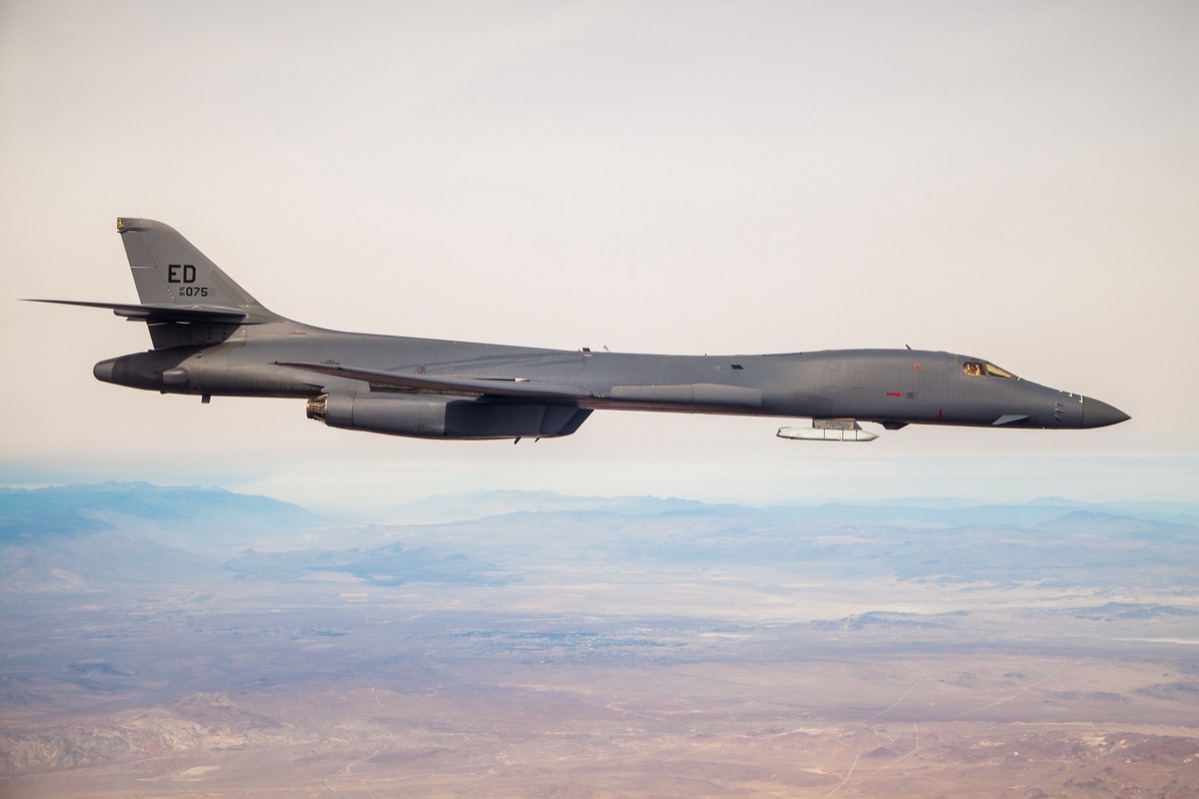
A B-1B Lancer carries JASSM cruise missiles over Edwards AFB. In a Pacific contingency, air-launched standoff weapons would be expended at rates that would stress any production capacity.
Everything discussed so far concerns relatively modest consumption scenarios, a proxy conflict in Europe, limited strike operations, peacetime attrition through training and testing. The scenario that keeps Pentagon planners awake is the one where consumption rates make Ukraine look like a rounding error: a conflict in the Western Pacific.
Wargames conducted by the Center for Strategic and International Studies, the RAND Corporation, and the Pentagon's own Joint Staff have consistently produced the same finding. In a Taiwan Strait contingency, the United States would expend the majority of its long-range precision munitions, JASSM, LRASM, Tomahawk, SM-6 in anti-ship mode, within the first two to three weeks. The distances are vast, the threat density is extreme, and the targets, amphibious fleets, air bases, missile batteries, logistics nodes, number in the thousands.
CSIS's 2023 wargame estimated that the U.S. would fire over 5,000 long-range missiles in the first three weeks of a Pacific conflict. At current production rates across all relevant systems, replacing that expenditure would take roughly four to five years. At the new target rates, it would still take well over a year, assuming no disruption to production facilities, supply chains, or the transportation networks that move components between them.
And this is where the strategic math becomes truly uncomfortable. China's missile production capacity dwarfs that of the United States. The PLA Rocket Force fields an estimated 2,500 or more ballistic and cruise missiles, with production lines that benefit from state-directed industrial policy, captive supply chains, and lower labor costs. China produces the raw materials that go into American missiles. In a conflict, those materials stop flowing on day one.
The production surge announced in 2026 is, in many ways, a belated acknowledgment of this arithmetic. The U.S. spent three decades optimizing its defense industry for efficiency, just-in-time delivery, sole-source contracts, minimal inventory buffers. That approach works brilliantly in peacetime. It fails catastrophically when demand spikes by an order of magnitude overnight.
None of this means the production expansion is misguided. Quadrupling PrSM output to 550 per year is a genuine capability gain. Scaling Tomahawk from 90 to 1,000-plus transforms the Navy's ability to sustain strike operations beyond the first salvo. Tripling Patriot PAC-3 MSE production to 2,000 per year provides the volume needed to equip allied air defense networks across Europe and the Pacific simultaneously.
The investments in facilities, workforce, and supply chain resilience are equally important. Lockheed's $150 million expansion at Troy represents real concrete, real machine tools, and real production capacity that did not exist before. Honeywell's $500 million bet on subsystem production addresses one of the least visible but most critical bottlenecks in the entire chain.
But the uncomfortable truth remains: the gap between plausible consumption rates and achievable production rates is not a problem that can be solved by quadrupling output. It is a structural feature of modern guided-munitions warfare. The missiles are too complex, too expensive, and too dependent on fragile supply chains to be produced at the rates a major conflict would demand.
The Pentagon knows this, which is why the production surge is being paired with other initiatives, autonomous collaborative munitions, directed-energy weapons, cheaper attritable drones that can substitute for expensive missiles in some roles. The future force will need all of them. The production lines ramping up today in Troy, Alabama and Tucson, Arizona are building the weapons the military needs now. Whether they can build enough of them, fast enough, for the conflict everyone is preparing for, that is a question the math has already answered.