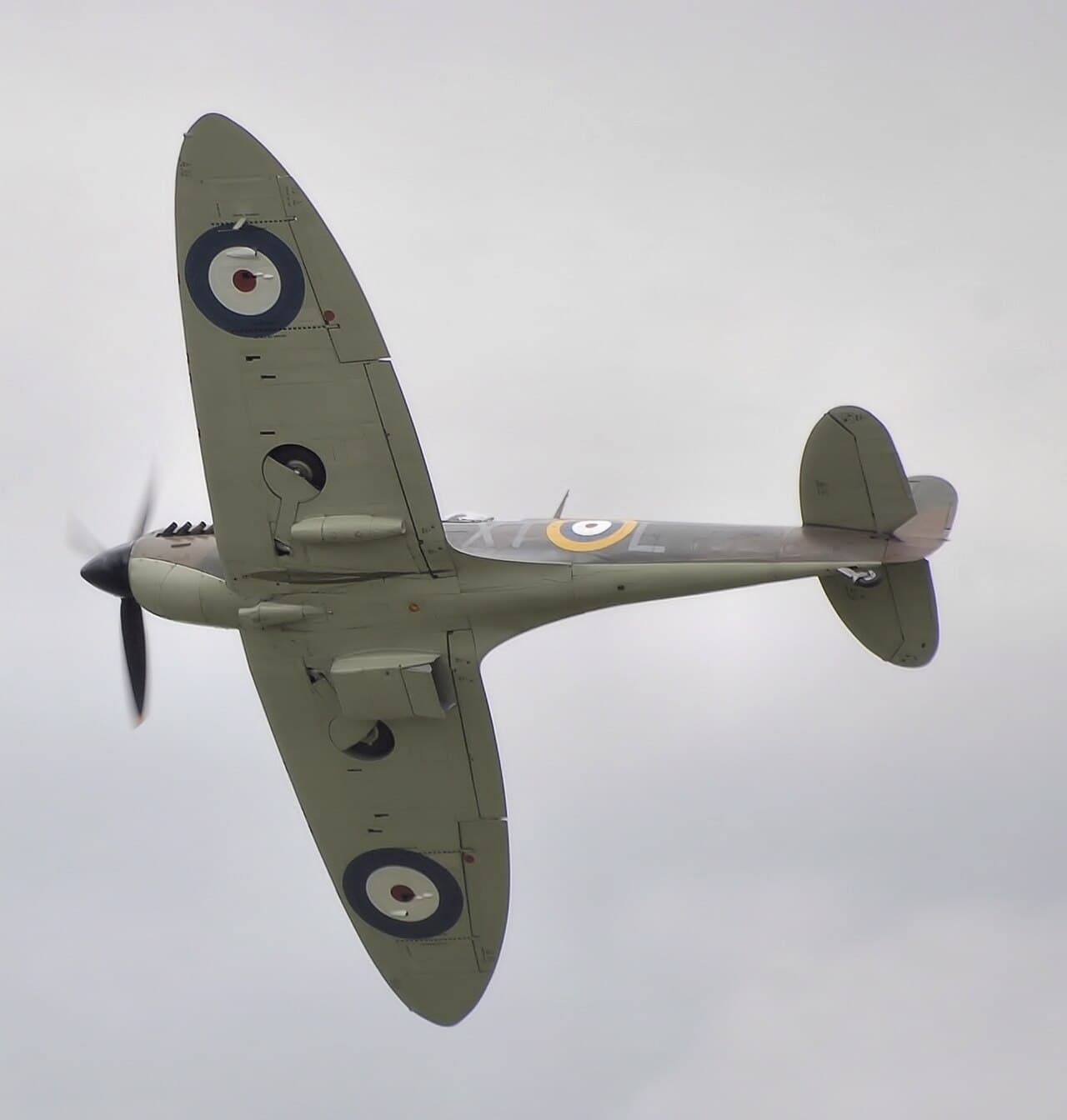
Supermarine Spitfire Mk IX
Supermarine
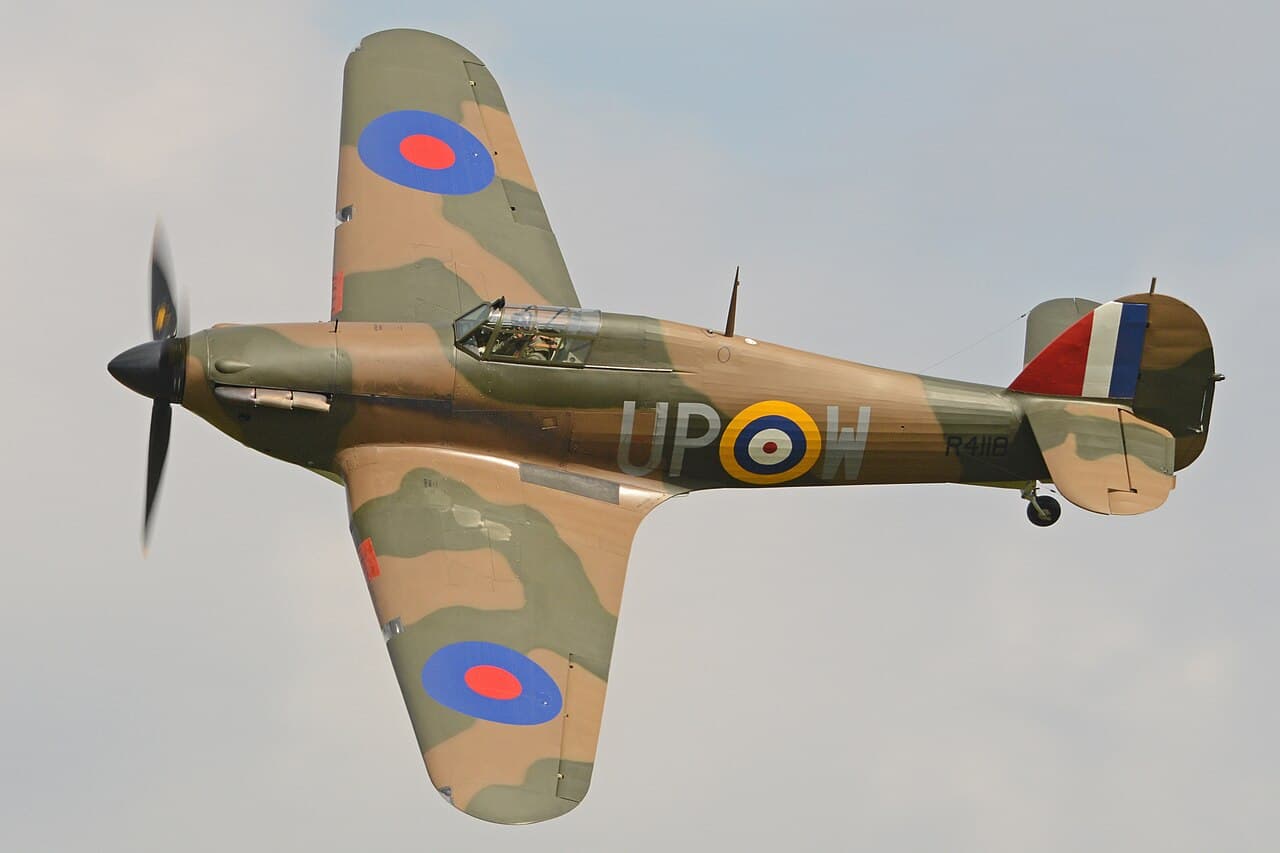
Hawker Hurricane Mk IIC
Hawker Aircraft
Spitfire vs Hurricane
Britain's Battle of Britain Icons, The Thoroughbred and the Workhorse That Saved a Nation Together
The Bottom Line
The Spitfire Mk IX was the superior pure fighter by a decisive margin, but the Hurricane Mk IIC excelled in roles where raw performance mattered less than firepower, ruggedness, and operational flexibility. Britain needed both, neither alone would have been enough.
Who Wins Each Scenario?
Air superiority against Bf 109G or Fw 190A
Spitfire Mk IX
The Spitfire Mk IX was purpose-built for this and could meet both primary Axis fighters on equal or better terms. The Hurricane was simply too slow and limited at altitude.
Bomber interception (Battle of Britain conditions)
Hurricane Mk IIC
Against bomber formations at 15,000–20,000 feet, the Hurricane's rock-steady stability, four-cannon armament, and ability to absorb return fire made it the superior bomber-destroyer.
Ground attack and close air support
Hurricane Mk IIC
Four 20mm cannons, bombs, rockets, wide undercarriage for rough strips, and rugged construction made the Hurricane a natural ground-attack platform.
High-altitude interception above 25,000 feet
Spitfire Mk IX
The Spitfire Mk IX's two-stage supercharger gave exceptional performance above 25,000 feet where the Hurricane's engine was starved of boost. No contest.
Operations from austere or damaged airfields
Hurricane Mk IIC
The Hurricane's wide undercarriage, rugged construction, and tolerance for rough conditions made it far better suited to improvised or battle-damaged airfields.
Rapid force generation under wartime production constraints
Hurricane Mk IIC
The Hurricane could be produced faster, repaired more quickly, and brought to operational status with less specialized infrastructure.
Interactive 3D Models
Performance Profile
Overall capability comparison across six combat dimensions
Head-to-Head Specifications
Key performance metrics compared side by side
Size Comparison
Both aircraft drawn to the same scale, the Hurricane Mk IIC has 3.2ft greater wingspan and is 1.2ft shorter
Performance Analysis
How each aircraft performs across key combat dimensions
Speed
WINNER: Spitfire Mk IXThe Spitfire Mk IX achieved 408 mph at 25,000 feet, approximately 75 mph faster than the Hurricane Mk IIC at comparable altitude.
The Hurricane was slightly faster at very low altitudes in certain clean configurations, though this advantage was marginal and disappeared above 5,000 feet.
The Spitfire Mk IX held a decisive speed advantage at all operationally relevant altitudes. The Hurricane Mk IIC's top speed of approximately 330 mph at 18,000 feet was respectable by early-war standards but placed it at a serious disadvantage against contemporary Axis fighters by 1942.
Climb Rate
WINNER: Spitfire Mk IXThe Spitfire Mk IX could climb at approximately 4,580 feet per minute initially, reaching 20,000 feet in about 5 minutes 42 seconds. The two-stage supercharger maintained excellent climb performance at high altitude.
The Hurricane had adequate initial climb for intercepting bomber formations, and its wider undercarriage made it more forgiving during takeoff from rough or damaged airfields.
The Spitfire's climb rate advantage was substantial, roughly 40% better than the Hurricane Mk IIC, and the gap widened dramatically above 20,000 feet. This was central to the Battle of Britain tactical doctrine.
Maneuverability
WINNER: Spitfire Mk IXThe Spitfire's elliptical wing provided exceptional lift characteristics and a tighter turning circle than almost any contemporary fighter. The Mk IX retained these qualities while adding substantially more power.
The Hurricane's thicker wing and lower wing loading gave it excellent low-speed handling and a tight turn radius at lower speeds. Its stability in turns made it an excellent gun platform.
The Spitfire was superior in high-speed maneuvering and at altitude, while the Hurricane's thick wing gave it advantages in slow-speed turning fights closer to the ground. For bomber interception, the Hurricane's stability was arguably more valuable than raw agility.
Altitude Performance
WINNER: Spitfire Mk IXThe Spitfire Mk IX had a service ceiling of approximately 43,000 feet and maintained excellent performance above 30,000 feet, essential for countering high-altitude raids.
The Hurricane's service ceiling of approximately 36,000 feet was adequate for engaging most bomber formations at 15,000–25,000 feet.
The altitude gap was enormous. The Spitfire's two-stage supercharger gave it 7,000 feet more ceiling and dramatically better performance above 25,000 feet, the single most important reason the Spitfire remained a front-line fighter while the Hurricane could not.
Range & Endurance
EvenThe Spitfire Mk IX had a combat range of approximately 434 miles on internal fuel, with drop tanks extending this to roughly 680 miles.
The Hurricane Mk IIC had a range of approximately 460 miles on internal fuel with slightly more efficient cruise fuel consumption.
Range was roughly comparable between the two types. Both were designed as point-defense interceptors rather than long-range escorts.
Dive Speed
WINNER: Spitfire Mk IXThe Spitfire Mk IX could dive extremely rapidly with its thin wing generating less drag. Its reinforced structure handled the additional power and speed well.
The Hurricane was extremely robust in dives and pilots trusted it to hold together in steep pullouts. Its fabric-covered fuselage could absorb damage that would have caused structural failure in stressed-skin aircraft.
The Spitfire achieved higher terminal dive speeds due to cleaner aerodynamics, but the Hurricane was praised for its structural integrity during aggressive dive-and-pullout maneuvers.
Roll Rate
WINNER: Spitfire Mk IXThe Spitfire Mk IX featured clipped-wing variants that substantially improved roll rate. Even the standard wing Mk IX rolled faster than the Hurricane.
The Hurricane's roll rate was adequate for bomber interception where rolling agility was less critical than steady tracking.
The Spitfire consistently outrolled the Hurricane. The Hurricane's fabric-covered control surfaces could develop flutter issues at higher speeds.
Cockpit Visibility
WINNER: Hurricane Mk IICThe Spitfire's bubble canopy in later variants offered good all-round visibility. The slim nose profile gave excellent forward visibility.
The Hurricane's cockpit sat higher relative to the nose and wing, giving the pilot excellent visibility forward and to the sides. The wide-track undercarriage provided better ground visibility during taxiing.
The Hurricane generally offered better visibility for the pilot, particularly during takeoff, landing, and searching for bomber formations below.
Photo Gallery, 10 Photos

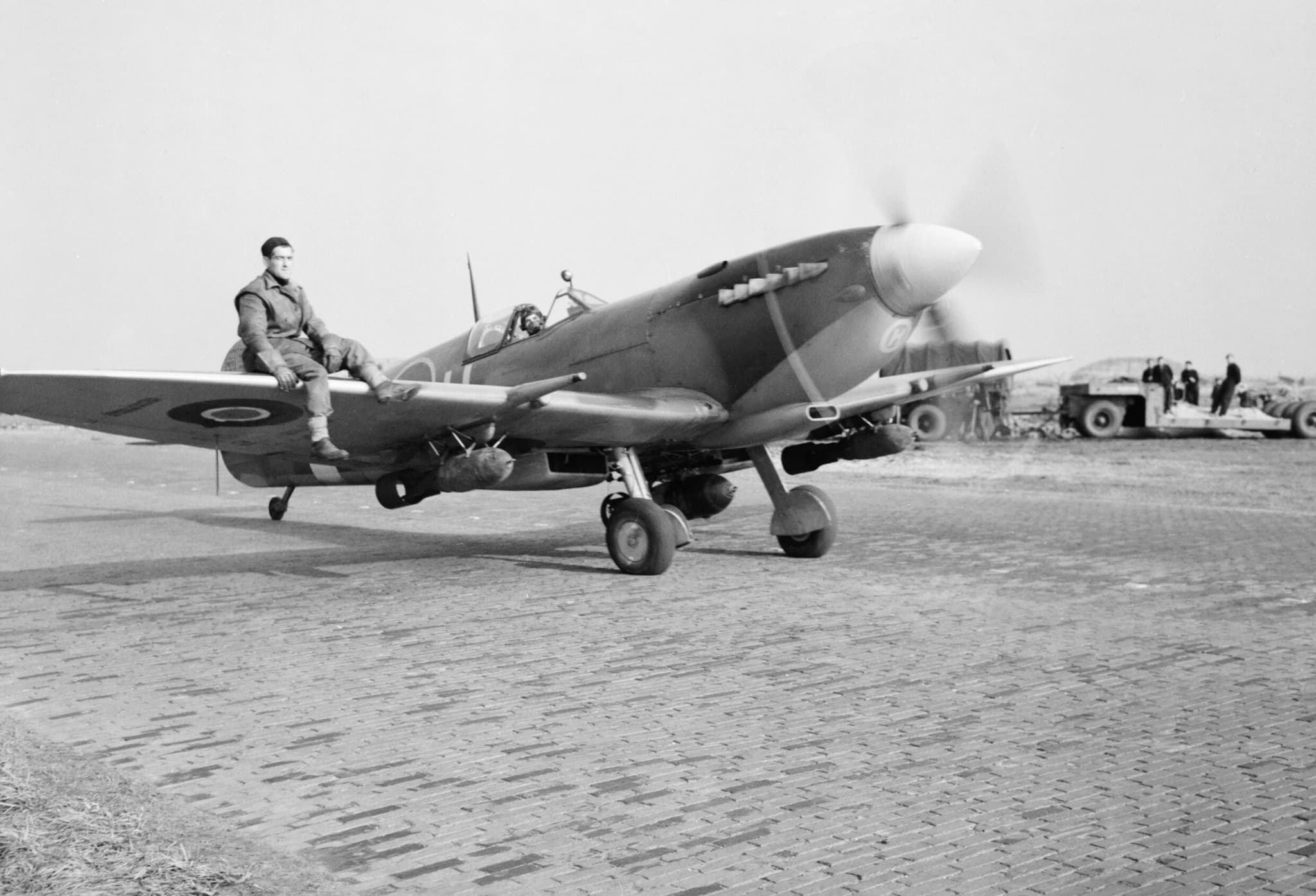
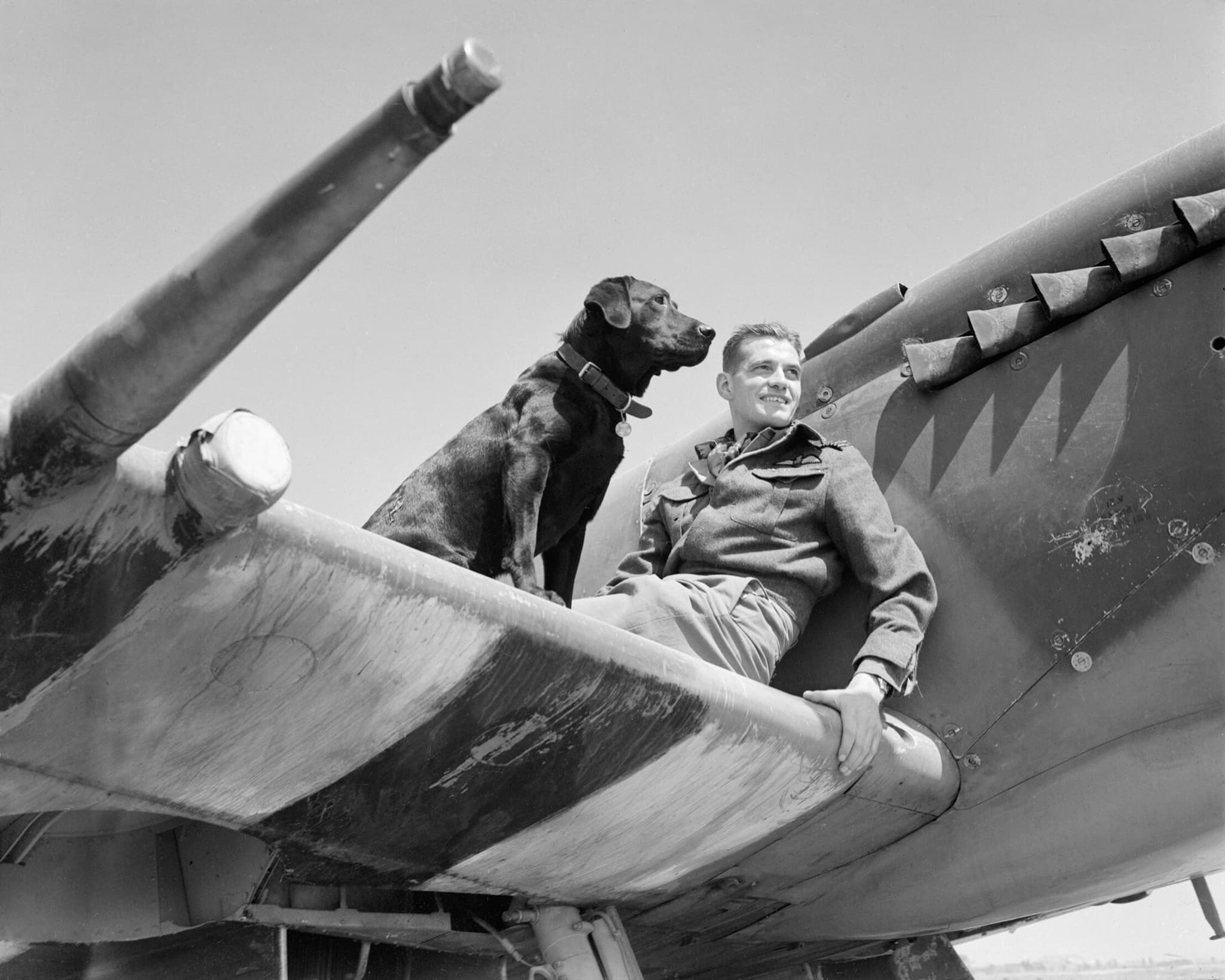

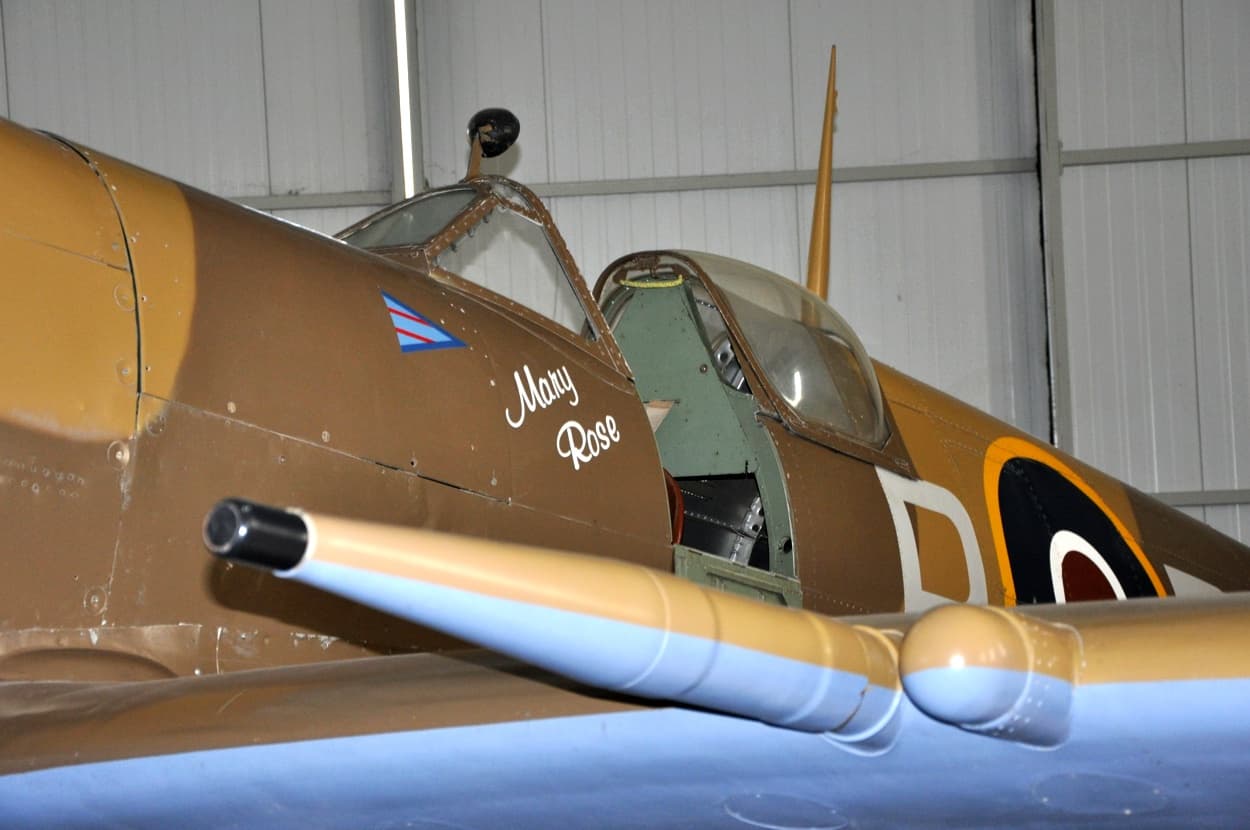

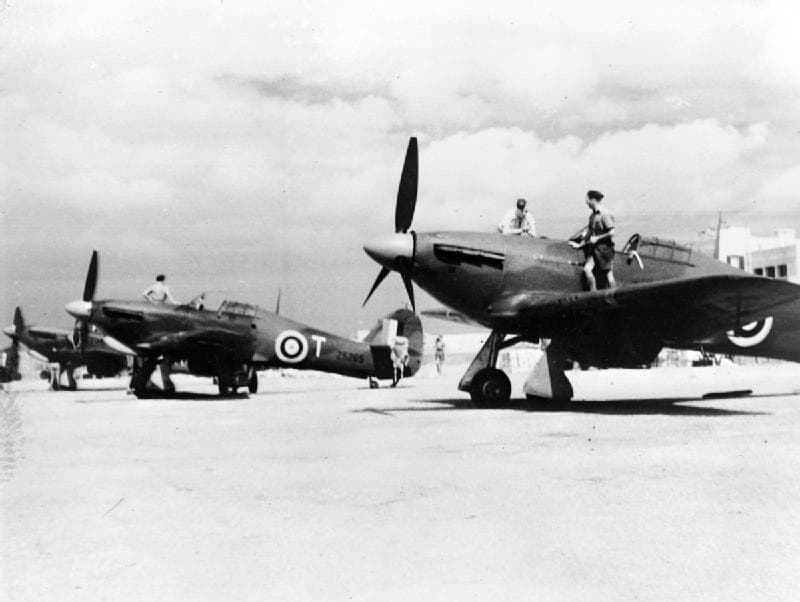
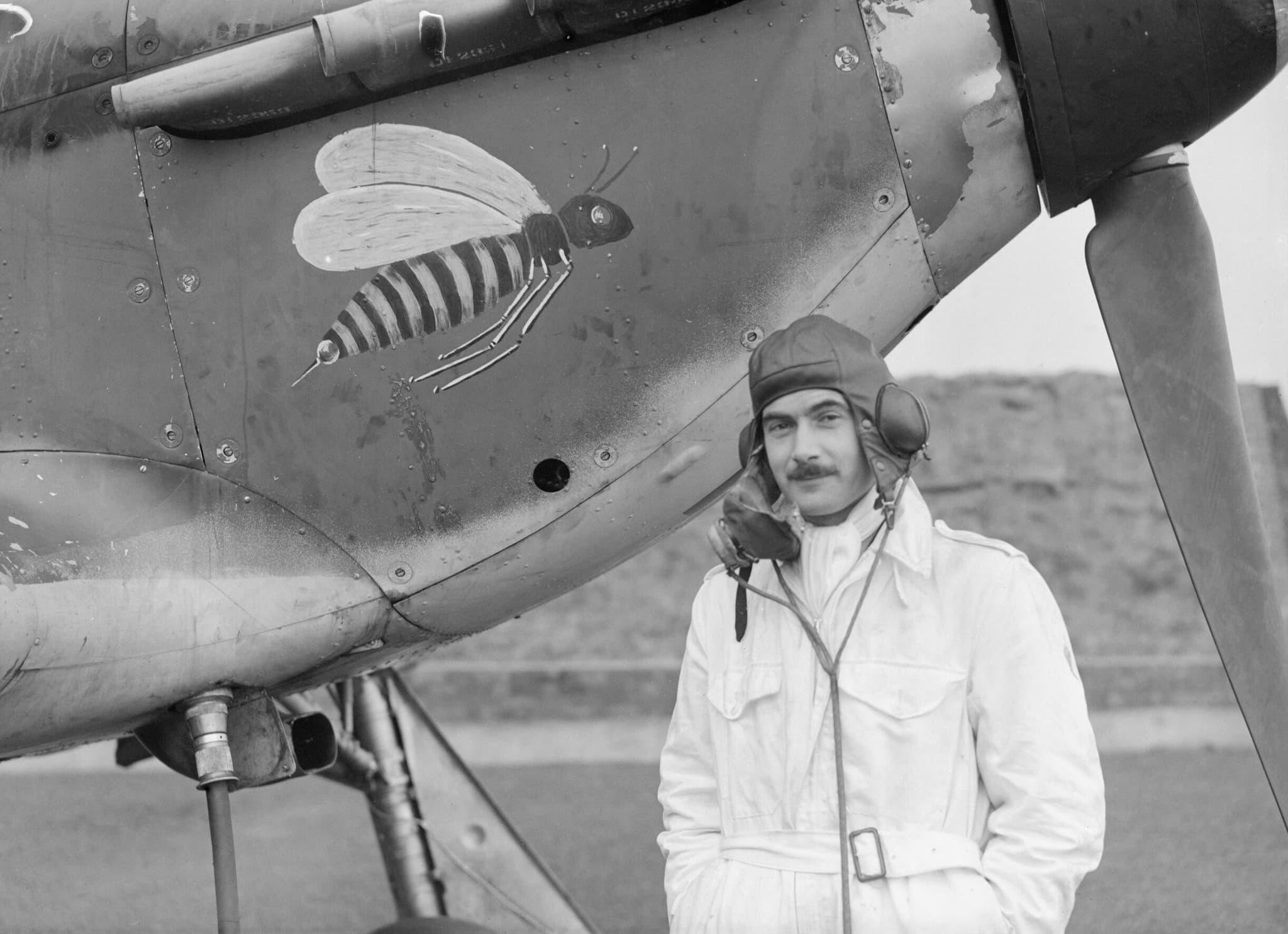
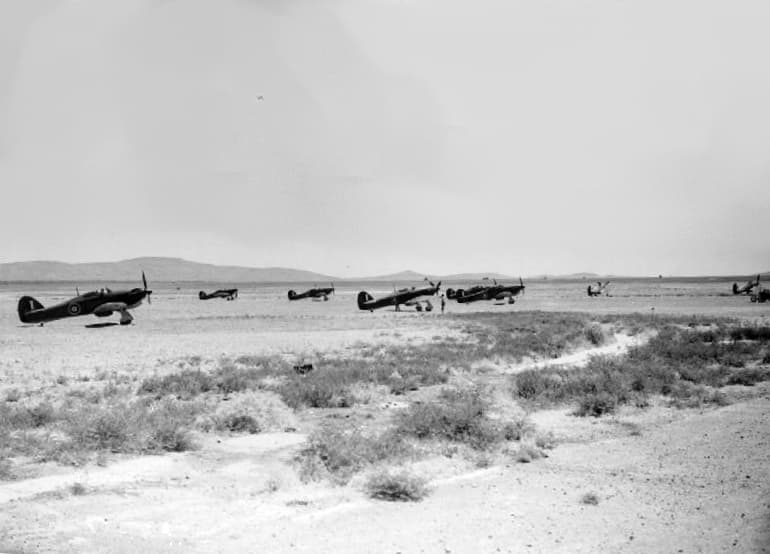

Click any photo to enlarge · 10 photos
Historical Context
The strategic backdrop that shaped both aircraft
The story of the Spitfire and Hurricane is inseparable from the story of Britain's survival in 1940. Both aircraft traced their origins to the mid-1930s Air Ministry specifications, but they emerged from radically different design traditions. Sydney Camm's Hurricane, which first flew in November 1935, was essentially the last great biplane fighter stretched into monoplane form, its fuselage built around a Warren girder structure of metal tubes covered in fabric, its thick wing housing eight .303 Browning machine guns. Reginald Mitchell's Spitfire, first flying in March 1936, was a clean-sheet design with stressed-skin construction, that iconic elliptical wing, and a thinner airfoil that gave it a decisive speed advantage.
When war came in September 1939, the Hurricane was available in far greater numbers precisely because its simpler construction lent itself to rapid production. By the summer of 1940, as the Luftwaffe launched its air offensive against Britain, Fighter Command fielded roughly twice as many Hurricane squadrons as Spitfire squadrons. Air Vice-Marshal Keith Park, commanding the crucial 11 Group defending southeast England, developed the tactical doctrine that would define the battle: where possible, Spitfires would climb to engage the high-flying Bf 109 escorts while Hurricanes attacked the bomber formations at lower altitudes.
This was not a reflection of the Hurricane's inferiority so much as an acknowledgment of each aircraft's strengths, the Spitfire's superior high-altitude performance and rate of climb made it better suited to the fighter-versus-fighter role, while the Hurricane's rock-steady gun platform and greater structural resilience made it ideal for pressing home attacks against formations of heavily armed bombers. The partnership worked brilliantly. On September 15, 1940, now celebrated as Battle of Britain Day, both types flew together in the massive engagements over London that convinced the German High Command that air superiority over the English Channel was unachievable.
After the Battle of Britain, the two aircraft's paths diverged sharply. The Spitfire's thin wing and advanced construction allowed continuous development through dozens of marks, its Merlin engine eventually giving way to the even more powerful Griffon. The Mk IX, introduced in mid-1942 to counter the Fw 190A, represented perhaps the Spitfire's finest wartime iteration. The Hurricane, meanwhile, reached the limits of its development potential. The Mk IIC, armed with four belt-fed 20mm Hispano cannons, packed fearsome firepower but could not overcome the airframe's fundamental aerodynamic limitations. It found new life as a ground-attack aircraft, the "Hurribomber", and served with distinction in North Africa, Burma, and the Mediterranean.
Notable Combat Encounters
Key engagements where these aircraft faced each other in combat
Battle of Britain Day saw the Luftwaffe launch two massive raids against London, committing over 1,100 sorties. Fighter Command scrambled every available squadron in 11 Group and called upon reinforcements from 10 and 12 Groups. Hurricanes and Spitfires operated in their complementary roles, Spitfires against the high escort while Hurricane squadrons tore into the bomber formations. No. 303 (Polish) Squadron alone claimed multiple kills flying Hurricanes, while Spitfire squadrons from Biggin Hill and Hornchurch fought running battles with Bf 109s above.
Outcome
The RAF claimed 185 enemy aircraft destroyed (actual German losses were 56 aircraft, with many more damaged). British losses were 29 fighters. The scale of resistance convinced Hitler to postpone Operation Sea Lion indefinitely.
This day demonstrated the devastating effectiveness of the Spitfire-Hurricane tactical pairing. The psychological impact on German planners was decisive, it proved that Fighter Command was far from defeated.
Known as "The Hardest Day," August 18 saw some of the most intense fighting of the entire Battle of Britain. Hurricanes of No. 615 Squadron scrambled from Kenley just minutes before the airfield was devastated by low-level Dornier Do 17 attacks. Spitfires from No. 602 Squadron engaged Bf 109 escorts over Kent while Hurricane squadrons intercepted Heinkel and Junkers formations heading for sector stations.
Outcome
Both sides suffered their heaviest losses of the battle. The Luftwaffe lost 69 aircraft; the RAF lost 68, including 29 Hurricanes and 10 Spitfires. Losses were roughly equal, unsustainable for the Luftwaffe given their longer replacement pipeline.
Hurricane losses were proportionally higher because they bore the brunt of bomber interception, but their pilots' survival rate was notably high, a testament to the aircraft's ruggedness and the ability of pilots to belly-land the tough airframe.
Malta's defense in early 1942 relied heavily on Hurricanes flown off aircraft carriers in desperate reinforcement operations. These Hurricanes faced Bf 109Fs and Italian Macchi C.202s that decisively outperformed them. When Spitfire Mk Vs began arriving in March 1942, the transformation was immediate, the Spitfires could finally meet the Bf 109F on equal terms at altitude.
Outcome
The Hurricane squadrons suffered heavy losses but bought critical time. When Spitfires arrived in sufficient numbers by mid-1942, the air situation stabilized dramatically.
Malta illustrated both the Hurricane's resilience and its limitations by 1942. It could still fight, and its pilots did so heroically, but against second-generation Axis fighters it was at a severe disadvantage.
The Hurricane Mk IIC with its four 20mm cannons became a fearsome tank-buster and ground-strafer in North Africa. Hurricane Mk IIDs carrying 40mm Vickers S guns earned the nickname "Flying Can Openers" against Rommel's armor. In Burma, Hurricanes provided close air support from rough jungle airstrips. Meanwhile, Spitfire Mk Vs and later Mk IXs handled air superiority over Tunisia and Italy.
Outcome
The Hurricane proved outstanding in close air support and anti-armor roles. The Spitfire maintained air superiority, allowing Hurricanes to operate with reduced fighter threat.
This period demonstrated the mature tactical relationship, the Spitfire as an ever-improving air superiority fighter, the Hurricane as a battle-hardened ground-attack platform exploiting its firepower, toughness, and operational flexibility.
Armament & Firepower
Primary weapons, munitions capacity, and destructive capability
Spitfire Mk IX Loadout
Two 20mm Hispano Mk II cannons (120 rpg) and four .303 Browning machine guns (350 rpg), or "e" wing with two 20mm cannons and two .50 caliber M2 Brownings. Could carry one 500 lb or two 250 lb bombs.
Hurricane Mk IIC Loadout
Four 20mm Hispano Mk II cannons (91 rpg each, 364 rounds total). Could carry two 250 lb or 500 lb bombs, or eight RP-3 rocket projectiles for ground attack.
Air-to-Air Verdict
The Spitfire's mixed armament provided better versatility for air-to-air combat, machine guns gave volume of fire for deflection shooting while cannons provided killing power. The Hurricane's all-cannon armament was devastating when hits were scored but offered fewer rounds and a lower combined rate of fire.
Ground Attack Verdict
The Hurricane Mk IIC was decisively superior in ground attack. Four 20mm cannons could shred vehicles, suppress AA positions, and damage light armor. Combined with bombs or rockets, it was one of the RAF's most effective tactical strike platforms.
The armament comparison reveals why these two aircraft complemented each other so perfectly. The Spitfire Mk IX's balanced armament was optimized for air superiority where deflection shooting against fast, maneuvering targets was the norm. The Hurricane Mk IIC's four 20mm cannons were optimized for destroying large, relatively slow targets, bombers, ground vehicles, and ships, where the pilot could set up a steady approach and deliver a short, annihilating burst.
A single one-second burst from a Hurricane Mk IIC delivered approximately 5.2 kg of projectiles, compared to roughly 2.6 kg from a Spitfire Mk IX. This weight of fire was extraordinarily destructive against any target it struck. The Mk IID variant with 40mm Vickers S guns took specialization even further, becoming a dedicated tank-buster in North Africa.
Survivability & Protection
Armor, self-sealing tanks, pilot protection, and structural resilience
Spitfire Mk IX Protection
Armor plate behind and beneath the pilot's seat, bulletproof windscreen, and engine armor. All-metal stressed-skin construction was strong but could suffer critical structural damage from cannon hits.
Hurricane Mk IIC Protection
Substantial armor protection including rear armor plate, bulletproof windscreen, and under-seat armor. Mixed construction, metal tube frame with fabric covering, provided an unexpected survivability advantage.
Pilot Protection
Both aircraft provided comparable pilot protection through armor plating and bulletproof windscreens. The Hurricane's cockpit position, slightly higher and further from the engine, arguably gave the pilot fractionally more time to react to engine fires.
Structural Durability
The Hurricane's fabric-and-tube construction gave it remarkable damage tolerance. Cannon shells would often pass through the fabric fuselage without causing catastrophic structural failure, punching clean holes that could be patched in the field. The Spitfire's stressed-skin construction, while stronger overall, was more vulnerable to cascading structural compromise from battle damage.
Crash Survivability
The Hurricane was widely regarded as one of the most survivable fighters to crash-land. Its wide undercarriage track reduced ground-loop tendency, its rugged structure absorbed impact forces well, and the pilot sat in a well-protected position. The Spitfire's narrow undercarriage made ground loops more common.
The Hurricane's survivability was one of its defining strengths and a key reason pilot losses during the Battle of Britain were manageable despite heavy aircraft attrition. The combination of fabric construction, robust structural frame, and wide undercarriage meant that Hurricane pilots frequently walked away from aircraft riddled with damage. Trained pilots were harder to replace than aircraft.
Tactical Doctrine & Evolution
How pilots were trained to fight in each aircraft and how tactics adapted over time
Spitfire Mk IX Tactics
The Spitfire Mk IX was employed primarily as an air superiority fighter at high altitude. By 1942, Spitfire squadrons had adopted the finger-four formation, providing mutual support and excellent search capability. In the offensive sweep role over France, Spitfire Mk IXs flew "Rodeo" (fighter sweep), "Ramrod" (bomber escort), and "Ranger" (intruder) missions.
The Mk IX's altitude advantage was crucial, squadrons positioned above expected enemy formations, using height advantage to initiate combat on favorable terms. In the defensive role, the Spitfire's exceptional climb rate allowed pilots to gain altitude quickly after scramble, engaging enemy fighters before they could bounce ground-attack formations.
Hurricane Mk IIC Tactics
By the time the Hurricane Mk IIC entered widespread service, tactical doctrine had shifted toward ground attack. Hurricane squadrons operated as "Hurribombers," conducting low-level attacks with four 20mm cannons supplemented by bombs or rockets. The standard attack profile involved approaching at low level, climbing briefly to identify the target, then diving to attack from approximately 2,000 feet.
In the anti-shipping role, Hurricanes attacked from wave-top height, relying on surprise and devastating cannon fire against superstructure. In the fighter role during the Battle of Britain, Hurricane tactics centered on the head-on or quarter attack against bomber formations, approaching from slightly above, opening fire at 300 yards and closing to point-blank range.
How Tactics Evolved
The tactical relationship evolved from complementary fighter partnership to a division of labor between air superiority and ground attack. During the Battle of Britain, both operated as fighters with differentiated roles. By 1941, as newer Bf 109F variants widened the performance gap, the Hurricane shifted to night fighting, convoy protection, and ground attack.
The arrival of the Mk IIC with its four cannons accelerated this transition. By 1943, the picture had crystallized: Spitfires provided the air umbrella under which Hurricanes, Typhoons, and Tempests conducted ground-attack missions. This evolution from complementary fighters to distinct roles foreshadowed the increasing specialization of tactical airpower.
What the Pilots Said
Firsthand accounts from the men who flew and fought these aircraft
On the Hurricane Mk IIC“The Hurricane was a marvelous aircraft to fly. It was steady as a rock, a wonderful gun platform, and it could take an incredible amount of punishment. I could place my shots exactly where I wanted them because the aircraft was so stable in the firing pass.”
On the Spitfire Mk IX“The Spitfire was the most beautiful and the most deadly aircraft ever built. When you flew a Spitfire, you wore it like a glove. It responded to the slightest touch and could out-turn, out-climb, and outfight virtually anything in the sky.”
On the Hurricane Mk IIC“People always wanted to talk about the Spitfire, but it was the Hurricane that really won the Battle of Britain. We in our Hurricanes shot down far more of the enemy than the Spitfire squadrons did.”
On the Spitfire Mk IX“Having flown Hurricanes in the battle, I found the Spitfire a tremendous step up in performance. It was lighter on the controls, faster at altitude, and had that wonderful ability to gain height quickly. But I never forgot what the Hurricane taught me, it forgave mistakes that the Spitfire would not.”
By the Numbers
Statistical combat performance and historical kill ratios
Exchange Ratio
These figures reflect tactical allocation, Hurricanes were more numerous (33 of 62 squadrons) and directed against bomber formations, which were larger, slower targets. Spitfires engaged the faster Bf 109 escorts.
Source: RAF Fighter Command records and post-war analysis by Alfred Price and Stephen Bungay
The Hurricane's dominant share of Battle of Britain victories is nuanced: Hurricanes shot down more aircraft because there were more Hurricane squadrons, because they were directed against the more vulnerable bomber formations, and because the stable gun platform excelled at the steady approach needed for multi-engine aircraft. Spitfire squadrons performed the equally vital task of neutralizing the Bf 109 escort, without which the Hurricanes would have been bounced while attacking bombers. Both roles were essential.
In the later war, the Hurricane Mk IIC compiled an impressive record in ground attack, particularly in North Africa. The Spitfire Mk IX proved itself against the Fw 190A over Dieppe in August 1942 and subsequently maintained favorable kill ratios against all Axis opponents. Comparing their records directly is misleading because by 1942 they were performing entirely different missions, but both served with great distinction.
Production & the Numbers Game
How industrial output shaped the strategic balance
5,665
Spitfire Mk IX Built
4,711
Hurricane Mk IIC Built
The production story reveals why the Hurricane was so critical to Britain's survival. When the Battle of Britain began, Hurricane production was approximately 100 aircraft per week, roughly double the Spitfire rate. This was a direct consequence of conventional construction techniques: the Hurricane's tubular metal frame and fabric covering could be built by workers with less specialized skills.
Lord Beaverbrook's Ministry of Aircraft Production exploited this advantage ruthlessly, dispersing Hurricane production across multiple sites. The Hurricane was also significantly easier to repair, damaged aircraft could be returned to service with fabric patches. Castle Bromwich, the massive shadow factory for Spitfires, took far longer to reach full output. Had Britain depended on the Spitfire alone, Fighter Command would not have had enough fighters to contest the Battle of Britain.
Conversely, the Spitfire's sophisticated construction gave it the structural and aerodynamic margins that allowed continuous development, the Mk IX represented a near-doubling of engine power over the Mk I while using fundamentally the same airframe.

Advantages in This Matchup
Where each aircraft holds the edge in a head-to-head encounter
Spitfire Mk IX Spitfire
- Superior speed at all altitudes, 75+ mph advantage over the Hurricane at medium and high altitude
- Exceptional high-altitude performance with two-stage Merlin 61, service ceiling 43,000 feet
- Outstanding rate of climb allowing rapid scramble response and altitude advantage
- Legendary maneuverability with tight turn radius and responsive controls
- Enormous development potential, the airframe accepted engines from 1,030 hp to over 2,050 hp
- Balanced armament suited to air-to-air deflection shooting
- Remained competitive against all Axis fighters through continuous improvement
Hurricane Mk IIC Hurricane
- Devastating four-cannon armament, heaviest standard firepower of any single-engine RAF fighter
- Exceptional structural ruggedness absorbing battle damage without catastrophic failure
- Rock-steady gun platform ideal for attacks against bombers, ground targets, and shipping
- Simpler construction enabling production rates nearly double the Spitfire's in 1940
- Wide-track undercarriage allowing operations from rough or improvised airfields
- Outstanding ground-attack capability with bombs, rockets, or 40mm cannon variants
- Easier field maintenance, battle damage patchable with fabric for quick return to service
Final Verdict
Overall Assessment
Context-Dependent
Neither aircraft holds a definitive advantage, the winner depends on the scenario.
Declaring a "winner" between the Spitfire and Hurricane fundamentally misunderstands their relationship. These were not competitors, they were complementary halves of a defensive system that saved Britain from invasion in 1940. The Hurricane was the fighter Britain needed when it needed it most: available in quantity, tough enough to absorb punishment, simple enough to repair overnight, and effective enough to destroy the Luftwaffe's bomber force. Without the Hurricane's numbers, the Spitfire alone could not have won the Battle of Britain. But without the Spitfire engaging the Bf 109 escorts, the Hurricanes would have been vulnerable to being bounced.
As the war progressed, the divergence in development potential became the defining factor. The Spitfire's advanced design allowed it to absorb ever more powerful engines while remaining competitive against each new Axis fighter. The Hurricane's traditional construction imposed performance limits that no amount of engine power could overcome. By 1942, the Hurricane was outclassed as a pure fighter but found a second life as one of the war's most effective ground-attack platforms.
Together, across the full span of the war, these two aircraft embodied the pragmatic genius of British fighter design, one the evolutionary perfection of proven methods, the other a revolutionary design that defined the future of fighter aviation.
Theaters of Operation
Shared Theaters
Hurricane Mk IIC Only