
Spitfire Mk IX vs Bf 109G
The legendary rivalry that defined the air war over Western Europe
The Bottom Line
The Spitfire Mk IX and Bf 109G were the most evenly matched fighter rivals of World War II, a contest decided by pilot skill and tactical situation rather than aircraft superiority.
Who Wins Each Scenario?
Low-altitude turning dogfight (below 15,000 ft)
Spitfire Mk IX
The Spitfire IX's elliptical wing and superior turn rate make it dominant in low-altitude turning combat. The Bf 109G's slats help initially, but the Spitfire tightens the turn circle relentlessly.
High-altitude interception (above 25,000 ft)
Spitfire Mk IX
The two-stage Merlin 61 maintains power at altitude better than the DB 605A. The Spitfire IX's higher ceiling and maintained handling quality give it the edge in the thin air above 25,000 feet.
Bounce and extend (single-pass attack)
Bf 109G
The Bf 109G's superior climb rate and accurate hub cannon make it lethal in hit-and-run attacks. A disciplined Gustav pilot can deliver a devastating pass and zoom climb away before the Spitfire can respond.
Defensive combat (outnumbered 2-to-1)
Bf 109G
The Bf 109G's climb rate and dive acceleration give it better escape options when outnumbered. Its ability to disengage vertically is critical when fighting against odds.
Extended patrol or escort mission
Spitfire Mk IX
The Spitfire IX's marginally longer range and greater ammunition capacity give it slightly more endurance in extended missions, though both aircraft are range-limited.
Head-on engagement
Bf 109G
The Bf 109G's centerline-mounted hub cannon is devastatingly accurate in head-on passes, where convergence and harmonization are irrelevant. The pilot simply points the nose and fires.
Interactive 3D Models
Performance Profile
Overall capability comparison across six combat dimensions
Head-to-Head Specifications
Key performance metrics compared side by side
Size Comparison
Both aircraft drawn to the same scale, the Spitfire Mk IX has 4.3ft greater wingspan and is 1.5ft longer
Performance Analysis
How each aircraft performs across key combat dimensions
Speed
WINNER: Spitfire Mk IXThe Spitfire IX was marginally faster at low and medium altitudes, with 408 mph at 25,000 feet. Its two-stage Merlin 61 maintained power more consistently across the altitude range, giving it better sustained speed at typical combat altitudes of 15,000–25,000 feet.
The Bf 109G was competitive at 386 mph at 22,640 feet, and later G-6/AS and G-14 sub-variants with the DB 605ASM engine could match or exceed the Spitfire IX at high altitude. With MW 50 water-methanol injection, the Gustav could achieve short bursts of additional speed in emergencies.
The speed difference was marginal, about 20 mph in the Spitfire's favor at optimal altitude. In combat, this translated to a slight advantage in pursuit and disengagement, but not enough to be decisive. Both aircraft were fast enough to dictate terms against anything other than each other.
Climb Rate
WINNER: Bf 109GThe Spitfire IX climbed at 3,950 ft/min, which was excellent and represented a major improvement over the Spitfire V. In a zoom climb from a high-speed pass, the Spitfire IX could hold its own against the Gustav.
The Bf 109G climbed at approximately 3,345 ft/min in standard configuration, but its lighter weight and excellent power-to-weight ratio gave it outstanding sustained climb performance. With emergency power, the Gustav could out-climb the Spitfire IX at most altitudes, particularly above 20,000 feet.
On paper the Spitfire IX has the higher climb rate, but in practice the Bf 109G's lighter weight and ability to use emergency boost meant it could generally out-climb the Spitfire in sustained vertical maneuvering. This was a critical tactical factor, Bf 109 pilots routinely escaped by pulling into steep climbs that Spitfire pilots could not follow.
Maneuverability
WINNER: Spitfire Mk IXThe Spitfire IX's elliptical wing, with 242 sq ft of wing area and a clean aerodynamic profile, delivered a turning circle that was the envy of every fighter pilot in the war. In a sustained turning fight, the Spitfire would gain angles within two to three complete turns. The controls remained harmonious and predictable across the speed range.
The Bf 109G had automatic leading-edge slats that deployed at high angles of attack, providing excellent instantaneous turn performance. At low speed, the Gustav could surprise a Spitfire pilot by pulling a tighter initial turn than expected. The slats effectively warned the pilot of the approaching stall.
The Spitfire IX was the superior turning aircraft in sustained combat by a clear margin. Its larger wing area and lower wing loading made it dominant in extended turning engagements. The Bf 109G's slats gave it a brief instantaneous advantage, but the asymmetric deployment that could occur in hard maneuvering made it less predictable, a dangerous quality in a dogfight. Experienced Bf 109 pilots learned to avoid extended turning fights with Spitfires.
Altitude Performance
WINNER: Spitfire Mk IXThe Spitfire IX had a service ceiling of 43,000 feet, exceptional for 1942, thanks to the two-stage Merlin 61 supercharger. It maintained its handling qualities well at high altitude, remaining a responsive and effective fighter above 30,000 feet.
The Bf 109G's ceiling of 38,550 feet was lower, but it performed well in the 20,000–28,000 foot band that comprised most fighter combat. Some pressurized variants (G-5/G-6/AS) were specifically optimized for high-altitude interception.
The Spitfire IX held a clear high-altitude advantage, with both a higher ceiling and better power maintenance above 25,000 feet. This made the Spitfire particularly effective as a high-altitude escort and interceptor. The Bf 109G was the better performer in the medium-altitude band where most Channel sweeps and bomber escort battles occurred.
Range & Endurance
WINNER: Spitfire Mk IXThe Spitfire IX had a combat range of approximately 434 miles on internal fuel, short by any standard. This limited its offensive utility for deep penetration missions and meant it could only escort bombers a short distance into occupied Europe.
The Bf 109G had a combat range of approximately 350 miles, even shorter than the Spitfire. However, as a defensive fighter operating over friendly territory, its limited range was less of a tactical handicap than the Spitfire's.
Both aircraft had short legs by any standard, and this was a significant limitation for both. The Spitfire's marginally longer range gave it a slight edge for offensive sweeps, but neither aircraft could perform the kind of deep escort missions that made the P-51D so valuable. Range was arguably the weakest point for both designs.
Dive Speed
EvenThe Spitfire IX could dive cleanly and accelerated well, but experienced increasing control stiffness at high speeds. Above 450 mph indicated, the ailerons became very heavy, limiting the pilot's ability to maneuver in a high-speed dive. The fabric-covered ailerons on early IXs ballooned at speed.
The Bf 109G was a clean diver with good acceleration. Its lighter weight and smaller airframe gave it slightly better initial dive acceleration. However, it too suffered from control stiffening at very high speeds, and its tendency to tighten in the dive required careful trim management.
Diving performance was roughly equal, with the Bf 109G having a slight edge in initial dive acceleration due to lower weight. Neither aircraft was a natural energy fighter in the dive like the P-47D or Fw 190A. Both pilots could use the dive to disengage, but neither had a decisive advantage in this dimension.
Roll Rate
EvenThe Spitfire IX had a moderate roll rate that was adequate for combat maneuvering at typical fighting speeds. The clipped-wing variant (LF Mk IX) had a noticeably improved roll rate at the expense of some high-altitude performance.
The Bf 109G had a reasonable roll rate at low to moderate speeds, but it degraded at higher speeds due to the relatively narrow wingspan and control force characteristics. At speeds above 350 mph, the 109's ailerons became progressively heavier.
Neither aircraft was outstanding in roll rate compared to the Fw 190A, which dominated this category. The Spitfire IX and Bf 109G were roughly comparable, with the Spitfire having a slight edge at higher speeds and the Bf 109 performing marginally better at lower speeds. This was not a decisive factor in most engagements between these two types.
Cockpit Visibility
WINNER: Spitfire Mk IXThe Spitfire IX's bubble canopy and slim fuselage provided excellent all-round visibility. The pilot sat high in the cockpit with a good view over the nose and excellent rearward vision. In combat, where seeing the enemy first was often the difference between life and death, this was a genuine advantage.
The Bf 109G had a heavily framed canopy that restricted rearward visibility. The "Galland hood" modification improved matters somewhat, but the 109's forward-set cockpit and heavy spine behind the pilot remained a visibility handicap. Many Bf 109 pilots were bounced from behind because they simply could not see their attacker.
The Spitfire IX had clearly superior cockpit visibility, particularly to the rear quarter. This was a meaningful tactical advantage, in the combat conditions of 1942-44, where surprise attacks accounted for the majority of kills, the ability to see an attacker early was often more important than any performance advantage.
Photo Gallery, 20 Photos
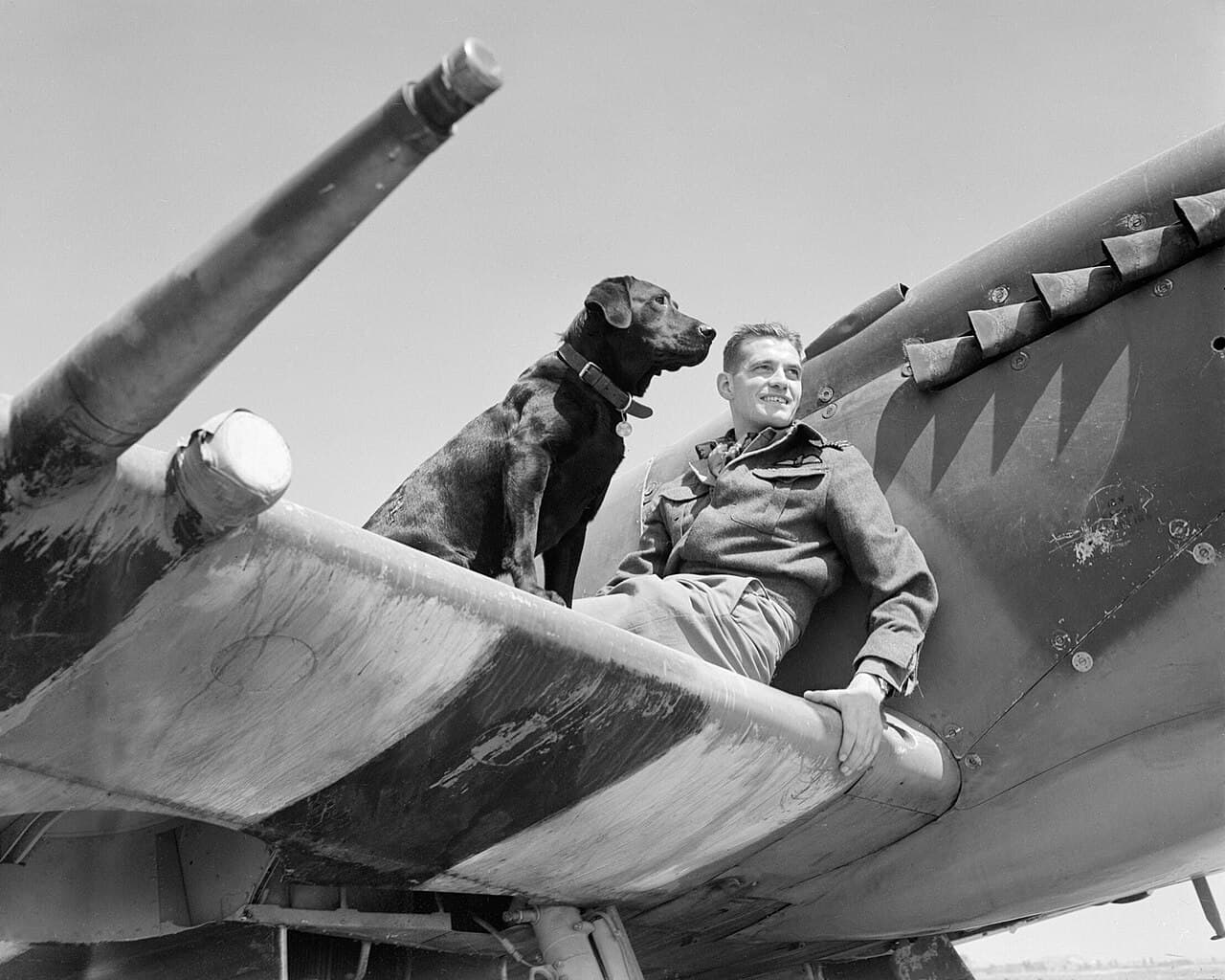
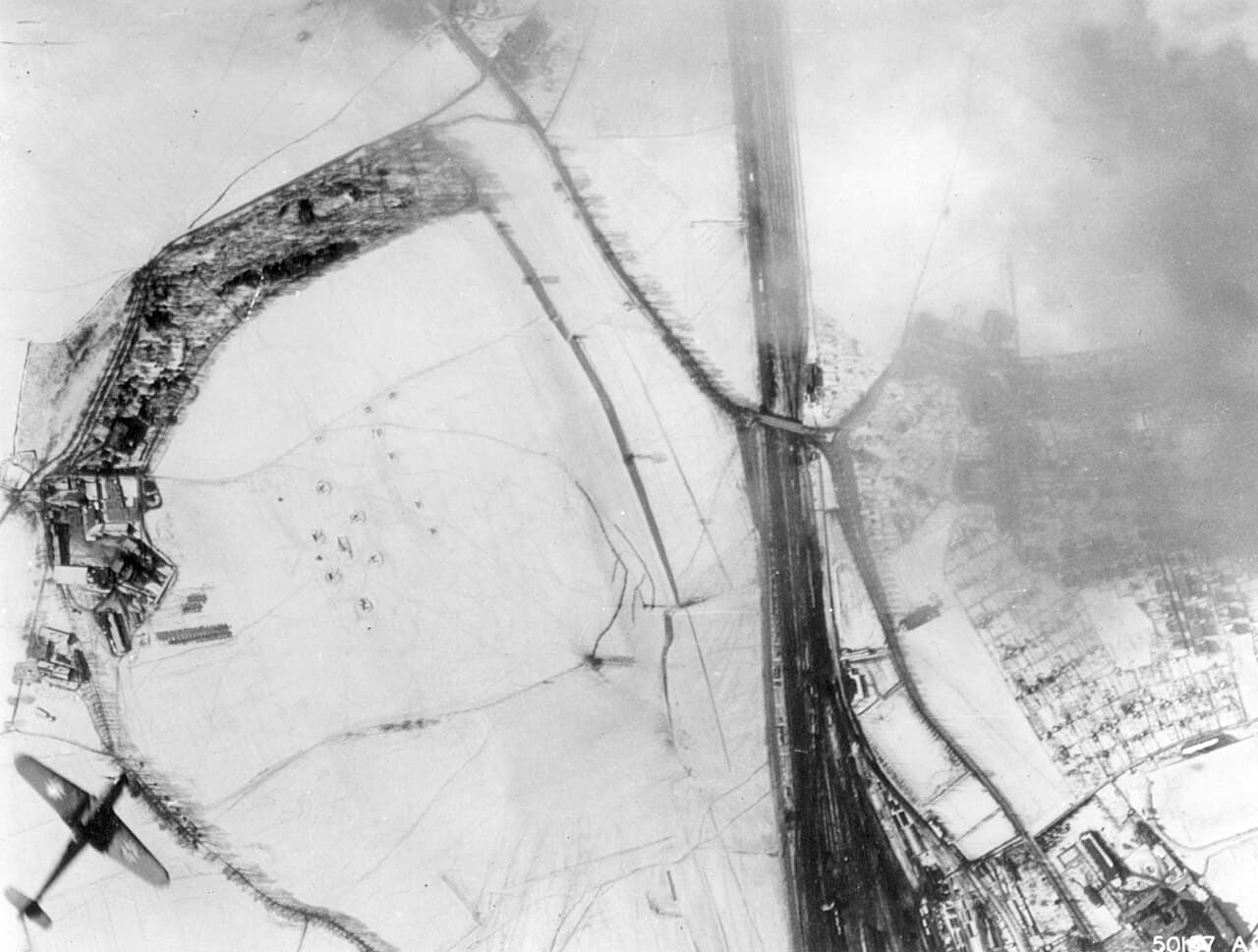
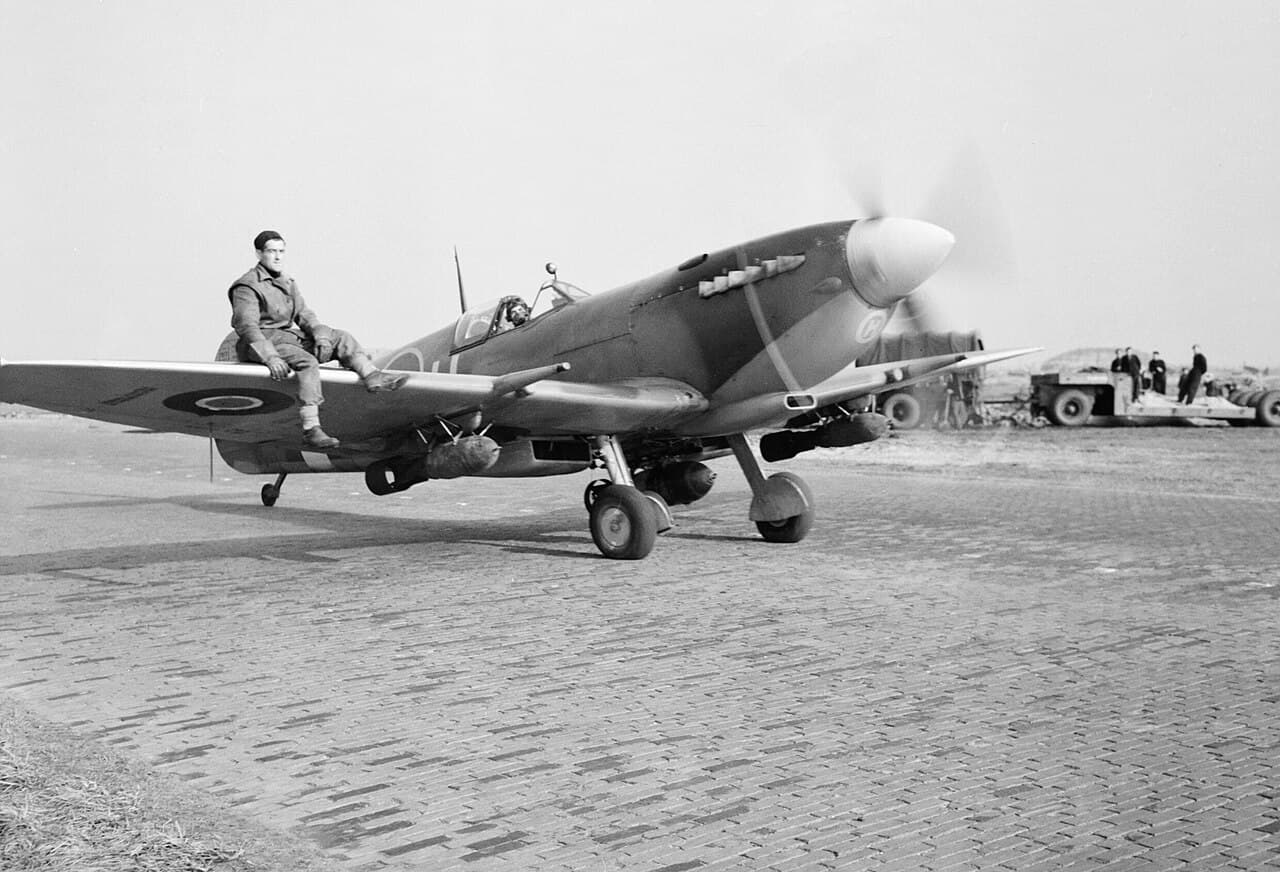
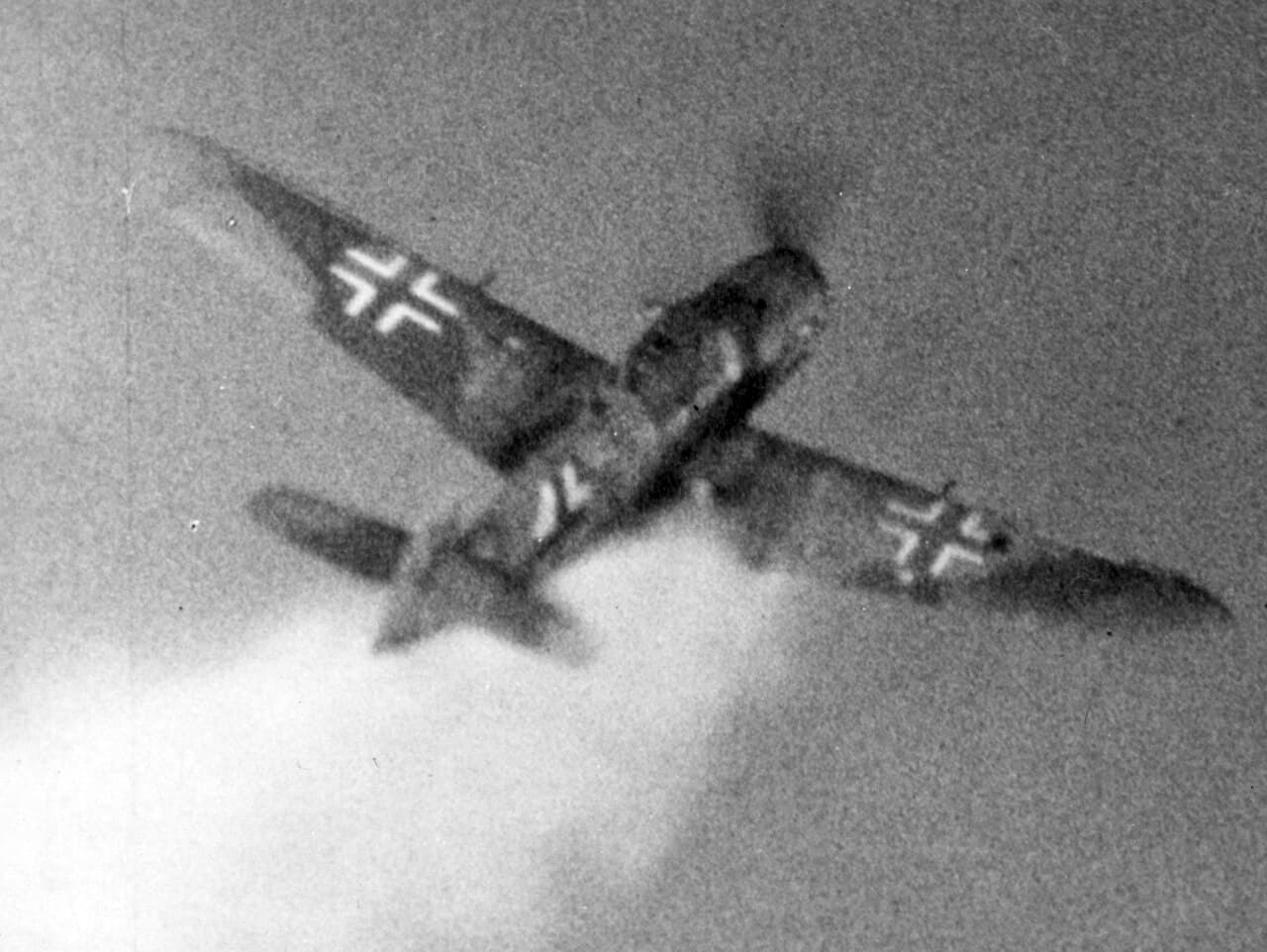
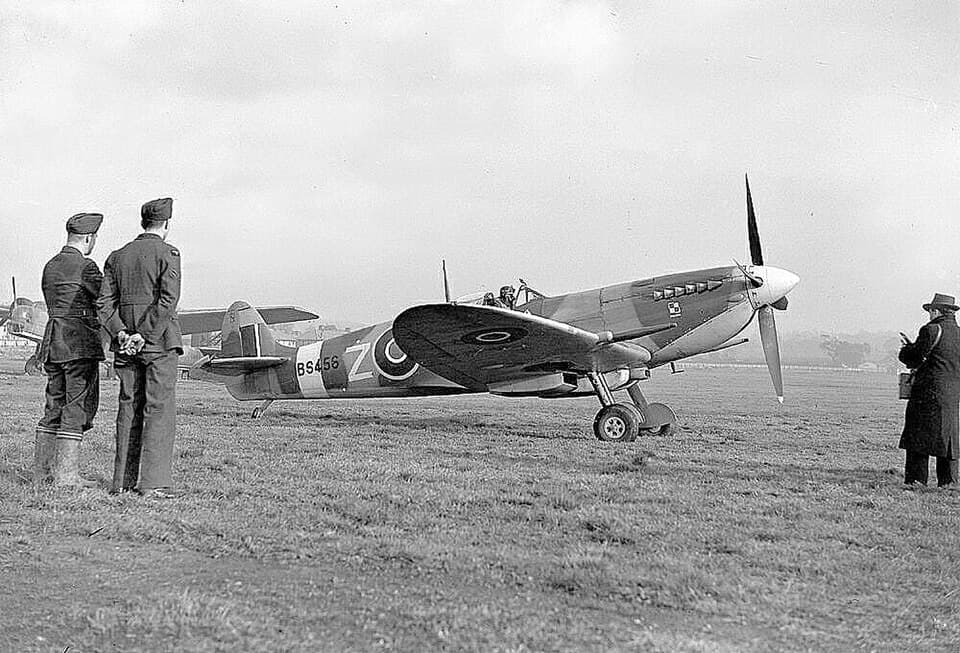
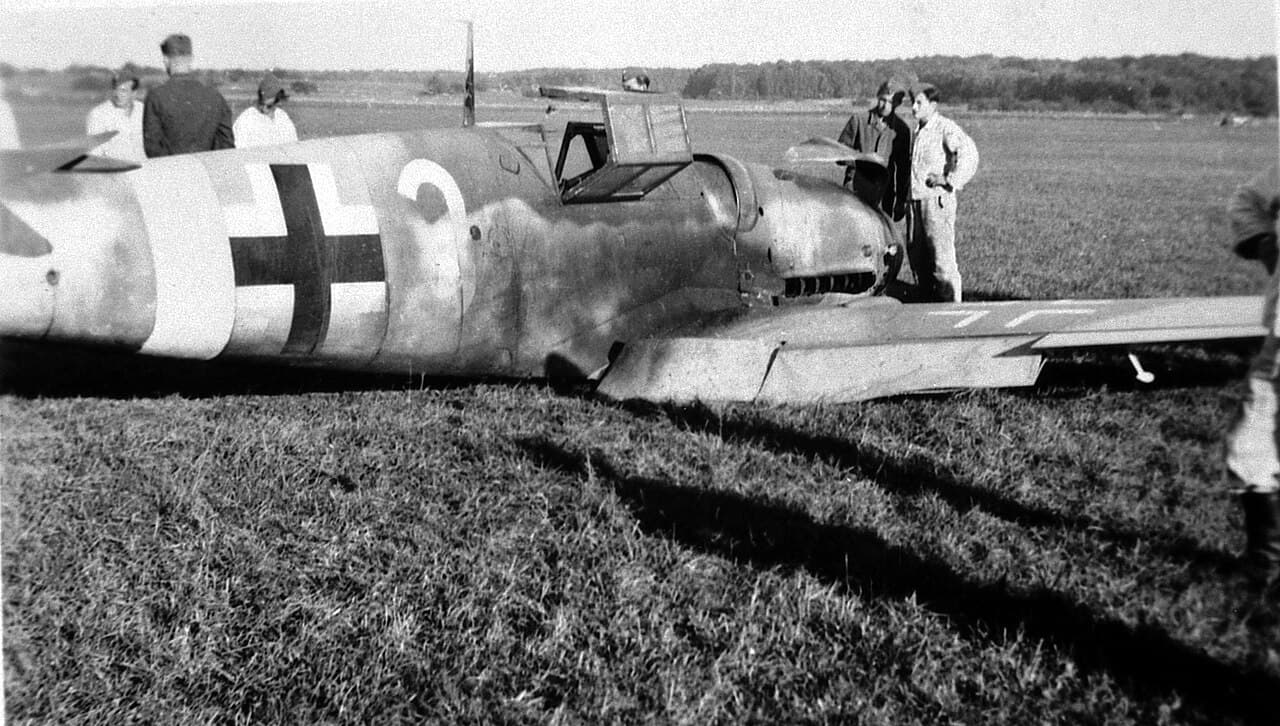
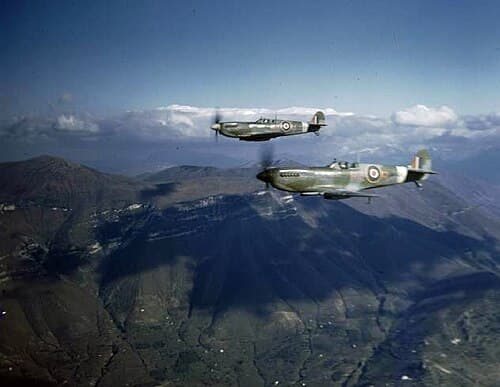
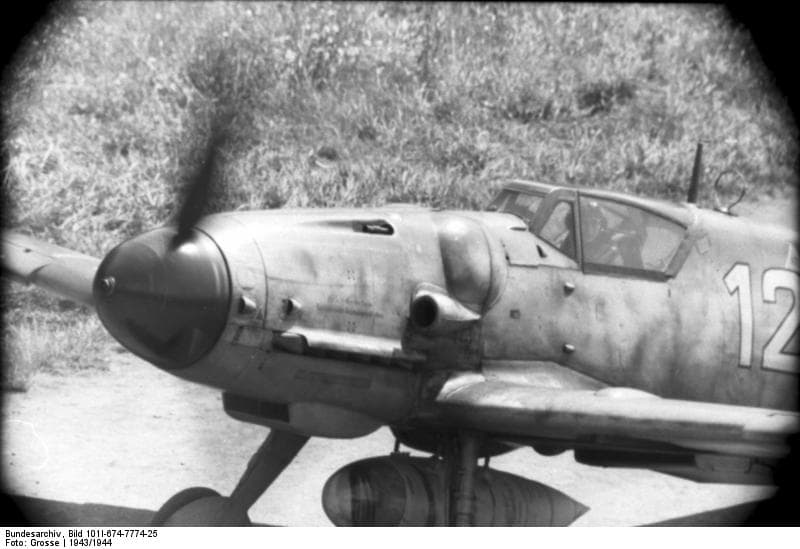
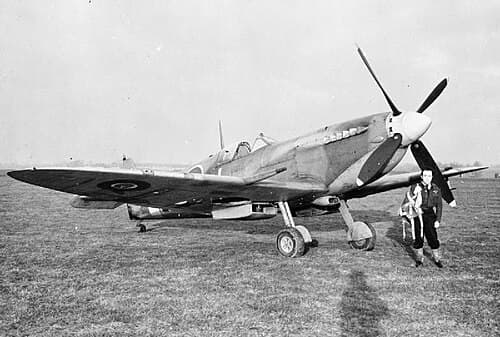
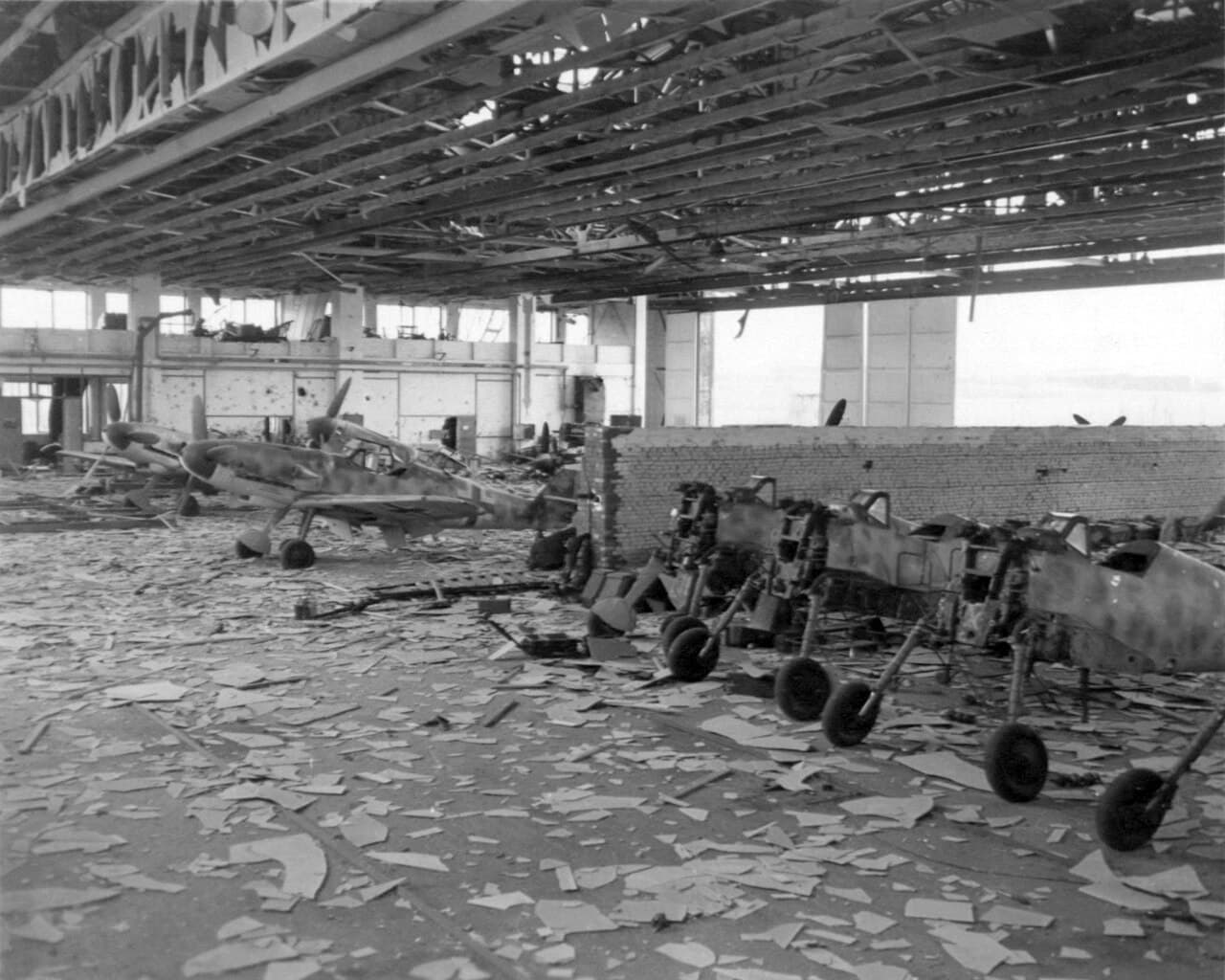
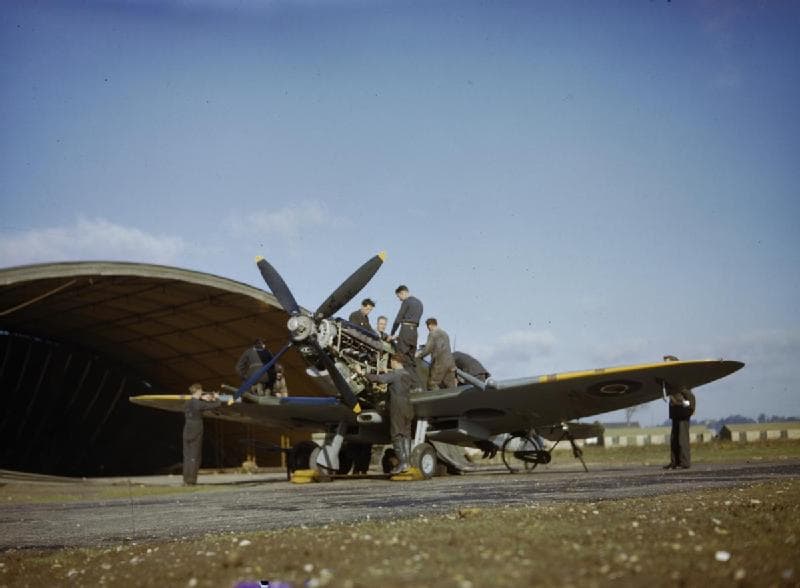
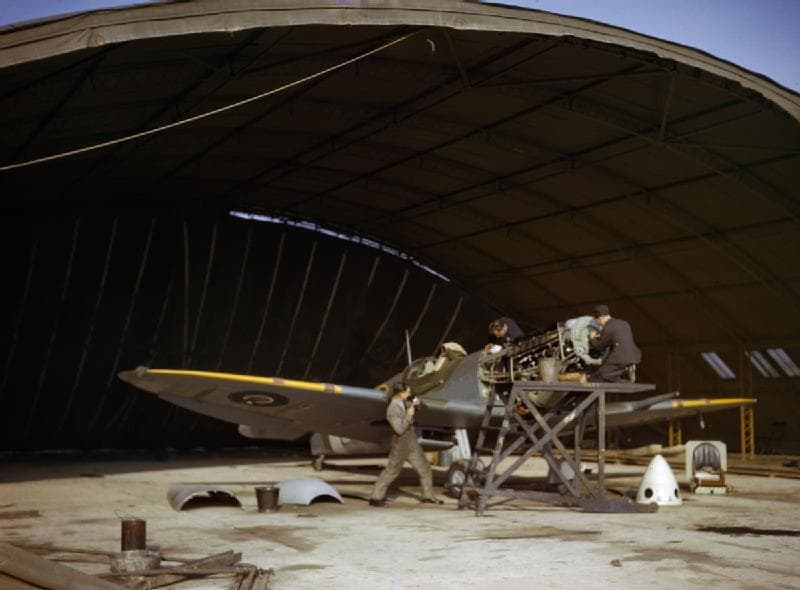
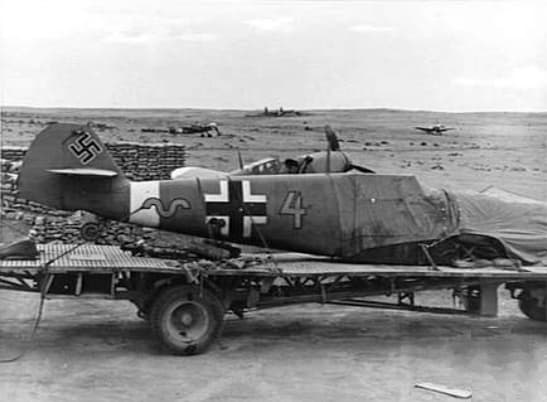
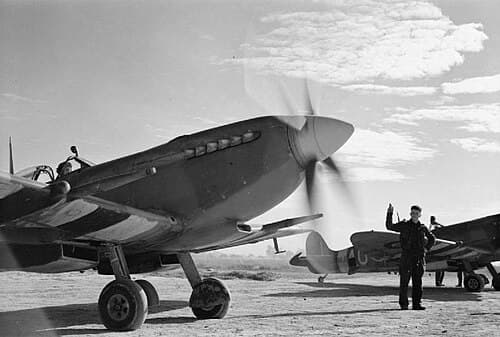
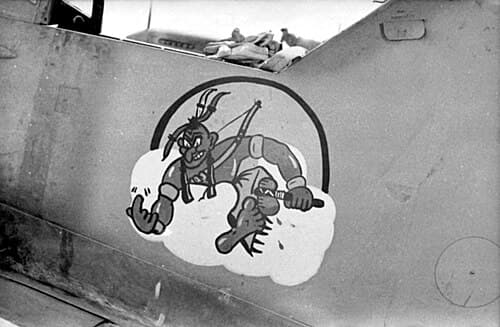
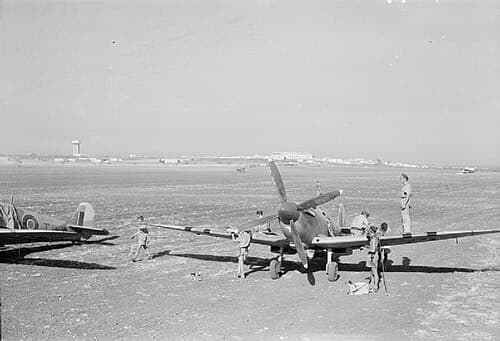
Click any photo to enlarge · 20 photos
Historical Context
The strategic backdrop that shaped both aircraft
The Spitfire versus Bf 109 rivalry is the defining fighter duel of the Second World War, a contest that began over Dunkirk in May 1940 and did not end until the final days of the European war in April 1945. No other pair of adversaries fought each other so continuously, across so many variants, through so many phases of the air war. By the time the Mk IX met the Gustav, the rivalry was entering its most mature and evenly-balanced phase.
The Bf 109G "Gustav" entered service in May 1942, powered by the Daimler-Benz DB 605A engine that gave it a meaningful performance boost over the Friedrich. Within weeks, it was clashing with RAF Spitfire Vb squadrons over northern France, and the British were in trouble. The Spitfire V, already outclassed by the Fw 190A, was now being pressed by an improved 109 as well. Fighter Command needed an answer urgently.
That answer was the Spitfire IX. Rushed into service in June 1942, it was essentially a Spitfire Vc airframe married to the new Rolls-Royce Merlin 61 two-stage, two-speed supercharger engine. The result was transformative: the Merlin 61 delivered 1,565 horsepower and maintained power at altitudes where the earlier Merlin 45 had faded. Almost overnight, the Spitfire regained parity with the latest German fighters.
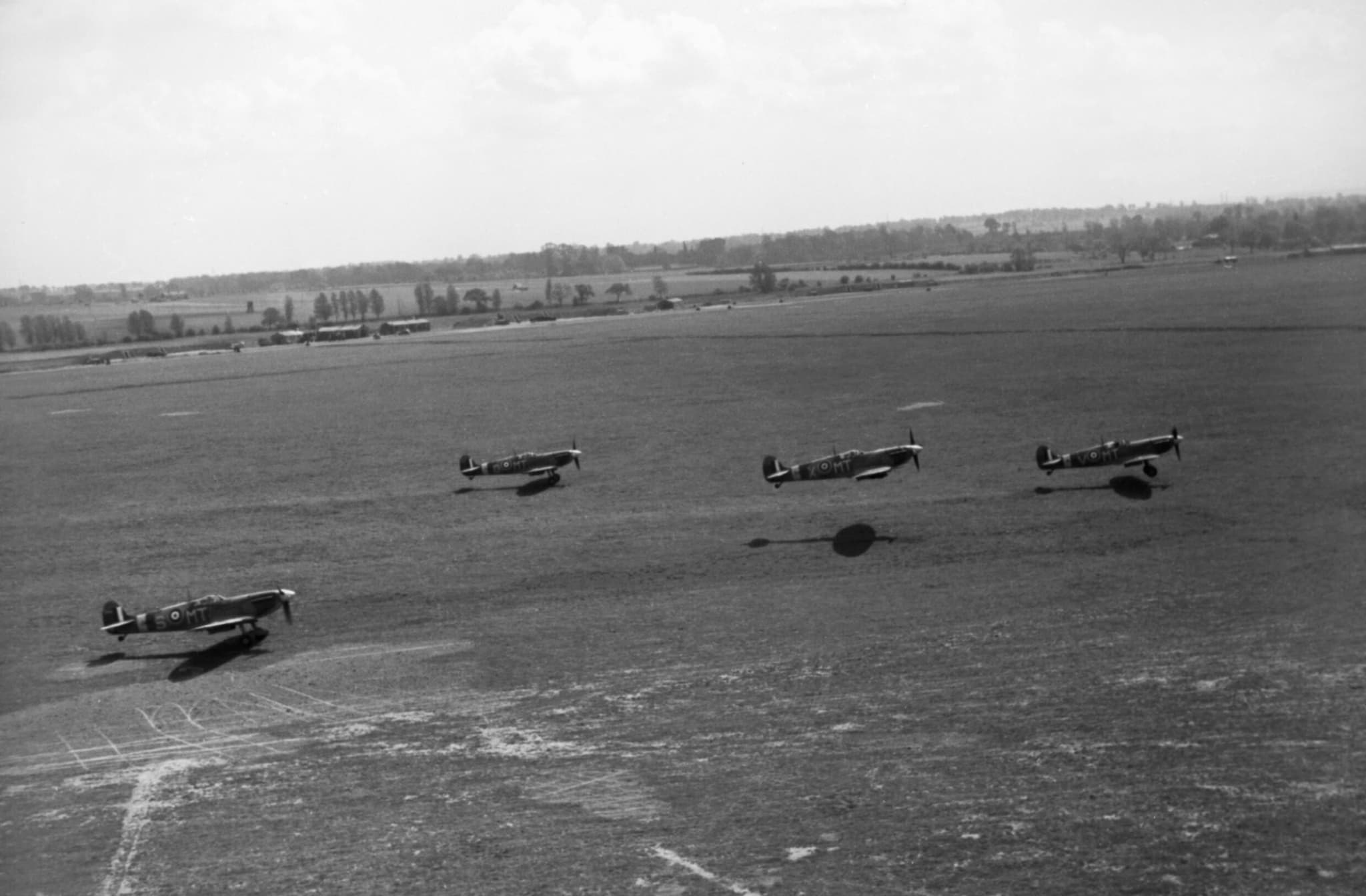
The Mk IX versus Gustav duel played out across three overlapping theaters. Over the English Channel and northern France, RAF Fighter Command flew offensive sweeps, Circus and Ramrod operations, designed to draw the Luftwaffe into combat. Over the Mediterranean, Spitfire IXs tangled with Bf 109Gs during the campaigns in North Africa, Sicily, and Italy. And over northwest Europe after D-Day, the two aircraft met in the enormous air battles that accompanied the Allied advance into Germany.
What made this matchup so tactically rich was how evenly the aircraft were matched. Unlike the Hellcat versus Zero, where one aircraft was comprehensively superior, the Spitfire IX and Bf 109G each held genuine advantages that a skilled pilot could exploit. The outcome of any individual engagement depended heavily on altitude, energy state, tactical awareness, and the relative experience of the pilots involved. This created a dynamic, unpredictable combat environment that demanded the highest levels of airmanship from both sides.
By late 1943, the Luftwaffe was increasingly shifting its Bf 109G units to the Defense of the Reich mission against American heavy bombers, reducing the frequency of encounters with RAF Spitfires. But wherever the two met, over Normandy, over the Arnhem corridor, over the Rhine, the combat remained fierce and the margins razor-thin.

Notable Combat Encounters
Key engagements where these aircraft faced each other in combat
The first major engagement between Spitfire IXs and Bf 109Gs occurred when 64 Squadron RAF, one of the first units to receive the new mark, flew sweeps over the French coast. The squadron's pilots found they could match the Gustav in speed and outperform it in turning combat, a dramatic improvement over the Spitfire V.
Outcome
Several Bf 109Gs claimed for no Spitfire IX losses. RAF pilots reported the new Spitfire was "a completely different aircraft" at altitude.
Proved the Merlin 61 engine had restored the Spitfire's competitive edge against the latest German fighters.
Operation Jubilee, the disastrous Dieppe Raid, produced the largest single-day air battle over Western Europe since the Battle of Britain. Over 70 RAF squadrons, including several equipped with Spitfire IXs, provided air cover against determined Luftwaffe opposition including Bf 109G-equipped JG 2 and JG 26. The air battle raged from dawn to dusk.
Outcome
RAF lost 106 aircraft (including 70 fighters) against 48 Luftwaffe losses. The Spitfire IX units performed noticeably better than Spitfire V squadrons in the same battle.
Dieppe demonstrated both the capabilities of the Mk IX and the limitations of fighter sweeps without clear air superiority. JG 2's Gustav pilots proved formidable opponents.
During the final phase of the Tunisian campaign, Spitfire IX squadrons of the Desert Air Force engaged Bf 109G-4s of JG 77 and JG 53 in intense air battles over the shrinking Axis bridgehead. The fighting was at lower altitudes than typical Channel operations, negating some of the Bf 109G's climbing advantage.
Outcome
The Luftwaffe lost heavily during the evacuation attempts, with Spitfire IXs playing a major role in establishing air superiority over the Mediterranean.
Proved the Spitfire IX was equally effective in the Mediterranean theater, where different altitude bands and hotter temperatures changed the performance dynamics.
During the D-Day invasion and the battle for Normandy, Spitfire IXs of the 2nd Tactical Air Force clashed with Bf 109G-6s of JG 2, JG 26, and JG 53 over the beachheads. The Luftwaffe, outnumbered and fighting under constant Allied air pressure, launched sporadic but fierce attacks on the invasion fleet and ground forces.
Outcome
The Luftwaffe's response to D-Day was badly hampered by fuel shortages and Allied air superiority. Bf 109G units suffered unsustainable losses while Spitfire IX losses were comparatively light.
Normandy represented the culmination of the Spitfire vs Bf 109 rivalry. The Gustav was still dangerous in individual engagements, but the Luftwaffe could no longer contest air superiority on a strategic level.
Operation Market Garden produced sharp air battles as Bf 109G units attempted to intercept the massive Allied airborne operation. Spitfire IXs flew top cover for transport aircraft and engaged Bf 109Gs in running battles over the drop zones and corridors.
Outcome
While Market Garden failed on the ground, Allied air forces maintained control of the skies. Bf 109G units inflicted losses on transport aircraft but were generally kept at bay by Spitfire IX escorts.
One of the final large-scale encounters between Spitfire IXs and Bf 109Gs before the Gustav was increasingly replaced by the Bf 109K-4.
Armament & Firepower
Primary weapons, munitions capacity, and destructive capability
Spitfire Mk IX Loadout
The Spitfire IX carried two 20mm Hispano Mk II cannons with 120 rounds per gun and four .303 Browning machine guns with 350 rounds per gun. The Hispano cannons were belt-fed, reliable in the Mk II version, and delivered devastating explosive rounds capable of destroying a fighter in a short burst. The .303 machine guns provided tracer for aiming and could inflict damage to unarmored aircraft, but were increasingly marginal against the self-sealing tanks and armor plate of late-war German fighters.
Bf 109G Loadout
The Bf 109G-6 carried one 20mm MG 151/20 cannon firing through the propeller hub with 150 rounds and two 13mm MG 131 machine guns mounted above the engine with 300 rounds each. The hub-mounted cannon was extremely accurate due to its centerline mounting, and the 13mm MG 131s were a significant upgrade over the earlier 7.92mm MG 17s. Optional Rüstsätze kits could add two 20mm MG 151/20 gondola cannons under the wings, dramatically increasing firepower at the cost of performance.
Air-to-Air Verdict
The Spitfire IX had the superior air-to-air armament in standard configuration. Its two wing-mounted 20mm cannons delivered a wider cone of fire and greater weight of shell per second than the Bf 109G's single hub cannon. The four .303 machine guns added volume. The Bf 109G-6 with the gondola cannon kit could match the Spitfire's weight of fire, but the performance penalty was severe, the added drag cost approximately 20 mph in top speed and degraded maneuverability noticeably.
Ground Attack Verdict
Neither aircraft was primarily designed for ground attack, but both were used in the role. The Spitfire IX could carry a single 500-pound bomb, while the Bf 109G could carry a 551-pound bomb. Both were adequate for tactical ground support but lacked the payload capacity of dedicated fighter-bombers like the P-47D or Fw 190F.
The armament comparison favors the Spitfire IX in total firepower delivered per second, but the Bf 109G's hub-mounted cannon was more accurate and its centreline mounting meant that convergence was never an issue, the shells went exactly where the pilot pointed the nose. Spitfire pilots had to carefully set their gun harmonization and were most effective at specific ranges where the wing-mounted cannon converged with the machine guns.
In practical terms, the Bf 109G's armament was better suited to the quick, decisive burst that characterized most air combat, one accurate pass with the 20mm hub cannon could be lethal. The Spitfire's broader spread of fire was more forgiving of aiming errors and more effective in tracking shots during turning combat. Both armament configurations were capable of destroying the opponent in a well-aimed burst.
The key limitation of the Bf 109G's armament was its lack of redundancy. If the MG 151/20 jammed, which happened, the pilot was left with only two 13mm machine guns. The Spitfire IX pilot who lost one cannon still had another plus four machine guns. This redundancy was a meaningful advantage in the extended combat that characterized Channel sweeps and escort missions.
Survivability & Protection
Armor, self-sealing tanks, pilot protection, and structural resilience
Spitfire Mk IX Protection
The Spitfire IX featured a 73-pound armored bulkhead behind the pilot, an armored windscreen, and armor plate protecting the engine coolant header tank. The cockpit was reasonably well protected from rear attacks, and the structure was designed to absorb combat damage without catastrophic failure. The Merlin engine, being liquid-cooled, was vulnerable to a single coolant leak, any round that punctured a coolant line would cause the engine to seize within minutes.
Bf 109G Protection
The Bf 109G carried approximately 88 pounds of armor, including a 10mm seat back plate, armored headrest, and engine armor. The DB 605A engine was also liquid-cooled and shared the same coolant vulnerability as the Merlin. The Bf 109G's smaller airframe meant that armor coverage was proportionally better, but the compact cockpit also meant that fire could reach the pilot more quickly.
Pilot Protection
Both aircraft provided comparable pilot protection. The Spitfire IX's armored windscreen and rear bulkhead were effective against machine gun fire, and the wider cockpit gave the pilot more room to move and better egress in an emergency. The Bf 109G's hinged canopy was notorious for jamming in combat damage situations, sometimes trapping pilots in burning aircraft. The Spitfire's sliding canopy, while not perfect, generally offered easier emergency egress.
Structural Durability
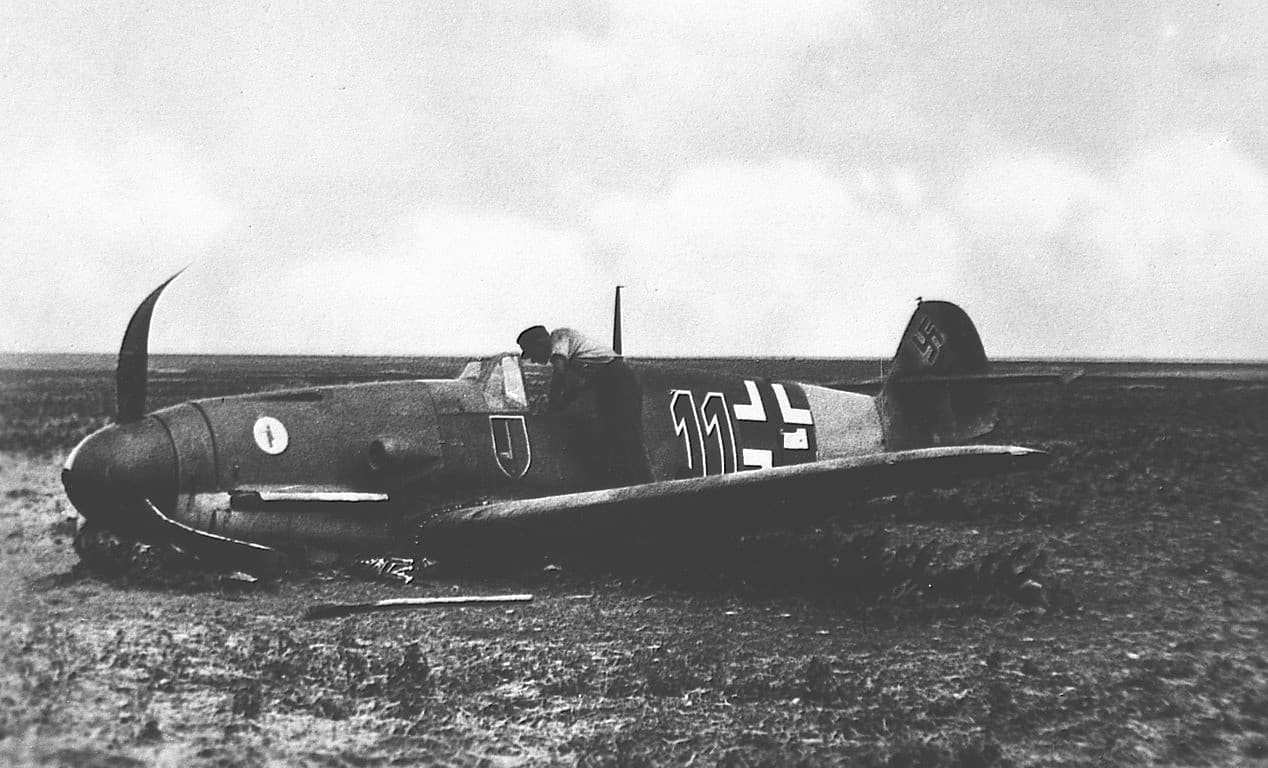
The Spitfire IX's monocoque fuselage and stressed-skin wing could absorb significant battle damage while remaining flyable. The aircraft had a reputation for bringing damaged pilots home, though not to the degree of the P-47D. The Bf 109G was structurally sound but its narrow-track undercarriage was notorious for ground-loop accidents, more Bf 109Gs were lost to landing and takeoff accidents than many pilots would care to admit.
Crash Survivability
In a wheels-up forced landing, both aircraft offered reasonable crash survivability on prepared surfaces. The Spitfire's wider undercarriage track gave it a stability advantage during emergency landings. The Bf 109G's narrow gear and tendency to ground-loop made forced landings on rough surfaces particularly hazardous. Both types were prone to fire in crash situations due to fuel tank placement near the cockpit.
Survivability was closely matched between these two fighters. Both relied on liquid-cooled inline engines that shared the same fundamental vulnerability to coolant system damage, a single well-placed round could doom either aircraft to a forced landing or bailout. This was a significant weakness compared to radial-engined fighters like the P-47D or Fw 190A, which could often continue flying with cylinder damage that would have destroyed a Merlin or DB 605.
The Bf 109G's narrow undercarriage was a persistent survivability hazard that doesn't appear in combat statistics but was a major factor in operational attrition. The Luftwaffe lost substantial numbers of Bf 109Gs to ground accidents, particularly on the rough airfields of the Eastern Front and the hastily prepared strips that characterized the final year of the war. The Spitfire's wider gear was more forgiving, though it too could be damaged by rough-field operations.
In the air, the most critical survivability factor was fire resistance. Both aircraft had self-sealing fuel tanks, but the effectiveness of self-sealing technology varied with the caliber and velocity of the incoming round. High-explosive 20mm cannon shells could overwhelm self-sealing tank technology, making both aircraft vulnerable to the opponent's primary armament. The Spitfire IX's lower wing fuel tanks were somewhat more vulnerable to ground fire during strafing runs than the Bf 109G's fuselage-mounted tank.
Tactical Doctrine & Evolution
How pilots were trained to fight in each aircraft and how tactics adapted over time
Spitfire Mk IX Tactics
RAF Spitfire IX tactics evolved significantly from the early offensive sweeps of 1942 to the tactical air operations of 1944-45. The fundamental approach was built around the "finger four" formation, adopted from the Luftwaffe's own Schwarm, which replaced the outdated vic formation that had cost the RAF dearly in 1940-41.
In offensive sweeps over France, Spitfire IX sections operated at 25,000-30,000 feet, using their altitude advantage and superior high-altitude performance to initiate combat on favorable terms. The standard engagement sequence was to spot the enemy from above, position for a diving attack using sun and cloud cover, deliver a firing pass, and use speed to regain altitude for another pass. Sustained turning fights were accepted when they developed, since the Spitfire excelled in this regime.
The wing leader's key tactical decision was whether to press an engagement or break off. Against Bf 109G formations that were clearly aware of the Spitfire presence, experienced wing leaders like Johnnie Johnson would often decline combat rather than engage alerted opponents at a disadvantage. The best scores were achieved through surprise, the bounce from above with sun behind, delivering a killing burst before the German pilot knew he was under attack.
Bf 109G Tactics
Luftwaffe Bf 109G tactics in the West were shaped by the increasingly defensive strategic situation from 1943 onward. Against the RAF's offensive sweeps, Jagdgeschwader units employed a vertical fighting style that maximized the Gustav's climbing ability while avoiding the Spitfire's turning advantage.
The standard Bf 109G engagement doctrine was the "bounce and extend", dive from a superior altitude, deliver a high-speed firing pass using the accurate hub-mounted cannon, and immediately zoom climb back to altitude without entering a turning fight. Against Spitfires, this discipline was critical: pilots who were seduced into a horizontal turning engagement rarely survived the experience.
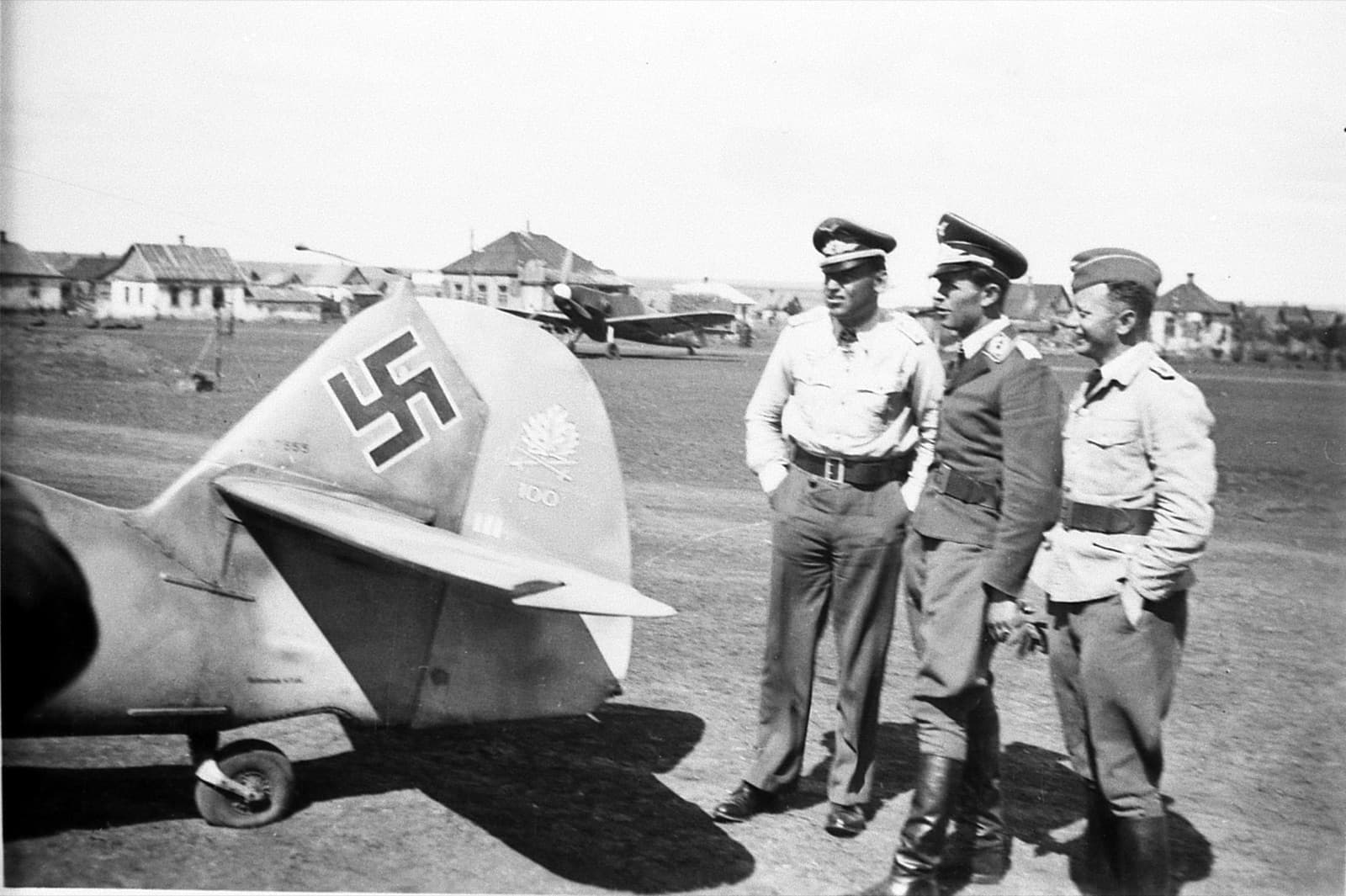
By 1944, Bf 109G units were increasingly allocated to the Defense of the Reich mission, where their primary targets were American heavy bombers rather than Allied fighters. When Spitfires were encountered, the German fighter controllers attempted to position their units above the British formation and direct a single coordinated diving attack rather than a prolonged engagement. Conservation of force, avoiding losses while inflicting damage, became the overriding tactical priority as experienced pilot numbers dwindled.
How Tactics Evolved
The tactical evolution of the Spitfire IX versus Bf 109G matchup reflects the broader shift in the air war from a contest of rough parity to one of growing Allied dominance. In 1942, when both types first met, the combat was between roughly equal numbers of experienced pilots flying comparable aircraft. The fighting was sharp, losses were heavy on both sides, and neither side could claim sustained air superiority.
By mid-1943, the balance had begun to shift. The RAF's growing numerical superiority meant that Bf 109G units were increasingly outnumbered, forcing them into a reactive defensive posture that limited their tactical options. The Luftwaffe's mounting losses on the Eastern Front were drawing experienced pilots away from the Western theater, while the RAF's training pipeline was producing steady streams of competent replacements.
The introduction of drop tanks for the Spitfire IX in late 1943 partially addressed its range limitation and allowed deeper penetration into occupied airspace, extending the reach of RAF fighter sweeps. Meanwhile, the Luftwaffe was adapting its Bf 109G force structure to the bomber interception role, fitting gondola cannon kits that increased firepower against bombers but degraded performance against fighters.
By the Normandy campaign in June 1944, the tactical landscape had transformed completely. Spitfire IX units operated with near-total air superiority, using ground-controlled interception and radar to vector onto Bf 109G formations that were outnumbered, often under-experienced, and fighting at a severe strategic disadvantage. The aircraft remained evenly matched, but the system supporting the Spitfire, numbers, training, radar, ground control, fuel, had achieved a dominance that no individual German fighter performance advantage could overcome.
This evolution mirrors the broader lesson of the air war: that fighter quality matters enormously in tactical engagements, but the strategic outcome is determined by the total system of training, production, logistics, and command and control that supports the aircraft in the field.



What the Pilots Said
Firsthand accounts from the men who flew and fought these aircraft
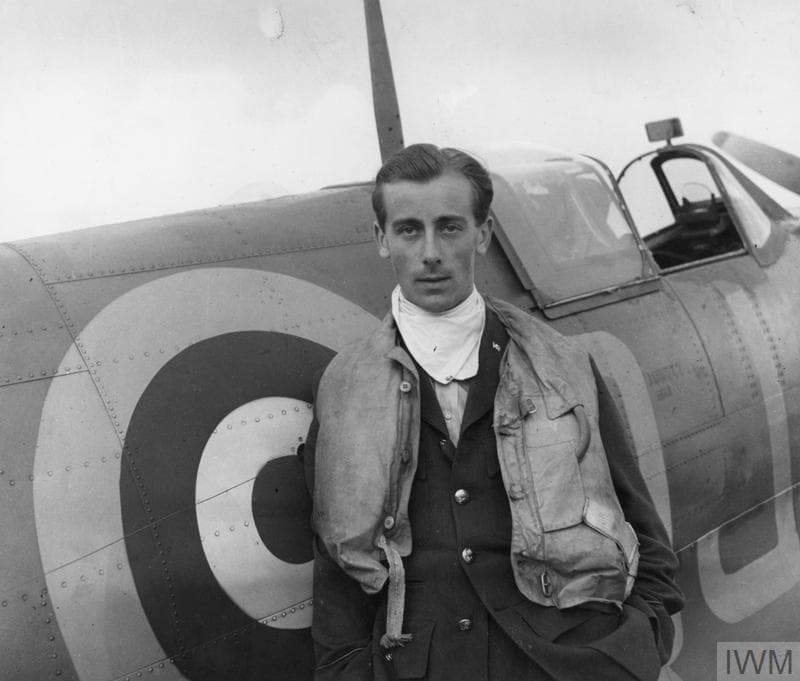
On the Spitfire Mk IX“The Spitfire IX was the finest fighter aircraft I ever flew. It did everything you asked of it, turned, climbed, dived, and fought with a grace that made you feel the aircraft was part of you. Against the 109G, I always felt confident. Not complacent, the Gustav was a dangerous opponent, but confident that my aircraft would do whatever I asked of it.”
On the Bf 109G“The 109G was heavier than the Friedrich, and you could feel it in the controls. It was still a good fighter, but it had lost some of the lightness and agility of the earlier marks. Against the Spitfire IX, you had to be very careful, if you got into a turning fight below 250 knots, you were in serious trouble. The trick was to never let that happen.”
On the Bf 109G“We knew the Spitfire IX was our equal. It could not out-climb us, but we could not out-turn it. Every engagement was a chess match, the pilot who made the first mistake lost. The British pilots were very good by 1943, and their aircraft matched ours.”
On the Spitfire Mk IX“Against the 109G, the key was to get him turning. If you could force a sustained turn fight, the Spitfire would win every time, we would gain angles until we had a shot. But the good German pilots knew this. They would make one pass, and if it didn't work, they would pull up into a zoom climb and come back for another pass from above. You had to be patient.”
By the Numbers
Statistical combat performance and historical kill ratios
Exchange Ratio
The exchange ratio between Spitfire IXs and Bf 109Gs was among the most balanced of any WWII fighter matchup. RAF claims suggest a favorable ratio of approximately 1.3:1 in the Spitfire's favor, but this varied enormously by theater, period, and the relative experience levels of opposing units.
Source: RAF Fighter Command and Luftwaffe loss records, 1942–1945
The combat record between Spitfire IXs and Bf 109Gs defies simple statistical summary because it played out across three years, multiple theaters, and constantly shifting tactical conditions. In the Channel sweeps of 1942-43, losses were roughly even, RAF Fighter Command was flying offensively over enemy territory, which negated many of the Spitfire's performance advantages since damaged aircraft had to fly back across the Channel.
In North Africa and the Mediterranean, the picture shifted in the Spitfire's favor as Allied air superiority grew and Luftwaffe units suffered from fuel and spare parts shortages. By the Tunisia campaign of early 1943, Spitfire IX units were regularly achieving favorable exchange ratios against Bf 109G opponents who were often less experienced than the Channel-front Jagdgeschwader pilots.
The critical factor in the overall exchange ratio was not aircraft performance but rather the strategic context. By 1944, the Luftwaffe was hemorrhaging experienced pilots at an unsustainable rate, the same attrition that affected the Bf 109G's combat record against P-51Ds applied to the Spitfire matchup as well. Late-war encounters between Spitfire IXs and Bf 109Gs increasingly featured experienced British pilots against hastily trained German replacements, which skewed the statistics.
When the analysis is narrowed to encounters between units of comparable experience, such as JG 2 and JG 26 against the Tangmere and Biggin Hill wings in 1942-43, the record was remarkably even, which is exactly what the aircraft's closely matched performance would predict. This was a matchup decided by pilot skill, tactical situation, and numerical advantage rather than by any inherent superiority of either aircraft.
Production & the Numbers Game
How industrial output shaped the strategic balance
5,665
Spitfire Mk IX Built
23,500
Bf 109G Built
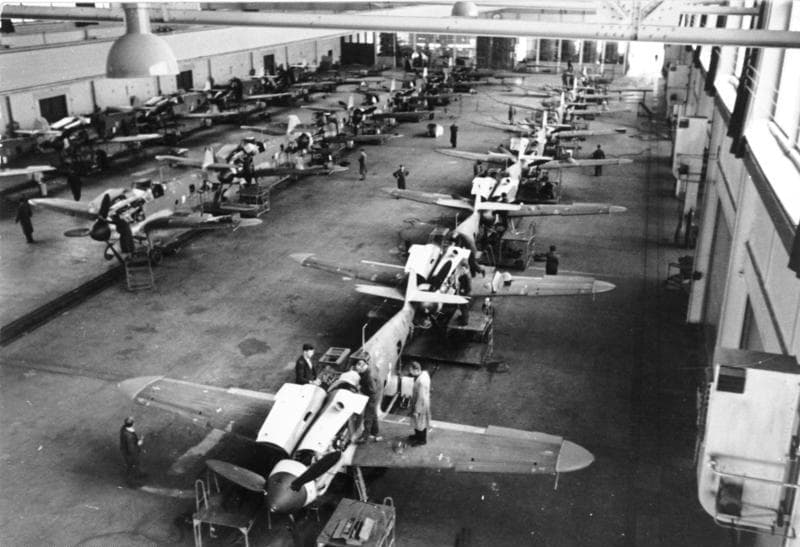
The production disparity between the two types, nearly 4:1 in the Bf 109G's favor, tells a deceptive story. Germany needed far more Bf 109Gs than Britain needed Spitfire IXs because the Luftwaffe was fighting on multiple fronts simultaneously. The vast majority of Bf 109Gs served on the Eastern Front, where they were consumed at catastrophic rates by a combination of Soviet fighters, anti-aircraft fire, operational accidents, and the brutal attrition of continuous combat operations.
The Spitfire IX's smaller production numbers were adequate for its role because it was part of a broader Allied fighter force that included P-51Ds, P-47Ds, Typhoons, and Tempests. The RAF did not need the Spitfire IX to win the air war alone, it needed it to perform well in its designated role as the primary air superiority fighter over Western Europe, which it did superbly.
Germany's massive Bf 109G production was simultaneously its greatest achievement and a strategic trap. The decision to continue producing the 109 in enormous numbers, rather than transitioning fully to the superior Fw 190D or the jet-powered Me 262, reflected both the conservatism of the German aircraft production system and the reality that the 109 was easier and cheaper to build than its alternatives. In the end, production quantity could not compensate for the loss of experienced pilots, shortage of fuel, and the collapse of the training system that plagued the Luftwaffe from mid-1944 onward.
Advantages in This Matchup
Where each aircraft holds the edge in a head-to-head encounter
Spitfire Mk IX Spitfire
- Superior sustained turning performance, dominant in extended dogfights
- Higher service ceiling (43,000 ft) and better high-altitude power maintenance
- Better cockpit visibility, especially to the rear quarter
- Heavier total firepower with two 20mm cannons plus four machine guns
- More forgiving handling characteristics across the speed range
- Wider undercarriage with fewer ground handling accidents
- Excellent gun platform stability during tracking shots
Bf 109G Gustav
- Superior climb rate in sustained vertical maneuvering
- More accurate centerline-mounted 20mm hub cannon
- Better instantaneous turn rate from automatic leading-edge slats
- Lighter weight and better power-to-weight ratio
- Emergency boost systems (MW 50) for critical escape or attack moments
- Slightly better initial dive acceleration
- Simpler field maintenance with easily accessible engine panels
Final Verdict
Overall Assessment
Context-Dependent
Neither aircraft holds a definitive advantage, the winner depends on the scenario.
The Spitfire Mk IX versus Bf 109G is the closest thing to a perfectly balanced fighter matchup that World War II produced. Unlike comparisons where one aircraft clearly dominated, the Hellcat versus the Zero, or the late-war P-51D versus the standard Bf 109G, this was a contest where the outcome depended almost entirely on the circumstances of the engagement and the skills of the pilots involved.
The Spitfire IX held genuine advantages in turning combat, high-altitude performance, cockpit visibility, and overall firepower. The Bf 109G countered with superior climb rate, better vertical energy fighting capability, a more accurate centrally-mounted cannon, and the ability to disengage from unfavorable fights by climbing away. These complementary strengths meant that each aircraft could dictate terms in different tactical situations, the Spitfire in sustained horizontal combat, the Gustav in the vertical plane.
The pilot who understood his aircraft's strengths and fought accordingly held the advantage. A Spitfire pilot who tried to follow a climbing Bf 109G was making a potentially fatal error; a Bf 109 pilot who entered a sustained turning fight with a Spitfire was equally foolish. The best pilots on both sides understood this implicitly and fought within their aircraft's envelope.
What ultimately decided the broader contest was not the aircraft but the systems behind them. The RAF's superior training pipeline, growing numerical advantage, radar-directed ground control, and the strategic support of the growing American air presence over Europe gave the Spitfire IX a systemic advantage that the Bf 109G, however capable, could not overcome. The Gustav was let down not by its own limitations but by the progressive collapse of the Luftwaffe's pilot training, fuel supply, and strategic coherence.
As a pure fighter-versus-fighter comparison, this matchup deserves its legendary status. It was the defining rivalry of the air war over Western Europe, two superbly designed machines, both at the peak of their piston-engine development, piloted by men who knew they were flying the best their nations could build, fighting a contest that stretched across three years and multiple theaters. Neither aircraft was definitively superior. The better pilot won.
Theaters of Operation
Shared Theaters
Spitfire Mk IX Only
Bf 109G Only
Related Matchups
 P-51D
P-51D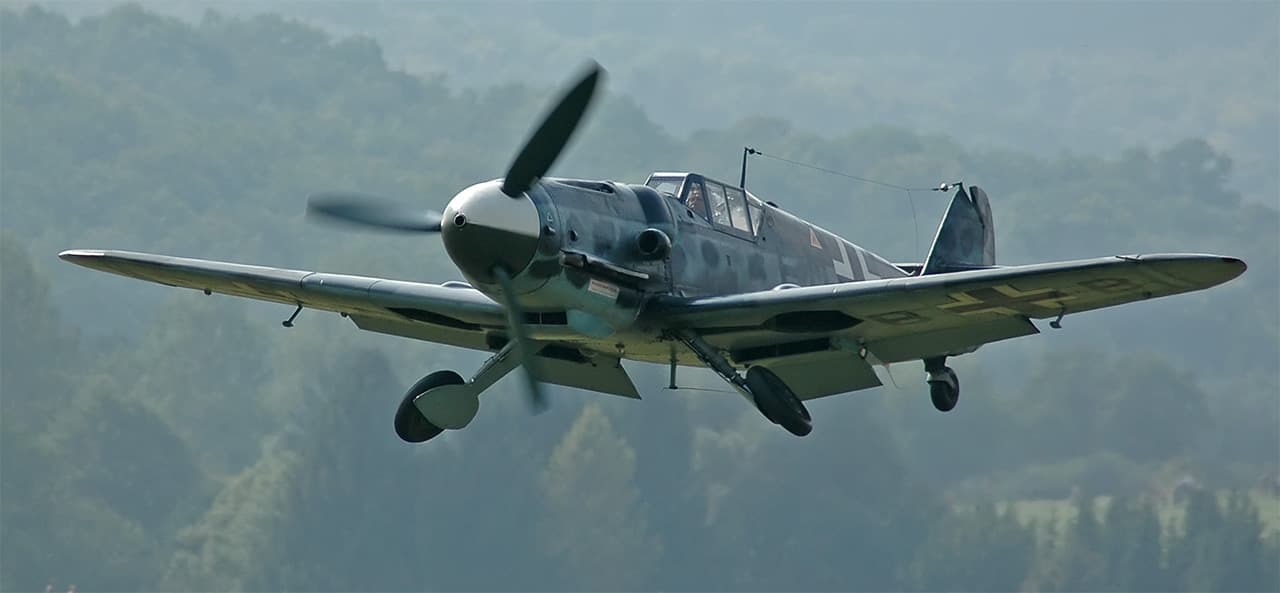 Bf 109GP-51D
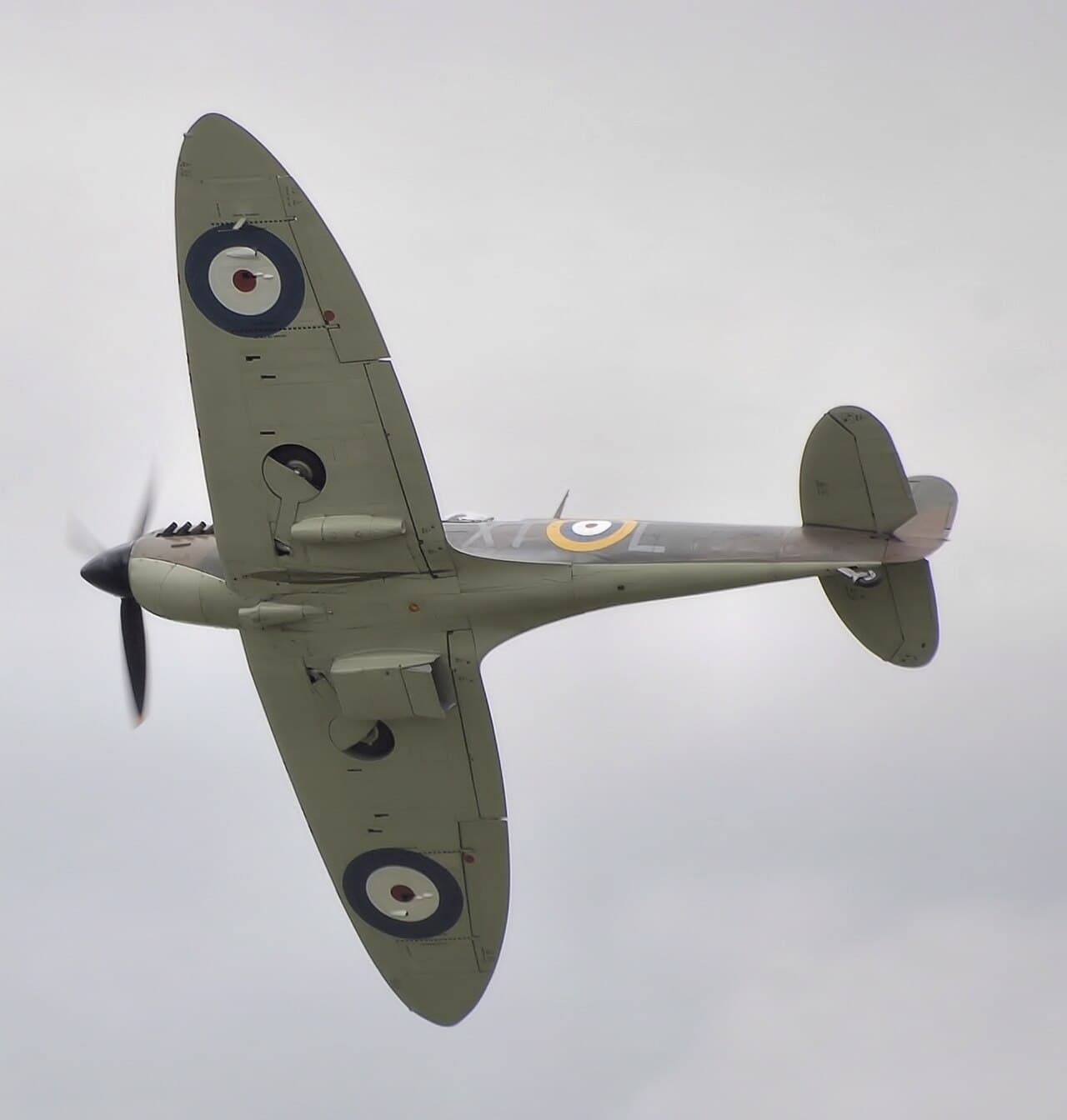 Spitfire Mk IXSpitfire Mk IX
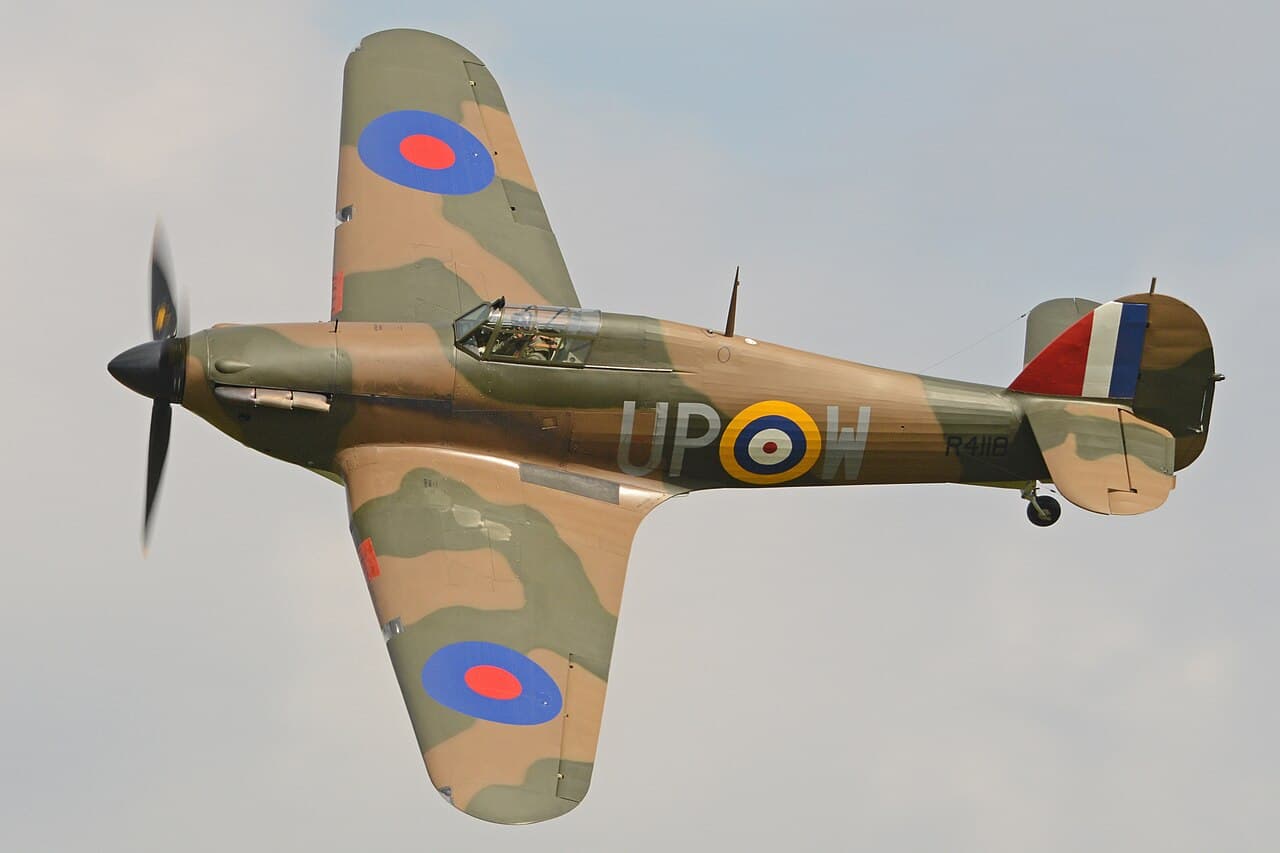 Hurricane Mk IICP-51DSpitfire Mk IXBf 109G
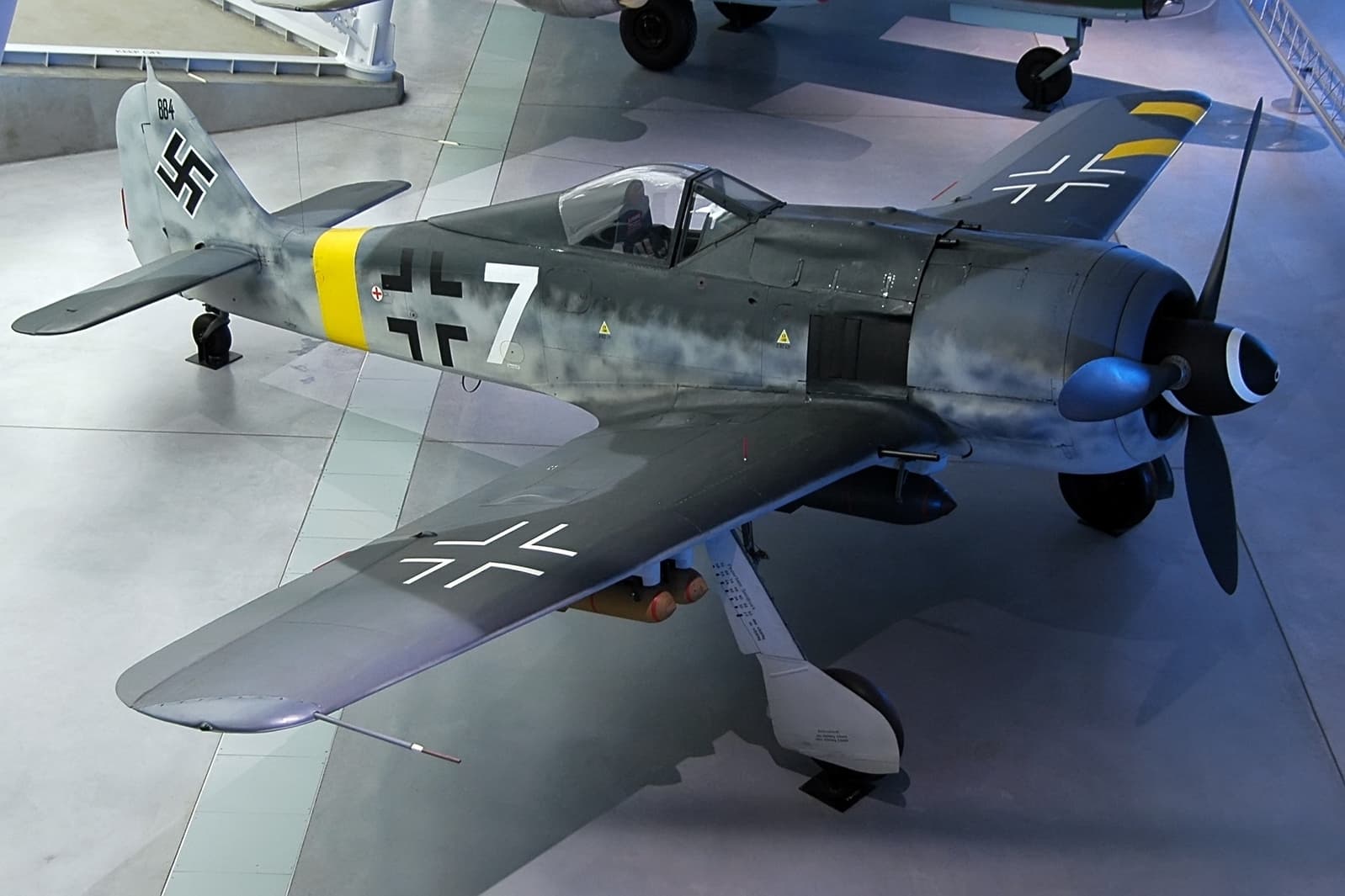 Fw 190ASpitfire Mk IXFw 190A
 P-47DBf 109G