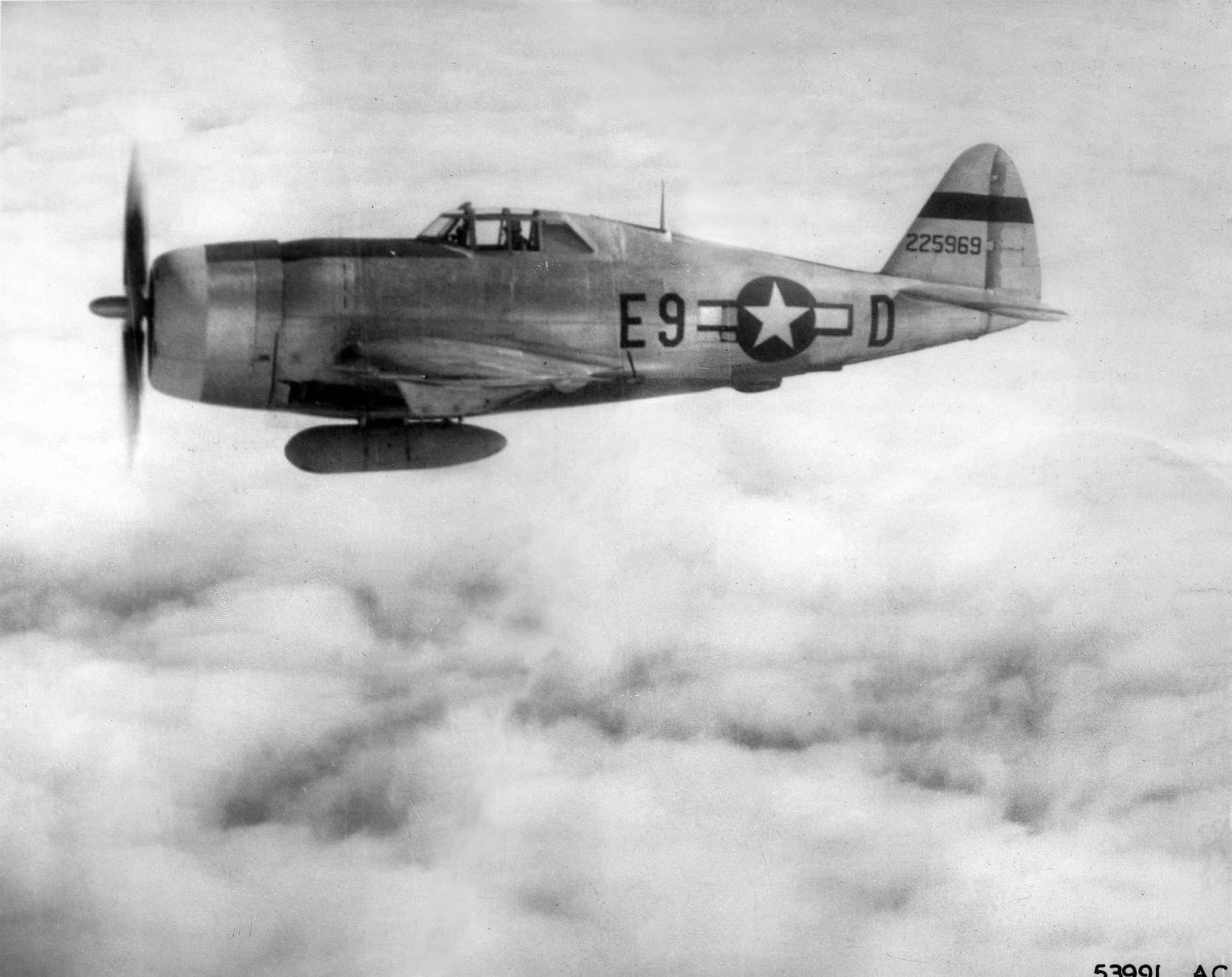
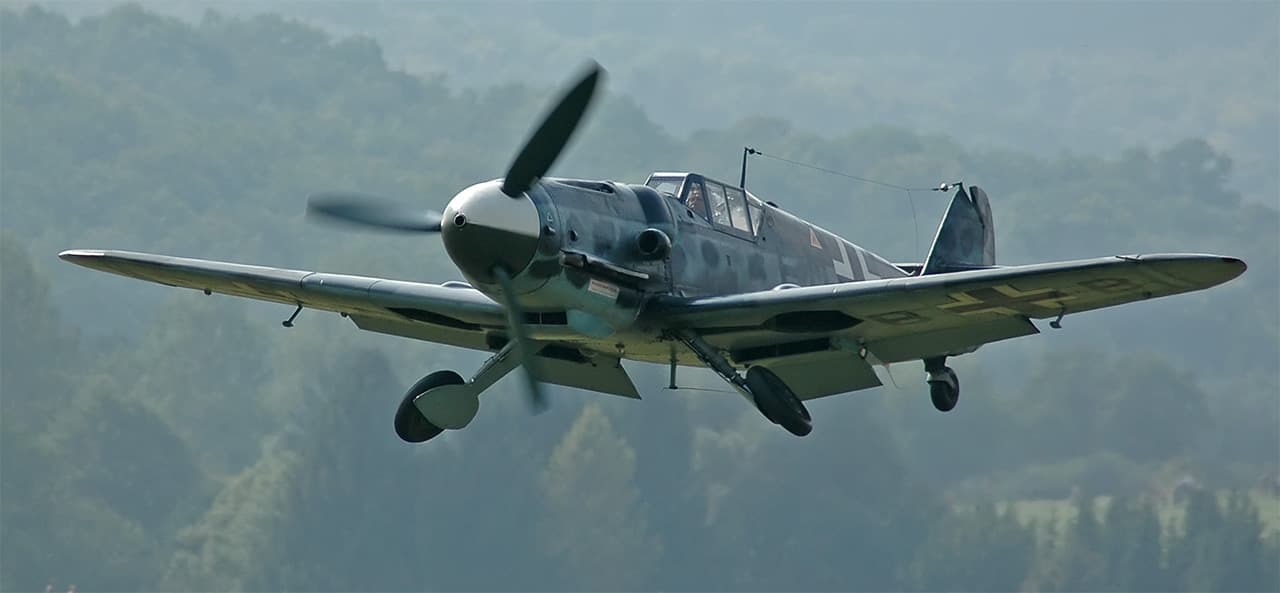
P-47D Thunderbolt vs Bf 109G
The seven-ton Jug versus the Gustav, brute force meets Teutonic precision over the Reich
The Bottom Line
The P-47D dominated the high-altitude escort role where most ETO engagements occurred, using superior speed, dive performance, and survivability. The Bf 109G was the better climber and turner, but these advantages were increasingly irrelevant as American tactics, numbers, and pilot quality overwhelmed the Luftwaffe.
Who Wins Each Scenario?
High-altitude escort combat above 25,000 ft
P-47D
The P-47D's turbosupercharged R-2800 maintained full power at altitudes where the Bf 109G's DB 605 was gasping. At 30,000 ft, the Thunderbolt was 35 mph faster and held commanding advantages in speed, dive, and roll rate.
Medium-altitude dogfight (15,000–20,000 ft)
Bf 109G
At medium altitudes, the Bf 109G's lighter weight gave it advantages in climb, turn, and acceleration that the P-47D could not overcome in a sustained maneuvering fight. Experienced P-47 pilots avoided this scenario.
Ground attack and fighter-bomber operations
P-47D
The P-47D was the supreme fighter-bomber of WW2. Its 2,500 lb ordnance capacity, eight strafing guns, and legendary toughness against ground fire made it devastatingly effective. The Bf 109G was fragile and poorly suited to low-level attack.
Point defense interception
Bf 109G
The Bf 109G could scramble and reach bomber altitude faster than the P-47D could respond. Its climb rate advantage was critical for the defensive interceptor role, allowing it to reach attacking bombers before escorts could intervene.
Boom-and-zoom energy fighting
P-47D
The P-47D's legendary dive speed (approaching 600 mph), superior high-altitude speed, and excellent roll rate made it the master of energy fighting. Nothing in the Luftwaffe could follow a diving Thunderbolt.
Sustained turning engagement
Bf 109G
At roughly half the P-47D's weight, the Bf 109G could out-turn the Thunderbolt at any speed. But by 1944, experienced American pilots simply refused to engage in turning fights, rendering this advantage academic.
Interactive 3D Models
Performance Profile
Overall capability comparison across six combat dimensions
Head-to-Head Specifications
Key performance metrics compared side by side
Size Comparison
Both aircraft drawn to the same scale, the P-47D has 8.2ft greater wingspan and is 6.5ft longer
Performance Analysis
How each aircraft performs across key combat dimensions
Speed
WINNER: P-47D433 mph at 30,000 ft, 35 mph faster than the Bf 109G at its optimum altitude; turbocharger maintained power to 40,000+ ft
Slightly faster acceleration from a standing start due to dramatically lower weight (6,940 lb vs 17,500 lb)
The P-47D's turbosupercharged R-2800 gave it a decisive speed advantage at the high altitudes where most escort engagements began. The Bf 109G's DB 605 was optimized for medium altitudes (18,000-22,000 ft) and lost ground rapidly above 25,000 ft.
Climb Rate
WINNER: Bf 109GBetter sustained climb rate above 30,000 ft where the turbocharger maintained full power
Superior rate of climb at all altitudes below 30,000 ft, approximately 3,345 ft/min vs 2,750 ft/min; could reach 25,000 ft significantly faster
The Bf 109G's lighter weight gave it a pronounced climb advantage that was critical for the interceptor role. German pilots could scramble and reach bomber altitude faster than the P-47 could respond.
Maneuverability
WINNER: Bf 109GSuperior roll rate at combat speeds, approximately 95-100°/sec vs 75-80°/sec at 250 mph; better high-speed handling
Tighter turning circle, better low-speed handling, quicker direction changes below 250 mph due to lower wing loading
Different types of agility. The P-47 could change direction faster at high speed using its excellent roll rate. The Bf 109G could out-turn the Thunderbolt in a sustained turn. Experienced P-47 pilots avoided turning fights and used roll-rate-dependent maneuvers instead.
Altitude Performance
WINNER: P-47DDecisive advantage above 25,000 ft; turbocharger maintained full power to extreme altitude; service ceiling 40,000-42,000 ft
Better performance band at 15,000-22,000 ft where the DB 605 was in its element
The P-47D was specifically designed for high-altitude combat, and its turbosupercharger gave it a capability the mechanically supercharged Bf 109G could not match. Above 25,000 ft, the Thunderbolt held commanding advantages in speed and sustained power.
Range & Endurance
WINNER: P-47D590 miles internal, up to 1,800 miles with drop tanks (P-47D-40); could escort bombers hundreds of miles into Germany
None, 350 miles internal range limited sorties to approximately 80 minutes
Range was one of the P-47D's most critical strategic advantages. With progressive drop tank improvements, it could escort bombers deep into Germany. The Bf 109G's 80-minute endurance was a severe limitation, Günther Rall noted that Allied fighters flew for 7 hours while German pilots were limited to 80 minutes.
Dive Speed
WINNER: P-47DLegendary dive performance, terminal velocity approaching 600 mph; could out-dive any Axis fighter by a wide margin; maintained controllability at extreme speeds
Good initial dive acceleration due to lighter weight
The P-47D's dive performance was perhaps its single greatest tactical advantage. The massive airframe, powerful engine, and excellent high-speed controls allowed it to build up speed in a dive that no Bf 109G could match. American pilots routinely used the dive to disengage, pursue, or set up attacks.
Roll Rate
WINNER: P-47DApproximately 95-100°/sec at 250 mph, significantly faster than the Bf 109G; maintained effectiveness at high speeds
Slightly better at very low speeds where the P-47's controls felt heavy
The P-47D's superior roll rate at combat speeds was a decisive advantage in the high-speed slashing attacks that defined ETO air combat. The ability to reverse direction quickly at speed allowed P-47 pilots to track evading Bf 109s more effectively.
Cockpit Visibility
WINNER: P-47DExcellent all-around visibility in bubble-top variants; even the razorback had decent forward visibility
Smaller profile made the Bf 109G harder to spot visually
The P-47D bubble-top offered some of the best cockpit visibility of any WW2 fighter. The Bf 109G's cramped cockpit provided poor rearward visibility until the Erla Haube clear-vision canopy was introduced on late G-10/G-14 variants. The Bf 109G's sideways-hinged canopy could not be opened in flight.
Photo Gallery, 12 Photos
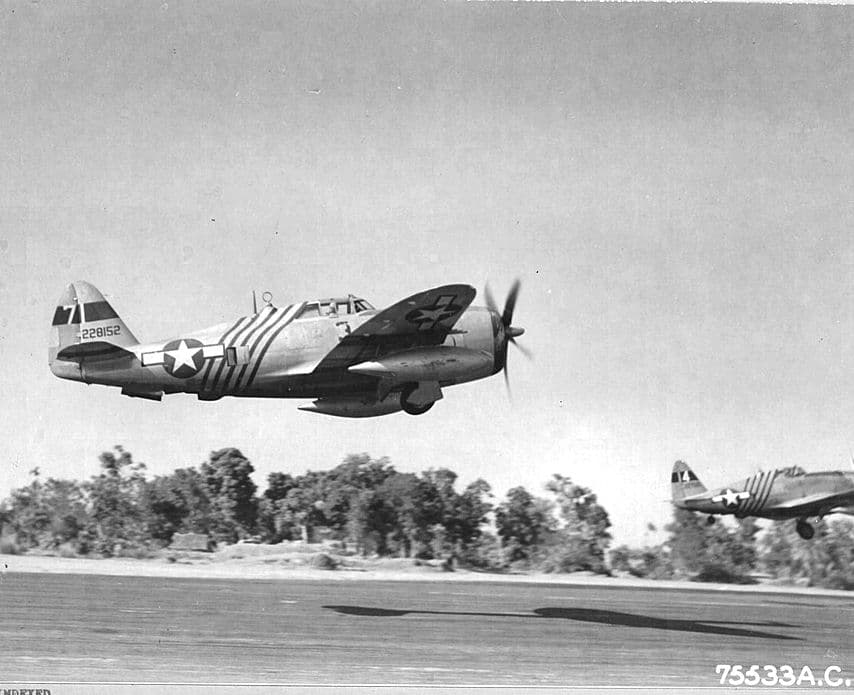
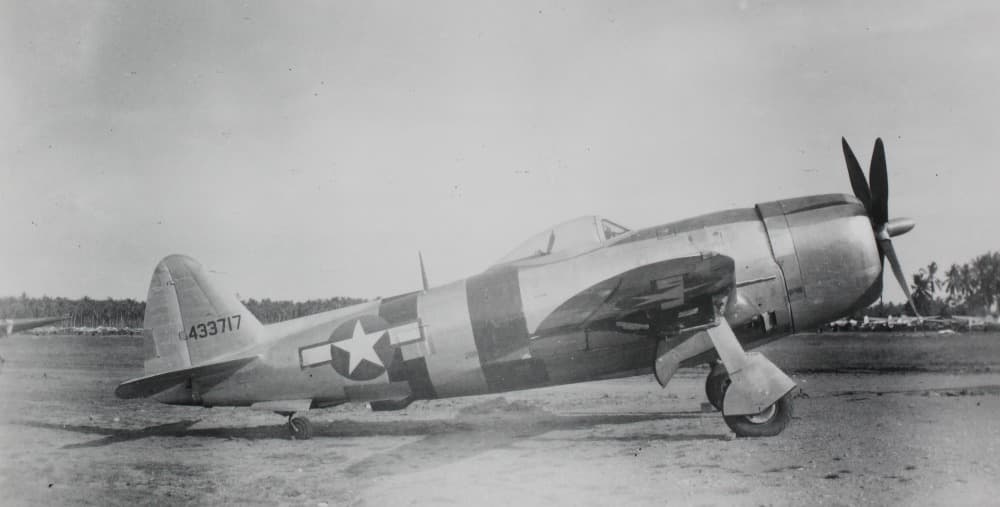
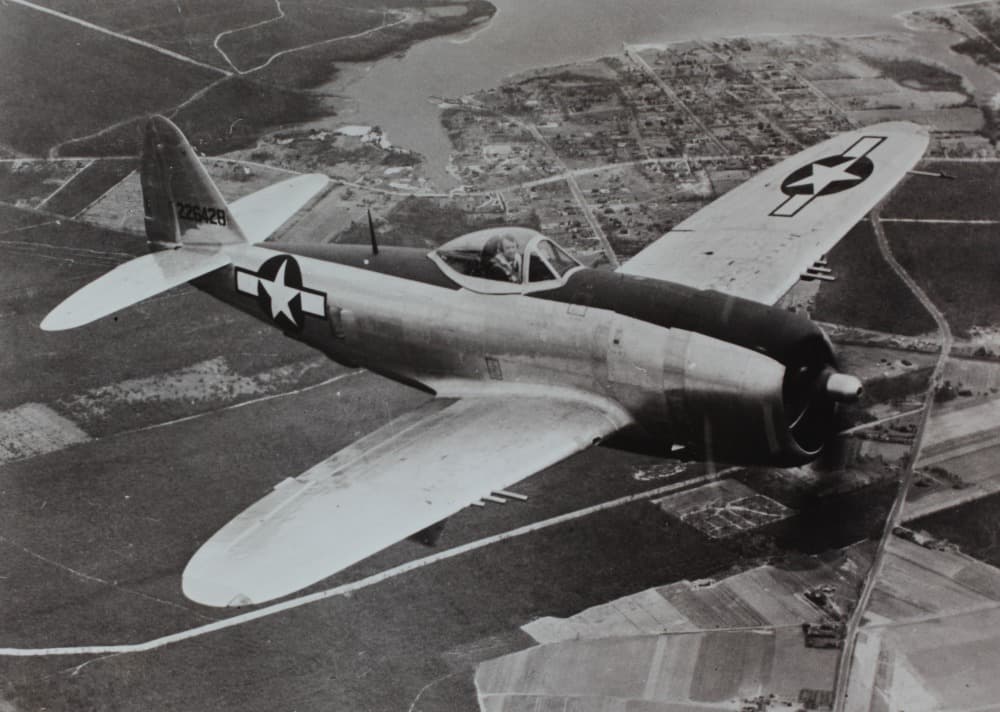
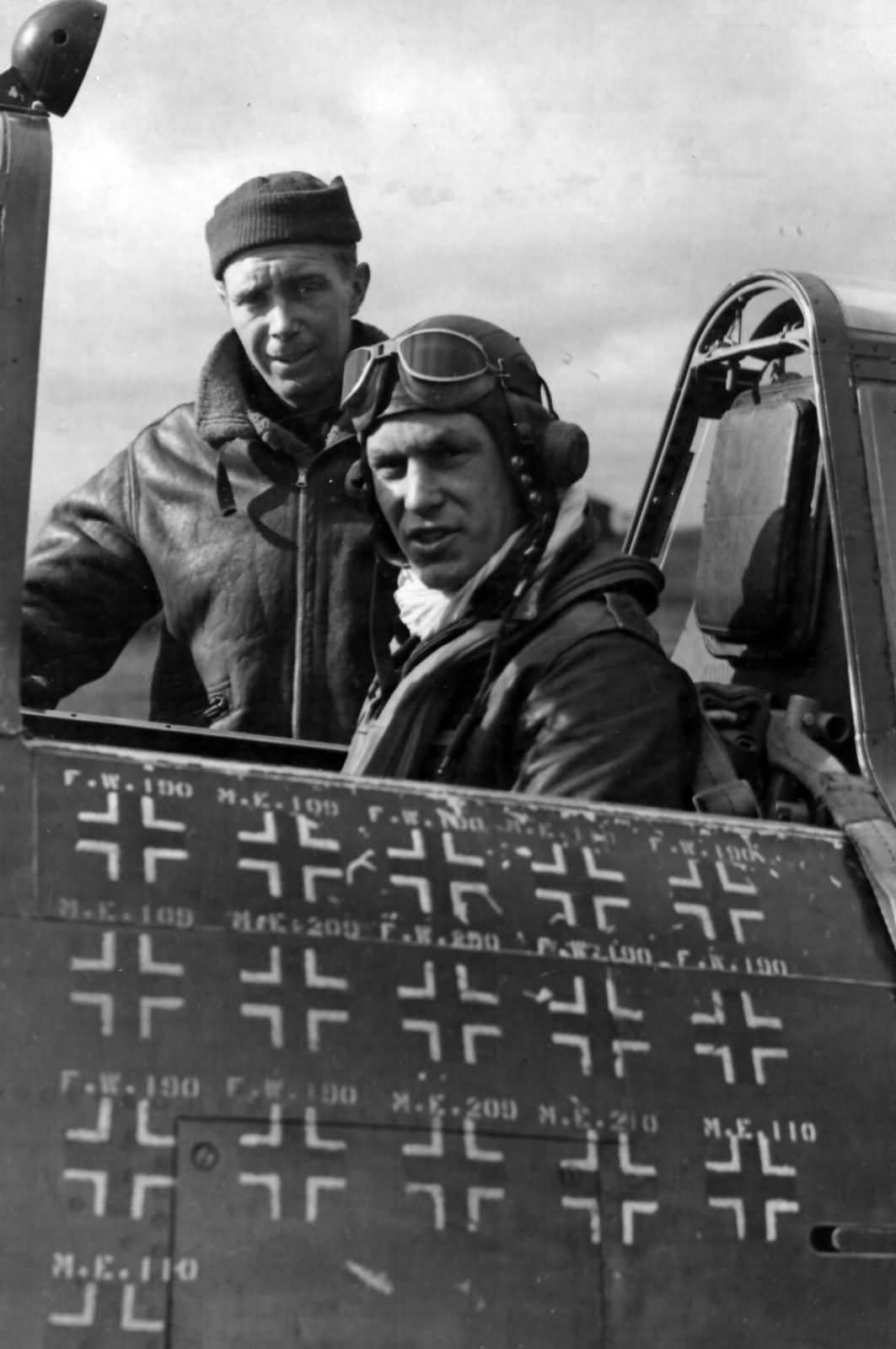
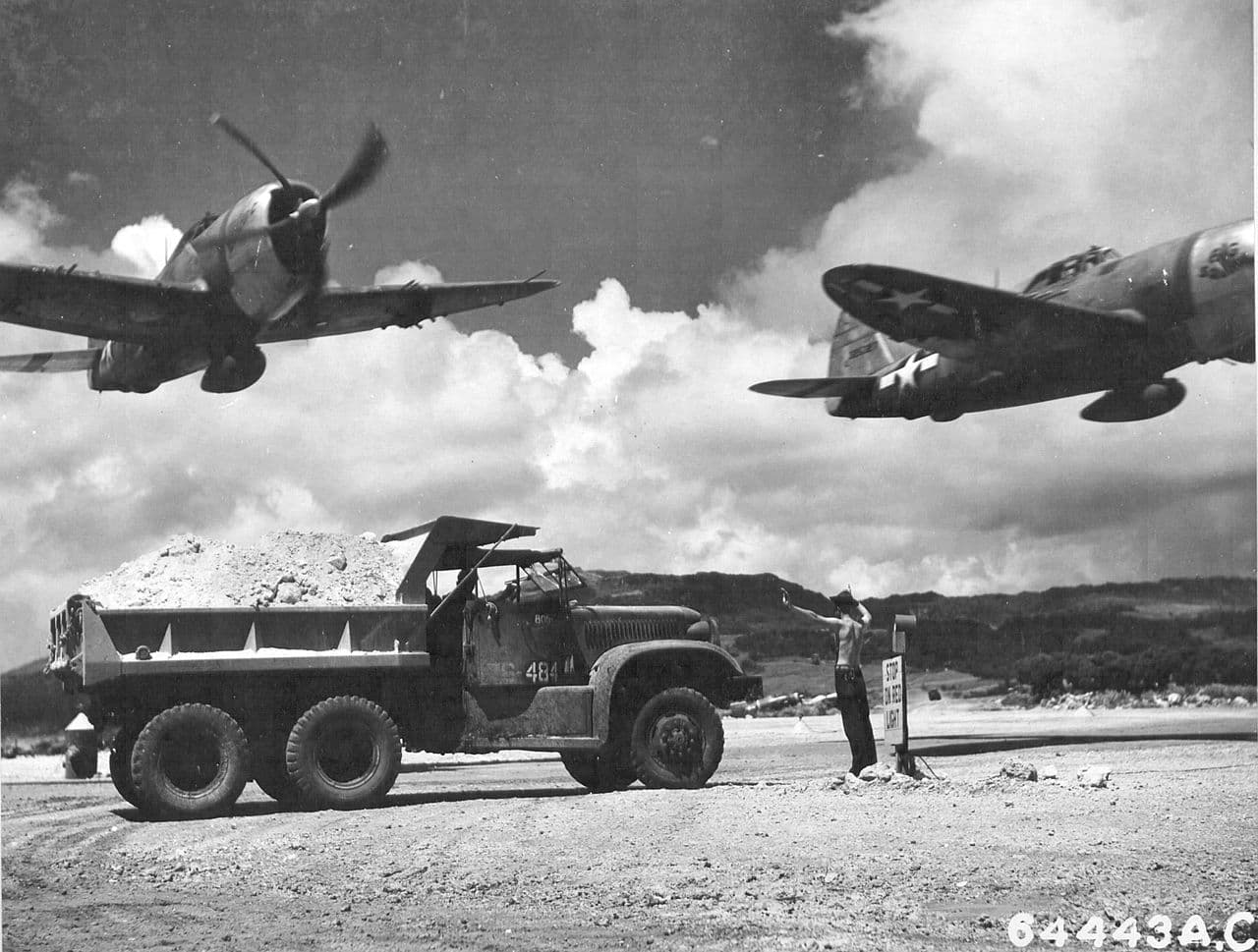
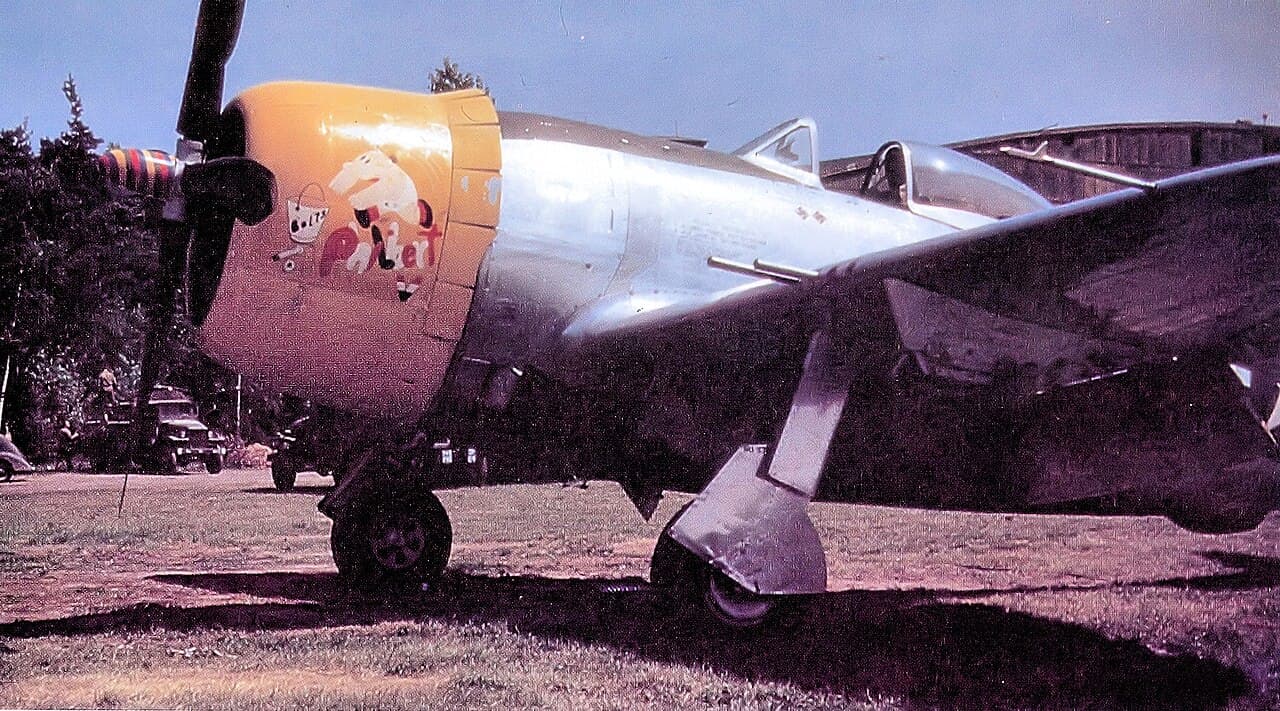
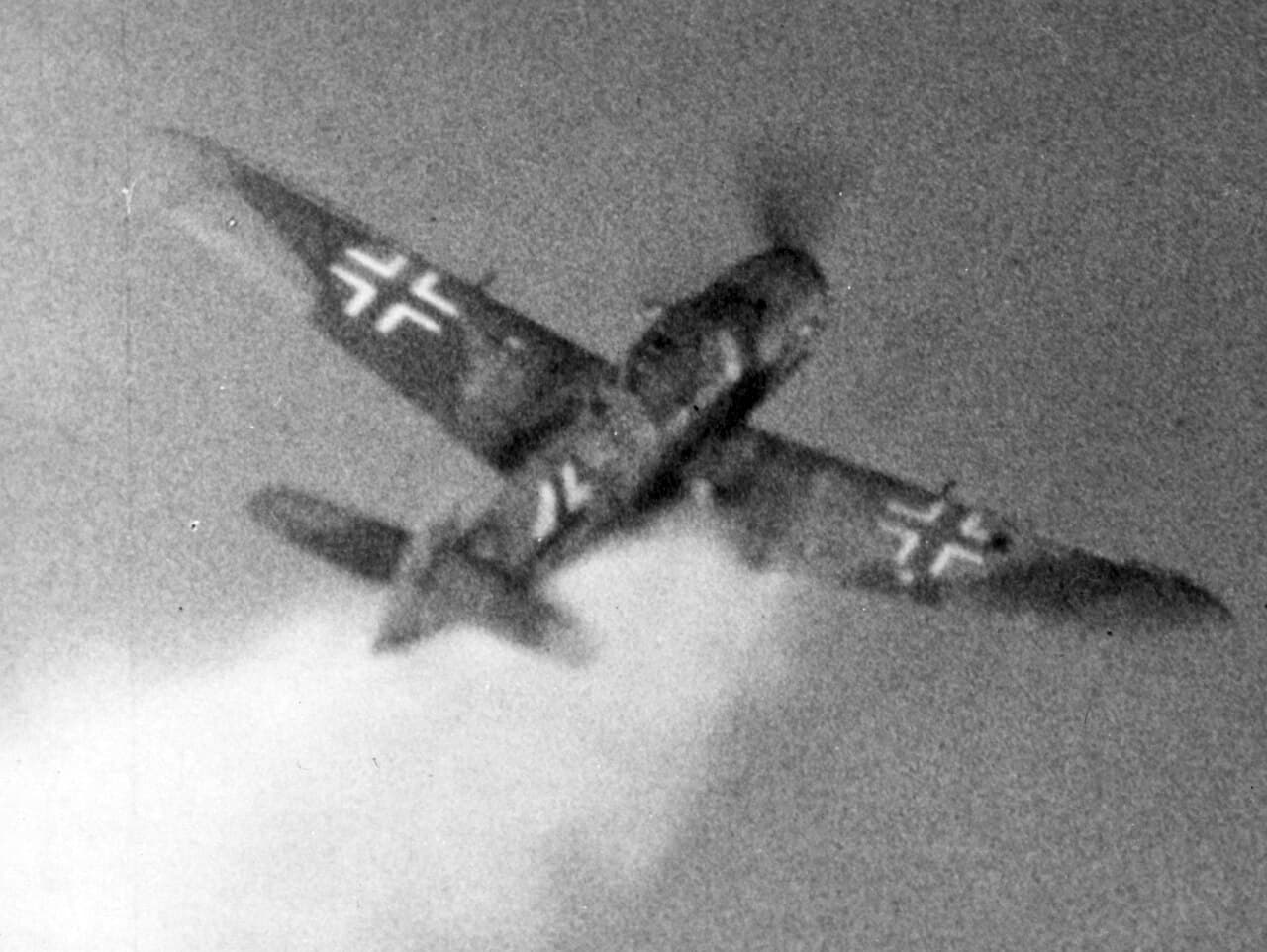
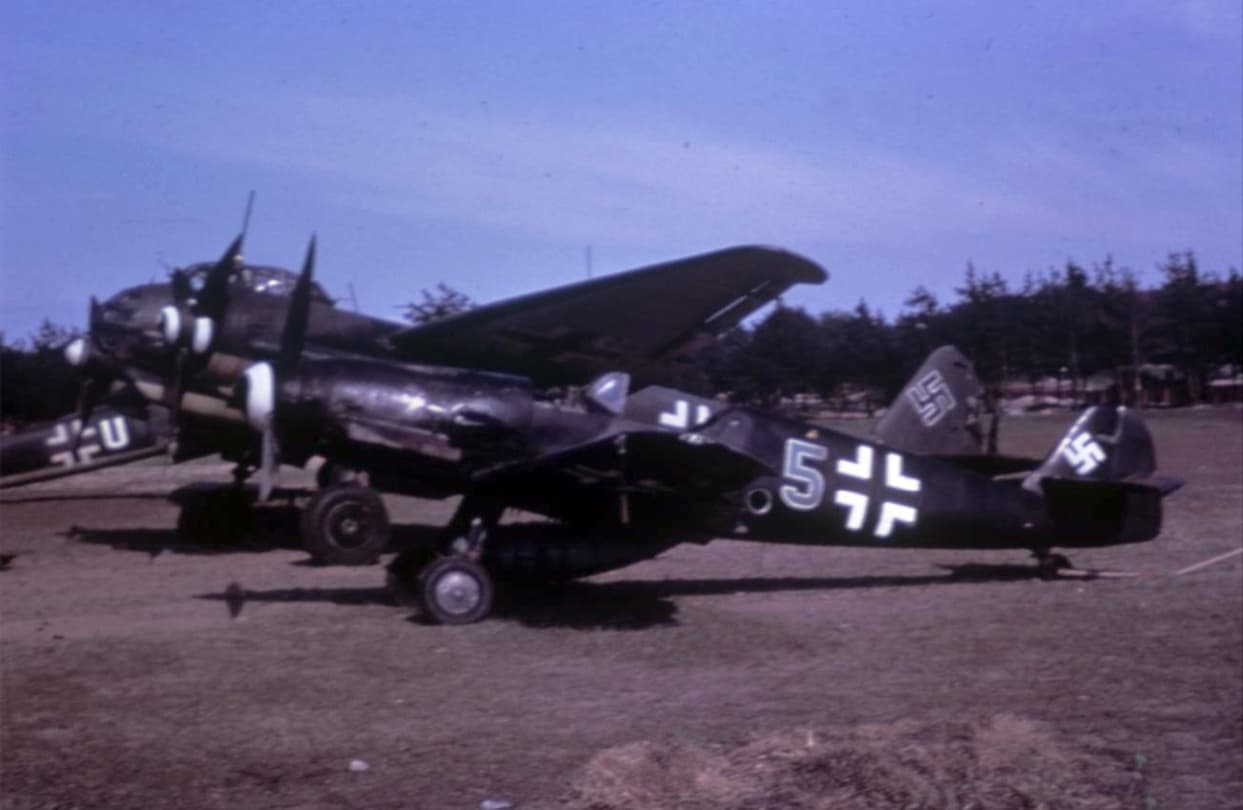
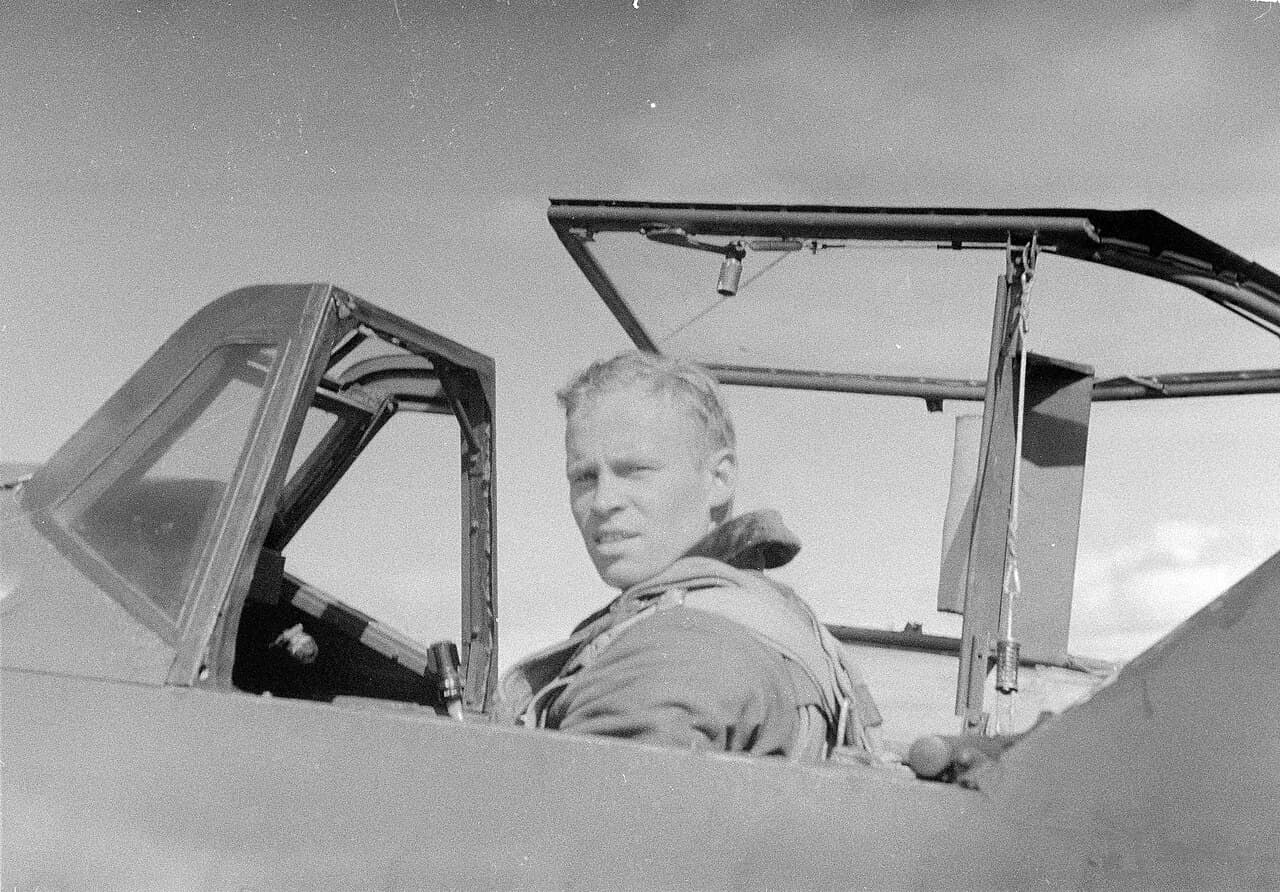
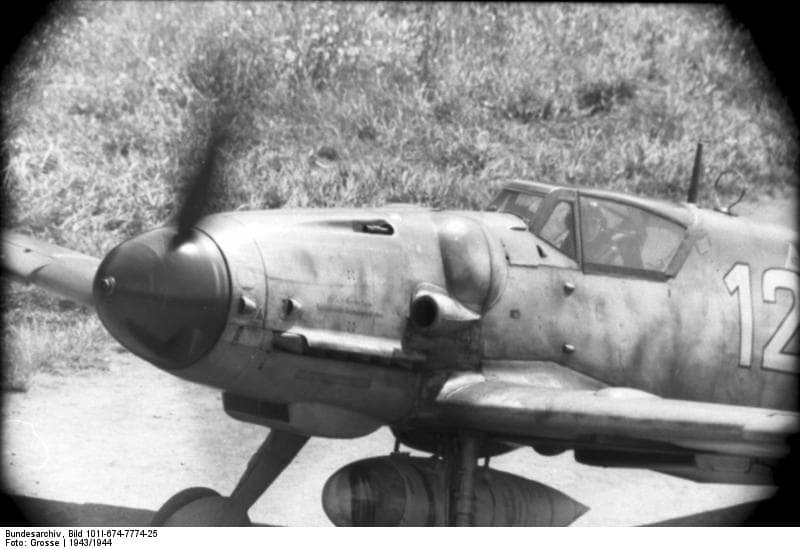
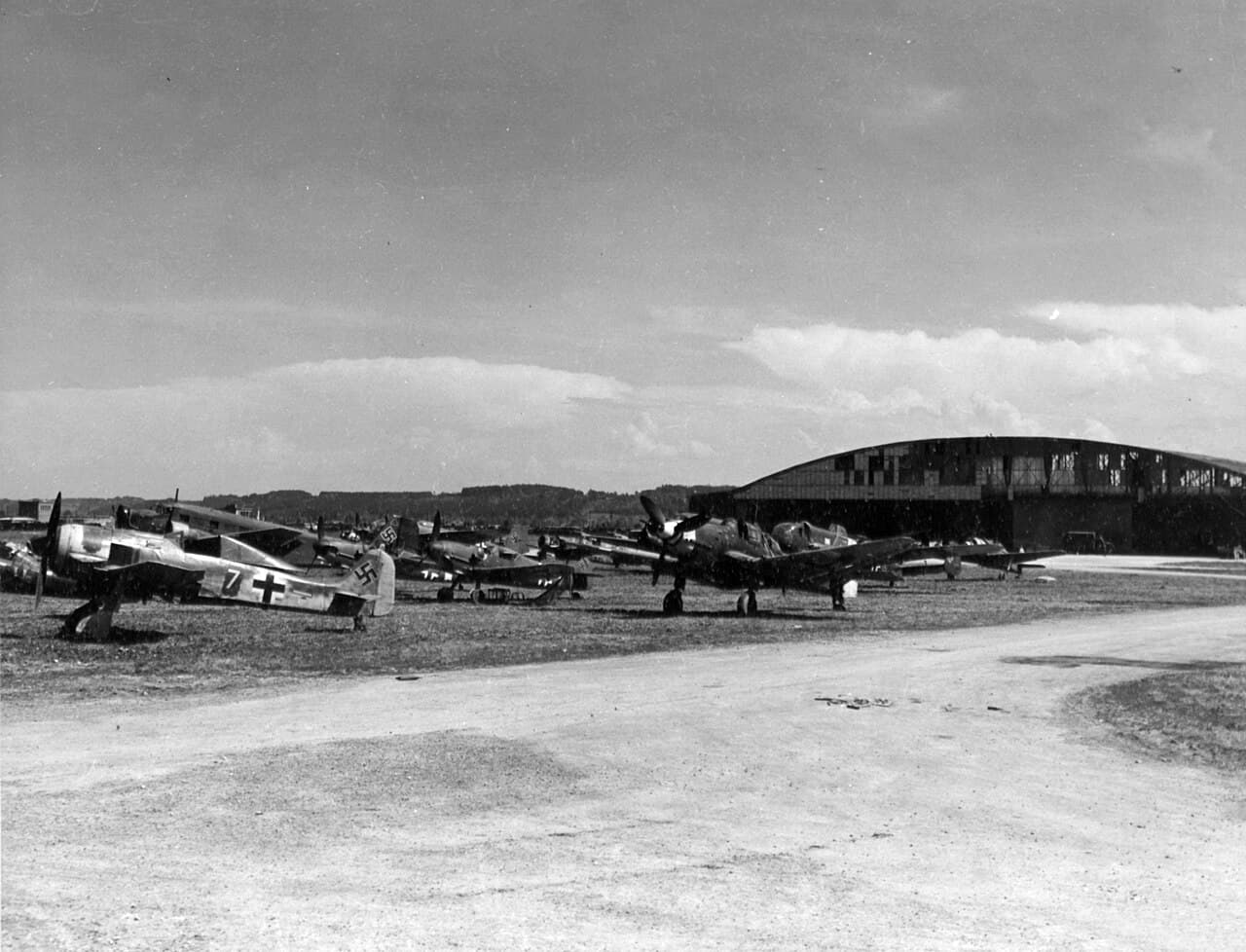
Click any photo to enlarge · 12 photos
Historical Context
The strategic backdrop that shaped both aircraft
The P-47D Thunderbolt and Bf 109G first met in the skies over occupied France in the spring of 1943, beginning a rivalry that would define the air war over Western Europe. The three pioneer P-47 groups of VIII Fighter Command, the 4th, 56th, and 78th Fighter Groups, became operational in April 1943, flying their first combat missions as escorts for 8th Air Force heavy bombers striking targets in France and the Low Countries.
The early encounters were a learning experience for both sides. American pilots, many of whom had trained in the lighter P-40 and P-39, found the massive Thunderbolt sluggish at low speeds and painfully slow to climb. The Bf 109G pilots of JG 2 and JG 26, hardened veterans of the Channel Front, initially treated the new American fighters with the same aggressive tactics they had used against the Spitfire V. But they quickly discovered that the P-47 was a very different proposition in a dive, nothing in the Luftwaffe inventory could follow a Thunderbolt going downhill.
The Bf 109G "Gustav" that greeted the P-47 was itself a compromise. The basic Bf 109 airframe dated to 1935, and by 1943 it had been stretched to accept the heavier, more powerful Daimler-Benz DB 605 engine and progressively heavier armament. The G-6 variant, which entered service in early 1943, was the most-produced sub-type with roughly 12,000 built. It carried a 20mm MG 151/20 cannon firing through the propeller hub and two 13mm MG 131 machine guns in the cowling, the larger breeches of the MG 131s required distinctive "Beule" (bumps) on the cowling that became the Gustav's visual signature.
The critical strategic context was the Allied Combined Bomber Offensive. American daylight bombing required fighter escort, and the P-47 was the first American fighter available in sufficient numbers and with sufficient performance to take on the Luftwaffe's defense-of-the-Reich interceptors. The initial constraint was range, early P-47Ds could escort bombers only partway to their targets before fuel limitations forced them to turn back, leaving the bombers to face German interceptors unprotected. The progressive introduction of drop tanks, first 75-gallon, then 108-gallon, then 150-gallon, extended the P-47's reach deeper into Germany.
By early 1944, the P-51 Mustang was arriving in numbers to handle the deepest escort missions, and the P-47 increasingly transitioned to a dual role: escorting the first leg of bomber missions and then descending to attack ground targets on the way home. This proved to be the Thunderbolt's true calling. Its eight .50 caliber guns, 2,500-pound bomb capacity, and legendary toughness made it the most effective fighter-bomber of the war.
Notable Combat Encounters
Key engagements where these aircraft faced each other in combat
The P-47's first aerial victory came during a fighter sweep over the Channel coast. Major Don Blakeslee of the 4th Fighter Group scored the first P-47 kill, downing an Fw 190. In these early weeks, the three P-47 groups were finding their feet, learning the Thunderbolt's strengths and weaknesses against the experienced Luftwaffe Channel units.
Outcome
The first kills validated the P-47 as a combat aircraft, but losses were also taken. Pilots quickly learned that energy management was everything, the P-47 was dominant in the dive but vulnerable if caught slow and low.
These early combats established the tactical doctrine that would define P-47 operations: dive from altitude, use speed and firepower, never get into a slow-speed turning fight with a Bf 109.
Operation Argument, "Big Week", was the decisive air battle of the European war. P-47Ds and P-51s escorted bombers striking German aircraft factories. Under General Jimmy Doolittle's new directive, escorts were freed to range 50-75 miles ahead of the bomber stream, engaging interceptors before they could form up for attacks.
Outcome
Germany lost 262 fighters and approximately 100 irreplaceable veteran pilots. The Reichsverteidigung's operational strength dropped to 50%. The Luftwaffe was forced to pull interceptor units back from France, weakening the defense against the forthcoming invasion.
Big Week proved that aggressive escort tactics, using the P-47 as a hunter rather than a bodyguard, could break the Luftwaffe's defensive fighter force. The new doctrine of seeking out and destroying German fighters became the cornerstone of Allied air strategy.
During and after D-Day, 9th Air Force P-47s provided continuous air cover over the invasion beaches and attacked German defensive positions, armor, and supply lines. The 362nd FG escorted C-47 transports carrying paratroopers. In the breakout after Operation Cobra (late July), P-47s of the 405th FG attacked a trapped German column at Roncey, destroying 66 tanks, 204 vehicles, and 11 guns in a single action.
Outcome
By the end of the Normandy campaign, P-47s had established complete air superiority over the battlefield. German ground forces could not move in daylight without risking devastating air attack. The Luftwaffe's fighter response was sporadic and ineffective.
Normandy demonstrated the P-47D's supreme effectiveness as a fighter-bomber, a role that ultimately contributed more to Allied victory than its air-to-air record.
Operation Bodenplatte, the Luftwaffe's last major offensive, struck 17 Allied airfields at dawn. In one of the most lopsided engagements of the day, 12 P-47s of the 367th Fighter Squadron / 358th Fighter Group intercepted 26 Bf 109s.
Outcome
The 12 P-47s claimed 13 Bf 109s destroyed, 1 probable, and 6 damaged, without losing a single aircraft. Overall, Bodenplatte cost the Luftwaffe 271 fighters destroyed, 89 damaged, and 213 pilots killed, missing, or captured.
The 367th FS engagement epitomized the state of the air war by January 1945: even outnumbered 2:1, well-trained P-47 pilots could devastate Bf 109G formations crewed by inadequately trained replacements.
Armament & Firepower
Primary weapons, munitions capacity, and destructive capability
P-47D Loadout
8x .50 caliber (12.7mm) Browning AN/M2 machine guns with 3,400 rounds total (425 per gun), providing approximately 30 seconds of continuous fire at a combined rate of ~100 rounds per second. External ordnance: up to 2,500 lb of bombs and/or 10x 5-inch HVAR rockets.
Bf 109G Loadout
Standard Bf 109G-6: 1x 20mm MG 151/20 cannon (200 rounds, hub-firing through propeller) + 2x 13mm MG 131 machine guns (300 rpg, cowl-mounted). Optional R6 field kit: 2x additional 20mm MG 151/20 in underwing gondola pods (135 rpg). Optional R4 kit: 2x 30mm MK 108 underwing pods for anti-bomber work.
Air-to-Air Verdict
Different philosophies. The P-47D's eight .50 calibers delivered an enormous volume of fire, ideal for the brief deflection shots typical of high-speed combat. The Bf 109G's 20mm cannon delivered more destructive punch per hit, especially against bombers. However, the gondola guns that made the Gustav effective against bombers also degraded its performance enough to make it vulnerable to escorts.
Ground Attack Verdict
The P-47D was vastly superior as a ground-attack platform. It could carry 2,500 lb of ordnance, had eight guns for strafing, and its toughness allowed low-level operations that would have been suicidal in a Bf 109G.
The P-47D's eight .50 calibers with 3,400 rounds gave it 65% more ammunition than a P-51 and the ability to sustain fire for 30 seconds, an enormous advantage in the brief, high-speed engagements typical of ETO combat. A one-second burst from eight M2 Brownings was devastating against any single-engine fighter. The Bf 109G's armament was adequate for the fighter role but became a compromise when the underwing weapons needed to kill bombers also made the aircraft vulnerable to the very escorts it needed to evade.
Survivability & Protection
Armor, self-sealing tanks, pilot protection, and structural resilience
P-47D Protection
Substantial pilot armor plate. Self-sealing fuel tanks. The air-cooled R-2800 radial engine had no coolant system, it could lose entire cylinders to battle damage and continue producing power. The massive airframe spread critical systems apart, making catastrophic damage from a single hit unlikely.
Bf 109G Protection
Pilot armor plate behind and below the seat. Some armor around the engine coolant system on later variants. Self-sealing fuel tanks, though smaller and with less redundancy than the P-47D's.
Pilot Protection
Both aircraft provided pilot armor, but the P-47D's sheer size worked in its favor, a round that might hit something critical in the compact Bf 109G might pass through empty space in the Thunderbolt.
Structural Durability
The P-47D was legendarily tough. Robert S. Johnson's aircraft absorbed 21 20mm cannon shells and 200+ machine gun bullets and flew home. The air-cooled radial engine was virtually immune to the single-hit kills that plagued liquid-cooled engines, there was no coolant line to rupture. The Bf 109G's DB 605 was fatally vulnerable to coolant system damage, and its lighter construction offered less margin for absorbing battle damage.
Crash Survivability
The Bf 109G had notoriously poor ground handling due to its narrow-track, outward-retracting landing gear. Johannes Steinhoff estimated the Luftwaffe lost 11,000 of 33,000 Bf 109s to takeoff and landing accidents, a staggering attrition rate. The P-47D's wide-track gear and rugged construction made ground handling far safer.
This was the P-47D's most decisive advantage. The Thunderbolt could absorb punishment that would have destroyed any Bf 109G. In the low-level ground attack role where the P-47 increasingly operated, this toughness was the difference between a damaged aircraft that flew home and a dead pilot. The Bf 109G was a fragile machine by comparison, effective when it hit first, but vulnerable when hit in return.
Tactical Doctrine & Evolution
How pilots were trained to fight in each aircraft and how tactics adapted over time
P-47D Tactics
P-47 tactics evolved dramatically between 1943 and 1945. Initially, 8th Air Force doctrine required escorts to stay close to the bombers, a waste of the P-47's energy advantages that allowed Luftwaffe interceptors to choose when and where to engage. This changed under General Jimmy Doolittle, who issued his famous directive: "The first duty of Eighth Air Force fighters is to destroy German fighters."
Under the new doctrine, P-47 formations spread out 25 miles wide, with squadrons ranging 50-75 miles ahead of the bomber stream to catch interceptors forming up. Hub Zemke's "Zemke Fan" tactic had fighters rendezvous at a landmark in their escort zone, then scatter in a 180-degree arc by flights, creating a sweeping net that was impossible for the Luftwaffe to avoid.
P-47 pilots were trained to fight from energy advantages: begin at altitude, dive on the enemy, use superior speed and roll rate for slashing attacks, and zoom climb back to altitude. Never follow a Bf 109 into a sustained climbing fight. Never get slow. If bounced, the standard response was to push over and dive, nothing could follow. The P-47 typically took the first escort leg (closer to England), handing off to longer-ranged P-51s for deeper penetration into Germany.
Bf 109G Tactics
Luftwaffe Reichsverteidigung tactics were shaped by the dual requirement to destroy bombers and survive against escorts. The standard approach used a layered system: Bf 109Gs carrying underwing gondola guns (R6 kit with two additional 20mm MG 151/20 cannons) were tasked with attacking bomber formations, while clean Bf 109Gs without gondola guns flew top cover against American escorts.
Heavy fighters (Bf 110s, Me 410s) typically made the initial head-on passes against bomber formations, followed by Bf 109G and Fw 190A attacks from the sides and rear. The concentrated firepower of the gondola-gun Gustavs was devastating against bombers but came at a severe price: the added weight and drag degraded performance enough to make these aircraft dangerously vulnerable to escort fighters.
From mid-1944, increasingly desperate measures were employed. Sturmgruppen of heavily armored Fw 190As made massed head-on attacks against bomber formations. Bf 109Gs were increasingly used in the top-cover role, trying to keep escorts away from the vulnerable attack formations. By late 1944, replacement pilots arriving with as little as 100 hours of total flight time were unable to execute these complex tactics effectively.
How Tactics Evolved
The tactical evolution of this rivalry was driven by two transformative decisions and one irreversible trend. The first decision was Doolittle's directive freeing escorts to hunt rather than huddle, this turned the P-47 from a defensive weapon into an offensive one. The second was the progressive extension of the P-47's range through drop tanks, which pushed the safe zone for Bf 109G interceptors steadily eastward.
The irreversible trend was the destruction of the Luftwaffe's experienced pilot corps. Through 1943, German pilots with thousands of combat hours could exploit the Bf 109G's climb and maneuverability advantages to fight P-47s on favorable terms. By mid-1944, the veterans were dead or wounded, and their replacements, rushed through truncated training programs, could not execute the energy management and situational awareness required to survive against aggressive American escorts. The aircraft hadn't changed, but the men in the cockpits had.
What the Pilots Said
Firsthand accounts from the men who flew and fought these aircraft
On the P-47D“When I was badly shot up on June 26, 1943, I had twenty-one 20mm cannon shells in that airplane, and more than 200 7.92mm machine-gun bullets. That P-47 brought me home.”
On the P-47D“A fighter pilot must possess an inner urge for combat. The will at all times to be offensive will develop into his own tactics.”
On the Bf 109G“You could not fly the Bf 109 for seven hours; the cockpit was too tight, too narrow. The P-51 cockpit was for me a great room, just fantastic.”
On the Bf 109G“If a German mechanic who really knew the Bf 109 wasn't handy, I should not get into the cockpit.”
By the Numbers
Statistical combat performance and historical kill ratios
The P-47 Thunderbolt compiled one of the most impressive combat records of any WW2 fighter, with particularly strong statistics in the European Theater where it faced the Bf 109G most frequently.
The P-47 Thunderbolt achieved an overall aerial kill ratio of 4.6:1 across 746,000+ combat sorties in the ETO. The 8th Air Force specifically recorded 1,562 air-to-air credits against 214 combat losses, a remarkable 7.3:1 ratio. The 56th Fighter Group, which uniquely kept its P-47s throughout the war by choice, compiled 677.5 air victories and 311 ground kills while losing 128 aircraft.
The P-47 was flown by 18 of the top 30 American aces in Europe, including Francis "Gabby" Gabreski (28 victories), Robert S. Johnson (27), David Schilling (22.5), Fred Christensen (21.5), and Walker Mahurin (21). The "Terrible Three" of Gabreski, Zemke, and Schilling earned their German nickname through relentless aggressive flying.
The Bf 109G's combat record in the West is harder to quantify precisely because the Luftwaffe's claims system was different from the USAAF's, and the Gustav served alongside the Fw 190 in most engagements. What is clear is the trajectory: by April 1944, Adolf Galland reported that the Luftwaffe was losing nearly 40% of its fighters and approximately 25% of its pilots per month. By the time of D-Day, the Luftwaffe's experienced pilot corps had been decimated, and replacement pilots arriving with as little as 100 hours of total flight time were no match for combat-hardened American escorts.
The ground attack statistics are equally telling. P-47s were credited with destroying 86,000 railroad cars, 9,000 locomotives, 6,000 armored fighting vehicles, and 68,000 trucks, devastation that paralyzed the German logistical system in Western Europe. No Bf 109G variant could have sustained this kind of low-level campaign; the Thunderbolt's toughness was essential.
Production & the Numbers Game
How industrial output shaped the strategic balance
15,636
P-47D Built
23,500
Bf 109G Built
The production numbers reflect different strategic realities. America could concentrate on a few excellent designs produced in massive quantities with consistent quality. Germany's dispersed production, while resilient against bombing, introduced quality control problems and made logistics increasingly chaotic.
The P-47D's production run benefited from American industrial efficiency, Republic's two factories maintained high output with relatively few variant changes. The Bf 109G, by contrast, went through numerous sub-variants (G-2, G-4, G-5, G-6, G-10, G-14) with different engines, armament, and equipment fits, creating a logistical nightmare for maintenance units already struggling with supply shortages.
By 1944, Germany was producing more Bf 109Gs than ever, but it couldn't train pilots fast enough to fly them or produce fuel to keep them airborne. The factory output was impressive; the strategic context rendered it largely irrelevant.
Advantages in This Matchup
Where each aircraft holds the edge in a head-to-head encounter
P-47D Thunderbolt
- Decisive speed advantage above 25,000 ft, the most common escort engagement altitude
- Legendary dive performance approaching 600 mph, could disengage from any engagement at will
- Eight .50 cal Brownings with 3,400 rounds, devastating firepower with 30 seconds of sustained fire
- Extraordinary survivability, air-cooled engine, self-sealing tanks, and massive structural margin
- 2,500 lb bomb load and rocket capability made it the war's most effective fighter-bomber
- Superior roll rate at combat speeds (~100°/sec) enabled rapid direction changes
- Extended range with drop tanks allowed deep escort missions into Germany
Bf 109G Gustav
- Superior rate of climb at all altitudes below 30,000 ft, critical for the interceptor role
- Lighter weight (6,940 lb vs 17,500 lb) gave better acceleration and tighter turning
- 20mm hub cannon delivered more destructive punch per hit than .50 caliber rounds
- Smaller visual and radar profile, harder to detect and track
- Could scramble to altitude faster than any Allied piston fighter
- Massive production numbers ensured continued availability despite heavy attrition
- Versatile armament options (gondola guns, rockets) allowed adaptation to different roles
Final Verdict
Overall Winner
🇺🇸 Republic P-47D Thunderbolt
United States
In the specific context of the European air war, high-altitude escort combat, followed by fighter-bomber operations, the P-47D Thunderbolt was the superior weapon system. Not the better airplane in absolute terms, but the better tool for the job that needed doing. The Bf 109G could out-climb and out-turn the Thunderbolt, but these advantages mattered less than the P-47D's dominance in speed, dive performance, survivability, and ground-attack capability.
The 56th Fighter Group's choice to keep their P-47s, when every other 8th Air Force group transitioned to P-51s, and their resulting record as the highest-scoring group in the theater is the most eloquent argument for the Thunderbolt. Gabreski, Johnson, Zemke, Schilling, and the rest of "Zemke's Wolfpack" proved that in the hands of pilots who understood its strengths, the P-47D was the equal of any fighter in the sky and superior to most.
The Bf 109G was not a bad aircraft, it remained competitive through 1944 in the hands of experienced pilots. But it was a prewar design stretched to its limits, increasingly fragile, difficult to maintain, and cursed with a landing gear that killed more pilots than many Allied fighters did. Its greatest liability was not any performance shortfall but the collapsing infrastructure behind it: declining fuel quality, truncated pilot training, and logistics chaos from dispersed production.
The Thunderbolt won this rivalry because it was tough enough to survive, powerful enough to dominate at altitude, versatile enough to excel in ground attack, and available in numbers that the Luftwaffe could not match. It was not the most elegant fighter of the war, it was the most effective.
Theaters of Operation
Shared Theaters
P-47D Only
Bf 109G Only