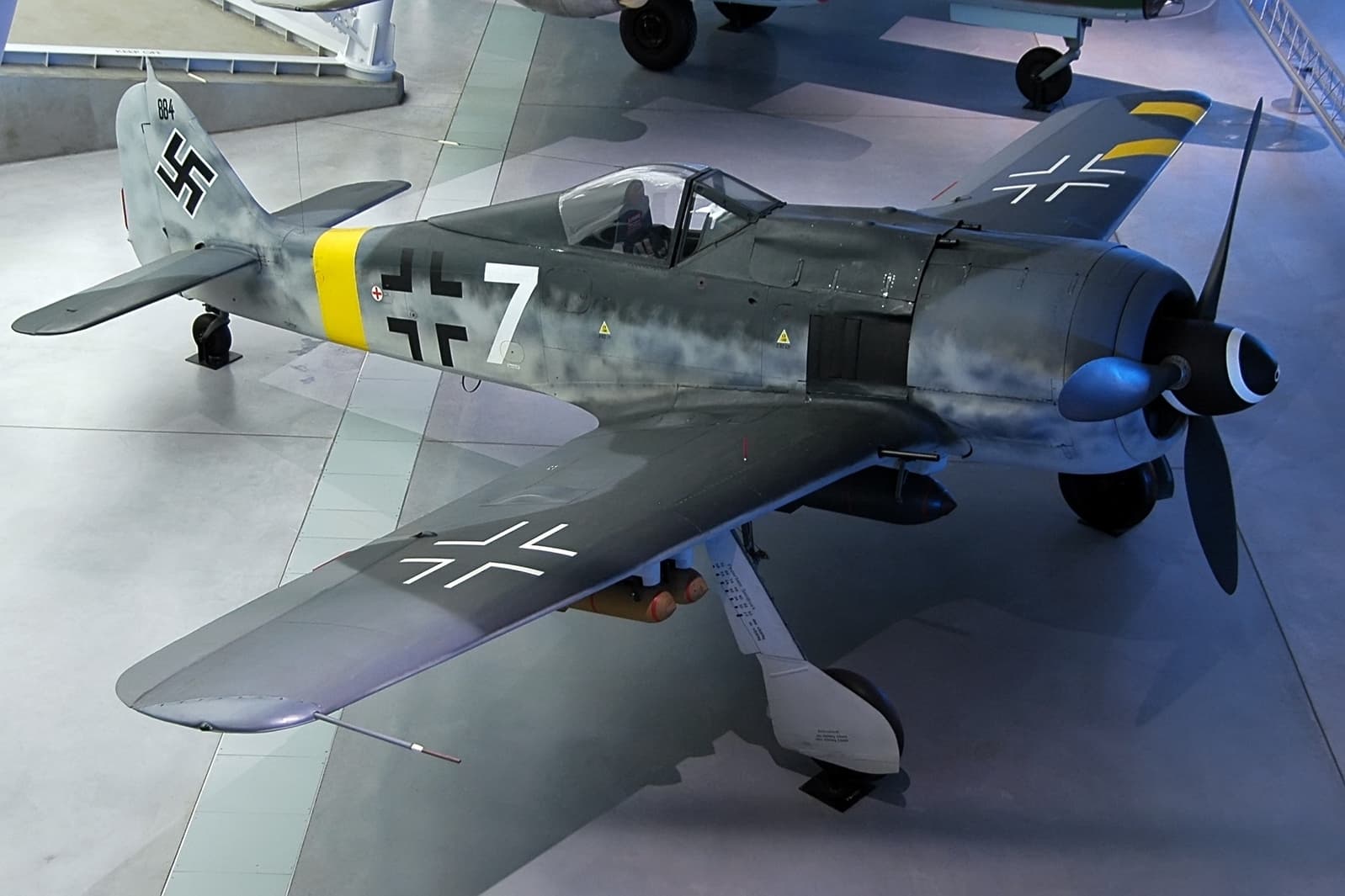
Bf 109G vs Fw 190A
The Luftwaffe's complementary fighter duo that defended the Reich from two different altitudes
The Bottom Line
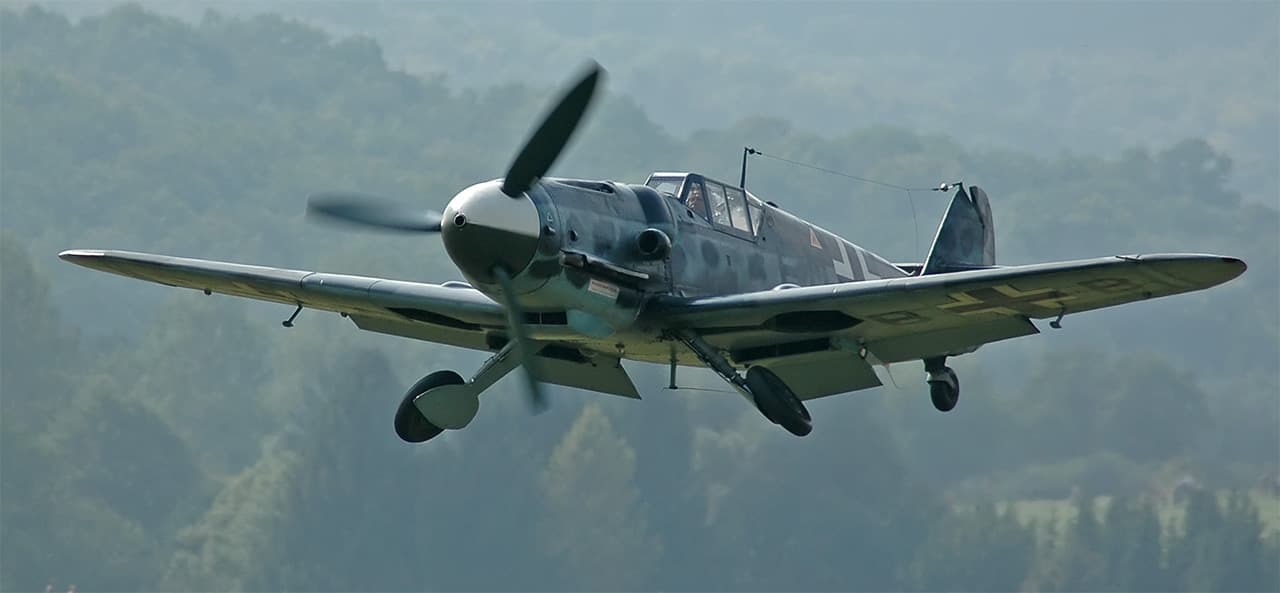
The Bf 109G and Fw 190A were not competitors but the two halves of a complementary fighter system. The Bf 109G was the Luftwaffe's high-altitude rapier, light, fast-climbing, and precise. The Fw 190A was its mid-altitude broadsword, fast, heavily armed, and tough.
Who Wins Each Scenario?
High-altitude air superiority above 25,000 feet
Bf 109G
The Bf 109G's inline engine maintained power at high altitude, and its lighter weight translated to superior maneuverability in thin air. The Fw 190A's performance degraded significantly above 22,000 feet.
Anti-bomber assault against heavy bomber formations
Fw 190A
The Fw 190A's four 20mm cannons could destroy a B-17 in a single firing pass. Its heavier armor and damage-resistant radial engine made it far more survivable in close-range passes through defensive fire.
Low-level ground attack and close air support
Fw 190A
The Fw 190A dominated ground attack thanks to its rugged radial engine, greater bomb capacity, heavier cannon armament, and wide landing gear for rough forward airfields.
Dogfighting against Allied fighters at medium altitude
Fw 190A
Below 20,000 feet, the Fw 190A's advantages in speed, roll rate, dive performance, and firepower outweighed the Bf 109G's edge in climb rate and turn radius.
Eastern Front air superiority against Soviet fighters
Bf 109G
The Bf 109G's superior climb rate and altitude performance were perfectly suited to bounce-and-zoom tactics that produced extraordinary kill ratios against Soviet fighters.
Operational flexibility and ease of maintenance
Fw 190A
The Fw 190A was easier to fly, land, and maintain. Its Kommandogerät automatic engine management reduced pilot workload, and its wide landing gear cut accident rates, strategically significant as the Luftwaffe relied on hastily trained replacements.
Interactive 3D Models
Performance Profile
Overall capability comparison across six combat dimensions
Head-to-Head Specifications
Key performance metrics compared side by side
Size Comparison
Both aircraft drawn to the same scale, the Fw 190A has 1.9ft greater wingspan and is 0.5ft longer
Performance Analysis
How each aircraft performs across key combat dimensions
Speed
WINNER: Fw 190ABf 109G-6 reached 386 mph at 22,640 feet with the DB 605A engine. Above 25,000 feet, the Gustav maintained speed better than most contemporary fighters. With MW 50 injection, later variants could briefly reach 400 mph.
Fw 190A-8 was faster at all altitudes below 20,000 feet, reaching 408 mph at 20,670 feet. Emergency power using C3 fuel could push speed to 416 mph briefly.
The Fw 190A held a significant 20+ mph speed advantage through the low and medium altitude bands where most tactical combat occurred. The gap narrowed above 20,000 feet and reversed above approximately 25,000 feet where the Bf 109G's inline engine breathed easier.
Maneuverability
WINNER: Bf 109GThe Bf 109G's lighter weight (3,200 kg loaded vs 4,400 kg) and leading-edge slats gave it a tighter sustained turn radius at all altitudes. Wing loading was approximately 38 lb/sq ft.
The Fw 190A's outstanding roll rate and crisp aileron response allowed rapid changes of direction through rolling scissors and displacement rolls. At high speeds, the 190A's controls remained lighter and more responsive.
Classical turning ability clearly favored the lighter Bf 109G. However, the Fw 190A's superior roll rate meant it could change the plane of combat faster. The Bf 109G wins the traditional energy-maneuverability comparison, but the Fw 190A was arguably more agile in the modern sense.
Climb Rate
WINNER: Bf 109GThe Bf 109G-6 climbed at approximately 3,345 feet per minute at sea level. Its superior power-to-weight ratio gave it a decisive advantage in zoom climbs. Time to 20,000 feet was approximately 6 minutes.
The Fw 190A-8 climbed at approximately 2,350 feet per minute at sea level. The BMW 801D-2's Kommandogerät automatic engine management meant pilots could focus on flying rather than managing engine settings during climbs.
Climb rate was one of the most decisive performance differentials between the two aircraft. The Bf 109G could gain altitude roughly 40% faster, a massive advantage in air combat where altitude equals energy.
Altitude Performance
WINNER: Bf 109GThe Bf 109G-6 had a service ceiling of approximately 39,370 feet and maintained combat-effective performance above 30,000 feet. Its low wing loading allowed effective maneuvering in thin air.
The Fw 190A-8 had a service ceiling of approximately 33,800 feet but was effectively a medium-altitude fighter, with performance degrading noticeably above 22,000 feet.
High-altitude performance was the most clear-cut advantage the Bf 109G held. Above 25,000 feet, precisely where USAAF heavy bombers operated, the Bf 109G was dramatically superior. This differential drove the entire Reichsverteidigung layered defense concept.
Range & Endurance
WINNER: Fw 190AThe Bf 109G-6 had an internal fuel capacity of 400 liters and a combat radius of approximately 350 miles. A 300-liter drop tank could extend range significantly.
The Fw 190A-8 carried 524 liters of internal fuel and achieved a combat radius of approximately 400 miles. Its fuel system was more robust and less vulnerable to combat damage.
The Fw 190A's greater internal fuel capacity gave it a meaningful range advantage, roughly 15% greater combat radius on internal fuel.
Dive Speed
WINNER: Fw 190AThe Bf 109G could enter dives rapidly thanks to its excellent climb rate. However, controls stiffened significantly at high indicated airspeeds.
The Fw 190A was an exceptional diving platform. Controls remained effective and responsive at very high speeds where the Bf 109G's ailerons became heavy. The robust radial engine tolerated negative-G pushover entries better.
The Fw 190A had meaningful advantages in dive acceleration and controllability at high dive speeds, allowing precise corrections during diving attacks on bombers.
Roll Rate
WINNER: Fw 190AThe Bf 109G had a respectable roll rate at low to moderate speeds. However, the ailerons became progressively heavier at higher speeds.
The Fw 190A possessed one of the highest roll rates of any WW2 fighter, approximately 162 degrees per second at 250 mph. Even at high speeds, it maintained outstanding roll authority.
Roll rate was the Fw 190A's single greatest aerodynamic advantage over any contemporary fighter. The ability to snap from one bank to another gave Fw 190A pilots an almost unfair advantage in rolling scissors and defensive breaks.
Cockpit Visibility
WINNER: Fw 190AThe Bf 109G featured the "Erla Haube" clear-view canopy on later production variants, which significantly improved rearward visibility.
The Fw 190A offered excellent all-round visibility from its raised cockpit position. The bubble-style canopy with thin framing gave outstanding rearward and lateral visibility.
The Fw 190A generally offered better overall cockpit visibility, particularly to the rear and sides. The high cockpit position gave pilots a better view of the tactical situation.
Photo Gallery, 12 Photos
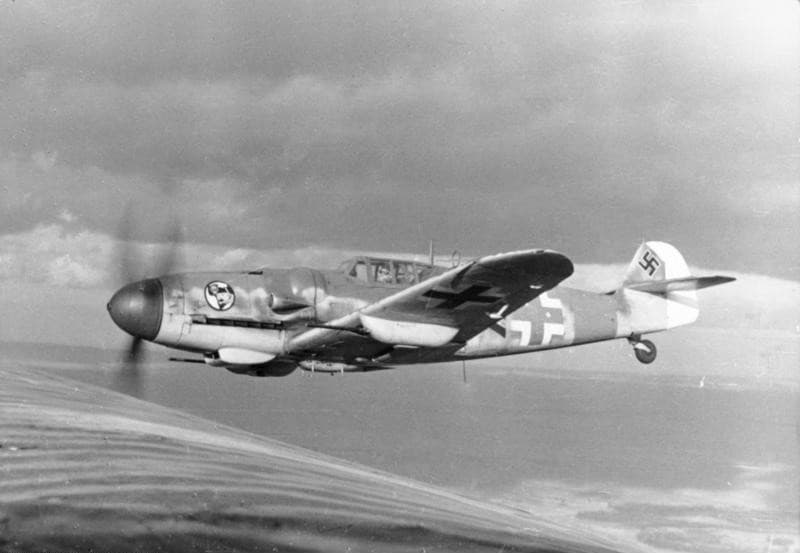
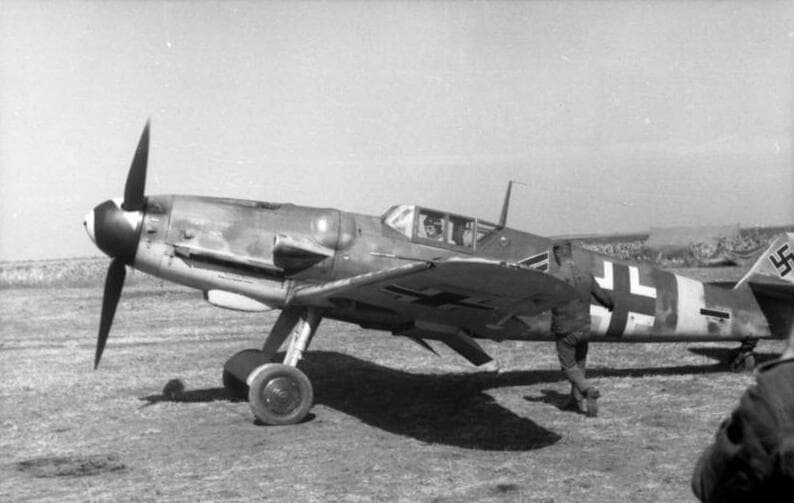
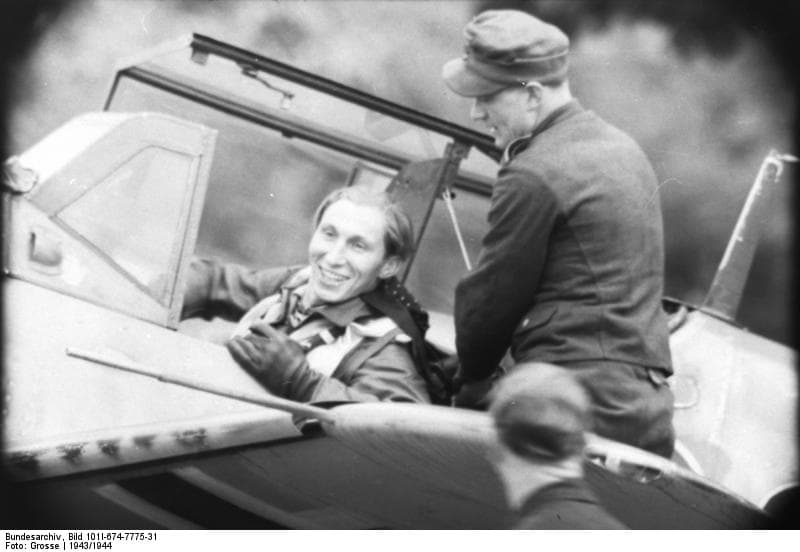
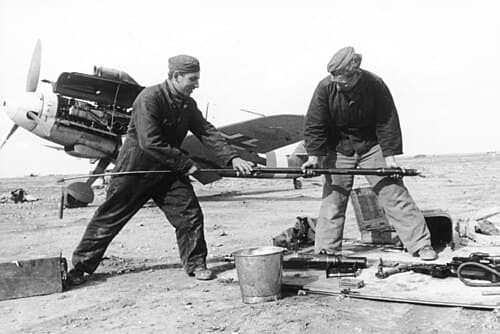
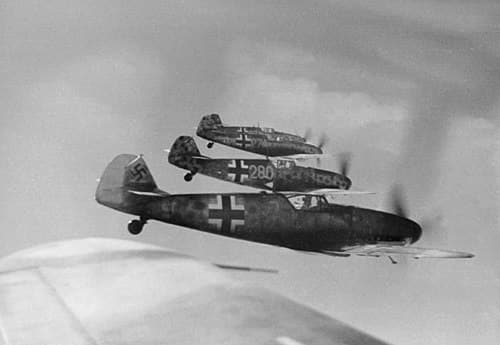
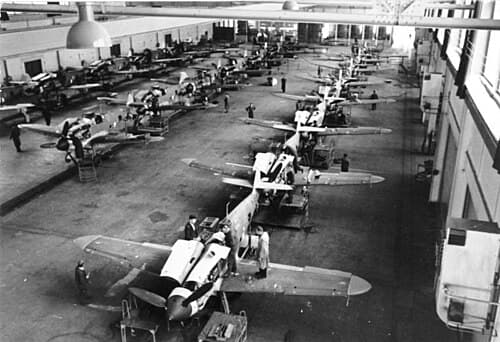
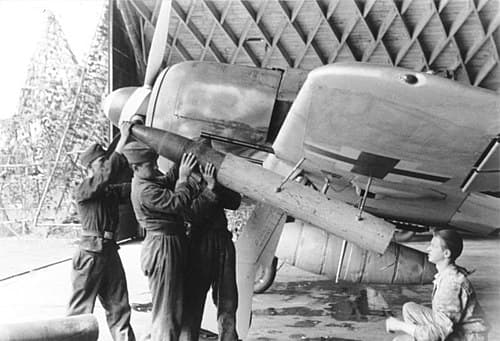
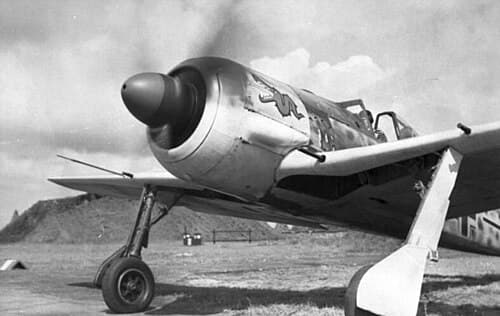
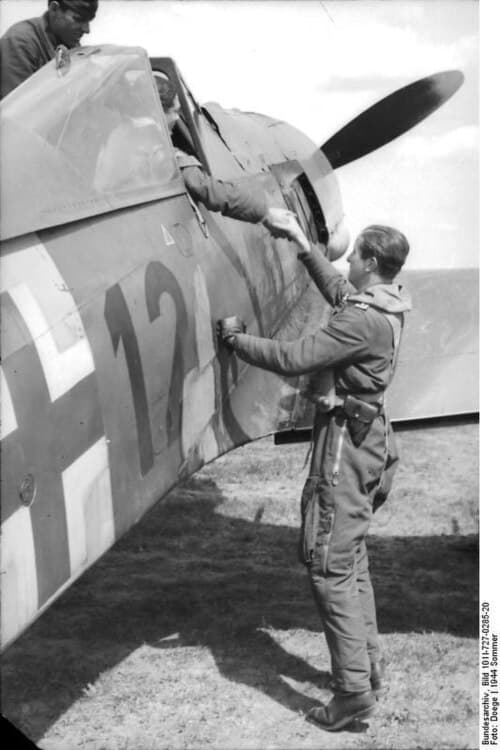
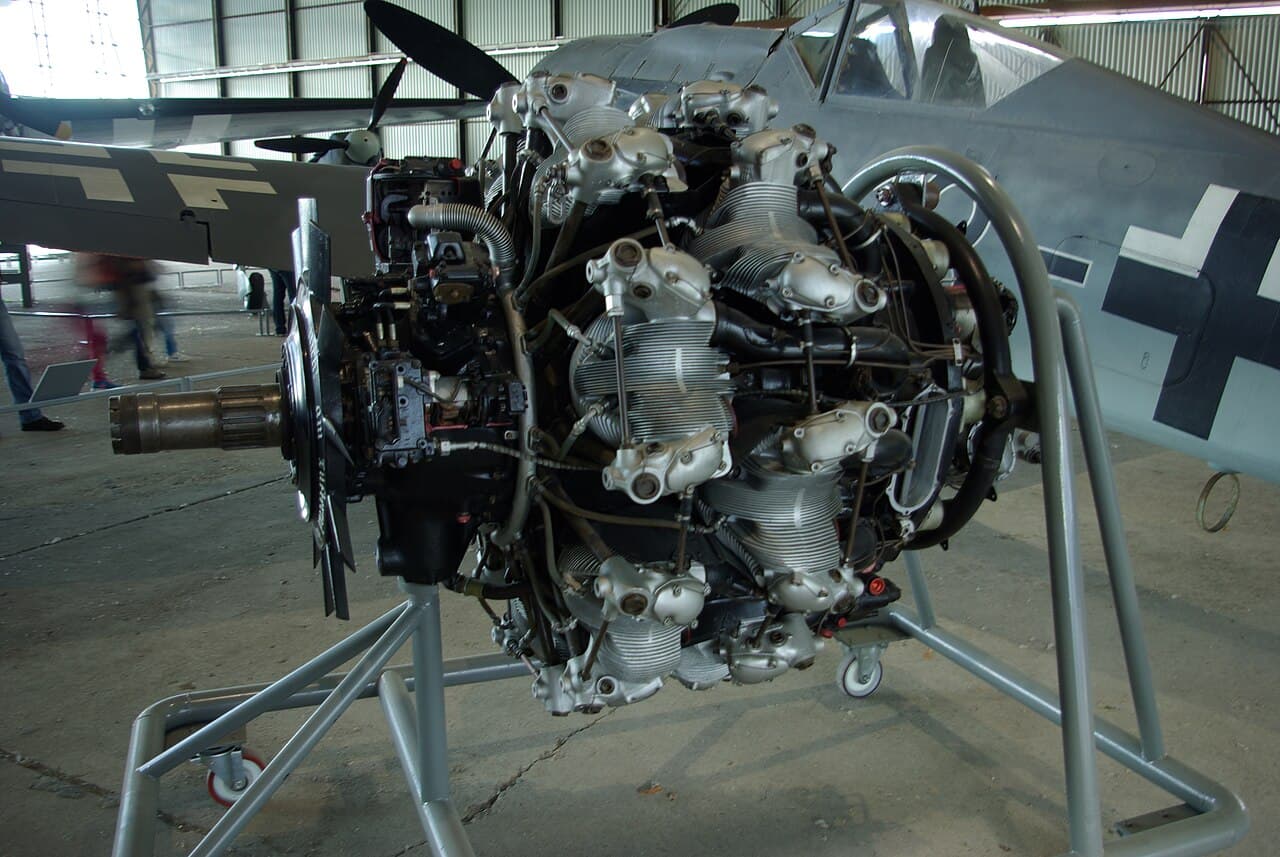
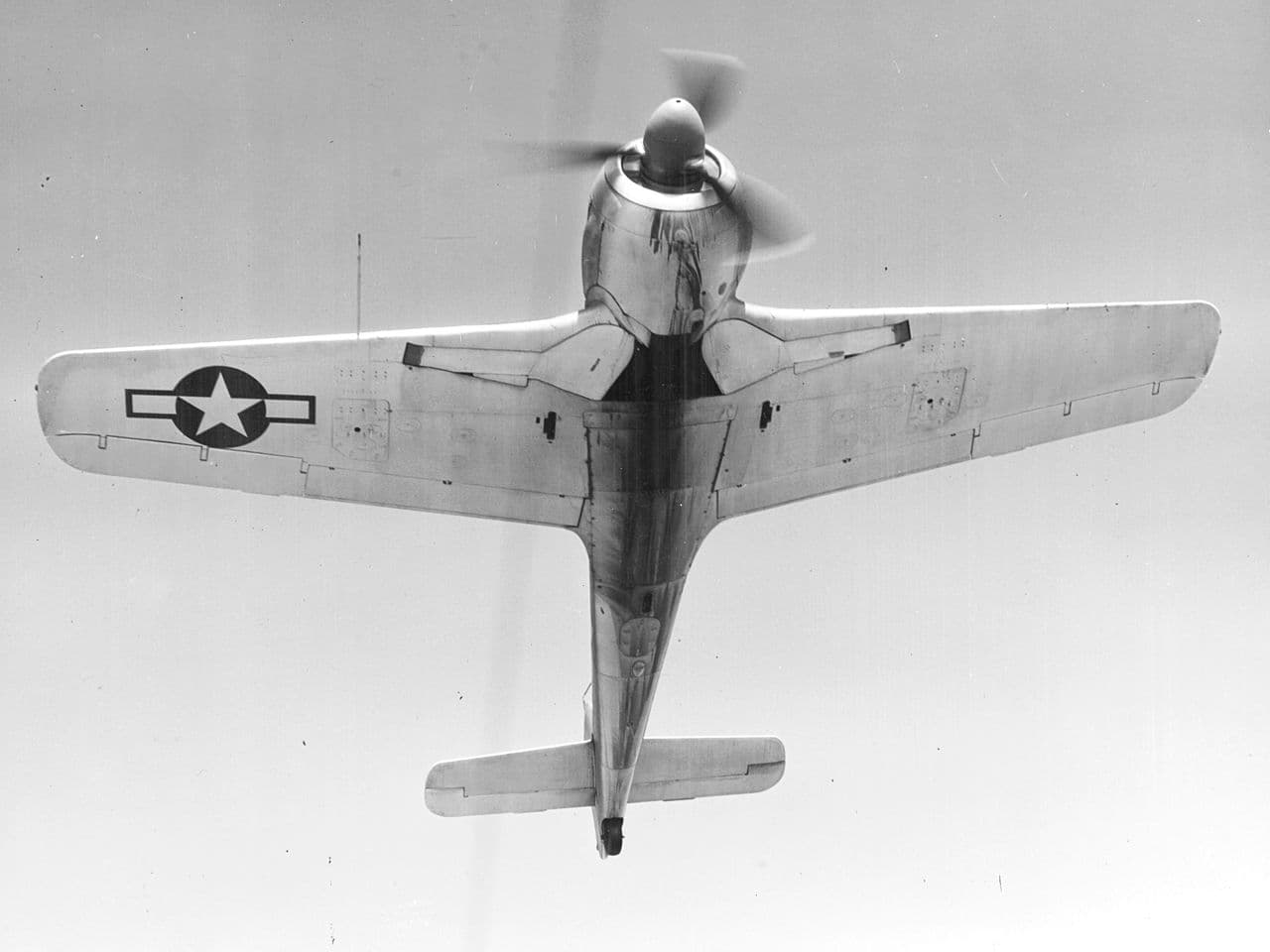
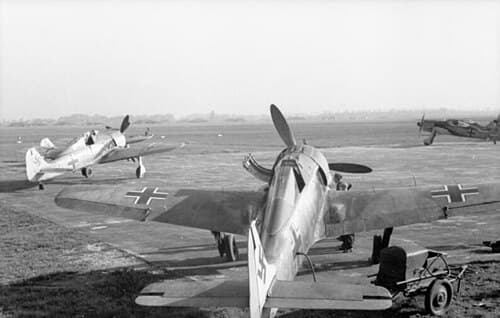
Click any photo to enlarge · 12 photos
Historical Context
The strategic backdrop that shaped both aircraft
By mid-1942, the Luftwaffe found itself in an unprecedented position: fielding two first-rate single-engine fighters simultaneously on every major front. The Bf 109G "Gustav" entered service in the spring of 1942 as the latest evolution of Messerschmitt's iconic design, while the Fw 190A had been shocking Allied pilots since its operational debut with JG 26 over the English Channel in August 1941. Rather than standardizing on a single type, the Luftwaffe recognized that each aircraft filled a distinct tactical niche and committed to producing both in massive numbers throughout the war.
The decision to maintain parallel production lines was not without controversy. Albert Speer's Armaments Ministry periodically questioned the industrial logic of building two fighters when raw materials and skilled labor were increasingly scarce. Yet the operational demands of a multi-front war validated the dual-fighter approach. On the Eastern Front, Bf 109G units racked up extraordinary kill tallies in the air superiority role, with aces like Erich Hartmann and Gerhard Barkhorn accumulating scores that would have been unthinkable in the West. Simultaneously, Fw 190A units proved their worth as Schlachtflieger at Kursk and across the ground-attack mission set, absorbing punishment from ground fire that would have been fatal to the liquid-cooled Messerschmitt.
The strategic bombing campaign over Germany from 1943 onward cemented the complementary relationship between the two fighters. Bf 109G Gruppen flew high cover at 28,000–32,000 feet, engaging American escort fighters and protecting the Fw 190A Sturmgruppen that operated at lower altitudes in the direct anti-bomber role. This tactical pairing became the standard Luftwaffe response to the combined bomber offensive.
Notable Combat Encounters
Key engagements where these aircraft faced each other in combat
The Luftwaffe's Erprobungsstelle Rechlin conducted comprehensive comparative trials between the new Bf 109G-1 and the Fw 190A-3 to establish tactical doctrine for deploying both types. Test pilots flew both aircraft through identical profiles measuring speed at altitude, climb rate, roll rate, dive acceleration, and turning radius at multiple altitudes.
Outcome
The Rechlin evaluation led directly to the Luftwaffe's doctrine of assigning Bf 109G units to the high-altitude air superiority mission and Fw 190A units to the mid-altitude fighter-bomber and tactical superiority roles.
These trials established the complementary deployment doctrine that would govern Luftwaffe fighter operations for the remainder of the war.
During Operation Citadel, the Luftwaffe concentrated unprecedented fighter strength over the Kursk battlefield. Bf 109G-6 units from JG 3 and JG 52 flew top cover and air superiority sorties at altitude, while Fw 190A units from SG 2 and SchG 1 operated at low level in the Schlachtflieger role, attacking Soviet armor and fortified positions with bombs and cannon fire.
Outcome
The Luftwaffe achieved local air superiority over the Kursk salient for the first several days of the offensive, with JG 52 alone claiming over 100 Soviet aircraft.
Kursk demonstrated the complementary system at its most effective, Bf 109Gs controlling the air above while Fw 190As delivered devastating ground attack below.
When 291 B-17s struck the ball-bearing factories at Schweinfurt without long-range fighter escort, the Luftwaffe executed its layered defense system with devastating effect. Bf 109G units engaged the P-47 escort fighters at high altitude near the limit of the Thunderbolts' range. Once the bombers were unescorted, Fw 190A Sturmgruppen closed to point-blank range against the bomber formations.
Outcome
The USAAF lost 60 B-17s destroyed and 17 more damaged beyond repair, a catastrophic 26% loss rate that temporarily halted unescorted deep-penetration raids.
Second Schweinfurt was the apex of the Reichsverteidigung layered fighter system and demonstrated that the Bf 109G/Fw 190A pairing could inflict unsustainable losses on unescorted bomber formations.
Operation Citadel and the concurrent air battles over the Kursk salient saw the Luftwaffe deploy its largest concentration of both types on the Eastern Front. JG 3, JG 52, and JG 54 operated mixed Gruppen of Bf 109Gs and Fw 190A-5s against Soviet La-5FN, Yak-1, and Yak-7 fighters. The Bf 109G's climb rate and high-altitude ceiling gave it an edge over the Yak series at altitude, while the Fw 190A's superior roll rate and firepower made it devastating in the low-level mêlées that characterised the close air support battles. Erich Hartmann of JG 52, flying his Bf 109G, scored multiple kills during this period, while Walter Nowotny, transitioning between types, noted the 190A's superior situational awareness through its wide-angle canopy.
Outcome
Luftwaffe achieved temporary local air superiority during the initial offensive, though Soviet air power gradually asserted itself as the battle progressed. Both fighter types proved effective against their respective target sets.
Demonstrated that on the Eastern Front, as in the West, the two types filled different tactical niches rather than competing directly, the 109G for high-altitude and turning engagements, the 190A for low-altitude aggression and ground-attack escort.
In the Luftwaffe's last major offensive operation, approximately 900 fighters, a roughly equal mix of Bf 109G/K and Fw 190A/D variants, launched surprise low-level attacks against Allied airfields in Belgium, the Netherlands, and France. Both types operated at treetop height in mixed formations, operating far outside their designed roles.
Outcome
The Luftwaffe destroyed approximately 300 Allied aircraft on the ground but lost 271 of its own fighters and 213 irreplaceable pilots.
Bodenplatte exposed the limits of the complementary system when both types were forced into identical roles. The operation effectively destroyed the Luftwaffe's remaining offensive fighter capability.
Armament & Firepower
Primary weapons, munitions capacity, and destructive capability
Bf 109G Loadout
Standard Bf 109G-6: one engine-mounted 20mm MG 151/20 cannon (200 rounds) and two cowling-mounted 13mm MG 131 machine guns (300 rounds each). Optional Rüstsatz 6 added two underwing 20mm gondola cannons at significant performance cost.
Fw 190A Loadout
Standard Fw 190A-8: four wing-mounted 20mm MG 151/20 cannons (two with 250 rounds, two with 140 rounds) plus two cowling-mounted 13mm MG 131 machine guns (475 rounds each). Some Sturmböck variants replaced outer 20mm cannons with 30mm MK 108s.
Air-to-Air Verdict
The Fw 190A-8's four-cannon armament was devastatingly effective. The Bf 109G's single centerline cannon was accurate but lacked the volume of fire for fleeting deflection shots. The gondola modification partially closed this gap but at an unacceptable handling penalty.
Ground Attack Verdict
The Fw 190A was decisively superior in the ground-attack role. Its four 20mm cannons were effective against soft targets and light armor, and it could carry up to 500 kg of bombs. The Bf 109G was a poor ground-attack platform.
Armament was one of the most significant differentiators. The Fw 190A-8 delivered more than double the weight of fire per second compared to the standard Bf 109G-6. For the anti-bomber role that dominated Reichsverteidigung operations, the Fw 190A's firepower advantage was decisive.
Survivability & Protection
Armor, self-sealing tanks, pilot protection, and structural resilience
Bf 109G Protection
The Bf 109G-6 featured an armored bulkhead behind the pilot, armored headrest, and armored glass windscreen totaling approximately 58 kg. The liquid-cooled DB 605A was inherently vulnerable, a single bullet piercing the coolant system meant engine failure within minutes.
Fw 190A Protection
The Fw 190A-8 incorporated substantially heavier armor, particularly in Sturmböck variants with additional cockpit armor panels and armored glass totaling 100+ kg. The air-cooled BMW 801D-2 could absorb significant battle damage without immediate engine failure.
Pilot Protection
The Fw 190A offered superior overall protection. The radial engine acted as an additional shield against frontal fire. Sturmböck variants added side armor panels. Bf 109G pilots were more exposed to frontal fire due to the slimmer inline engine profile.
Structural Durability
The Fw 190A was the more structurally robust aircraft by a significant margin. Its wider-track landing gear dramatically reduced landing accident rates. The Bf 109G's liquid cooling system represented a critical single point of failure.
Crash Survivability
The Fw 190A was markedly superior in crash-landing scenarios. The Bf 109G's narrow landing gear was treacherous even on prepared runways, responsible for a disproportionate number of landing accidents throughout the war.
Survivability was one of the Fw 190A's strongest advantages. The air-cooled radial engine's resistance to combat damage, the wider landing gear's operational safety, and heavier armor all combined to make it substantially more likely to bring its pilot home.
Tactical Doctrine & Evolution
How pilots were trained to fight in each aircraft and how tactics adapted over time
Bf 109G Tactics
The Bf 109G was employed primarily in the high-altitude air superiority and escort role. Standard tactics emphasized energy management: climbing to superior altitude, executing diving attacks, and using excellent climb rate to regain altitude. In Reichsverteidigung operations, Bf 109G Gruppen flew top cover at 28,000–32,000 feet, engaging Allied escort fighters.
Fw 190A Tactics
The Fw 190A was employed across a broader tactical spectrum. Against heavy bombers, Sturmgruppen developed the Gefechtsverband, tight formations that closed to point-blank range before firing. In the ground-attack role, Schlachtflieger used the aircraft's speed and structural toughness for low-level operations.
How Tactics Evolved
The tactical relationship evolved as the Luftwaffe was forced onto the defensive. In 1942-43, both types could be used offensively. By 1944, the doctrinal emphasis shifted to layered Reichsverteidigung defense. By late 1944, fuel shortages and pilot quality degradation eroded the sophisticated coordination that made the dual-fighter system effective.
What the Pilots Said
Firsthand accounts from the men who flew and fought these aircraft
On the Fw 190A“The Fw 190 was a superb aircraft. I preferred it to the Me 109 because it was easier to fly and had much better visibility. But for the high-altitude fighting, the 109 was still the better machine. Above eight thousand meters, the Fw 190 was like a tired horse.”
On the Bf 109G“I flew the Messerschmitt 109 throughout my career and had no desire to change. At the altitudes we fought on the Eastern Front, the 109 was unbeatable. It climbed like a rocket and could turn with anything the Soviets had.”
On the Fw 190A“When I transitioned to the Fw 190, the first thing I noticed was how much easier it was to land. After years of the tricky 109 with its terrible ground handling, the 190 felt like a gentleman's aircraft. The firepower was also in another class entirely.”
On the Bf 109G“The 109 Gustav was the aircraft I knew best, and it served me well for over 300 victories. It was honest in its handling if you respected its limitations.”
By the Numbers
Statistical combat performance and historical kill ratios
Comparing combat records is complicated by deliberate assignment to different roles and theaters. The Bf 109G accumulated the vast majority of the Luftwaffe's highest individual victory tallies, with the top 100 German aces almost exclusively flying Messerschmitts, reflecting assignment to the target-rich Eastern Front rather than inherent superiority.
The statistical record is misleading at face value. Bf 109G units compiled higher kill counts partly due to Eastern Front assignments where Soviet air opposition was abundant. When Fw 190A units were assigned to the pure fighter role, as with JG 26 and JG 2, they compiled excellent records against Allied fighters. The fairest assessment is that both types were highly effective in their designed roles, and pilot skill mattered far more than aircraft type.
Production & the Numbers Game
How industrial output shaped the strategic balance
23,500
Bf 109G Built
13,367
Fw 190A Built
The decision to produce both fighters simultaneously strained Germany's industrial base but was strategically sound. Standardizing on either type alone would have created critical capability gaps. The Bf 109G alone could not perform the low-altitude ground-attack and anti-bomber assault roles, while the Fw 190A alone could not contest high-altitude air superiority.
Advantages in This Matchup
Where each aircraft holds the edge in a head-to-head encounter
Bf 109G Gustav
- Superior climb rate, approximately 40% faster to altitude, enabling zoom-climb tactics and rapid altitude recovery
- Dominant high-altitude performance above 25,000 feet where the DB 605A maintained power
- Tighter sustained turn radius at all altitudes thanks to lower wing loading and automatic leading-edge slats
- Lighter weight (3,200 kg vs 4,400 kg) giving superior power-to-weight ratio in vertical maneuvering
- Centerline-mounted cannon provided highly accurate fire along the aircraft's axis
- Higher service ceiling of approximately 39,000 feet versus 33,800 feet
- Smaller physical dimensions and frontal area made it harder to spot and hit
Fw 190A Wurger
- Devastating four-cannon armament delivering over 6 kg of projectiles per second
- Superior speed of 408 mph at medium altitude, 22 mph faster than the Bf 109G
- Outstanding roll rate of 162 degrees per second enabling rapid direction changes
- Air-cooled radial engine with no vulnerable liquid cooling system
- Wide-track landing gear providing stable ground handling and lower accident rates
- Greater versatility across roles, interceptor, fighter-bomber, ground-attack, and close air support
- Superior cockpit visibility from the raised seating position
Final Verdict
Overall Assessment
Context-Dependent
Neither aircraft holds a definitive advantage, the winner depends on the scenario.
Choosing between the Bf 109G and Fw 190A is an exercise in misunderstanding the question. These were not rival designs competing for the same role, they were complementary weapons in a layered defensive system. The Bf 109G owned the sky above 25,000 feet, where its lighter weight, superior climb rate, and altitude-optimized inline engine made it the only viable Luftwaffe option against high-flying bombers and P-51D Mustangs. The Fw 190A ruled below 20,000 feet, where its speed, firepower, roll rate, and ruggedness made it the superior platform for bomber destruction, ground attack, and medium-altitude fighter combat.
If forced to choose a single aircraft, the Fw 190A-8 edges ahead on points because it excelled in more scenarios and was more versatile. But this hypothetical misses the reality that the Luftwaffe's combat effectiveness depended on having both types in their proper roles. The layered Reichsverteidigung defense system that inflicted such heavy losses on the USAAF in 1943 required Bf 109Gs at high altitude and Fw 190As at medium altitude, neither alone could have achieved what the pairing accomplished together.
The true lesson of this comparison is that air forces are best served by complementary fighter types covering different performance envelopes, rather than by a single do-everything design that compromises in every role. The Luftwaffe achieved this complementary pairing more effectively than any other air force of the Second World War.
Theaters of Operation
Shared Theaters