
P-51D Mustang vs Fw 190A
America's premier escort fighter against the Luftwaffe's devastating radial-engine interceptor
The Bottom Line
The P-51D won the strategic air war through speed, range, and high-altitude superiority, but the Fw 190A was a formidable opponent that held real advantages in close-in combat at medium and low altitudes.
Who Wins Each Scenario?
High-altitude escort combat above 25,000 feet
P-51D
The Mustang dominated at altitude where its Merlin maintained full power while the Fw 190A's BMW 801 was significantly degraded.
Low-altitude dogfight below 10,000 feet
Fw 190A
The Fw 190A's superior roll rate, responsive controls, and devastating cannons made it extremely dangerous in low-altitude turning fights.
Head-on bomber interception attack
Fw 190A
The Fw 190A was purpose-built for this, particularly in Sturmgruppe configuration with heavy cannon armament and frontal armor.
Long-range offensive sweep deep into enemy territory
P-51D
Only the Mustang could perform this mission with over three times the Fw 190A's range.
Ground attack and close air support
Even
Both effective: the Fw 190A's heavier armament and rugged engine vs the Mustang's range and .50 caliber effectiveness against soft targets.
Overall impact on the air war in Europe
P-51D
The P-51D was the decisive weapon in achieving Allied air superiority. The Fw 190A held real tactical advantages but could not overcome the strategic reality the Mustang imposed.
Interactive 3D Models
Performance Profile
Overall capability comparison across six combat dimensions
Head-to-Head Specifications
Key performance metrics compared side by side
Size Comparison
Both aircraft drawn to the same scale, the P-51D has 2.5ft greater wingspan and is 3.2ft longer
Performance Analysis
How each aircraft performs across key combat dimensions
Speed
WINNER: P-51DThe P-51D achieved 437 mph at 25,000 feet. Above 25,000 feet, the two-stage Merlin gave the Mustang a 30–50 mph speed advantage over the Fw 190A.
The Fw 190A-8 reached 408 mph at 20,700 feet. Below 5,000 feet, the speed difference narrowed significantly. The BMW 801D's automatic engine management (Kommandogerät) allowed pilots to focus entirely on combat.
The Mustang held a clear speed advantage at escort altitudes. The Fw 190A was competitive below 15,000 feet but fell behind progressively with altitude. This allowed Mustang pilots to dictate the terms of engagement.
Climb Rate
WINNER: P-51DThe P-51D climbed at approximately 3,475 fpm at sea level, improving relative to the Fw 190A at higher altitudes thanks to the Merlin's supercharger.
The Fw 190A-8 climbed at approximately 3,350 fpm at sea level, broadly comparable at low altitude with smooth, immediate power delivery.
Climb rates were roughly comparable at low and medium altitudes, with the Mustang gaining an increasing advantage above 20,000 feet.
Maneuverability
EvenThe P-51D had a tighter sustained turn radius at high altitude and good energy retention in turning fights. The bubble canopy gave excellent visibility during maneuvering.
The Fw 190A was exceptionally responsive with light, well-harmonized controls. At medium and low altitudes, it could pull tighter instantaneous turns and change direction more quickly.
Altitude-dependent. Below 15,000 feet, the Fw 190A's instantaneous turn rate and direction changes gave it an advantage. At higher altitudes and speeds, the Mustang's sustained turn was superior.
Altitude Performance
WINNER: P-51DThe P-51D's two-stage Merlin maintained excellent power above 25,000 feet, making it a potent fighter up to 35,000+ feet.
The Fw 190A's single-stage BMW 801 was optimized for medium altitudes, performing well up to about 20,000 feet.
High-altitude performance was the Mustang's most decisive advantage and the Fw 190A's most significant weakness. Since escort missions flew at 20,000–28,000 feet, the Mustang was in its optimal envelope while the Fw 190A was struggling.
Range & Endurance
WINNER: P-51DThe P-51D carried 269 US gallons internal plus drop tanks for approximately 1,650 miles maximum range, over three times the Fw 190A's.
The Fw 190A carried approximately 115 gallons for roughly 500 miles operational radius. Adequate for defensive interception.
Range was the single most important strategic factor. The Mustang's ability to escort deep into Germany meant the Luftwaffe could never wait for escorts to turn back.
Dive Speed
EvenThe P-51D's laminar-flow wing was optimized for low drag at high speed, and it sustained high-speed dives without severe control stiffening.
The Fw 190A was renowned for dive performance. Its radial engine had no carburetor issues during negative-G transitions, and it accelerated rapidly into a dive.
Both were outstanding divers, essentially even. The Mustang had a slight terminal speed advantage; the Fw 190A transitioned into dives faster.
Roll Rate
WINNER: Fw 190AThe P-51D had a good but not exceptional roll rate. Adequate for combat maneuvering.
The Fw 190A had one of the fastest roll rates of any WW2 fighter, approximately 162 degrees per second at 250 mph. Large, well-balanced ailerons remained responsive across the entire speed range.
Roll rate was the Fw 190A's single greatest aerodynamic advantage. Many Mustang pilots reported they could get behind a Fw 190A but struggled to hold a firing solution because the German fighter could flick out of the gunsight so quickly.
Cockpit Visibility
WINNER: P-51DThe P-51D's bubble canopy provided outstanding 360-degree visibility with no blind spots, the best cockpit visibility of any WW2 fighter.
The Fw 190A's cockpit was set well forward with good forward and lateral visibility, though the radial cowling obstructed some forward-downward view.
The P-51D's bubble canopy gave it a clear advantage in situational awareness. Seeing the enemy first was often the decisive factor in high-speed multi-aircraft engagements.
Photo Gallery, 11 Photos
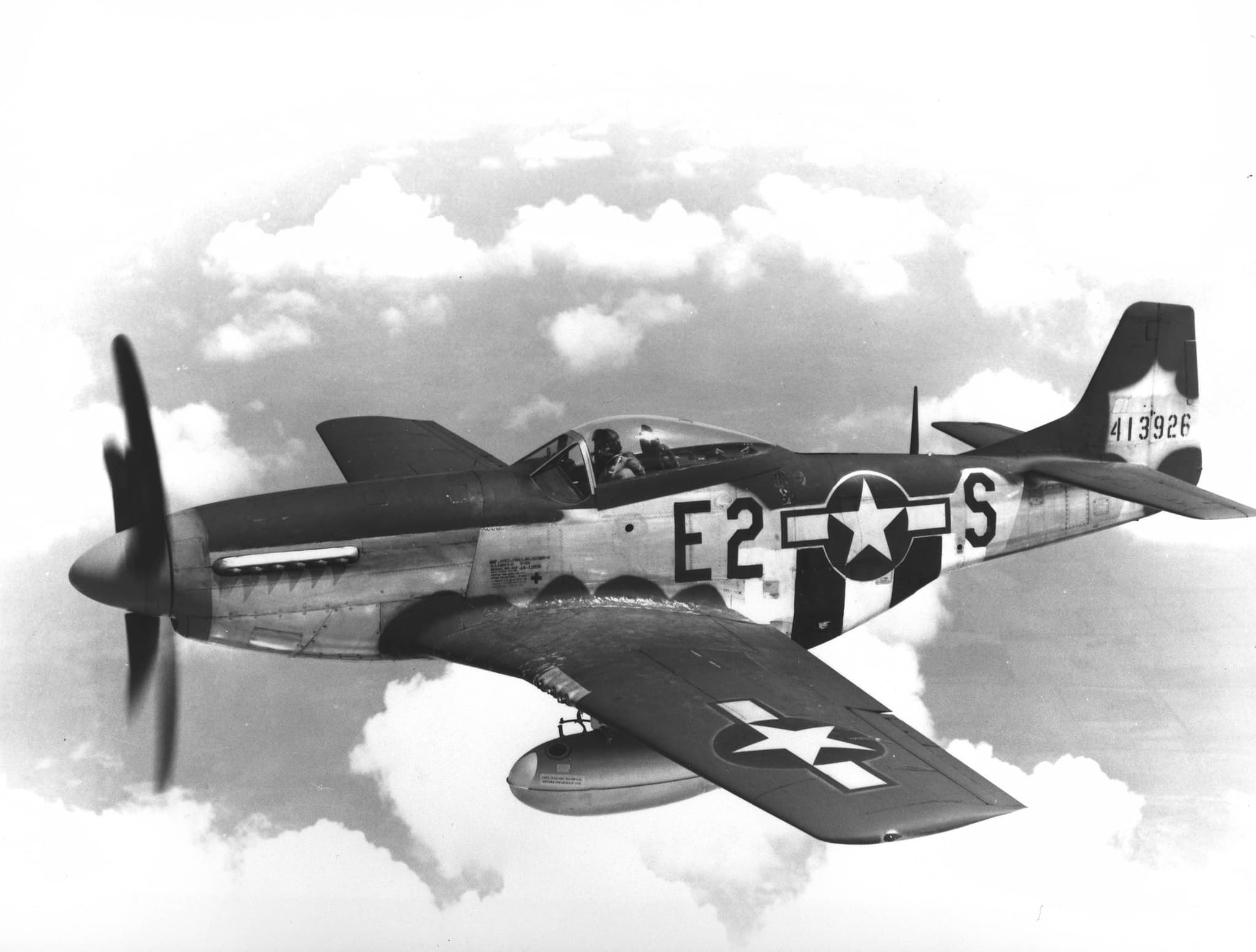
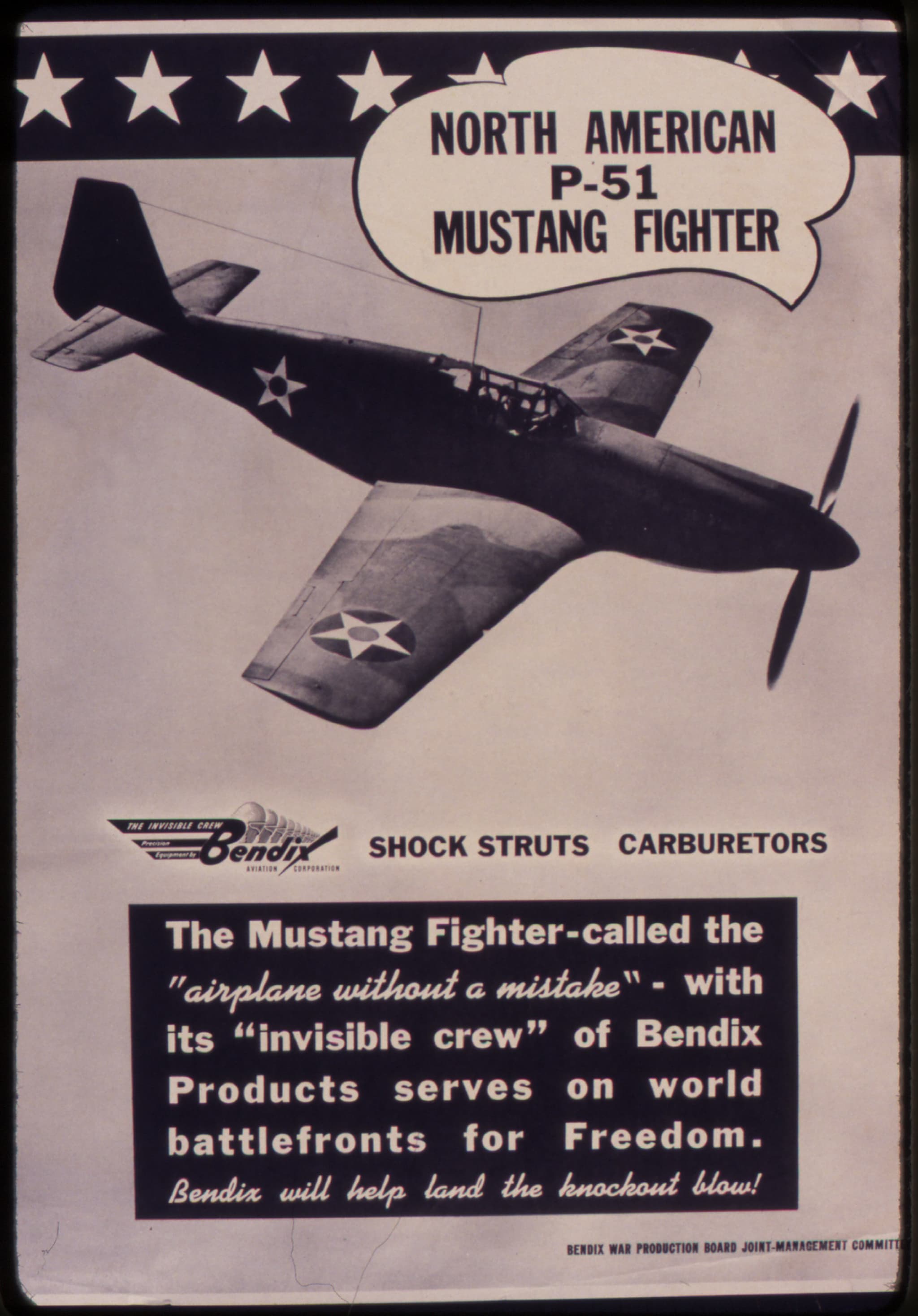

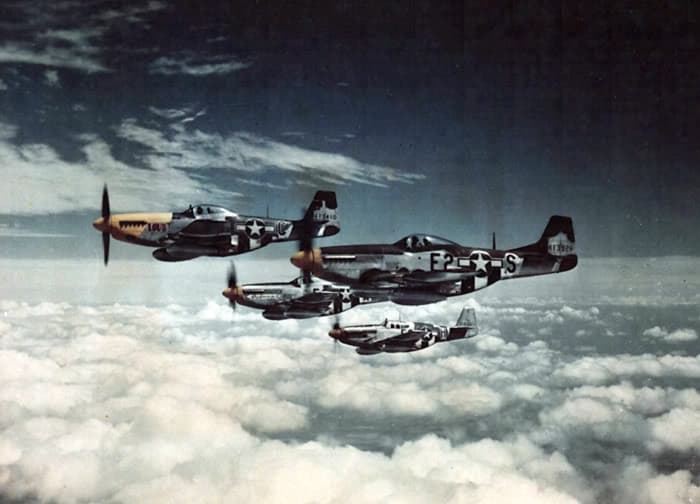

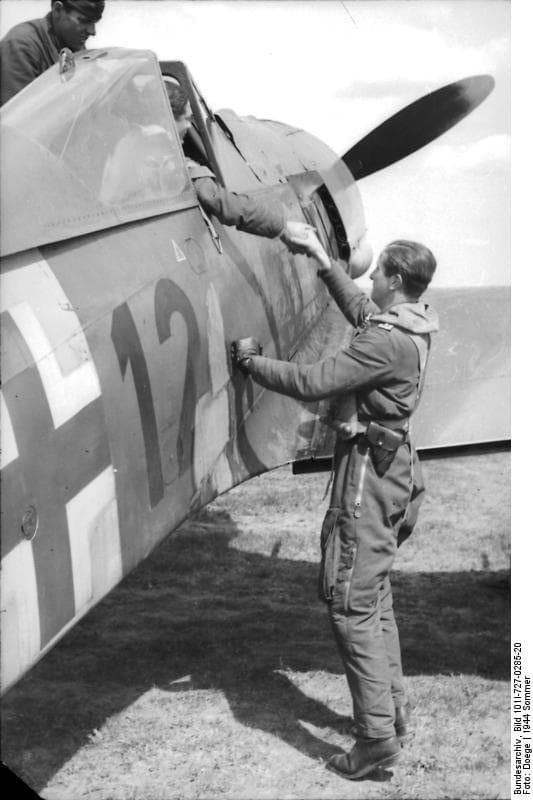
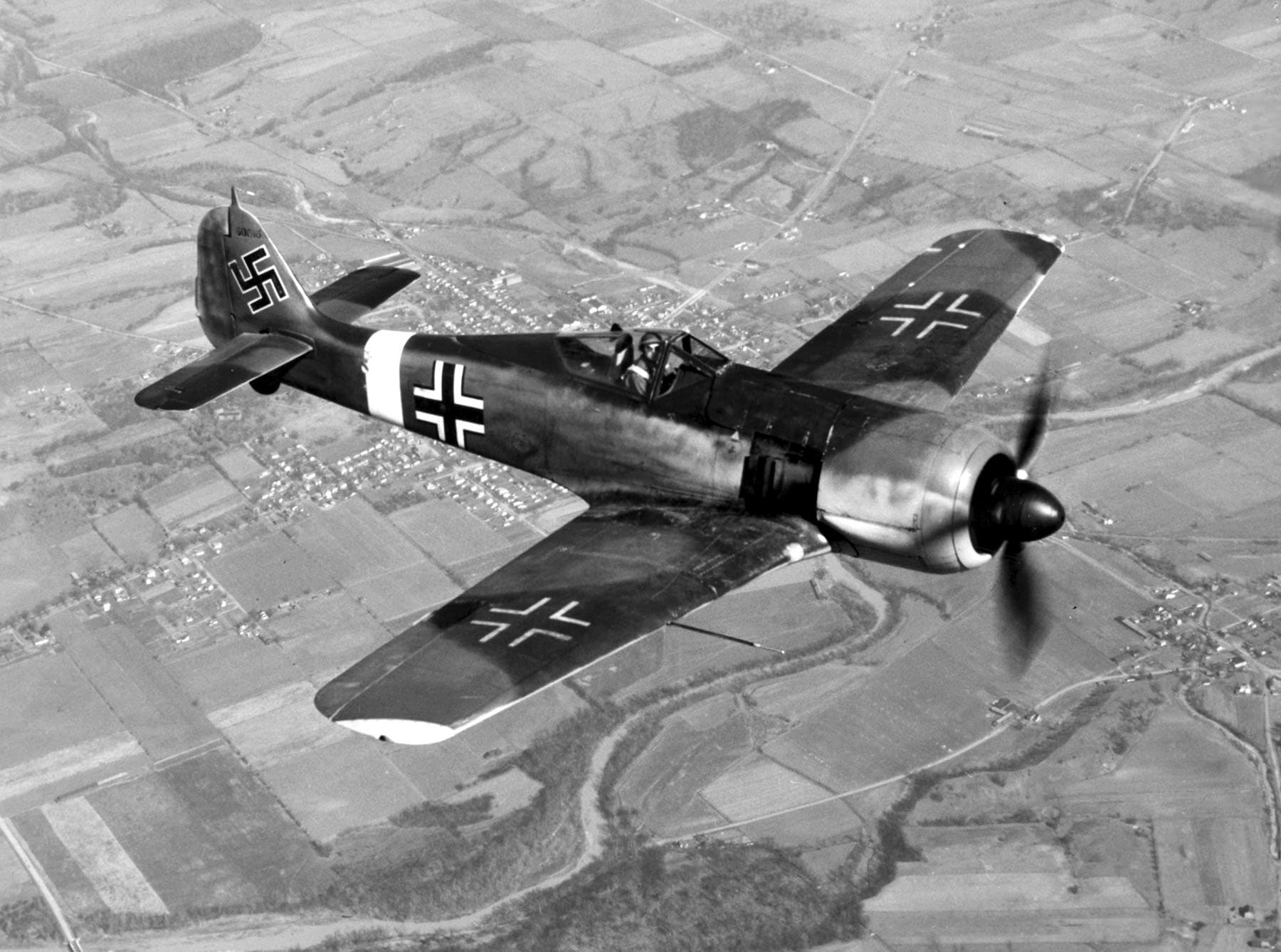
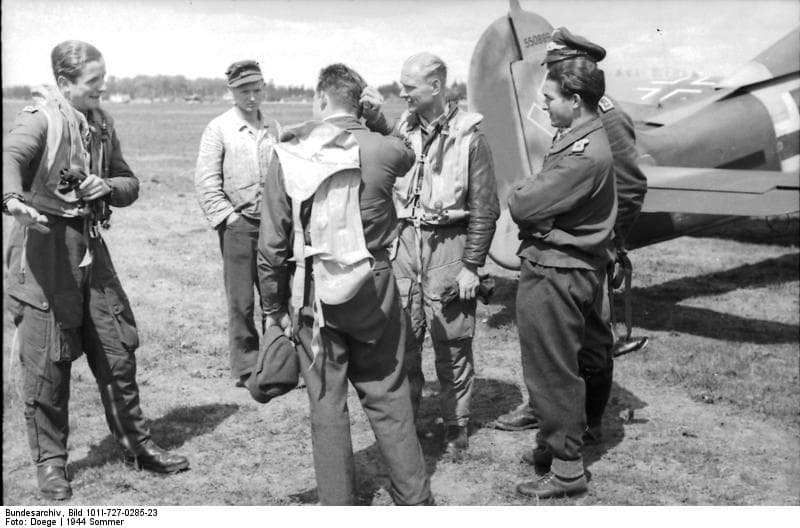
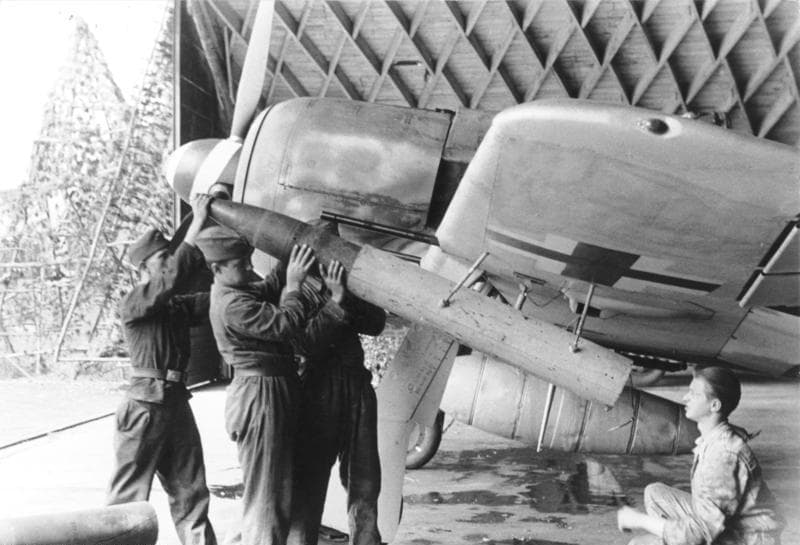
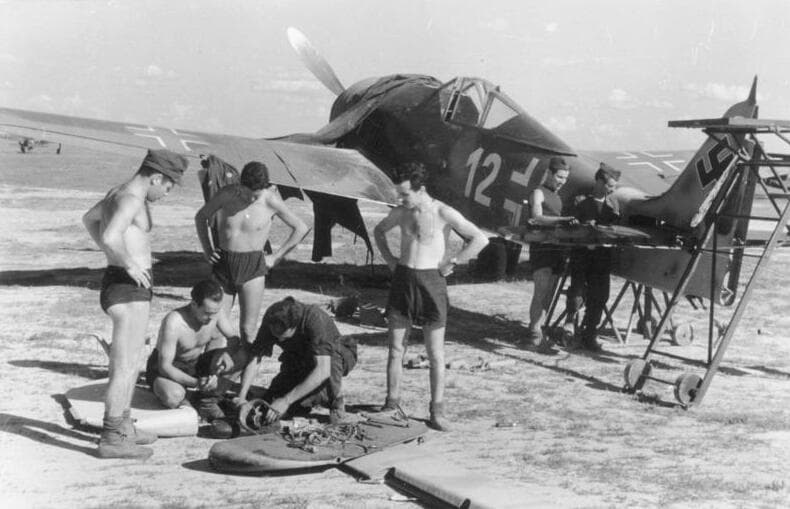
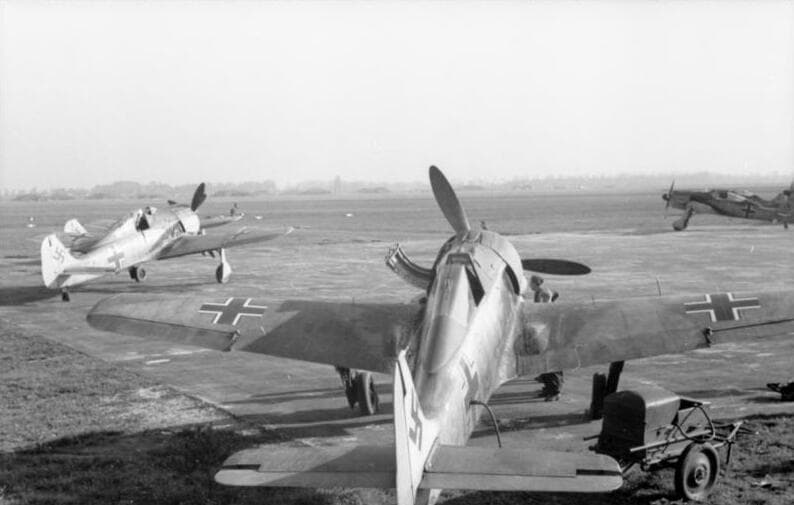
Click any photo to enlarge · 11 photos
Historical Context
The strategic backdrop that shaped both aircraft
The Focke-Wulf Fw 190A burst onto the scene over the English Channel in September 1941 and immediately shocked the RAF. Kurt Tank's wide-track, radial-engine fighter outperformed the Spitfire V in nearly every category. By 1943, the Fw 190A had become the backbone of the Reich's defense, its variants served as interceptors, fighter-bombers, and dedicated bomber destroyers in the Sturmgruppen units.
The P-51D Mustang arrived in force during the spring of 1944, just as the USAAF launched its air superiority campaign before D-Day. When VIII Fighter Command commander Major General Jimmy Doolittle freed his escorts to pursue Luftwaffe aircraft aggressively, the stage was set for the Mustang and Fw 190A to clash repeatedly.
The period from February to June 1944 saw the most concentrated aerial combat between these two types. Fw 190A-equipped Sturmgruppen would bore in on B-17 formations in tight wedge formations, accepting fighter attacks while they closed to point-blank range on the bombers. Mustang pilots had to break up these formations before they could reach the bomber stream.
The final major clash came on January 1, 1945, during Operation Bodenplatte. Fw 190s formed the majority of the attacking force, and while they destroyed hundreds of Allied aircraft on the ground, they suffered catastrophic losses. Bodenplatte effectively ended the Luftwaffe's capacity for large-scale offensive operations.
Notable Combat Encounters
Key engagements where these aircraft faced each other in combat
During "Big Week," Fw 190A units from JG 1, JG 11, and JG 26 scrambled to intercept massive USAAF bombing raids against aircraft industry targets. P-51 groups of the 354th and 357th Fighter Groups engaged them in running battles. Fw 190A pilots employed head-on attacks against bomber formations, but Mustang escorts dove on them during their approach runs.
Outcome
The Luftwaffe lost approximately 355 fighters, roughly 17% of its single-engine force, with many experienced pilots killed.
Big Week demonstrated that the Mustang could effectively protect bombers from Fw 190A interceptors. The attrition of the Luftwaffe's pilot corps was irreplaceable.
The first major American daylight raid on Berlin saw 730 bombers escorted by P-51s. Fw 190As of JG 1 and JG 11, along with heavily armed Sturmböcke variants, attacked the bomber stream. Major Don Gentile of the 4th Fighter Group engaged multiple Fw 190As, claiming three destroyed in a single sortie.
Outcome
The USAAF lost 69 bombers, the heaviest single-day loss of 1944, but Mustang pilots claimed over 80 Luftwaffe fighters.
The Berlin raids proved American bombers could strike the heart of the Reich with fighter escort, demonstrating the Mustang's strategic reach.
During D-Day, Fw 190A units including JG 2 and JG 26 attempted to intervene against the invasion. Josef "Pips" Priller and his wingman famously made the only Luftwaffe strafing run over the beaches in their Fw 190As. P-51 groups maintained an aerial umbrella and engaged Fw 190As attempting to reach the invasion area.
Outcome
Allied air supremacy was total. JG 26 lost 24 pilots killed or captured in the first week alone.
Normandy demonstrated the complete air superiority the P-51 force had achieved. Fw 190A units were forced to operate in small groups at low altitude.
Operation Bodenplatte saw approximately 900 Luftwaffe fighters, predominantly Fw 190As, launch a surprise dawn attack on 16 Allied airfields. The attackers destroyed over 450 Allied aircraft on the ground but suffered devastating losses to both fighters and their own anti-aircraft defenses.
Outcome
The Luftwaffe lost around 280 aircraft and 213 pilots, including 19 experienced unit leaders. Allied losses were replaced within a week; German losses were irreplaceable.
Bodenplatte was the Fw 190A's last major offensive operation and a Pyrrhic victory that destroyed the Luftwaffe as an offensive fighting force.
Armament & Firepower
Primary weapons, munitions capacity, and destructive capability
P-51D Loadout
Six .50 caliber M2 Browning machine guns with 1,880 rounds total. Could carry two 500 lb bombs or ten 5-inch HVAR rockets.
Fw 190A Loadout
Two 13mm MG 131 machine guns (475 rpg) plus four 20mm MG 151/20 cannons, two wing root (250 rpg) and two outer wing (140 rpg). Sturmböcke variants replaced outer 20mm with 30mm MK 108 cannons.
Air-to-Air Verdict
The Fw 190A's mixed cannon and machine gun armament delivered far more destructive power per burst. A one-second burst could destroy any single-engine fighter and critically damage a heavy bomber. The Mustang's six .50s required longer bursts but offered more ammunition and higher volume of fire.
Ground Attack Verdict
The Fw 190A's 20mm cannons were more effective against armored targets. The Mustang's .50 calibers excelled against soft targets with its greater range allowing longer loiter time.
The USAAF standardized on the .50 caliber M2 Browning, reliable, flat trajectory, ample ammunition. Six M2s throwing approximately 13 pounds per second could saw through airframes but required sustained hits.
The Luftwaffe designed the Fw 190A's armament for maximum destructive impact per burst. Four 20mm cannons delivered high-explosive shells causing catastrophic damage on impact. A half-second burst could blow a wing off a fighter. The Sturmgruppen's 30mm MK 108 cannons needed only three or four hits to bring down a B-17.
In practical combat, the Fw 190A's armament was more effective in snapshot engagements. The Mustang's greater ammunition capacity meant more engagement attempts per sortie. On balance, the Fw 190A's armament was superior for air-to-air combat.
Survivability & Protection
Armor, self-sealing tanks, pilot protection, and structural resilience
P-51D Protection
Armor plate behind the pilot, bulletproof windscreen, and armor around the engine coolant system. The liquid-cooled Merlin was the Achilles' heel, a single bullet through coolant lines would cause engine failure within minutes.
Fw 190A Protection
5mm armor ring around the BMW 801, armored oil tank, 8mm rear pilot armor, 12–14mm head armor, and armored ammunition feeds. Sturmböcke added side armor panels and armored windscreen.
Pilot Protection
The Fw 190A offered superior protection overall. Its radial engine acted as an additional shield, the BMW 801's 14 cylinders could absorb significant damage and continue running. A hit that would merely cause an oil leak in the Fw 190A could be fatal to the Mustang's Merlin if it struck a coolant line.
Structural Durability
The Fw 190A was exceptionally rugged. Its wide-track gear was forgiving on rough airfields. The BMW 801 could sustain cylinder damage and continue producing power. The P-51D was well-built but more refined and less tolerant of battle damage.
Crash Survivability
The Fw 190A's wide-track undercarriage and sturdy construction made forced landings more survivable. Its radial engine was less likely to be pushed into the cockpit. The P-51D's ventral radiator could catch on terrain during belly landings.
The Fw 190A held a significant survivability advantage thanks to its air-cooled radial, heavier armor, and rugged construction. The Mustang's liquid-cooled Merlin was inherently vulnerable, a single small-caliber round through a coolant line could force a bailout. This was the Mustang's most significant tactical weakness.
Tactical Doctrine & Evolution
How pilots were trained to fight in each aircraft and how tactics adapted over time
P-51D Tactics
P-51D pilots exploited high-altitude performance and speed to maintain energy superiority. Standard escort tactic was weaving above the bomber formation. The preferred attack was the high-speed bounce, dive, fire, zoom climb back to altitude.
Against the Fw 190A specifically, Mustang pilots avoided low-altitude turning fights. Coordinated pairs tactics were key, when an Fw 190A reversed using its roll rate, the wingman was positioned to take the shot. Fighter groups like the 4th, 352nd, and 357th became extremely proficient at these team tactics by mid-1944.
Fw 190A Tactics
Against bombers, the preferred approach was the head-on company-front attack, 12+ Fw 190As closing at combined speeds over 600 mph. The Sturmgruppen took this to an extreme, pressing attacks to 100-meter range with armored variants, escorted by Bf 109G top cover.
When engaged by Mustangs, experienced Fw 190A pilots used the aircraft's roll rate to deny tracking solutions through constant direction changes. If caught at high altitude, the escape was a half-roll and steep dive to lower altitudes where the aircraft performed better.
How Tactics Evolved
In early 1944, Fw 190A units still had experienced pilots who could exploit their aircraft effectively. The Sturmgruppen concept reached peak effectiveness in mid-1944. As 1944 progressed, American doctrine evolved from close escort to "released escort", fighters ranged ahead to engage Luftwaffe formations before they reached bombers.
By autumn 1944, attrition and fuel shortage had fundamentally altered the equation. New Fw 190A pilots lacked experience to execute complex tactics. Many were shot down on their first mission. By January 1945, the air war was less a contest between equals and more systematic destruction of the remaining Luftwaffe fighter force.
What the Pilots Said
Firsthand accounts from the men who flew and fought these aircraft
On the Fw 190A“The Fw 190 could roll faster than anything we had. You'd get on his tail and think you had him, and he'd just flick that stick and be going the other direction before you could blink.”
On the P-51D“At altitude, the Mustang was king. We could see the Fw 190s struggling up to meet us at 27,000 feet, they were slow, wallowing. But get dragged down to the deck and it was a different fight entirely.”
On the P-51D“The Mustang was fast and it could stay with us forever, that was the problem. We couldn't run from it, and we couldn't wait for it to turn back for fuel. Every time we went up to hit the bombers, there they were.”
On the Fw 190A“Below five thousand meters, I had no fear of the Mustang. My Focke-Wulf could turn inside him, roll faster, and my cannons needed only a few hits. But they rarely came down to us. They sat up high where their engine worked better and waited.”
By the Numbers
Statistical combat performance and historical kill ratios
Exchange Ratio
Individual Mustang-vs-Fw 190A ratios are difficult to isolate. The overall USAAF exchange ratio improved from roughly 1.5:1 in early 1943 to over 7:1 by late 1944, driven primarily by the collapse of Luftwaffe pilot training quality.
Source: USAAF Statistical Digest and Luftwaffe quartermaster loss records
The raw exchange ratios require careful contextualization. By mid-1944, American fighter pilots had 300–400 hours of training while German replacements often arrived with barely 100 hours. The numerical balance was overwhelming, the Eighth Air Force alone fielded over 1,000 P-51s while the entire Luftwaffe Western Front could muster perhaps 500 fighters. The fuel crisis meant Luftwaffe units could fly fewer sorties.
Against experienced Luftwaffe pilots, the Experten of JG 2, JG 26, and JG 300, the exchange ratio was much closer to even, and in some engagements Fw 190A pilots came out ahead. The aggregate statistics reflect the overall collapse of the Luftwaffe as an institution rather than inherent inferiority of the Fw 190A.
Production & the Numbers Game
How industrial output shaped the strategic balance
15,586
P-51D Built
13,367
Fw 190A Built
Germany actually produced more Fw 190s than America produced Mustangs, yet the Luftwaffe was overwhelmed. The critical difference was not airframe production but the entire ecosystem, pilot training, fuel supply, and maintenance infrastructure.
The United States maintained a vast training pipeline producing well-qualified pilots faster than they were lost. The Luftwaffe's program was strangled by fuel shortages. By late 1944, thousands of new Fw 190As sat dispersed along autobahns, awaiting pilots and fuel that would never come.
It was not the Fw 190A that failed; it was the system that sustained it.
Advantages in This Matchup
Where each aircraft holds the edge in a head-to-head encounter
P-51D Mustang
- Superior performance above 25,000 feet where escort missions were flown
- Extraordinary range of 1,650 miles with drop tanks enabled deep-penetration escort
- Bubble canopy provided outstanding 360-degree situational awareness
- Excellent high-speed dive performance for slashing attack tactics
- Six .50 caliber guns offered high volume of fire with generous ammunition supply
- Reliable Packard Merlin with excellent serviceability rates
- Robust training and logistics pipeline maintained pilot quality throughout the war
Fw 190A Wurger
- Best roll rate of any major WW2 fighter, approximately 162 degrees per second
- Devastating four-cannon armament could destroy a fighter in a single burst
- Air-cooled radial engine absorbed remarkable combat damage and kept running
- Superior pilot armor including head, back, and side armor plates
- Automatic engine management freed the pilot to focus entirely on combat
- Excellent low-altitude performance where the BMW 801 peaked
- Rugged wide-track gear allowed operations from rough forward airstrips
Final Verdict
Overall Winner
🇺🇸 North American P-51D Mustang
United States
The P-51D vs Fw 190A matchup encapsulates the central paradox of the air war over Europe: the aircraft that was arguably the better pure dogfighter at medium and low altitudes lost the war to the aircraft that was better where it mattered strategically. The Fw 190A was faster-rolling, harder-hitting, better-armored, and more rugged. In the hands of an experienced pilot below 15,000 feet, it was as dangerous as any fighter in the world.
But the war was not won in individual dogfights, it was won in the relentless campaign to establish air superiority over the entire continent. Range meant the Luftwaffe could never escape. High-altitude performance meant bomber formations had protection. Speed meant Fw 190A pilots could not run. And the American training and logistics system meant that for every Mustang lost, two more arrived with well-trained pilots.
The Fw 190A deserves recognition as one of the finest fighters of the war, a beautifully designed weapon that asked only for fuel, pilots, and numbers that a collapsing Germany could no longer provide.
Theaters of Operation
Shared Theaters
P-51D Only
Fw 190A Only
Related Matchups
 P-51D
P-51D Bf 109G
 P-47D
P-47D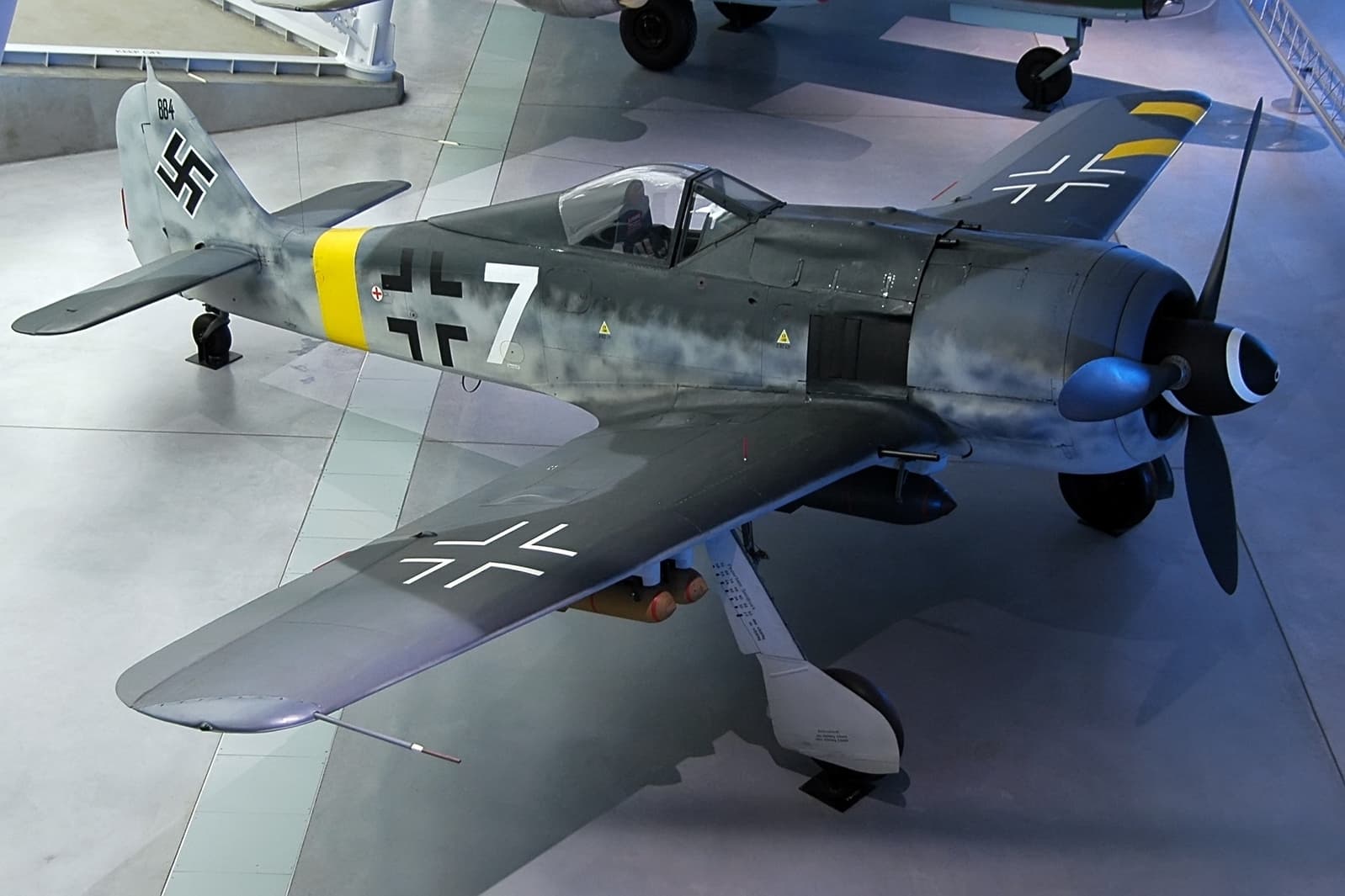 Fw 190A
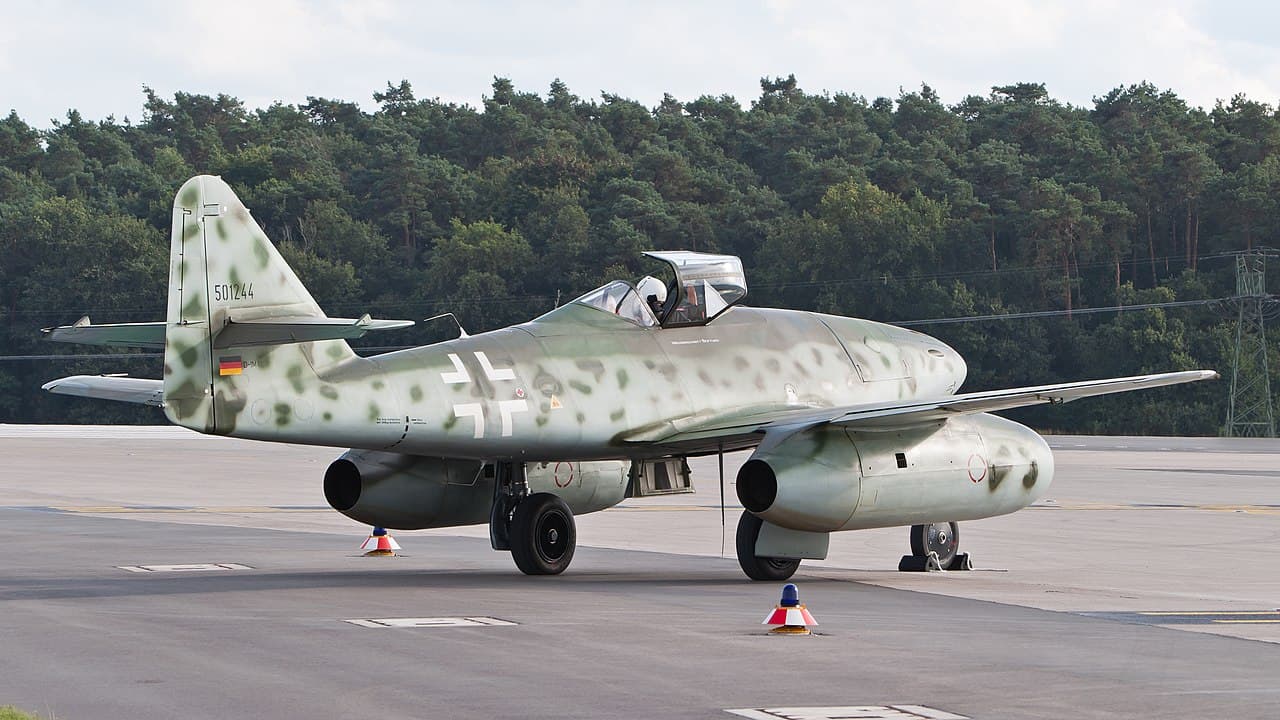 Me 262AP-51DP-47DP-51DP-51D
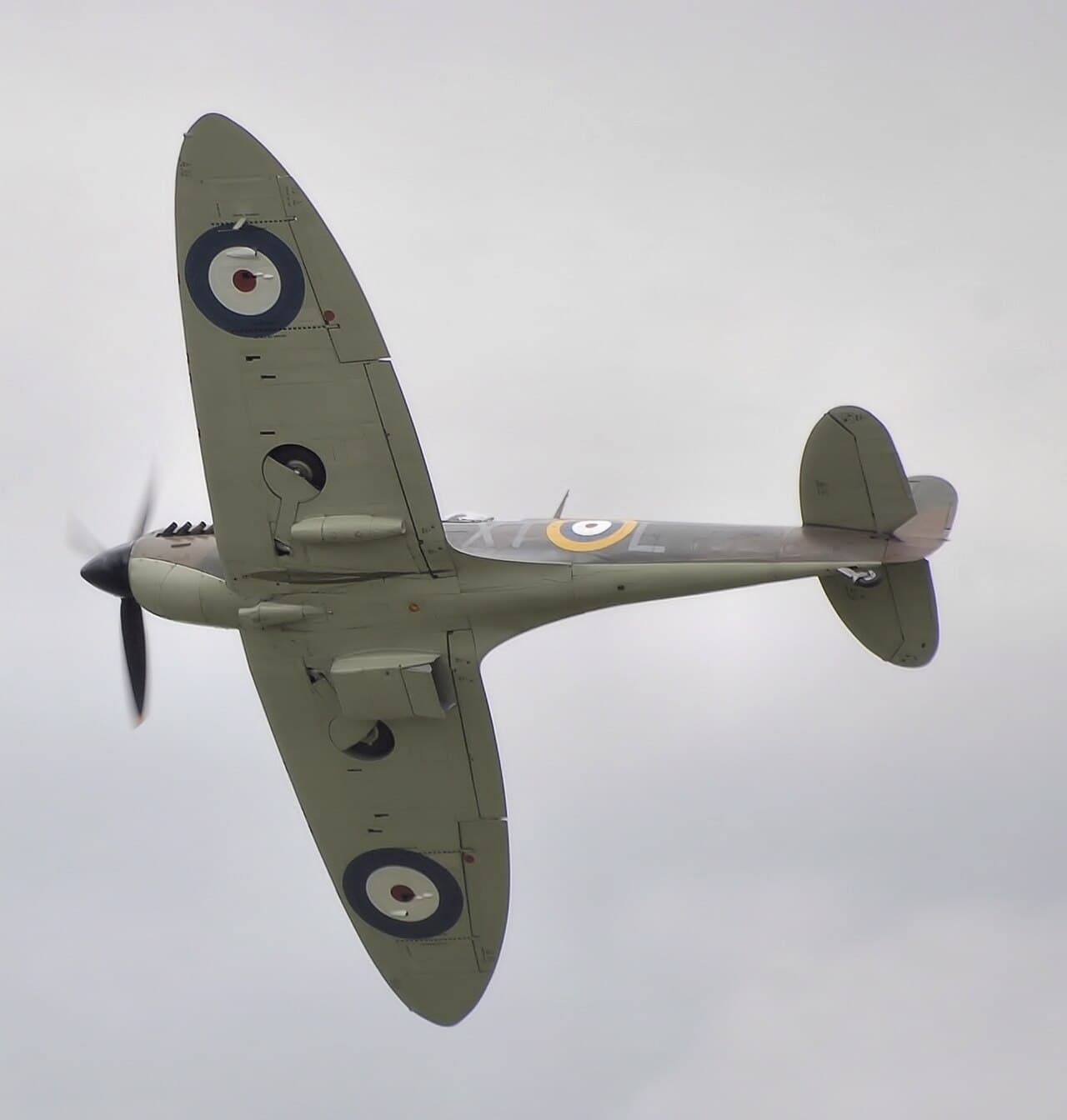 Spitfire Mk IX
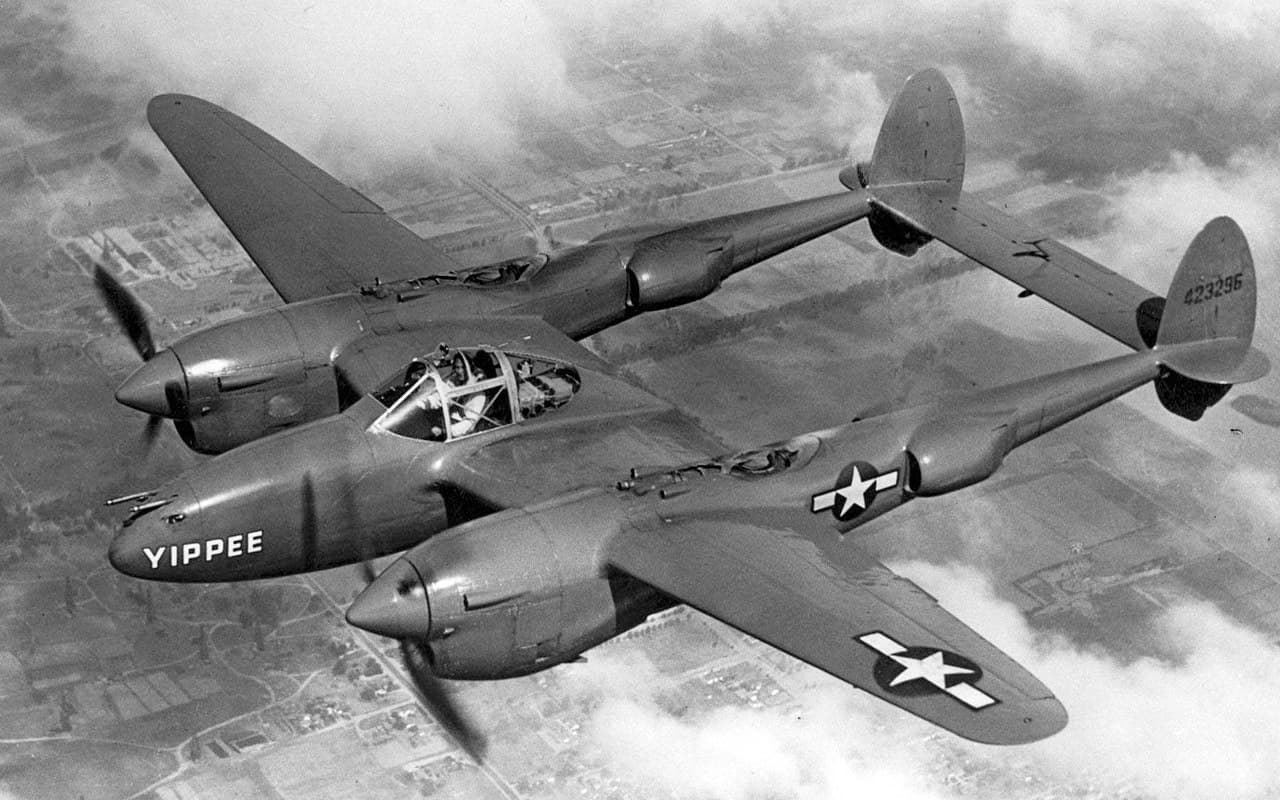 P-38JP-51DP-51DSpitfire Mk IXBf 109GFw 190ASpitfire Mk IXFw 190A