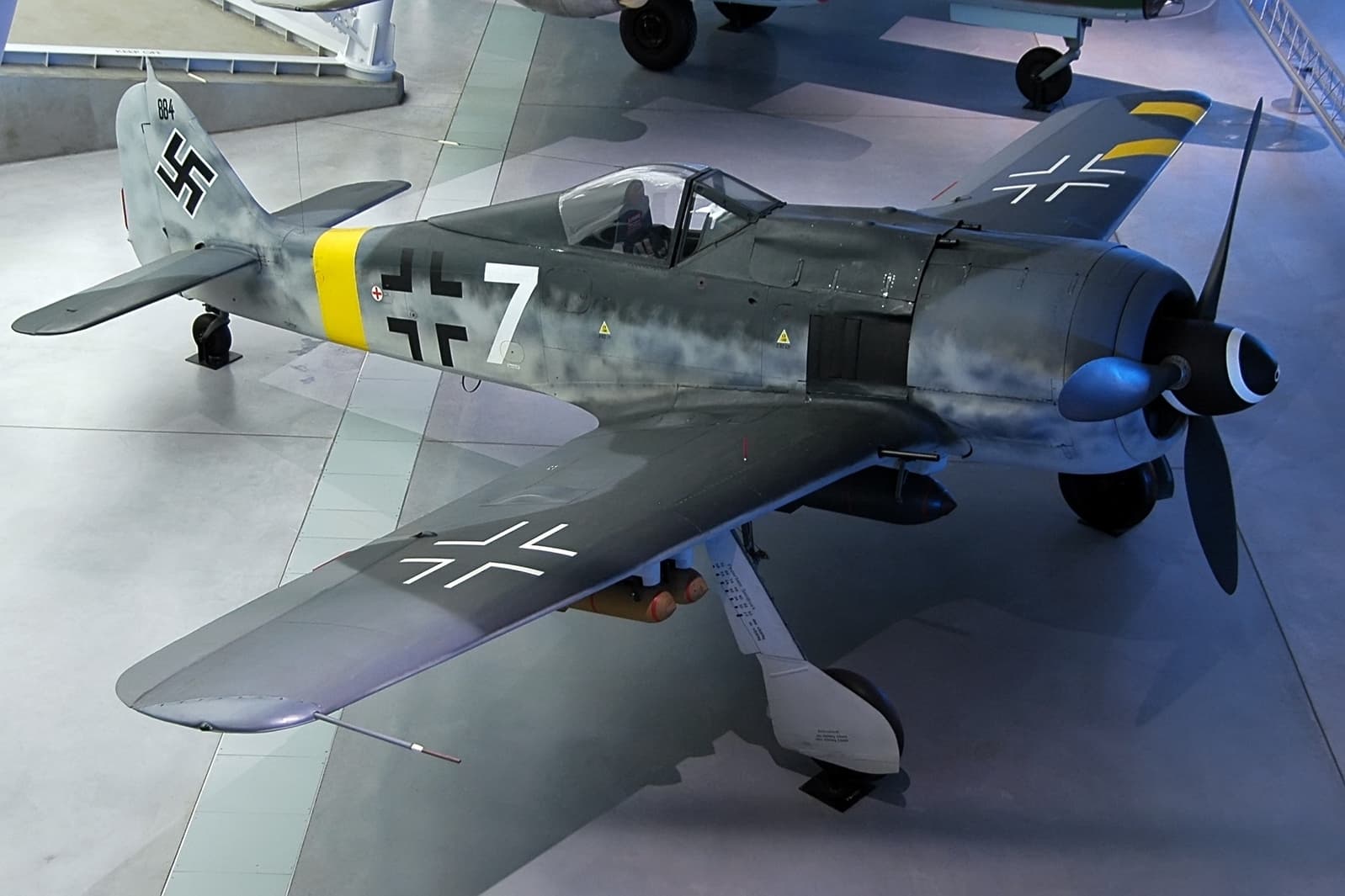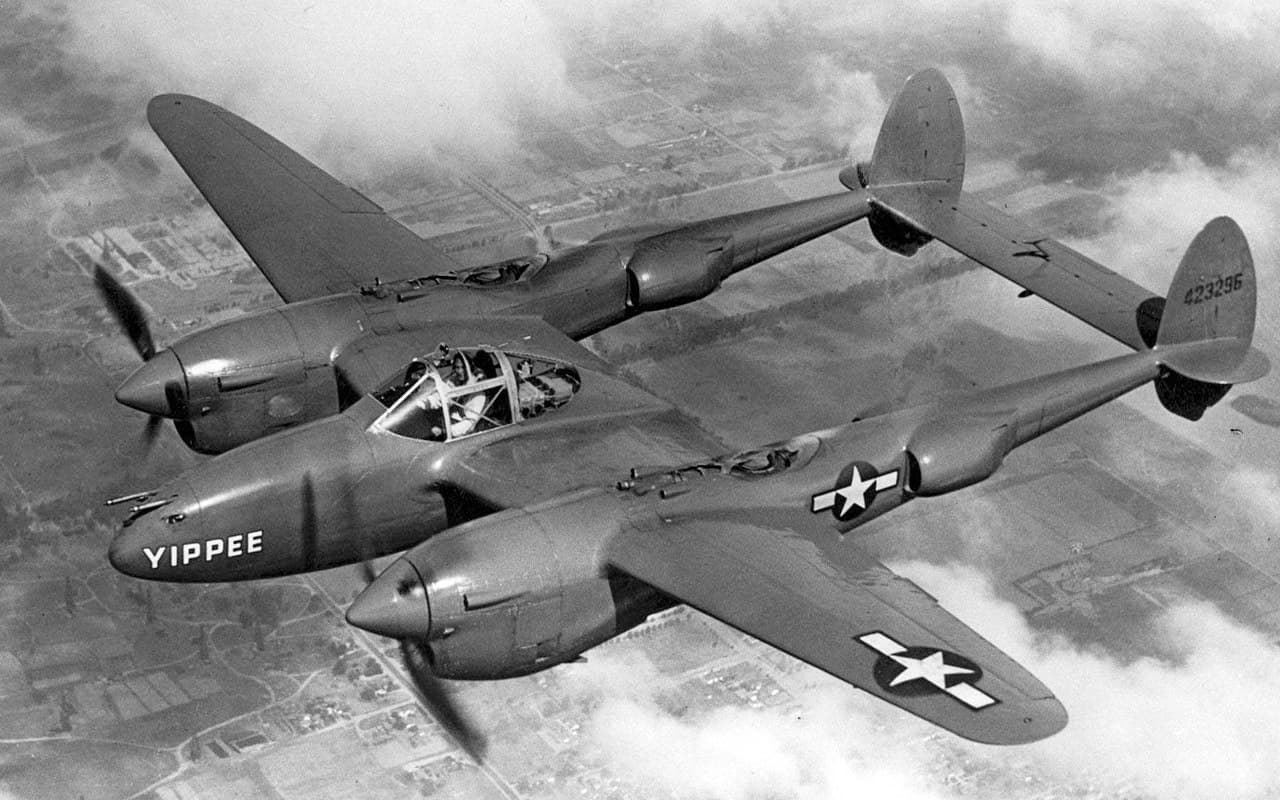
Lockheed P-38J Lightning
Lockheed
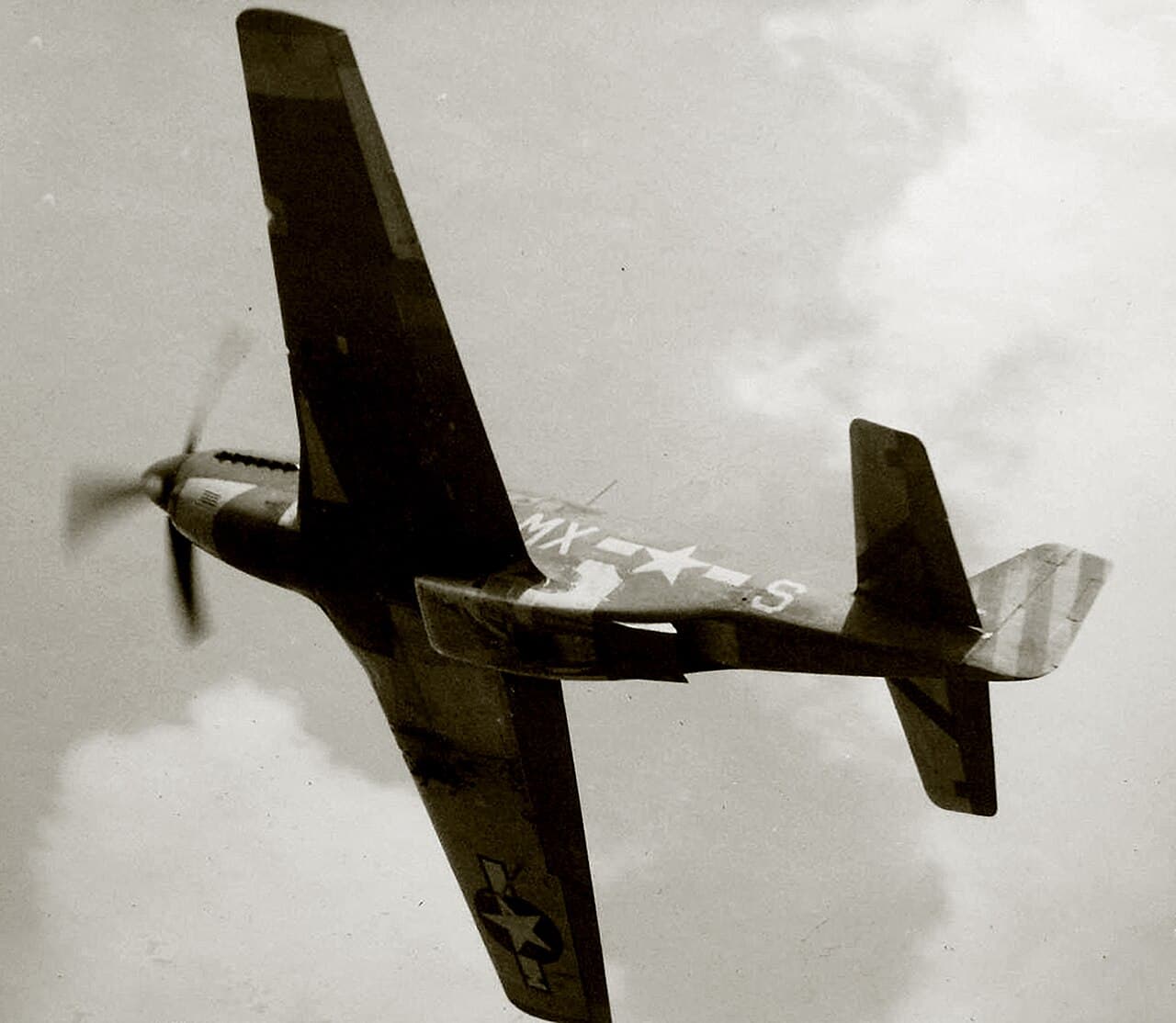
North American P-51D Mustang
North American Aviation
P-38J Lightning vs P-51D Mustang
Twin-engine firepower meets single-engine elegance, America's greatest fighters across two theaters
The Bottom Line
The P-38 Lightning owned the Pacific; the P-51 Mustang owned Europe. Each was the best fighter in its theater, and together they won the air war on both sides of the globe. Choosing one requires choosing a theater, and in a global war, you need both.
Who Wins Each Scenario?
Long-range Pacific patrol over open ocean
P-38J
Twin-engine safety over vast oceanic distances, superior internal fuel capacity, and proven combat record against Japanese aircraft. No single-engine fighter could match the security of a spare engine over hundreds of miles of water.
High-altitude bomber escort over Germany
P-51D
Better speed, agility, and Merlin engine performance at 25,000+ feet. Superior kill ratio against Luftwaffe fighters (13.1 per 100 sorties vs 4.3). Could reach Berlin and back reliably in European conditions.
Ground attack and fighter-bomber
P-38J
Double the bomb load (4,000 vs 2,000 pounds), twin-engine resilience to ground fire, concentrated nose guns for strafing, and the unique Droop Snoot precision bombing capability.
Dogfighting against elite opponents
P-51D
Superior speed, maneuverability, roll rate, and dive characteristics against Bf 109s and Fw 190s. The Mustang could engage the best Axis fighters on favorable terms at any altitude.
Interception and point defense
P-38J
Superior climb rate of approximately 4,000 feet per minute, higher service ceiling, and devastating nose-mounted firepower for head-on attacks on incoming bombers or fighters.
Mass production and logistics efficiency
P-51D
Half the cost, single-engine simplicity, faster field maintenance, and simpler spare parts logistics. The USAAF could field two Mustangs for every Lightning.
Performance Profile
Overall capability comparison across six combat dimensions
Head-to-Head Specifications
Key performance metrics compared side by side
Size Comparison
Both aircraft drawn to the same scale, the P-38J has 15.0ft greater wingspan and is 5.6ft longer
Performance Analysis
How each aircraft performs across key combat dimensions
Speed
WINNER: P-51DThe P-38J reached 414 mph at 25,000 feet, powered by twin turbosupercharged Allison V-1710 engines producing a combined 3,000 horsepower. Its speed was respectable but limited by the aerodynamic drag of its twin-boom configuration and engine nacelles.
The P-51D reached 437 mph at 25,000 feet, a consistent 20-plus mph advantage at most combat altitudes. The Mustang's clean single-engine aerodynamics and laminar-flow wing produced less drag, allowing it to convert its Merlin's 1,490 horsepower into speed more efficiently than the P-38 could use its combined 3,000.
The P-51D's speed advantage was consistent and significant. Twenty miles per hour is a meaningful gap in fighter combat, it allowed the Mustang to dictate engagement terms, pursue retreating enemies, and disengage at will. The P-38's twin-engine drag penalty offset its raw power advantage, a fundamental limitation of the twin-boom configuration. Against Axis fighters, the P-51D's speed gave it options the P-38 lacked.
Maneuverability
WINNER: P-51DAbove 15,000 feet, the P-38 matched or exceeded other fighters in turning ability. The P-38J-25/L variants with hydraulic aileron boost dramatically improved roll rate, surpassing the P-51 and Fw 190 above 350 mph. Combat flaps on late models allowed exceptional turning at lower speeds.
The P-51D was lighter, more agile, and had better roll rate across most of the speed range. Its responsive controls and tighter turn radius made it consistently more maneuverable at the altitudes and speeds where most air combat occurred.
The P-51D was the more maneuverable fighter across the broadest range of conditions. Early P-38s had notoriously heavy ailerons at high speed, and while hydraulic boost on late variants solved this above 350 mph, the Mustang's lighter weight and smaller size gave it inherent agility advantages. The P-38's superior twin-engine energy in zoom climbs was a meaningful tactical tool, but in sustained maneuvering combat, the Mustang held the edge.
Climb Rate
WINNER: P-38JThe P-38J climbed at approximately 3,800–4,000 feet per minute at sea level, with some sources citing 4,020 feet per minute on 150-octane fuel at War Emergency Power. Twin-engine power gave it a zoom-climb capability that single-engine fighters could not match. German ace Johann Pichler noted the P-38 climbed much faster than the Bf 109.
The P-51D climbed at approximately 3,475 feet per minute, competitive but clearly behind the Lightning's twin-engine advantage.
Climb rate was the P-38J's clearest performance advantage over the Mustang. The combined thrust of two Allison engines accelerated the Lightning upward faster than any single-engine American fighter, giving its pilots the ability to gain energy advantages in vertical combat. The 500-plus feet per minute gap was tactically significant, it allowed P-38 pilots to reach intercept altitude faster and to regain altitude after attack dives more quickly.
Altitude Performance
EvenService ceiling of 44,000 feet. The twin turbosupercharged Allison engines maintained power at extreme altitude, giving the P-38 one of the highest ceilings of any World War II fighter. At altitude, the turbosuperchargers maintained manifold pressure that mechanically supercharged engines could not match.
Service ceiling of 41,900 feet. The Packard Merlin's two-stage mechanical supercharger was optimized for the 25,000–35,000-foot band where most European combat occurred, providing excellent power output and throttle response at the most tactically relevant altitudes.
The P-38J had a higher absolute ceiling by over 2,000 feet, but the P-51D performed better in the altitude band that mattered most for combat (20,000–35,000 feet). The Merlin's smooth power delivery and superior throttle response at combat altitudes gave the Mustang better practical high-altitude performance despite the Lightning's higher absolute ceiling. The distinction is between theoretical ceiling and combat-effective altitude, the Mustang won where the fighting happened.
Range & Endurance
WINNER: P-38JInternal fuel capacity of 410 gallons, vastly superior to the Mustang's 269 gallons. Maximum range with external tanks reached 2,260 miles. Charles Lindbergh demonstrated even greater range with engine-leaning techniques, saving 50–100 gallons per mission. For Pacific operations over hundreds of miles of open ocean, this internal fuel capacity was the difference between reaching home and ditching at sea.
Maximum range of approximately 1,650 miles with drop tanks, with a combat radius of 750 miles. While shorter than the P-38's maximum, this was sufficient for the European escort mission, England to Berlin and back, that defined the air war.
Range favored the P-38J in raw numbers, with 610 more miles of maximum range and 141 more gallons of internal fuel. In the Pacific, where missions could span a thousand miles of open water, this advantage was critical. In Europe, the P-51D's range was sufficient for the deepest escort missions while the P-38's European reliability problems negated its theoretical range advantage. The P-38 was the better long-range aircraft; the P-51D had enough range for the mission that mattered most.
Dive Speed
WINNER: P-51DWith the P-38J-25's electrically actuated dive recovery flaps (deploying in 1.5 seconds), the compressibility problem was largely solved. The flaps changed pressure distribution to maintain wing lift without acting as a speed brake.
The P-51D dove cleanly and predictably to high Mach numbers with no compressibility issues. Its laminar-flow wing was designed for high-speed flight, and pilots could commit to vertical attacks with complete confidence in the aircraft's behavior.
Dive performance was the P-51D's clear advantage. Early P-38s suffered severe compressibility above Mach 0.68, tail buffet, nose tuck-under, and locked controls that trapped pilots in fatal dives. The J-25's dive flaps mitigated this, but the problem was inherent to the wing design and never fully eliminated. The Mustang had no such limitation, it dove cleanly and predictably, giving pilots confidence to execute boom-and-zoom tactics without risking compressibility lockup.
Roll Rate
EvenLate-model P-38J-25 and P-38L variants with hydraulic aileron boost achieved roll rates that surpassed the P-51D and even the Fw 190 above 350 mph. At high speed, the boosted ailerons gave the Lightning excellent roll authority.
The P-51D had consistently good roll rate across the entire speed range, responsive at low speed, adequate at medium speed, and still functional at high speed. It never suffered the heavy ailerons that plagued early P-38 variants.
Roll rate was speed-dependent and variant-dependent. Early P-38s had notoriously sluggish ailerons that could not keep up with agile opponents. The hydraulic boost on late variants solved this above 350 mph but came too late for many units. The P-51D offered consistent, predictable roll authority at all combat speeds without requiring modification, a reliability of handling that was itself a combat advantage.
Cockpit Visibility
WINNER: P-51DThe P-38's bubble canopy provided good forward visibility, and the pilot sat high between the twin booms with a reasonable view forward and to the sides. The unique configuration gave the pilot an unobstructed view directly ahead, no engine cowling blocking the forward arc.
The P-51D's teardrop bubble canopy with cut-down rear fuselage provided exceptional 360-degree visibility, widely regarded as the best cockpit view of any World War II fighter. No blind spots to the rear, critical for detecting threats in the multi-aircraft engagements that characterized combat over Germany.
The P-51D's visibility advantage was substantial. While the P-38's forward view was excellent (no engine blocking the pilot's line of sight), the twin booms and engine nacelles created blind spots to the lower left and right that the Mustang's clean silhouette did not share. The P-51D's rear visibility was particularly important, in the swirling dogfights over Germany, the ability to check six o'clock without obstruction saved lives.
Photo Gallery, 11 Photos
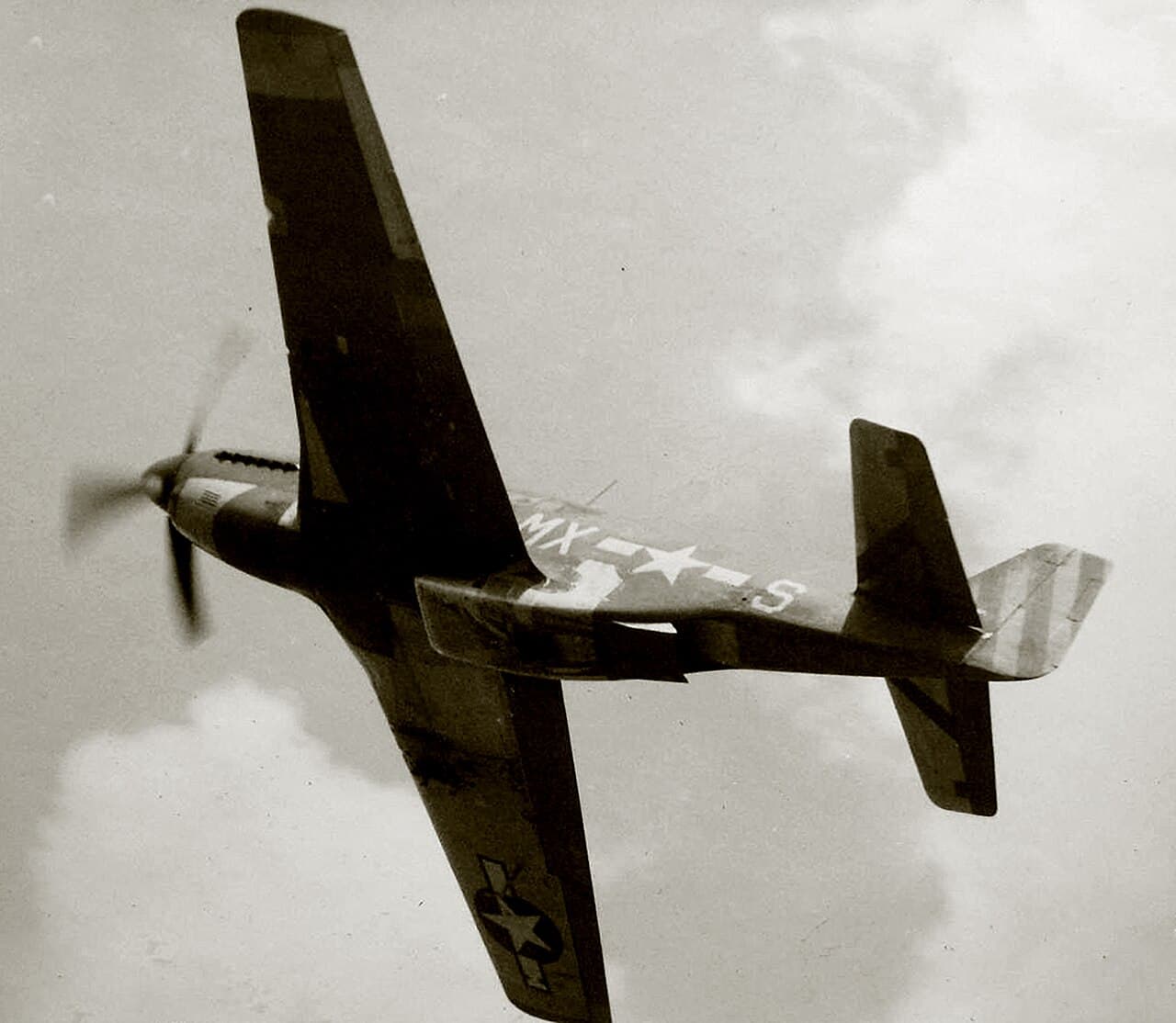
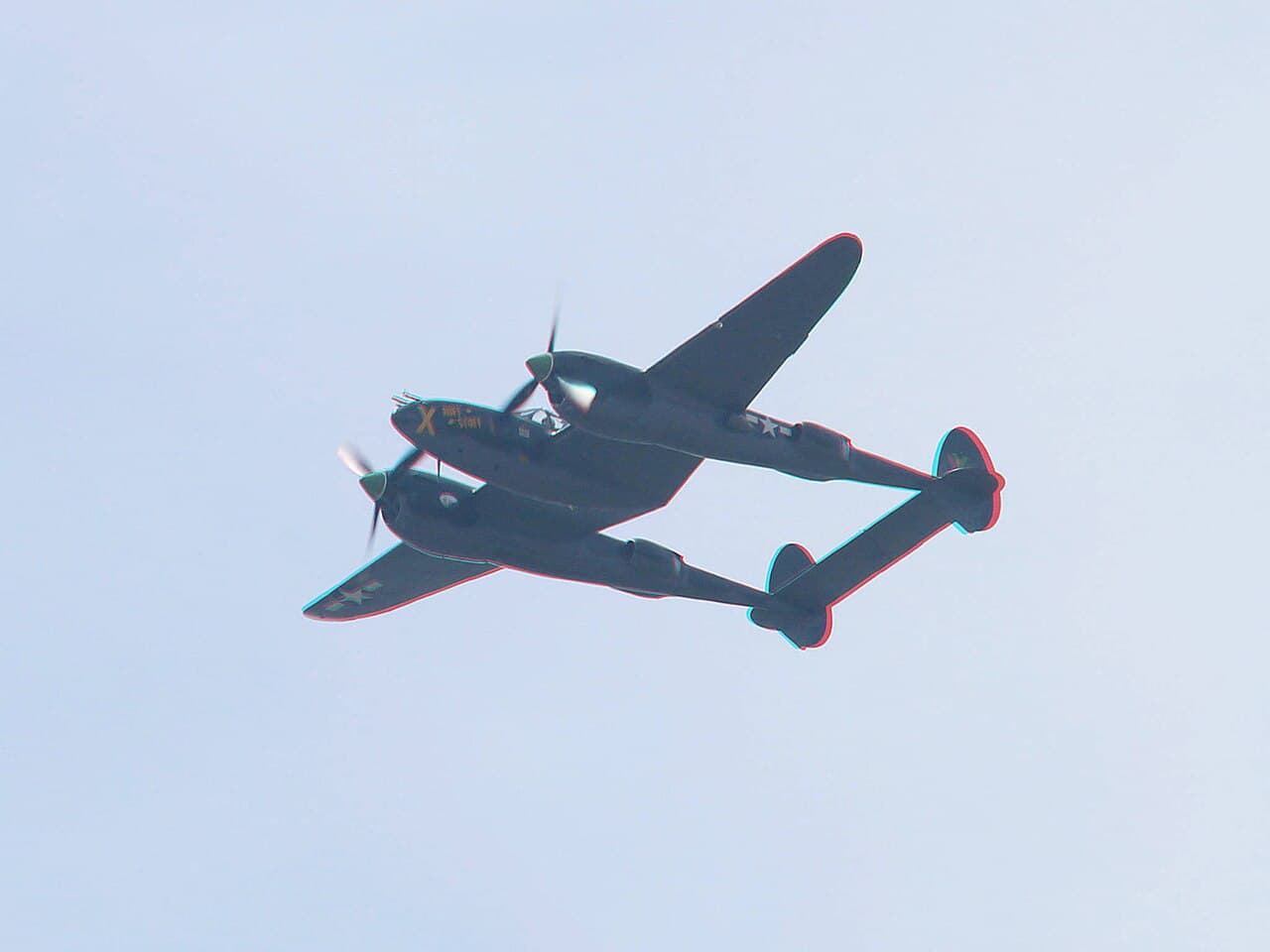
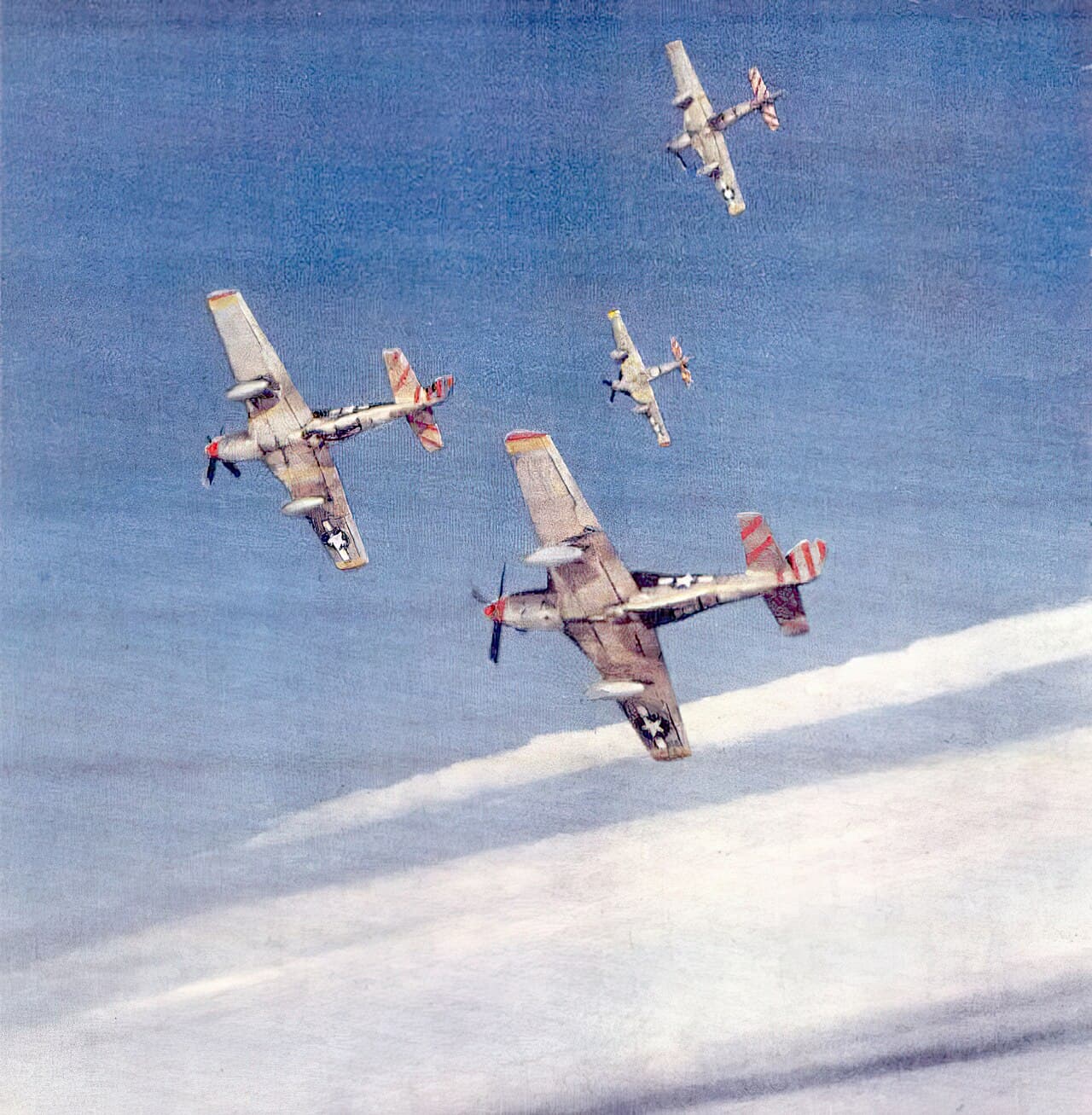
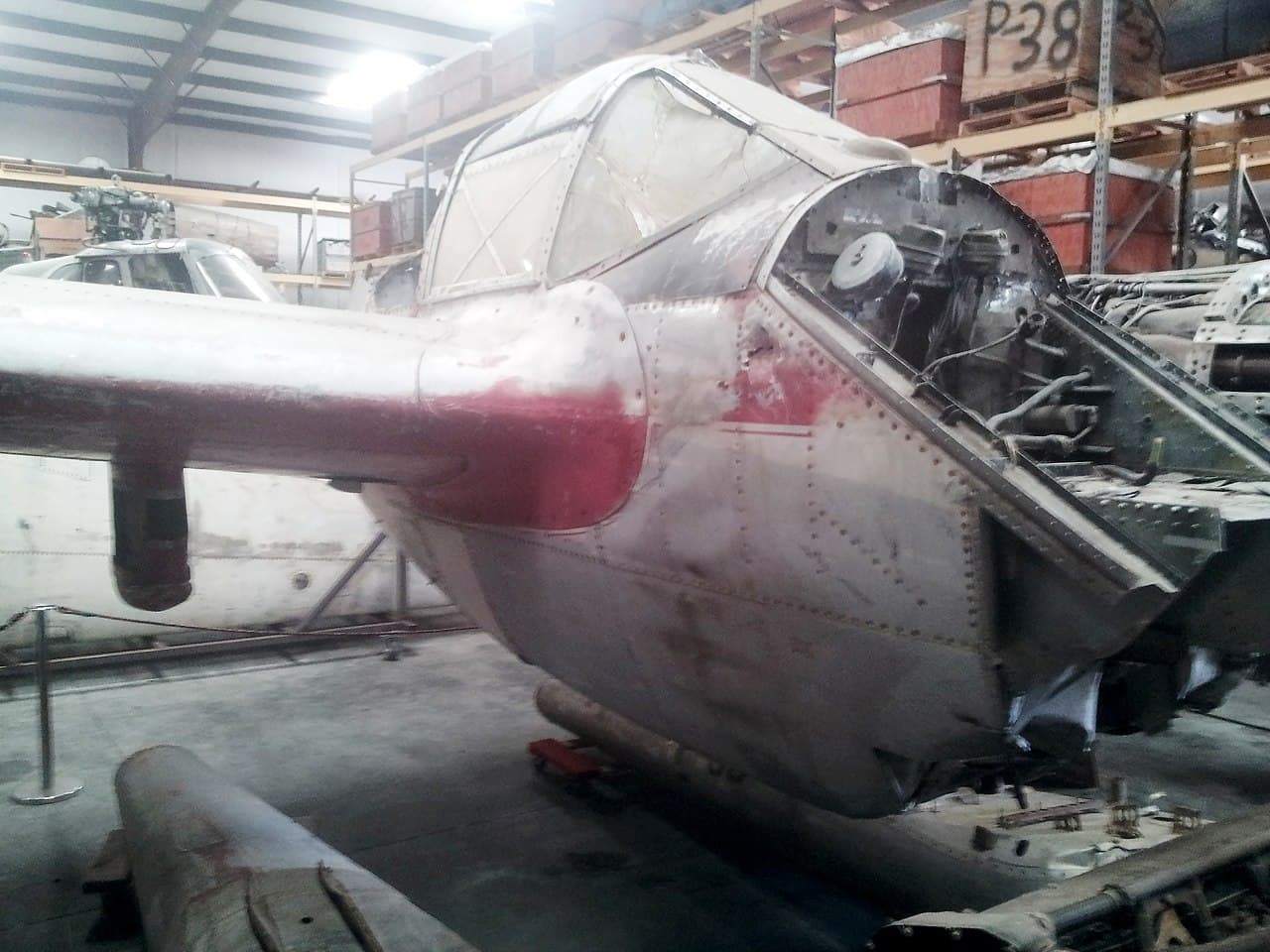
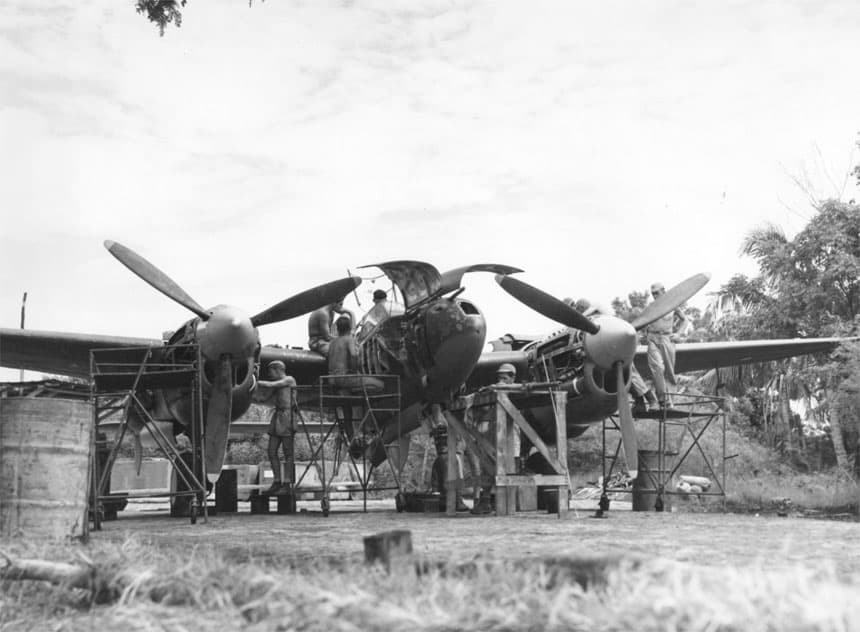
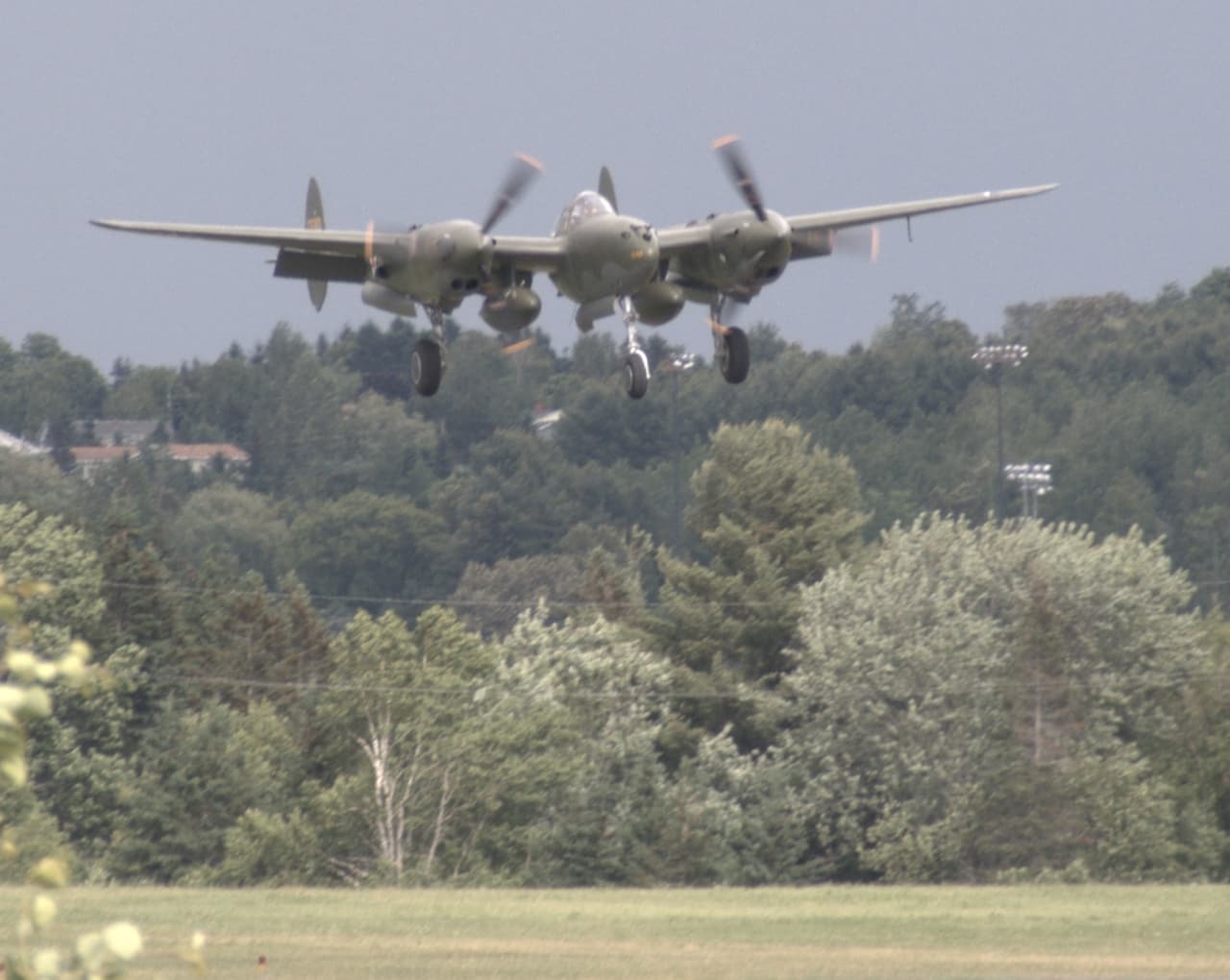
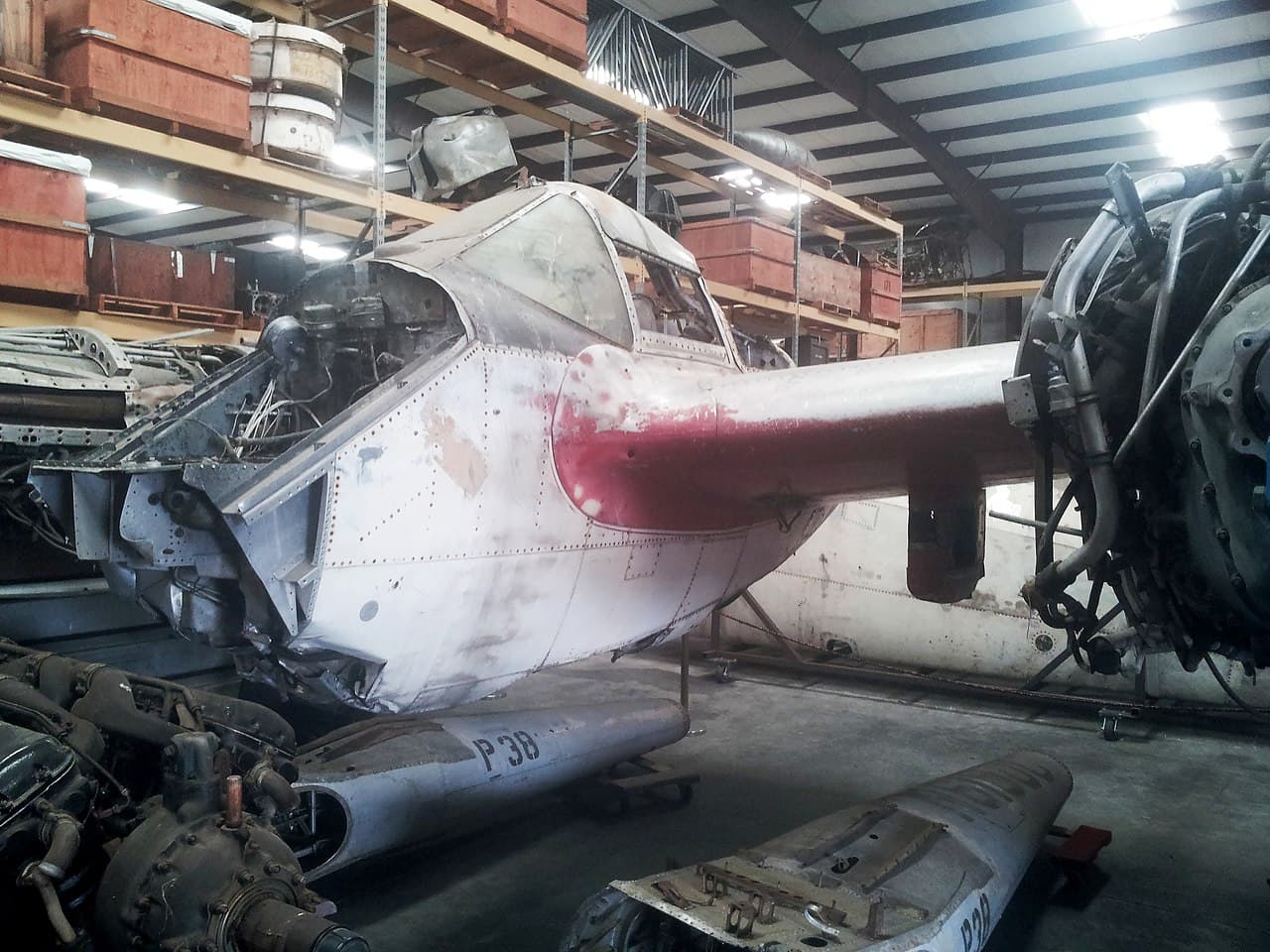
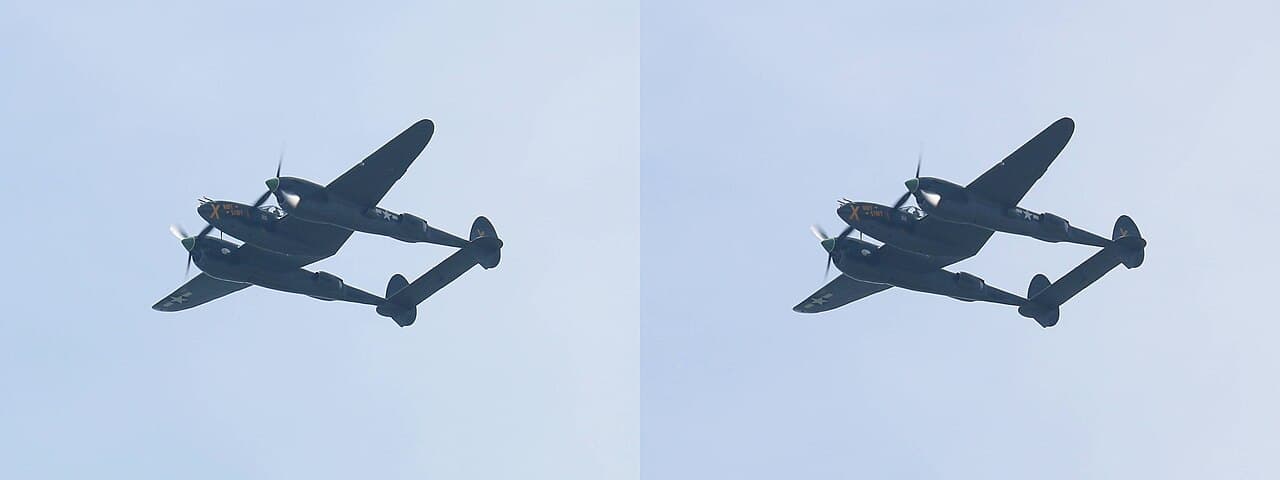
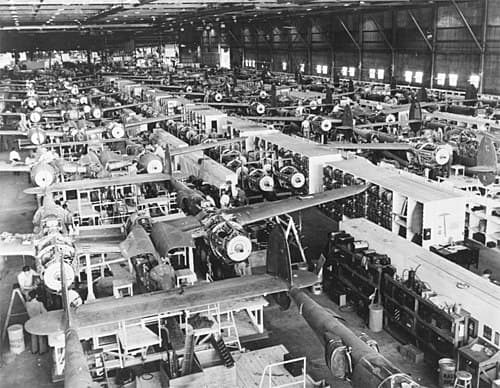
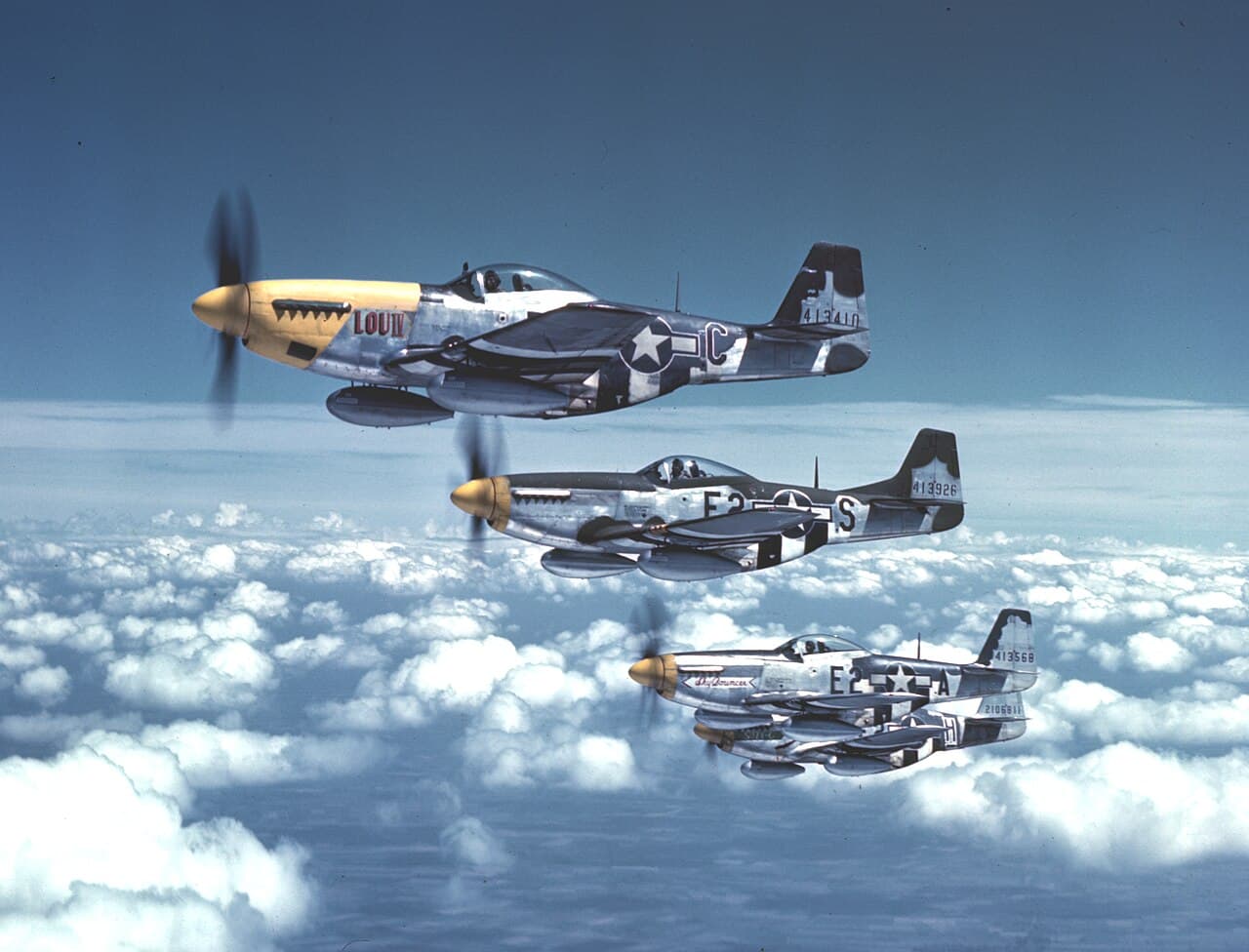
Click any photo to enlarge · 11 photos
Historical Context
The strategic backdrop that shaped both aircraft
The P-38J Lightning and P-51D Mustang were products of radically different design philosophies that proved equally valid in their respective theaters. The Lightning was designed by Kelly Johnson and Hall Hibbard at Lockheed in 1936, answering an Army specification for a high-altitude interceptor capable of 360 mph at 20,000 feet. Johnson chose a revolutionary twin-boom configuration to house the engines, turbosuperchargers, and landing gear, with a central nacelle for the pilot and nose-mounted armament. The XP-38 prototype first flew on January 27, 1939, and the P-38 became the only American fighter in continuous production from Pearl Harbor to V-J Day.
The Mustang's origin was more pragmatic, a 1940 British Purchasing Commission request that North American Aviation answered not with a license-built P-40 but with a clean-sheet design completed in 102 days. The aircraft was transformed from a competent low-altitude fighter into a war-winning weapon when Rolls-Royce test pilot Ronald Harker suggested fitting the Merlin 61 two-stage supercharged engine, giving it the high-altitude performance the original Allison engine lacked.
The two fighters' paths diverged dramatically in 1943–44. The P-38 dominated the Pacific from its first combat operations in mid-1942, where its twin-engine safety over vast oceanic distances, concentrated nose firepower, exceptional range, and devastating climb rate made it the ideal Pacific fighter. In Europe, however, the Lightning struggled: British aviation fuel interacted poorly with its Allison engines and turbosuperchargers, cockpit heating failures caused frostbite at 30,000 feet, and the complex intercooler plumbing frequently malfunctioned. When Merlin-powered P-51Bs arrived in late 1943 and proved faster, more reliable, and half the cost, the Eighth Air Force's decision was clear. By spring 1944, P-38s were transferred from the Eighth to the Fifteenth Air Force in the Mediterranean and the Ninth Air Force's tactical units, replaced by Mustangs that would go on to break the Luftwaffe.
The ace tallies tell the story of two theaters. Richard Bong scored all 40 of his victories in P-38s over the Pacific, America's all-time ace of aces. Tommy McGuire scored 38, also exclusively in Lightnings. In Europe, George Preddy scored 23 victories in the P-51, and the Mustang produced over 250 aces. Each aircraft produced legends, but in different skies.
Notable Combat Encounters
Key engagements where these aircraft faced each other in combat
The USAAF conducted formal comparative flight tests pitting the P-38F against the P-39, P-40, P-47, and P-51A. The P-38F could outclimb all types tested. Above 15,000 feet, it matched or exceeded other fighters in turning ability. However, below 12,000 feet it had a longer turn radius than the P-39, P-51A, and P-40F, and its slow aileron roll rate meant other types could roll into a turn faster and close the circle before the P-38 reached its maximum turn rate.
Outcome
The tests identified the P-38's strengths (climb, high-altitude performance, firepower) and weaknesses (roll rate, low-altitude turning) that would define its tactical employment. Later variants with hydraulic aileron boost and combat flaps addressed these limitations.
Established the quantitative basis for understanding where each American fighter excelled, directly informing the USAAF's decisions about which aircraft to assign to which theater and mission.
Operation Vengeance, the mission to kill Admiral Isoroku Yamamoto, architect of the Pearl Harbor attack. US Navy codebreakers intercepted Yamamoto's itinerary, and Major John Mitchell led eighteen P-38s on a thousand-mile round trip from Guadalcanal at wave-top height to avoid radar. Four P-38s designated as the "kill flight" intercepted Yamamoto's transport. First Lieutenant Rex Barber opened fire on the lead Betty bomber, hitting the right engine and sending it crashing into the jungle. Yamamoto was killed.
Outcome
Japan lost its most brilliant naval strategist. The P-38 was the only American fighter with sufficient range for the mission, no P-51, P-47, or P-40 could have made the round trip.
The P-38's signature moment and one of the most dramatic missions of the war. It demonstrated the Lightning's unique combination of extreme range and devastating firepower, capabilities that made it irreplaceable in the Pacific.
The first complete P-51 escort missions to Berlin. Five bomb raids on the German capital were flown between March 3 and March 9, with P-51Bs providing the deep escort that P-38s and P-47s could not sustain. The 354th Fighter Group, the first P-51B unit in Europe since November 1943, led the way. P-51Bs with 85-gallon internal auxiliary tanks achieved 700–850-mile combat radii on internal fuel alone.
Outcome
The Berlin missions proved the P-51 could escort bombers to the heart of Germany and back, transforming the strategic bombing campaign. Bomber losses dropped dramatically when continuous fighter escort became possible.
This was the moment the P-51 made the P-38 obsolete in the European escort role. The Mustang could do what the Lightning could not, operate reliably at high altitude in European conditions while providing continuous escort to the deepest targets.
After being replaced in the Eighth Air Force by P-51s, P-38 groups transferred to the Fifteenth Air Force in Italy, where both types operated simultaneously. P-38s and P-51s flew escort and ground attack missions over southern Europe, the Balkans, and the Romanian oil fields at Ploești. In the Mediterranean's warmer climate, the P-38's reliability problems largely disappeared, and it served with distinction alongside the Mustang.
Outcome
Both aircraft types performed well in the Mediterranean, with the P-38 excelling in the fighter-bomber role and the P-51 dominating air-to-air combat. The 15th Air Force's combined force helped cripple Axis oil production.
The Mediterranean provided the clearest side-by-side comparison of both types in the same theater. The P-38's strengths, ground attack capability, twin-engine resilience, concentrated firepower, complemented the P-51's air superiority dominance.
Armament & Firepower
Primary weapons, munitions capacity, and destructive capability
P-38J Loadout
1x Hispano AN/M2 20mm cannon (150 rounds) plus 4x .50 caliber M2 Browning machine guns (500 rounds each, 2,000 total), all mounted in the central nose nacelle. The concentrated nose installation maintained a tight, focused stream of fire accurate at any range up to 1,000 yards without the convergence harmonization required by wing-mounted guns. Ground attack ordnance: up to 4,000 pounds of bombs or 10x 5-inch HVAR rockets on the P-38L variant.
P-51D Loadout
6x .50 caliber M2 Browning machine guns with 1,880 rounds total (400 per inboard gun, 270 per outboard). Wing-mounted with convergence typically set at 250–300 yards. Ground attack ordnance: up to 2,000 pounds of bombs or 6–10x 5-inch HVAR rockets.
Air-to-Air Verdict
The P-38's nose-mounted armament was more accurate at extended range, a significant advantage in boom-and-zoom tactics where the pilot fired during a high-speed diving pass. The concentrated pattern hit hard at any distance without the convergence sweet spot that wing guns required. The 20mm cannon added explosive-shell capability that .50-caliber rounds lacked, devastating against any aircraft. The P-51D's six .50-caliber guns delivered a higher volume of fire at convergence distance and were more forgiving of aiming errors in deflection shooting. The Mustang's 1,880 rounds offered greater sustained firing time than the P-38's total load.
Ground Attack Verdict
The P-38J was dramatically superior in the ground-attack role. It carried twice the bomb load (4,000 pounds versus 2,000), had twin-engine resilience against ground fire, and its nose guns were devastating for strafing. The Droop Snoot variant could carry a Norden bombsight and lead formations of bomb-laden P-38s for precision formation bombing, a capability unique among fighters. The P-51D's liquid-cooled engine was dangerously vulnerable to ground fire, particularly its belly-mounted radiator.
Both armament packages were highly effective but optimized for different tactical approaches. The P-38's nose guns rewarded precision shooting and boom-and-zoom tactics; the P-51D's wing guns rewarded volume of fire and deflection shooting. The P-38's 20mm cannon gave it a destructive advantage per pass, while the P-51D's greater .50-caliber ammunition supply allowed longer engagements. For ground attack, the P-38's double bomb load and twin-engine survivability made it the clear winner.
Survivability & Protection
Armor, self-sealing tanks, pilot protection, and structural resilience
P-38J Protection
Pilot armor including seat back and head rest protection. The P-38's critical survivability advantage was its twin engines, losing one engine was survivable, allowing pilots to return to base on the remaining powerplant. Over the vast Pacific Ocean, this was the difference between life and death. Counter-rotating propellers eliminated the "critical engine" problem that plagued most twin-engine aircraft, meaning either engine could fail without catastrophic asymmetric thrust.
P-51D Protection
Pilot armor including seat back and head rest plates. No armor around the liquid-cooled Merlin engine or its vulnerable glycol coolant system. The belly-mounted radiator was particularly exposed during ground strafing runs. A single bullet through the coolant line meant engine seizure within minutes, and over enemy territory, that meant bailout or crash.
Pilot Protection
The P-38's twin-engine configuration provided a fundamental survivability advantage that no amount of armor could replicate. A P-38 pilot who lost an engine over the Pacific could nurse the aircraft home on the remaining engine; a P-51 pilot in the same situation had no engine to fall back on. However, the P-38's twin-engine layout also doubled the number of potential failure points and created more vulnerable fuel line routing through the fuselage.
Structural Durability
The P-38 was a robust aircraft that could absorb significant battle damage, with the twin-boom structure providing redundancy in the tail control system. However, engine fires were often fatal regardless of the second engine. The P-51D was structurally robust with good gliding characteristics if the engine failed, but its liquid cooling system remained a single point of failure that ground fire could exploit.
Survivability depended entirely on the mission. Over the Pacific Ocean, the P-38's twin engines were an unmatched safety advantage, one pilot described the security as something "that simply can't be appreciated by a non-combat pilot." Over Europe on ground-strafing missions, the P-51D's exposed coolant system was a lethal vulnerability that the P-47's air-cooled radial did not share. Both aircraft had critical weaknesses, but the P-38's twin-engine redundancy was a unique survival asset that no single-engine fighter could match.
Tactical Doctrine & Evolution
How pilots were trained to fight in each aircraft and how tactics adapted over time
P-38J Tactics
P-38 tactics centered on boom-and-zoom attacks exploiting the aircraft's superior climb rate and concentrated nose firepower. Pilots dove from altitude, fired their nose-mounted guns in a concentrated stream, and zoom-climbed away using twin-engine power, a tactic particularly effective against Japanese fighters that could out-turn the Lightning but could not match its vertical energy. The counter-rotating propellers provided a stable gun platform with no torque effects. In the Pacific, long-range patrol missions exploited the P-38's exceptional fuel capacity, with Charles Lindbergh teaching engine-leaning techniques that extended range even further. The Lightning also excelled in the fighter-bomber role, carrying 4,000 pounds of ordnance, and the Droop Snoot variant led precision formation bombing.
P-51D Tactics
P-51 doctrine evolved around the deep-penetration escort mission and aggressive air superiority sweeps. General Doolittle's order to "go hunting" freed Mustang pilots from close escort to seek out and destroy the Luftwaffe aggressively. P-51 pilots used energy fighting, bouncing enemy formations from altitude, engaging in slashing attacks, and using the Mustang's superior speed and energy retention to maintain the initiative. The emphasis was on killing the Luftwaffe's pilot force through sustained attritional combat. Later in the war, P-51s also flew strafing campaigns against Luftwaffe airfields, destroying aircraft on the ground, though the Mustang's coolant vulnerability made this the most dangerous mission type.
How Tactics Evolved
The tactical evolution of these fighters mirrored the air war's geographic reality. The P-38 was developed first and proved itself in the Pacific's unique environment, vast distances, lower-altitude combat, and island-based operations. When it struggled in Europe's high-altitude conditions, the Mustang stepped in to fill the strategic escort role that defined the European air war. By 1945, the roles were settled: P-38s dominated the Pacific and tactical missions in Europe, while P-51s dominated the strategic air war over Germany. The USAAF's willingness to employ each aircraft where it excelled, rather than forcing universal standardization, was a key factor in winning the air war on both fronts.
What the Pilots Said
Firsthand accounts from the men who flew and fought these aircraft
On the P-38J“She can dive, she can climb, and she can turn. If you can handle the Lightning, she'll fight for you and bring you home.”
On the P-38J“Two-engine reliability. Especially on long over-water flights, the security of having a spare engine simply can't be appreciated by a non-combat pilot.”
On the P-51D“The P-51 was the most aerodynamically perfect aircraft of its time. Its stability as a gun platform and its forgiving handling on long missions made it the fighter you wanted when the fight was 500 miles from home.”
On the P-51D“In its first 55 days of combat, the P-51B shot down 13.1 enemy aircraft per 100 sorties versus 4.3 for the P-38. The numbers spoke for themselves.”
By the Numbers
Statistical combat performance and historical kill ratios
Exchange Ratio
P-38 Lightning pilots destroyed more Japanese aircraft than pilots of any other USAAF type in the Pacific theater, accumulating approximately 1,800 aerial victories across over 130,000 combat missions. America's two highest-scoring aces of all time, Richard Bong (40 victories) and Tommy McGuire (38), flew P-38s exclusively. The P-51 Mustang was credited with approximately 4,950 aerial victories across all theaters, with over 250 pilots achieving ace status. In Europe, P-51 pilots claimed nearly half of all USAAF air-to-air kills.
Source: USAAF combat records; Pacific Air Forces historical data
The combat records reflect theater-specific excellence rather than inherent aircraft superiority. The P-38's Pacific dominance was built on its twin-engine safety, concentrated firepower, and range, advantages perfectly suited to the vast Pacific distances and lower-altitude combat against Japanese aircraft. The P-51's European dominance was built on its speed, agility, and Merlin engine performance at the high altitudes where Luftwaffe combat occurred. The P-38's lower kill rate in Europe (4.3 per 100 sorties versus the P-51's 13.1) was caused by reliability problems specific to European conditions, not inherent combat inferiority. In the Pacific, where those problems didn't exist, the Lightning's record was extraordinary.
Production & the Numbers Game
How industrial output shaped the strategic balance
10,037
P-38J Built
15,586
P-51D Built
The production economics strongly favored the Mustang. At half the cost per unit, the USAAF could field two P-51s for every P-38, with simpler logistics and faster field maintenance (one engine to service instead of two). This cost advantage was a major factor in the Eighth Air Force's switch from P-38 to P-51, the Mustang was not only better suited to the European mission but dramatically cheaper to produce and maintain. However, the P-38's twin-engine configuration provided capabilities, single-engine return, concentrated nose armament, extreme range, massive ordnance load, that no single-engine fighter could replicate, justifying its higher cost for Pacific operations where those capabilities were essential.
Advantages in This Matchup
Where each aircraft holds the edge in a head-to-head encounter
P-38J Lightning
- Twin-engine survivability, could return to base on one engine, critical for Pacific over-water operations spanning hundreds of miles
- Concentrated nose firepower, 20mm cannon plus four .50-caliber guns accurate at any range without convergence issues
- Superior internal fuel capacity (410 gallons vs 269) and maximum range (2,260 miles) for Pacific distances
- Exceptional climb rate of approximately 4,000 feet per minute using twin-engine power
- Extraordinary versatility, fighter, fighter-bomber (4,000 lb ordnance), photo-recon, pathfinder, and night fighter
- Counter-rotating propellers eliminated torque effects, providing stable handling and no critical engine on failure
- Service ceiling of 44,000 feet, one of the highest of any World War II fighter
P-51D Mustang
- Superior speed of 437 mph at 25,000 feet, 20+ mph faster than the P-38 at combat altitudes
- Better maneuverability, lighter, more agile, tighter turns, and superior roll rate across most speeds
- Outstanding bubble canopy visibility, the best 360-degree view of any WW2 fighter
- Clean dive characteristics, no compressibility issues, predictable handling at high Mach numbers
- Half the production cost ($51,000 vs $97,000) with simpler maintenance, the most cost-efficient fighter of the war
- Merlin engine optimized for 25,000–35,000-foot combat band where European air war was fought
- Highest kill ratio of any major USAAF fighter (10.7:1 in Europe), reflecting dominance in air-to-air combat
Final Verdict
Overall Assessment
Context-Dependent
Neither aircraft holds a definitive advantage, the winner depends on the scenario.
The P-38J Lightning versus P-51D Mustang comparison has no universal answer because these aircraft excelled in different theaters against different enemies under different conditions. The P-51D wins the European comparison decisively, it was faster, more maneuverable, had better dive characteristics, cost half as much, and its Merlin engine performed superbly at the high altitudes where the air war over Germany was fought. Its 13.1 kills per 100 sorties versus the P-38's 4.3 in European combat reflected genuine superiority in that environment. The P-38J wins the Pacific comparison equally decisively, its twin-engine safety over oceanic distances, concentrated nose firepower, exceptional range, superior climb rate, and extraordinary versatility made it irreplaceable. America's two highest-scoring aces flew P-38s exclusively, and Lightning pilots destroyed more Japanese aircraft than pilots of any other USAAF type. The P-38's European struggles were caused by specific conditions, fuel incompatibility, cockpit heating failures, intercooler problems, that did not exist in the Pacific. The aircraft that stumbled over Germany thrived over the Solomons and Philippines. The USAAF's wisdom was in recognizing that a global war required different tools for different theaters. The P-51 broke the Luftwaffe; the P-38 dominated the Pacific. Together, they were the most effective fighter combination of the war.
Theaters of Operation
Shared Theaters