
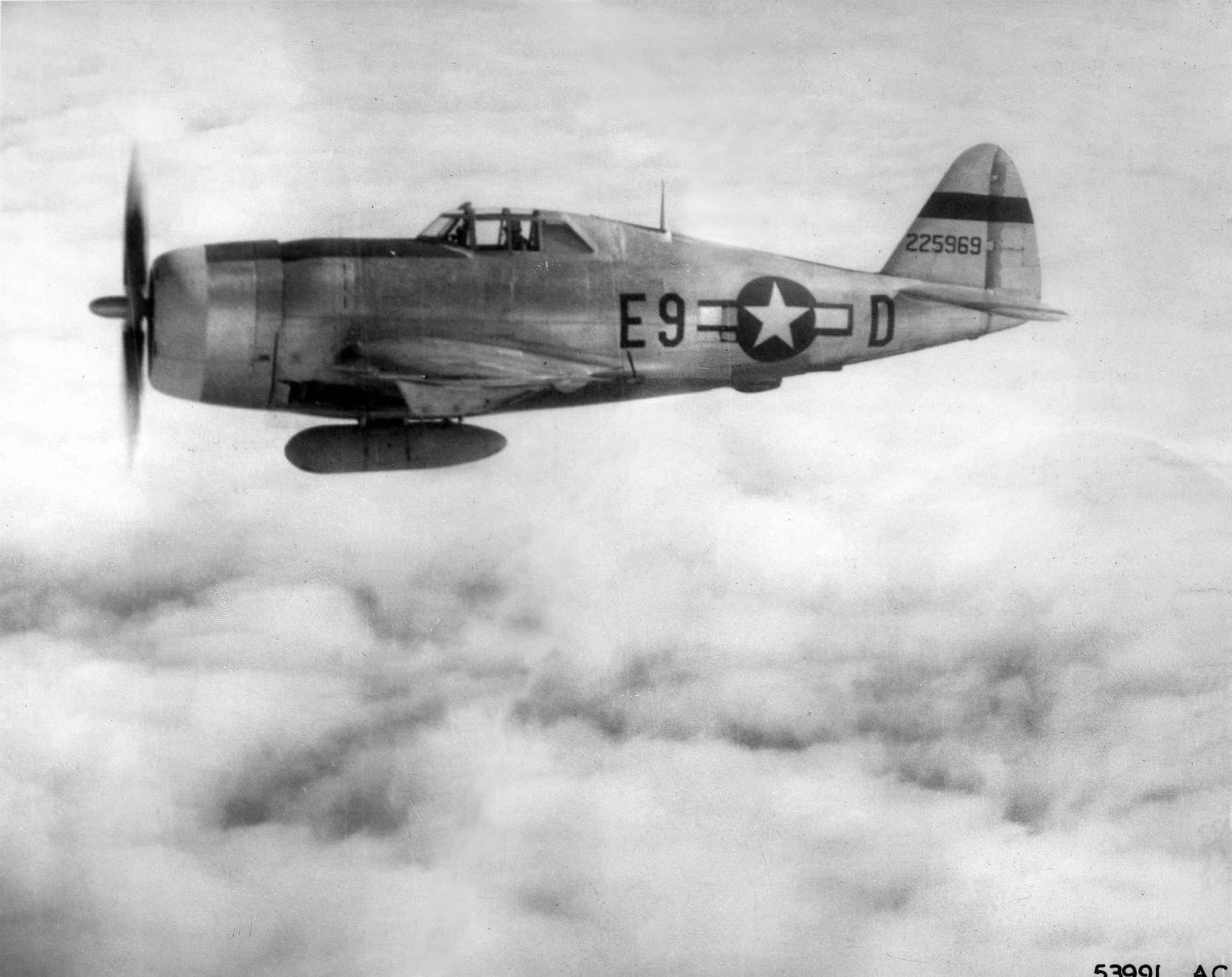
Republic P-47D Thunderbolt
Republic Aviation
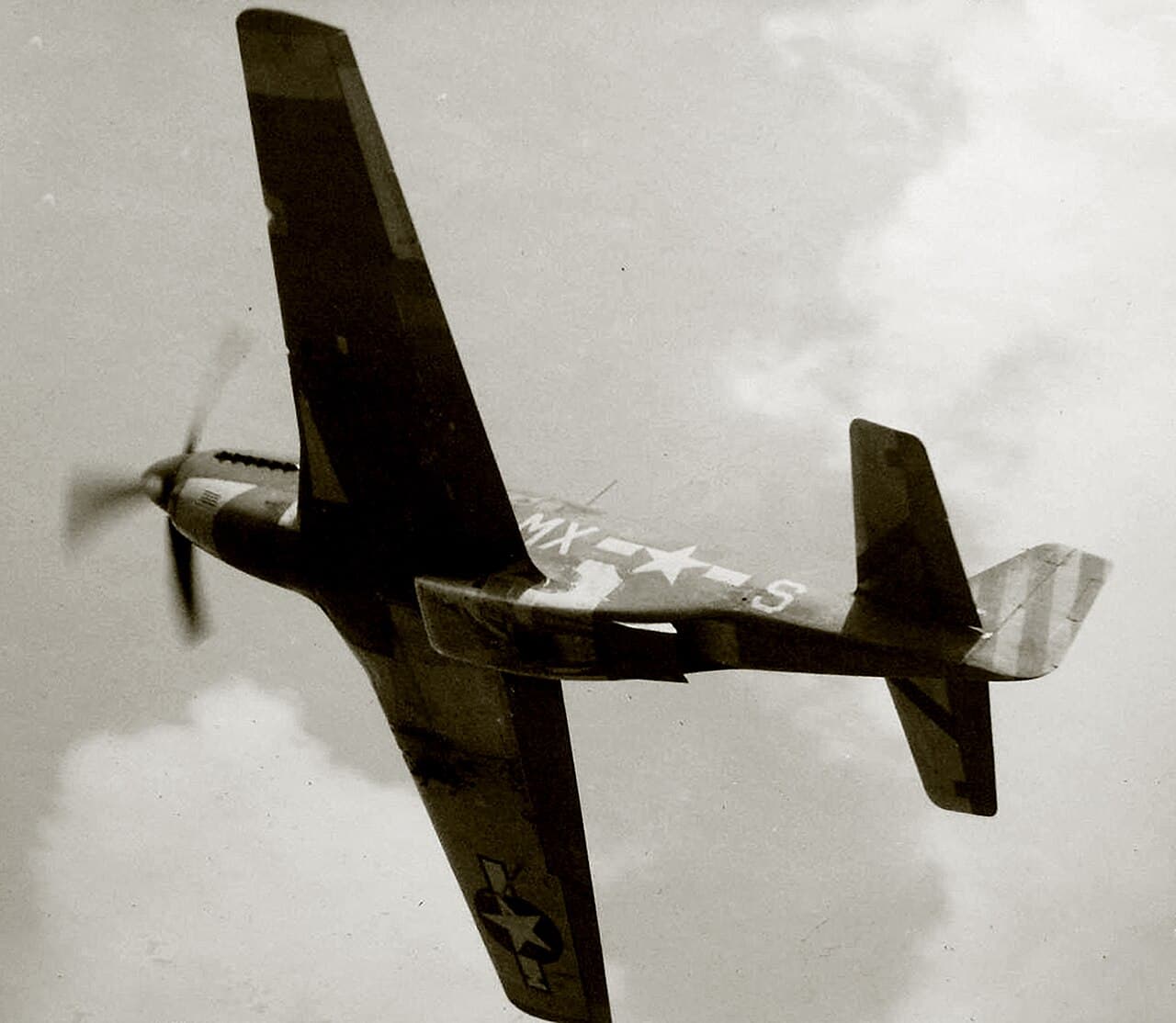
North American P-51D Mustang
North American Aviation
P-47D Thunderbolt vs P-51D Mustang
America's great fighter rivalry, the indestructible Jug against the long-legged Mustang
The Bottom Line
The P-51D Mustang was the best escort fighter and air superiority platform of World War II. The P-47D Thunderbolt was the best fighter-bomber and the most survivable single-engine fighter ever built. Together they were complementary halves of the USAAF's air power strategy, the Mustang broke the Luftwaffe, and the Thunderbolt demolished the Wehrmacht.
Who Wins Each Scenario?
Long-range bomber escort beyond 500 miles
P-51D
Only the P-51D had the range. The P-47 could not accompany bombers beyond Frankfurt; the Mustang could escort them to Berlin and back. This was the war-winning capability.
High-altitude air superiority at 25,000+ feet
P-51D
The P-51D's better speed, climb, and agility at escort altitudes made it the superior air-to-air platform. Its 10.7:1 kill ratio reflected this dominance.
Ground attack and close air support
P-47D
The P-47D carried more bombs, more rockets, and more gun ammunition, and its air-cooled engine survived ground fire that killed P-51s. The Thunderbolt was purpose-built for this mission by late 1944.
Low-level fighter sweep against defended airfields
P-47D
Eight guns, maximum ordnance, and an engine that could absorb flak gave the P-47 decisive advantages in the dangerous low-altitude environment. P-51 units assigned to ground attack suffered disproportionate losses.
All-altitude dogfight from equal starting position
P-51D
The P-51D's better turn rate, climb, and energy retention gave it a slight edge in a pure dogfight. However, the P-47 could always disengage by diving away, nothing could follow it down.
Deep interdiction against bridges, rail, and armor
P-47D
The P-47D's 2,500-pound bomb load, ten rockets, and structural toughness made it the premier interdiction platform. The Thunderbolt destroyed more ground targets than any other fighter in the ETO.
Interactive 3D Models
Performance Profile
Overall capability comparison across six combat dimensions
Head-to-Head Specifications
Key performance metrics compared side by side
Size Comparison
Both aircraft drawn to the same scale, the P-47D has 3.8ft greater wingspan and is 3.8ft longer
Performance Analysis
How each aircraft performs across key combat dimensions
Speed
WINNER: P-51DThe P-47D reached 433–445 mph at altitude, with late-model "paddle blade" propeller variants achieving the higher figure. At very high altitudes above 30,000 feet, the turbosupercharger maintained full power where the Mustang's supercharger began to fall off.
The P-51D reached 437–440 mph at 25,000 feet and was significantly faster at low altitude, approximately 380 mph at sea level versus the P-47D's 345 mph. The laminar-flow wing provided lower drag and better speed retention in combat maneuvering.
At the altitudes where most air combat occurred (15,000–25,000 feet), the two fighters were remarkably close in maximum speed, within a few miles per hour. The P-51D held a decisive advantage at low altitude, where the P-47D's enormous frontal area created more drag. At extreme altitude above 30,000 feet, the P-47D's turbosupercharger gave it a slight edge. For the strategic escort mission at 20,000–25,000 feet, the speed difference was negligible.
Maneuverability
WINNER: P-51DThe P-47D was surprisingly agile at high speed and high altitude, where its large control surfaces and powerful engine provided authority. In a high-speed rolling engagement, the Thunderbolt's mass could be converted to energy effectively.
The P-51D was more maneuverable at virtually all speeds and altitudes. Lighter by over 3,000 pounds, with a smaller, more aerodynamic airframe, it turned tighter, sustained turns better, and responded more quickly to control inputs. The Mustang's energy retention in sustained maneuvering combat was exceptional.
Maneuverability was the P-51D's clearest advantage. The Thunderbolt was never designed to out-turn anyone, its tactical doctrine was built around energy fighting, diving attacks, and disengagement rather than sustained turning combat. The Mustang could do everything the P-47 could do in a dogfight and do it tighter. Against Axis fighters, this agility advantage was frequently decisive.
Climb Rate
WINNER: P-51DLate-model P-47Ds with paddle-blade propellers improved to approximately 3,300 feet per minute, narrowing the gap significantly from earlier variants. The turbosupercharger maintained climb performance at altitude where normally aspirated engines fell off.
The P-51D climbed at approximately 3,400 feet per minute, a consistent advantage over the heavier Thunderbolt. The Merlin's two-stage supercharger provided excellent power throughout the climb profile.
Early P-47Ds had a significant climb rate deficit (2,300 ft/min), but the introduction of paddle-blade propellers nearly closed the gap. By late 1944, the difference was modest. However, the P-51D's ability to get to altitude faster was a meaningful tactical advantage, particularly when scrambling to intercept or when recovering altitude after a dive attack.
Altitude Performance
EvenService ceiling of 42,000 feet. The turbosupercharger maintained engine power at extreme altitude, and pilots described the P-47 as "fast and nimble" above 30,000 feet where other fighters grew sluggish.
Service ceiling of approximately 41,000 feet. The two-stage Merlin provided excellent performance through the 25,000–35,000-foot band where most high-altitude combat occurred.
Both fighters had exceptional altitude performance, with the P-47D holding a slight edge at the extreme upper end. The Thunderbolt's turbosupercharger was better suited to sustained operations above 30,000 feet, while the Mustang's two-stage Merlin was optimized for the 20,000–30,000-foot range. In practice, the difference was rarely decisive since most combat occurred below 30,000 feet.
Range & Endurance
WINNER: P-51DInternal fuel gave a range of approximately 449 miles, extendable to roughly 800 miles with drop tanks. Adequate for tactical operations and medium-range escort.
Internal fuel gave 951 miles, extending to 1,650 miles with drop tanks, a combat radius of 750 miles. This was the single most important performance advantage of the entire matchup, the capability that allowed the USAAF to escort bombers deep into Germany.
Range was the P-51D's decisive strategic advantage and the reason it replaced the P-47 in the escort role. The Thunderbolt could escort bombers to Frankfurt; the Mustang could escort them to Berlin. This wasn't a marginal difference, it was the difference between losing the air war and winning it. The P-47's range limitation was its greatest liability and the primary reason it was shifted to the tactical mission.
Dive Speed
WINNER: P-47DThe P-47D was the finest diving aircraft of the war. At 7.5 tons loaded, it built tremendous speed in a dive that nothing could match. P-47 pilots routinely used the dive as both an attack initiation and an escape maneuver, no enemy fighter could follow a Thunderbolt in a steep dive.
The P-51D was a clean, efficient diver thanks to its laminar-flow wing, but its lighter weight meant it could not build the same energy as the heavier Thunderbolt.
Dive performance was the P-47D's signature advantage. The physics were simple: the heavier aircraft accelerates faster in a dive, and the Thunderbolt was three thousand pounds heavier than the Mustang. Pilots exploited this ruthlessly, the standard P-47 tactic was to bounce from altitude, make a firing pass, and extend away in a dive that no enemy could follow. The Mustang dove well but could not match the Thunderbolt's energy-building capability.
Roll Rate
EvenGood roll rate at combat speeds, with large ailerons providing responsive roll authority. The P-47's weight gave it inertia that aided roll-reversal maneuvers.
Slightly better roll rate at high speeds due to its smaller, lighter airframe and well-balanced control forces.
Roll rate was similar between the two fighters at combat speeds, with neither holding a significant advantage. Both aircraft responded well to aileron inputs, and the difference was unlikely to be decisive in any engagement.
Cockpit Visibility
EvenThe P-47D's large, roomy cockpit with bubble canopy (from the P-47D-25 onward) provided excellent visibility and superior pilot comfort on long missions. The spacious cockpit reduced fatigue on 7-hour sorties.
The P-51D's sleeker bubble canopy provided slightly better sight lines, particularly to the rear. The lower-profile fuselage improved rearward visibility, critical for detecting threats.
Both aircraft offered excellent visibility from their respective bubble canopies. The P-47's cockpit was significantly more comfortable, with more room for the pilot to move and adjust, a meaningful advantage on long missions. The P-51D's sight lines were marginally better, particularly rearward. This category is essentially a draw, with each aircraft offering a different type of advantage.
Photo Gallery, 11 Photos
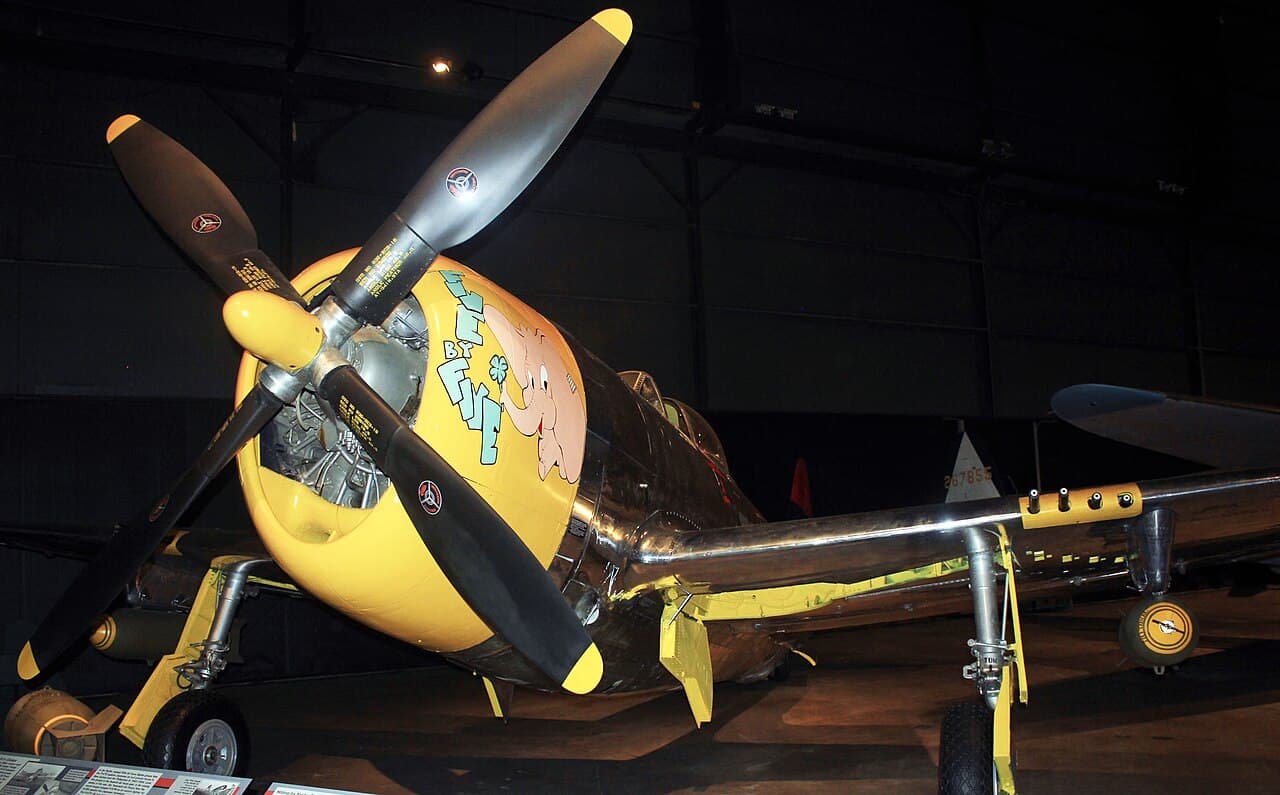
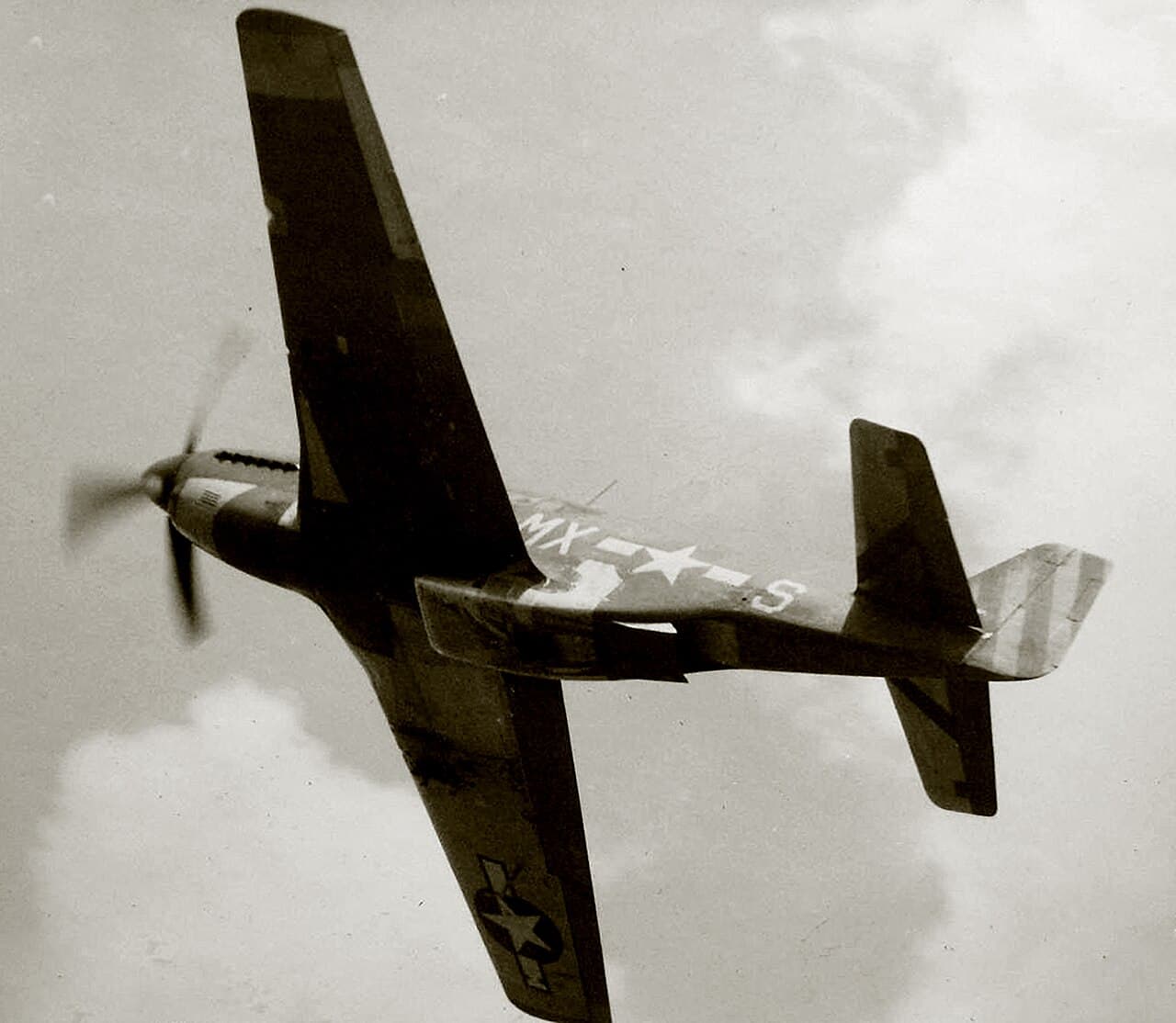
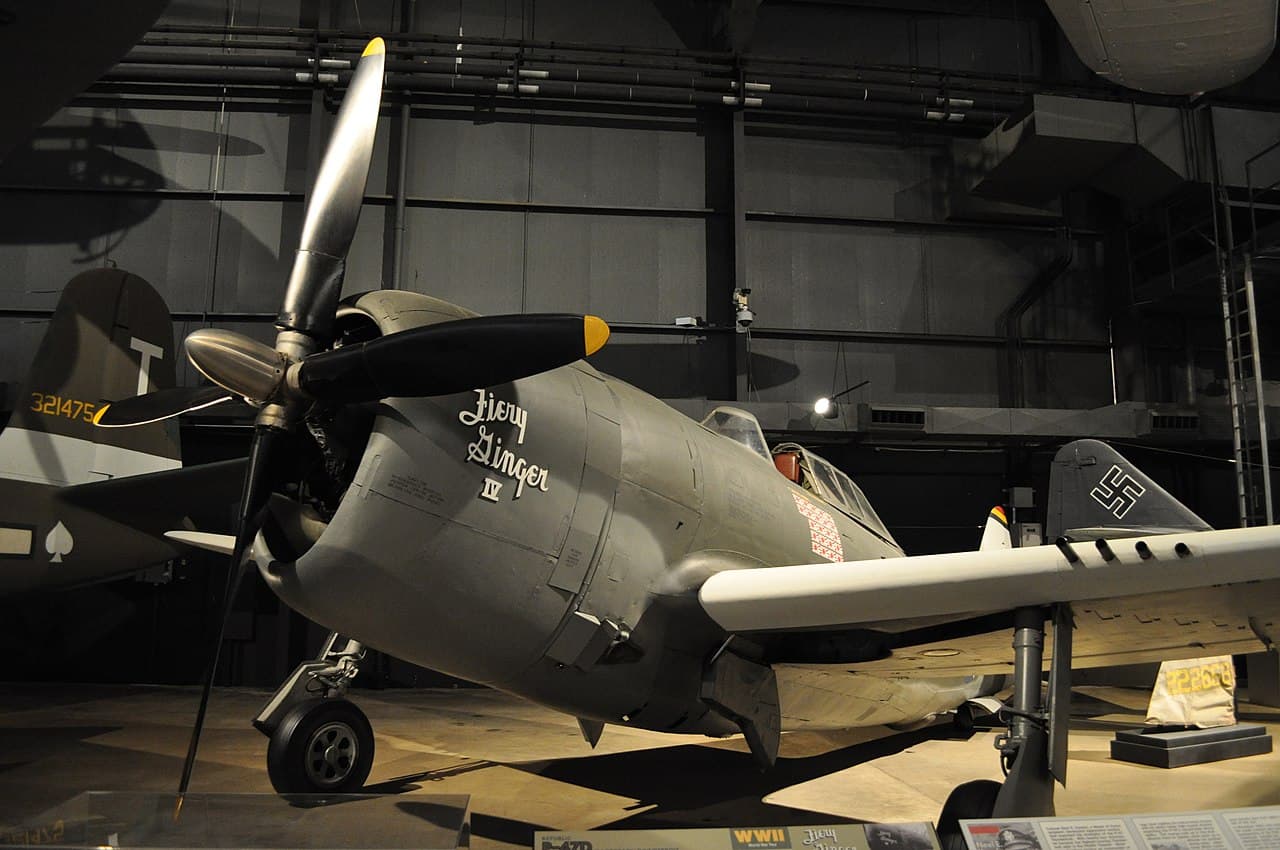
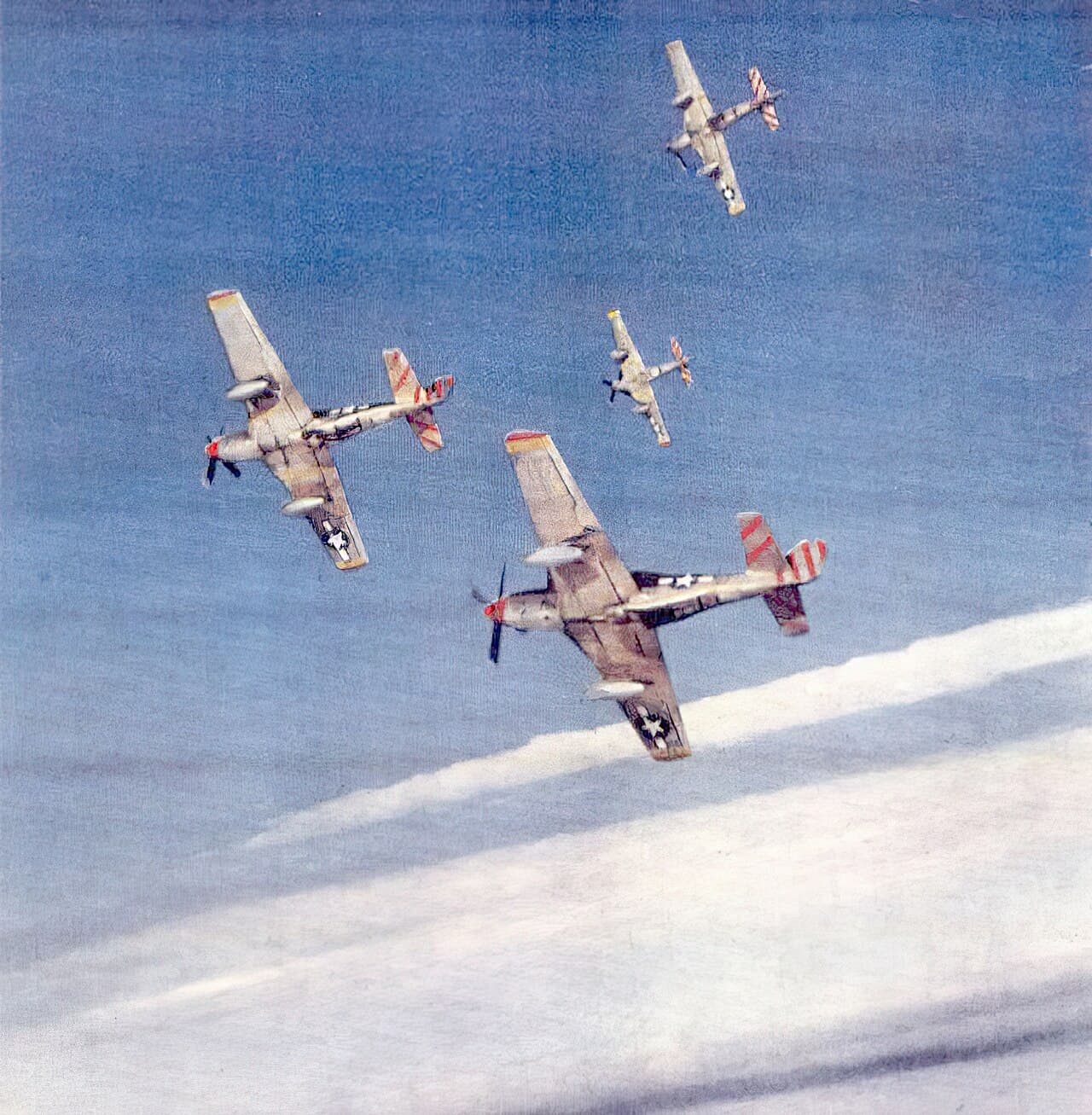
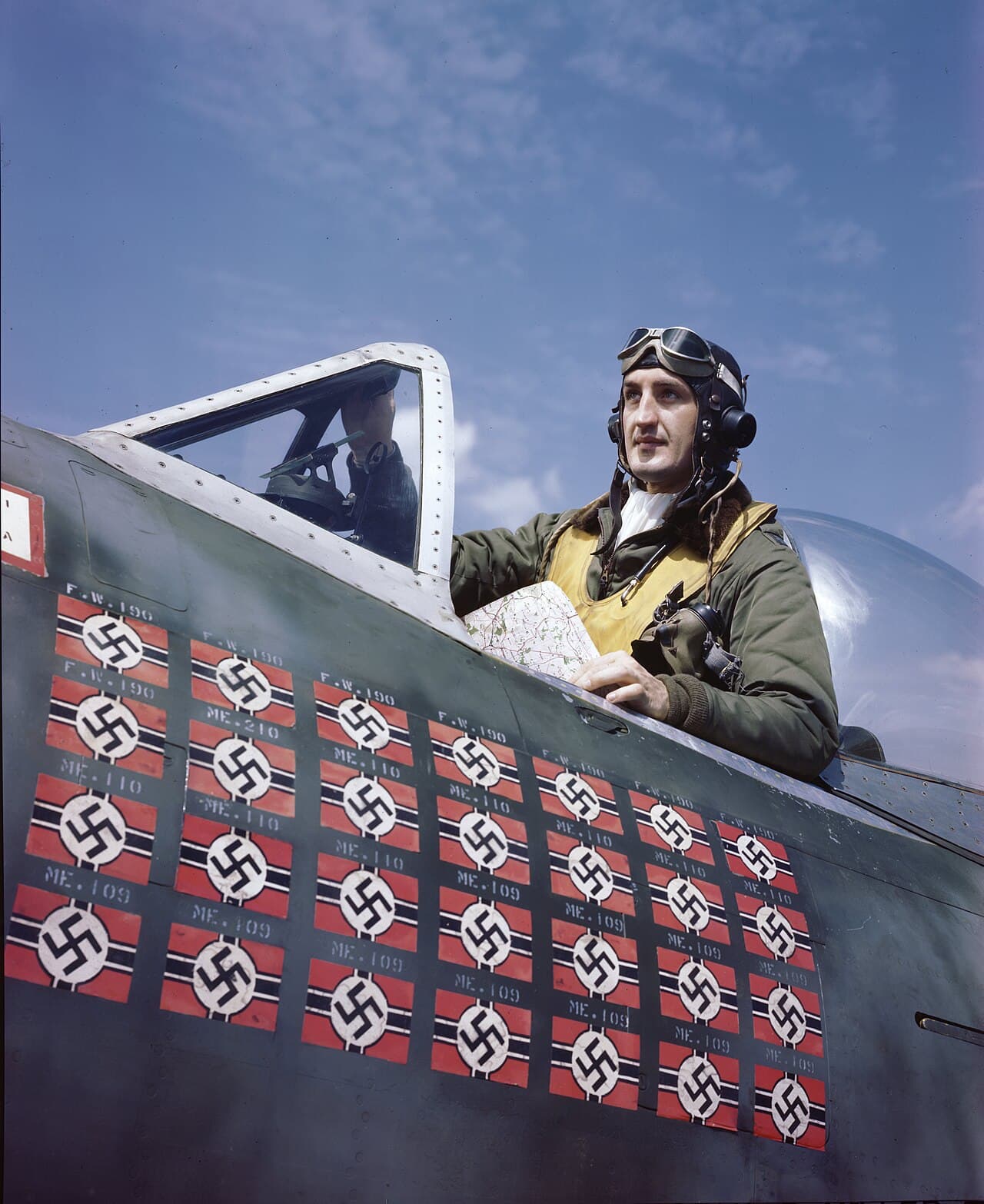
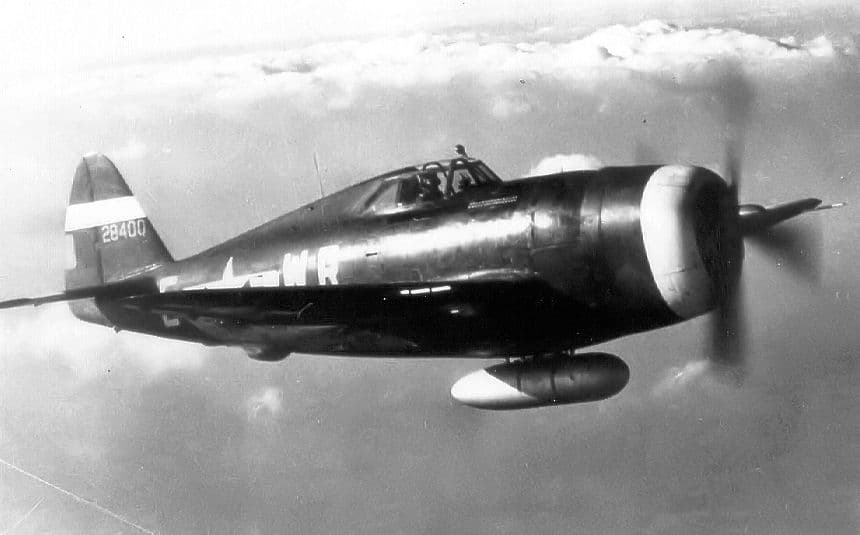
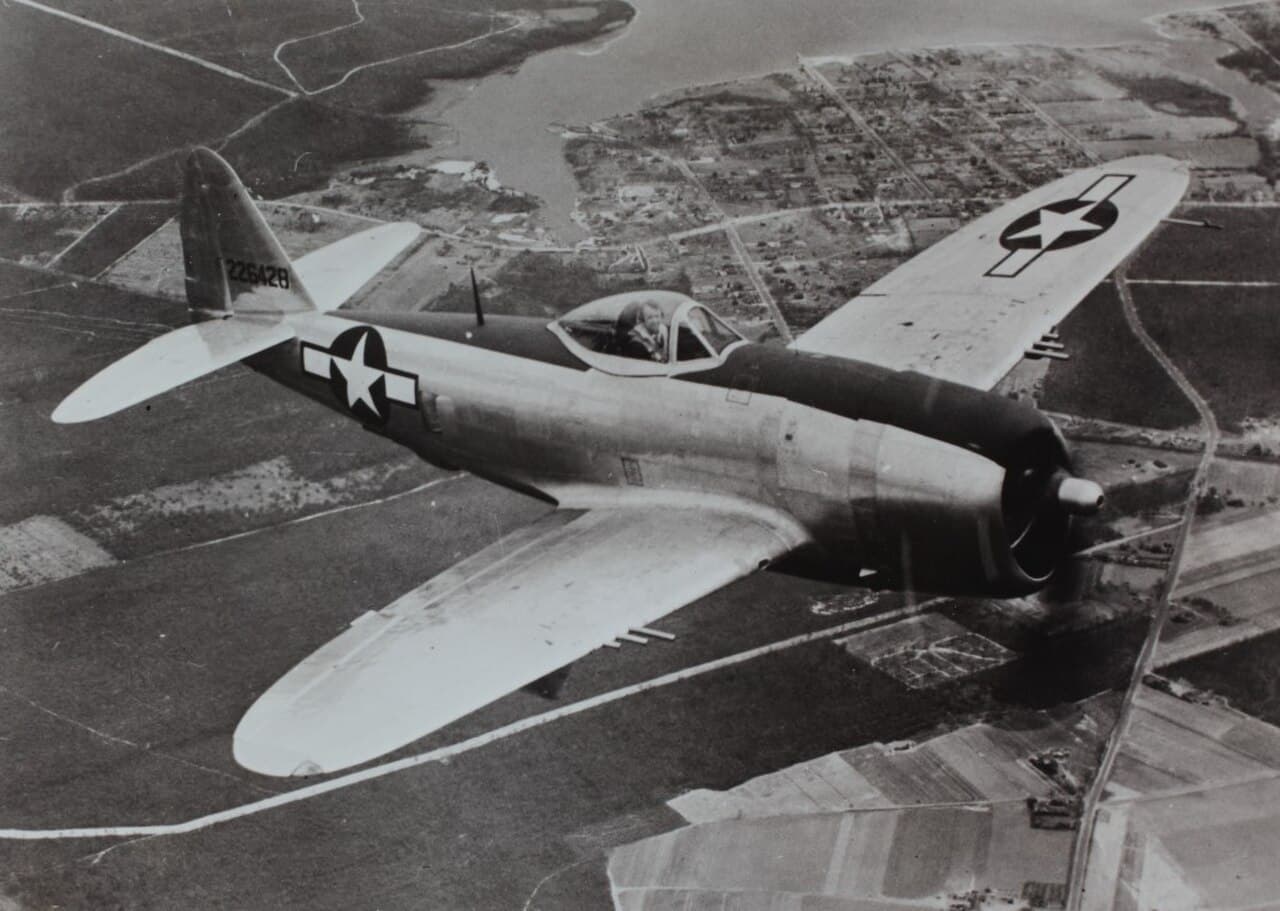
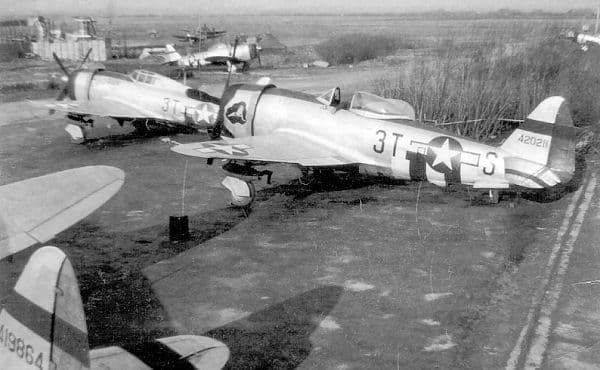
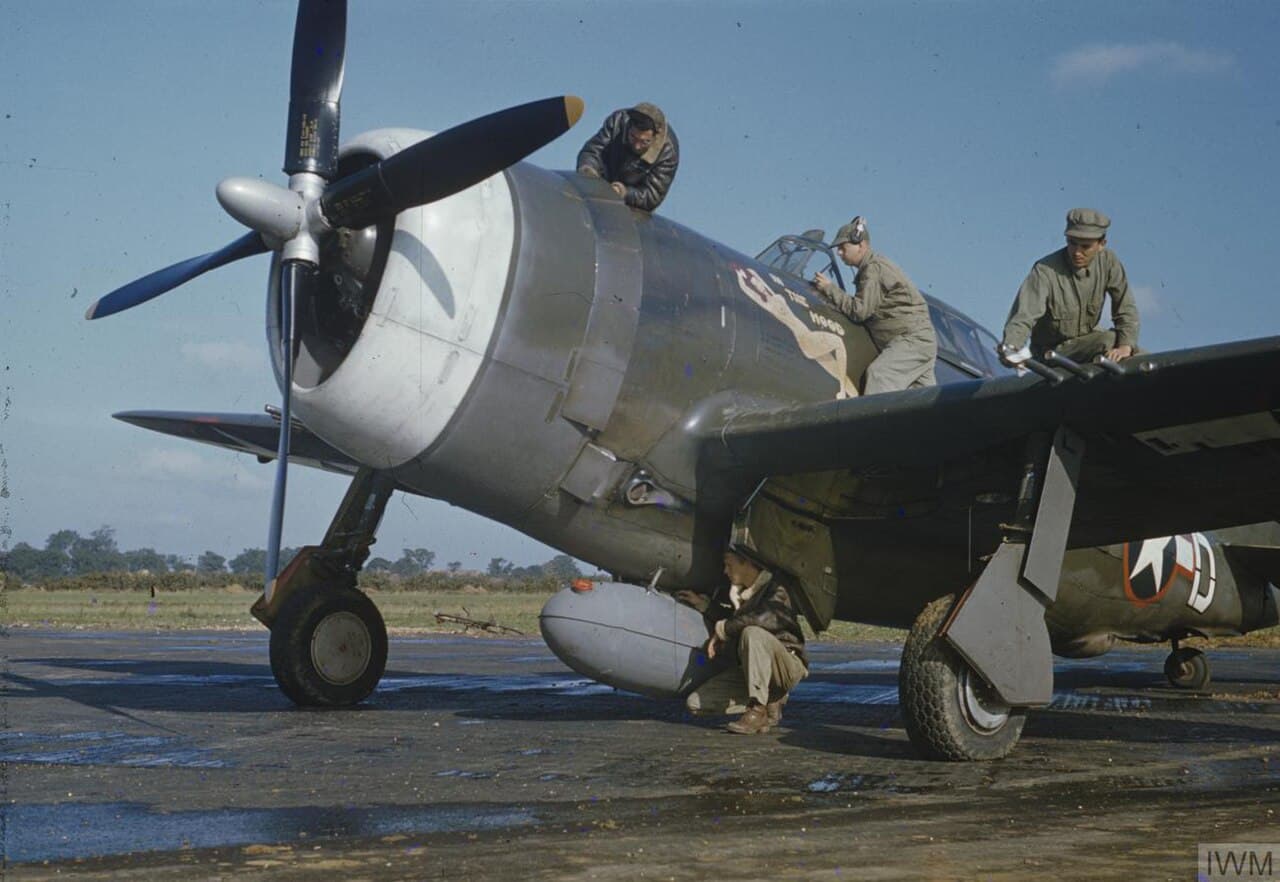
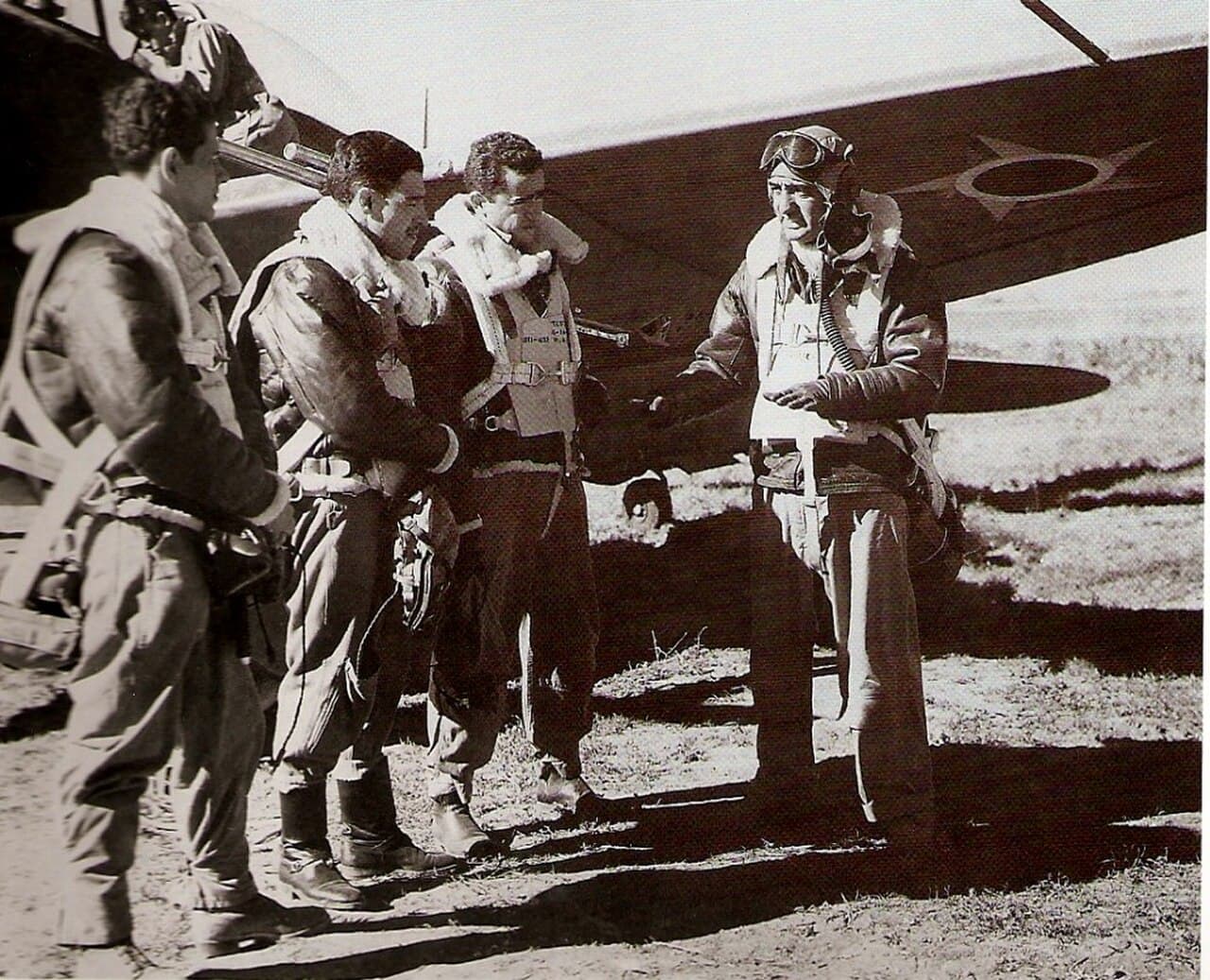
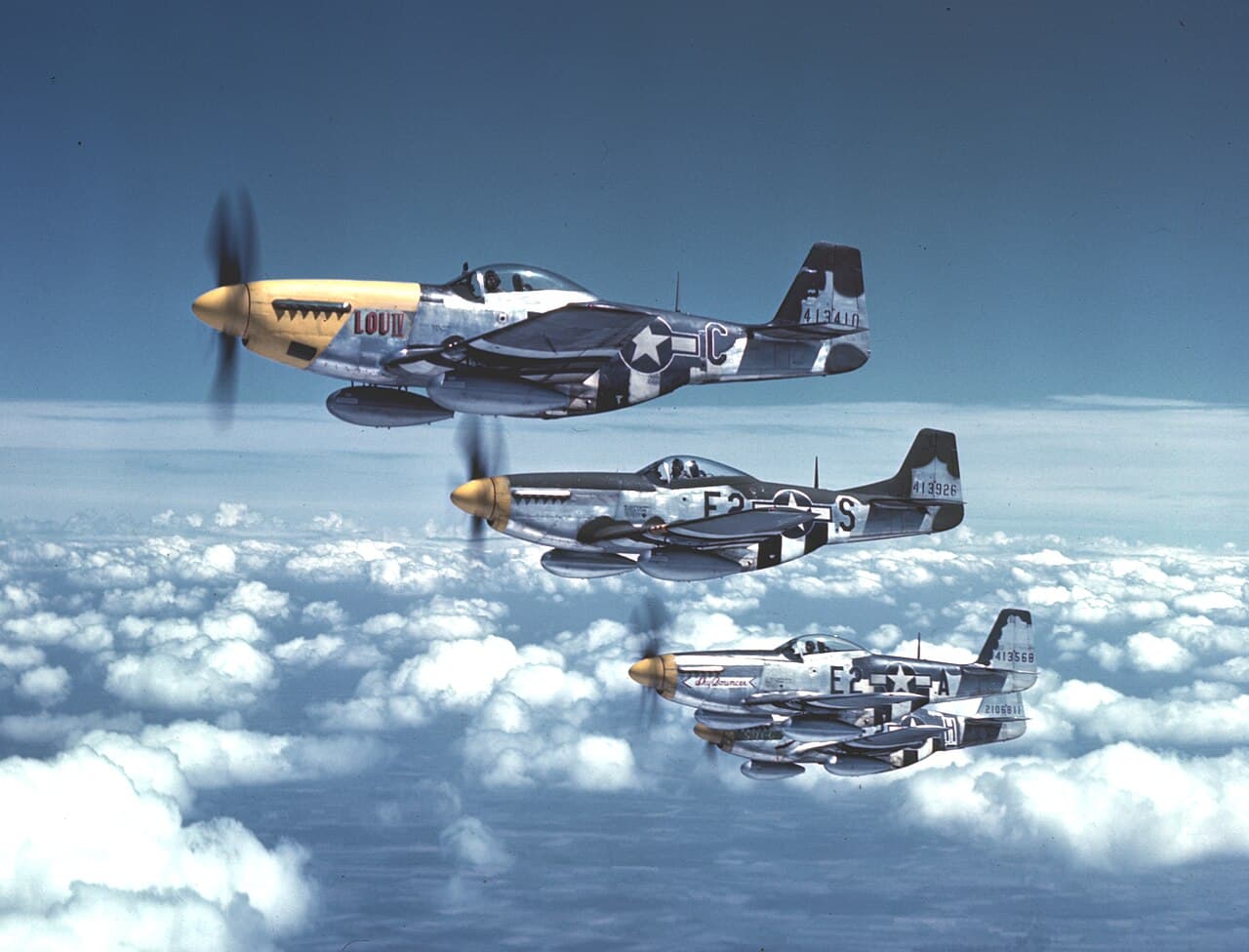
Click any photo to enlarge · 11 photos
Historical Context
The strategic backdrop that shaped both aircraft
The P-47D Thunderbolt and P-51D Mustang emerged from radically different design philosophies to become the twin pillars of American air power in the European theater. The Thunderbolt was designed by Republic Aviation's Alexander Kartveli around the massive turbosupercharged Pratt & Whitney R-2800 Double Wasp, the turbocharger ducting was designed first, and the rest of the aircraft was built around it, producing the largest and heaviest single-engine fighter of the war. The Mustang was born from a British request to North American Aviation to build P-40s under license, designer Edgar Schmued proposed a superior new design instead, and the prototype was completed in just 102 days. The critical transformation came when the original Allison engine was replaced with the Packard-built Rolls-Royce Merlin, giving the Mustang the high-altitude performance that would make it a war-winning escort fighter.
Their rivalry crystallized in 1943–44 as the Eighth Air Force struggled with unsustainable bomber losses over Germany. P-47s could escort bombers only as far as Frankfurt or Hanover before fuel limitations forced them to turn back, and the Luftwaffe exploited this ruthlessly, attacking bomber formations beyond fighter range. When Merlin-powered P-51s began flying deep escort missions in December 1943, the crisis broke, the Mustang could accompany bombers all the way to Berlin and back. During 1944, the Eighth Air Force standardized on the P-51 for strategic escort, while the tactical Ninth Air Force concentrated P-47s in the fighter-bomber role.
The transition was not without controversy. Hub Zemke, who had made the 56th Fighter Group the most celebrated P-47 unit in the Eighth Air Force, privately acknowledged the P-51B as having "the best performance of any US fighter" and voluntarily transferred to the P-51-equipped 479th Fighter Group. Yet the 56th itself refused to convert, becoming the only Eighth Air Force group still flying P-47s at war's end, and compiling one of the finest combat records of any fighter group, with 677.5 air victories. The Thunderbolt versus Mustang debate was never settled by the pilots who flew them because both were right.
Notable Combat Encounters
Key engagements where these aircraft faced each other in combat
The USAAF conducted direct comparative flight tests between the P-47D and P-51D. The P-51D demonstrated advantages in climb rate (3,400 versus 2,300 feet per minute for early P-47Ds), range, and low-altitude speed, reaching 380 mph at sea level compared to the P-47D's 345 mph. The P-47 excelled in dive speed, where its seven-and-a-half-ton mass built tremendous energy, and in high-altitude performance above 30,000 feet where its turbosupercharger maintained power output.
Outcome
The tests confirmed what operational experience had already shown: the P-51D was the superior escort fighter and the P-47D was the superior fighter-bomber. Neither aircraft was categorically better, each excelled in different mission profiles.
These comparative evaluations informed the USAAF's decision to standardize the Eighth Air Force on P-51s for strategic escort while concentrating P-47s in the Ninth Air Force for tactical operations.
During the great air battles of early 1944, both types flew escort missions simultaneously, with P-47s providing withdrawal escort and P-51s flying target escort. Complicated relay arrangements were needed: P-47s escorted bomber formations partway into Germany, then P-51s took over for deep penetration missions. On the return trip, P-47 groups provided fresh cover for the exhausted formations.
Outcome
The relay system worked but highlighted the P-47's range limitation, it simply could not accompany bombers to the most important targets deep inside Germany. The P-51's range advantage became increasingly decisive as the Combined Bomber Offensive intensified.
The shared escort missions demonstrated the complementary nature of the two fighters and accelerated the USAAF's decision to transition Eighth Air Force groups to P-51s.
Colonel Hub Zemke, commander of the 56th Fighter Group, the most celebrated P-47 unit in the Eighth Air Force, voluntarily nominated himself for transfer to the 479th Fighter Group to fly P-51 Mustangs. Zemke had privately acknowledged the P-51B as the superior fighter. His transfer was one of the most symbolically significant moments in the P-47 versus P-51 debate.
Outcome
Zemke flew P-51s with distinction but was tragically forced to bail out when he ripped the wings off his Mustang in a dive pullout, becoming a prisoner of war. Meanwhile, the 56th Fighter Group, now led by Dave Schilling, who adamantly refused the switch, continued flying P-47s through V-E Day.
Zemke's transfer embodied the tension at the heart of the rivalry: even the commander of the best P-47 unit in the world chose the Mustang when given the option. Yet the 56th's continued success in Thunderbolts proved that conviction and skill could overcome any performance gap.
As the P-51 took over deep escort, the P-47 emerged as the premier fighter-bomber of the European theater. Ninth Air Force P-47 groups devastated German armor, troops, transport, and airfields in close support of advancing Allied armies. The Thunderbolt's ability to carry 2,500 pounds of bombs plus rockets, combined with its rugged air-cooled engine that shrugged off ground fire, made it the ideal ground-attack platform. P-51s assigned to ground attack suffered disproportionate losses because a single bullet in the coolant system meant engine failure.
Outcome
P-47s flew 746,000 sorties and destroyed over 7,000 enemy aircraft (mostly on the ground), along with thousands of tanks, vehicles, and locomotives. The Thunderbolt became the most effective tactical aircraft of the air war.
The divergence of roles, P-51 as strategic escort, P-47 as tactical fighter-bomber, validated the USAAF's decision to employ both types rather than standardize on one. Each fighter proved irreplaceable in its assigned mission.
Armament & Firepower
Primary weapons, munitions capacity, and destructive capability
P-47D Loadout
8x .50 caliber M2 Browning machine guns with 3,400 rounds total, the longest sustained firepower of any single-engine American fighter. Ground attack ordnance: up to 2,500 pounds of bombs (typically 2x 1,000-lb or 3x 500-lb) plus ten 5-inch HVAR rockets. The P-47D could carry more ordnance than many light bombers.
P-51D Loadout
6x .50 caliber M2 Browning machine guns with 1,880 rounds total (400 rounds per inboard pair, 270 per outboard pair). Ground attack ordnance: 2x 500-lb bombs or six 5-inch HVAR rockets, with a maximum external load of approximately 1,000–2,000 pounds.
Air-to-Air Verdict
The P-47D's eight guns with 3,400 rounds provided substantially more firepower and firing time than the P-51D's six guns with 1,880 rounds. In a sustained engagement or against multiple targets, the Thunderbolt could fire for nearly twice as long. However, the P-51D's six .50-caliber guns were still more than sufficient for air-to-air combat, the Mustang's higher kill ratio proves the point. Six converging streams of .50-caliber fire were lethal against any fighter.
Ground Attack Verdict
The P-47D was dramatically superior in the ground-attack role. It carried more bombs, more rockets, and more ammunition, and crucially, its air-cooled radial engine could absorb ground fire that would have been instantly fatal to the Mustang's liquid-cooled Merlin. The P-51D's belly-mounted radiator was particularly vulnerable during low-level strafing runs. P-51 units assigned to ground attack suffered disproportionate losses for exactly this reason.
Both aircraft used the same .50-caliber M2 Browning, the difference was quantity. The Thunderbolt carried a third more guns and nearly twice the ammunition, giving it superior firepower in every context. For pure air-to-air combat, the P-51D's six guns were entirely adequate and its higher kill ratio proves that other factors (range, agility, mission profile) mattered more than raw firepower. For ground attack, the P-47D's combination of heavier ordnance and a survivable engine made it the clear choice.
Survivability & Protection
Armor, self-sealing tanks, pilot protection, and structural resilience
P-47D Protection
Pilot armor including seat back and head rest plates. The P-47's critical survivability advantage was not armor but its air-cooled Pratt & Whitney R-2800 radial engine, there was no liquid cooling system to puncture. The engine could absorb extraordinary punishment and keep running. Robert S. Johnson survived twenty-one 20mm cannon shells and over two hundred 7.92mm bullets in a single mission on June 26, 1943, and flew his P-47 home. Luftwaffe ace Heinz Bär said the P-47 "could absorb an astounding amount of lead."
P-51D Protection
Pilot armor similar to the P-47. The P-51D's critical vulnerability was its liquid-cooled Packard Merlin engine with a glycol coolant system, a single bullet in the right place could cause coolant loss and engine seizure within minutes. The belly-mounted radiator scoop was particularly exposed during ground strafing and belly landings.
Pilot Protection
Both aircraft provided similar levels of pilot armor. The survivability difference was entirely about the engine. The P-47's air-cooled R-2800 had no single point of failure equivalent to the P-51D's coolant system. A P-47 could lose multiple cylinders and keep flying; a P-51 with a punctured coolant line was a dead aircraft within minutes.
Structural Durability
The P-47D was the more structurally durable fighter. Its massive airframe was built to withstand the stresses of high-speed dives and the abuse of ground-attack missions. The Thunderbolt's ability to absorb battle damage and return home was legendary, it was arguably the most survivable single-engine fighter of the war.
Crash Survivability
The P-47D was significantly more survivable in crash landings. Its air-cooled engine did not spray hot glycol coolant into the cockpit, and its wide-track landing gear was more forgiving on rough fields. The P-51D's belly-mounted radiator was a liability in belly landings, and coolant leaks created fire hazards.
Survivability was the P-47D's most celebrated advantage. The loss rate per sortie tells the story: 0.7% for the P-47 versus 1.2% for the P-51. Much of this difference came from the ground-attack mission, where the Thunderbolt's air-cooled engine shrugged off flak that would have killed a Mustang. The Mustang's liquid-cooled engine was its Achilles heel, a single bullet in the coolant system turned a $51,000 fighter into a very expensive glider. For any mission that involved exposure to ground fire, the P-47 was the safer aircraft by a wide margin.
Tactical Doctrine & Evolution
How pilots were trained to fight in each aircraft and how tactics adapted over time
P-47D Tactics
The P-47D evolved through two distinct tactical phases. Initially (1943–early 1944), it flew escort missions using energy-fighting tactics: bouncing enemy formations from altitude, making high-speed diving attacks, and extending away in dives that no enemy could follow. The standard formation was the loose deuce (finger-four in pairs). When range limitations shifted it to the tactical mission (mid-1944 onward), the P-47 became the premier fighter-bomber of the war. Ninth Air Force Thunderbolts carried 1,000-pound bombs and HVAR rockets against German armor, transport, and airfields in close support of advancing Allied armies, exploiting the air-cooled engine's ability to survive ground fire that would have downed liquid-cooled fighters.
P-51D Tactics
The P-51D was employed as a deep penetration escort fighter and offensive air superiority platform. General Doolittle's directive freed escorts to hunt the Luftwaffe rather than stay tied to bomber formations, transforming the Mustang from a defensive shield into an aggressive weapon. P-51 formations used energy fighting, bouncing enemy formations from altitude, engaging in slashing attacks, and using the Mustang's superior energy retention to maintain the initiative. The emphasis was always on killing the Luftwaffe's pilot force through sustained attritional combat over enemy territory.
How Tactics Evolved
The tactical evolution of these two fighters tells the story of the air war in Europe. In 1943, both types flew escort, the P-47 to its range limit, the P-38 and later P-51 beyond. By 1944, the division of labor was clear: P-51s owned the strategic escort and air superiority mission, P-47s owned the tactical fighter-bomber mission. By 1945, the Mustang had broken the Luftwaffe's fighter force through sustained attrition, while the Thunderbolt had destroyed the Wehrmacht's ability to move, supply, and fight on the ground. The USAAF's wisdom was in recognizing that it needed both aircraft rather than choosing one over the other.
What the Pilots Said
Firsthand accounts from the men who flew and fought these aircraft
On the P-47D“That added power meant so much. It meant that I could do combat with the enemy over his territory at all altitudes and I could break off at will. I had more power than he had and I could corkscrew, go up to altitude and he couldn't follow me.”
On the P-47D“The P-47's air-cooled engine didn't have the vulnerability that the Mustang's liquid-cooled Merlin had, one hit in a cooling system could down a Mustang. I'd been hit by twenty-one 20mm shells and over two hundred 7.92mm bullets and I flew home.”
On the P-51D“You can learn to fly them on the way to the target.”
On the P-51D“The P-51B has the best performance of any US fighter and better than any Luftwaffe fighter except in climb.”
By the Numbers
Statistical combat performance and historical kill ratios
Exchange Ratio
The P-47 was credited with 3,752 air-to-air kills and destroyed over 7,000 enemy aircraft including ground kills across 746,000 sorties. The 56th Fighter Group alone claimed 677.5 air victories and 311 ground kills while losing 128 aircraft. The P-51 was credited with approximately 4,950 aerial victories, nearly half of all USAAF claims in the European theater. In its first 55 days of combat, the P-51B shot down 13.1 enemy aircraft per 100 sorties compared to 2.7 for the P-47.
Source: USAAF combat records; 56th Fighter Group after-action reports
The P-51D's dramatically higher kill ratio reflects the fundamental difference in mission profiles. The Mustang flew deep escort where it engaged the Luftwaffe's fighter force directly and repeatedly, every mission was an air superiority sweep over enemy territory. The P-47 increasingly shifted to ground attack after mid-1944, where its sorties produced destroyed locomotives and bridges rather than aerial victories. Comparing kill ratios without acknowledging this role divergence is misleading. The P-47's lower loss rate per sortie (0.7% versus 1.2%) is the more meaningful survivability metric, and the Thunderbolt's 7,000+ ground kills had an enormous impact on the ground war that aerial victory tallies cannot capture.
Production & the Numbers Game
How industrial output shaped the strategic balance
15,636
P-47D Built
15,586
P-51D Built
The production totals were remarkably similar, roughly 15,500 of each type, but the cost difference was significant. The P-51D cost $32,000 less per unit than the P-47D, meaning the USAAF got more fighter for every dollar spent on Mustangs. However, the P-47's cost reflected its greater structural complexity, turbosupercharger system, and the massive R-2800 engine that gave it the survivability that justified every penny. In the end, American industrial capacity was sufficient to produce both types in enormous numbers, ensuring that the USAAF never had to make the painful choice of standardizing on one design.
Advantages in This Matchup
Where each aircraft holds the edge in a head-to-head encounter
P-47D Thunderbolt
- Legendary survivability, air-cooled R-2800 radial engine absorbed punishment that would destroy any liquid-cooled fighter
- Superior dive performance, seven-and-a-half-ton loaded weight built tremendous energy that nothing could match
- Eight .50-caliber guns with 3,400 rounds, the longest sustained firepower of any single-engine American fighter
- Massive ordnance capacity, 2,500 pounds of bombs plus ten HVAR rockets, more than many light bombers
- Turbosupercharged performance at extreme altitude above 30,000 feet
- Spacious cockpit providing superior pilot comfort on long missions, reduced fatigue on 7-hour sorties
- Lowest loss rate per sortie of any major USAAF fighter (0.7%), the safest fighter to fly in combat
P-51D Mustang
- War-winning range, combat radius of 750 miles with drop tanks, the only American fighter that could escort bombers to Berlin
- Superior climb rate and low-to-medium altitude speed advantage over the P-47D
- Better sustained turn performance and overall agility, tighter turns, better energy retention in maneuvering combat
- Lower cost per unit ($51,000 vs $83,000), 39% cheaper, the most cost-efficient fighter of the war
- Laminar-flow wing providing exceptional high-speed aerodynamic efficiency
- Highest kill ratio of any major USAAF fighter (10.7:1) reflecting its dominance in air-to-air combat
- Versatile air superiority platform that broke the Luftwaffe's fighter force through sustained attritional combat
Final Verdict
Overall Assessment
Context-Dependent
Neither aircraft holds a definitive advantage, the winner depends on the scenario.
The P-47D Thunderbolt versus P-51D Mustang debate has no single answer because these were complementary aircraft that excelled in different missions. The P-51D was the best escort fighter of the war, its range allowed it to accompany bombers to Berlin and back, its agility let it engage the Luftwaffe's fighters on favorable terms, and its 10.7:1 kill ratio reflected its dominance in air-to-air combat. Without the Mustang, the daylight bombing offensive might have failed. The P-47D was the best fighter-bomber of the war, its survivability, firepower, and ordnance capacity made it the ideal platform for the tactical air power that destroyed the Wehrmacht's ability to fight. Without the Thunderbolt, the ground campaign would have been immeasurably harder. The USAAF was wise enough to use both types in the roles where each excelled rather than forcing a choice between them. The Mustang won the air war; the Thunderbolt won the ground war. Together, they were the most effective fighter combination of World War II.
Theaters of Operation
Shared Theaters
P-51D Only
Related Matchups
P-51D Bf 109GP-47D
 Fw 190A
 Me 262AP-51DP-51D
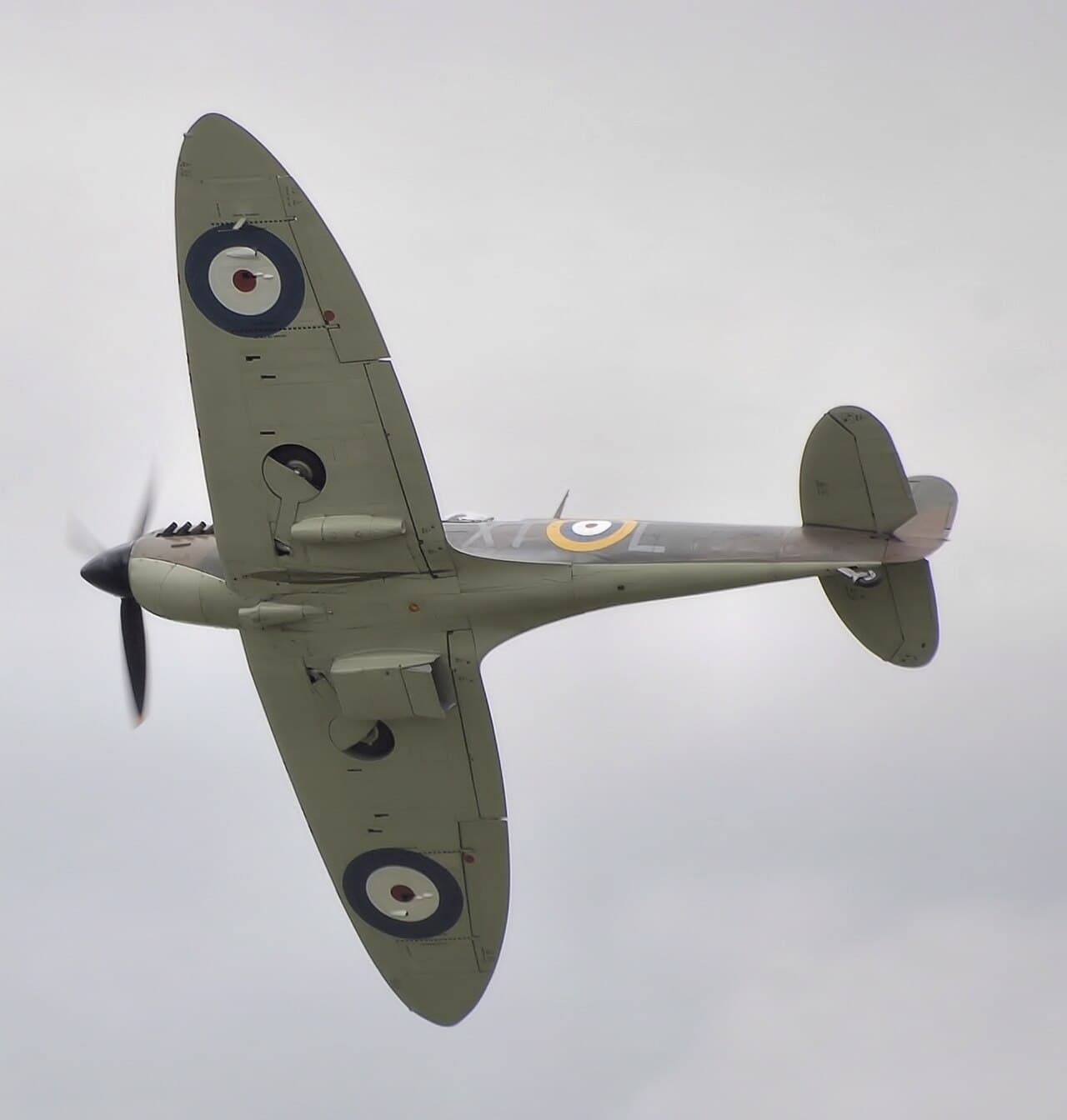 Spitfire Mk IX
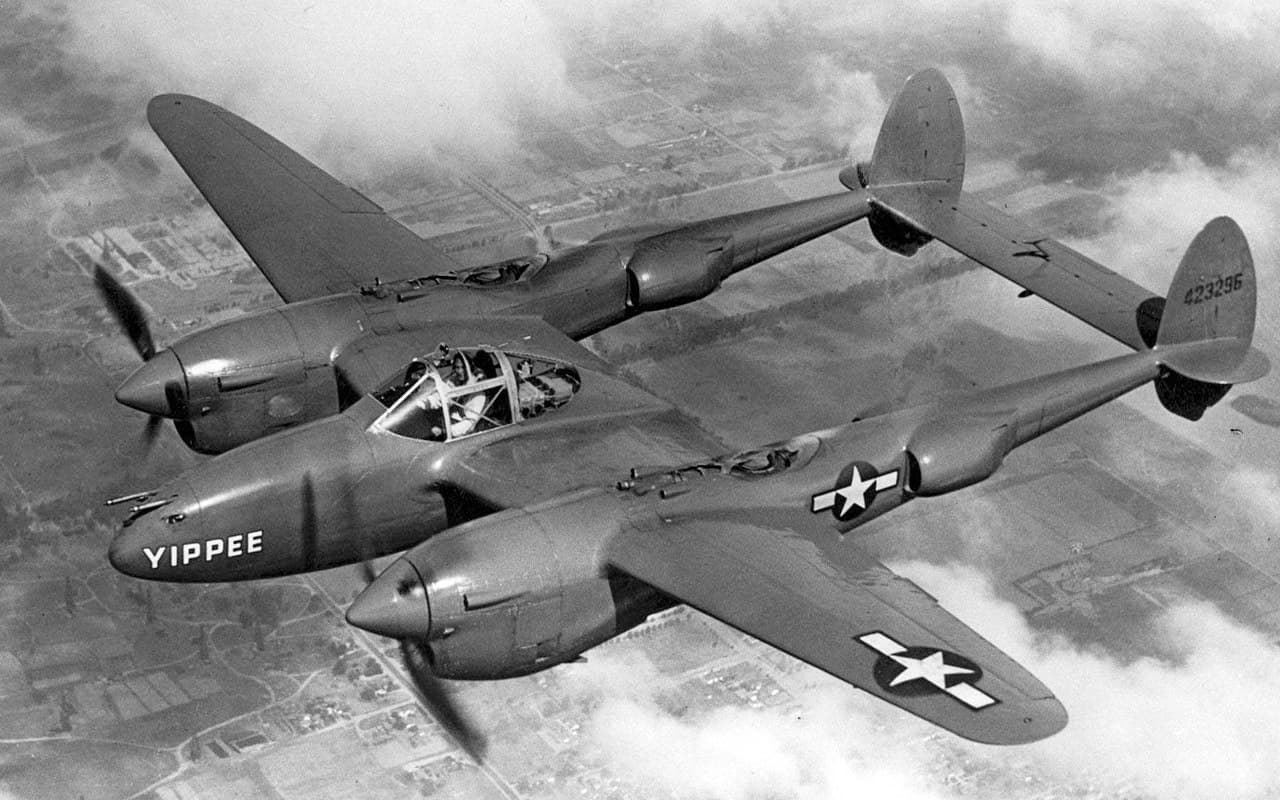 P-38JP-51DP-51DSpitfire Mk IXP-51DFw 190AP-47DBf 109G