
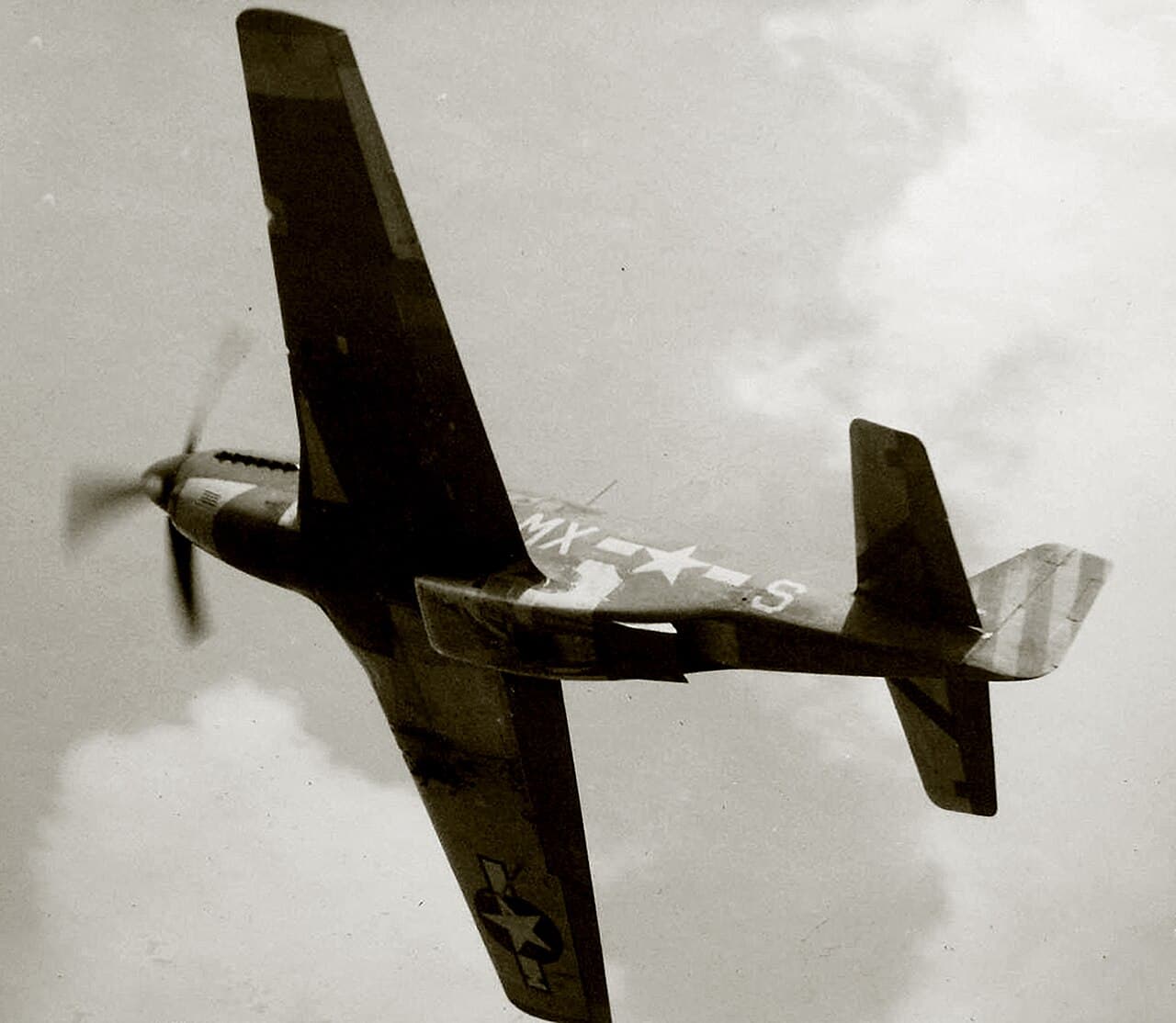
North American P-51D Mustang
North American Aviation
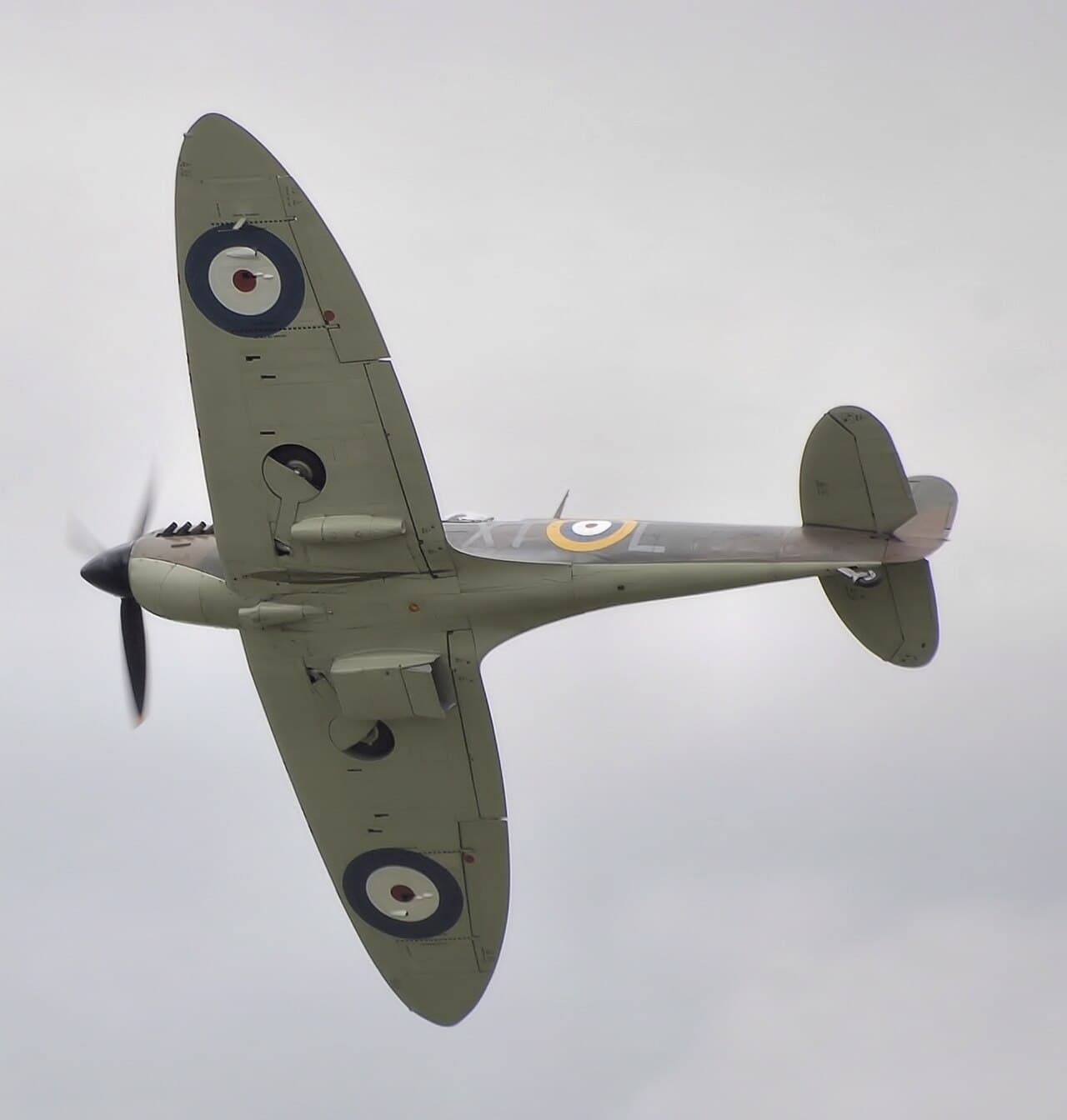
Supermarine Spitfire Mk IX
Supermarine
P-51D Mustang vs Spitfire Mk XIV
The debate of the century, America's long-range champion against Britain's ultimate dogfighter
The Bottom Line
The Spitfire XIV was the better dogfighter, faster, climbed better, turned tighter, and carried more destructive armament. The P-51D was the more important weapon of war, its range made the strategic bombing offensive viable, and its numbers allowed the Eighth Air Force to break the Luftwaffe. These are not contradictions; they are complementary truths about two supreme fighters designed for different purposes.
Who Wins Each Scenario?
Dogfight below 20,000 feet
Spitfire Mk IX
The Spitfire XIV's superior turn rate, climb rate, and acceleration gave it decisive advantages in close combat. The Griffon's 2,050 hp dominated in the energy-intensive maneuvering of a dogfight.
Long-range bomber escort to Berlin
P-51D
No contest, the Spitfire XIV could not reach Berlin from England. The P-51D's 750-mile combat radius was the capability that made the entire daylight bombing offensive viable.
High-altitude interception above 30,000 feet
Spitfire Mk IX
Better climb rate to reach altitude quickly, slightly higher ceiling, and superior maneuverability in thin air gave the Spitfire XIV the edge as a high-altitude interceptor.
Ground attack and strafing
P-51D
Six .50-caliber guns with 1,880 rounds, better dive speed for weapons delivery, and superior range for deep strikes made the Mustang the more effective ground-attack platform.
V-1 flying bomb interception
Spitfire Mk IX
Proven in this role with over 300 kills. The Spitfire XIV's speed at low and medium altitude was essential against the 400-mph buzz bombs, the Mustang was less effective in this specific mission.
Air superiority over a contested battlefield
Spitfire Mk IX
In a defined area where range is irrelevant, the Spitfire XIV's superior agility, climb, speed, and destructive firepower made it the better pure air superiority fighter.
Interactive 3D Models
Performance Profile
Overall capability comparison across six combat dimensions
Head-to-Head Specifications
Key performance metrics compared side by side
Size Comparison
Both aircraft drawn to the same scale, the P-51D has 0.2ft greater wingspan and is 1.2ft longer
Performance Analysis
How each aircraft performs across key combat dimensions
Speed
WINNER: Spitfire Mk IXThe P-51D reached 437 mph at 25,000 feet. Its laminar-flow wing produced less drag at high speed, giving it superior speed retention in maneuvering and excellent acceleration in dives.
The Spitfire XIV reached 446 mph at 25,400 feet, approximately 9 mph faster. The Griffon 65's 2,050 horsepower, roughly 330 hp more than the Mustang's Merlin, gave it a raw power advantage that translated directly into top speed.
The AFDU described their maximum speeds as "practically identical," and the 9-mph gap was indeed marginal in operational terms. Both aircraft were among the fastest piston-engine fighters of the war. The Spitfire XIV's edge was consistent across altitudes, but the Mustang's laminar-flow wing gave it better speed retention in the high-speed maneuvering that characterized real air combat, a subtlety that raw top speed figures cannot capture.
Maneuverability
WINNER: Spitfire Mk IXThe P-51D was stable and predictable in turns, with good sustained turn performance. Its heavier weight gave it energy advantages in extended maneuvering sequences where momentum could be maintained.
The Spitfire XIV was exceptionally maneuverable, tighter instantaneous and sustained turn radius, lighter and more responsive controls, and the famous elliptical wing that provided superb lift characteristics across a wide speed range. The AFDU confirmed it was "better in turning circle."
Maneuverability was the Spitfire XIV's most decisive advantage. The lighter wing loading, responsive controls, and the elliptical wing's aerodynamic properties gave it a turning capability that the Mustang could not match. The P-51D's laminar-flow wing traded some turning agility for speed and range, a deliberate design choice that was strategically correct but tactically limiting in a dogfight.
Climb Rate
WINNER: Spitfire Mk IXThe P-51D climbed at 3,475 feet per minute, respectable for a fighter of its weight and role. The Merlin's two-stage supercharger maintained good climb performance through the operational altitude band.
The Spitfire XIV climbed at 4,580 feet per minute or higher, nearly 30% better than the P-51D. It could reach 20,000 feet in just over five minutes compared to roughly seven minutes for the Mustang. The AFDU stated the Spitfire XIV was "very much better in maximum climb."
Climb rate was the Spitfire XIV's most dramatic advantage. The 30% gap was enormous by fighter standards and gave the Spitfire a decisive energy advantage in combat, it could gain altitude faster, recover energy faster, and dictate the vertical dimension of any engagement. For an interceptor, climb rate is arguably the single most important performance metric, and the Spitfire XIV excelled.
Altitude Performance
WINNER: Spitfire Mk IXService ceiling of 41,900 feet. The Packard Merlin V-1650-7's two-stage supercharger was optimized for the 20,000–30,000-foot band where most escort combat occurred.
Service ceiling of 43,000–44,000 feet, roughly 2,000 feet higher than the Mustang. The Griffon 65 maintained better power output at extreme altitude, and the Spitfire's lighter weight kept it agile where heavier fighters grew sluggish.
Both aircraft had excellent high-altitude performance, with the Spitfire XIV holding a modest edge at the extreme upper end. The difference was less pronounced than in climb rate, above 35,000 feet, both aircraft were approaching their limits, and the operational significance of a 2,000-foot ceiling advantage was marginal. Most combat occurred well below these altitudes.
Range & Endurance
WINNER: P-51DRange of 1,650 miles with drop tanks, a combat radius of 750 miles that allowed escort missions from England to Berlin and back. Internal fuel capacity of approximately 269 gallons (including the 85-gallon fuselage tank) gave 950 miles of range before external tanks were even considered.
Maximum range of approximately 460 miles on internal fuel, extending to roughly 650 miles with a 90-gallon drop tank. Adequate for short-range defensive operations and tactical missions within a few hundred miles of base.
Range was the P-51D's overwhelming strategic advantage and the Spitfire XIV's most crippling limitation. The AFDU noted that without a long-range tank, the Spitfire XIV "has no endurance," and even with one it had "about half the range" of the Mustang. This was not a marginal difference, it was the difference between an aircraft that could win the air war over Germany and one that could not leave England. The Spitfire XIV was leashed to bases within 300 miles of the fight; the Mustang could go anywhere the bombers went.
Dive Speed
WINNER: P-51DThe P-51D was the superior diver. Its laminar-flow wing produced lower drag at high speed, giving it better dive acceleration and a higher limiting Mach number before encountering compressibility effects. The AFDU confirmed the Mustang "pulls away" in the dive.
The Spitfire XIV dove well but was more prone to compressibility effects at very high indicated airspeeds. The thinner wing generated more transonic buffeting at lower Mach numbers than the Mustang's wing.
Dive performance was the P-51D's most significant aerial combat advantage after range. The Mustang's ability to extend away from an opponent in a dive gave its pilots an escape option and enabled boom-and-zoom tactics that could offset the Spitfire's turning advantage. An experienced Mustang pilot could dictate engagement terms by using altitude and dive speed to control when and how combat occurred.
Roll Rate
EvenThe P-51D had excellent roll rate at high speed, above 350 mph, its lighter ailerons gave it responsive roll authority that was critical for snap deflection shooting and evasive maneuvering.
The Spitfire XIV had better roll rate at low-to-moderate speeds, surprising the AFDU evaluators who noted the "advantage in rate of roll tended to be with the Spitfire XIV." The clipped-wing option further improved roll response.
Roll rate was speed-dependent, making this category genuinely even. The Spitfire XIV rolled better at lower combat speeds; the P-51D rolled better at high speeds above 350 mph. In the real-world engagement, the aircraft that initiated combat dictated the speed regime and therefore which fighter had the roll advantage.
Cockpit Visibility
WINNER: P-51DThe P-51D's full teardrop bubble canopy provided exceptional 360-degree visibility, widely regarded as the best cockpit visibility of any World War II fighter. The ability to scan every direction without blind spots was critical for threat detection in the chaotic multi-aircraft engagements over Germany.
The Spitfire XIV had good forward visibility, but most production aircraft retained the framed canopy with a fuselage spine fairing that created a significant blind spot to the rear. Late-production XIVs received a cut-down rear fuselage and bubble canopy, but these were a minority.
Visibility was the P-51D's clearest non-range advantage. In air combat, seeing the enemy first is often the decisive factor, and the Mustang's bubble canopy gave its pilots a meaningful edge in situational awareness. The Spitfire XIV's rear-quarter blind spot was a genuine tactical liability that German pilots could exploit.
Photo Gallery, 11 Photos
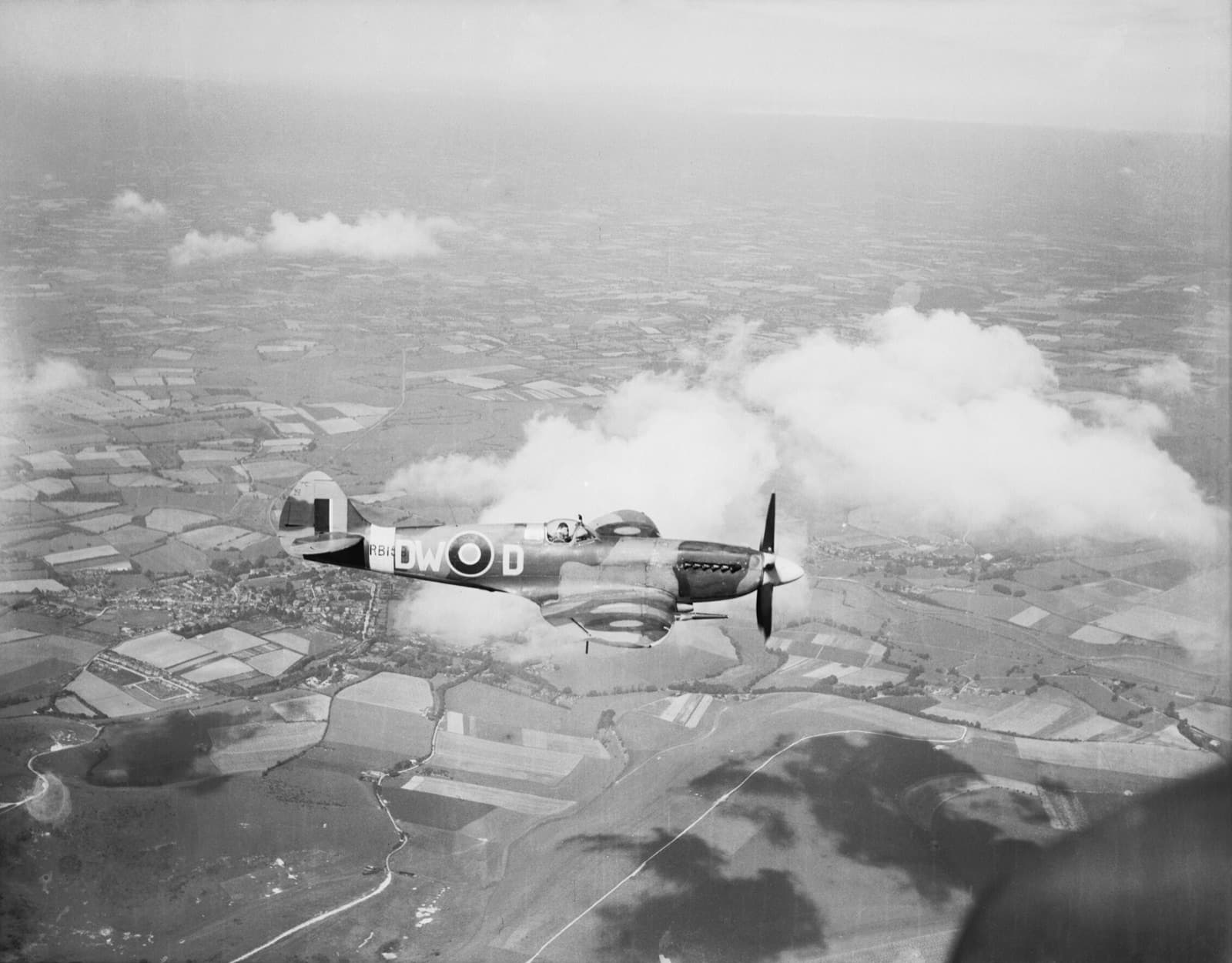
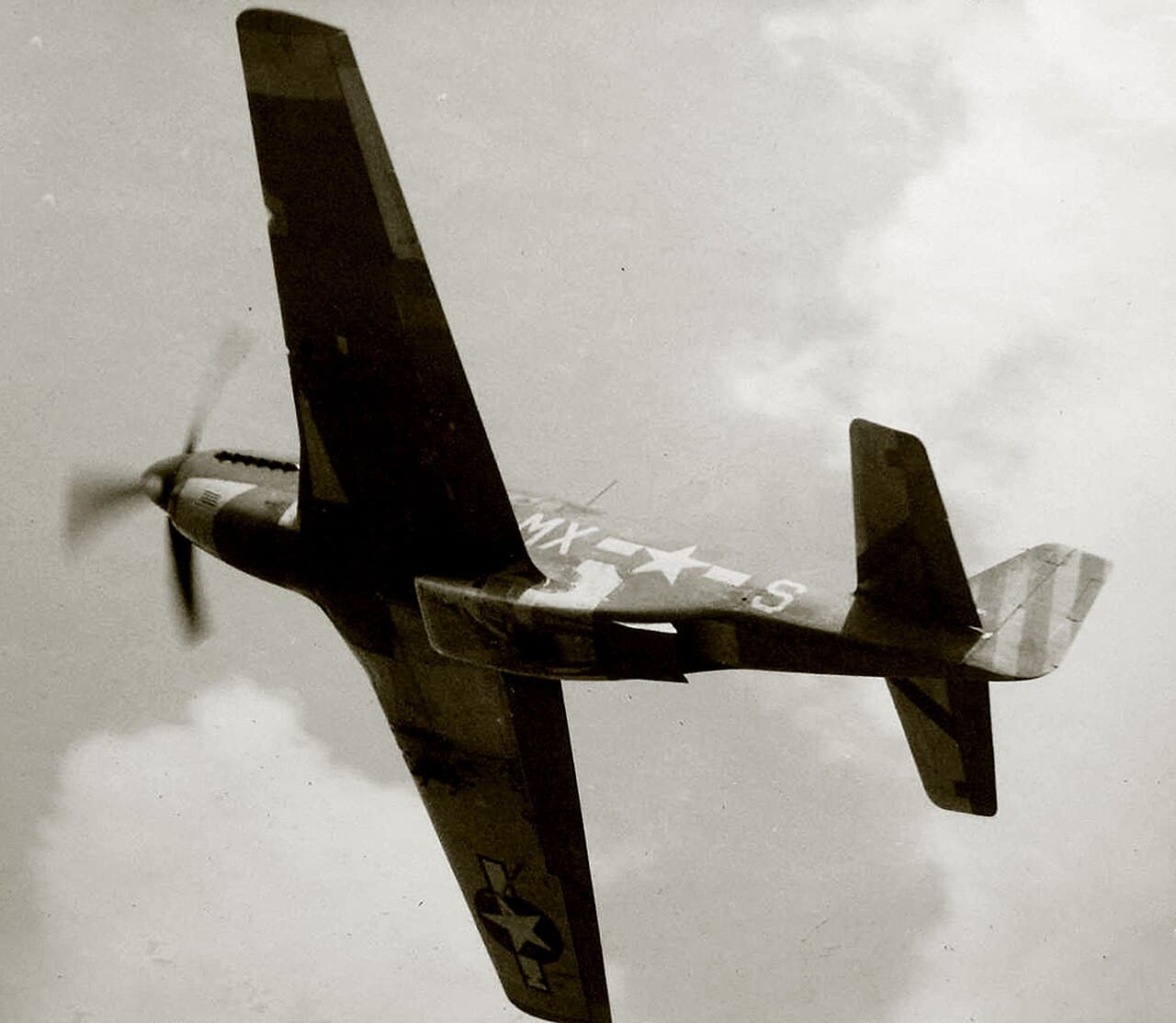
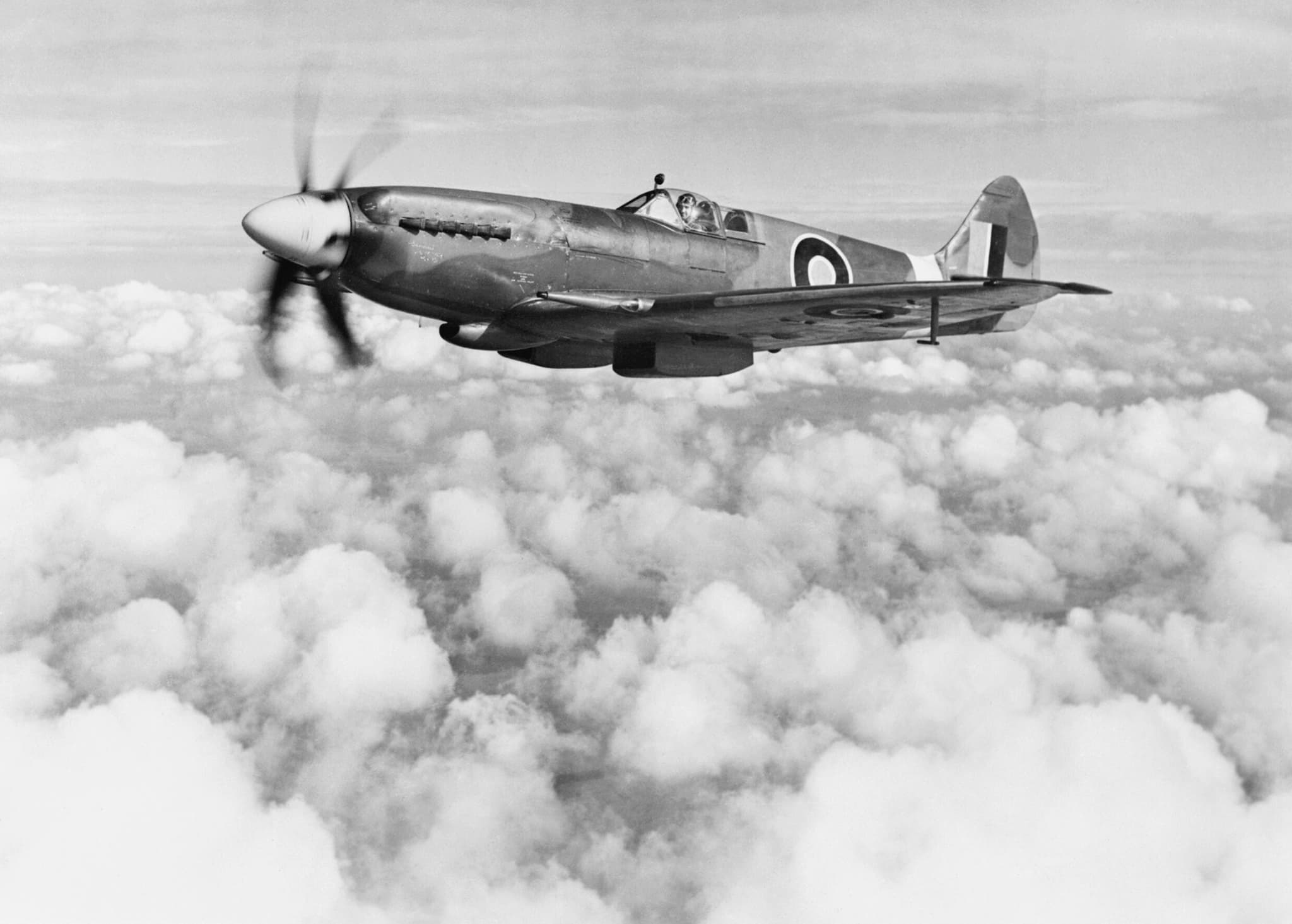
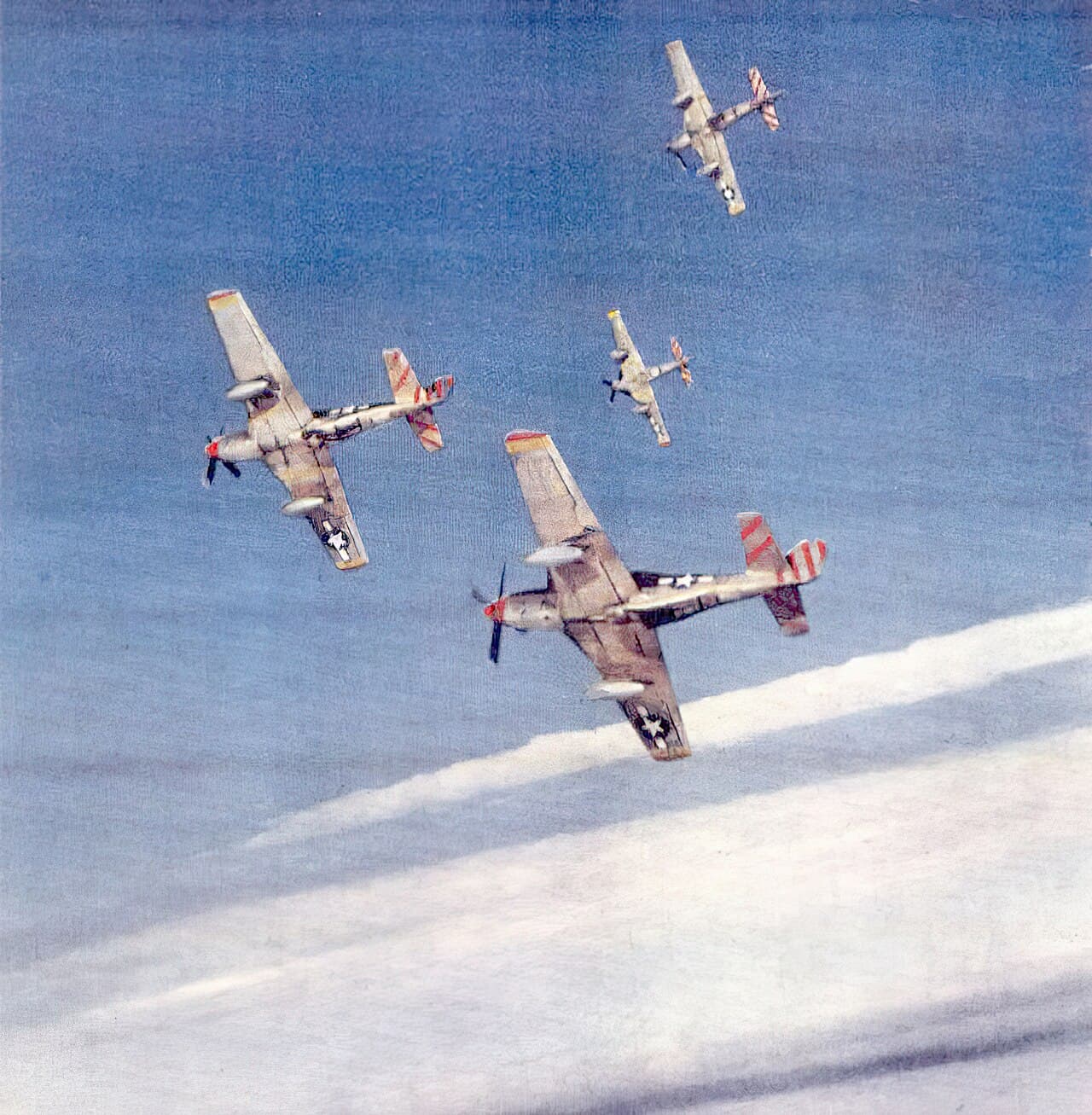

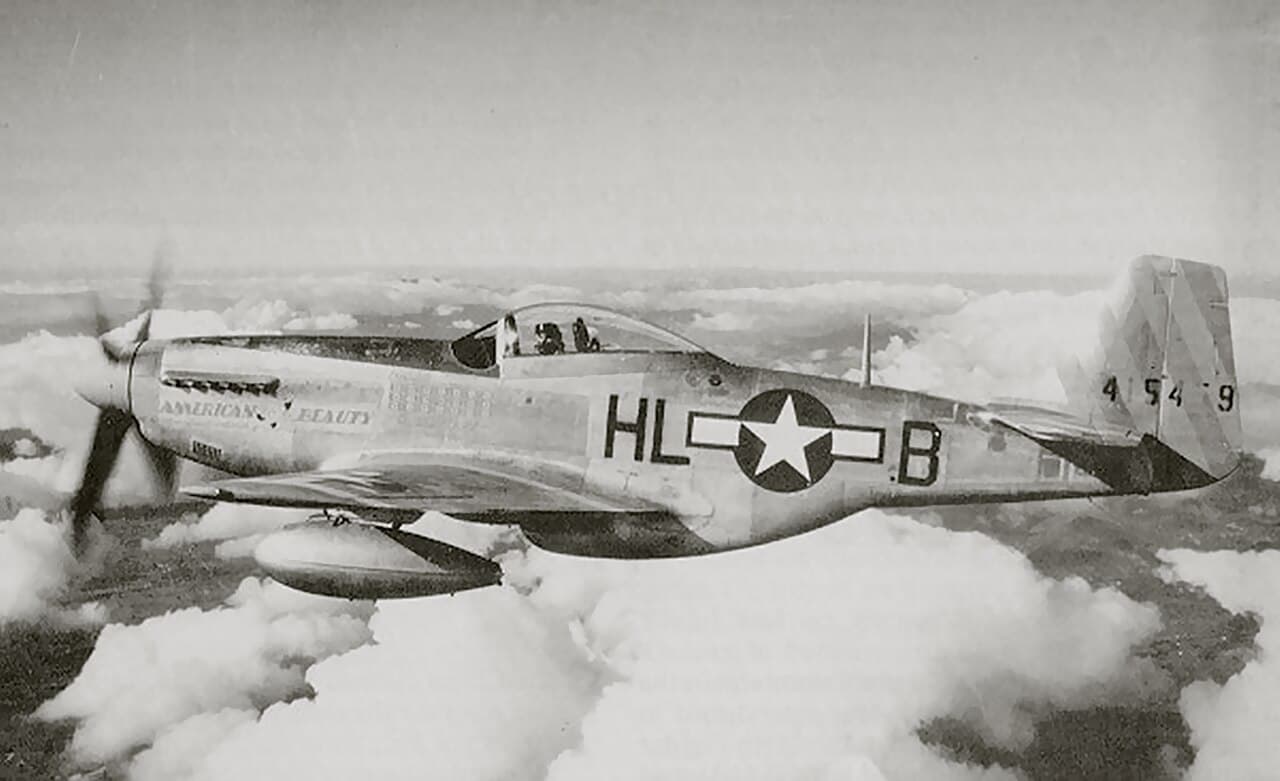
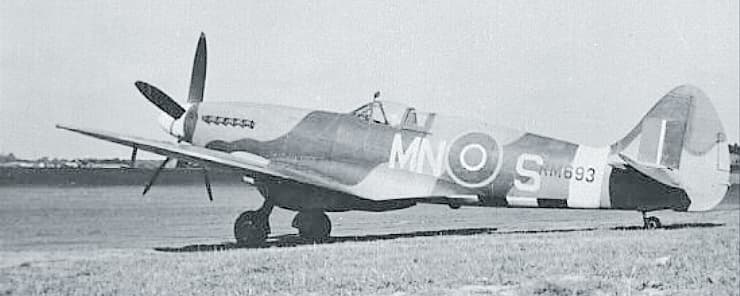
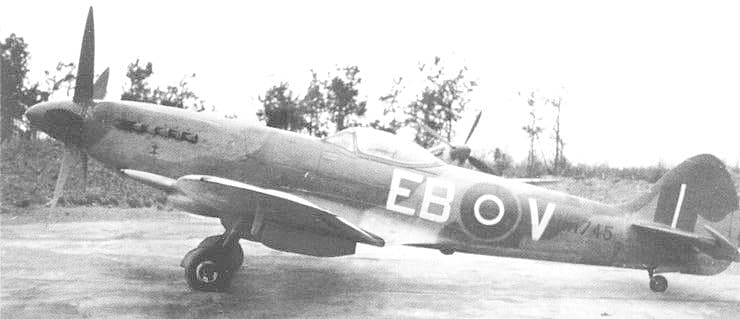
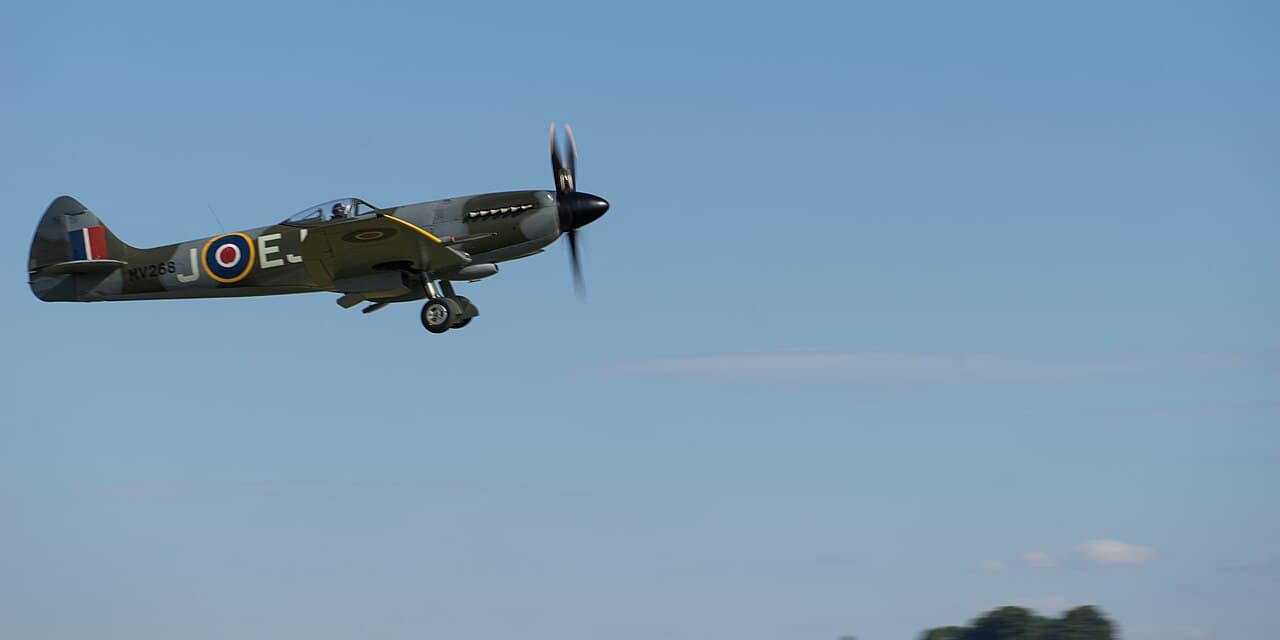
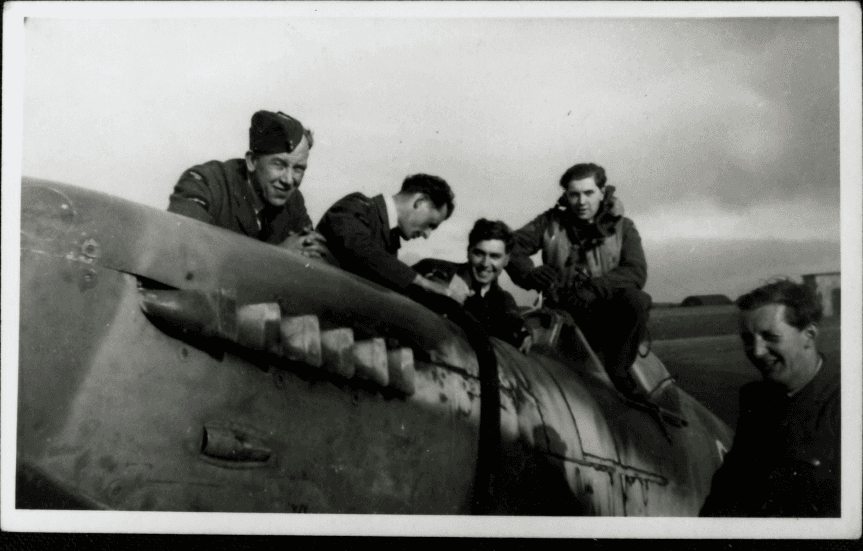
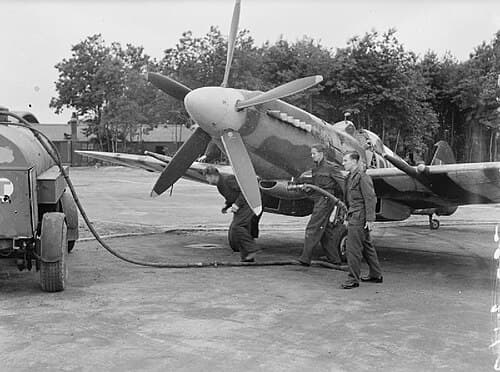
Click any photo to enlarge · 11 photos
Historical Context
The strategic backdrop that shaped both aircraft
The P-51D Mustang and Spitfire Mk XIV were the ultimate expressions of two different design traditions that converged in the skies over Europe during the final year of the war. The Mustang originated from a 1940 British Purchasing Commission request, North American Aviation proposed a new design rather than license-building P-40s, and the prototype was completed in just 102 days. Originally powered by the Allison V-1710 with limited high-altitude performance, the aircraft was transformed in 1942 when Rolls-Royce test pilot Ronald Harker suggested fitting the Merlin 61 two-stage supercharged engine. The definitive P-51D, with its bubble canopy and six .50-caliber guns, entered service in 1944 and immediately became the backbone of the Eighth Air Force's escort fighter force.
The Spitfire XIV was the culmination of R.J. Mitchell's 1936 interceptor design, evolved through 24 marks over a decade of continuous refinement. Chief designer Joseph Smith's philosophy, "the good big 'un will eventually beat the good little 'un", drove the mating of the original Spitfire airframe with the enormous Rolls-Royce Griffon 65 engine producing 2,050 horsepower. The result was the fastest, hardest-climbing variant of the most famous fighter in history, entering service with 610 Squadron in January 1944.
The two fighters complemented rather than competed with each other in the European theater. P-51Ds flew primarily with the US Eighth Air Force on deep-penetration bomber escort missions, the strategic mission that broke the Luftwaffe's back. Spitfire XIVs served with RAF squadrons in Air Defence of Great Britain and later the 2nd Tactical Air Force, excelling in the interceptor role against V-1 flying bombs and providing tactical air superiority over the battlefield. The Mustang went deep into Germany; the Spitfire defended Britain and covered the advance across France. Both were essential, and neither could have done the other's job as well.
Notable Combat Encounters
Key engagements where these aircraft faced each other in combat
The AFDU conducted formal comparative trials between the Spitfire XIV and Mustang III (equivalent to P-51B/C, closely comparable to the P-51D in performance). The trials tested speed, climb, dive, turning circle, and roll rate in direct comparison. Maximum speed was found to be "practically identical." The Spitfire XIV was "very much better in maximum climb." The Mustang "pulled away in the dive" but less markedly than against the Spitfire IX. The Spitfire XIV was "better in turning circle," and the advantage in roll rate "tended to be with the Spitfire XIV."
Outcome
The AFDU concluded: "No conclusions can be drawn, as these two aircraft should never be enemies. The choice is a matter of taste."
The most authoritative direct comparison ever conducted between these two fighters. The diplomatic conclusion acknowledged that neither aircraft was categorically superior, each excelled in different aspects of fighter performance.
Spitfire XIVs were deployed as primary interceptors against V-1 flying bombs during the German campaign to terrorize London. The Griffon-powered Spitfires were among the few aircraft fast enough to catch the 400-mph buzz bombs at low and medium altitude. Pilots reported flying alongside V-1s and tipping their wings to crash them when ammunition ran out. P-51s were occasionally diverted from escort duties to engage V-1s but were less effective at the low altitudes where the flying bombs operated.
Outcome
Spitfire XIVs destroyed over 300 V-1 flying bombs, proving their superiority as short-range interceptors. The campaign demonstrated the Spitfire XIV's exceptional low-altitude speed and acceleration, capabilities the P-51D could not match.
Perfectly illustrated the Spitfire XIV's superiority in the interceptor role. The V-1 campaign required exactly what the Griffon Spitfire offered: raw speed, rapid climb, and short-range lethality. The Mustang's range advantage was irrelevant against a target 20 miles from the English coast.
Operation Bodenplatte, the Luftwaffe's last major offensive, a surprise attack on Allied airfields. Both P-51 and Spitfire XIV units were caught on the ground and scrambled to respond. RAF Spitfire XIV squadrons (41, 130, 350, and 610) and USAAF P-51 groups engaged the attackers in the chaotic low-level combat that followed. Both types proved devastatingly effective against the low-flying German fighters.
Outcome
The Luftwaffe destroyed approximately 300 Allied aircraft on the ground but lost over 270 of its own, including many irreplaceable experienced pilots. The operation was a pyrrhic victory that accelerated the Luftwaffe's collapse.
One of the few occasions where both aircraft types fought in the same defensive battle. Both excelled in the close-range, low-altitude combat that characterized the response to the surprise attack.
Both the Spitfire XIV and P-51D were among the few piston-engine fighters fast enough to engage the Me 262 jet. A Spitfire XIV of 401 Squadron RCAF scored one of the first Allied kills against an Me 262 in October 1944. P-51D units developed "Rat Catcher" patrols over known Me 262 airfields. No. 41 Squadron's Spitfire XIVs scored kills against both Me 262s and Ar 234 jets in early 1945.
Outcome
Both aircraft types successfully engaged German jets using different tactics, the Spitfire through raw speed in pursuit, the Mustang through tactical ambush at airfields.
Demonstrated that both aircraft represented the absolute pinnacle of piston-engine performance. The Me 262 threat required the best fighters the Allies had, and both the Spitfire XIV and P-51D answered the call.
Armament & Firepower
Primary weapons, munitions capacity, and destructive capability
P-51D Loadout
6x .50 caliber (12.7mm) M2 Browning machine guns with 1,880 rounds total (400 per inboard gun, 270 per outboard). Rate of fire approximately 750–850 rounds per minute per gun. Could also carry 2x 500-lb bombs or 6–10 5-inch HVAR rockets for ground attack.
Spitfire Mk IX Loadout
2x 20mm Hispano Mk II cannons with 120 rounds per gun, plus 2x .50 caliber Browning machine guns with 250 rounds per gun (E-wing configuration). Could carry 1x 500-lb bomb or 2x 250-lb bombs. Some aircraft carried additional rocket rails.
Air-to-Air Verdict
Both armament packages were highly effective but optimized differently. The Spitfire XIV's 20mm Hispano cannons were devastating, a single hit could destroy a fighter, and a short burst could bring down a bomber. The P-51D's six .50-caliber guns produced a dense stream of fire that was more forgiving of aiming errors and highly effective in deflection shooting. The Mustang's massive ammunition supply (1,880 rounds versus 740 total) allowed sustained engagements against multiple targets, pilots could engage four or five aircraft on a single sortie without worrying about ammunition. The Spitfire's 120 cannon rounds per gun demanded fire discipline.
Ground Attack Verdict
The P-51D was the superior ground-attack platform. Its six .50-caliber guns with enormous ammunition supply excelled at strafing airfields, transport, and soft targets. The Mustang could carry more external ordnance and had better dive characteristics for bomb delivery. The Spitfire XIV's cannons were more destructive per hit against armored targets but ran dry quickly.
The armament choice reflected the design philosophies of each aircraft. The Mustang was built for sustained combat over enemy territory, where ammunition endurance and the ability to engage multiple targets mattered most. The Spitfire was built for decisive short-range engagements where destructive power per burst was paramount. Both were lethal, but they achieved lethality through different means.
Survivability & Protection
Armor, self-sealing tanks, pilot protection, and structural resilience
P-51D Protection
Armor plate behind the pilot's head and back, armored windscreen, and armor around the engine oil tank and coolant header tank. The P-51D's 85-gallon fuselage fuel tank behind the pilot was a known vulnerability, when full, it shifted the center of gravity aft and a hit there could be catastrophic.
Spitfire Mk IX Protection
Similar pilot armor arrangement with armored seat back and windscreen, but less comprehensive protection for engine components. The Spitfire XIV's fuel was distributed across fuselage and wing tanks, with lower total capacity but less concentrated vulnerability.
Pilot Protection
Both aircraft provided comparable pilot protection through armor plating. Both used liquid-cooled engines with identical vulnerability to coolant system damage, a single bullet through a coolant line would disable either aircraft within minutes. The P-51D's belly-mounted radiator and the Spitfire XIV's underwing radiators were both exposed to ground fire during strafing runs.
Structural Durability
The P-51D was the more structurally robust aircraft, designed for the stresses of long-range operations including high-speed dives and prolonged combat. The Spitfire XIV was lighter with an excellent strength-to-weight ratio but was somewhat less tolerant of heavy battle damage. Both were well-built, all-metal monoplane fighters.
Survivability was roughly equal between these two aircraft. Both shared the fundamental vulnerability of liquid-cooled engines, both had self-sealing fuel tanks, and both provided comparable pilot armor. The P-51D's fuselage fuel tank was a unique vulnerability; the Spitfire XIV's lighter construction made it slightly less damage-tolerant. Neither aircraft had the survivability advantage that an air-cooled radial engine would have provided, a weakness both shared equally.
Tactical Doctrine & Evolution
How pilots were trained to fight in each aircraft and how tactics adapted over time
P-51D Tactics
The P-51D was employed as the Eighth Air Force's primary deep-penetration escort fighter. General Doolittle's critical decision in early 1944 freed escorts from close formation with bombers, allowing Mustang pilots to aggressively seek out and destroy the Luftwaffe. P-51s used energy-fighting tactics, bouncing enemy formations from altitude, making high-speed diving attacks, and using the Mustang's superior dive speed and energy retention to disengage and re-engage on favorable terms. By late 1944, fourteen of the Eighth Air Force's fifteen fighter groups flew P-51s, and the systematic destruction of the Luftwaffe's pilot force through sustained attritional combat was the Mustang's defining strategic contribution.
Spitfire Mk IX Tactics
The Spitfire XIV served in three primary tactical roles. First, as an air defense interceptor protecting Britain, particularly during the V-1 campaign, where its exceptional low-altitude speed and climb rate made it the most effective anti-V-1 platform. Second, as a tactical air superiority fighter with the 2nd Tactical Air Force on the continent after September 1944, providing cover for ground operations. Third, as an anti-jet interceptor, where its speed allowed it to pursue Me 262s and Ar 234s that slower fighters could not catch. Over 430 of the 957 Mk XIVs built were FR (fighter-reconnaissance) variants with oblique cameras.
How Tactics Evolved
The tactical employment of these two fighters reflected the fundamental difference between strategic and tactical air power. The Mustang's doctrine evolved from escort to offensive air superiority to ground attack as the Luftwaffe weakened, an increasingly aggressive posture that destroyed Germany's ability to defend its airspace. The Spitfire XIV's doctrine evolved from point defense (V-1 interception) to offensive sweeps on the continent to anti-jet patrols, adapting to the specific threats that required its unique combination of speed and agility. Both aircraft were eventually employed in fighter-bomber roles, though neither was optimized for ground attack.
What the Pilots Said
Firsthand accounts from the men who flew and fought these aircraft
On the Spitfire Mk IX“The Mustang was a good fighter and the best escort due to its incredible range. It could not by any means out-turn a Spitfire. If I were in a dogfight, I'd prefer to be flying the Spitfire. The problem was I wouldn't like to be in a dogfight near Berlin, because I could never get home to Britain in a Spitfire.”
On the Spitfire Mk IX“The best thing about the Spitfire Mk XIV was that there were so few of them.”
On the P-51D“The P-51 was the most aerodynamically perfect aircraft of its time. The Spitfire was a fine aircraft, but the Mustang's ability to go anywhere the bombers went and still fight effectively made it the more important weapon.”
On the P-51D“It kept me alive.”
By the Numbers
Statistical combat performance and historical kill ratios
Exchange Ratio
The P-51 Mustang was credited with approximately 4,950 air-to-air victories and 4,131 ground kills across 213,873 sorties, achieving an 11:1 kill-to-loss ratio. Over 250 Mustang pilots achieved ace status. The Spitfire's overall tally across all marks exceeded 4,000 aerial victories over six years of combat in every theater. The Spitfire XIV specifically destroyed over 300 V-1 flying bombs and scored among the first Allied kills against Me 262 jets.
Source: USAAF combat records; RAF Fighter Command records; AFDU comparative trials
Direct comparison of combat records is misleading because the aircraft served in fundamentally different roles, time periods, and theaters. The P-51D's spectacular kill ratio reflected both its excellence and the declining quality of Luftwaffe pilots by 1944–45, the aircraft entered service when the Luftwaffe was already being ground down by attrition. The Spitfire served from 1938 through 1945, facing the Luftwaffe at its peak during the Battle of Britain and throughout the long attritional campaign. The Spitfire XIV's limited production (957 aircraft) means its individual combat record was inherently smaller in scale, but its per-aircraft effectiveness was extraordinary.
Production & the Numbers Game
How industrial output shaped the strategic balance
15,586
P-51D Built
5,665
Spitfire Mk IX Built
The production disparity, 8,102 P-51Ds versus 957 Spitfire XIVs, an 8.5:1 ratio, was itself a decisive strategic factor. The Mustang's numbers allowed the Eighth Air Force to equip virtually every fighter group with P-51s, creating an overwhelming force that the Luftwaffe could not match. The Spitfire XIV's limited production meant it could only equip a handful of squadrons, restricting its operational impact regardless of its individual superiority. As Galland recognized, the Spitfire XIV's scarcity was its greatest weakness. American industrial capacity transformed a very good fighter into a war-winning weapon through sheer numbers.
Advantages in This Matchup
Where each aircraft holds the edge in a head-to-head encounter
P-51D Mustang
- Unmatched range of 1,650+ miles with drop tanks, the only single-engine fighter that could escort bombers from England to Berlin and back
- Superior dive performance, laminar-flow wing provided better high-speed acceleration and higher limiting Mach number
- Massive ammunition capacity, 1,880 rounds across six .50-cal guns allowed sustained engagements against multiple targets
- Outstanding 360-degree bubble canopy visibility, the best cockpit view of any WW2 fighter
- Excellent gun platform stability, smooth handling characteristics aided accurate gunnery on long deflection shots
- Mass production capability, 8,102 P-51Ds ensured numerical superiority across the entire theater
- Versatility, equally effective as escort fighter, air superiority fighter, fighter-bomber, and strafing platform
Spitfire Mk IX Spitfire
- Superior climb rate of 4,580+ feet per minute, nearly 30% better than the P-51D, providing decisive energy advantage in combat
- Exceptional maneuverability, tighter turning circle and lighter controls made it the superior dogfighter at virtually all speeds
- Marginally faster at 446 mph, plus sufficient speed to catch V-1 flying bombs and harass Me 262 jets
- Devastating 20mm Hispano cannon armament, far more destructive per hit than .50-caliber machine guns
- Higher service ceiling of 43,000–44,000 feet for high-altitude interception capability
- Combat-proven Spitfire lineage, built on eight years of continuous development and operational refinement
- Inspired extraordinary pilot confidence, legendary handling and responsiveness; Johnnie Johnson flew 1,000+ Spitfire sorties without being shot down
Final Verdict
Overall Winner
🇺🇸 North American P-51D Mustang
United States
The P-51D Mustang wins the overall comparison not because it was the better dogfighter, it was not. In pure air combat performance, the Spitfire Mk XIV was the superior aircraft: faster, climbed 30% better, turned tighter, reached a higher ceiling, and carried 20mm cannons that could destroy any aircraft in a single burst. Captain Eric Brown ranked it his number one piston-engine fighter. Adolf Galland feared it. The AFDU confirmed its advantages in climb, turn, and roll rate. Had the question been "which aircraft would you choose for a duel?" the answer would be the Spitfire XIV. But wars are not won in duels. The P-51D Mustang wins because it answered the single most important strategic question of the air war: how do you protect heavy bombers all the way to Berlin and back? No amount of climb rate or turn performance mattered if the fighter could not reach the battle. The Spitfire XIV was leashed to bases within 300 miles of the fight. The Mustang could go anywhere. Combined with massive production numbers (8,102 versus 957), enormous ammunition capacity, outstanding visibility, and genuine versatility across air-to-air and air-to-ground missions, the P-51D was the more strategically decisive aircraft. It did not merely contribute to winning the air war, it made the strategic bombing campaign possible. The honest answer, as the AFDU concluded, is that "these two aircraft should never be enemies." The Spitfire XIV was the finest interceptor of the war. The P-51D was the finest strategic fighter. Together they represented the absolute peak of piston-engine fighter design, and together they helped win the war.
Theaters of Operation
Shared Theaters
P-51D Only
Spitfire Mk IX Only
Related Matchups
P-51D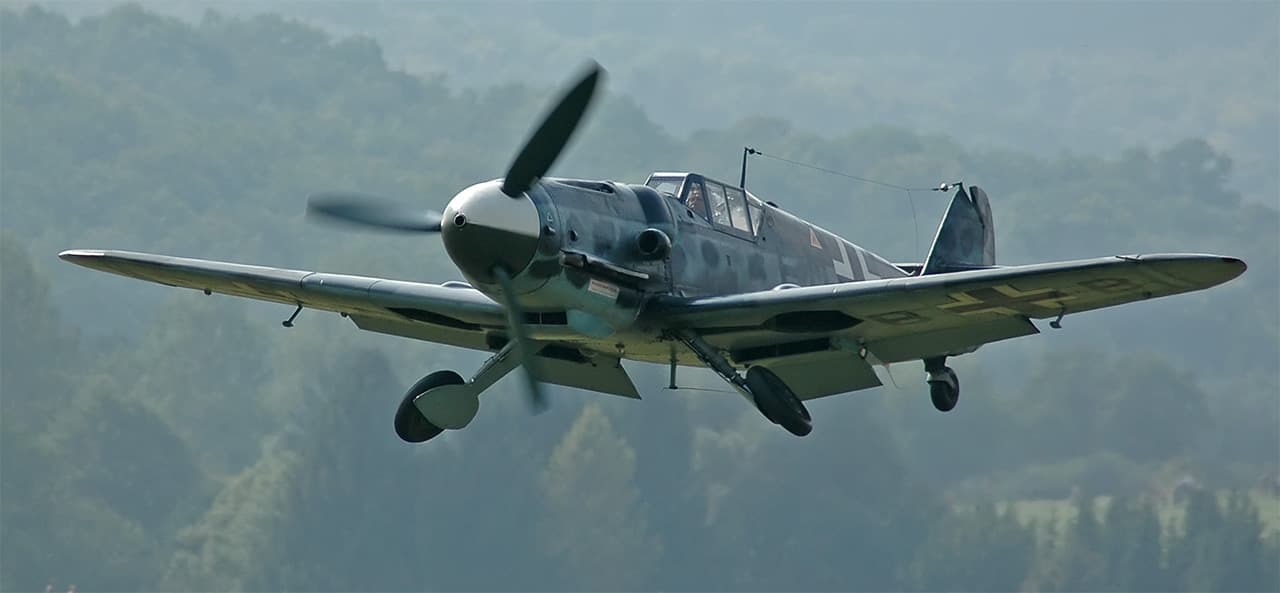 Bf 109GSpitfire Mk IXBf 109G
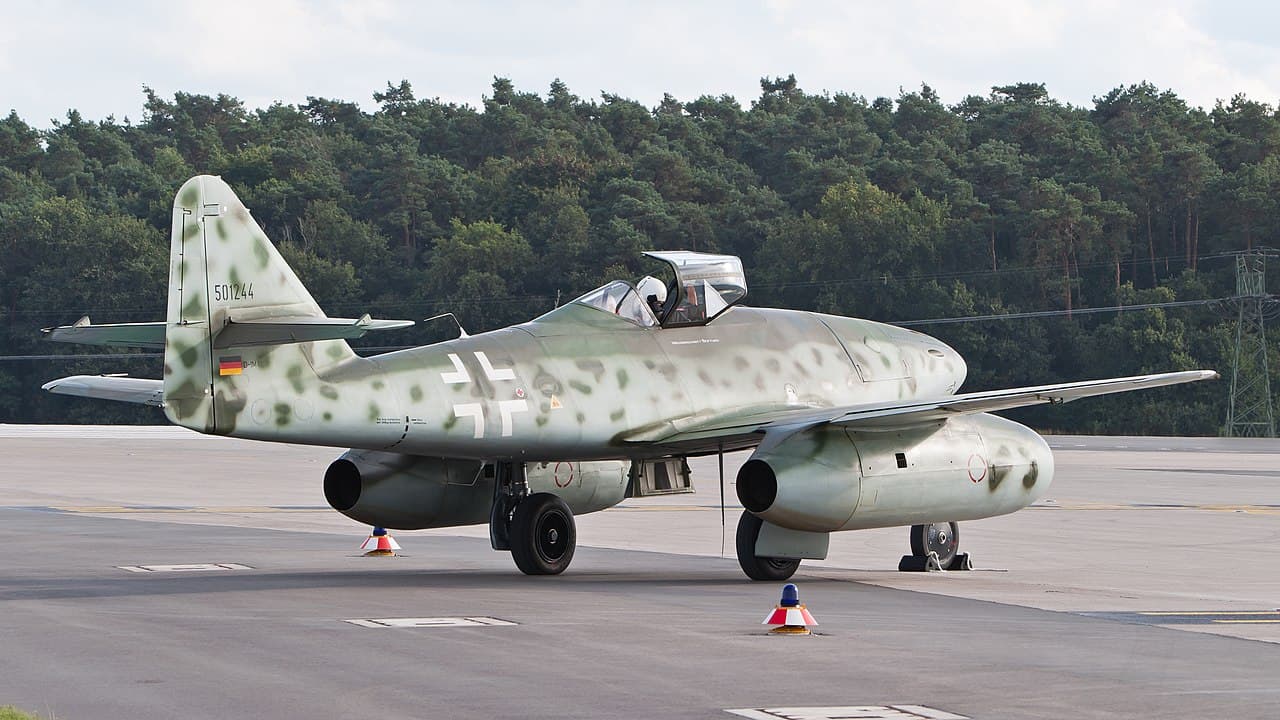 Me 262AP-51D
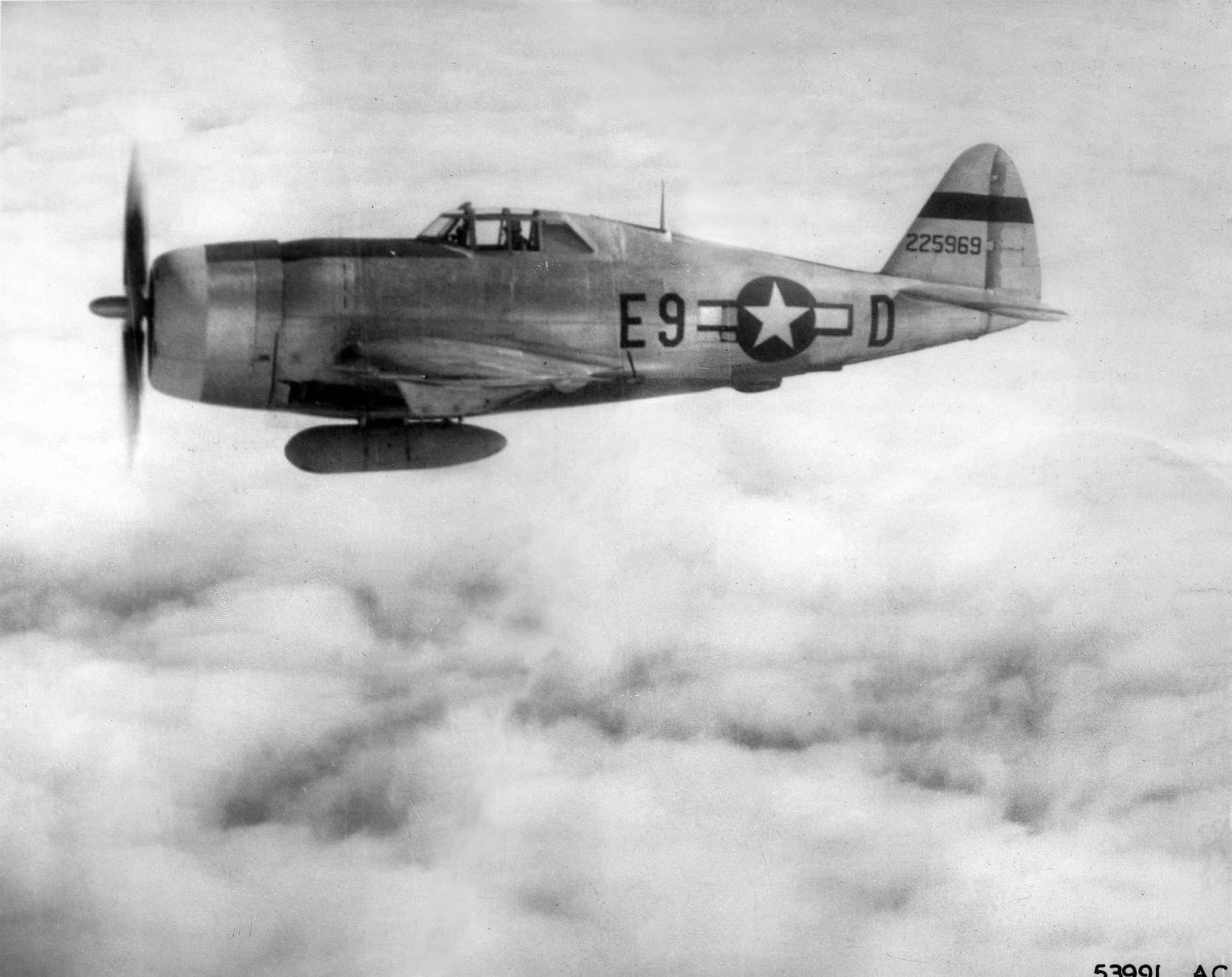 P-47DP-51D
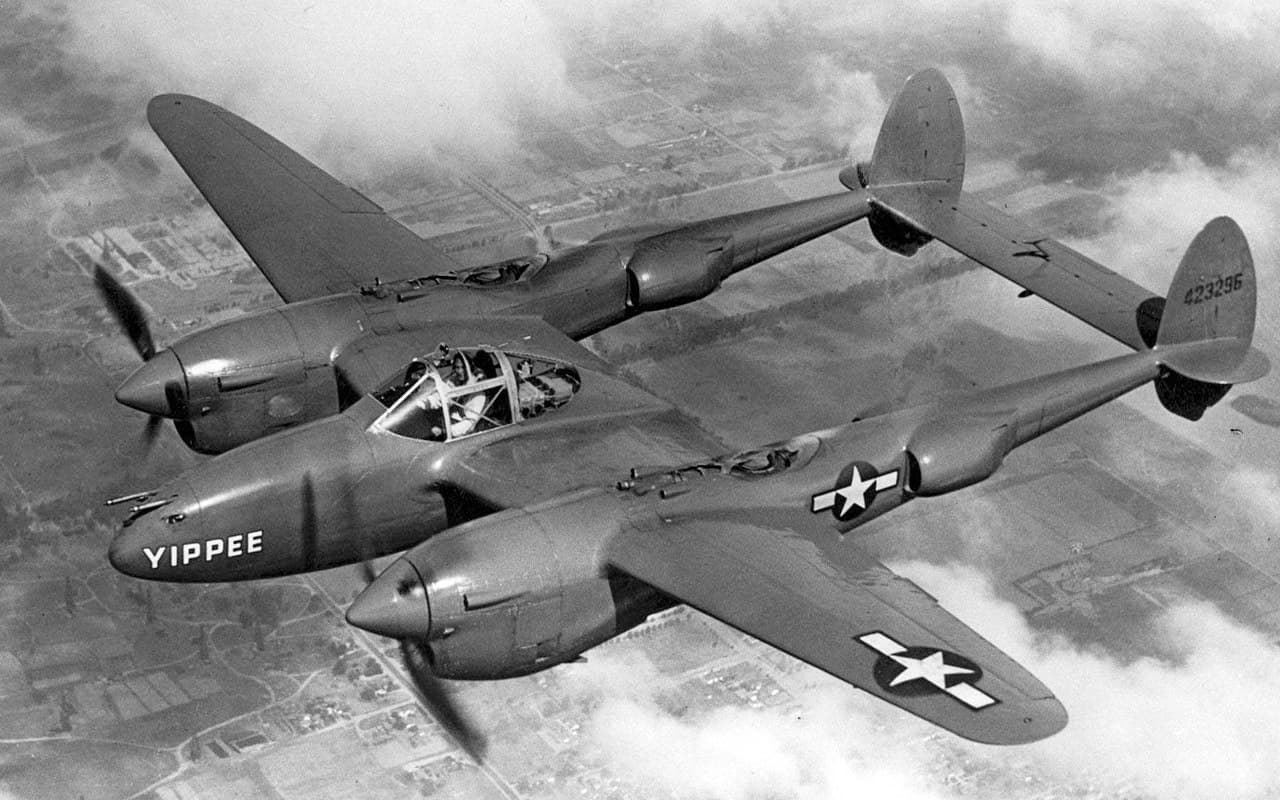 P-38JP-51DSpitfire Mk IX
 Hurricane Mk IICP-51DSpitfire Mk IXP-51D
 Fw 190ASpitfire Mk IXFw 190A