
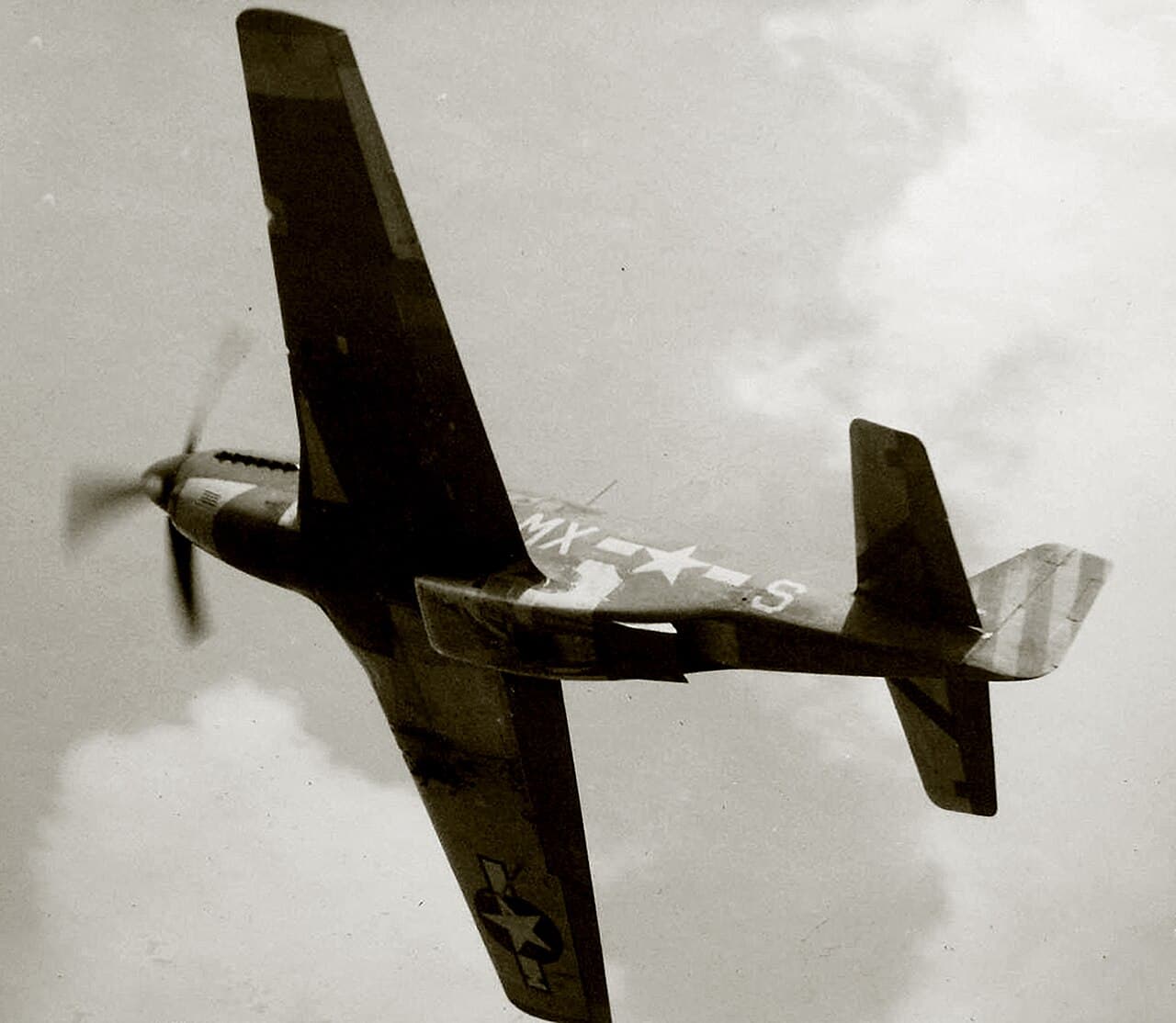
North American P-51D Mustang
North American Aviation
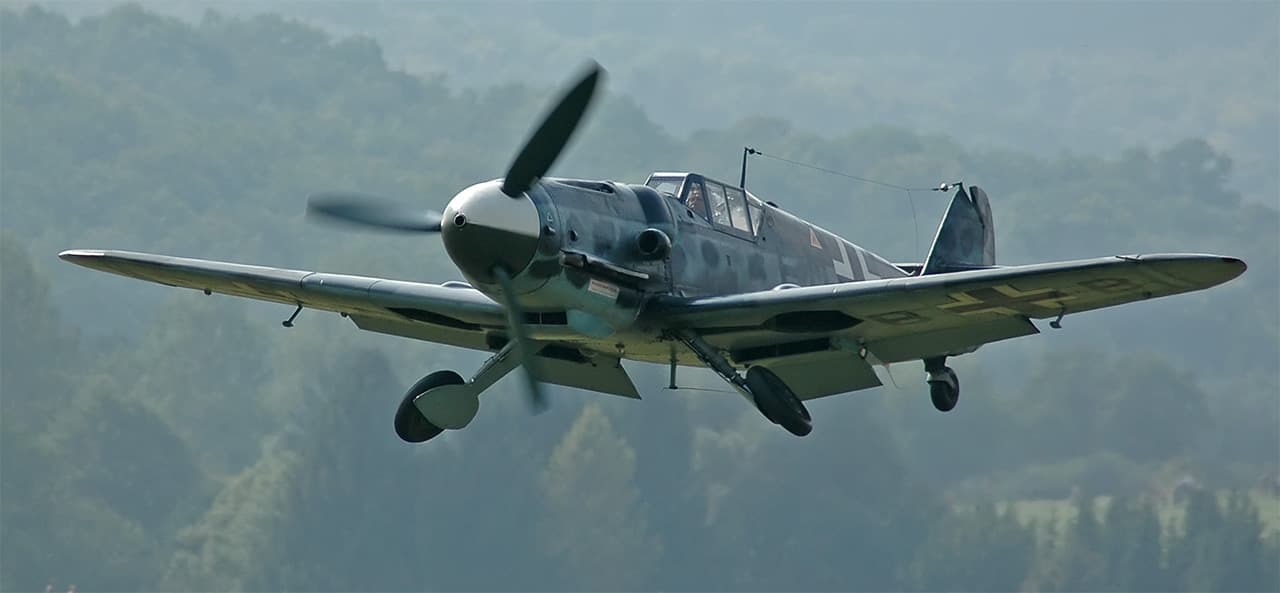
Messerschmitt Bf 109G
Messerschmitt
P-51D Mustang vs Bf 109G
The duel that decided the skies over Europe
The Bottom Line
The P-51D Mustang was the strategically superior fighter, its range, speed, and visibility made it the instrument that won the air war over Europe. The Bf 109G remained a dangerous opponent in individual combat, but the Mustang's ability to bring the fight to the Luftwaffe on its own terms, day after day, was decisive.
Who Wins Each Scenario?
High-altitude escort (25,000+ ft)
P-51D
The Mustang's speed, altitude performance, and range made it dominant at the altitudes where the air war was fought.
Low-altitude dogfight (<10,000 ft)
Even
At low altitude the Bf 109G's climb advantage was strongest, but the Mustang's speed and roll rate kept it competitive.
Vertical fight (zoom climbs)
Bf 109G
The Bf 109G's superior climb rate gave it the edge in vertical maneuvering, its best tactical card.
Head-on pass
P-51D
The P-51D's six .50-calibers threw more lead in a head-on pass. The Bf 109G's centerline cannon hit harder but was less forgiving of aim.
Bomber interception
Bf 109G
With MK 108 30mm cannon or underwing gondolas, the Bf 109G was purpose-built to destroy heavy bombers, a role the Mustang was not designed for.
War of attrition (strategic)
P-51D
The Mustang's range, production efficiency, and America's pilot training pipeline made it the instrument of an attritional victory the Luftwaffe could not survive.
Interactive 3D Models
Performance Profile
Overall capability comparison across six combat dimensions
Head-to-Head Specifications
Key performance metrics compared side by side
Size Comparison
Both aircraft drawn to the same scale, the P-51D has 4.5ft greater wingspan and is 2.7ft longer
Performance Analysis
How each aircraft performs across key combat dimensions
Speed
WINNER: P-51DThe P-51D was faster at all altitudes above 15,000 feet, reaching 437 mph at 25,000 feet, a margin of roughly 30 mph over the Bf 109G at the same altitude.
Below 10,000 feet, the speed difference narrowed significantly. The Bf 109G was competitive at low altitude and could briefly exceed the Mustang in a dive from medium altitudes.
Speed was the P-51D's primary tactical advantage. In the high-altitude escort mission profile (20,000–30,000 feet), the Mustang's speed superiority meant it could choose when to engage and when to disengage. Bf 109G pilots who lost the initiative often could not escape a pursuing Mustang at altitude. This speed advantage was amplified by the Mustang's laminar-flow wing, which reduced drag at high speeds and gave it exceptional energy retention in high-speed maneuvering.
Climb Rate
WINNER: Bf 109GThe P-51D climbed at 3,475 ft/min at sea level, which was respectable but not exceptional for a 1944 fighter.
The Bf 109G climbed at 3,345 ft/min at sea level but maintained better climb performance through the middle altitudes. Its lighter weight and optimized wing gave it a meaningful advantage in zoom climbs and vertical maneuvers below 20,000 feet.
Climb rate was the Bf 109G's strongest card in air combat. German pilots often used the vertical to gain separation, pulling into a steep climb that the heavier Mustang could not follow as efficiently. This "climb and extend" tactic was the standard Luftwaffe response when bounced by Mustangs. However, the advantage diminished above 25,000 feet where the Mustang's two-stage supercharger gave it better power-to-weight ratio.
Maneuverability
EvenThe P-51D had superior sustained turn performance thanks to its elliptical wing loading and energy retention. In a prolonged turning engagement, the Mustang would gradually gain angles.
The Bf 109G's leading-edge slats gave it a tighter instantaneous turn radius at lower speeds. In a snapshot deflection engagement, the Gustav could pull tighter.
Turning performance was roughly equal between these two fighters, but they excelled in different ways. The P-51D was better in sustained, energy-fighting turns, the kind of engagement that lasted 30 seconds or more. The Bf 109G was better in instantaneous nose-pointing maneuvers, useful for quick deflection shots. The Gustav's slats were a double-edged sword: they allowed tighter turns at low speed but could deploy asymmetrically, causing the aircraft to roll unpredictably at the edge of the envelope. Experienced pilots managed this; less experienced ones sometimes lost control.
Altitude Performance
WINNER: P-51DThe P-51D's two-stage, two-speed Packard Merlin V-1650-7 supercharger delivered excellent power above 25,000 feet. The Mustang was at its best between 25,000 and 35,000 feet.
The Bf 109G's DB 605A performed well at medium altitudes but lost power more rapidly above 25,000 feet without MW-50 water-methanol injection.
High-altitude performance was decisive for the escort mission. Bomber formations flew between 20,000 and 28,000 feet, and interceptors typically attacked from above. The P-51D's ability to operate effectively at 30,000+ feet meant it could position above both the bombers and the attacking Bf 109Gs, giving Mustang pilots the all-important altitude advantage before engaging. The Bf 109G's altitude performance was adequate but not superior, German pilots preferred to fight at medium altitudes where the Gustav's climb rate gave them the best chance.
Range & Endurance
WINNER: P-51DThe P-51D had a combat radius of approximately 750 miles with drop tanks, enough to escort bombers from England to Berlin and back. Ferry range was 1,650 miles.
The Bf 109G's combat radius of roughly 350 miles was adequate for homeland defense but could not match the Mustang's operational reach.
Range was the P-51D's war-winning advantage and the reason it existed. No other single-engine fighter in 1944 could fly from England to Berlin and fight effectively on arrival. The Bf 109G's shorter range was not a design flaw, it was a homeland defense interceptor that did not need long range. But strategically, the asymmetry was devastating: the Mustang brought the fight to the Luftwaffe over its own territory, day after day, forcing German pilots into a war of attrition they could not win.
Dive Speed
WINNER: P-51DThe P-51D was one of the cleanest-diving fighters of the war. Its laminar-flow wing and low drag profile allowed it to build speed rapidly in a dive and hold it.
The Bf 109G could dive well but encountered compressibility effects at lower speeds than the Mustang. Its controls stiffened significantly above 450 mph.
Dive performance strongly favored the Mustang. P-51D pilots regularly used the dive to initiate attacks, bouncing enemy formations from altitude in high-speed passes that the Bf 109G struggled to counter. A Mustang in a steep dive could exceed 500 mph, and at those speeds its controls remained effective while the Gustav's became increasingly heavy. The Bf 109G's best defensive option against a diving Mustang was to break into the attack and force an overshoot, hoping to reverse the situation in the vertical.
Roll Rate
WINNER: P-51DThe P-51D had a good roll rate that remained effective at high speeds, important for tracking targets during deflection shots.
The Bf 109G's roll rate was adequate at low speeds but degraded at high speeds due to aileron heaviness. This was a known limitation.
Roll rate was roughly comparable at combat speeds (250-350 mph indicated), with the Mustang holding a slight edge at higher speeds. Neither aircraft was exceptional in roll compared to the Fw 190, but the P-51D's more harmonized controls at high speed gave its pilots an advantage in tracking maneuvering targets during high-speed engagements.
Cockpit Visibility
WINNER: P-51DThe P-51D's bubble canopy provided outstanding all-round visibility, one of the best of any WW2 fighter. Pilots could see clearly in every direction, critical for spotting threats.
The Bf 109G's Erla Haube canopy (introduced on late models) improved rear visibility significantly over the earlier framed canopy, but forward visibility was limited by the long engine cowling.
Visibility was a meaningful P-51D advantage. In the vast, cluttered skies over Germany where dozens of aircraft maneuvered simultaneously, the ability to spot threats early was often the difference between life and death. The bubble canopy gave Mustang pilots a decisive advantage in situational awareness. Many Bf 109G pilots were shot down by Mustangs they never saw, the most common cause of fighter losses in WW2.
Photo Gallery, 19 Photos
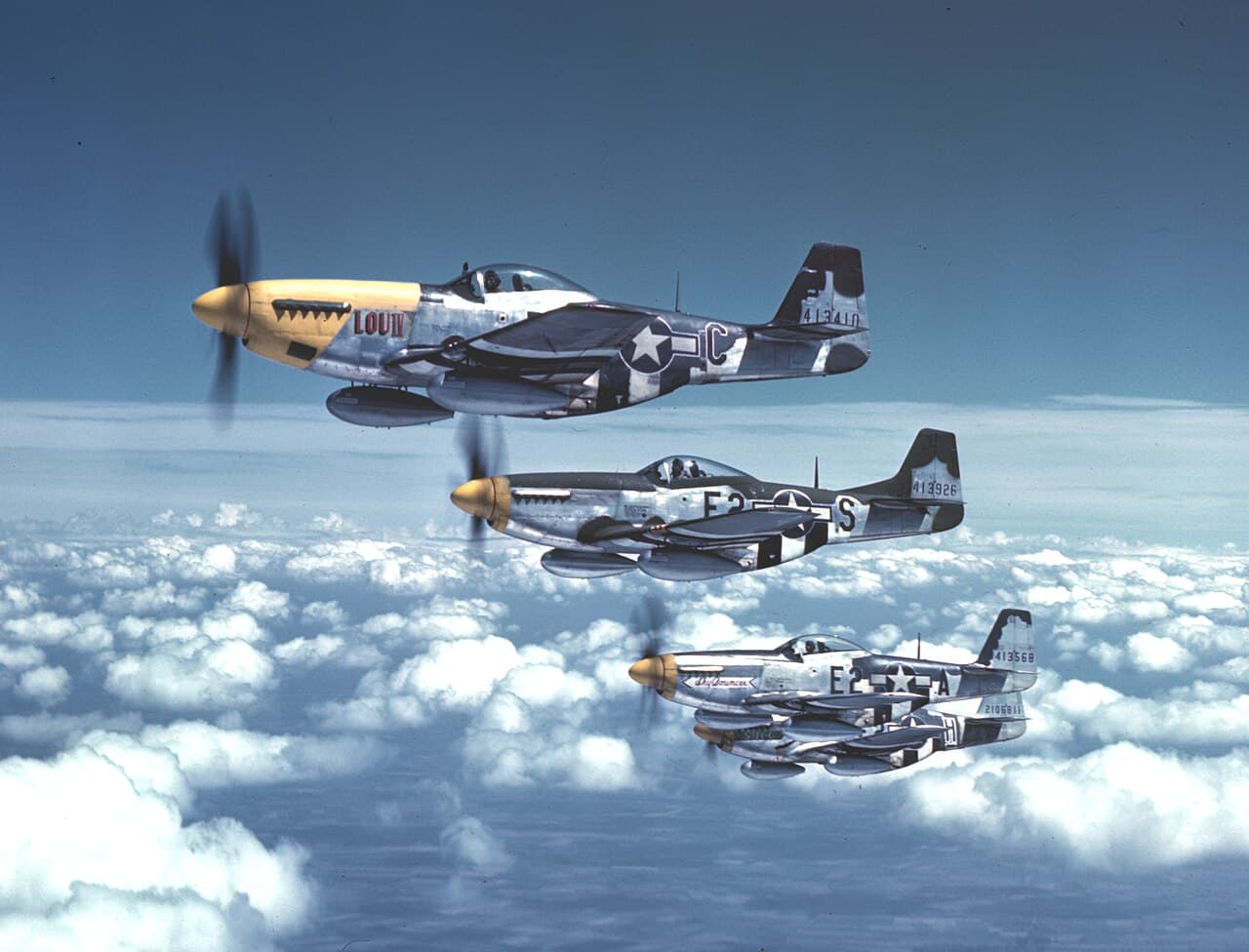
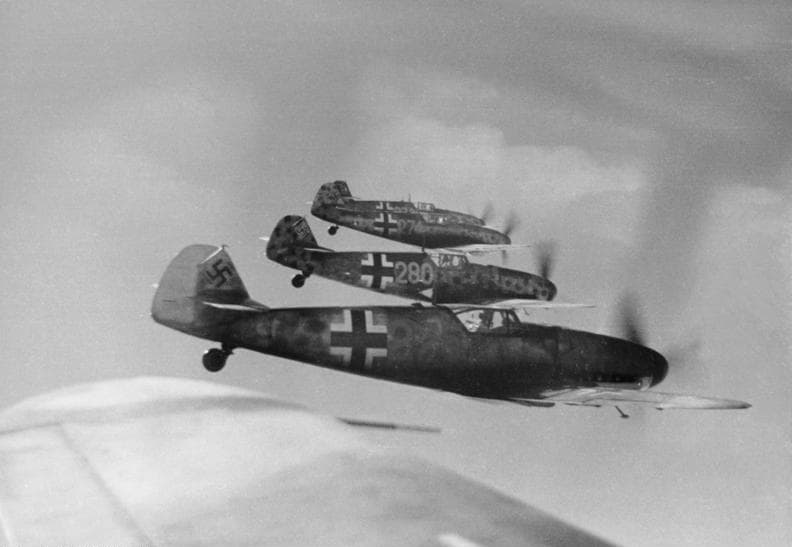
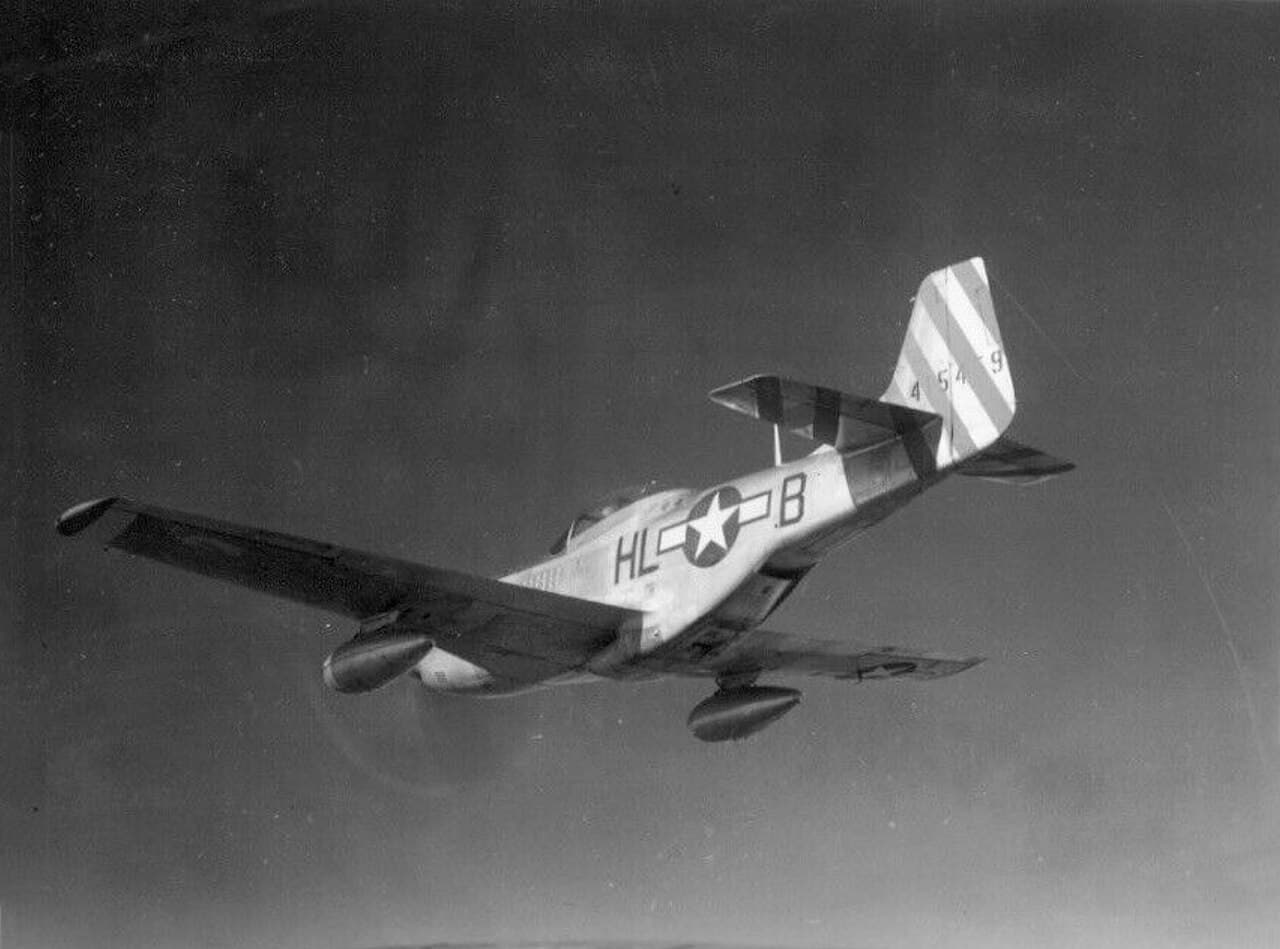
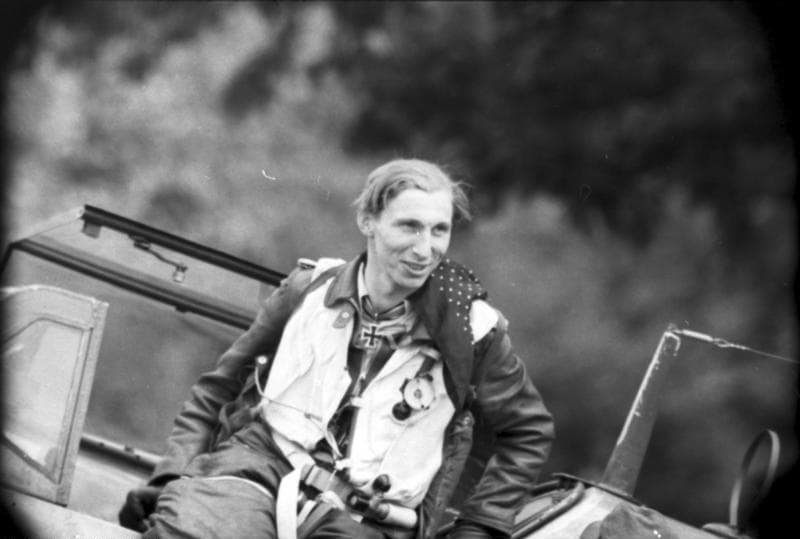
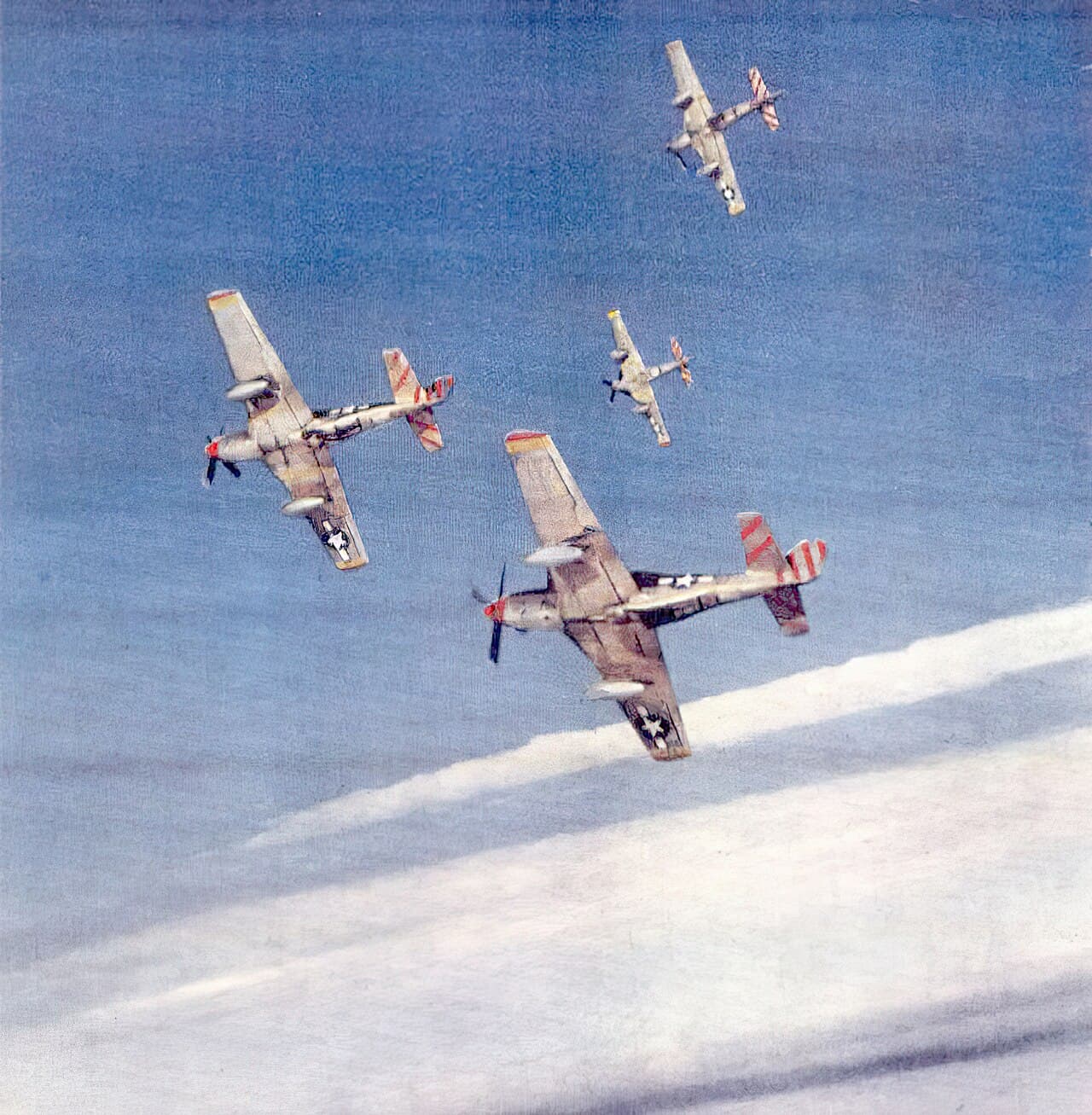
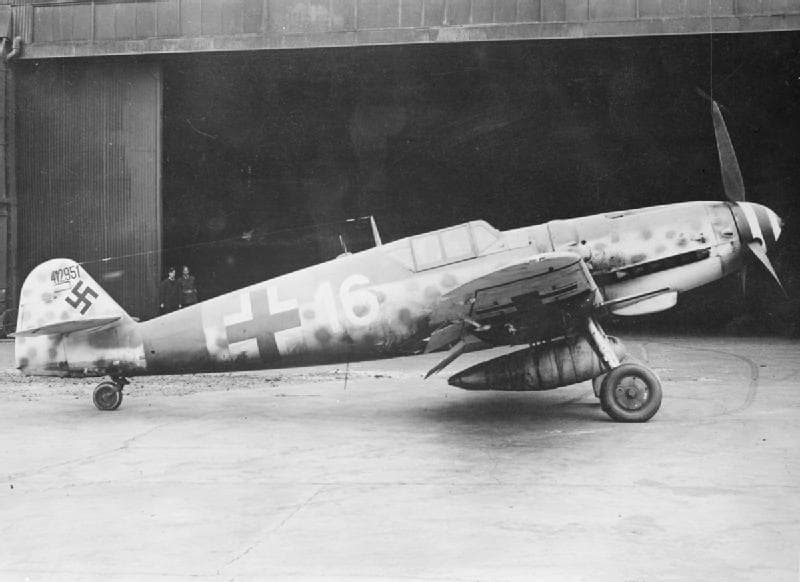
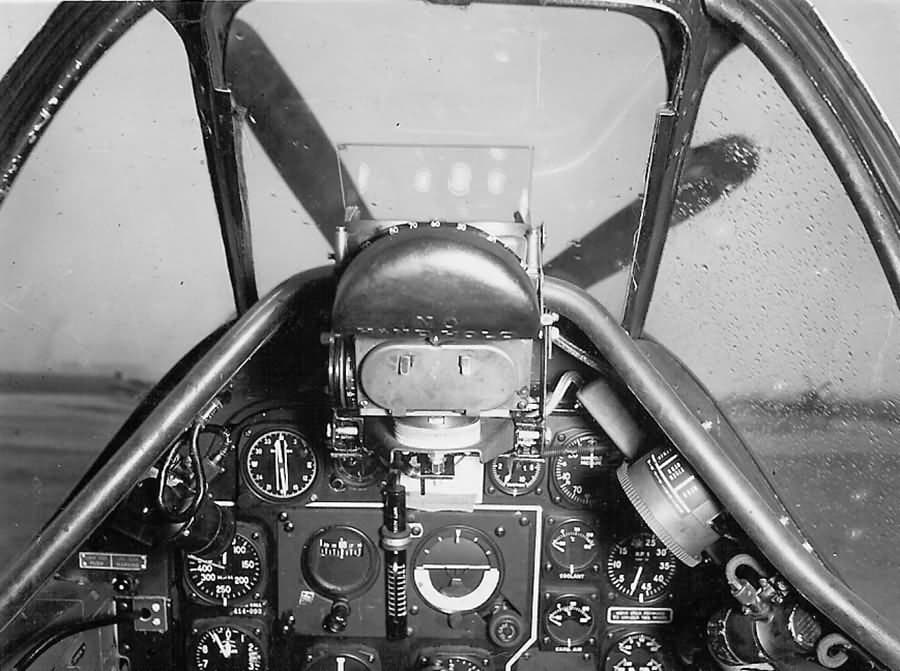
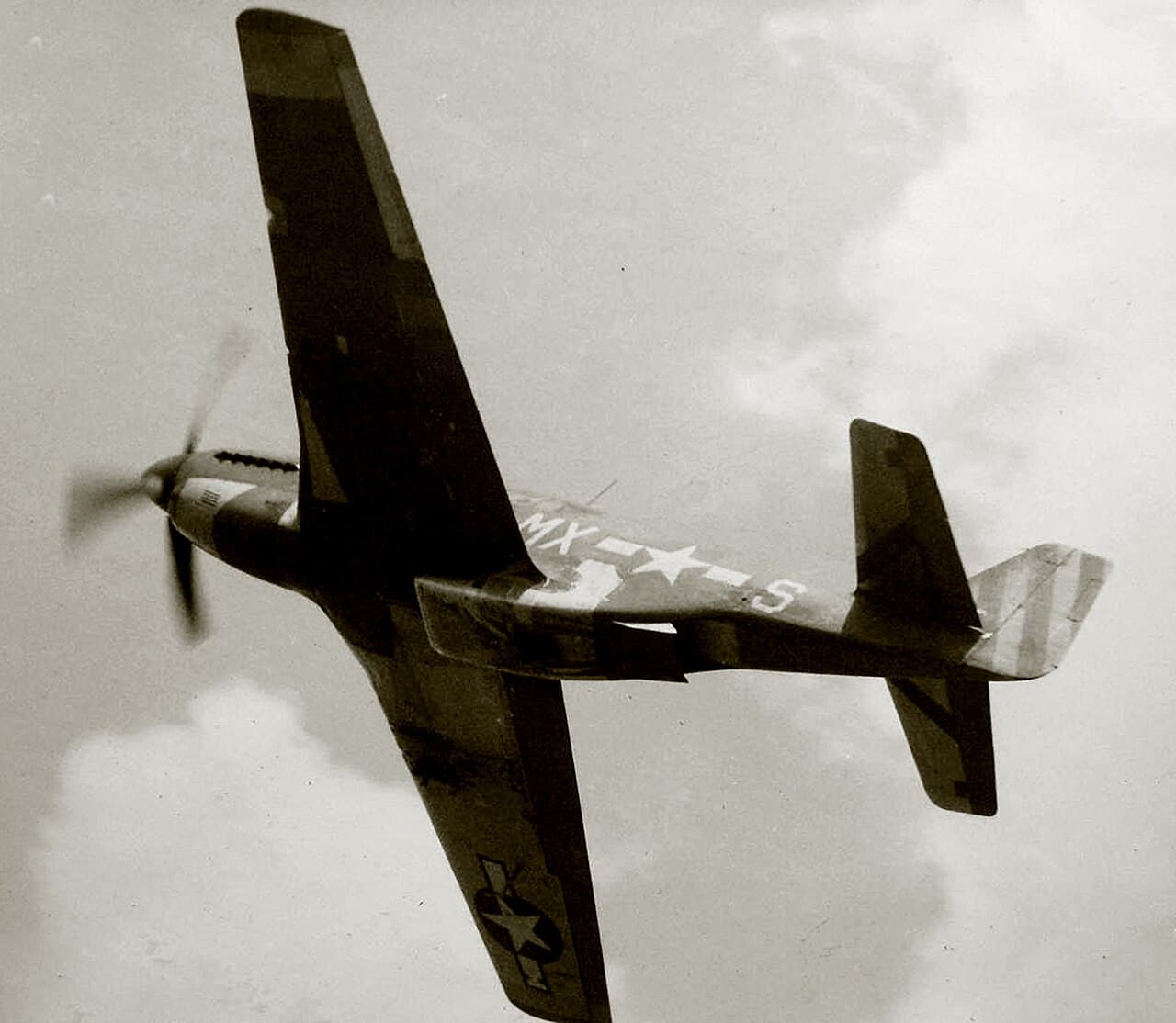
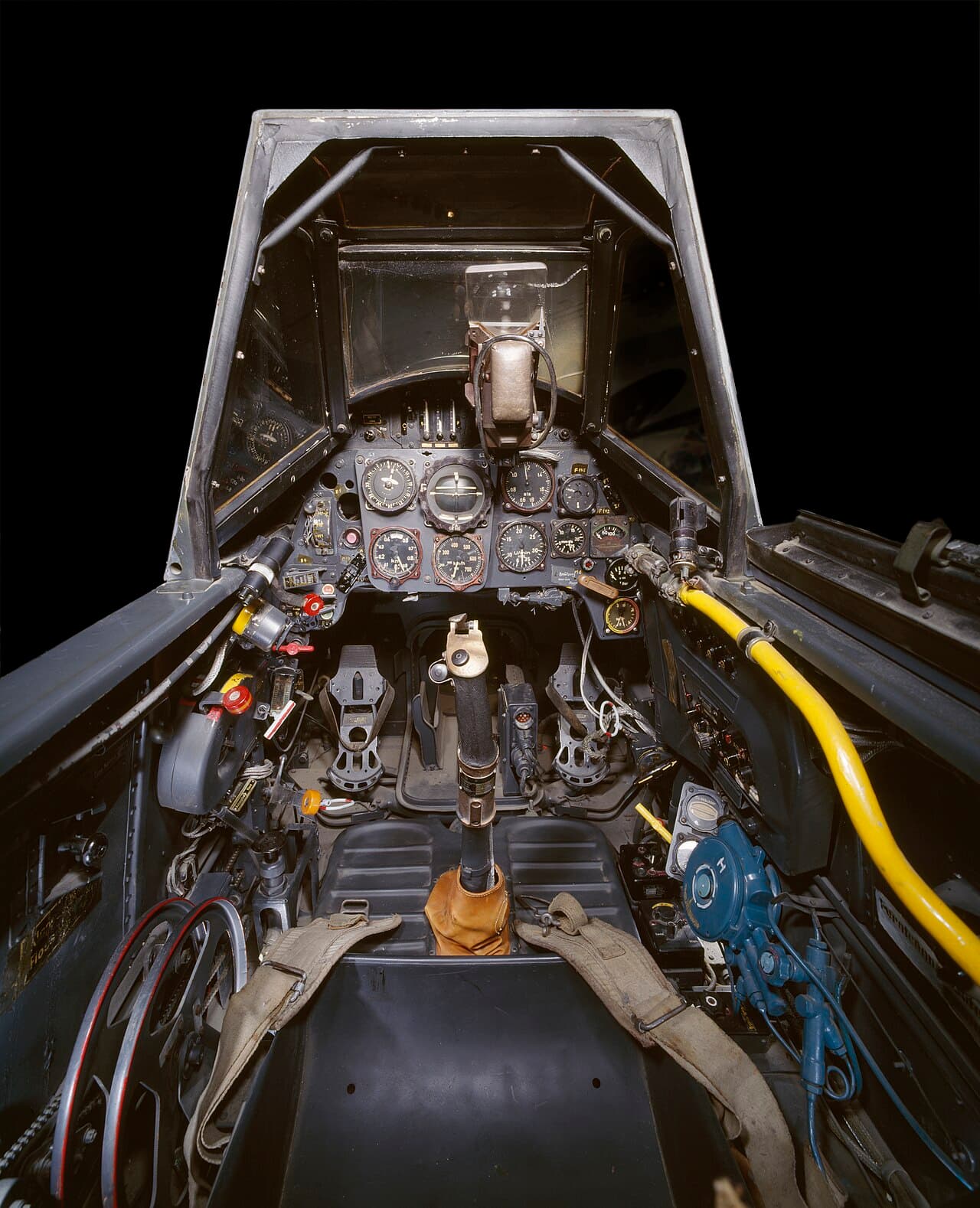
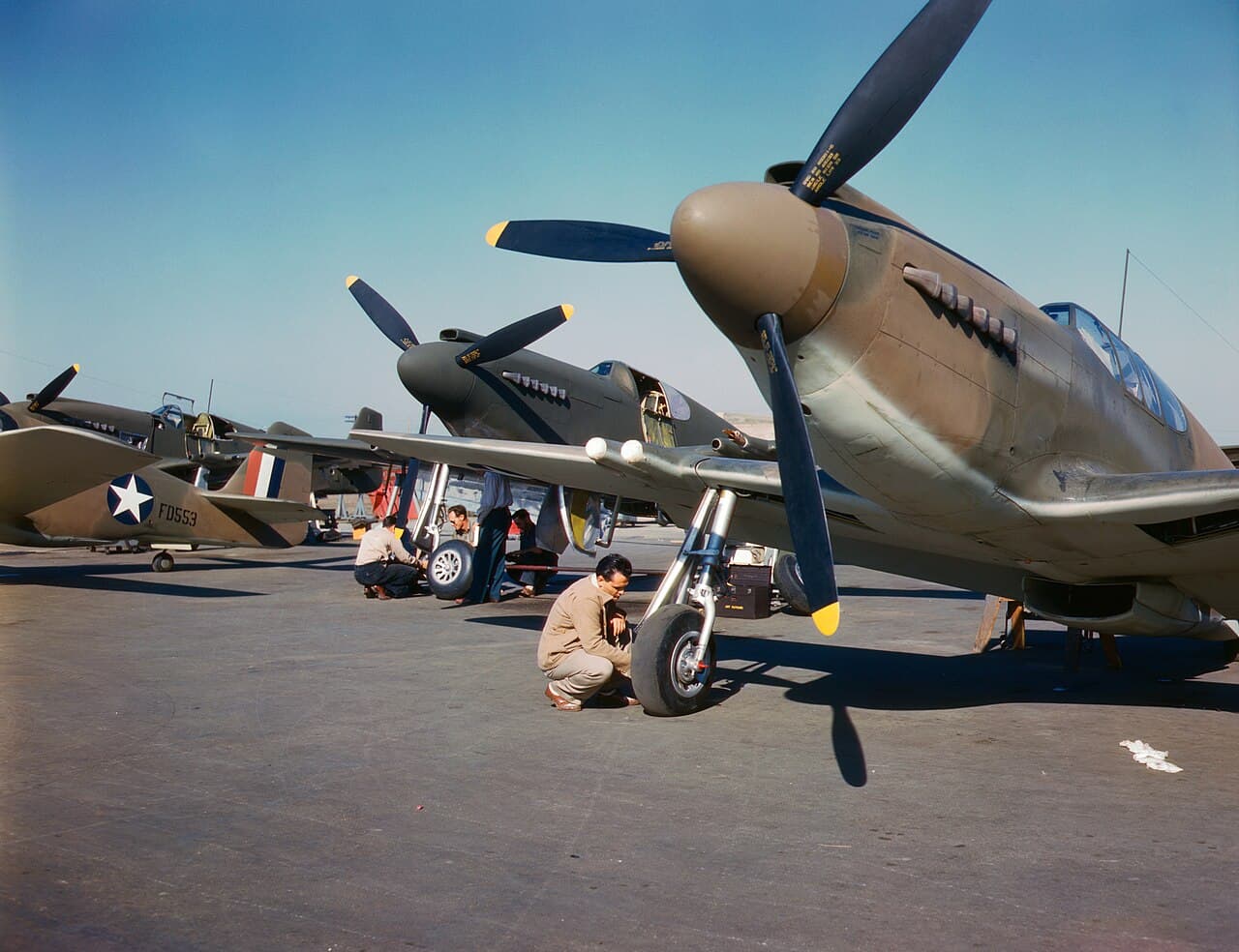
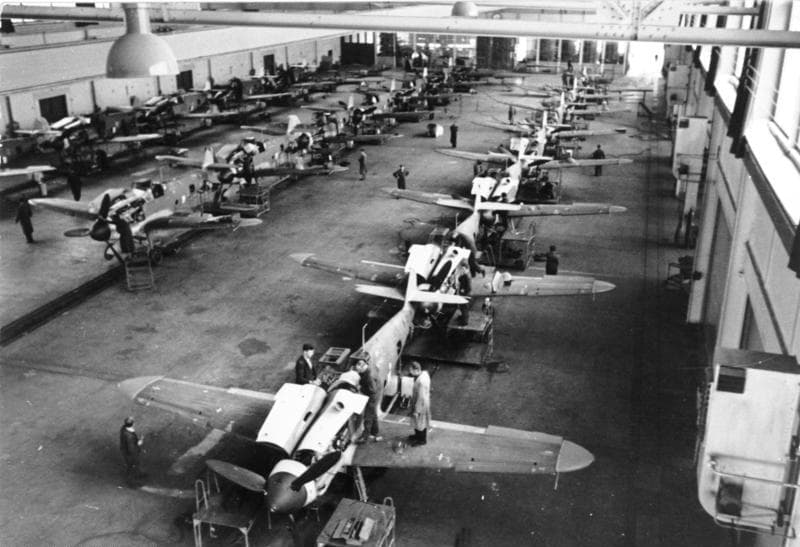
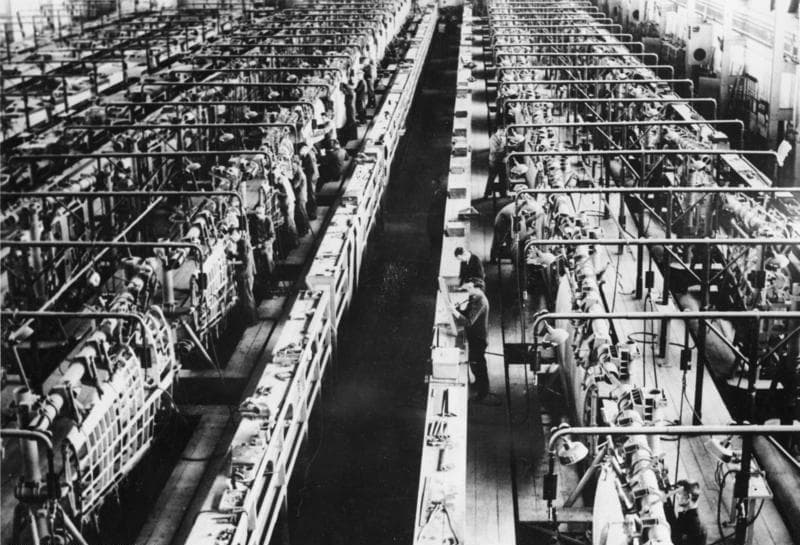
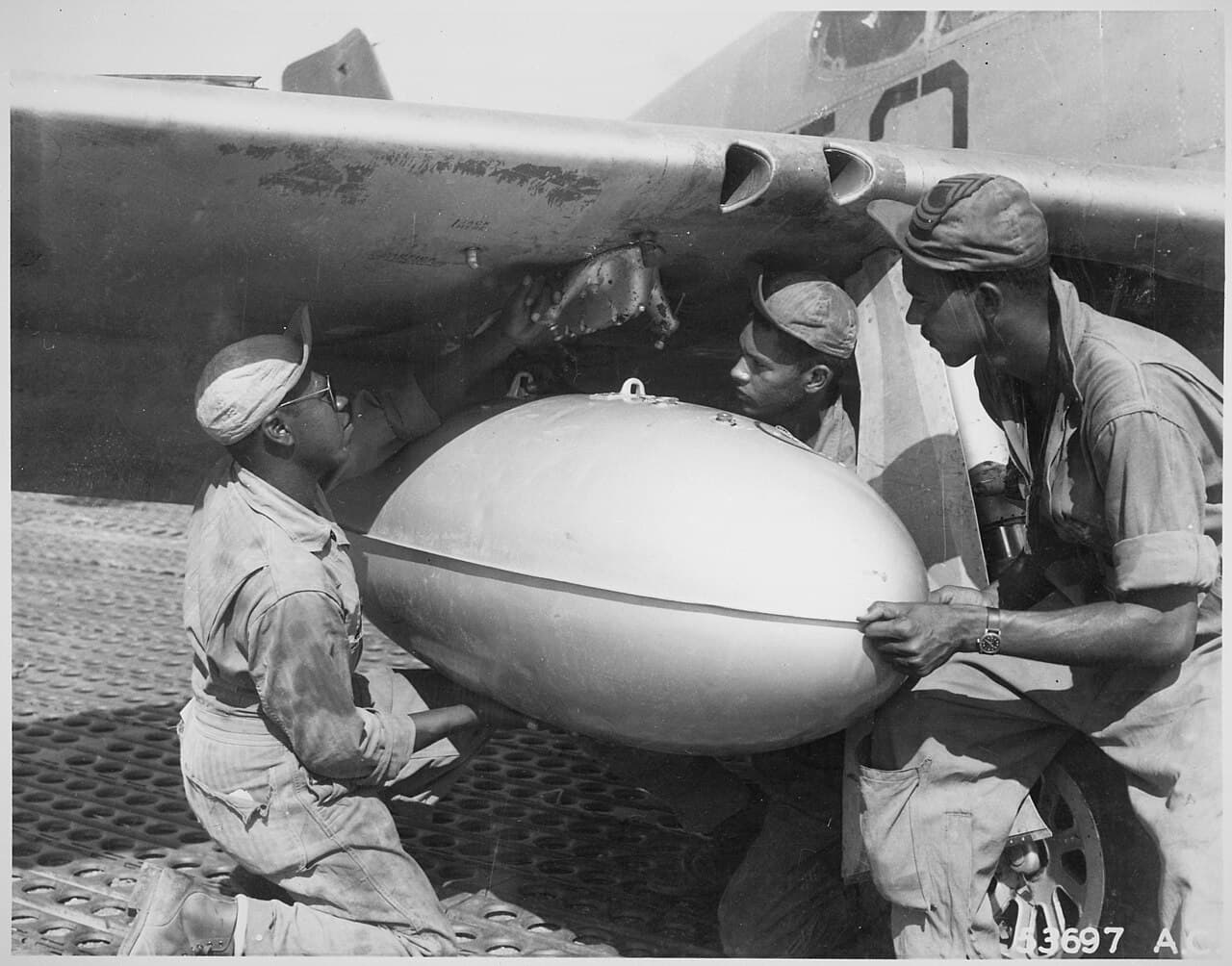
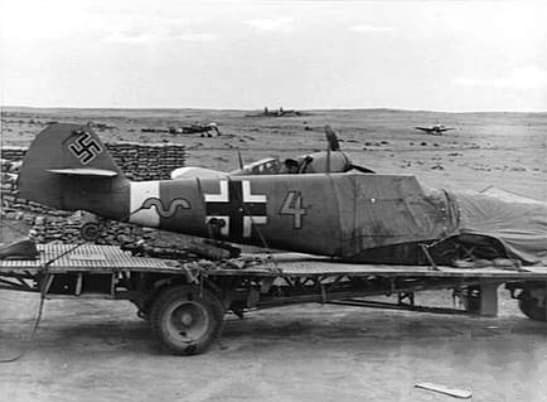

Click any photo to enlarge · 19 photos
Historical Context
The strategic backdrop that shaped both aircraft
The P-51D Mustang and Bf 109G Gustav met in the skies over Europe during the most critical phase of the strategic air war, from early 1944 through the end of the conflict in May 1945. Their confrontation was not a chance encounter between rival designs but a deliberate American strategy: the Eighth Air Force needed a long-range escort fighter that could accompany B-17 and B-24 bombers all the way to Berlin and back, and the P-51D was engineered specifically for that mission. The Bf 109G, by this point the Luftwaffe's most numerous fighter, was the primary opponent waiting over the Reich.
These two aircraft fought each other directly and frequently. From the moment P-51D groups became operational in early 1944, Mustang pilots engaged Bf 109Gs over every major target in Germany, oil refineries at Ploesti, ball-bearing factories at Schweinfurt, aircraft plants at Regensburg, and the capital itself. The air battles of Big Week (February 20–25, 1944) marked the first large-scale engagements, and by spring 1944, General Jimmy Doolittle had ordered his escort fighters to actively hunt the Luftwaffe rather than stay tied to the bomber formations. This transformed the P-51D from a defensive shield into an offensive weapon, and Bf 109G pilots found themselves increasingly on the defensive.
The matchup between these two fighters is the most iconic of the European air war, a contest between American industrial might and innovative design on one side, and German engineering excellence and pilot experience on the other. It was decided not in any single engagement but through the grinding attritional campaign of 1944, in which the Luftwaffe lost irreplaceable pilots faster than it could train replacements.
Notable Combat Encounters
Key engagements where these aircraft faced each other in combat
Operation Argument, known as "Big Week," saw the first large-scale confrontation between P-51D Mustangs and Bf 109Gs. Over six days, the Eighth and Fifteenth Air Forces launched massive raids against German aircraft production facilities. P-51Ds from the 354th and 357th Fighter Groups flew deep escort missions, engaging Luftwaffe interceptors that rose to defend the factories.
Outcome
The Luftwaffe lost approximately 355 fighters and, critically, over 100 pilots killed, losses that could not be replaced at the same rate. American bomber losses were significant but sustainable.
Big Week proved the P-51D could operate effectively at the ranges needed to escort bombers deep into Germany, fundamentally changing the air war dynamic.
The first American daylight bombing raid on Berlin. 730 bombers escorted by P-51Ds and P-47s flew to the German capital. Bf 109Gs from JG 1, JG 3, JG 11, and JG 302 scrambled to intercept, producing the largest air battle over Berlin to that date. P-51D pilots engaged in running fights from the Dutch border to the target and back.
Outcome
69 American bombers were lost, the highest single-day loss, but the Luftwaffe also suffered heavily, losing 66 fighters. The Americans returned to Berlin again on March 8 and 9.
Demonstrated that no target in Germany was beyond reach. The psychological impact on both sides was enormous, German civilians saw American fighters over their capital for the first time.
Major George Preddy's 352nd Fighter Group engaged a large formation of Bf 109Gs near Derben. In the course of a single mission, the 352nd claimed 23 Bf 109s destroyed. The engagement illustrated the typical late-war dynamic: experienced Mustang pilots bouncing Bf 109G formations that included many poorly trained replacement pilots.
Outcome
The 352nd FG suffered no losses while claiming 23 victories, a devastating exchange ratio that reflected the declining quality of Luftwaffe pilot training.
Emblematic of the late-war imbalance, the Luftwaffe still had aircraft but increasingly lacked the trained pilots to fly them effectively.
The Luftwaffe launched Sonderkommando Elbe, a desperate ramming attack using stripped-down Bf 109Gs flown by volunteer pilots who were expected to ram American bombers. Approximately 120 Bf 109s launched, many piloted by barely trained cadets with instructions to bail out after ramming. P-51D escort groups intercepted many of the rammers before they reached the bombers.
Outcome
Of the roughly 120 Bf 109s launched, only about 15 successfully rammed bombers, destroying 8. P-51D pilots shot down dozens of the slow, stripped-down Messerschmitts before they could reach the formation.
The last major Bf 109 operation of the war, and a desperate measure that underscored how completely the Mustang had won the air superiority battle.
Armament & Firepower
Primary weapons, munitions capacity, and destructive capability
P-51D Loadout
Six .50-caliber (12.7mm) M2 Browning machine guns with 1,880 rounds total (400 rounds for the inboard pair, 270 for the middle, and 270 for the outboard). Rate of fire: approximately 4,500 rounds per minute combined. Effective range: 300-600 yards. Could also carry two 500-lb bombs or six 5-inch HVAR rockets for ground attack.
Bf 109G Loadout
One 20mm MG 151/20 cannon firing through the propeller hub (200 rounds) and two 13mm MG 131 machine guns above the engine (300 rounds each). Optional field modifications: underwing 20mm MG 151/20 gondolas (Rüstsatz 6) or 30mm MK 108 cannon for bomber destruction. Rate of fire: approximately 2,200 rounds per minute in standard configuration.
Air-to-Air Verdict
The Mustang's six .50-calibers delivered a higher volume of fire over a longer engagement window. With nearly 1,900 rounds, a P-51D pilot could engage multiple targets per sortie. The Bf 109G's centerline cannon hit harder per round, a single 20mm mine shell could cause catastrophic damage, but the limited ammunition supply (200 rounds for the cannon) meant German pilots had to be more selective with their shots.
Ground Attack Verdict
Both were effective ground-attack platforms late in the war. The P-51D's bomb capacity and HVAR rockets gave it greater strike versatility. The Bf 109G was used extensively in the fighter-bomber role on the Eastern Front but was less suited to it than dedicated ground-attack types.
The armament question is nuanced and depends on mission context. For air-to-air combat against single-engine fighters, the P-51D's six .50-calibers were arguably the better weapon system, the volume of fire created a dense cone of bullets that was forgiving of slight aiming errors, and the deep ammunition supply allowed aggressive engagement. American ace Don Gentile described it as "like having six garden hoses", you could hose a target with sustained fire and expect hits.
The Bf 109G's armament was better optimized for bomber interception. The MG 151/20 cannon fired Minengeschoss (mine shells), thin-walled high-explosive rounds that detonated with devastating effect against bomber structures. A three-second burst into a B-17's wing could sever it. The optional MK 108 30mm cannon was even more lethal against bombers, three hits from its 330-gram shells were typically enough to destroy any four-engine bomber. But these heavy weapons added weight and drag, degrading the Bf 109G's dogfighting performance against escorting Mustangs.
This created a tactical dilemma for Bf 109G pilots: configure for bomber killing and become vulnerable to escorts, or configure for dogfighting and lose anti-bomber effectiveness. The Mustang faced no such trade-off, its standard armament was effective against everything.
Survivability & Protection
Armor, self-sealing tanks, pilot protection, and structural resilience
P-51D Protection
The P-51D featured armor plate behind the pilot's head and back (totaling approximately 73 lbs of armor), a bulletproof windscreen, and self-sealing fuel tanks in the wings and fuselage. The aircraft's main vulnerability was its liquid-cooled Merlin engine, a single hit to the coolant system could cause engine failure within minutes.
Bf 109G Protection
The Bf 109G carried armor plate behind the pilot and a 90mm armored glass windscreen. Self-sealing fuel tanks were standard. Like the Mustang, its DB 605 inline engine was vulnerable to coolant system hits. The cockpit was notably cramped, which could impede emergency egress.
Pilot Protection
Both aircraft provided comparable pilot protection with rear armor plate and bulletproof windscreens. The P-51D's bubble canopy, while excellent for visibility, was slightly less structurally protective than the Bf 109G's framed canopy in a collision or debris impact. However, the bubble canopy made it easier for pilots to bail out quickly in an emergency, a non-trivial advantage given that many WW2 pilots died because they couldn't exit a damaged aircraft in time.
Structural Durability
The P-51D was a well-built airframe but not exceptionally rugged, it was designed for speed and range, not damage absorption. The Bf 109G was similarly a relatively lightweight structure. Neither aircraft had the raw toughness of the P-47 Thunderbolt or the Fw 190. Both were vulnerable to structural failure in high-G maneuvers if pushed beyond design limits, particularly in high-speed pullouts.
Crash Survivability
The Mustang's belly radiator scoop tended to dig into soft ground during forced landings, sometimes causing the aircraft to flip. The Bf 109G's narrow-track landing gear made ground handling treacherous, more Bf 109s were lost to landing accidents than to any single enemy type. In ditching, the Mustang's ventral radiator made water landings hazardous, while the Bf 109G was known to sink rapidly.
Survivability was roughly equal between these two fighters. Both were liquid-cooled, inline-engine designs that shared the fundamental vulnerability of coolant system damage, a single bullet through a coolant line meant an engine failure within minutes and a forced landing or bailout. This was in stark contrast to radial-engine fighters like the P-47 and Fw 190, which could absorb far more punishment and keep flying. The real survivability difference was strategic: American pilots who bailed out over friendly territory could fly again the next day. German pilots who bailed out over Germany might fly again, but the attrition in experienced pilots was relentless and irreplaceable.
Tactical Doctrine & Evolution
How pilots were trained to fight in each aircraft and how tactics adapted over time
P-51D Tactics
American P-51D tactics were built around energy fighting and the "bounce", using altitude and speed advantages to initiate attacks from above, make a high-speed pass, and then zoom back up to repeat. The standard attack profile was: spot the enemy from above (bubble canopy advantage), dive to build speed, fire in a brief high-deflection pass, and pull back up to altitude. If the initial pass missed, the Mustang pilot would extend away at high speed rather than entering a turning fight.
When turning fights were unavoidable, Mustang pilots were trained to keep their speed above 250 mph indicated, the regime where the P-51D's controls were most effective and its energy advantage was greatest. American flight leads drilled the "loose deuce" formation: pairs of fighters covering each other, with one attacking and one guarding, rotating roles fluidly.
By late 1944, General Doolittle's policy of "freeing" escort fighters to hunt the Luftwaffe aggressively meant P-51D pilots were not merely defending bombers but actively seeking out Bf 109s on the ground and in the air. Strafing airfields became a major P-51D mission, and more Bf 109s were destroyed on the ground than in air combat during the final year of the war.
Bf 109G Tactics
Bf 109G tactics against P-51D escorts evolved throughout 1944 as the Luftwaffe adapted to the new threat. Early in 1944, German interceptors focused on the bombers and tried to avoid the escorts, but as Mustang pilots became more aggressive, this became increasingly difficult.
The standard Bf 109G tactic was the "climb and attack from above", using the Gustav's superior climb rate to gain altitude above the Mustang escorts, then diving through the escort screen to reach the bombers. If bounced by Mustangs, the trained response was to split-S or half-roll into a steep dive (using the Bf 109G's quick initial acceleration), then pull up into a climbing reversal that exploited the Gustav's climb advantage.
As the quality of German pilots declined, many Bf 109G units adopted "hit and run" attacks on bomber formations, diving through at maximum speed, firing a brief burst, and extending away without attempting to re-engage. This reduced losses but also reduced effectiveness. The Sturmgruppen, heavily armed Fw 190s escorted by Bf 109Gs, represented the Luftwaffe's most sophisticated late-war tactical response, using the Gustavs as a fighter screen while the Focke-Wulfs concentrated on the bombers.
How Tactics Evolved
The tactical evolution of the P-51D vs Bf 109G matchup mirrored the strategic arc of the air war. In early 1944, Bf 109G pilots still had the initiative, they could choose when and where to attack bomber formations, and P-51D escort pilots were tethered to the bombers. The turning point came when Doolittle freed the escorts to pursue: Mustang pilots now hunted the Bf 109Gs rather than merely reacting to them.
By summer 1944, the Luftwaffe was forced into an increasingly defensive posture. Bf 109G units adopted squadron-sized "gaggles" instead of the disciplined pairs and fours that had served them well, because inexperienced pilots couldn't maintain tactical formations under pressure. P-51D units exploited this by targeting the stragglers and poorly-positioned elements of these gaggles.
The final phase, from autumn 1944 to war's end, saw the Luftwaffe conserving fuel and aircraft for occasional massed interceptions rather than contesting every raid. When they did rise to fight, the attrition was devastating, experienced Mustang pilots against dwindling numbers of German veterans surrounded by novices. The tactical story of P-51D vs Bf 109G is ultimately a story of how overwhelming resources, when combined with a very good aircraft and well-trained pilots, ground down even a formidable opponent.
What the Pilots Said
Firsthand accounts from the men who flew and fought these aircraft
On the Bf 109G“The Bf 109 could out-climb us and for a few turns could out-turn us, but if you kept your speed up and fought in the vertical, the Mustang was the better machine. We had speed, range, and visibility, and that was enough.”
On the P-51D“The Mustang was the opponent I respected most. It was fast, it could dive, and it could stay with you. When you saw those Mustangs, you knew you were in for a hard fight. The only advantage we had was in the vertical, climb hard, and try to get above them.”
On the P-51D“I loved the Mustang. You could see everything, that bubble canopy was like sitting on top of the world. In a 109, you were always worried about what was behind you that you couldn't see.”
On the P-51D“We were not afraid of the Mustang in single combat, one against one, the 109 was still a dangerous opponent. But they never came alone. There were always more of them, and they always had altitude. That was what killed us.”
By the Numbers
Statistical combat performance and historical kill ratios
Exchange Ratio
P-51 groups in the Eighth Air Force claimed approximately 4,950 air-to-air victories against all types between 1944 and 1945, with total P-51 losses of approximately 2,520 aircraft (all causes). Against the Bf 109G specifically, the exchange ratio was heavily favorable to the Mustang, though precise type-vs-type figures are complicated by misidentification (Fw 190s were frequently recorded as Bf 109s and vice versa).
Source: USAAF Statistical Digest & Luftwaffe loss records, adjusted for shared claims
The exchange ratio tells a real story but requires careful interpretation. The P-51D's favorable kill ratio was not primarily a reflection of aircraft superiority, it reflected the total collapse of Luftwaffe pilot training in 1944. By mid-1944, German replacement pilots were arriving at frontline units with as few as 80 flying hours, compared to the 400+ hours of an average American fighter pilot. These poorly trained Germans were easy prey for experienced Mustang aces.
When equally skilled pilots met, the results were far more even. The Luftwaffe's experten, aces with 50, 100, or even 200+ victories, remained extremely dangerous opponents in the Bf 109G right up to the end of the war. Pilots like Gerhard Barkhorn (301 victories), Günther Rall (275 victories), and Walter Krupinski (197 victories) continued to shoot down Mustangs regularly. The difference was that there were fewer and fewer such pilots, while America produced well-trained replacements in an unending stream.
The aggregate numbers favor the Mustang decisively, but they are a verdict on the German training and attrition crisis as much as on the aircraft themselves.
Production & the Numbers Game
How industrial output shaped the strategic balance
15,586
P-51D Built
23,500
Bf 109G Built
The production numbers reveal the fundamental asymmetry of the air war. Germany produced far more Bf 109Gs than America produced P-51Ds, but America's total fighter production across all types dwarfed Germany's, and the training infrastructure to turn out skilled pilots was incomparably larger. Germany could replace lost aircraft but not lost pilots. America could replace both.
The P-51D's production efficiency was remarkable: North American Aviation delivered a reliable, high-performance fighter at a unit cost of approximately $51,572 (1945 dollars), significantly cheaper than the P-47 Thunderbolt ($83,001) or the P-38 Lightning ($97,147). This cost efficiency, combined with the Mustang's long range, made it the most strategically efficient fighter of the war: each P-51D delivered more combat hours per dollar spent than any alternative.
By contrast, the Bf 109G's production, while impressive in volume, was increasingly hampered by material shortages, forced labor quality issues, and the dispersal of factories into underground facilities to escape bombing. Late-production Bf 109Gs suffered from quality control problems that earlier models had not experienced, and many were delivered with substandard finish that reduced performance.
Advantages in This Matchup
Where each aircraft holds the edge in a head-to-head encounter
P-51D Mustang
- Decisive speed advantage above 15,000 feet, could dictate the terms of engagement
- Combat radius of 750 miles with drop tanks, the only single-engine fighter that could escort bombers to Berlin
- Bubble canopy providing superior all-round visibility, critical for spotting threats first
- Six .50-caliber guns with deep ammunition supply, effective against both fighters and bombers
- Exceptional dive performance, could disengage from unfavorable situations at will
- Superior energy retention in sustained maneuvering combat
- Lower cost per unit and more efficient production
Bf 109G Gustav
- Superior climb rate below 20,000 feet, could use vertical maneuvers to gain separation
- Tighter instantaneous turn radius at low speeds thanks to leading-edge slats
- Devastating 20mm centerline cannon with mine shells, single hits could be fatal
- Optional 30mm MK 108 cannon for bomber destruction, unmatched anti-bomber firepower
- Lighter weight and smaller dimensions, harder to spot and track visually
- More experienced pilot cadre (in early 1944) with extensive combat knowledge
- Could be produced in larger numbers with Germany's existing industrial base
Final Verdict
Overall Winner
🇺🇸 North American P-51D Mustang
United States
The P-51D Mustang vs Bf 109G matchup is often framed as a question of which was the "better" fighter, but that framing misses the point. The Bf 109G was not a worse aircraft than the P-51D, in several critical performance dimensions (climb rate, instantaneous turn, anti-bomber firepower), it was arguably superior. What the P-51D had was the combination of qualities needed to win a strategic air campaign: the range to escort bombers deep into enemy territory, the speed to engage or disengage at will, the visibility to spot threats first, and the firepower to destroy them.
The Bf 109G was designed as a short-range homeland defense interceptor, and it excelled at that role. Its problem was that the air war of 1944 was not fought on its terms. The P-51D forced the Luftwaffe to fight over Germany, every day, against an enemy that could replace its losses and keep coming. No amount of climb rate or cannon caliber could overcome that strategic reality.
In an individual engagement between equally skilled pilots, the outcome was genuinely uncertain, the Bf 109G was dangerous enough that every Mustang pilot who survived the war would tell you so. But the air war was not decided by individual engagements. It was decided by the relentless accumulation of small advantages, more pilots, better training, longer range, better fuel, better coordination, that the P-51D and the American system behind it delivered day after day throughout 1944 and 1945.
The P-51D Mustang didn't just defeat the Bf 109G. It defeated the Luftwaffe, which is what it was designed to do.
Theaters of Operation
Shared Theaters
P-51D Only
Bf 109G Only
Related Matchups
 Spitfire Mk IXBf 109G
 Me 262AP-51D
 P-47DP-51DP-51DSpitfire Mk IX
 P-38JP-51DP-51DSpitfire Mk IXP-51D
 Fw 190ABf 109GFw 190AP-47DBf 109G