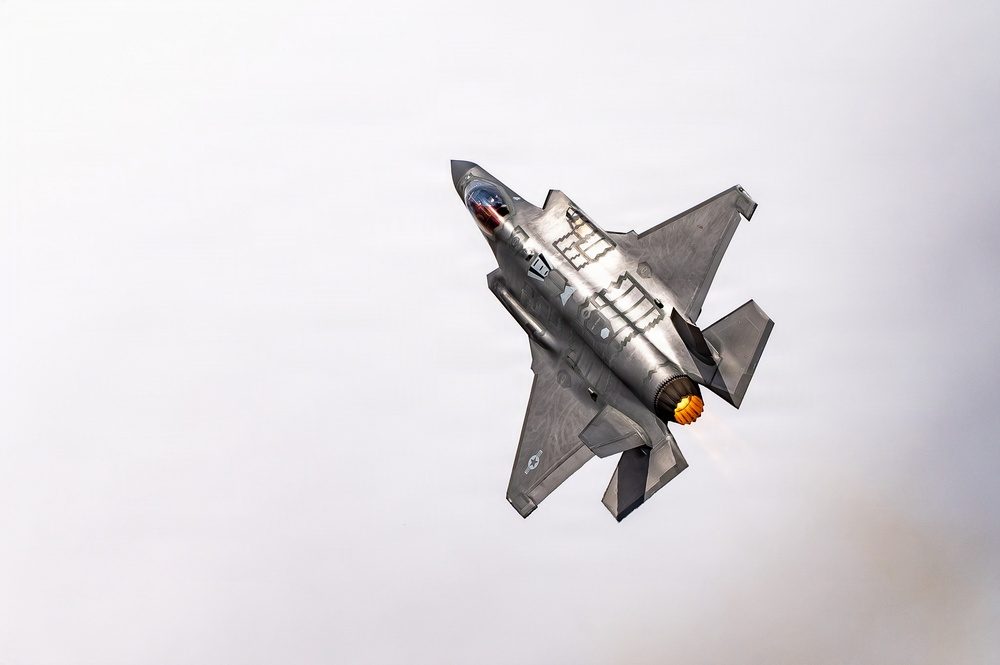

An AESA radar fires thousands of independent beams simultaneously. Each beam can track a different target, operate on a different frequency, and switch directions in microseconds, without any part of the antenna physically moving. That single capability is why AESA (Active Electronically Scanned Array) technology has become the defining sensor of modern military aviation and naval warfare. It's why an F-35 can track 200+ targets while jamming enemy radars and communicating with allied aircraft, all with the same antenna. And it's why the shift from mechanical radar to AESA is the most consequential sensor revolution since radar itself was invented in the 1930s.
The Problem With Moving Parts
Traditional radar works by emitting a pulse of radio energy, then listening for the echo that bounces back from a target. The time delay tells you how far away the target is. The direction the antenna was pointing tells you where it is. The Doppler shift, the frequency change in the returning signal, tells you how fast it's moving and in which direction.
For decades, this meant physically rotating a dish antenna. The iconic spinning radar dome on an AWACS aircraft or atop a warship is a mechanically scanned radar: it sweeps the sky one direction at a time, refreshing its picture once per revolution. The AN/APG-63 on early F-15 Eagles used a mechanically scanned antenna that could point in one direction at a time, taking several seconds to sweep its full field of regard. Against a single target, that's fine. Against dozens of simultaneous threats approaching from different directions, it's a fatal bottleneck.
How AESA Changed Everything
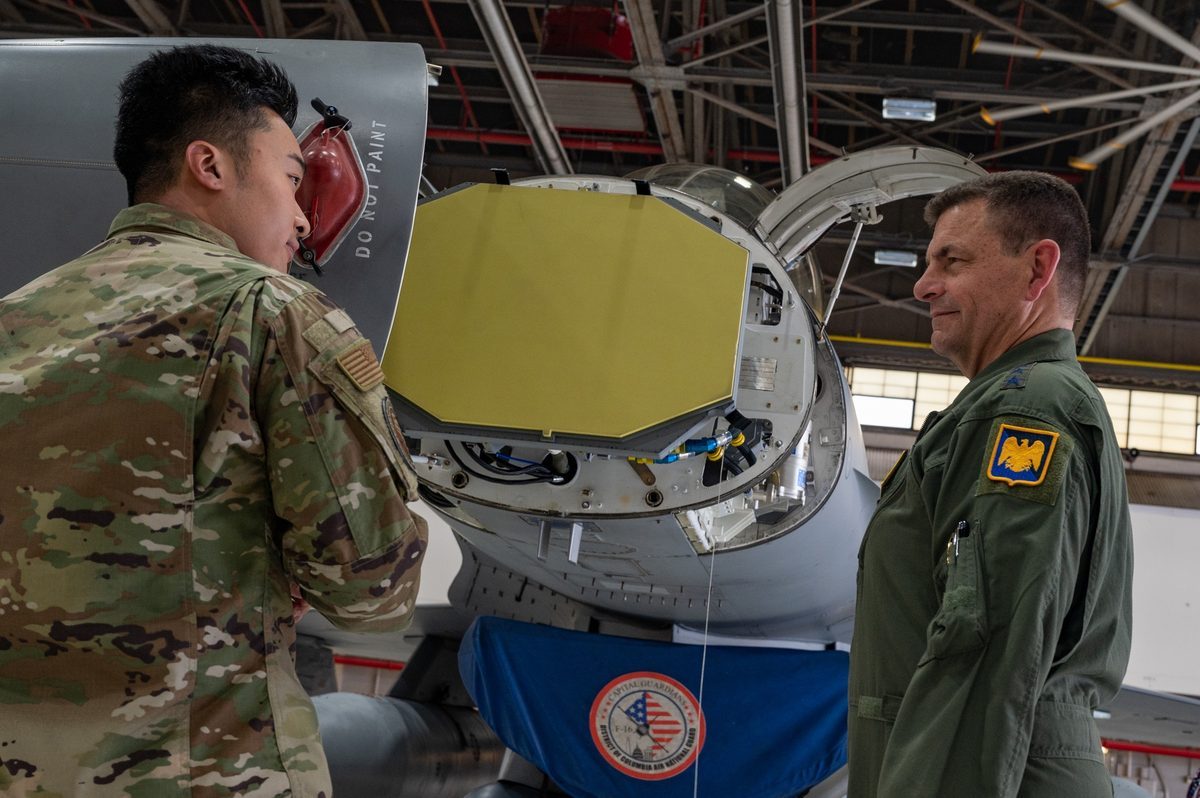
An AESA radar replaces the single transmitter and moving antenna with hundreds or thousands of individual Transmit/Receive (T/R) modules, tiny self-contained radar elements arranged in a flat array. Each module generates its own signal, controls its own phase and frequency, and receives its own returns. By precisely controlling the timing (phase) of the signal from each module, the radar can steer its beam electronically in any direction, almost instantaneously, without moving anything.