




Iconic Planes Of The Second World War
Northrop P-61 Black Widow U.S. Airforce Despite its ominous name, the Northrop P-61 doesn’t get the attention that more iconic American planes…
daniel-mercer··18 min read

France declares war on the Kingdom of Prussia, beginning the conflict that would lead to the fall of the French Second Empire, the unification of Germany, and the territorial grievances that fueled both World Wars.
The English Tudor warship Mary Rose, flagship of King Henry VIII, capsizes and sinks in the Solent during an engagement with a French invasion fleet, taking roughly 500 crew and archaeological evidence of Tudor naval warfare with her.
The first women's rights convention opens in Seneca Falls, New York, producing the Declaration of Sentiments. The movement it launched would eventually open all military roles to women, transforming the armed forces.
Union forces intercept Confederate raider John Hunt Morgan's cavalry at Buffington Island, Ohio, during Morgan's Raid, the northernmost Confederate military operation of the Civil War. Most of Morgan's command was captured.
Confederate Lieutenant General Jubal Early's Army of the Valley, having threatened Washington earlier in the month, skirmishes with Union cavalry near Snicker's Gap, Virginia as it withdraws back into the Shenandoah Valley with captured Union stores.
France declares war on the Kingdom of Prussia, beginning the conflict that would lead to the fall of the French Second Empire, the unification of Germany, and the territorial grievances that fueled both World Wars.
Admiral Karl Doenitz orders the remaining Type VII U-boats out of the U.S. Eastern Sea Frontier after Allied convoy escorts, air patrols, and coastal blackouts cut merchant ship losses from 182 in June to manageable levels.
Over 500 American B-17 and B-24 bombers strike Rome's San Lorenzo and Littorio railroad marshaling yards, marking the first Allied bombing of the Eternal City. The raid killed approximately 1,500 civilians and damaged the ancient Basilica of San Lorenzo.
Iconic Planes of the Second World WarU.S. Twelfth Air Force B-17 and B-24 bombers strike the San Lorenzo rail yards and other rail infrastructure in Rome, hitting the logistical backbone of Axis forces in Italy for the first time and accelerating the political crisis that would topple Mussolini.
The Geneva Accords are signed, dividing Vietnam at the 17th parallel into communist North and non-communist South. The temporary partition was intended to last until elections in 1956, but those elections never took place, setting the stage for the Vietnam War.
The Apollo 11 spacecraft fires its Service Propulsion System engine to enter lunar orbit, placing military veterans Armstrong, Aldrin, and Collins on final approach to the first crewed Moon landing.
Wear the Timeline
11 military events occurred on July 19, spanning multiple centuries. Key events include: Franco-Prussian War Begins (1870), Allies Bomb Rome for the First Time (1943), Two-Ocean Navy Act Signed (1940).
The most significant military event on July 19 is Franco-Prussian War Begins (1870). France declares war on the Kingdom of Prussia, beginning the conflict that would lead to the fall of the French Second Empire, the unification of Germany, and the territorial grievances that fueled both World Wars.
Notable military figures born on July 19 include Samuel Colt (1814–1862), George McGovern (1922–2012).
Events on July 19 span the Interwar Period, World War II, the Civil War, the Cold War, the Colonial & Revolutionary era, covering 11 events across 3 centuries of military history.
Events on July 19 involve 4 branches of the U.S. and allied armed forces, reflecting the global scope of military operations throughout history.
Explore military history from the day you were born.
June 6
The Allied invasion of Normandy, the largest amphibious assault in history.
December 7
Japan attacks the U.S. Pacific Fleet, bringing America into World War II.
September 11
The deadliest terrorist attack in history transforms U.S. national security.
August 6
The first atomic bomb is dropped on a city, ushering in the nuclear age.
May 8
Nazi Germany surrenders unconditionally, ending World War II in Europe.
November 11
Armistice Day marks the end of World War I and honors all who served.
June 4
The turning point of the Pacific War as the U.S. Navy destroys four Japanese carriers.
July 4
The Declaration of Independence is adopted, sparking the American Revolution.
Northrop P-61 Black Widow U.S. Airforce Despite its ominous name, the Northrop P-61 doesn’t get the attention that more iconic American planes…

All in all, there are 19 active aircraft carriers around the world. As you’ll see in this article, the vast majority of those belong to the United States. However, there…
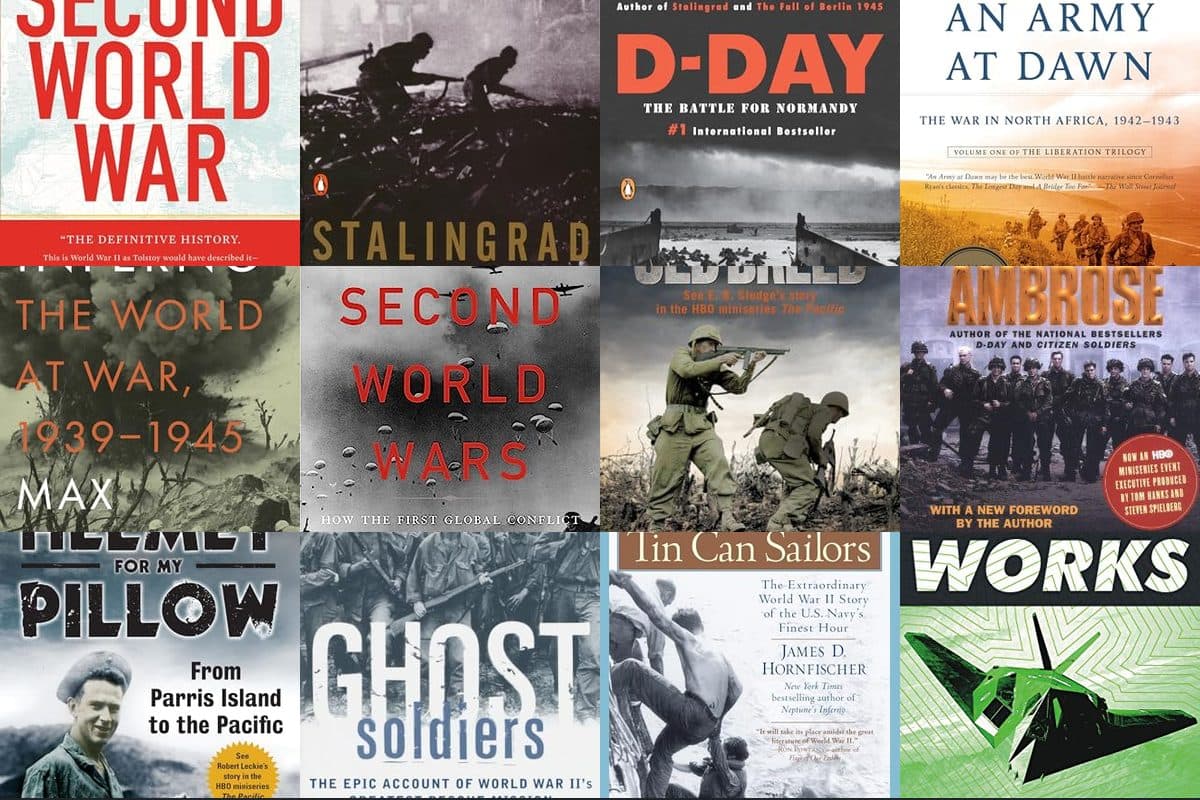
15 essential WW2 books covering every theater. Narrative histories, memoirs, and visual references ranked.
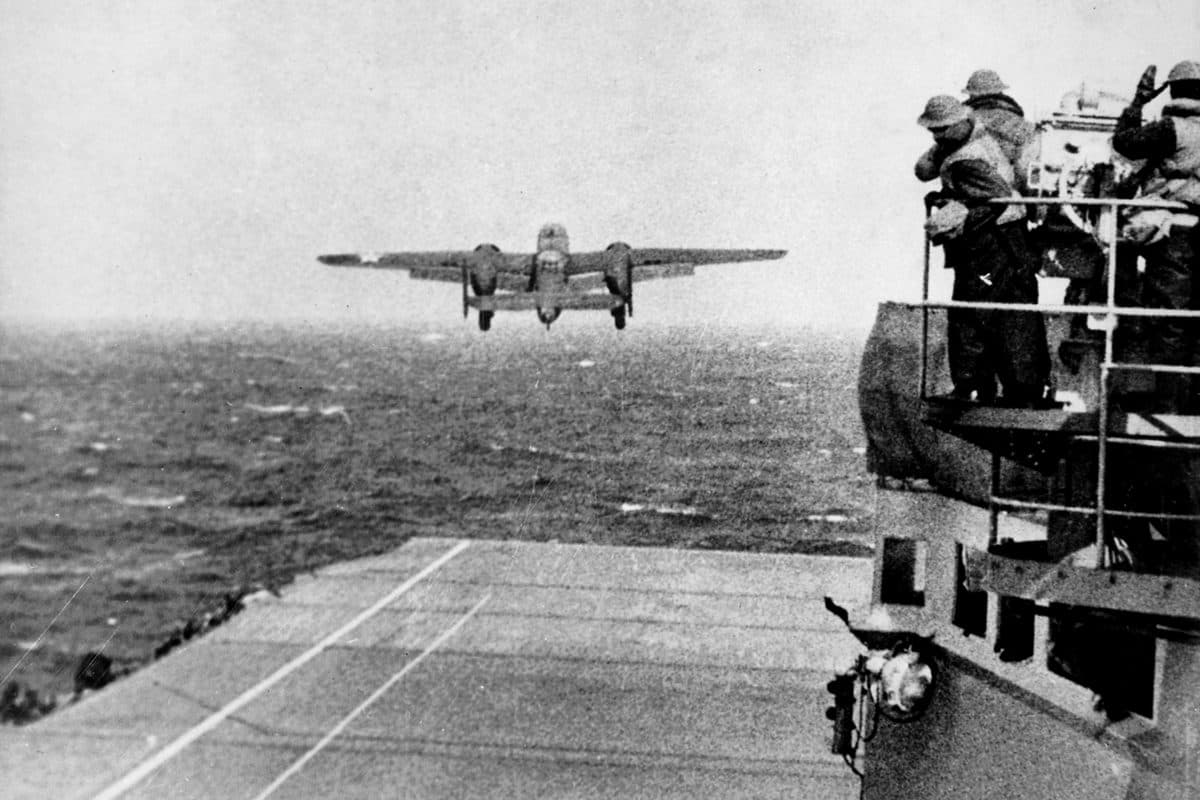
On April 18, 1942, sixteen B-25 Mitchell bombers did something no one thought possible: they launched from the deck of an aircraft carrier, flew 650 miles to Japan, and bombed Tokyo. Every aircraft was lost. The damage was negligible. The consequences changed the war.