
Skip to content
May 5:Battle of Puebla: Cinco de Mayo164yr ago

October 22 in Military History

Share:

This Day in Military History: October 22

Go to Today
U-2 reconnaissance photo showing Soviet missile installations under construction in Cuba, October 1962
Defining Moment64 years ago

Kennedy Addresses the Nation on Cuban Missile Crisis

NavyAir ForceArmy· 1962

President John F. Kennedy appeared on national television to reveal that the Soviet Union had placed nuclear missiles in Cuba, just 90 miles from American shores. He announced a naval "quarantine" of the island and demanded the removal of all offensive weapons, bringing the United States and Soviet Union to the brink of nuclear war in the most dangerous confrontation of the Cold War.

10 events, 2 notable births, 1 notable deaths, and 5 military quotes10events2births1deaths5quotes

1700s

1746RevolutionaryArmy280 years ago

The College of New Jersey, later Princeton University, was chartered, eventually becoming one of America's most important institutions for military leadership. Princeton's campus served as a Revolutionary War battlefield in 1777, and the university has produced numerous military leaders, intelligence officials, and strategic thinkers.

1800s

1859RevolutionaryArmyNavy167 years ago

Spain declared war on Morocco following border clashes near Ceuta, beginning the Spanish-Moroccan War of 1859-1860. The war, which ended in Spanish victory and the capture of Tetouan, expanded Spanish influence in North Africa and foreshadowed the colonial scramble for Africa that would dominate European military policy for the next half-century.

1900s

1941WWIINavy85 years ago

The Queen Elizabeth-class battleship HMS Barham was torpedoed by German submarine U-331 off the coast of Egypt, exploding within minutes and killing 862 of her 1,184-man crew. The sinking, captured on film by accompanying warships, remains one of the most dramatic film records of a warship loss in naval history.

1942WWIIArmy84 years ago

Field Marshal Bernard Montgomery's British Eighth Army launched Operation Lightfoot, the opening phase of the Second Battle of El Alamein in North Africa. The massive artillery barrage, from nearly 900 guns, marked the beginning of the decisive battle that would drive Rommel's Afrika Korps from Egypt. Churchill later called El Alamein "the end of the beginning."

1943WWIIAir Force83 years ago

RAF Bomber Command dispatched 569 aircraft against the German city of Kassel, center of the Wehrmacht's Tiger tank production and Henschel aircraft works. The raid produced one of the war's most destructive firestorms, killed roughly 10,000 people, and damaged tank production in ways that shaped the later course of ground combat in Europe.

1944WWIINavy82 years ago

U.S. submarines Darter and Dace ambushed Admiral Kurita's Center Force in the Palawan Passage, sinking the heavy cruisers Atago and Maya while crippling the Takao. The submarine attack forced Kurita to transfer his flag and disrupted the Japanese naval force before it could reach Leyte Gulf, demonstrating the lethal effectiveness of American submarine warfare.

1956Cold WarArmy70 years ago

Mass demonstrations in Budapest erupted into armed revolt against the Soviet-backed Hungarian government. Students and workers toppled the massive statue of Stalin and seized weapons from police and military depots. The uprising, initially successful in establishing a reformist government under Imre Nagy, would be brutally crushed by Soviet tanks on November 4.

1962Cold WarNavyAir ForceArmy64 years agoDefining Moment

President Kennedy revealed that the Soviet Union had placed nuclear missiles in Cuba and announced a naval quarantine of the island, bringing the world to the brink of nuclear war in the most dangerous confrontation of the Cold War.

1962Cold WarNavyAir Force64 years agoDefining Moment

President John F. Kennedy addressed the nation to announce a naval quarantine of Cuba in response to Soviet medium-range ballistic missile deployments discovered six days earlier. The speech committed the United States to interdict Soviet-flagged shipping, raised American strategic forces to DEFCON 3, and made the Cuban Missile Crisis public for the first time.

1973Cold WarArmyAir Force53 years ago

The United Nations Security Council passed Resolution 338 calling for an immediate ceasefire in the Yom Kippur War, which both Israel and Egypt accepted in principle, though fighting continued for several days along the Suez front. The ceasefire came as Israeli forces had encircled the Egyptian Third Army and were advancing on Damascus, ending an 18-day war that reshaped Middle East military strategy.

Enjoyed this page? Share it with someone who loves military history.

Share:

Never Miss a Day in Military History

Get daily military history, analysis, and technology delivered to your inbox.

Born on This Day

Orde Wingate

Orde Wingate

b. 1903

British Army officer who pioneered unconventional warfare methods, including the Special Night Squads in Palestine and the Chindits long-range penetration groups in Burma during World War II. Wingate's unorthodox tactics behind Japanese lines influenced the development of modern special operations forces worldwide.

Curly Lambeau

Curly Lambeau

b. 1898

Founder of the Green Bay Packers and NFL coaching legend who served in the U.S. Army during World War I. Before shipping overseas, Lambeau contracted influenza during the 1918 pandemic, which ended his military service. He returned to Green Bay and founded the team that became synonymous with small-town American grit.

Died on This Day

Charles Martel

Charles Martel

d. 741

Frankish military leader whose victory at the Battle of Tours in 732 halted the Muslim advance into Western Europe and is regarded as one of the most decisive battles in world history. Known as "The Hammer," Martel united the Frankish kingdoms and laid the military and political foundations for the Carolingian Empire and his grandson Charlemagne's future conquests.

Military Quotes

It shall be the policy of this nation to regard any nuclear missile launched from Cuba against any nation in the Western Hemisphere as an attack by the Soviet Union on the United States, requiring a full retaliatory response upon the Soviet Union.

John F. Kennedy

President of the United States

From Kennedy's televised address revealing the Soviet missile installations in Cuba, the most dangerous moment of the Cold War., 1962

We're eyeball to eyeball, and I think the other fellow just blinked.

Dean Rusk

U.S. Secretary of State

Rusk's remark when Soviet ships approaching the quarantine line appeared to slow or reverse course., 1962

Before my term has ended, we shall have to test anew whether a nation organized and governed such as ours can endure. The outcome is by no means certain.

John F. Kennedy

President of the United States

Kennedy's inaugural address, words that proved prophetic during the Cuban Missile Crisis the following year., 1961

It is insane that two men, sitting on opposite sides of the world, should be able to decide to bring an end to civilization.

John F. Kennedy

President of the United States

Kennedy's reflection after the Cuban Missile Crisis, which directly motivated the Nuclear Test Ban Treaty., 1963

Those who make peaceful revolution impossible will make violent revolution inevitable.

John F. Kennedy

President of the United States

Kennedy's warning about Cold War tensions, relevant to both the Cuban crisis and the Hungarian uprising that began on this date in 1956., 1962

Frequently Asked Questions

What military events happened on October 22?

10 military events occurred on October 22, spanning multiple centuries. Key events include: Kennedy Addresses the Nation on Cuban Missile Crisis (1962), Battle of Leyte Gulf: Palawan Passage (1944), Second Battle of El Alamein Opens (1942), Hungarian Revolution Begins (1956), Kennedy Announces Naval Quarantine of Cuba (1962).

What is the most significant military event on October 22?

The most significant military event on October 22 is Kennedy Addresses the Nation on Cuban Missile Crisis (1962). President John F. Kennedy appeared on national television to reveal that the Soviet Union had placed nuclear missiles in Cuba, just 90 miles from American shores. He announced a naval "quarantine" of the island and demanded the removal of all offensive weapons, bringing the United States and Soviet Union to the brink of nuclear war in the most dangerous confrontation of the Cold War.

What famous military figures were born on October 22?

Notable military figures born on October 22 include Orde Wingate (1903–1944), Curly Lambeau (1898–1965).

What wars are represented in October 22's military timeline?

Events on October 22 span the Cold War, the Colonial & Revolutionary era, World War II, covering 10 events across 3 centuries of military history.

How many military branches are represented on October 22?

Events on October 22 involve 3 branches of the U.S. and allied armed forces, reflecting the global scope of military operations throughout history.

What Happened on Your Birthday?

Explore military history from the day you were born.

Related Days by Era

Explore More Days

Related Articles

Minuteman III ICBM launching from its silo at Vandenberg Air Force Base with a trail of flame and smoke against a dark sky

10 Cold War Weapons That Were Designed for World War III and Never Fired

These weapons were built to fight a war that everyone prayed would never happen. The Minuteman III has been on alert since 1970. The Typhoon-class carried enough nuclear warheads to destroy a continent. The Davy Crockett could be fired by three soldiers. Most of them have been waiting for 40 years. Here are 10 Cold War weapons built exclusively for World War III.

daniel-mercer··13 min read
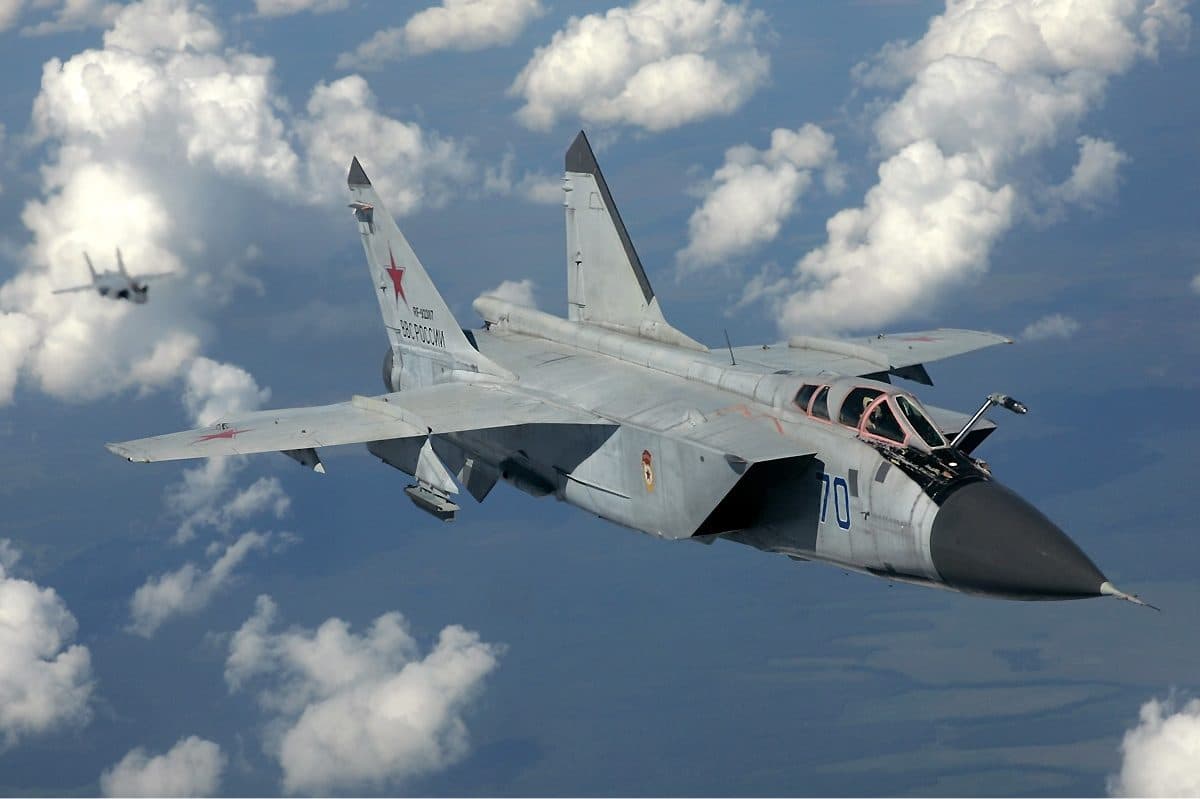
Russian Air Force MiG-31 Foxhound interceptor in flight showing its twin-engine configuration and large airframe

The MiG-31 Foxhound Can Fly Mach 2.83 and Fire Missiles at Targets 200 Miles Away

The MiG-31 was designed to catch the SR-71 Blackbird. It is still the fastest fighter in any air force. The Foxhound's Zaslon phased-array radar, the first ever installed in a fighter, can track 10 targets and engage 4 simultaneously at ranges exceeding 200 miles. Here is why Russia still flies a 1980s interceptor, and why the MiG-31BM carrying a Kinzhal hypersonic missile has changed what the aircraft means to modern warfare.

michael-trent··10 min read