

Skip to content
May 3:British Recapture of Rangoon: The Burma Campaign Ends81yr ago

December 18 in Military History

Share:

This Day in Military History: December 18

Go to Today
B-52 Stratofortress bombers in formation during Operation Linebacker II over North Vietnam, December 1972
Defining Moment54 years ago

Operation Linebacker II, The "Christmas Bombings" of Hanoi

Air ForceNavy· 1972

President Nixon ordered the most intensive bombing campaign of the Vietnam War, Operation Linebacker II, sending waves of B-52 Stratofortress bombers against military and industrial targets in Hanoi and Haiphong. Over the next eleven days, more than 200 B-52s flew 730 sorties and dropped over 20,000 tons of ordnance, making it the largest heavy bomber operation since World War II. Fifteen B-52s were shot down and 33 airmen killed.

10 events, 2 notable births, 1 notable deaths, and 5 military quotes10events2births1deaths5quotes

1700s

1777RevolutionaryContinental249 years ago

The Continental Congress proclaimed a national day of thanksgiving following the American victory at Saratoga, the battle that convinced France to enter the war on the American side. General Washington observed the day at Valley Forge, where his army was about to begin its legendary winter encampment.

1787RevolutionaryContinental239 years ago

New Jersey became the third state to ratify the United States Constitution, following Delaware and Pennsylvania. The unanimous 38-to-0 vote of the New Jersey ratifying convention confirmed the small state's support for the federal structure negotiated at Philadelphia, in which the Great Compromise had preserved equal Senate representation for small states against the population-based House.

1800s

1865Civil WarArmyNavy161 years ago

Secretary of State William Seward officially proclaimed the ratification of the Thirteenth Amendment to the Constitution, permanently abolishing slavery in the United States. The amendment was the constitutional capstone of the Union's Civil War victory and the sacrifice of more than 360,000 Union soldiers who died to preserve the nation and end human bondage.

1892InterwarArmy134 years ago

Tchaikovsky's ballet The Nutcracker premiered at the Mariinsky Theatre in St. Petersburg. While a cultural rather than purely military event, the ballet became a Cold War-era staple of American touring companies whose exchanges with Soviet cultural institutions formed one of the few consistent channels of soft-power contact between the superpowers during decades of military standoff.

1900s

1916WWIArmy110 years ago

The Battle of Verdun on the Western Front ended after ten months of continuous combat, with French forces having recovered nearly all the ground they had lost to the initial German offensive launched in February. The battle produced roughly 700,000 French and German casualties and became the defining symbol of industrial-age attritional warfare.

1940WWIIArmyAAF86 years ago

Adolf Hitler signed Führer Directive No. 21, the operational order for Operation Barbarossa, the invasion of the Soviet Union. The directive called for the Wehrmacht to "crush Soviet Russia in a rapid campaign" before the end of the war against England. The resulting invasion on June 22, 1941, would become the largest military operation in history and the decisive theater of World War II.

1944WWIIArmy82 years ago

The U.S. Supreme Court upheld the constitutionality of Executive Order 9066 in a 6-3 decision, ruling that the wartime internment of 120,000 Japanese Americans was justified by "military necessity." The decision, one of the most criticized in Supreme Court history, was effectively repudiated in 2018 when Chief Justice Roberts wrote that "Korematsu was gravely wrong the day it was decided."

1956Cold WarArmy70 years ago

Japan was formally admitted to the United Nations, completing its reentry into the international system eleven years after its surrender in World War II. The admission marked a turning point in the Cold War balance in East Asia, confirming Japan's alignment with the Western bloc and cementing the U.S.-Japan Security Treaty that had reshaped Pacific military strategy since 1951.

1971VietnamAir ForceNavy55 years ago

U.S. Seventh Air Force and Navy Task Force 77 aircraft struck airfields, surface-to-air missile sites, and petroleum storage facilities in North Vietnam during Operation Proud Deep Alpha, a five-day operation conducted in response to North Vietnamese buildups near the Demilitarized Zone. The strikes were the largest American air operation against the North since the 1968 bombing halt and previewed the operational patterns used during Linebacker I and Linebacker II the following year.

1972VietnamAir ForceNavy54 years agoDefining Moment

President Nixon ordered the most intensive bombing campaign of the Vietnam War, Operation Linebacker II, sending waves of B-52 Stratofortress bombers against military and industrial targets in Hanoi and Haiphong. Over the next eleven days, more than 200 B-52s flew 730 sorties and dropped over 20,000 tons of ordnance, making it the largest heavy bomber operation since World War II. Fifteen B-52s were shot down and 33 airmen killed.

Enjoyed this page? Share it with someone who loves military history.

Share:

Never Miss a Day in Military History

Get daily military history, analysis, and technology delivered to your inbox.

Born on This Day

Archduke Franz Ferdinand

Archduke Franz Ferdinand

b. 1863

Heir presumptive to the Austro-Hungarian throne whose assassination on June 28, 1914, in Sarajevo triggered the chain of alliances, ultimatums, and mobilizations that plunged Europe into World War I, the most destructive conflict the world had ever seen. A military inspector general who had advocated for reform of the Austro-Hungarian armed forces, Franz Ferdinand became the most consequential assassination victim in modern history, his death setting in motion a war that killed 20 million people and destroyed four empires.

Joseph Stalin

Joseph Stalin

b. 1878

Soviet dictator who led the USSR through the entirety of World War II, overseeing the transformation of the Red Army from the demoralized force that nearly collapsed in 1941 into the military juggernaut that conquered Berlin in 1945. As supreme commander of Soviet forces, Stalin directed the war effort that destroyed the bulk of the German Wehrmacht on the Eastern Front, though at a staggering cost of over 27 million Soviet dead. His postwar expansionism created the Cold War confrontation that defined global military strategy for four decades.

Died on This Day

Captain Sir John Alcock

Captain Sir John Alcock

Captain

d. 1919
Air Force

British Royal Air Force pilot who, with navigator Arthur Whitten Brown, completed the first non-stop transatlantic flight in June 1919, a feat that proved the potential of long-range aviation for both civilian and military purposes. Alcock had served as a bomber and fighter pilot in World War I, earning a Distinguished Service Cross. He was killed on this date in 1919 when his aircraft crashed in fog near Rouen, France, while flying to the Paris Aeronautical Exhibition.

Military Quotes

The German Armed Forces must be prepared, even before the conclusion of the war against England, to crush Soviet Russia in a rapid campaign.

Adolf Hitler

Führer of Nazi Germany

Opening directive of Führer Directive No. 21, Operation Barbarossa, signed December 18, 1940, ordering the invasion of the Soviet Union, 1940

We can get there and we will get there. The only way is to fly.

Captain Sir John Alcock

Royal Air Force pilot

Alcock expressing his conviction in the feasibility of non-stop transatlantic flight, a feat he accomplished in June 1919 before dying in a flying accident on this date, 1919

Neither slavery nor involuntary servitude, except as a punishment for crime whereof the party shall have been duly convicted, shall exist within the United States.

Thirteenth Amendment

United States Constitution

Officially proclaimed on this date, the amendment abolished slavery, the culmination of a war that cost over 620,000 American lives, 1865

This is a war of extermination. The Russians must be finished off.

Adolf Hitler

Führer of Nazi Germany

Hitler's chilling characterization of the Eastern Front war, Directive No. 21 for Operation Barbarossa was signed on this date in 1940, 1941

Loyalty to country always. Loyalty to government when it deserves it.

Mark Twain

American author and social critic

A principle tested by the Korematsu decision, when the government's wartime internment of 120,000 Japanese Americans was upheld by the Supreme Court on this date in 1944

Frequently Asked Questions

What military events happened on December 18?

10 military events occurred on December 18, spanning multiple centuries. Key events include: Operation Linebacker II, The "Christmas Bombings" of Hanoi (1972), Thirteenth Amendment Officially Proclaimed, Slavery Abolished (1865), Hitler Issues Directive No. 21, Operation Barbarossa (1940), Battle of Verdun Ends After Ten Months (1916).

What is the most significant military event on December 18?

The most significant military event on December 18 is Operation Linebacker II, The "Christmas Bombings" of Hanoi (1972). President Nixon ordered the most intensive bombing campaign of the Vietnam War, Operation Linebacker II, sending waves of B-52 Stratofortress bombers against military and industrial targets in Hanoi and Haiphong. Over the next eleven days, more than 200 B-52s flew 730 sorties and dropped over 20,000 tons of ordnance, making it the largest heavy bomber operation since World War II. Fifteen B-52s were shot down and 33 airmen killed.

What famous military figures were born on December 18?

Notable military figures born on December 18 include Archduke Franz Ferdinand (1863–1914), Joseph Stalin (1878–1953).

What wars are represented in December 18's military timeline?

Events on December 18 span the Vietnam War, the Colonial & Revolutionary era, the Civil War, World War II, the Cold War, the Interwar Period, World War I, covering 10 events across 3 centuries of military history.

How many military branches are represented on December 18?

Events on December 18 involve 5 branches of the U.S. and allied armed forces, reflecting the global scope of military operations throughout history.

What Happened on Your Birthday?

Explore military history from the day you were born.

Related Days by Era

Explore More Days

Related Articles

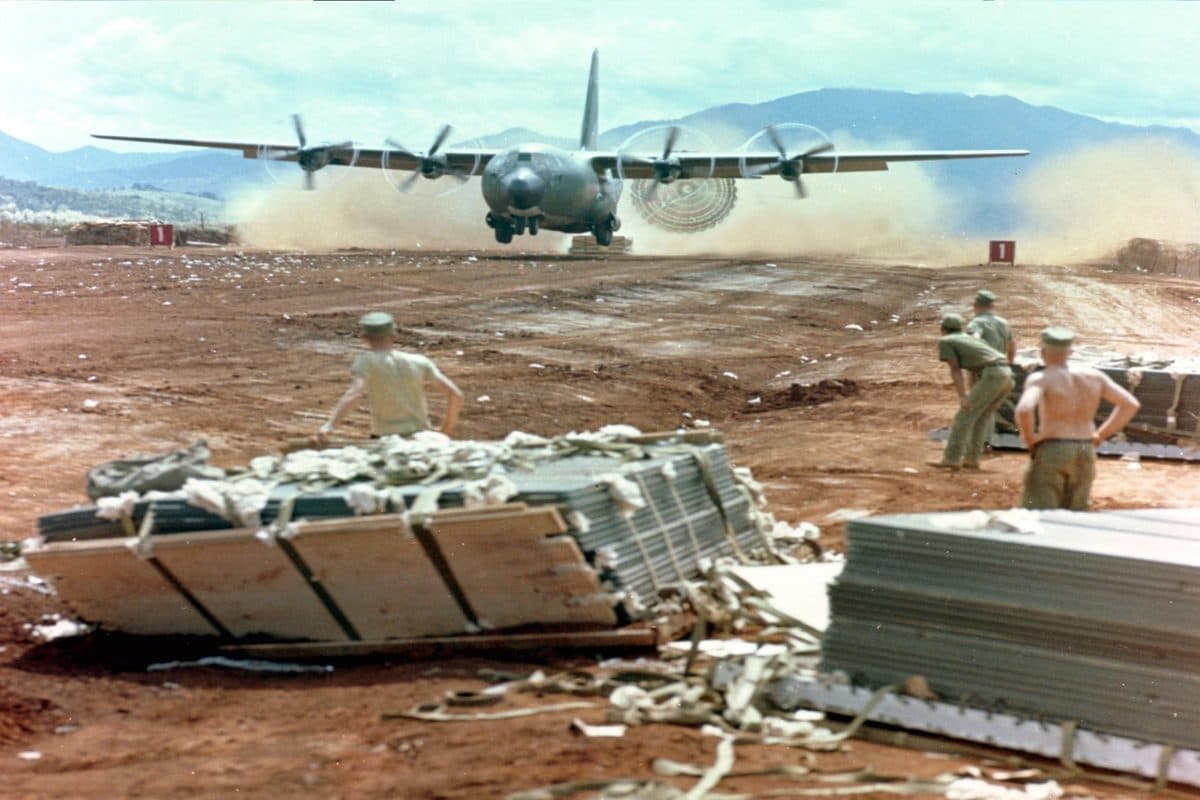
US Marines in foxholes at Khe Sanh combat base during the 1968 siege with fog-shrouded hills in the background

The Forgotten Siege of Khe Sanh: How 6,000 Marines Held a Base for 77 Days Against 20,000 NVA

For 77 days in 1968, 6,000 Marines held a remote hilltop combat base against 20,000-30,000 North Vietnamese soldiers. Operation Niagara dropped 110,000 tons of bombs around the perimeter. Resupply aircraft landed on a runway under constant shelling. The question isn't whether Khe Sanh was a tactical victory, it's whether it mattered.

daniel-mercer··11 min read
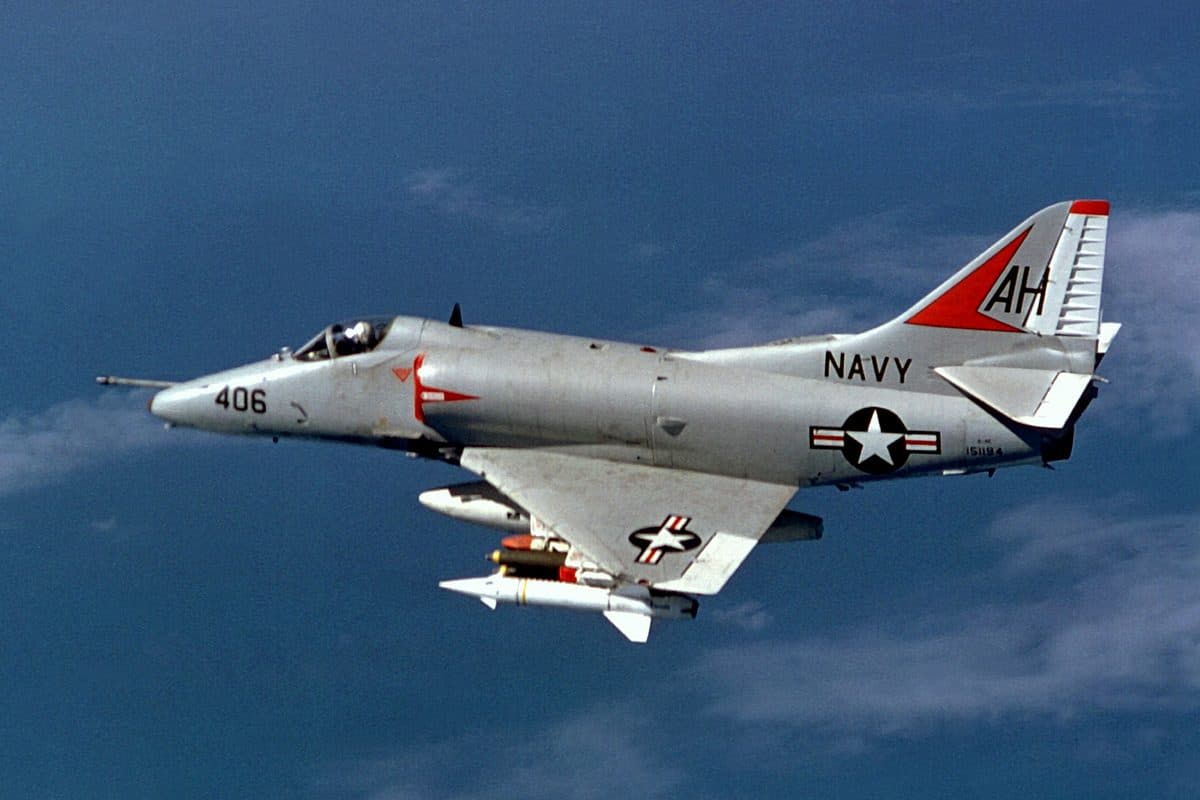
A-4 Skyhawk attack aircraft in flight showing its compact delta wing design and ordnance pylons

The A-4 Skyhawk: Heinemann's Hot Rod

When the Navy asked for a jet attack aircraft weighing 30,000 pounds, Douglas engineer Ed Heinemann delivered one that weighed half that. The A-4 Skyhawk was smaller, lighter, simpler, and cheaper than the Navy specified, and it turned out to be one of the most successful combat aircraft in history, serving with distinction from Vietnam to the Falklands over a career spanning four decades.

michael-trent··12 min read
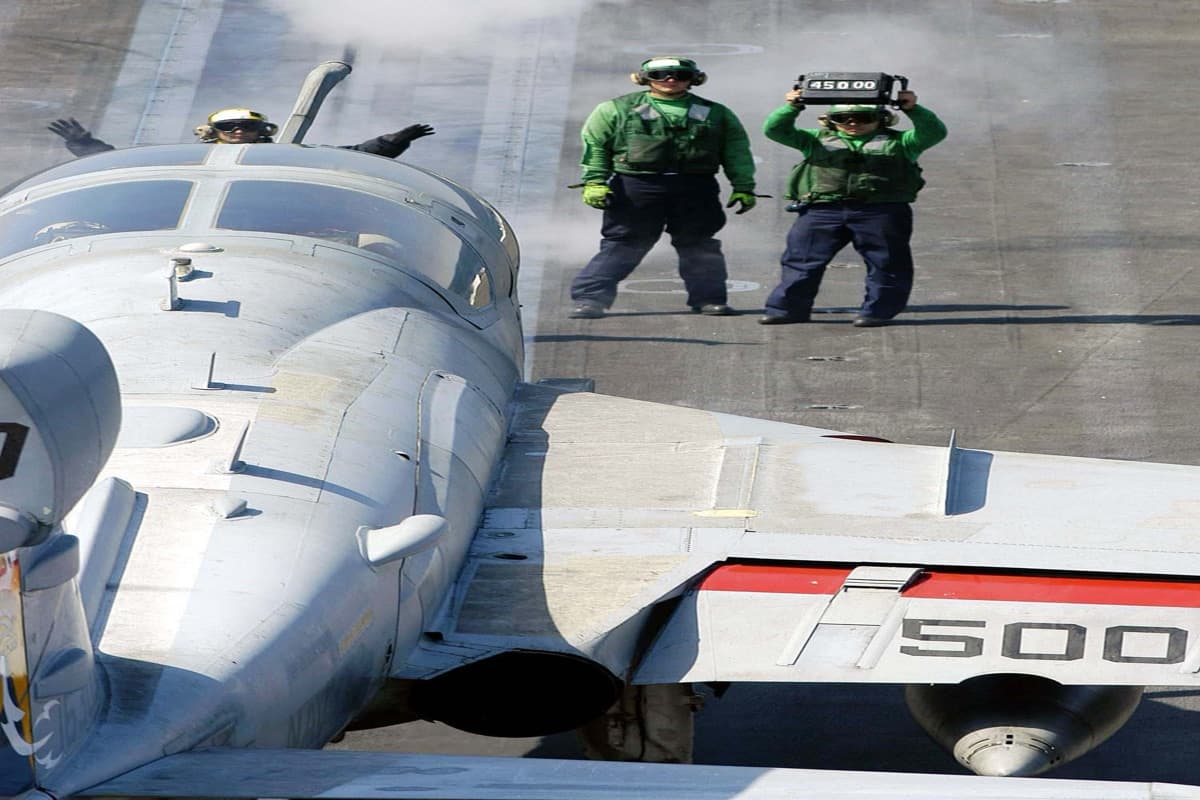
A USMC EA-6B Prowler Preparing for Its Last Deployment

Interesting Facts About The EA-6B Prowler

A Flawless Combat Record Sgt Neysa Huertes Quinones From its first deployments in 1970 during the Vietnam War through the current War…

daniel-mercer··6 min read