

15 Best World War II Books for History Enthusiasts (2026)
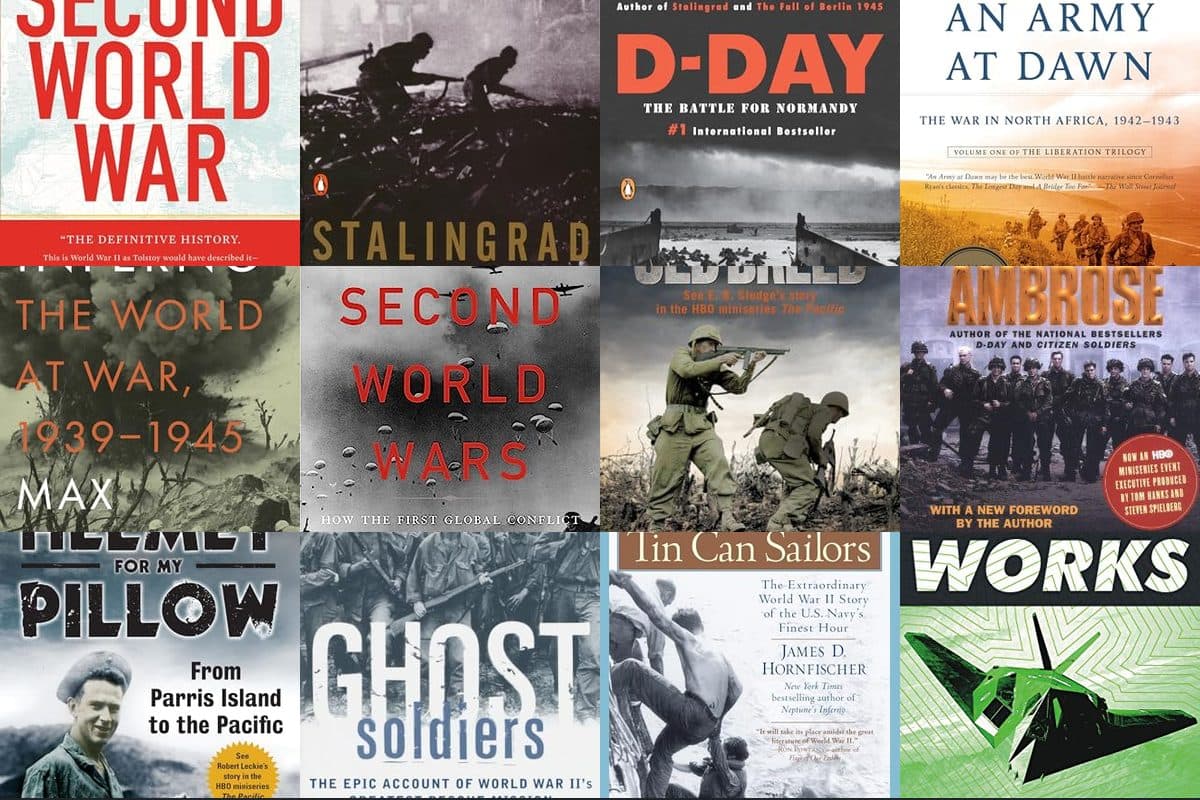
15 essential WW2 books covering every theater. Narrative histories, memoirs, and visual references ranked.
daniel-mercer··21 min read

Orville and Wilbur Wright achieved the first sustained, controlled flight of a powered heavier-than-air aircraft at Kill Devil Hills near Kitty Hawk, North Carolina. The first flight lasted 12 seconds and covered 120 feet; by the fourth flight that day, Wilbur covered 852 feet in 59 seconds. Five witnesses watched the moment that would transform warfare, and the world, forever.
France formally recognized the independence of the United States, a diplomatic triumph engineered by Benjamin Franklin that would prove decisive to the American cause. French recognition led directly to the Treaty of Alliance in February 1778, bringing French troops, naval power, and financial support that would ultimately tip the balance at Yorktown and win the war.
Major General Ulysses S. Grant issued the most notorious antisemitic order in American military history, expelling "Jews as a class" from the Department of the Tennessee. The order, motivated by Grant's frustration with cotton speculation in occupied territory, was reversed by President Lincoln within three weeks and later deeply regretted by Grant, who as president actively courted Jewish Americans and appointed them to prominent positions.
Major General Ulysses S. Grant issued General Orders No. 11 expelling all Jewish traders from the military department covering Tennessee, Mississippi, and Kentucky. President Abraham Lincoln revoked the order within three weeks after protests from Jewish community leaders including Cesar Kaskel of Paducah, who traveled to Washington to meet with the president. The episode remains one of the most controversial administrative actions of Grant's Civil War career.
Orville and Wilbur Wright achieved the first sustained, controlled flight of a powered heavier-than-air aircraft at Kill Devil Hills near Kitty Hawk, North Carolina. The first flight lasted 12 seconds and covered 120 feet; by the fourth flight that day, Wilbur covered 852 feet in 59 seconds. Five witnesses watched the moment that would transform warfare, and the world, forever.
The U.S. Navy submarine S-4 was rammed by the Coast Guard destroyer Paulding during trials off Provincetown, Massachusetts, and sank in 102 feet of water with 40 men aboard. Six crew members survived in the forward torpedo room for three days before rescue divers failed to reach them in a winter storm, a disaster that forced the Navy to develop modern submarine rescue equipment including the McCann Rescue Chamber and the Momsen Lung.
The prototype Douglas DC-3, the civilian airliner that would be militarized as the C-47 Skytrain, made its first flight from Clover Field in Santa Monica, California. The DC-3 airframe became the most successful military transport of all time, with more than 10,000 C-47s built for the U.S. Army Air Forces and Allied air forces during World War II.
The German pocket battleship Admiral Graf Spee was scuttled by her own crew in the estuary of the Río de la Plata off Montevideo, Uruguay, following the Battle of the River Plate, the first major naval engagement of World War II. Cornered by British cruisers and believing a larger force awaited outside the harbor, Captain Hans Langsdorff chose to destroy his ship rather than risk her capture. Langsdorff committed suicide three days later.
The German pocket battleship Admiral Graf Spee was scuttled by her captain Hans Langsdorff in the River Plate estuary off Montevideo, Uruguay. Damaged at the Battle of the River Plate four days earlier and misled into believing a superior Royal Navy force awaited him beyond Uruguayan territorial waters, Langsdorff chose to blow up his ship rather than risk another battle with the lives of his crew.
During the German Ardennes offensive, troops from Kampfgruppe Peiper of the 1st SS Panzer Division shot 84 unarmed American prisoners of war in a field near Malmedy, Belgium. Most of the victims were from Battery B of the 285th Field Artillery Observation Battalion. The massacre became one of the most infamous war crimes on the Western Front and the basis for the postwar Malmedy trial at Dachau.
The last American military convoy crossed the border from Iraq into Kuwait, ending nearly nine years of U.S. military operations that had begun with the 2003 invasion. The withdrawal fulfilled President Obama's pledge to end the war, though the rise of ISIS three years later would draw American forces back to Iraq in an advisory and combat-support role.

Private
The first known American woman to enlist in the military by disguising herself as a man. Serving under the name Robert Shurtliff in the Continental Army's 4th Massachusetts Regiment, Sampson fought in several engagements and was wounded twice, once removing a musket ball from her own thigh to avoid discovery. After her sex was revealed during treatment for a fever, she received an honorable discharge and later became one of the first women to go on a lecture tour about her military service.

Canada's longest-serving prime minister who led the country through the entirety of World War II. King oversaw the massive expansion of the Canadian military from a peacetime force of fewer than 10,000 to over one million men and women under arms. He navigated the politically explosive conscription crisis of 1944 while maintaining national unity and directing Canada's significant contributions to the Allied war effort, including the Normandy landings, the Italian campaign, and the Battle of the Atlantic.

Venezuelan military officer and statesman known as "El Libertador" who led the independence movements of six South American nations, modern-day Venezuela, Colombia, Ecuador, Panama, Peru, and Bolivia, from the Spanish Empire. Bolívar fought over 100 battles and traveled more than 70,000 miles on campaign. He died of tuberculosis on this date in 1830 at just 47, disillusioned by the political fracturing of the continent he had liberated at such enormous cost.
Wear the Timeline
10 military events occurred on December 17, spanning multiple centuries. Key events include: Wright Brothers Achieve First Powered Flight at Kitty Hawk (1903), France Formally Recognizes American Independence (1777), Battle of the River Plate, Admiral Graf Spee Scuttled (1939), Malmedy Massacre in Belgium (1944), Scuttling of the Graf Spee in Montevideo Harbor (1939).
The most significant military event on December 17 is Wright Brothers Achieve First Powered Flight at Kitty Hawk (1903). Orville and Wilbur Wright achieved the first sustained, controlled flight of a powered heavier-than-air aircraft at Kill Devil Hills near Kitty Hawk, North Carolina. The first flight lasted 12 seconds and covered 120 feet; by the fourth flight that day, Wilbur covered 852 feet in 59 seconds. Five witnesses watched the moment that would transform warfare, and the world, forever.
Notable military figures born on December 17 include Deborah Sampson (1760–1827), William Lyon Mackenzie King (1874–1950).
Events on December 17 span the Interwar Period, the Colonial & Revolutionary era, the Civil War, World War II, the Modern Era, covering 10 events across 4 centuries of military history.
Events on December 17 involve 6 branches of the U.S. and allied armed forces, reflecting the global scope of military operations throughout history.
Explore military history from the day you were born.
January 10
1920
January 11
1879
January 22
1879
January 29
1856
June 6
The Allied invasion of Normandy, the largest amphibious assault in history.
December 7
Japan attacks the U.S. Pacific Fleet, bringing America into World War II.
September 11
The deadliest terrorist attack in history transforms U.S. national security.
August 6
The first atomic bomb is dropped on a city, ushering in the nuclear age.
May 8
Nazi Germany surrenders unconditionally, ending World War II in Europe.
November 11
Armistice Day marks the end of World War I and honors all who served.
June 4
The turning point of the Pacific War as the U.S. Navy destroys four Japanese carriers.
July 4
The Declaration of Independence is adopted, sparking the American Revolution.
15 essential WW2 books covering every theater. Narrative histories, memoirs, and visual references ranked.
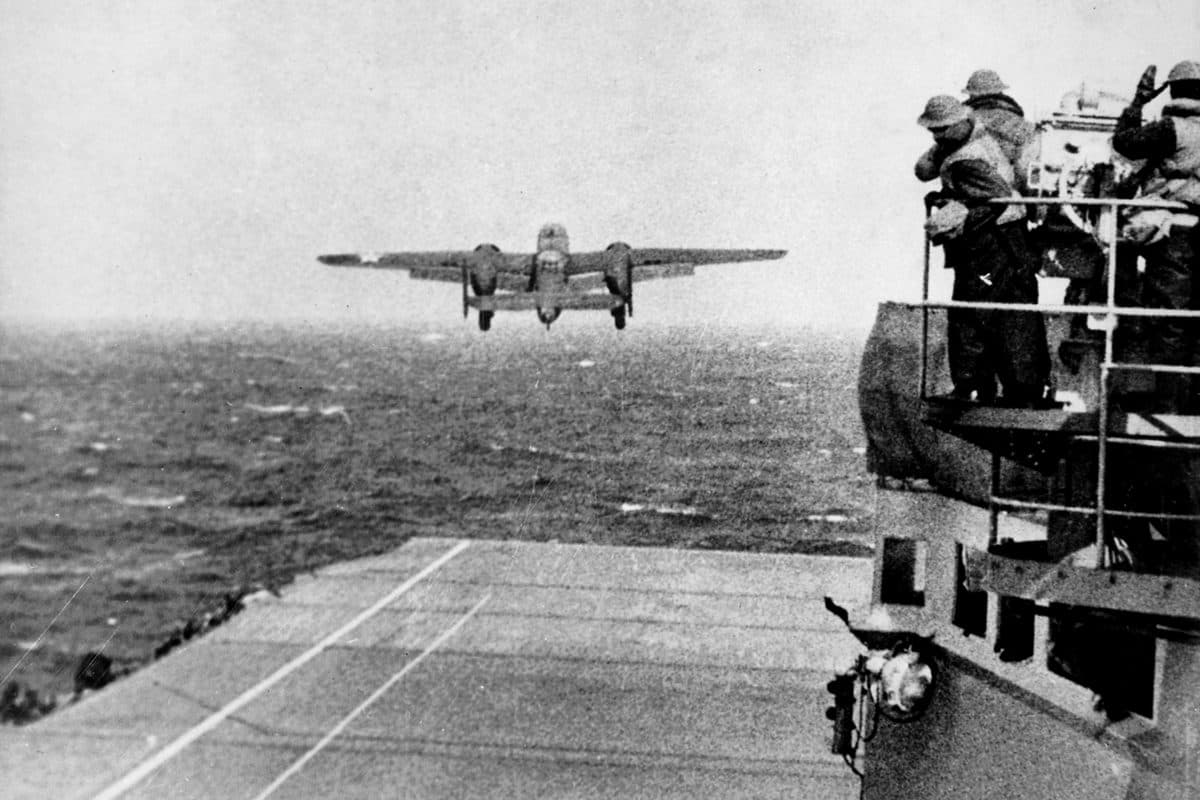
On April 18, 1942, sixteen B-25 Mitchell bombers did something no one thought possible: they launched from the deck of an aircraft carrier, flew 650 miles to Japan, and bombed Tokyo. Every aircraft was lost. The damage was negligible. The consequences changed the war.
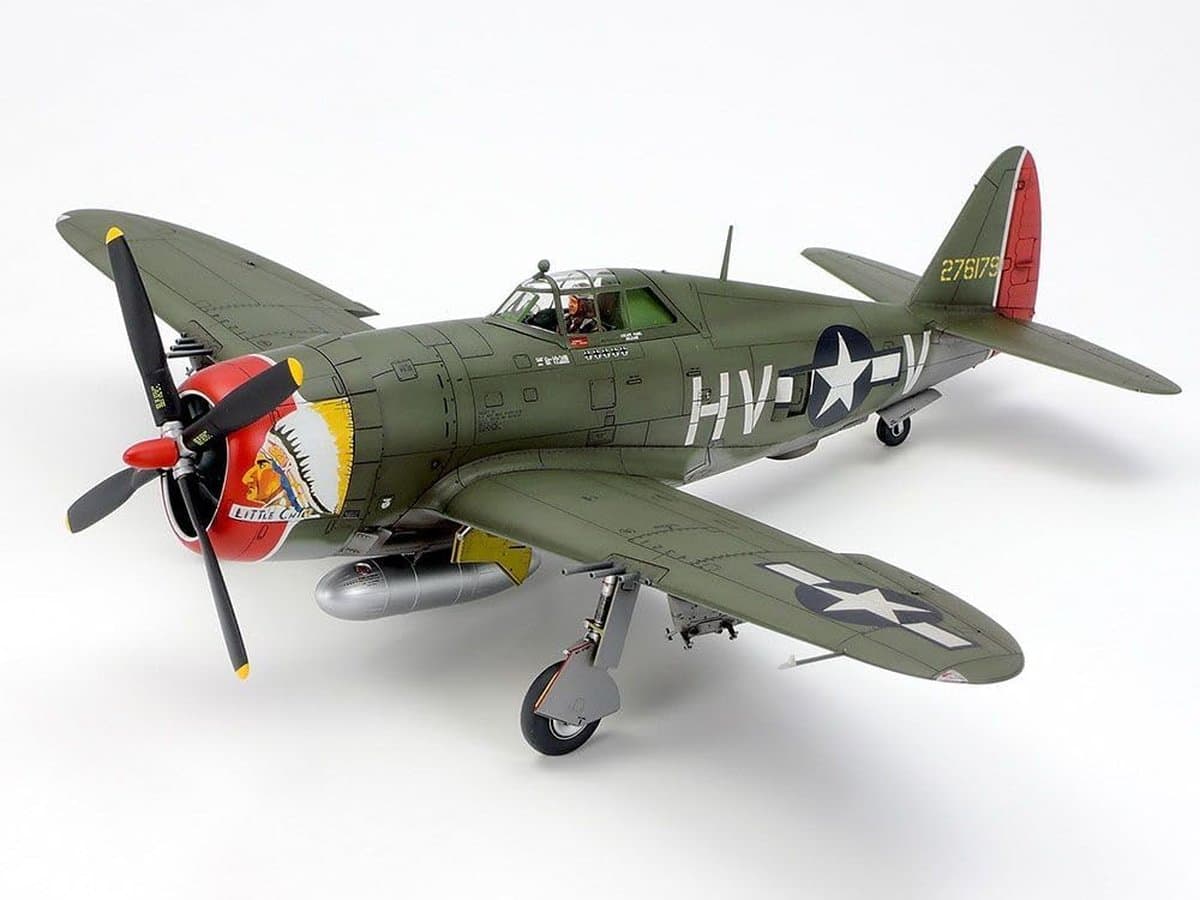
Compare 85+ WW2 scale model kits across aircraft, tanks, and ships. Beginner builds from $9 to museum-grade showpieces at $580. Covers Tamiya, Eduard, HK Models, Trumpeter, and more with honest reviews, trade-offs, and pricing.

On April 7, 1945, the Imperial Japanese Navy sent the largest battleship ever built on a one-way suicide mission to Okinawa. She never arrived. 386 American aircraft found her first, and sank her in under two hours.