



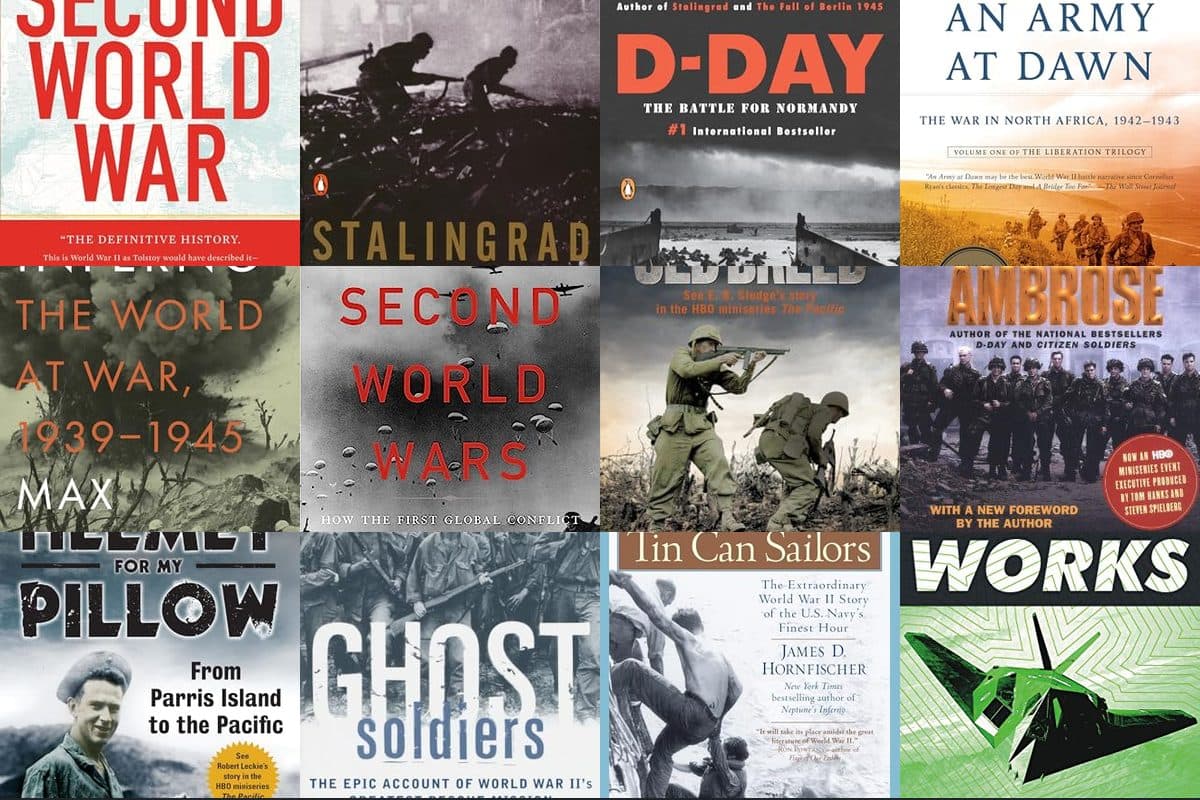
15 Best World War II Books for History Enthusiasts (2026)
15 essential WW2 books covering every theater. Narrative histories, memoirs, and visual references ranked.
daniel-mercer··21 min read
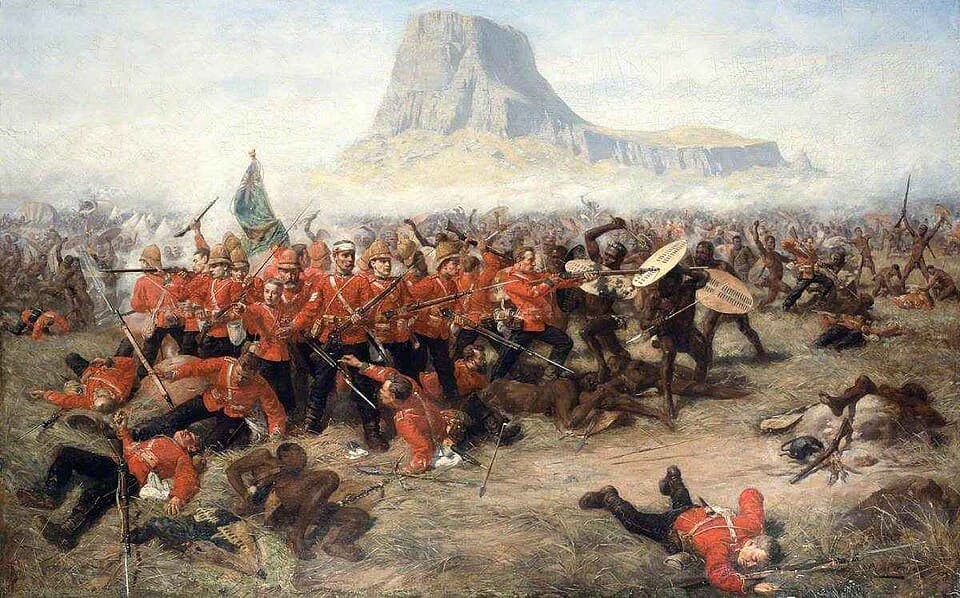
In a single day, the Zulu Kingdom inflicted a catastrophic defeat on a British column at Isandlwana, then a small garrison of 150 British soldiers heroically defended Rorke's Drift against 4,000 Zulu warriors.
In a single day, the Zulu Kingdom inflicted a catastrophic defeat on a British column at Isandlwana, then a small garrison of 150 British soldiers heroically defended Rorke's Drift against 4,000 Zulu warriors.
A Zulu army of roughly 20,000 warriors under Ntshingwayo kaMahole destroyed a British-led force at Isandlwana in South Africa, inflicting more than 1,300 casualties and capturing two artillery pieces. That same night, a garrison of barely 150 British and colonial troops defended the Rorke's Drift mission station against a Zulu detachment for twelve hours of continuous close combat.
Russian Imperial troops fired on peaceful protesters marching to the Winter Palace, killing hundreds and sparking the 1905 Revolution that would foreshadow the military mutinies and collapse of Imperial Russia.
Tsarist troops fired on a peaceful procession of workers marching to the Winter Palace to petition Tsar Nicholas II, killing an estimated 200 and wounding over 800. The massacre shattered public trust in the autocracy and sparked the Revolution of 1905, a rehearsal for the revolutions of 1917.
Organized Japanese resistance ended at the Buna-Gona beachheads in Papua New Guinea, concluding one of the most brutal campaigns of the Pacific War that cost over 3,000 Allied lives.
Operation Shingle saw Allied forces land at Anzio, Italy, south of Rome, in an ambitious amphibious flanking maneuver. Despite initial surprise, the beachhead became a four-month stalemate.
Allied forces landed at Anzio, Italy, behind German lines in an operation designed to outflank the Gustav Line and open the road to Rome. Although the landing was initially unopposed, the commander's failure to advance inland allowed the Germans to contain the beachhead for four months.
Henry Kissinger and Le Duc Tho initialed the Paris Peace Accords, effectively ending direct U.S. military involvement in the Vietnam War after years of negotiations.
The U.S. Supreme Court ruled 7-2 in Roe v. Wade that the Constitution protected a woman's right to an abortion, a decision with immediate implications for military healthcare policy. The Department of Defense subsequently provided abortion services at military hospitals, a policy that would be repeatedly revised over subsequent decades.
U.S. Special Forces and conventional units expanded operations into eastern Afghanistan's Paktia Province, hunting Taliban and al-Qaeda fighters in the rugged mountains near the Pakistani border.

Colonel
Cuban military leader and president whose U.S.-backed authoritarian regime was overthrown by Fidel Castro's revolution in 1959, triggering Cold War confrontation in the Western Hemisphere.

Field Marshal
German Wehrmacht commander known as "Hitler's Fireman" for his ability to stabilize collapsing front lines. He committed suicide rather than surrender during the Ruhr Pocket encirclement.

The 36th President of the United States, whose escalation of the Vietnam War defined his presidency. A Silver Star recipient from WWII, he dramatically expanded U.S. military commitment in Southeast Asia.
Wear the Timeline
10 military events occurred on January 22, spanning multiple centuries. Key events include: Battles of Isandlwana and Rorke's Drift Shock the British Empire (1879), Allied Landings at Anzio, Italy (1944), Bloody Sunday in St. Petersburg (1905), Paris Peace Accords Initialed (1973), Bloody Sunday in St. Petersburg, Seeds of the Russian Revolution (1905).
The most significant military event on January 22 is Battles of Isandlwana and Rorke's Drift Shock the British Empire (1879). In a single day, the Zulu Kingdom inflicted a catastrophic defeat on a British column at Isandlwana, then a small garrison of 150 British soldiers heroically defended Rorke's Drift against 4,000 Zulu warriors.
Notable military figures born on January 22 include Fulgencio Batista (1901–1973), Walter Model (1891–1945).
Events on January 22 span the Interwar Period, World War II, the Vietnam War, the Modern Era, the Cold War, the Colonial & Revolutionary era, covering 10 events across 3 centuries of military history.
Events on January 22 involve 4 branches of the U.S. and allied armed forces, reflecting the global scope of military operations throughout history.
Explore military history from the day you were born.
June 6
The Allied invasion of Normandy, the largest amphibious assault in history.
December 7
Japan attacks the U.S. Pacific Fleet, bringing America into World War II.
September 11
The deadliest terrorist attack in history transforms U.S. national security.
August 6
The first atomic bomb is dropped on a city, ushering in the nuclear age.
May 8
Nazi Germany surrenders unconditionally, ending World War II in Europe.
November 11
Armistice Day marks the end of World War I and honors all who served.
June 4
The turning point of the Pacific War as the U.S. Navy destroys four Japanese carriers.
July 4
The Declaration of Independence is adopted, sparking the American Revolution.
15 essential WW2 books covering every theater. Narrative histories, memoirs, and visual references ranked.
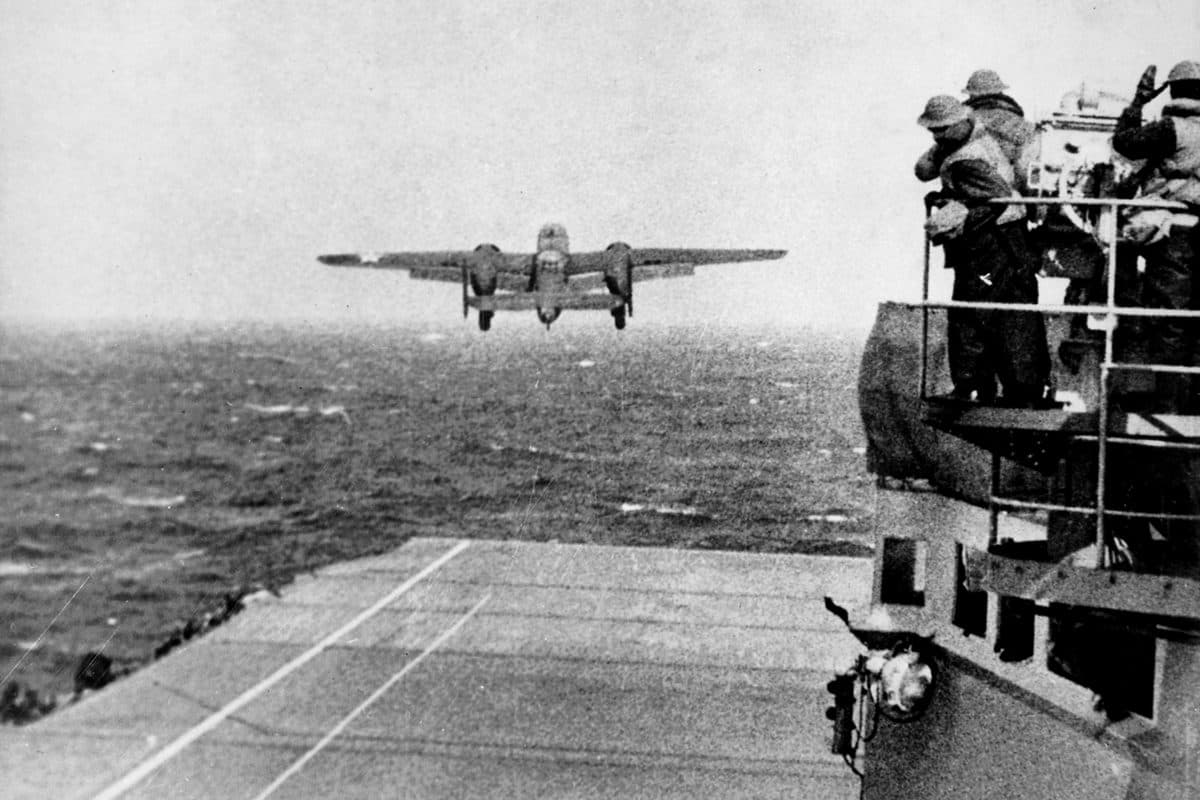
On April 18, 1942, sixteen B-25 Mitchell bombers did something no one thought possible: they launched from the deck of an aircraft carrier, flew 650 miles to Japan, and bombed Tokyo. Every aircraft was lost. The damage was negligible. The consequences changed the war.
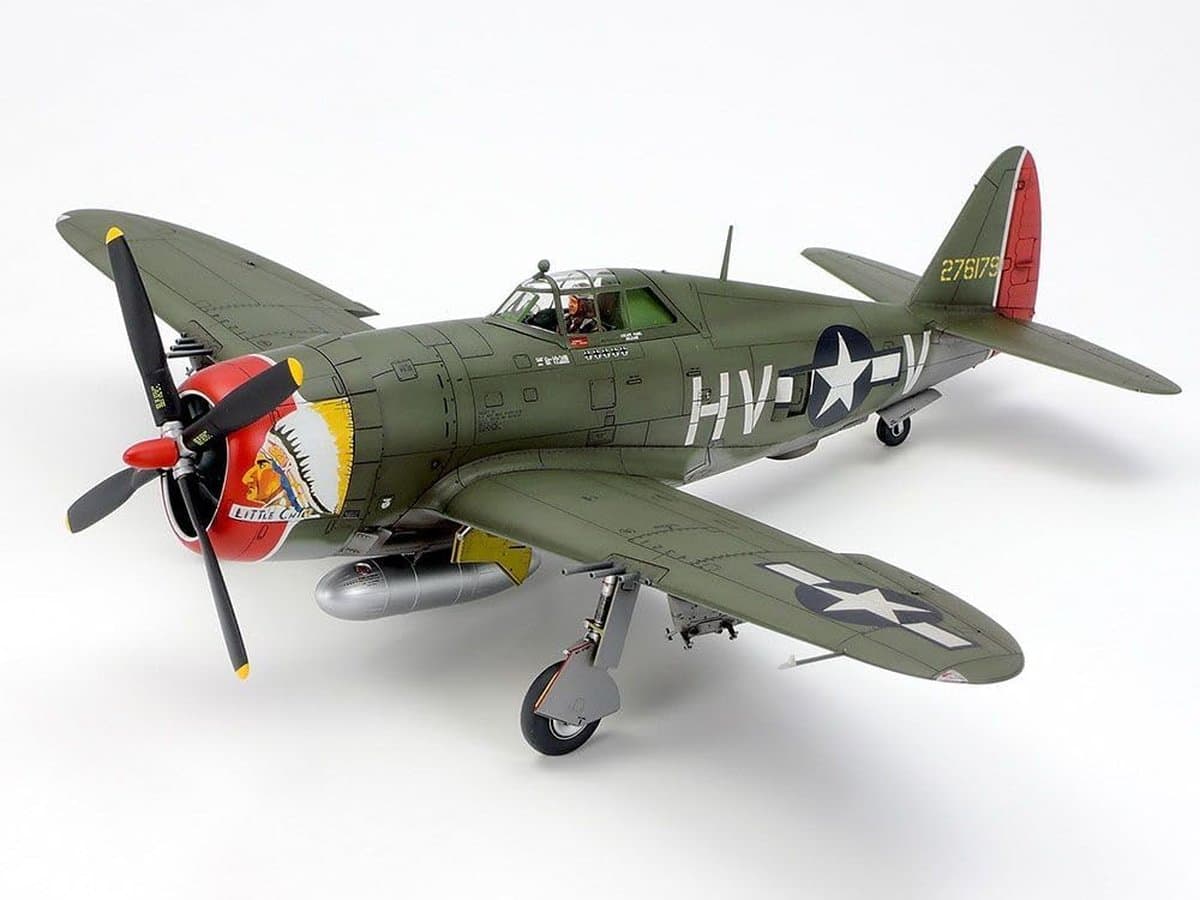
Compare 85+ WW2 scale model kits across aircraft, tanks, and ships. Beginner builds from $9 to museum-grade showpieces at $580. Covers Tamiya, Eduard, HK Models, Trumpeter, and more with honest reviews, trade-offs, and pricing.

On April 7, 1945, the Imperial Japanese Navy sent the largest battleship ever built on a one-way suicide mission to Okinawa. She never arrived. 386 American aircraft found her first, and sank her in under two hours.