


15 Best World War II Books for History Enthusiasts (2026)
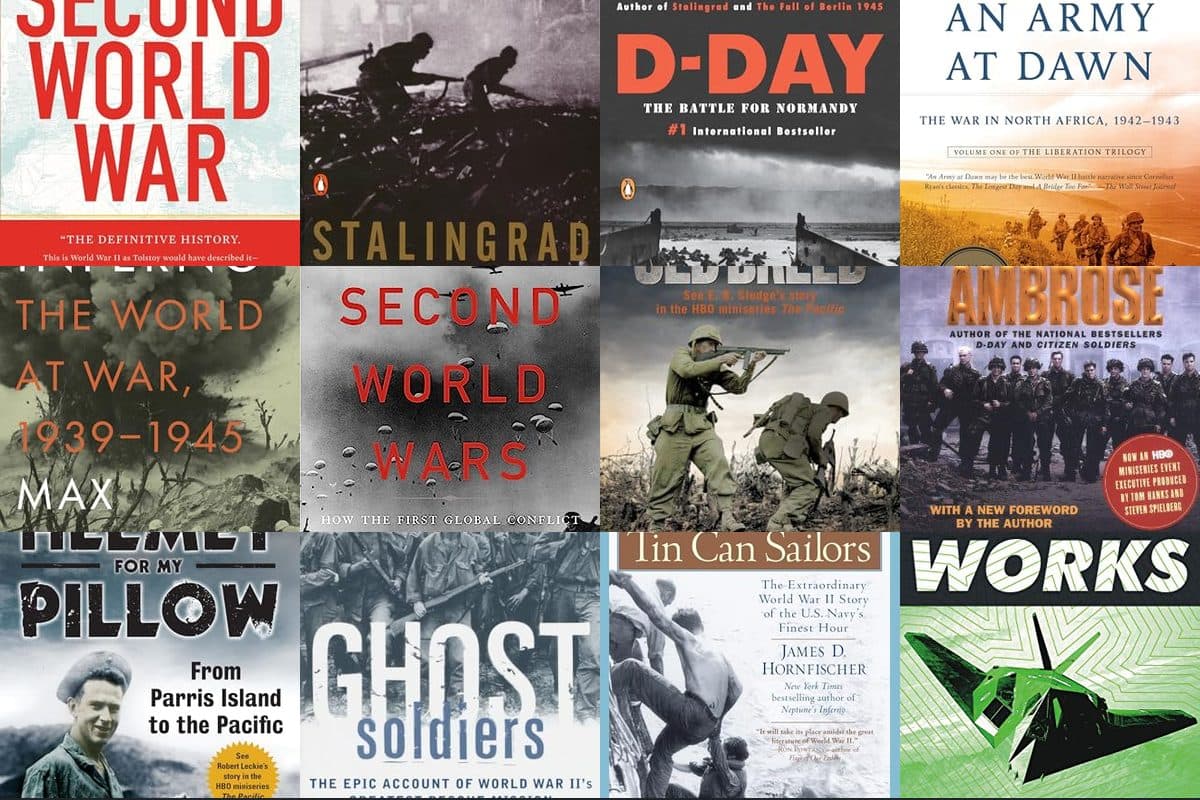
15 essential WW2 books covering every theater. Narrative histories, memoirs, and visual references ranked.
daniel-mercer··21 min read

At 5:30 a.m. in the frozen Ardennes forest of Belgium and Luxembourg, 250,000 German troops backed by 1,600 artillery pieces launched Operation Wacht am Rhein, the largest and bloodiest single battle fought by the United States in World War II. Achieving complete tactical surprise against thinly held American lines, German armored columns smashed through the front, creating a massive "bulge" in the Allied line. The offensive aimed to capture the vital port of Antwerp and split the Allied armies in two.
The last eruption of Mount Fuji in recorded history, the Hoei eruption, ended on December 16 after sixteen days of activity that blanketed Edo in volcanic ash up to four inches deep. The Tokugawa shogunate's response, including emergency grain shipments and ash-removal corvee labor drawn from daimyo domains, was one of the earliest documented large-scale military logistics responses to a natural disaster in East Asian history.
American colonists disguised as Mohawk Indians boarded three British ships in Boston Harbor and dumped 342 chests of East India Company tea into the water to protest taxation without representation. The act of defiance triggered a chain of escalation, the Intolerable Acts, the Continental Congress, and ultimately the armed revolution that would create the United States.
A Voortrekker commando of roughly 470 men under Andries Pretorius defeated a Zulu army of 10,000 warriors along the Ncome River in Natal. The wagon laager, a defensive ring of 64 ox wagons chained together and reinforced with firing platforms, allowed the defenders to concentrate musket fire while suffering only three wounded against more than 3,000 Zulu dead.
On the second day of the Battle of Nashville, Union forces under General George Thomas completed the destruction of Hood's Confederate Army of Tennessee. The assault shattered the Confederate line, sending Hood's army into a disorderly rout southward through freezing rain. The two-day battle effectively ended the Confederate threat in the Western Theater.
Sixteen U.S. Navy battleships painted brilliant white, collectively known as the Great White Fleet, departed Hampton Roads, Virginia, on a 14-month circumnavigation of the globe ordered by President Theodore Roosevelt. The deployment demonstrated that the United States had built the battle fleet and logistical reach of a first-rate naval power, altering the strategic calculations of Japan, Britain, and Germany.
Russian nobles led by Prince Felix Yusupov assassinated Grigori Rasputin, the mystic who had gained enormous influence over the Russian royal family. Rasputin's death did nothing to halt Russia's slide toward revolution; within fourteen months, the Romanov dynasty would fall, Russia would exit World War I, and the Bolsheviks would seize power, transforming the global military balance for the rest of the century.
At 5:30 a.m. in the frozen Ardennes forest of Belgium and Luxembourg, 250,000 German troops backed by 1,600 artillery pieces launched Operation Wacht am Rhein, the largest and bloodiest single battle fought by the United States in World War II. Achieving complete tactical surprise against thinly held American lines, German armored columns smashed through the front, creating a massive "bulge" in the Allied line. The offensive aimed to capture the vital port of Antwerp and split the Allied armies in two.
Following the Chinese intervention that shattered U.N. forces at the Chosin Reservoir, the U.S. Navy began the evacuation of X Corps from the North Korean port of Hungnam. Over two weeks, 193 shiploads carried 105,000 troops, 98,000 civilian refugees, 17,500 vehicles, and 350,000 tons of cargo to safety in South Korea under a protective umbrella of naval gunfire and carrier airstrikes.
Gemini 6A, crewed by Wally Schirra and Thomas Stafford, rendezvoused with Gemini 7, crewed by Frank Borman and Jim Lovell, over the Pacific Ocean. The two spacecraft closed to within one foot of each other and flew in formation for more than five hours, demonstrating the orbital mechanics and station-keeping skills essential for the Apollo lunar missions.
Pakistani forces in East Pakistan surrendered unconditionally to the Indian Army in Dhaka, ending the Indo-Pakistani War of 1971. Lieutenant General A.A.K. Niazi signed the instrument of surrender before Lieutenant General Jagjit Singh Aurora, delivering 93,000 Pakistani prisoners of war, the largest military surrender since World War II. The independent nation of Bangladesh was born.

British evangelist whose "Great Awakening" revival movement swept through the American colonies in the 1740s, creating the first truly shared cultural experience across colonial boundaries. Historians credit the Great Awakening with forging the inter-colonial identity and communication networks that made unified resistance to British rule possible, without Whitefield's movement, the Continental Army might never have had a nation to fight for.

First Lieutenant
The most decorated American soldier of World War II, receiving every military combat award for valor available from the U.S. Army, including the Medal of Honor. On January 26, 1945, near Holtzwihr, France, Murphy single-handedly held off an entire company of German soldiers for an hour while standing atop a burning tank destroyer, then led a successful counterattack despite being wounded. After the war, he became a successful Hollywood actor while quietly battling what would today be recognized as PTSD.

Admiral
Korean naval commander widely regarded as one of the greatest admirals in world history, killed by an arquebus bullet on this date in 1598 at the Battle of Noryang, the final engagement of the Imjin War. Yi fought at least 23 naval battles against the Japanese and won every single one, most famously defeating a fleet of 133 Japanese warships with just 13 of his own at the Battle of Myeongnyang. His dying words were: "The war is at its height, wear my armor and beat my war drums. Do not announce my death."
Wear the Timeline
10 military events occurred on December 16, spanning multiple centuries. Key events include: Battle of the Bulge Begins, Germany's Last Desperate Offensive (1944), Boston Tea Party (1773), Battle of Nashville, Second Day Routs Hood's Army (1864), Pakistan Surrenders, Bangladesh Becomes Independent (1971), Hungnam Evacuation Begins in Korea (1950).
The most significant military event on December 16 is Battle of the Bulge Begins, Germany's Last Desperate Offensive (1944). At 5:30 a.m. in the frozen Ardennes forest of Belgium and Luxembourg, 250,000 German troops backed by 1,600 artillery pieces launched Operation Wacht am Rhein, the largest and bloodiest single battle fought by the United States in World War II. Achieving complete tactical surprise against thinly held American lines, German armored columns smashed through the front, creating a massive "bulge" in the Allied line. The offensive aimed to capture the vital port of Antwerp and split the Allied armies in two.
Notable military figures born on December 16 include George Whitefield (1714–1770), Audie Murphy (1925–1971).
Events on December 16 span World War II, the Colonial & Revolutionary era, the Civil War, World War I, the Cold War, the Korean War, the Interwar Period, covering 10 events across 3 centuries of military history.
Events on December 16 involve 6 branches of the U.S. and allied armed forces, reflecting the global scope of military operations throughout history.
Explore military history from the day you were born.
June 6
The Allied invasion of Normandy, the largest amphibious assault in history.
December 7
Japan attacks the U.S. Pacific Fleet, bringing America into World War II.
September 11
The deadliest terrorist attack in history transforms U.S. national security.
August 6
The first atomic bomb is dropped on a city, ushering in the nuclear age.
May 8
Nazi Germany surrenders unconditionally, ending World War II in Europe.
November 11
Armistice Day marks the end of World War I and honors all who served.
June 4
The turning point of the Pacific War as the U.S. Navy destroys four Japanese carriers.
July 4
The Declaration of Independence is adopted, sparking the American Revolution.
15 essential WW2 books covering every theater. Narrative histories, memoirs, and visual references ranked.
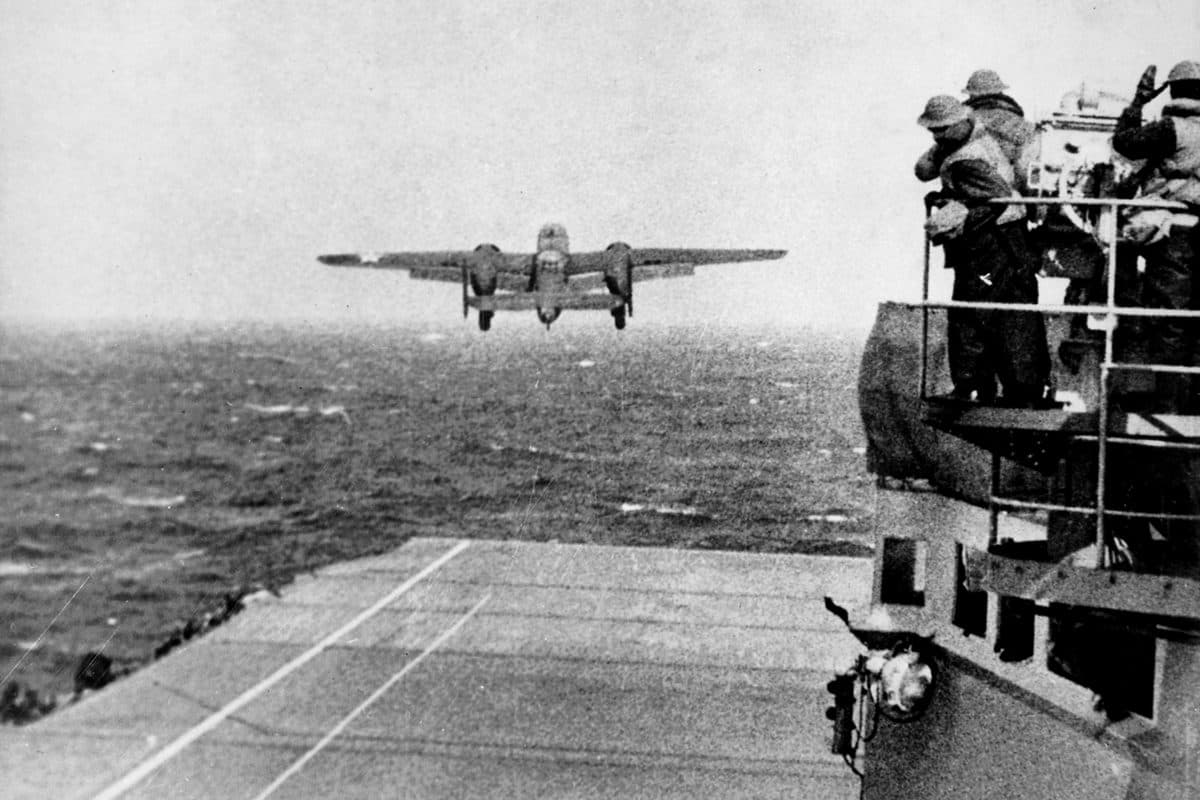
On April 18, 1942, sixteen B-25 Mitchell bombers did something no one thought possible: they launched from the deck of an aircraft carrier, flew 650 miles to Japan, and bombed Tokyo. Every aircraft was lost. The damage was negligible. The consequences changed the war.
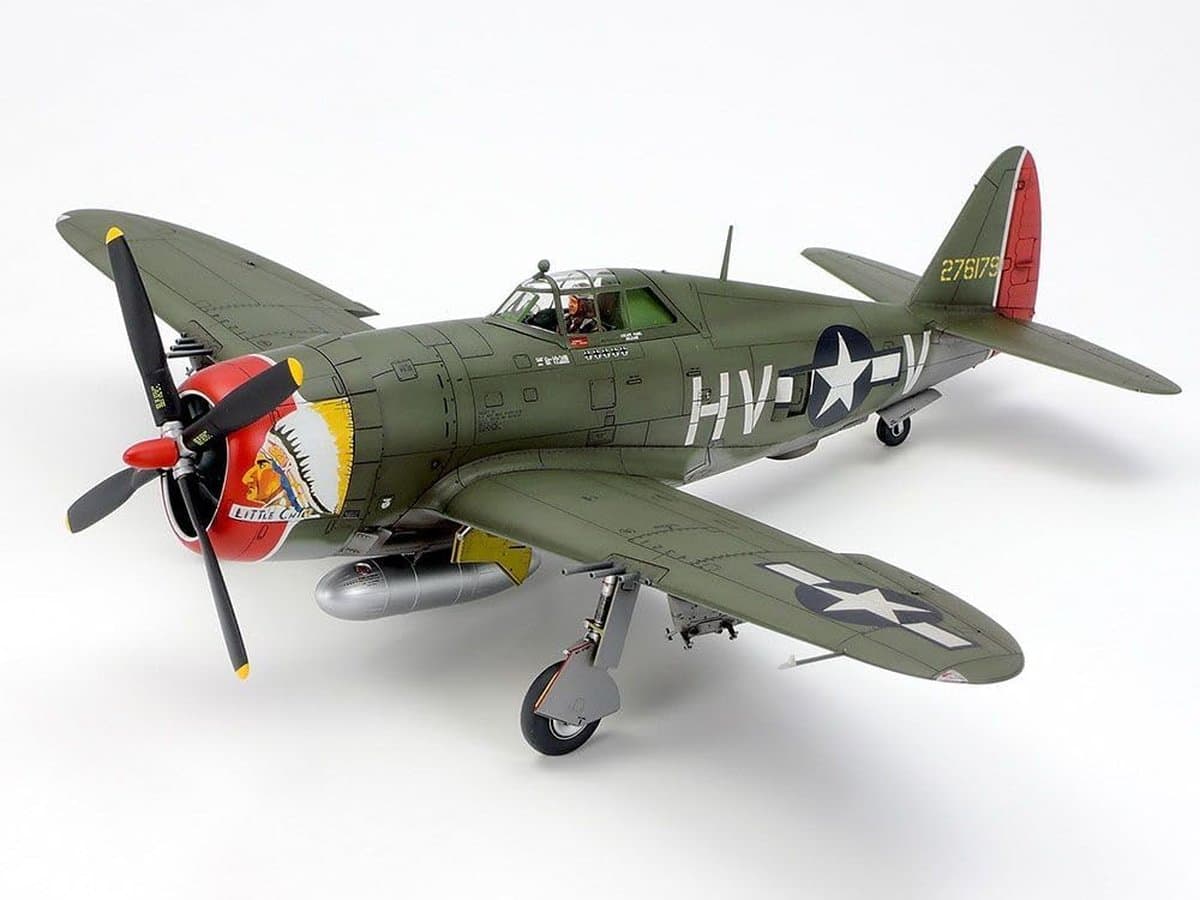
Compare 85+ WW2 scale model kits across aircraft, tanks, and ships. Beginner builds from $9 to museum-grade showpieces at $580. Covers Tamiya, Eduard, HK Models, Trumpeter, and more with honest reviews, trade-offs, and pricing.

On April 7, 1945, the Imperial Japanese Navy sent the largest battleship ever built on a one-way suicide mission to Okinawa. She never arrived. 386 American aircraft found her first, and sank her in under two hours.