

Top Aircraft Of The Korean War
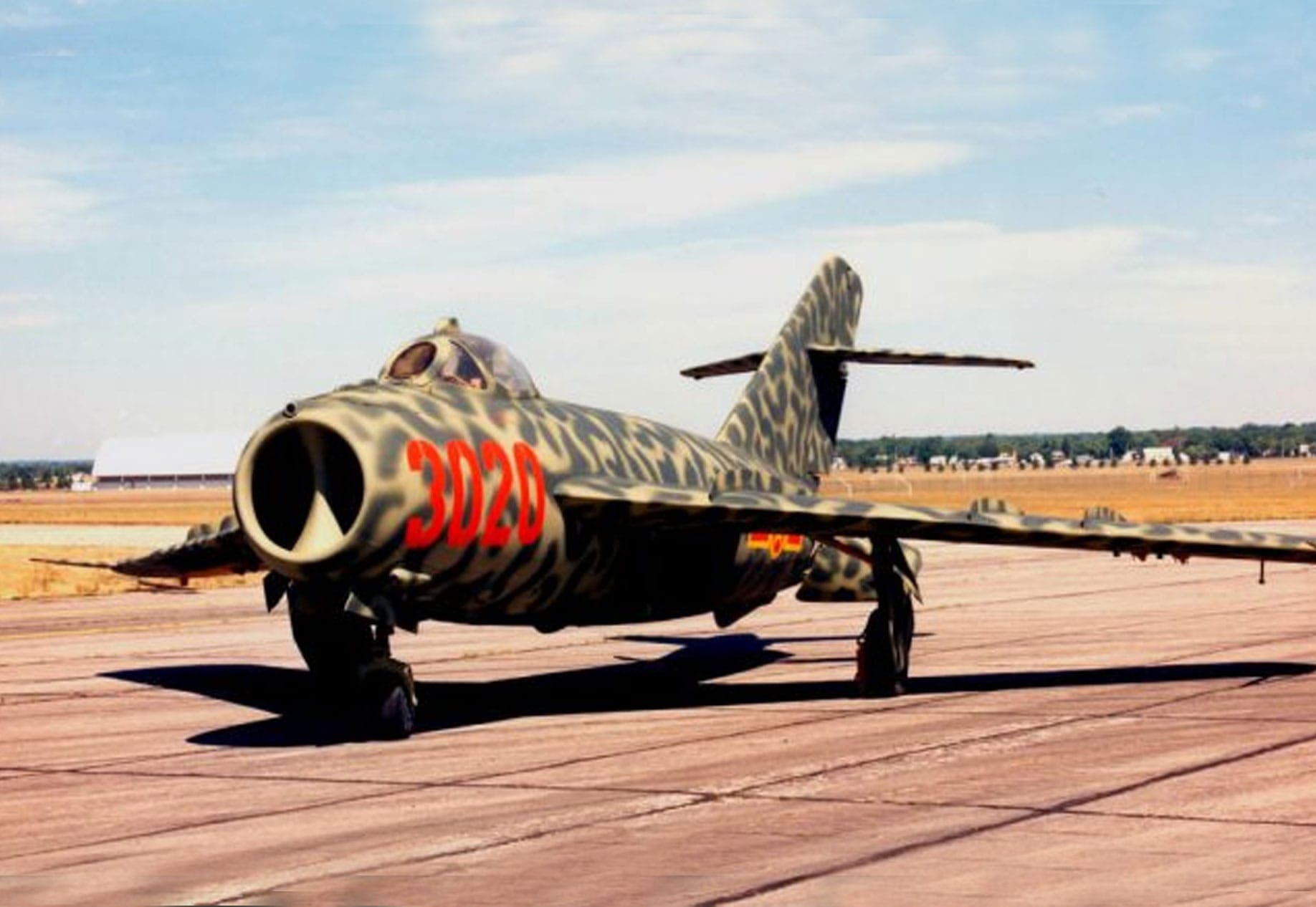
North American F-28 Twin Mustang US Air Force The F-28 Twin Mustang was one of the top Korean War aircraft from the very beginning….
ryan-caldwell··10 min read

Approximately 120,000 Chinese troops launched a devastating surprise attack against 30,000 United Nations forces, primarily the 1st Marine Division and elements of the U.S. Army's 7th Infantry Division, around the Chosin Reservoir in northeastern North Korea. In temperatures plunging to minus 35 degrees Fahrenheit, the Marines and soldiers conducted one of the most legendary fighting withdrawals in military history, battling through Chinese divisions for 17 days to reach the port of Hungnam. The battle earned its survivors the name "The Chosin Few."
Aircraft of the Korean WarAt the Council of Clermont in France, Pope Urban II preached a sermon calling for Christian warriors to march east and reclaim the Holy Land from Muslim rule. The call ignited nearly two centuries of religious warfare between Christendom and the Islamic world and reshaped European military organization, logistics, and castle-building for generations.
The remnants of George Washington's Continental Army reached Hackensack, New Jersey, continuing the desperate retreat across New Jersey after the fall of Fort Lee. With his force reduced to roughly 3,000 men and winter approaching, Washington's survival depended on crossing the Delaware River before British pursuit under Charles Cornwallis could catch him.
Union forces under General George Meade advanced against Robert E. Lee's Confederate Army of Northern Virginia along Mine Run in Virginia. After reconnoitering the heavily fortified Confederate positions, Meade wisely decided against a frontal assault, avoiding the kind of slaughter that had occurred at Fredericksburg a year earlier. The decision to withdraw without attacking closed the 1863 campaigning season in the Eastern Theater.
Lieutenant Colonel George Armstrong Custer led the 7th Cavalry in a dawn attack on a Cheyenne village along the Washita River in Indian Territory. Chief Black Kettle, a peace chief who had survived the Sand Creek Massacre four years earlier, was killed along with his wife. The engagement remains deeply controversial: the Army called it a battle, while many historians and Native Americans consider it a massacre of a peaceful encampment.
Secretary of War Elihu Root officially established the U.S. Army War College in Washington, D.C., as part of his comprehensive reform of the Army following the organizational failures of the Spanish-American War. The institution was created to prepare senior officers for strategic-level command and staff duties, and it remains the Army's premier institution for professional military education and strategic leadership development.
The French Navy scuttled 77 warships at Toulon, including 3 battleships, 7 cruisers, 15 destroyers, and 12 submarines, to prevent their capture by Nazi Germany during Operation Anton. The mass scuttling, one of the most dramatic acts of self-destruction in naval history, destroyed Vichy France's last significant military asset. Several submarines managed to escape and sailed to North Africa to join the Allies.
Approximately 4,000 tons of high explosives detonated at the underground RAF Fauld munitions depot in Staffordshire, England, in the largest non-nuclear explosion of the Second World War. The blast killed 70 people, destroyed a dairy farm and gypsum mine, and forced a fundamental review of British munitions storage practices for the remainder of the war.
Some 120,000 Chinese troops attacked 30,000 Marines and soldiers at the Chosin Reservoir in minus-35-degree temperatures. The ensuing 17-day fighting withdrawal, one of the most brutal in military history, earned its survivors the name "The Chosin Few."
Aircraft of the Korean WarThe Pentagon informed President Lyndon B. Johnson that troop levels in Vietnam needed to increase from 120,000 to 400,000 if planned operations were to succeed. Defense Secretary Robert McNamara recommended the massive escalation despite growing private doubts about the war's winnability. This recommendation committed the United States to a major ground war in Southeast Asia that would consume the next decade.
Aircraft of the Vietnam War
Lieutenant General
Japanese general who commanded the 14th Army in the invasion and conquest of the Philippines in 1941-1942, defeating General Douglas MacArthur's forces and compelling the largest surrender of American troops in history at Bataan. Homma was held responsible for the Bataan Death March, in which thousands of American and Filipino prisoners of war died of exhaustion, disease, and brutality. He was convicted of war crimes and executed by firing squad in 1946.

General
Republic of Korea Army general who commanded South Korean forces in the Vietnam War as head of the Korean Military Assistance Group, overseeing the deployment of over 300,000 Korean troops who fought alongside American forces. He was instrumental in modernizing South Korea's military and served as chairman of the Joint Chiefs of Staff. His leadership in Vietnam strengthened the U.S.-South Korean military alliance that remains vital today.

Cheyenne peace chief who spent years advocating for coexistence with white settlers and the U.S. government, only to be killed by Lieutenant Colonel Custer's 7th Cavalry at the Battle of Washita River on this date. Black Kettle had survived the Sand Creek Massacre four years earlier, where he had been flying an American flag over his camp as a sign of peace. His death at Washita while again seeking peace became a symbol of the tragic failure of U.S.-Native American diplomacy.
Wear the Timeline
10 military events occurred on November 27, spanning multiple centuries. Key events include: The Battle of Chosin Reservoir Begins (1950), The Battle of Washita River (1868), The French Fleet Scuttled at Toulon (1942), Pope Urban II Calls the First Crusade (1095), Operation Fracture Jaw Nuclear Plan Authorized for Khe Sanh (1967).
The most significant military event on November 27 is The Battle of Chosin Reservoir Begins (1950). Approximately 120,000 Chinese troops launched a devastating surprise attack against 30,000 United Nations forces, primarily the 1st Marine Division and elements of the U.S. Army's 7th Infantry Division, around the Chosin Reservoir in northeastern North Korea. In temperatures plunging to minus 35 degrees Fahrenheit, the Marines and soldiers conducted one of the most legendary fighting withdrawals in military history, battling through Chinese divisions for 17 days to reach the port of Hungnam. The battle earned its survivors the name "The Chosin Few."
Notable military figures born on November 27 include Masaharu Homma (1887–1946), Chae Myung-shin (1926–2013).
Events on November 27 span the Korean War, the Civil War, the Interwar Period, World War II, the Vietnam War, the Colonial & Revolutionary era, covering 10 events across 4 centuries of military history.
Events on November 27 involve 5 branches of the U.S. and allied armed forces, reflecting the global scope of military operations throughout history.
Explore military history from the day you were born.
June 6
The Allied invasion of Normandy, the largest amphibious assault in history.
December 7
Japan attacks the U.S. Pacific Fleet, bringing America into World War II.
September 11
The deadliest terrorist attack in history transforms U.S. national security.
August 6
The first atomic bomb is dropped on a city, ushering in the nuclear age.
May 8
Nazi Germany surrenders unconditionally, ending World War II in Europe.
November 11
Armistice Day marks the end of World War I and honors all who served.
June 4
The turning point of the Pacific War as the U.S. Navy destroys four Japanese carriers.
July 4
The Declaration of Independence is adopted, sparking the American Revolution.
North American F-28 Twin Mustang US Air Force The F-28 Twin Mustang was one of the top Korean War aircraft from the very beginning….
Boeing B-52 Stratofortress US Air Force This American project was first conceived in the immediate wake of the Second World War. The…
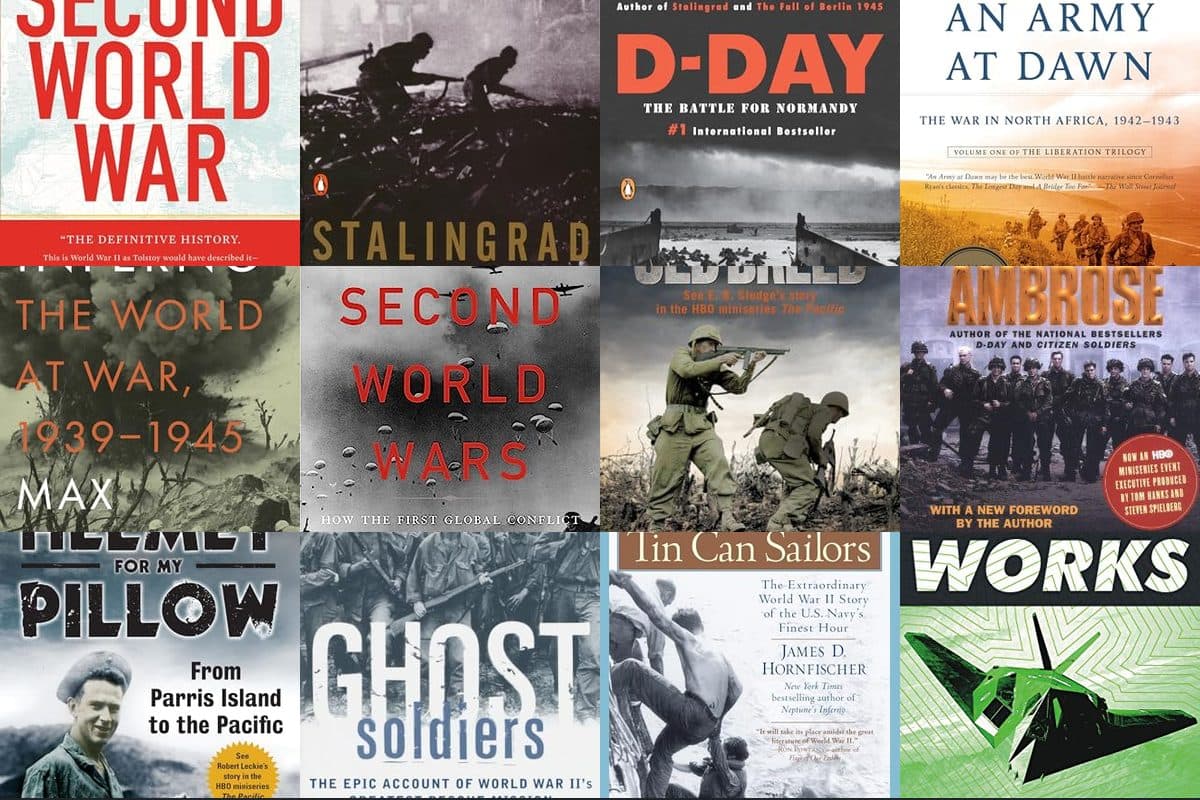
15 essential WW2 books covering every theater. Narrative histories, memoirs, and visual references ranked.
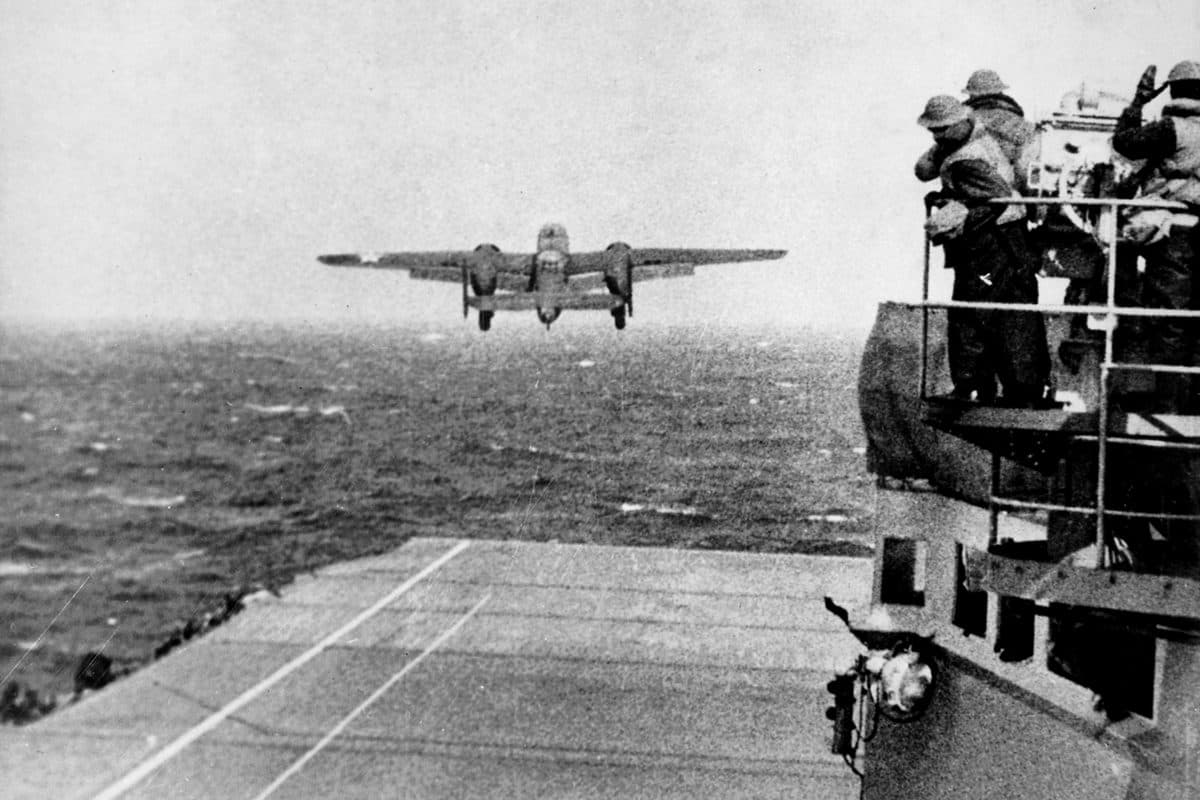
On April 18, 1942, sixteen B-25 Mitchell bombers did something no one thought possible: they launched from the deck of an aircraft carrier, flew 650 miles to Japan, and bombed Tokyo. Every aircraft was lost. The damage was negligible. The consequences changed the war.